
Inspiration
Most digital tools today prioritize productivity and efficiency, often at the cost of user wellbeing. Screen time trackers and reminder apps exist, but they tend to feel passive, data-heavy, or even guilt-inducing, rarely leading to meaningful behavior change.
We wanted to explore a more human approach: What if technology didn’t just track your habits, but responded to them with empathy?
This led to the idea of a digital pet that could reflect a user’s behavior and encourage healthier interactions with technology.
How We Built It
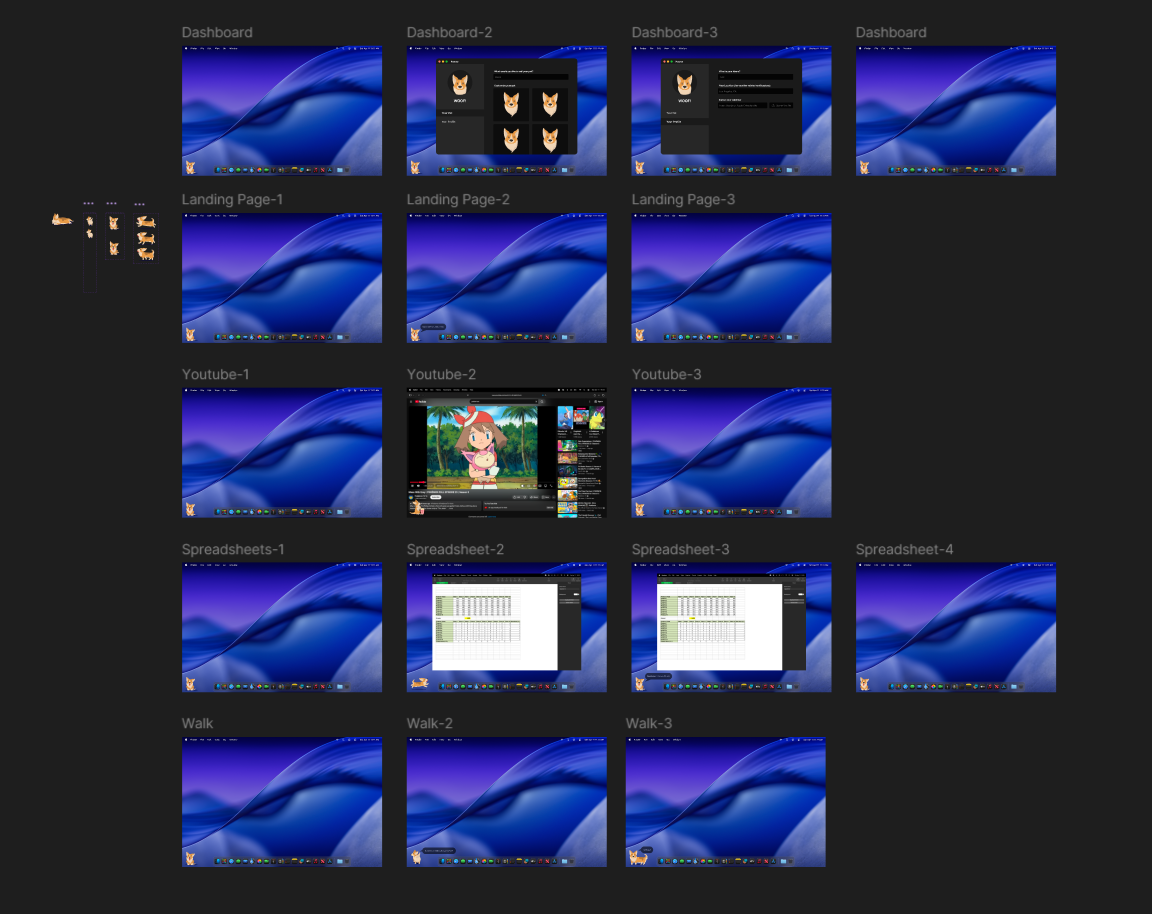
We designed a digital pet interface in Figma that acts as a companion rather than a tool.
- It responds in real time through emotional states and subtle prompts
- Instead of aggressive notifications, it gently encourages breaks and mindful pauses
What We Learned
- Designing for presence over efficiency requires rethinking common UX patterns
- Small, subtle interactions (like timing, motion, and tone) can drastically change how a product feels
- Users are more receptive to guidance when it feels supportive rather than corrective
Challenges We Faced
- Making it feel “alive”: Designing a pet that feels responsive and emotional without being overly complex
- Avoiding gimmicks: Ensuring the pet wasn’t just decorative, but meaningfully tied to user behavior
- Translating abstract ideas into UI: Concepts like “presence” and “digital wellbeing” are hard to visualize, so we had to experiment with different interaction patterns
What’s next for Pawse
- Playful interaction — lets you play, pet, and connect with Mochi
- Cross-device continuity — stays with you across laptop and phone
- Mood-based guidance — responds to your energy and state
- Growth over time — evolves as your habits improve
- Deeper personalization — adapts to your routines and needs
Built With
- figma


Log in or sign up for Devpost to join the conversation.