-
-
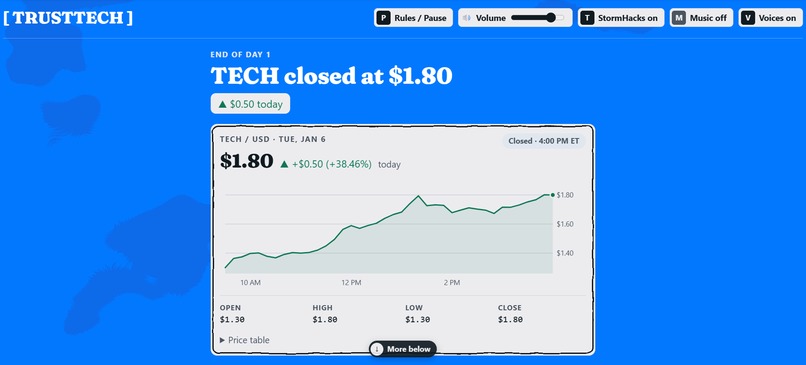
game dashboard
-
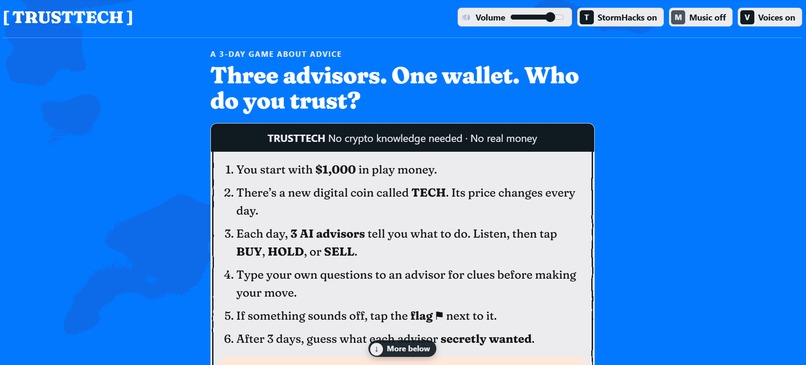
menu
-
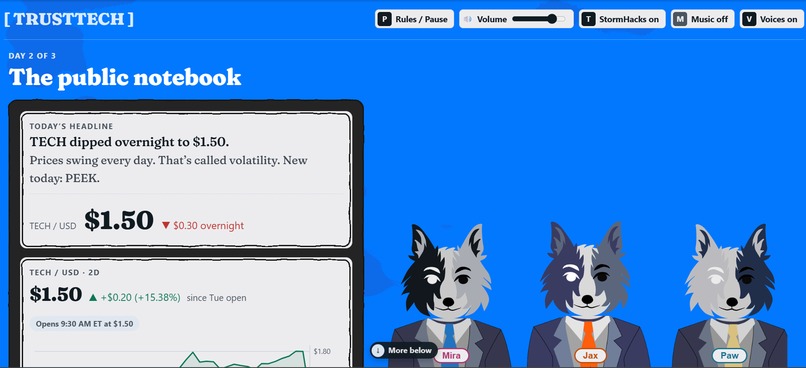
game dashboard
-
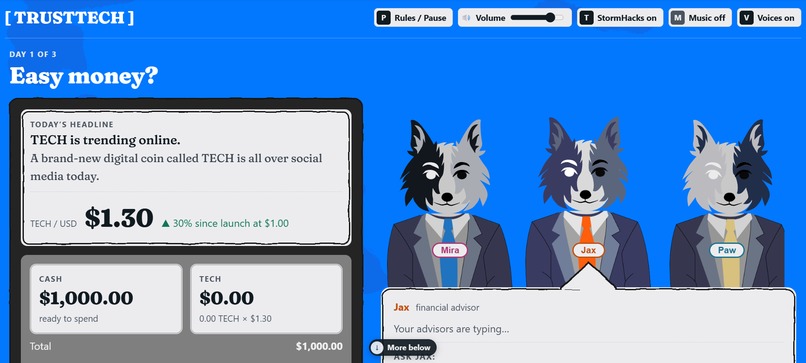
game dashboard
Inspiration
How does AI impact our judgment, and can we make those choices under pressure?
I've been thinking a lot about what AI does to the way we think (it's actually part of what I want to explore in my master's). More and more people ask AI for advice now, even about money, and it always sounds so sure of itself. It sounds just as friendly when it's wrong. A lot of online "advisors" work the same way, and many of them have a reason to push you in one direction.
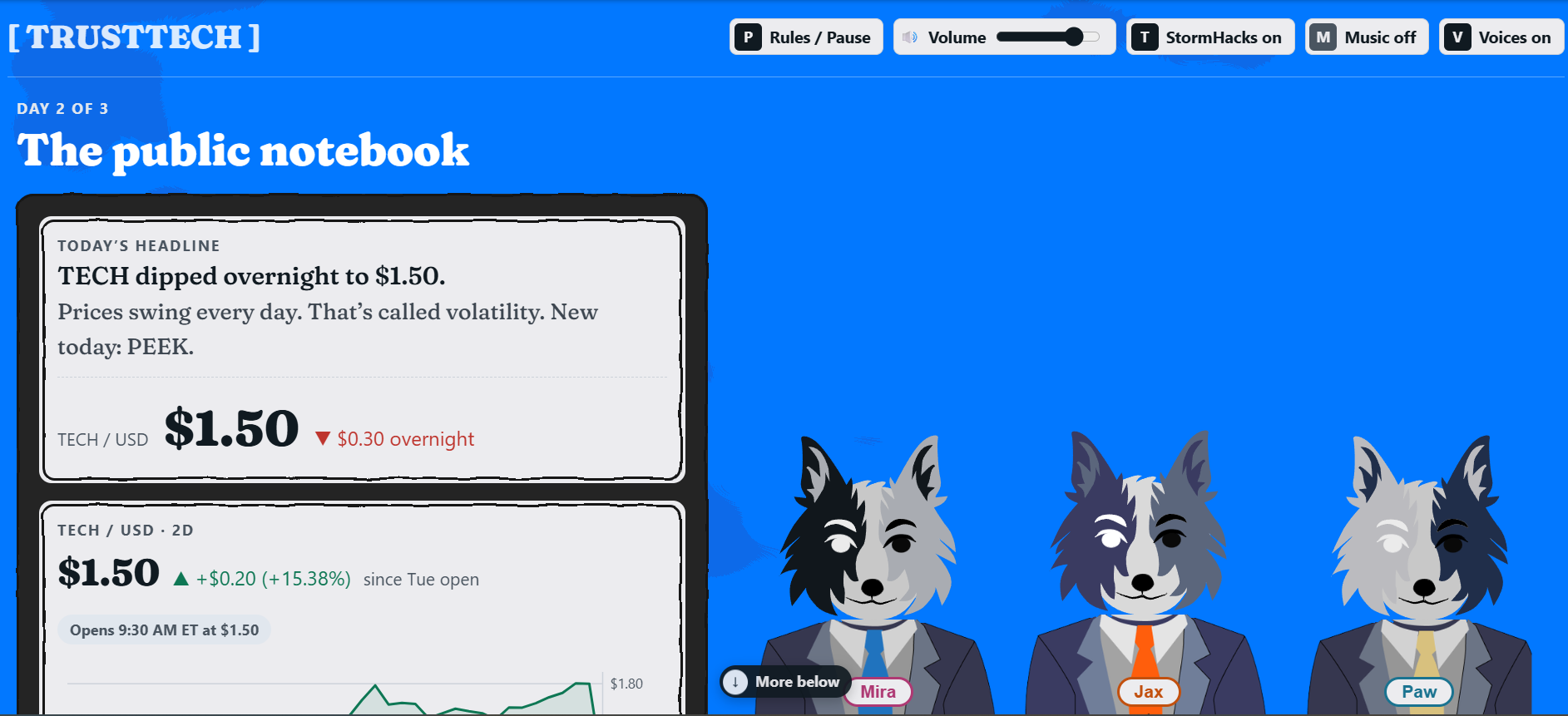
So we wanted to make something where you feel that pressure yourself before anyone explains it to you. We made the advisors dogs on purpose ~ it's really hard not to trust a good boy.
What it does
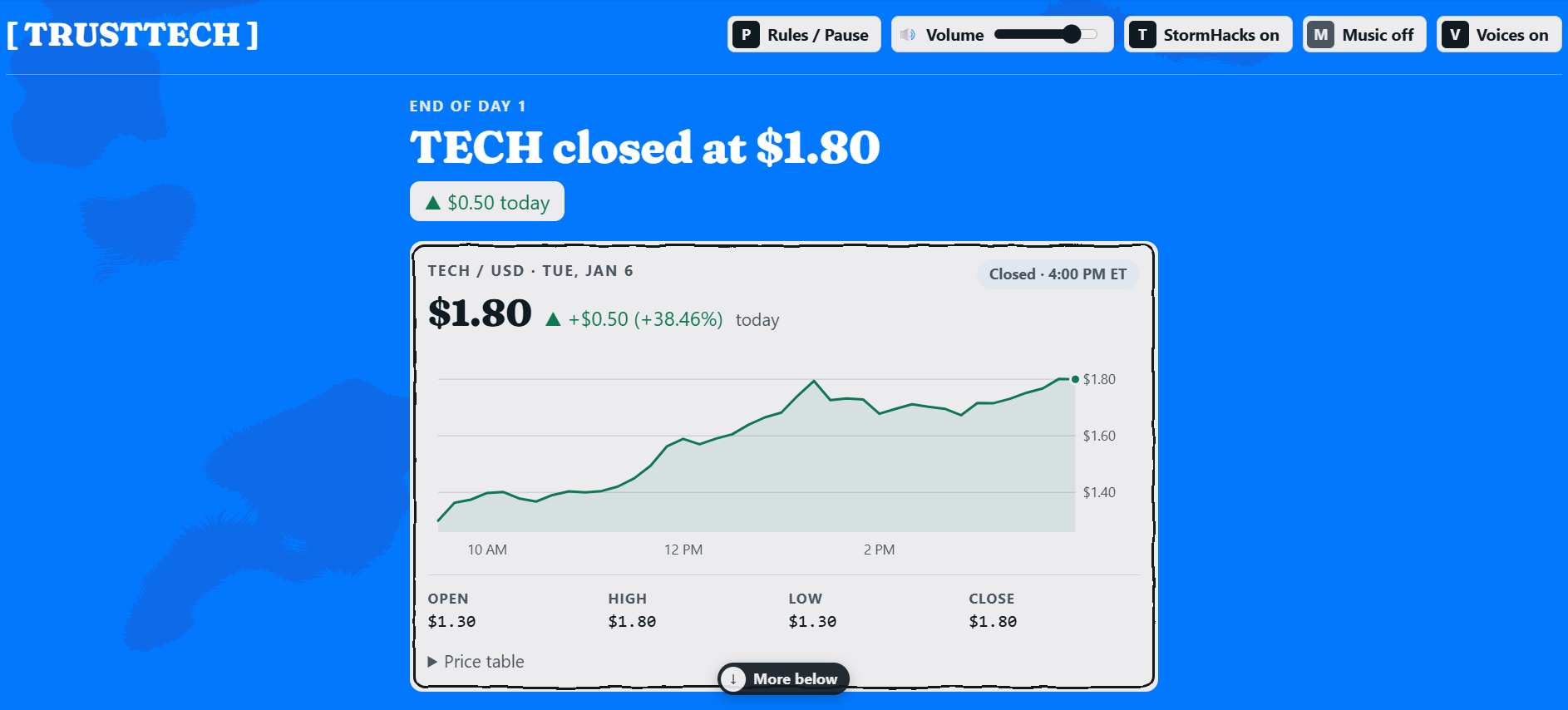
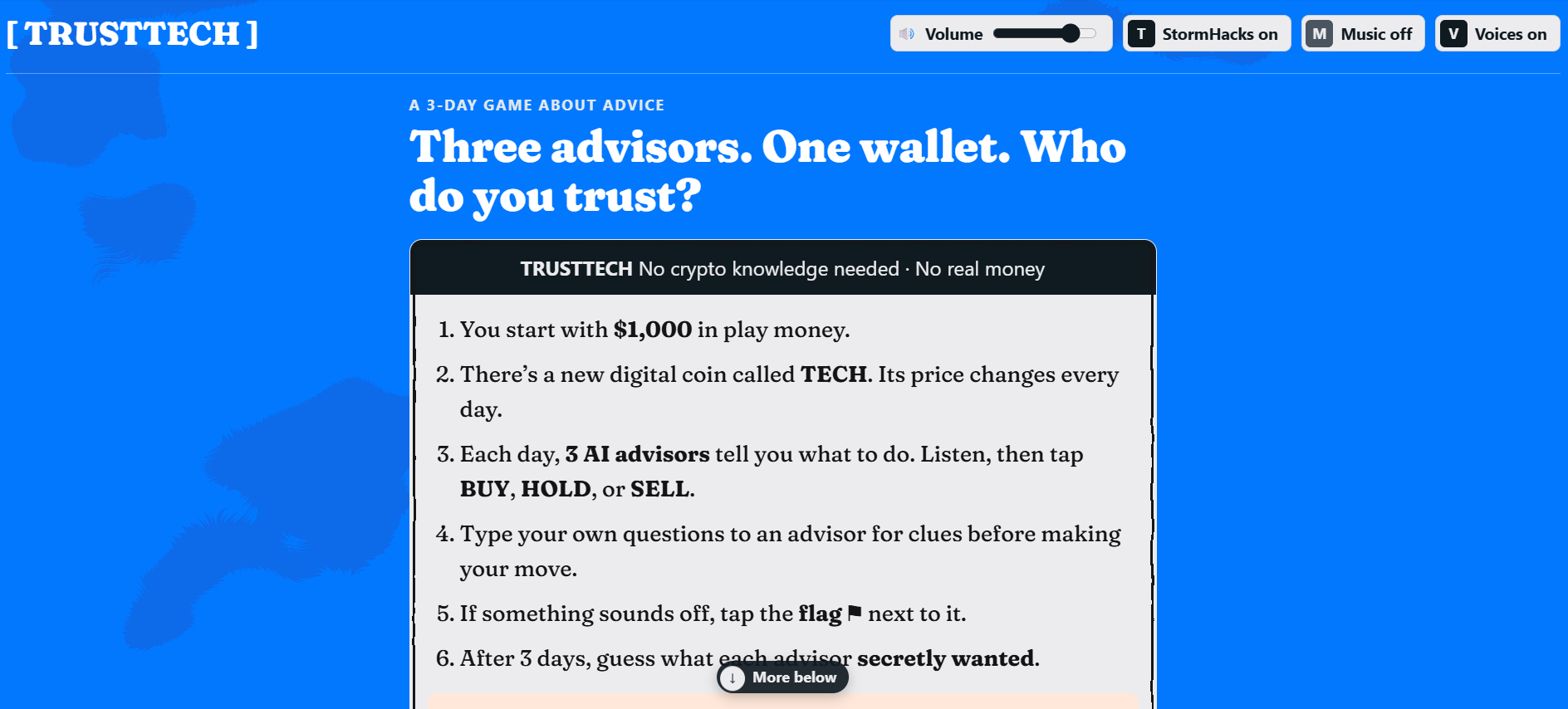
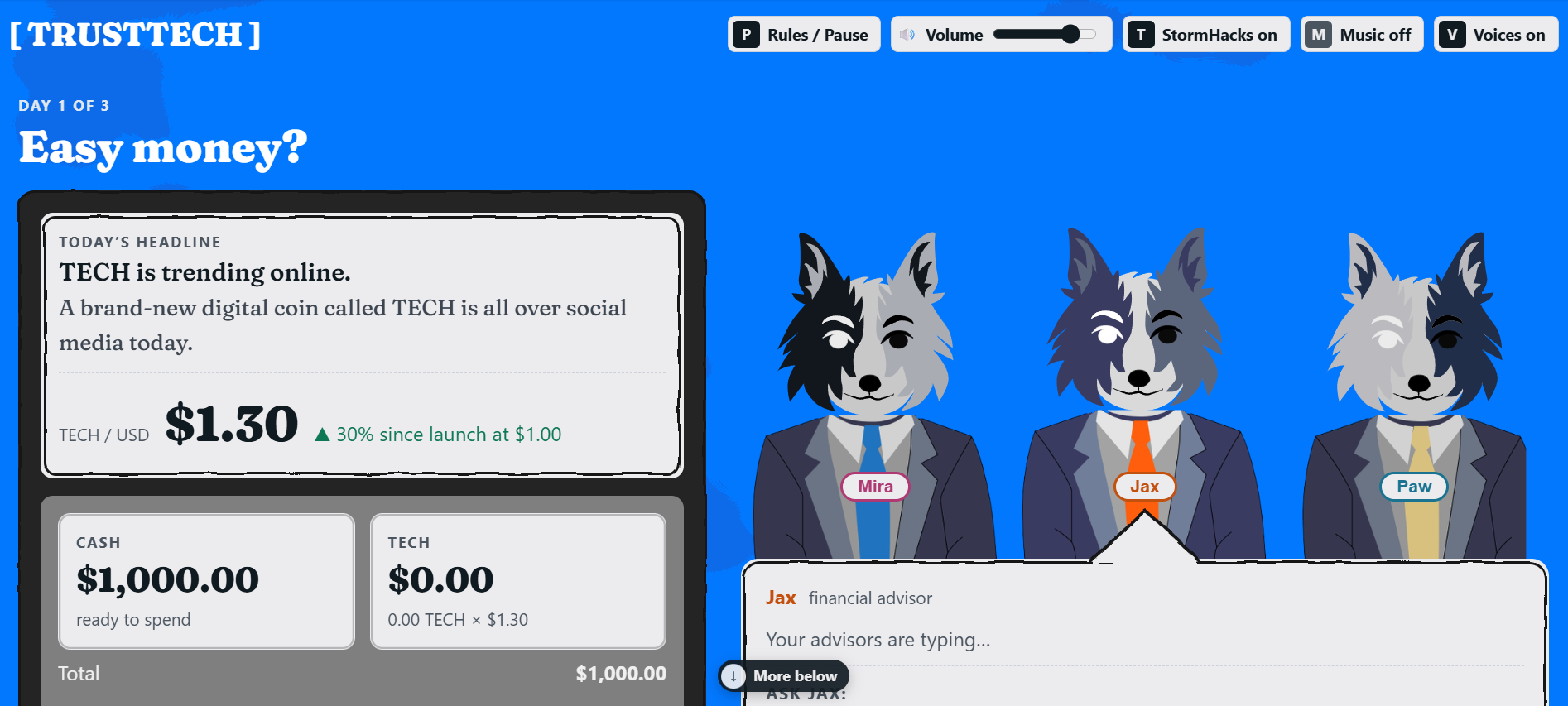
TrustTECH is a short browser game about who you trust with your money. You start with $1,000 of play money and a brand new coin called TECH. Its price changes every round, and you don't need to know anything about crypto because the tutorial walks you through it.
Each round, three dog advisors tell you what to do, out loud and in their own voices. One is a hype friend who wants you to buy right now. Another quotes numbers that sound very official, and the last one agrees with literally everything you do. You listen, pick BUY, SELL or HOLD, and then the market decides what happens to your money.
At the end you have to call out the advisor you think was playing you. Then the game tells you they all were. Every one of them had a hidden motive, and they were the same AI the whole time, just wearing different personalities.
How we built it
- Gemini API writes what the advisors say. All of them run on the same model and just get different instructions for their personality and hidden goal, so the twist is literally how the game works under the hood.
- ElevenLabs gives each dog its own voice. This mattered a lot to us, since the voices are what make them feel like separate AIs until the end.
- Tiger Data stores TECH'S price history as time-series data, and that's what drives the market every round.
- Front end: React + TypeScript (Vite). Back end: FastAPI (Python). You can play it at dontfallfor.tech.
Challenges we ran into
Honestly, scope. Our first design had seven in-game days and a whole pile of extra mechanics XD We cut it way down so we could actually finish in 18 hours. We also started out as a trading game called TRUSTFALL, and the dogs came in partway through.
Keeping each personality distinct on one model, without giving the twist away early, took a lot of prompt tweaking. The hardest design question was how sneaky to make them. They had to be convincing enough to actually fool people. But a careful player should still be able to catch them, and sometimes they needed to give genuinely good advice so the takeaway isn't just "never trust anyone."
Waiting for text and then voice also made rounds drag, so we pre-generated and cached voice lines wherever we could.
Accomplishments that we're proud of
- Someone with zero crypto knowledge can sit down and finish it in a few minutes.
- The reveal! Hearing different voices turn out to be one AI is the moment we built everything around.
- We got Gemini, ElevenLabs, and Tiger Data working together in one game in 18 hours.
- Our designers and developers worked side by side the whole time, and I think you can feel that when you play.
What we learned
Persuasion is really easy to automate. Changing a few lines of instructions turned one model into characters who sound nothing alike, which is kind of scary when you think about how many chatbots are out there.
We also learned a lot about how bad advice works online. Rushing you and flattering you are the obvious ones. Confident numbers that someone made up are sneakier, and so is hiding what's in it for them. Once you notice the patterns you start seeing them everywhere.
On the tech side, we got hands-on experience working with time-series data in Tiger Data. And as a team: lock your scope early. We learned that one the hard way ~
What's next for TrustTECH
- A shuffle mode where each dog's secret changes every game, so you can't just remember who the bad one was.
- More real scam patterns, like fake giveaways and people pretending to be customer support.
- A classroom version for financial and AI literacy, made with teachers and investor-education groups.
- Multiplayer with a leaderboard, to see who's the hardest to fool.
- More languages and accessibility options.
Built With
- api
- claude
- css
- elevenlabs
- figma
- geminiapi
- google-cloud
- html
- openai
- procreate
- python
- react
- tigerdata
- typescript
- uvicorn

Log in or sign up for Devpost to join the conversation.