-
-
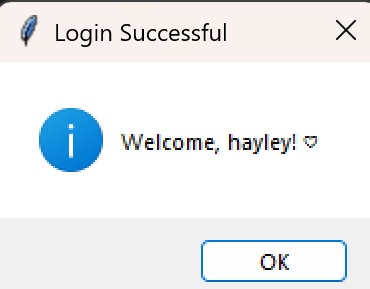
Welcome Screen
-
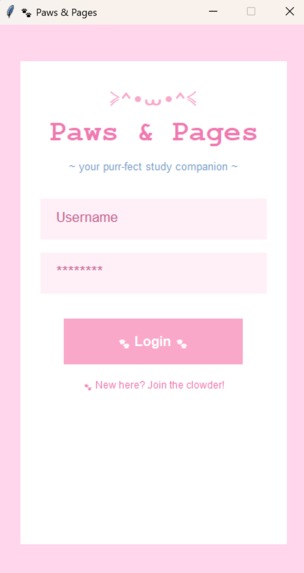
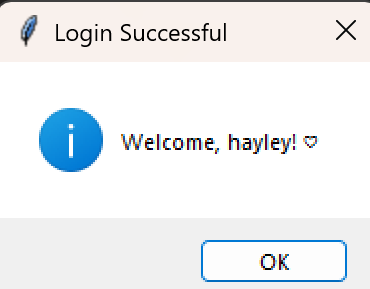
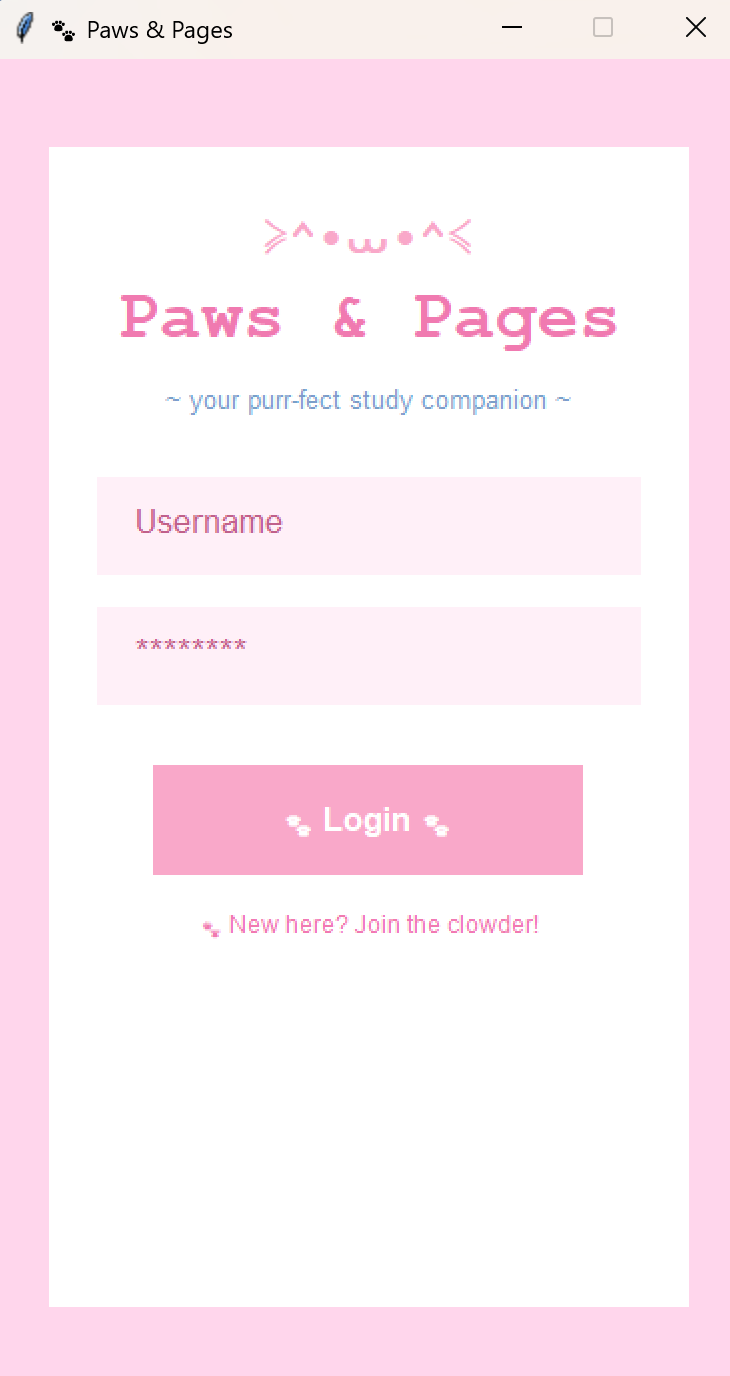
Paws & Pages Login Screen
-
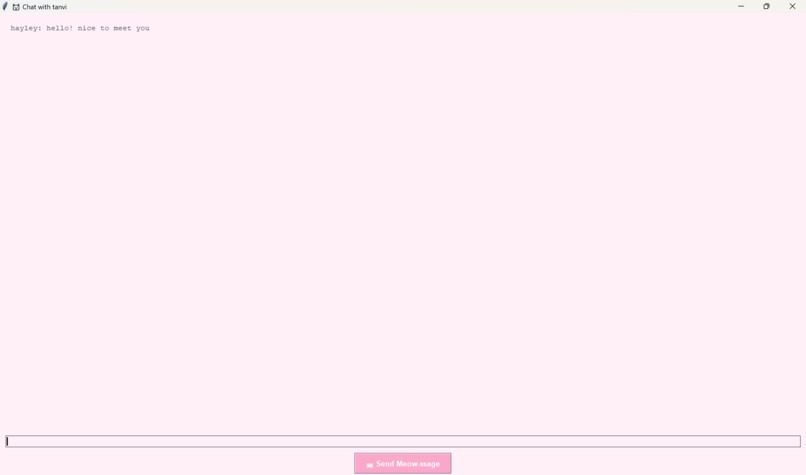
Messages Box
-
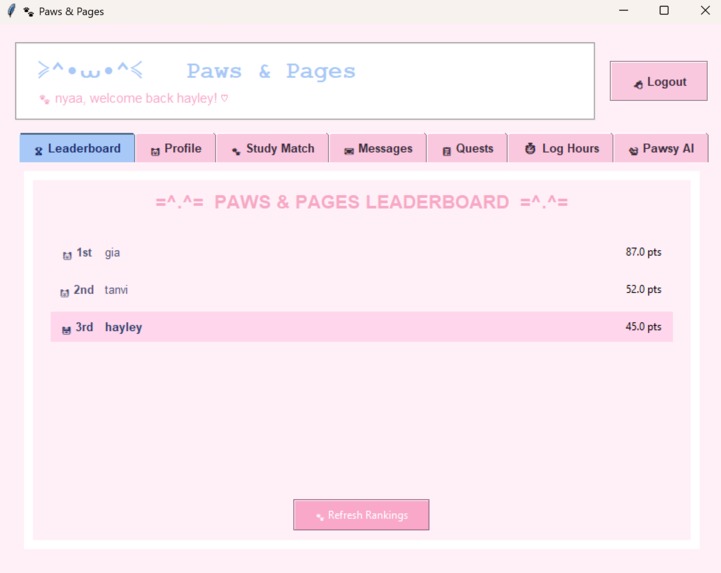
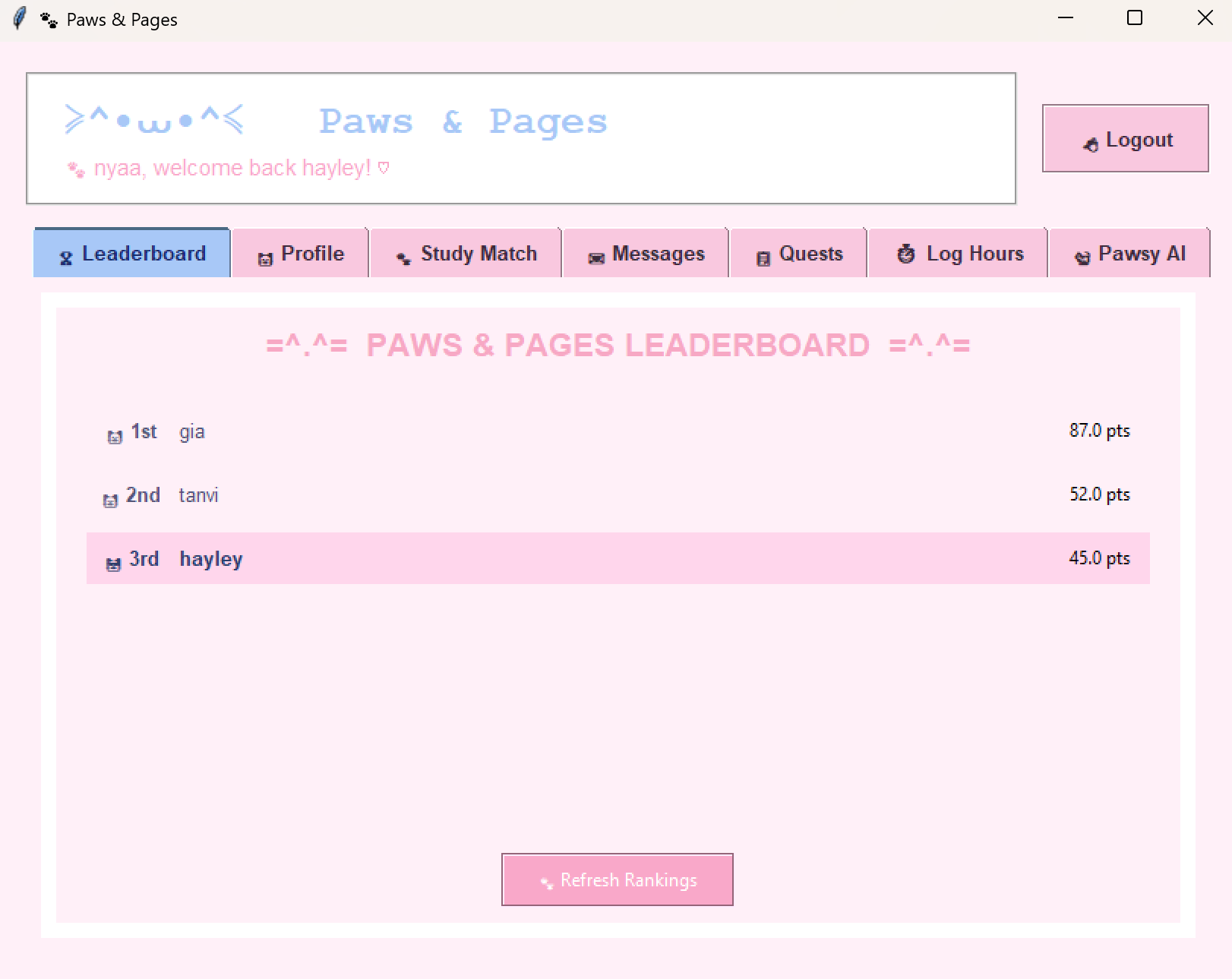
Leaderboard Page
-
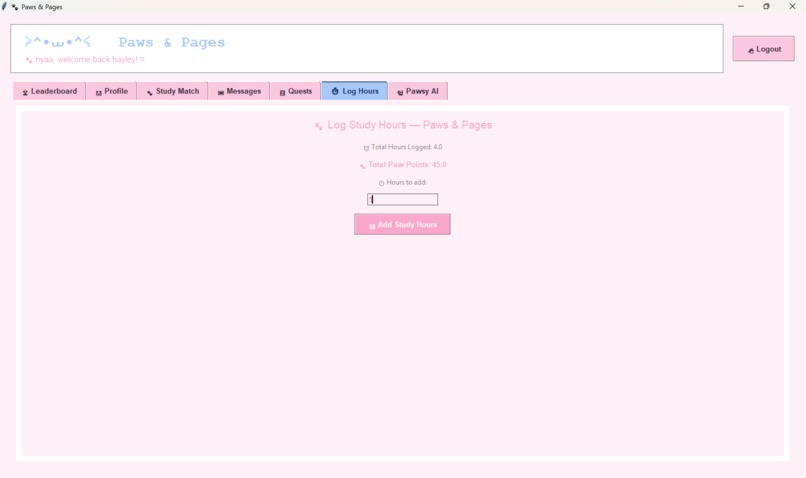
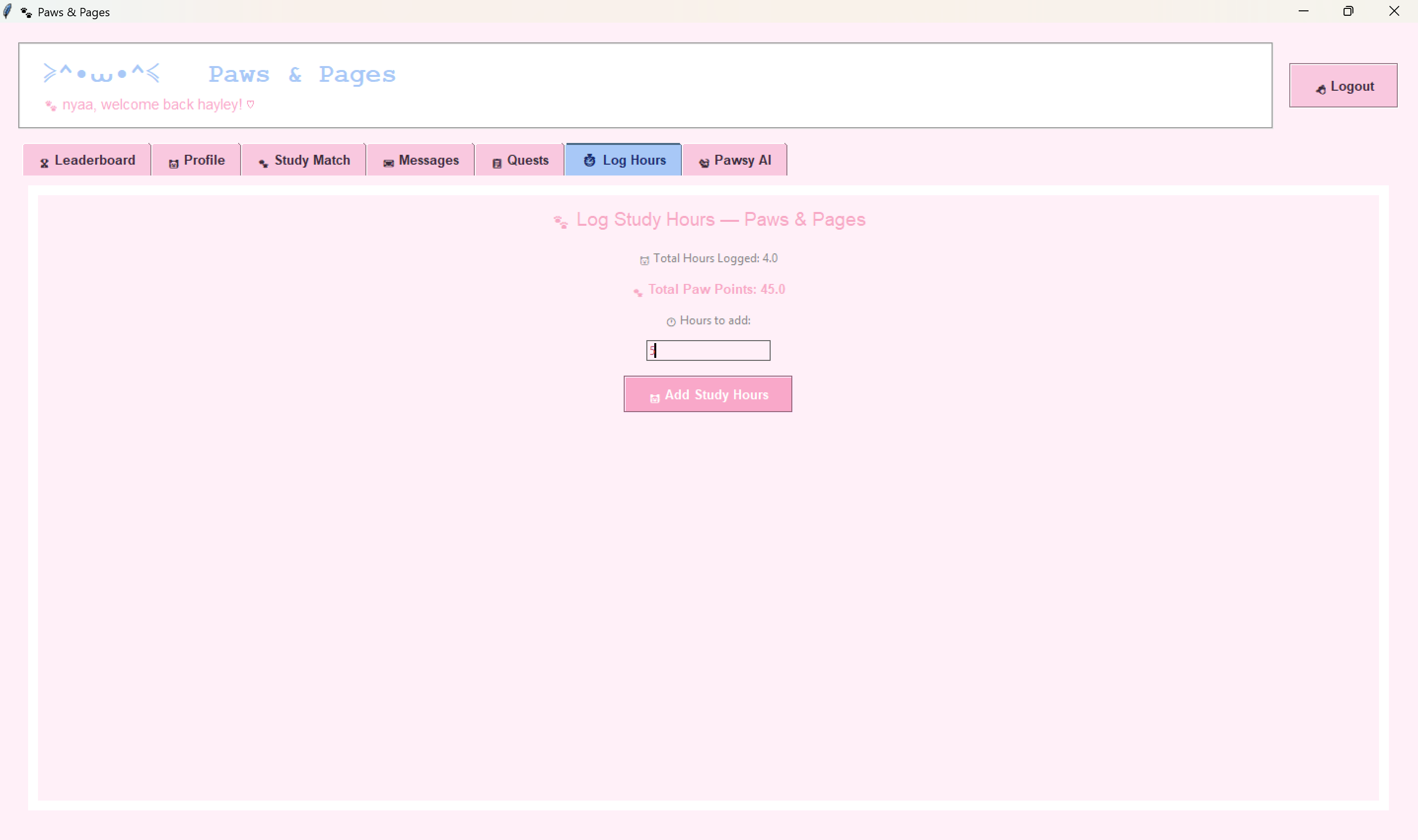
Study Hour Log Page
-
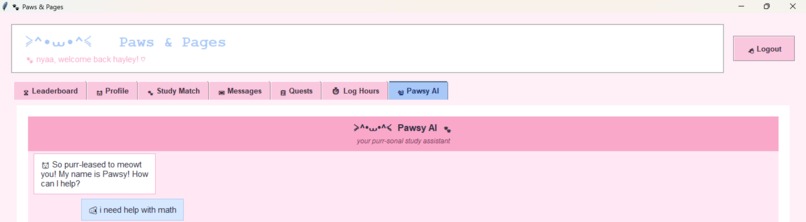
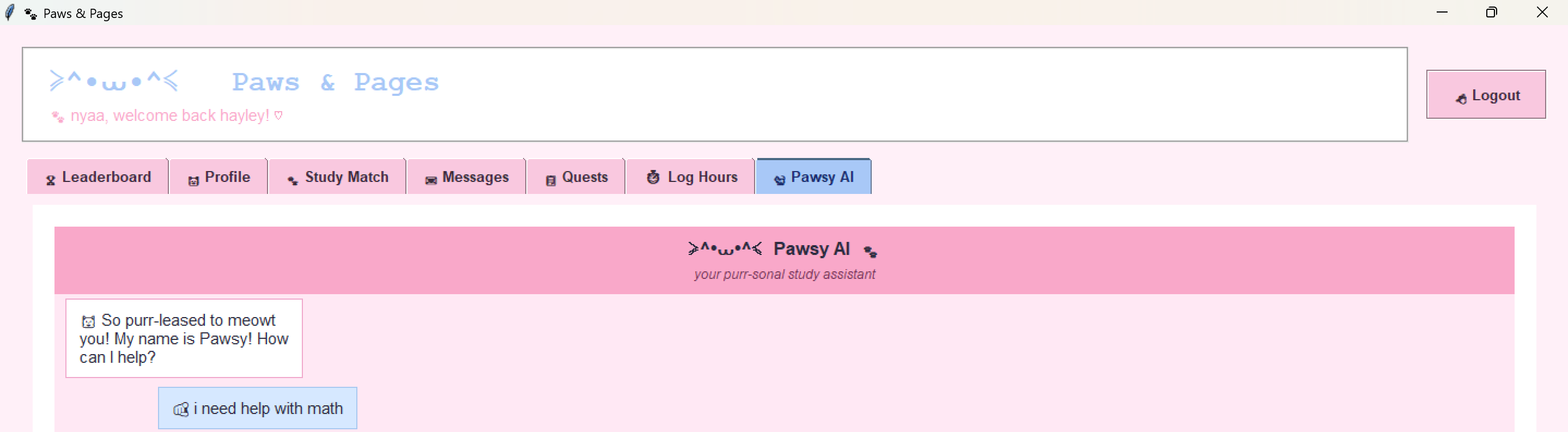
Pawsy AI Page
-
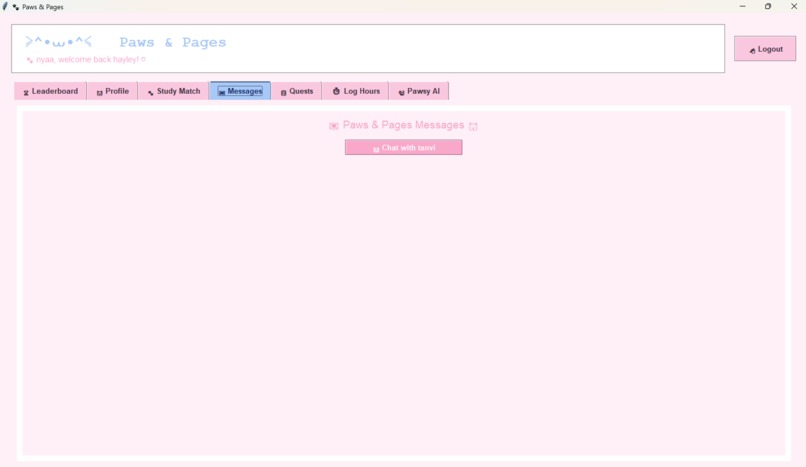
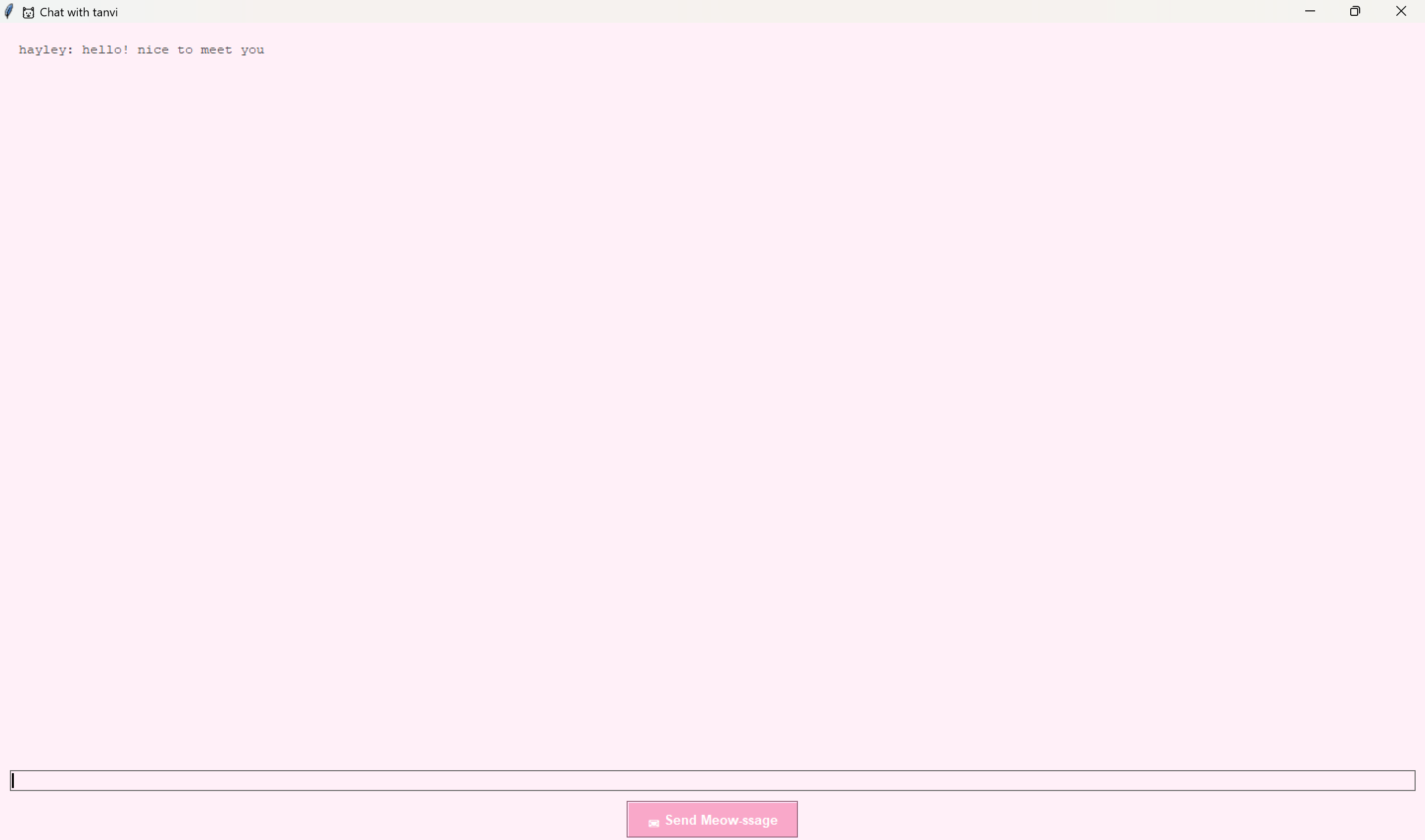
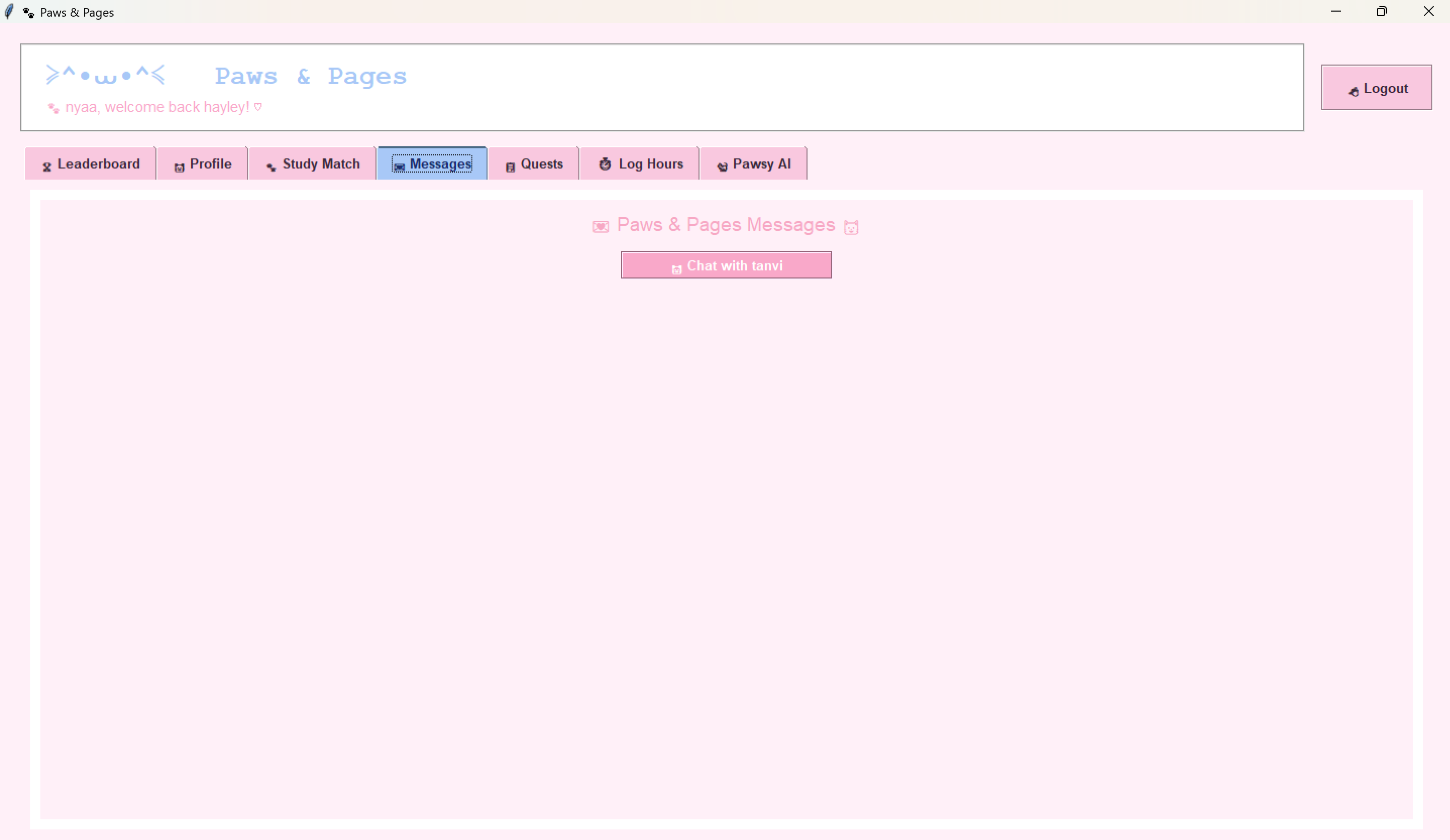
Messages Page
-
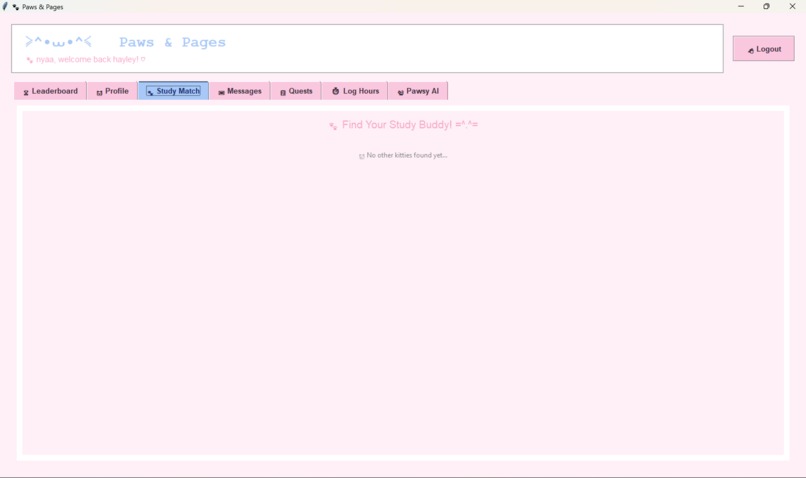
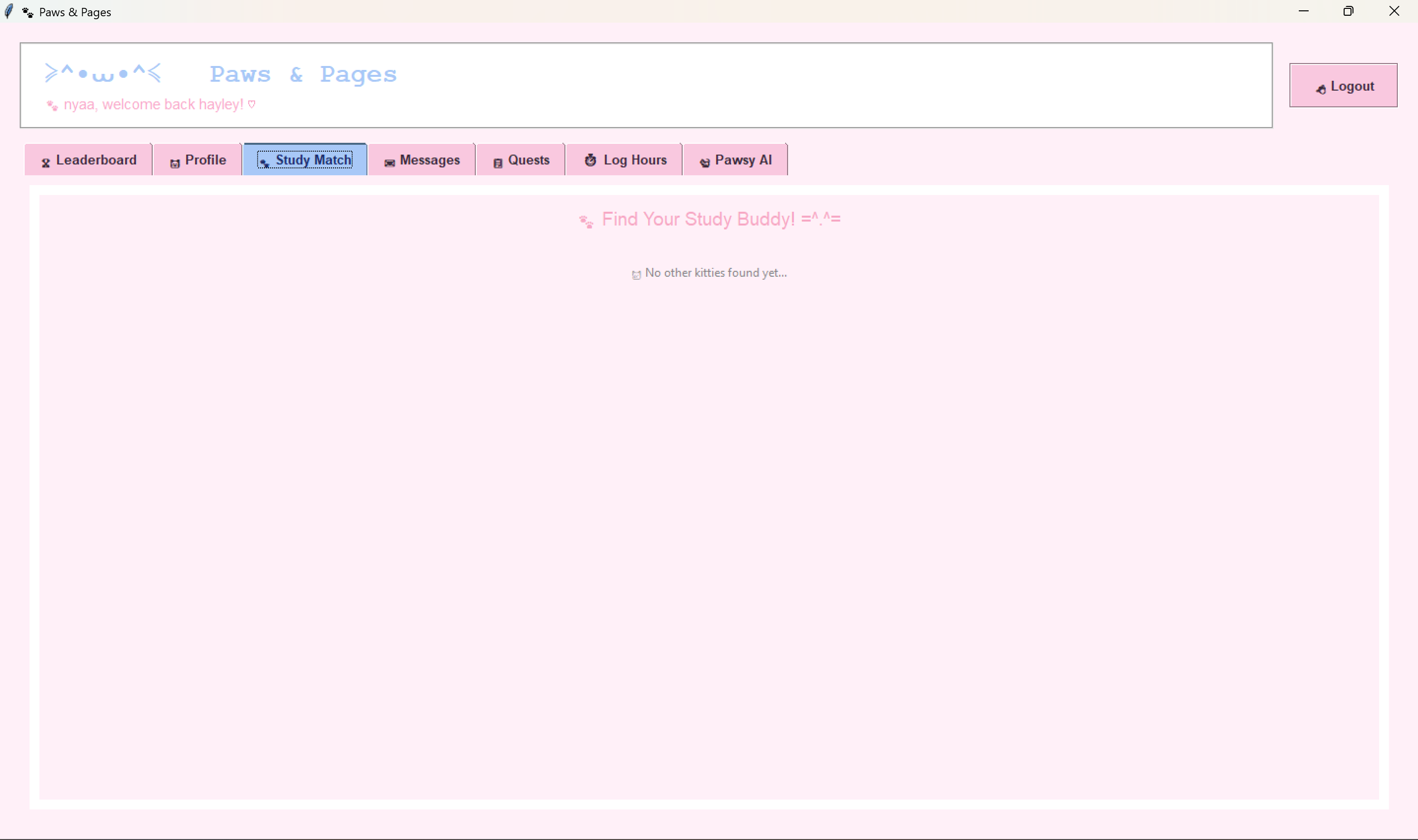
Study Match Page
-
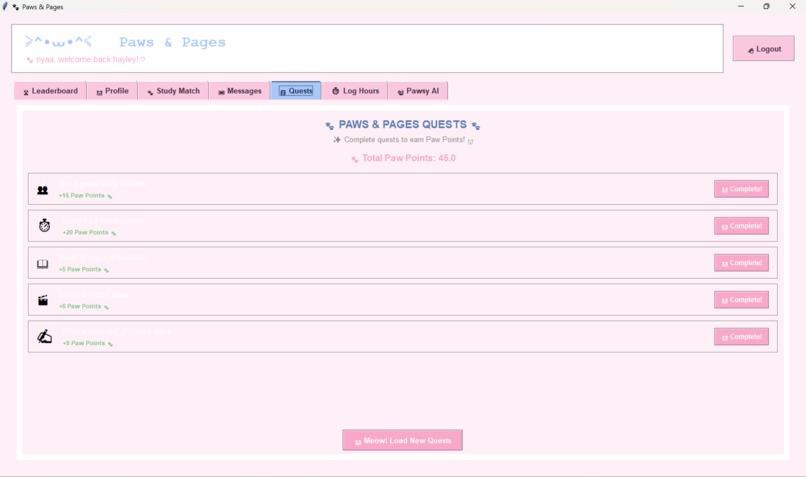
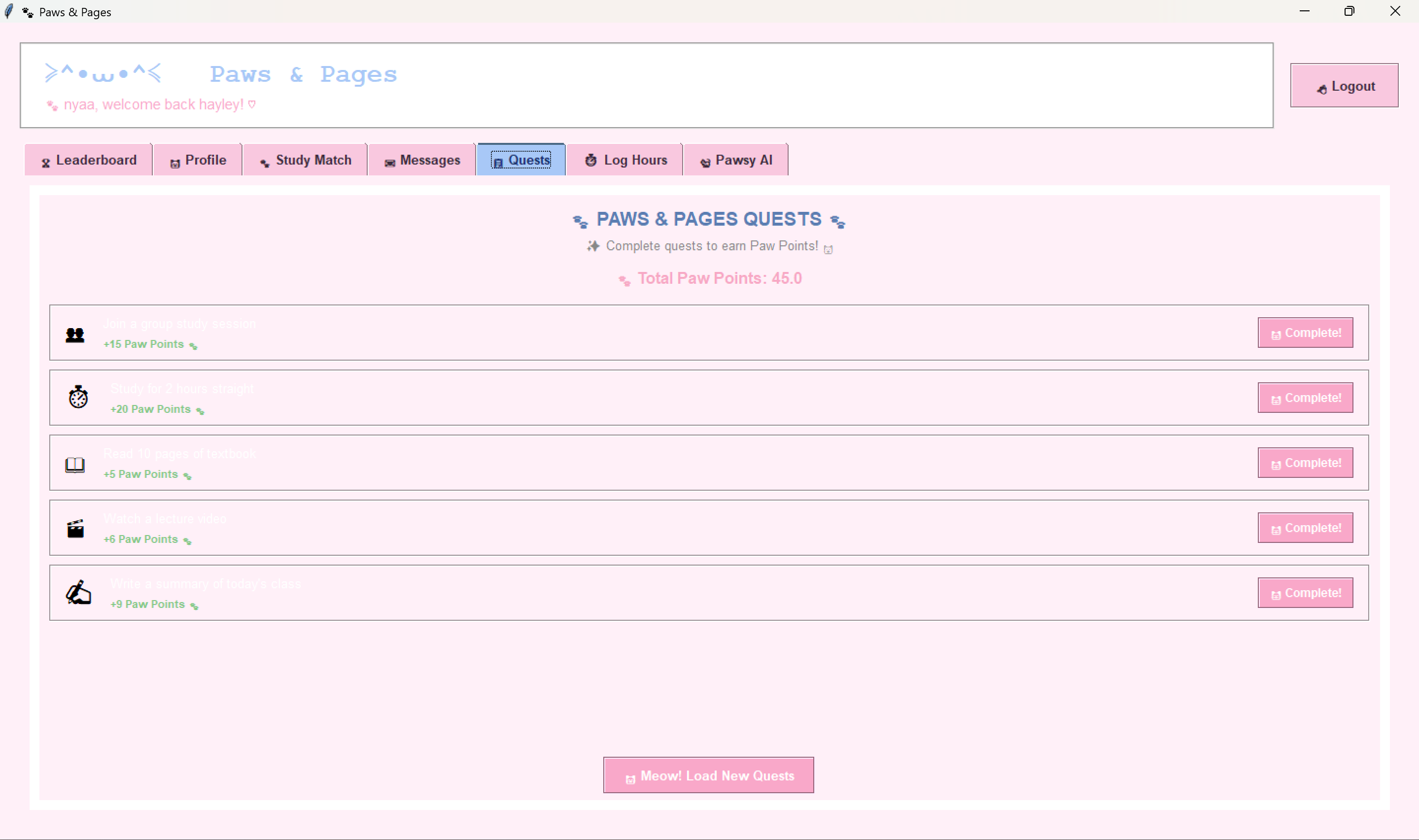
Quests Page
-
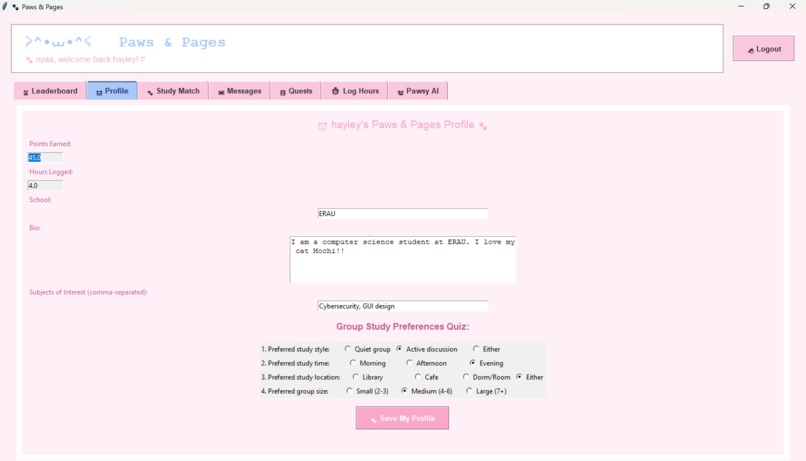
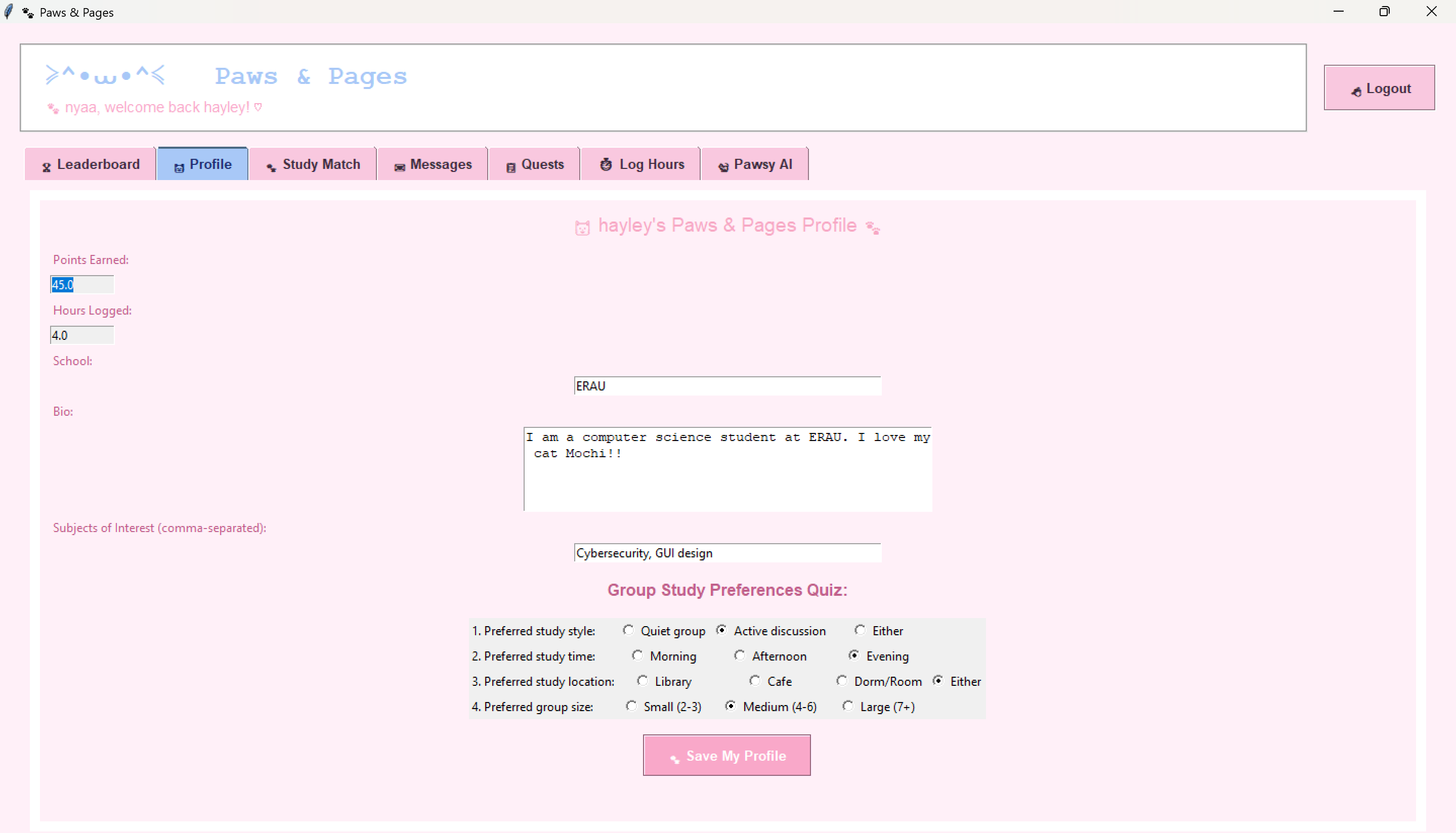
Profile Description and Preferences Page
Inspiration
It started with a simple problem. Finding a place to study on campus is already hard, but studying alone is even harder. We initially wanted to build a study room indicator to track open spaces on campus, but self-reported data isn't reliable enough to be useful. The real spark came from a friend who felt guilty taking up a library booth by herself. She actually left a handwritten note on the table saying "Come sit here!" just to invite strangers to share the space. That small, human moment stuck with us. So instead of tracking empty rooms, we decided to fill them with people.
What it does
Paws & Pages is a cat-themed study companion app that matches you with other students based on your study style, schedule, subjects, and preferred group size. Once matched, you can message them directly in-app and coordinate where to meet. To keep things fun and motivating, the app includes daily quests, a live leaderboard, and Pawsy, a cat-themed AI assistant powered by Gemini that can help with anything including the support you need.
How we built it
We built Paws & Pages entirely in Python using Tkinter for the UI, with MongoDB Atlas as our backend database. User profiles, matches, messages, and points are all stored and synced live. The AI chatbot is powered by the Gemini API, and the matching system compares study preferences across users to generate a compatibility score.
Challenges we ran into
Getting the app running consistently across different devices was our biggest hurdle, environment differences and dependency issues used up a lot of time. We also hit significant roadblocks building the AI chatbot integration, the live leaderboard, and core features like hours logging and messaging. Each one required more debugging than expected, but we pushed through and got them working.
Accomplishments that we're proud of
We're proud that we shipped a fully connected app, real authentication, live messaging, a working points and quest system, AI integration, and a matchmaking algorithm, all within a single hackathon. The inspiration behind it felt genuinely human, and we think the final product reflects that as it has a lot of hard work and efforts put into it.
What we learned
We learned a lot about integrating live databases with a desktop UI, handling real-time data sync, and working with generative AI APIs. Building the matching algorithm taught us how to think about comparing user data meaningfully rather than just storing it. On the frontend side, we got much more comfortable designing and styling GUIs in Tkinter, things like managing layouts across multiple tabs, creating a consistent color theme, and making the app feel polished and approachable rather than purely functional. We also learned how to structure a multi-file Python project cleanly, passing data like the username across modules without things breaking.
What's next for Paws & Pages
We'd love to move Paws & Pages to a web or mobile platform for easier access, add location-based matching so you can find people studying nearby right now, and expand Pawsy's capabilities to be more study-session aware. A calendar integration for scheduling study meetups would also be a natural next step


Log in or sign up for Devpost to join the conversation.