Inspiration
TOS, EULA, SLA, and other user agreements can act as a vehicle for abuse by online service providers, embedding shady practices within dense legal-ese—incomprehensible to most consumers. As security-minded individuals, our team members are aware of how difficult it can be to maintain your data security and be cautious about the myriad contracts we have to sign in our daily lives, so we wanted to make a tool that would help less security-inclined folks take care of their agreements and data. We also wanted it to be funny, so we made it a sarcastic old man!
What it does
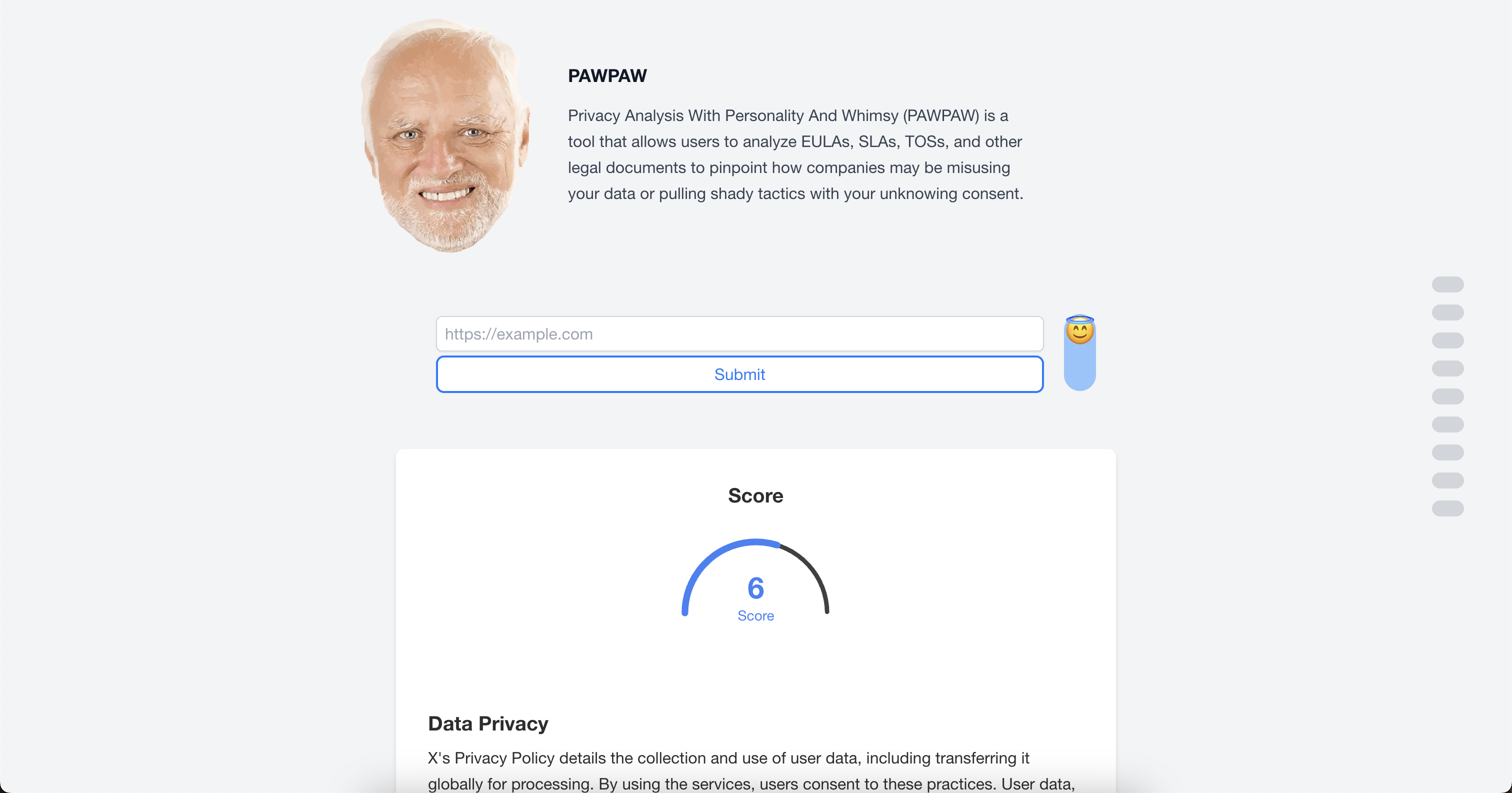
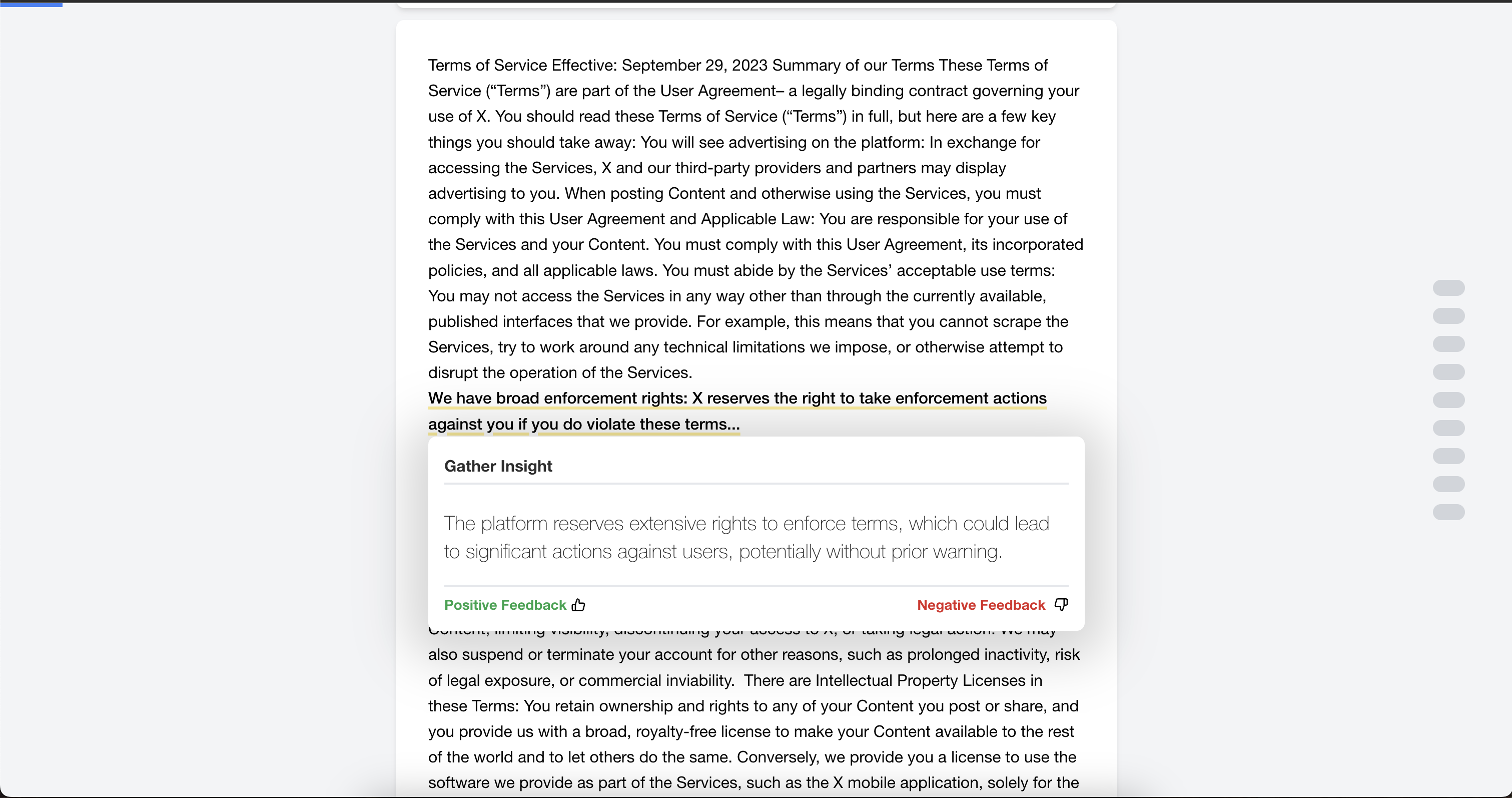
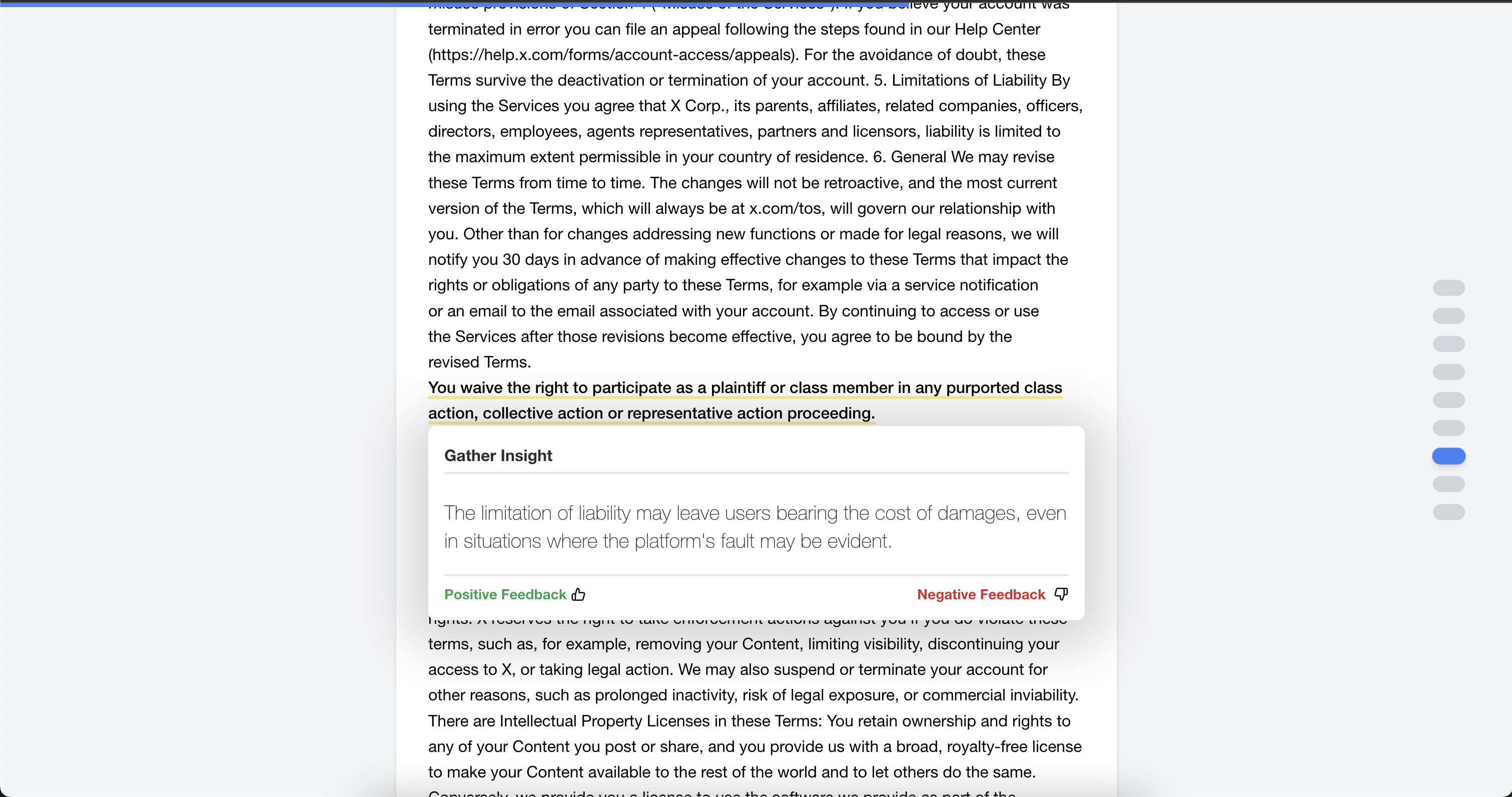
When users navigate to PAWPAW, either on the hosted project or on localhost, they can input a URL to a TOS or other user agreement site. After submitting, the site generates an overall "score" on the practices of the provided company, a summary of key points on their practices outlined in the given document, and a series of highlighted blocks of text in the provided document that can be navigated to and hovered over for further exposition on their importance.
How we built it
We used Next.js and Vercel for the web components of PAWPAW, building our front end with tailwind and framer motion for clean styling and animation. On the backend, we query a fine-tuned subset of OpenAI's GPT-4o which inspects the given document and summarizes parts of it, helping us assign an overall score. The model also points out specific important instances within the text, which we highlight using a highlighting and fuzzy finding algorithm developed by us.
Challenges we ran into
We originally hoped for PAWPAW to be a Chrome extension, but ran into issues with developing on Manifest V3 that took too long to fix for it to remain feasible. We also had several difficulties related to our highlighter and fuzzy finder, which ended up being much more complicated than we anticipated.
Accomplishments that we're proud of
Most of our group consists of systems-oriented programmers who don't have much (or any) experience with web development, especially front-end tasks. For all of us, making a responsive, modern, and beautiful website was a massive accomplishment. We'd also never done a project involving the use of AI for parsing and analyzing documents, which was a very fun challenge.
What we learned
That our friendship lasts through adversity (all-nighters and arguing over page styling).
What's next for PAWPAW - the Privacy Analyzer with Personality and Whimsy
We hope to add a feature for lazy loading pages for faster performance, along with a feature that would allow PAWPAW to conduct "background checks" on given companies—scraping the web for articles related to data misuse, misconduct, etc. We're also looking at fine-tuning our own LLM instead of using an external service.
Video
https://drive.google.com/file/d/1r-5mmGuaTIwyvh5m-gvq7wyc23hoIBak/view?usp=drive_link
Built With
- css
- exa
- html5
- next
- openai
- react
- typescript

Log in or sign up for Devpost to join the conversation.