Inspiration
Animal welfare problems are often not caused by a lack of people who care, but by a lack of clear, accessible information. Reports about animals in need can be scattered, difficult to visualize, or disconnected from the people who could actually help.
We created PawPath around a simple question:
What if animal welfare data could become something people can immediately see, understand, and act on?
Our goal was to build an approachable digital platform that transforms animal-related information into an interactive experience, helping users understand where animals may need attention and making welfare issues easier to explore.
What it does
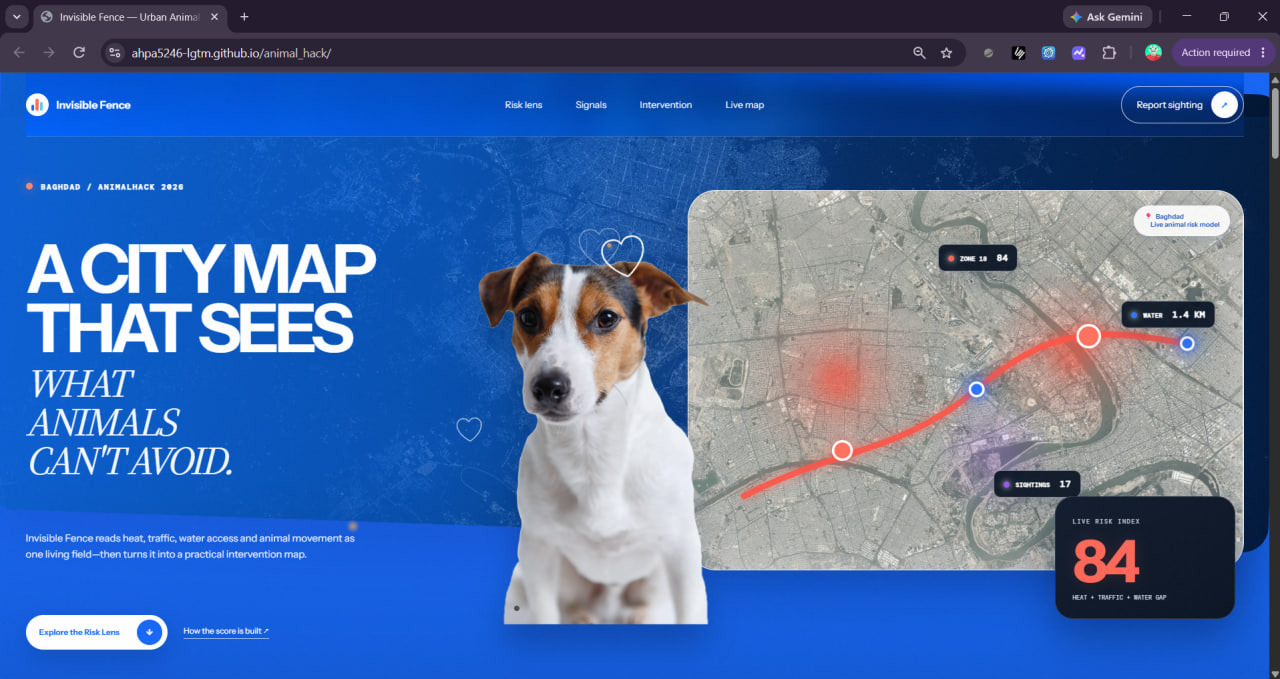
PawPath is an interactive animal-welfare platform centered around visual exploration and accessible information.
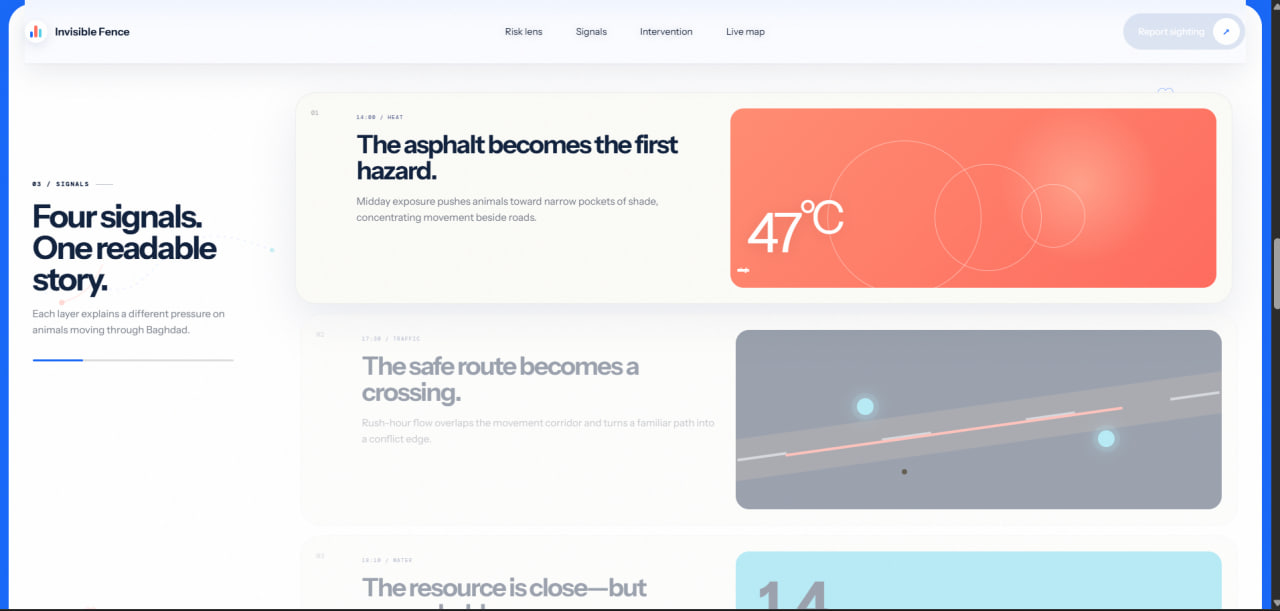
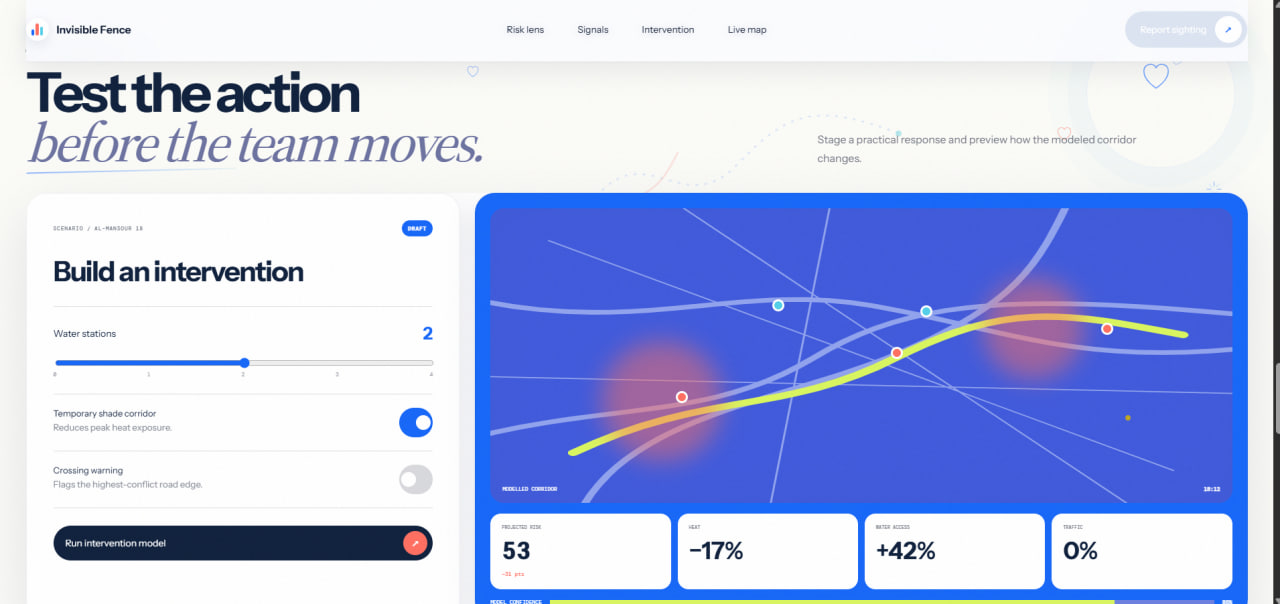
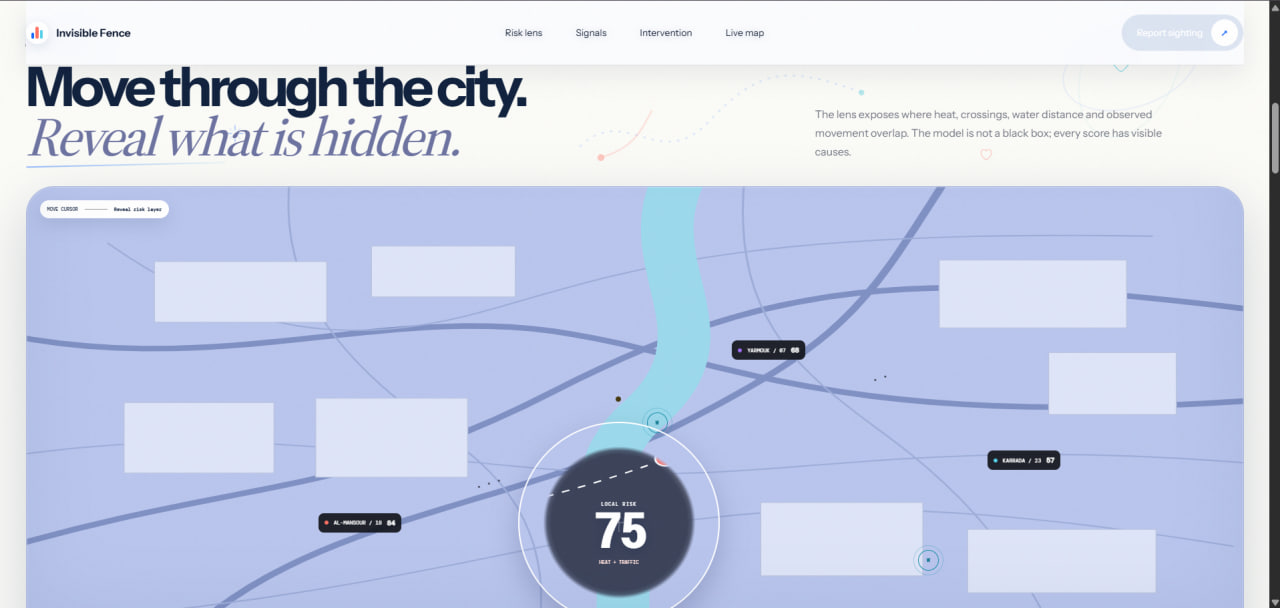
Instead of presenting users with dense tables or disconnected reports, PawPath organizes information through an intuitive interface and interactive map.
The platform is designed to help users:
- Explore animal-related reports geographically.
- Quickly understand where attention may be needed.
- View relevant information through a clear visual interface.
- Turn scattered data into actionable insights.
- Create a stronger connection between digital reporting and real-world animal welfare action.
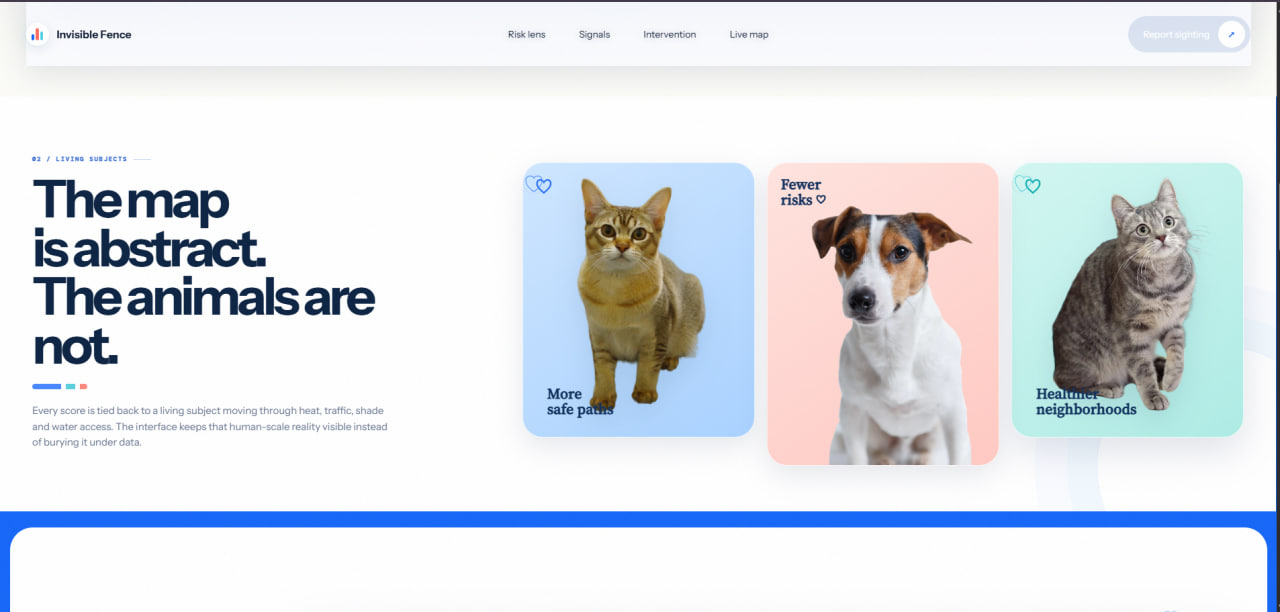
We also focused heavily on making the experience feel welcoming. Animal welfare is an emotional subject, so we deliberately avoided designing PawPath like a cold administrative dashboard. The interface uses friendly visual elements, illustrations, and subtle interactions while keeping the important information easy to find.
How we built it
We developed PawPath as a modern web application with a component-based architecture.
The frontend was built using React and TypeScript, with reusable components for the interface, animal-welfare information, and interactive experiences.
For the geographic experience, we integrated interactive mapping and geospatial visualization technologies so animal-related information can be understood spatially rather than only as text.
A major part of development was also dedicated to UI/UX. We iterated repeatedly on the visual design, improving typography, spacing, backgrounds, map presentation, responsiveness, and small visual details until the platform felt both functional and approachable.
The project was developed collaboratively using GitHub, allowing us to continuously test, refine, and improve the application.
Challenges we ran into
One of our biggest challenges was balancing serious information with an emotionally approachable design.
A traditional data dashboard made the project feel too clinical, while an overly playful interface could reduce the perceived importance of animal welfare issues. Finding the right balance required several design iterations.
Interactive mapping introduced another challenge. Geographic interfaces can quickly become visually overwhelming, especially when multiple data points and interface elements compete for attention. We had to rethink how information was presented so the map remained useful rather than becoming visual noise.
We also faced normal technical challenges during development, including dependency compatibility, responsive layouts, integrating different visualization components, and ensuring that improvements to one part of the interface did not negatively affect another.
What we learned
Building PawPath taught us that technology for social impact is not only about implementing features.
How information is presented can directly affect whether people understand it and whether they feel motivated to act.
We learned how to combine frontend development, geospatial visualization, responsive UI design, collaborative development, and iterative testing into one coherent product.
Most importantly, AnimalHack pushed us to think beyond simply building a website. We had to think about the journey from data → understanding → action.
What's next for PawPath
PawPath is currently a functional prototype, but our long-term vision is much larger.
Future versions could support real-time community reports, verified rescue organizations and shelters, report status tracking, richer geographic analysis, and tools that help connect people who discover animals in need with organizations capable of helping them.
Our goal is for PawPath to evolve from an animal-welfare visualization platform into an infrastructure that helps communities notice problems sooner, coordinate responses faster, and ultimately help more animals.
Built With
- css3
- data
- geospatial
- github
- html5
- interactive
- javascript
- maps
- react
- typescript
- vite


Log in or sign up for Devpost to join the conversation.