-
-
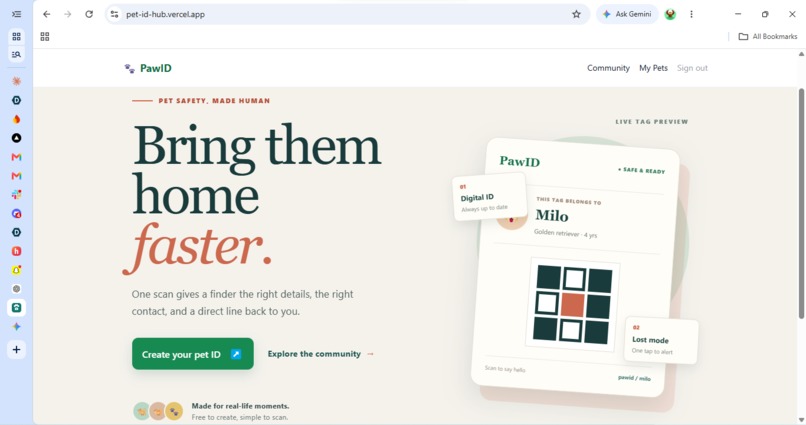
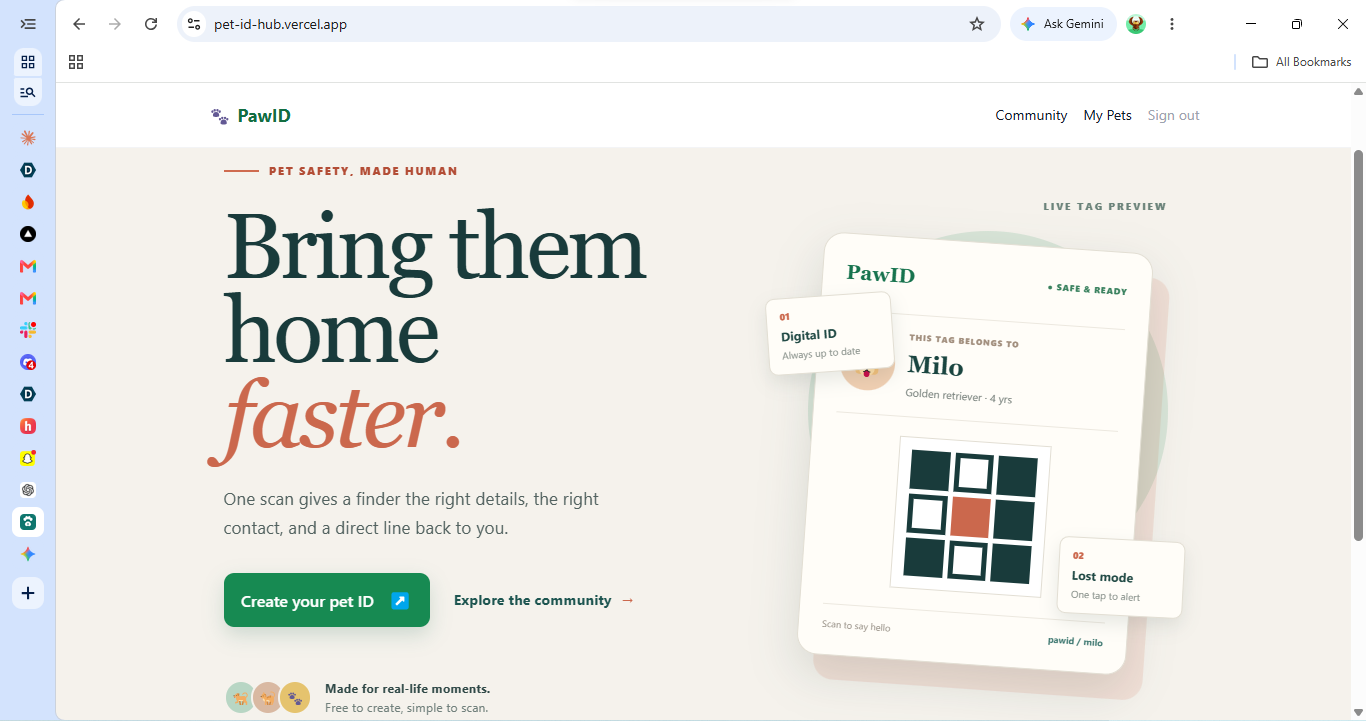
public page
-
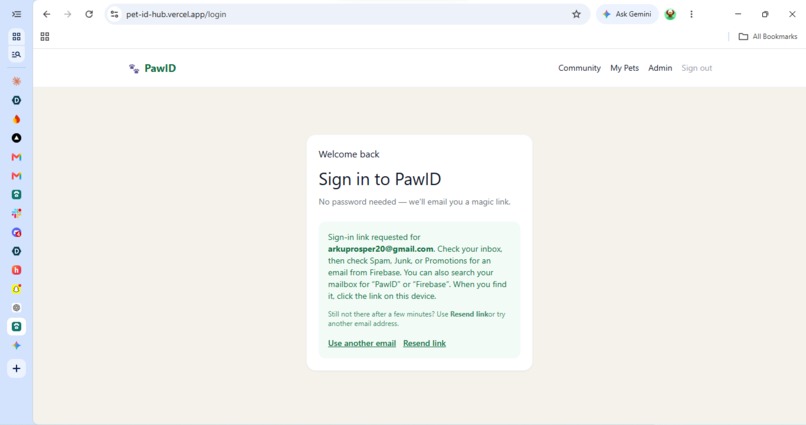
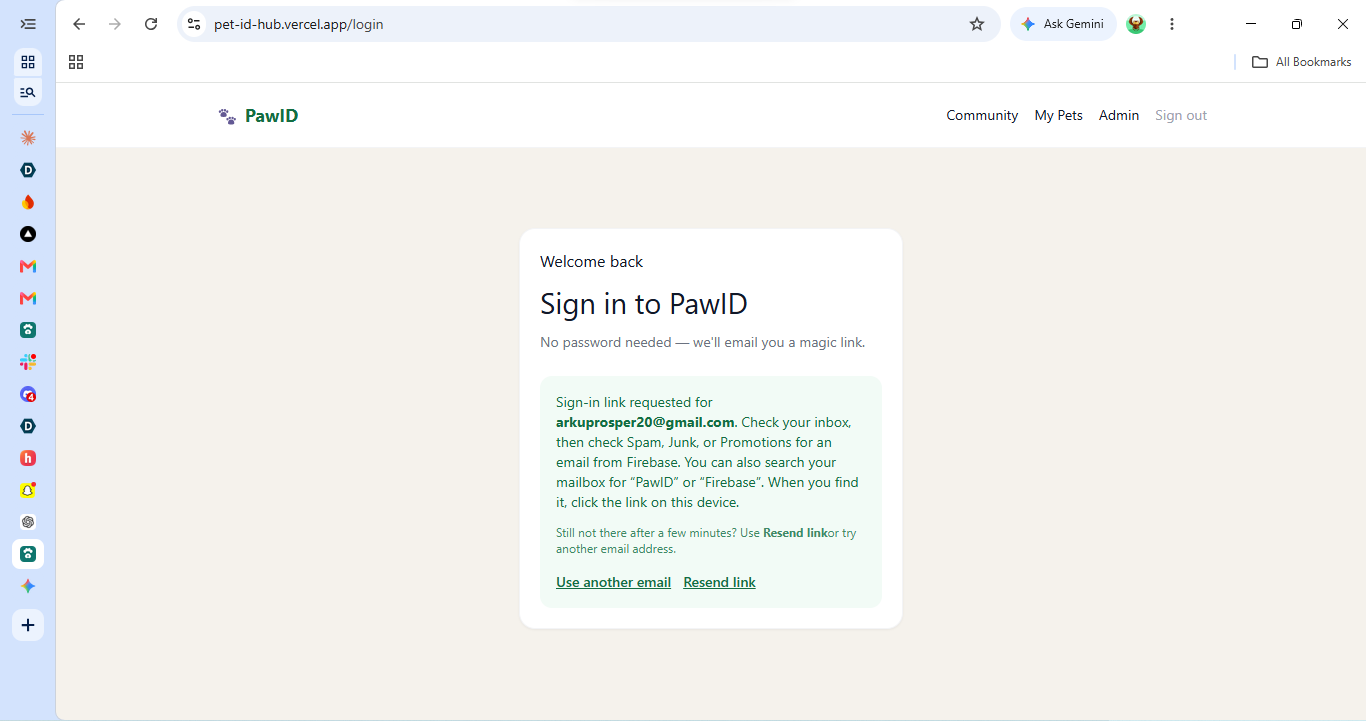
sign up page
-
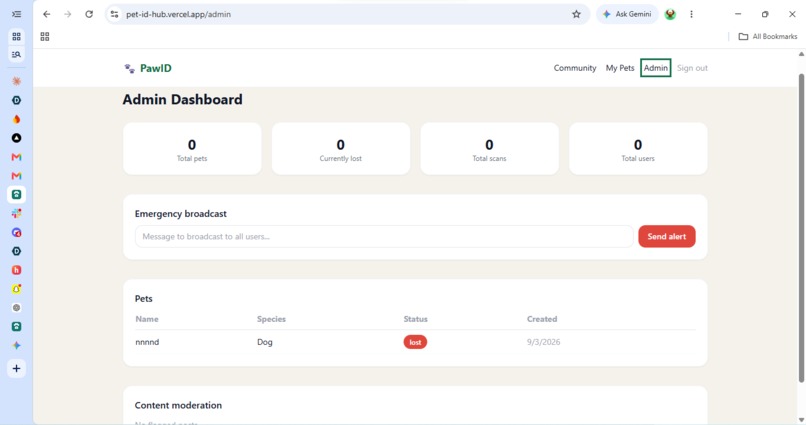
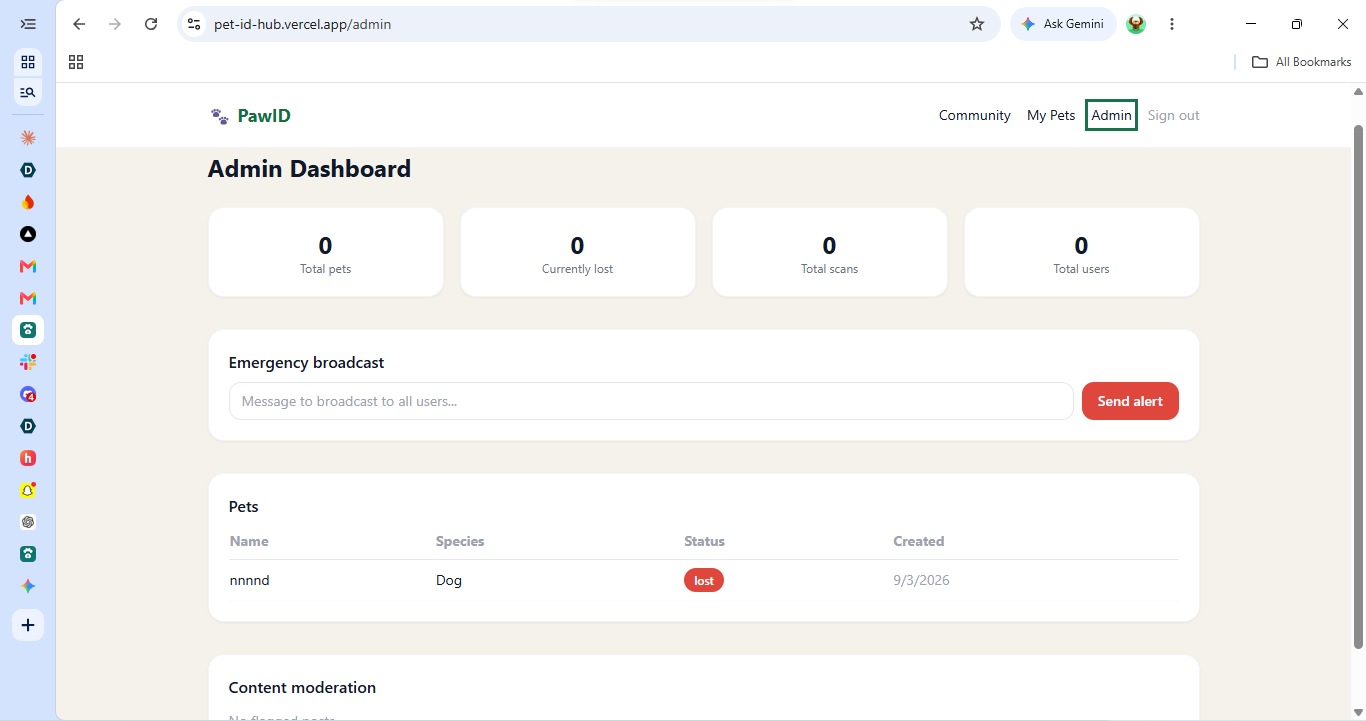
admin page
-
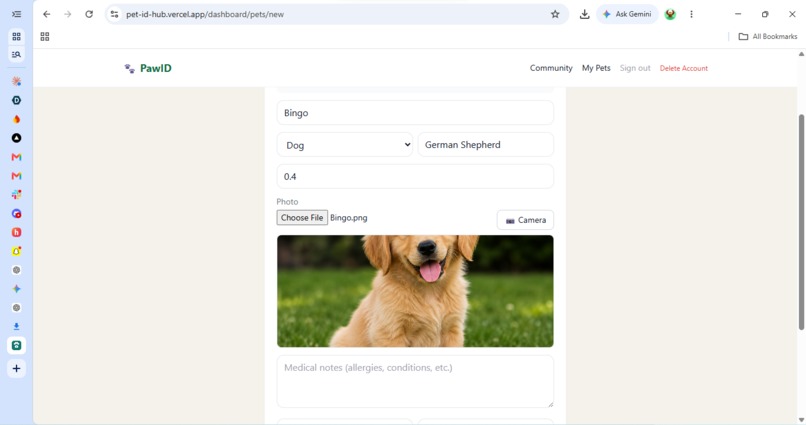
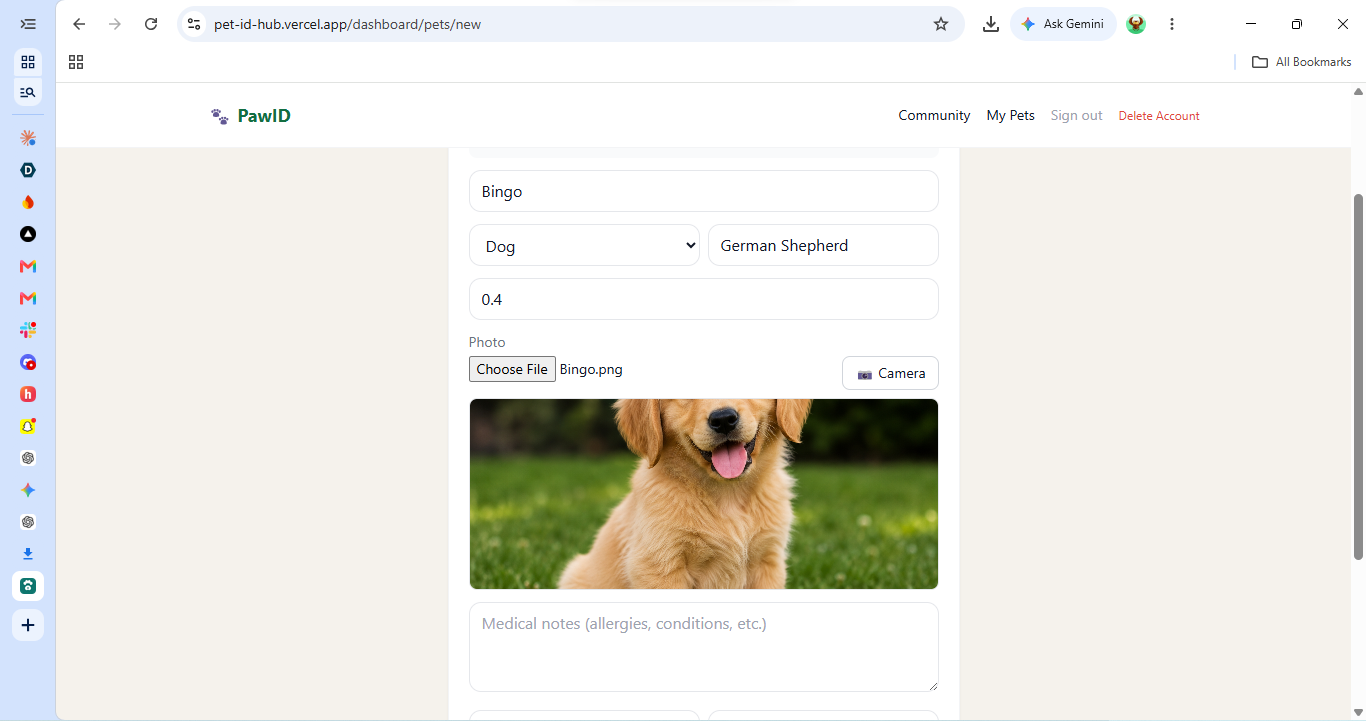
Adding a pet
-
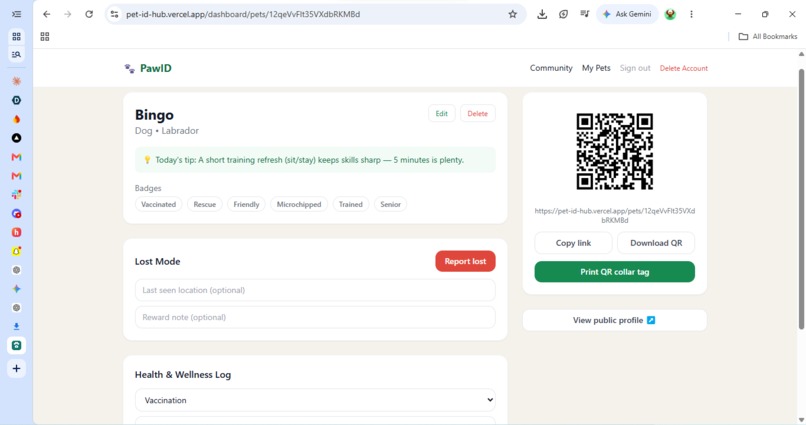
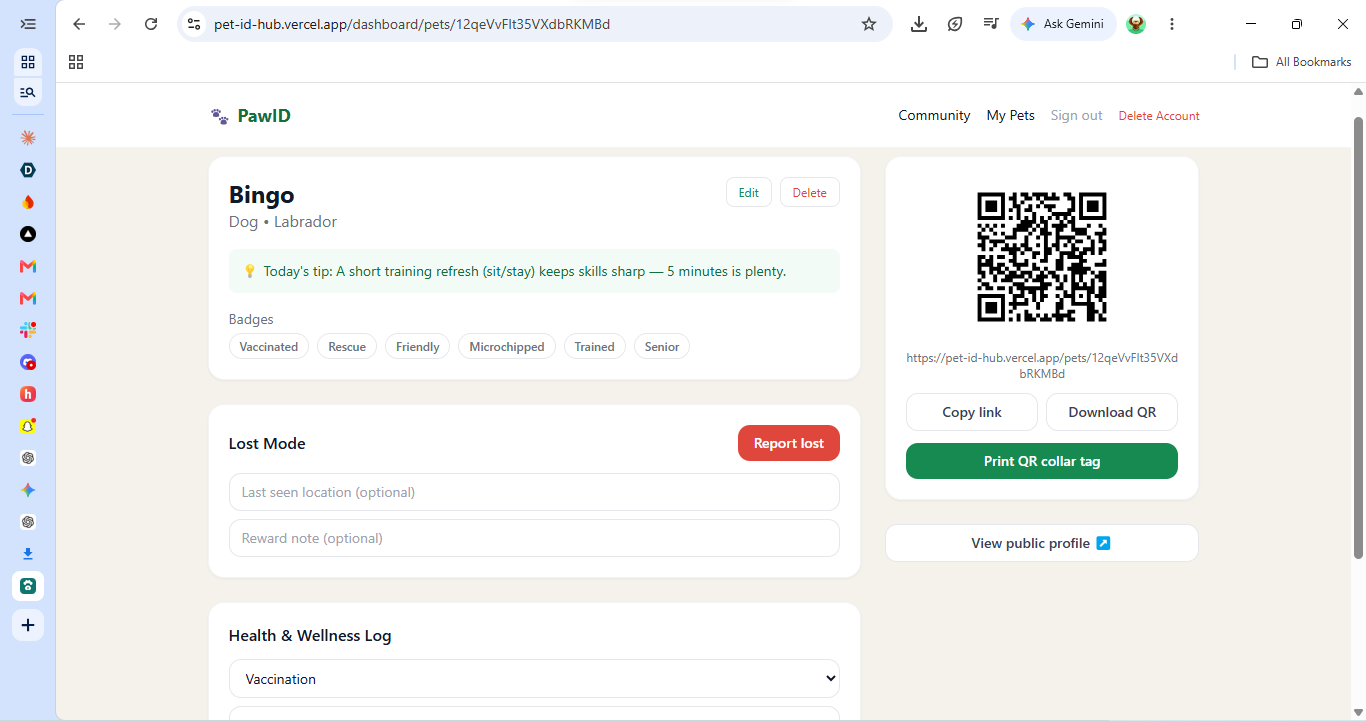
pet details
-
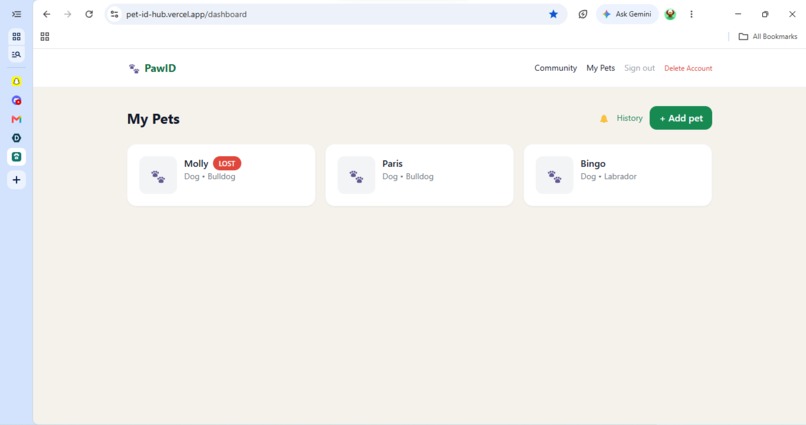
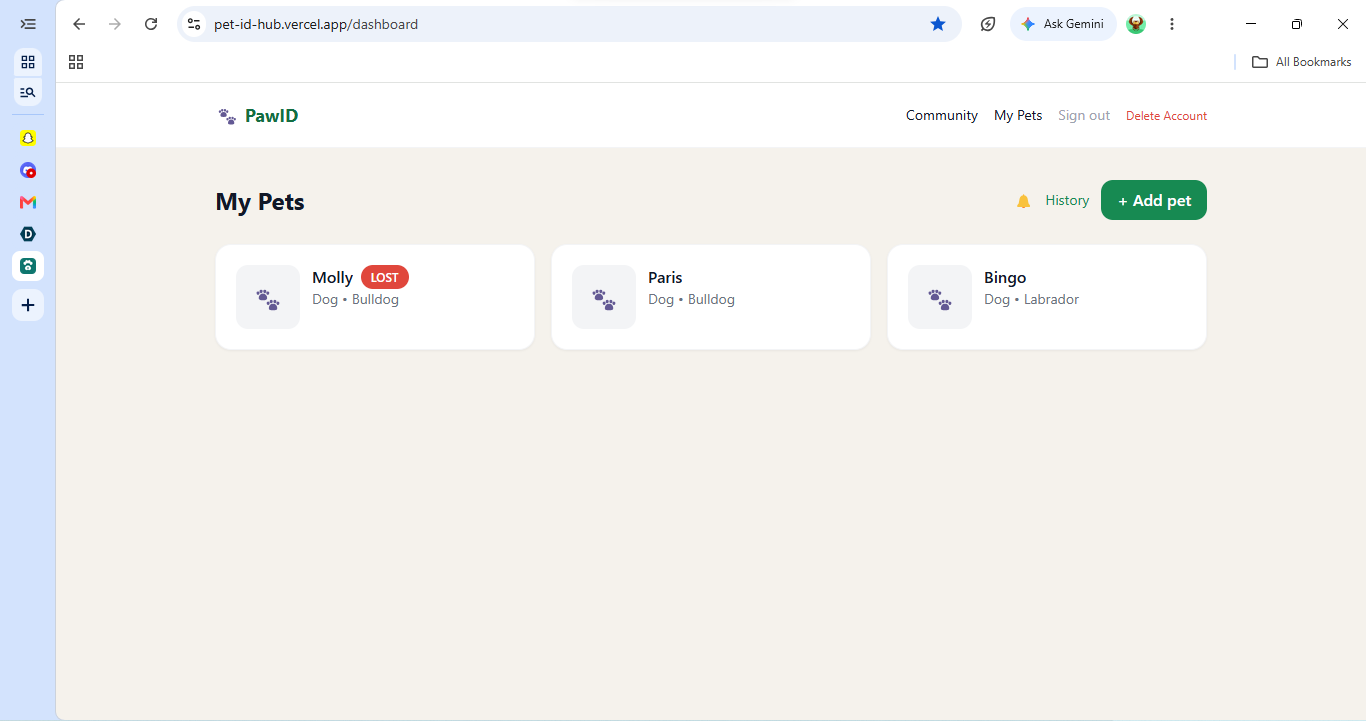
Pet collection
Inspiration
Two years ago our own pet went missing and was never found. PawID is the fast, obvious way we wish had existed then — one QR code standing between "lost" and "home."
What it does
Turns a pet's collar into a scannable ID. Owners create a free profile and print a QR tag; flipping on Lost Mode shows finders urgent contact info instantly and alerts the local community — no app download needed.
How we built it
Next.js + Tailwind, Firebase (Auth, Firestore, Storage), deployed on Vercel. No AI, no paid APIs — care tips are rule-based, and "visual verification" is a manual photo-comparison grid instead of an AI match.
Challenges we ran into
Adding pet photo took much space than my free ties offered so that had to be removed Water resistant collor to hold the QR codes are not in the markets yet and that becomes a problem where user keeps the tag on the pet No shelters or vert support to keep pets untill owners arrive to take them because finder doesn’t mean keeper
Accomplishments that we're proud of
The printable QR collar tag — the actual physical object that could put an ID in front of the next stranger who finds a missing pet.
What we learned
How differently you have to model data once you move from relational to document-based, and how much smoother a live demo runs when you choose a reliable manual flow over an AI feature that might not perform on stage.
What's next for PawID
lightweight shelter/vet partnerships. Designing of new pet collors to contain the tags
Built With
- date-fns
- firebase
- next.js
- qrcode.react
- tailwind
- typescript
- vercel

Log in or sign up for Devpost to join the conversation.