Inspiration
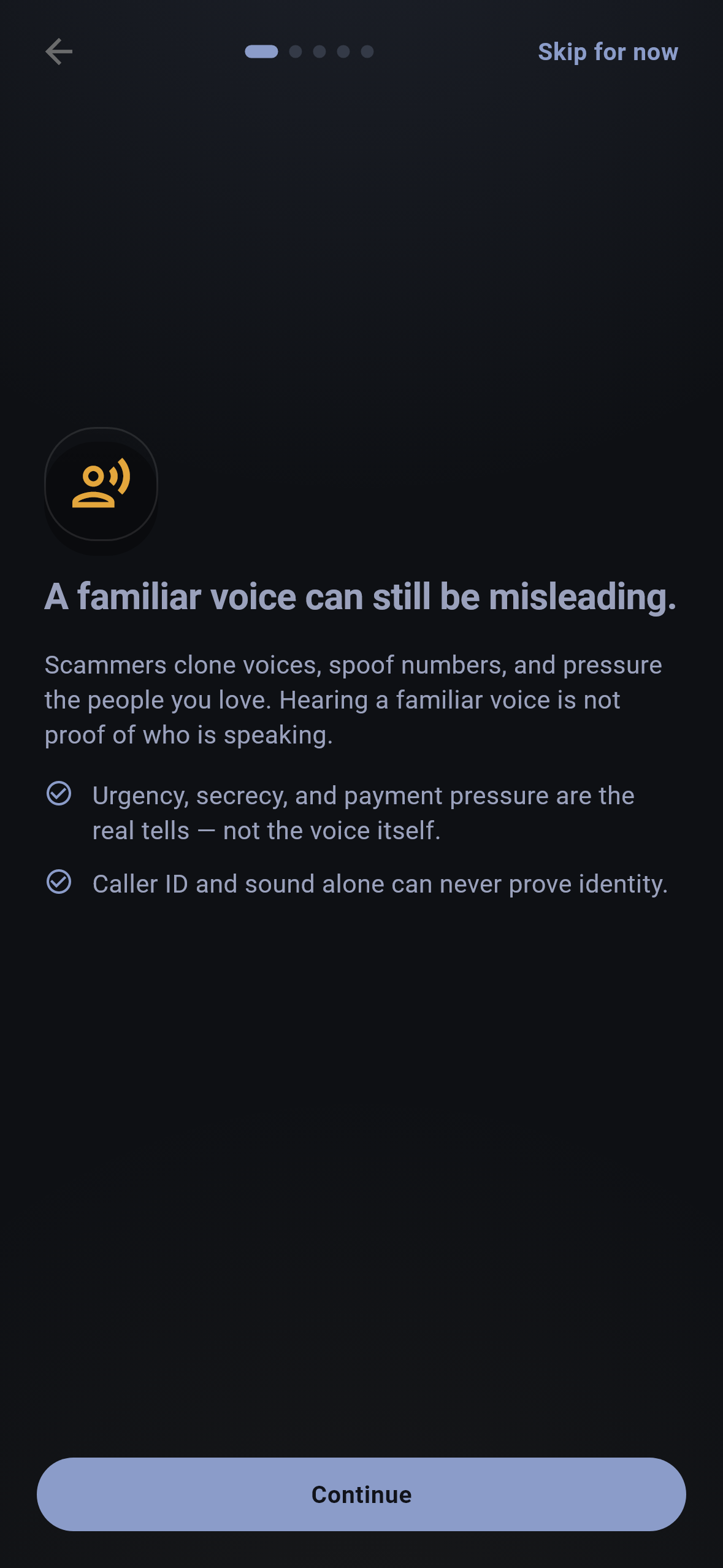
A parent answers the phone. The voice on the other end sounds exactly like their child — panicked, asking for an emergency transfer.
The problem is no longer just identifying a synthetic voice. A scam can use a real voice, a cloned voice, or social pressure alone. PauseSignal was built for the few seconds between hearing and acting: create a pause, explain the risk, and guide the user toward verification before money moves.
What it does
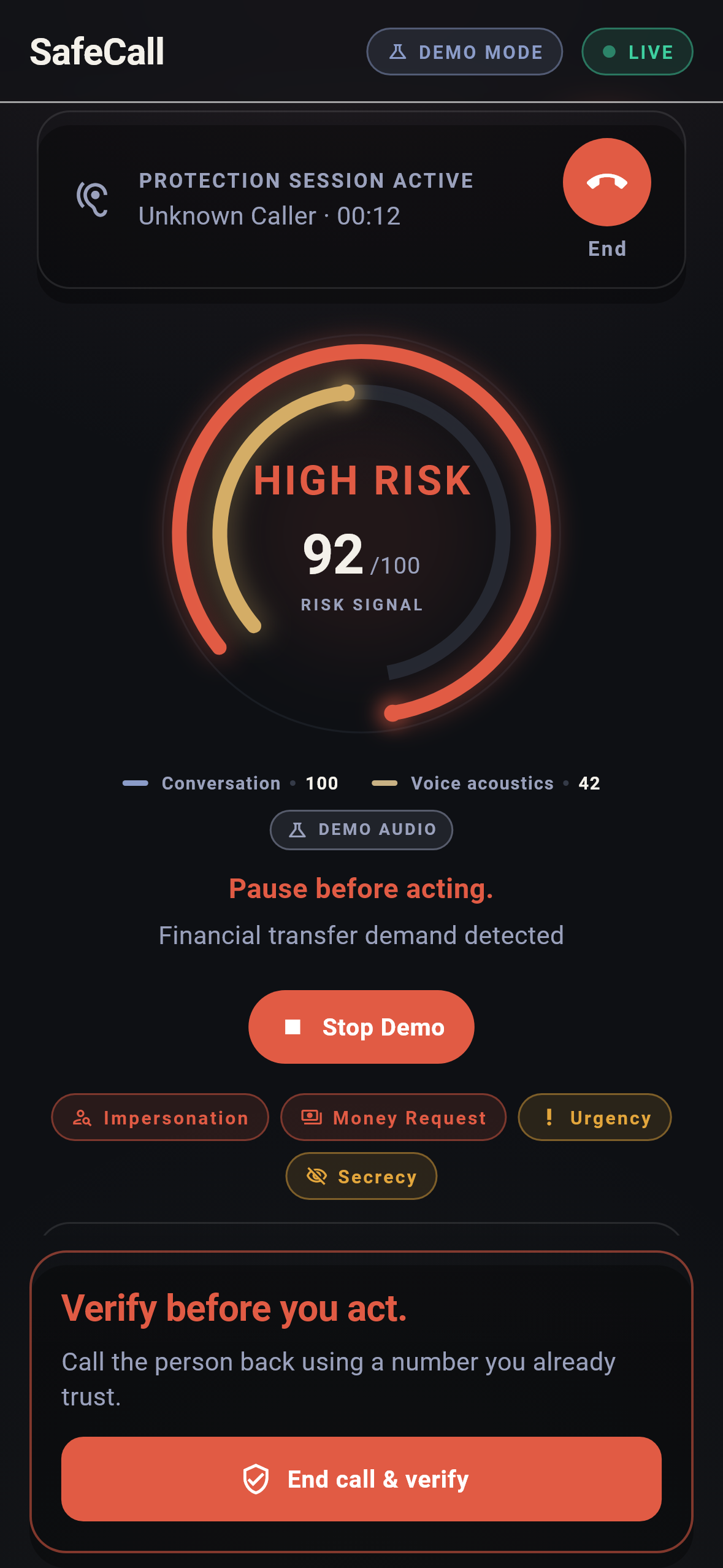
PauseSignal is an AI-assisted voice-scam defense system that combines two independent signals in real time:
- Acoustic forensics analyze real 16 kHz PCM audio using spectral flux, spectral rolloff, and zero-crossing-rate indicators.
- Semantic threat analysis detects urgency, financial demands, secrecy pressure, and impersonation cues in English and Egyptian Arabic.
The two signals are fused into an understandable Threat Score (0–100).
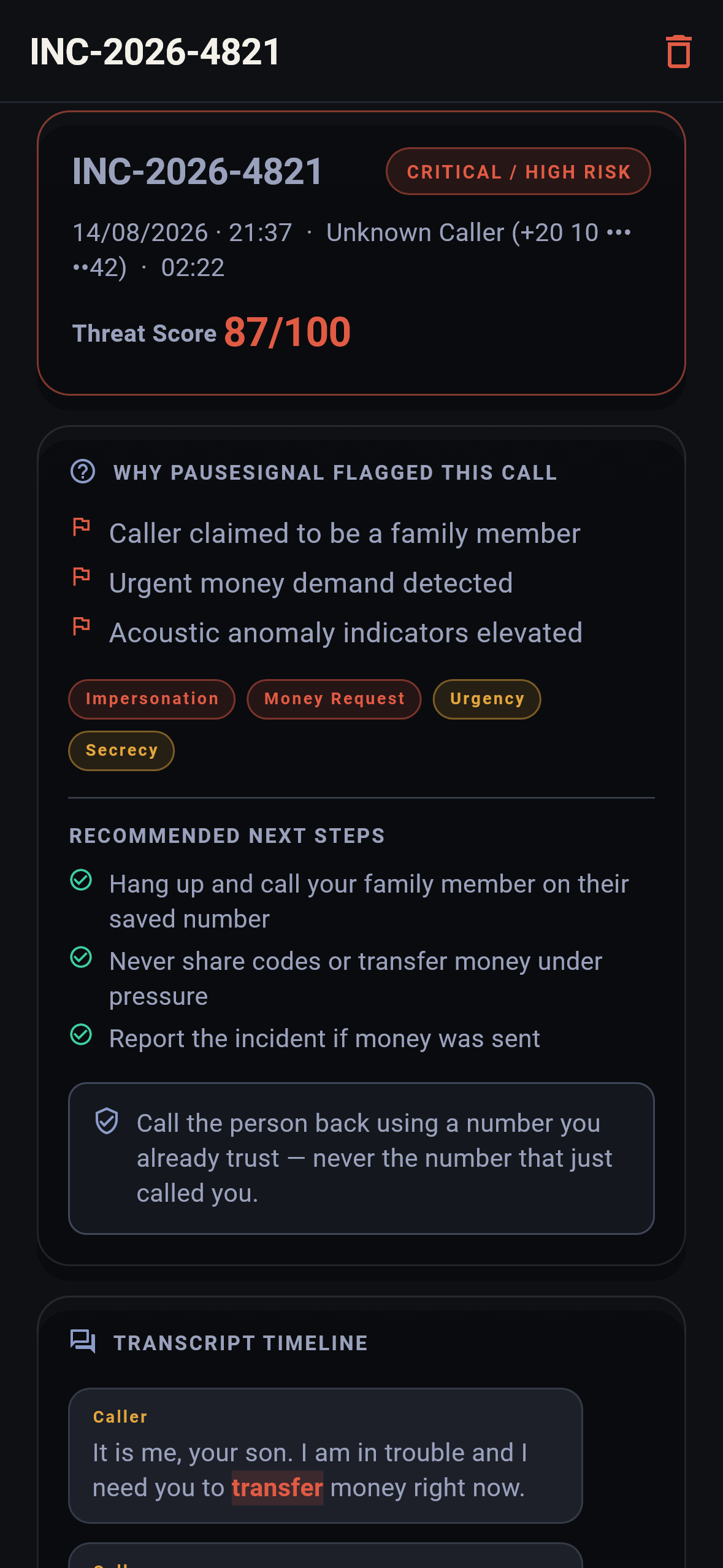
When risk becomes high, PauseSignal does more than show a warning. It explains why the call was flagged and provides concrete verification steps.
The product also includes:
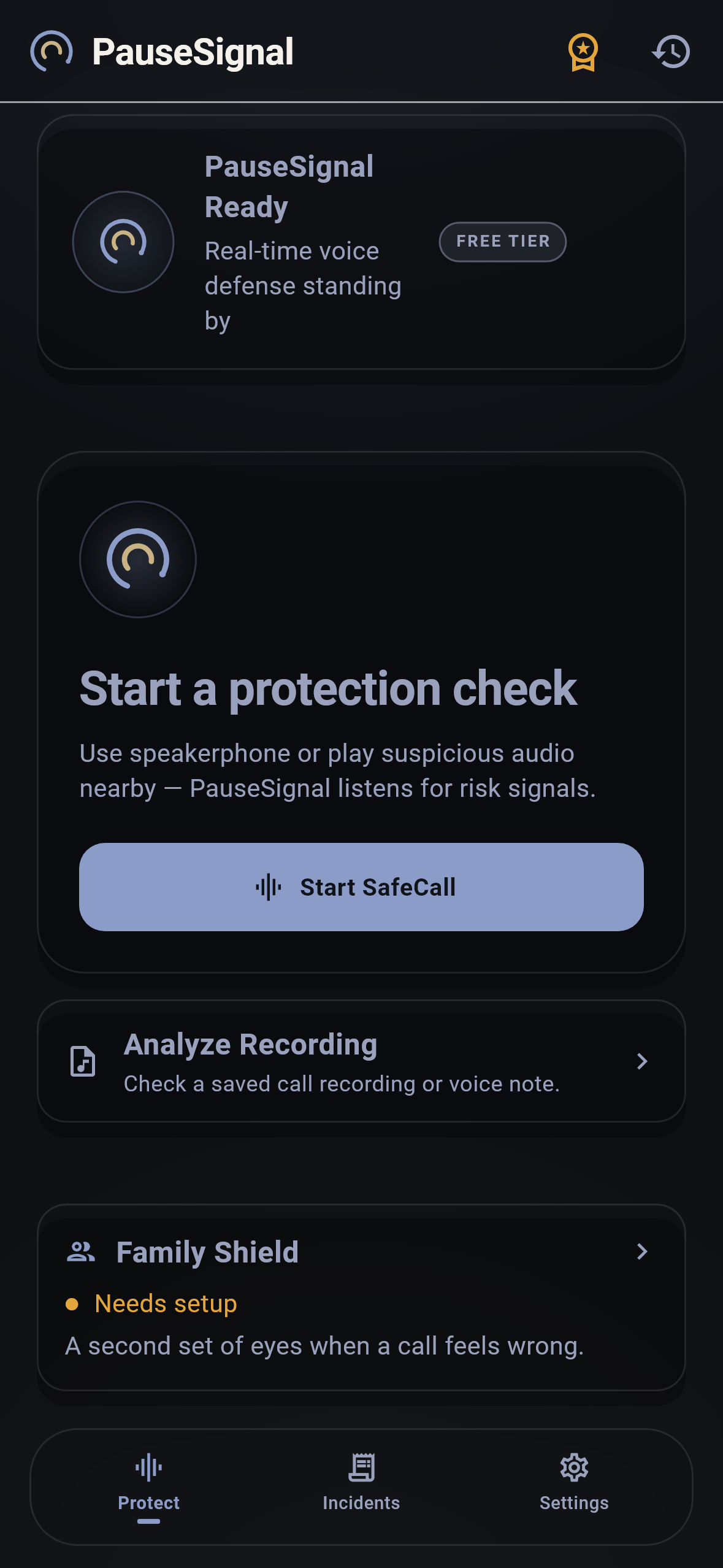
- SafeCall for live microphone sessions and a clearly labeled Demo Attack mode.
- Incident Reports with SHA-256 audio provenance, flagged phrases, evidence, and verification guidance.
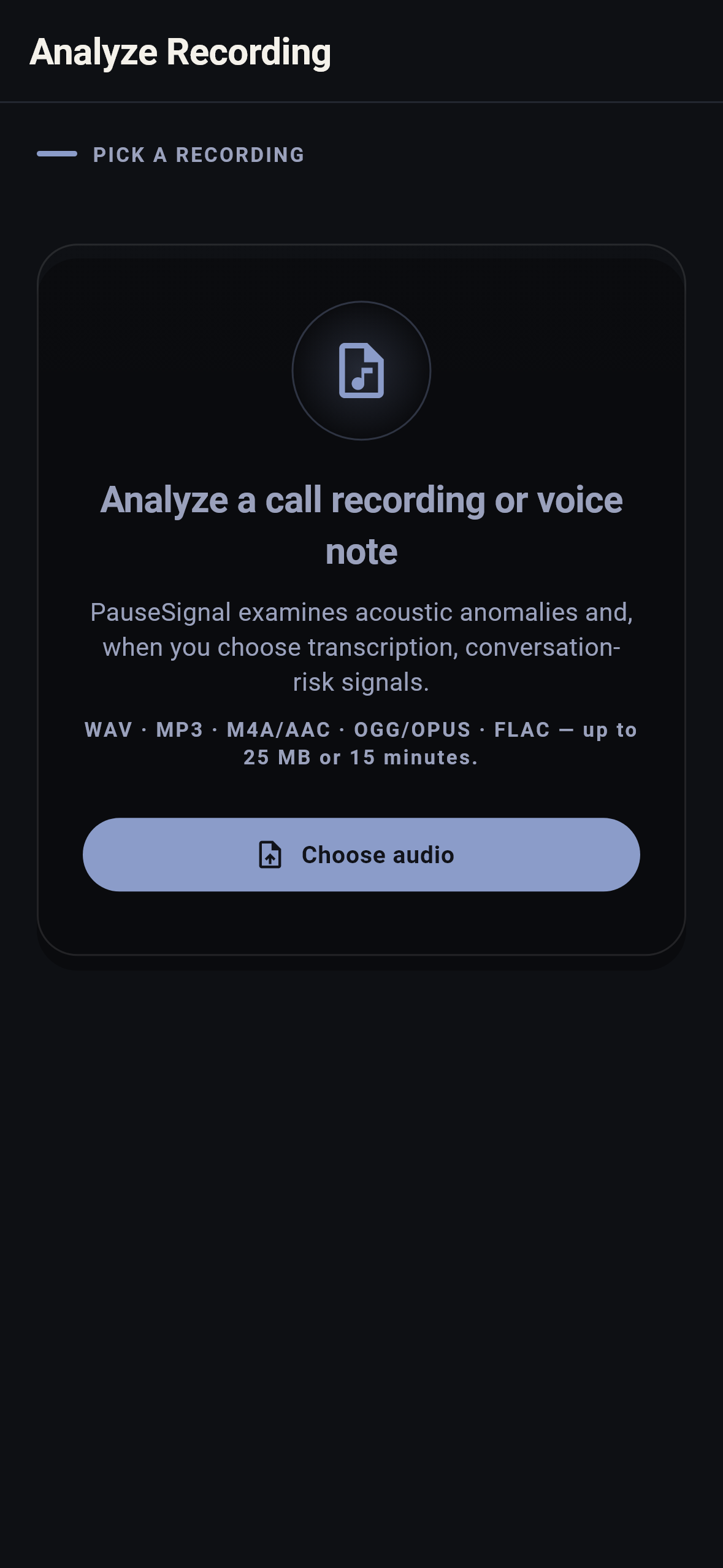
- Analyze Recording for local acoustic analysis of saved calls and voice notes.
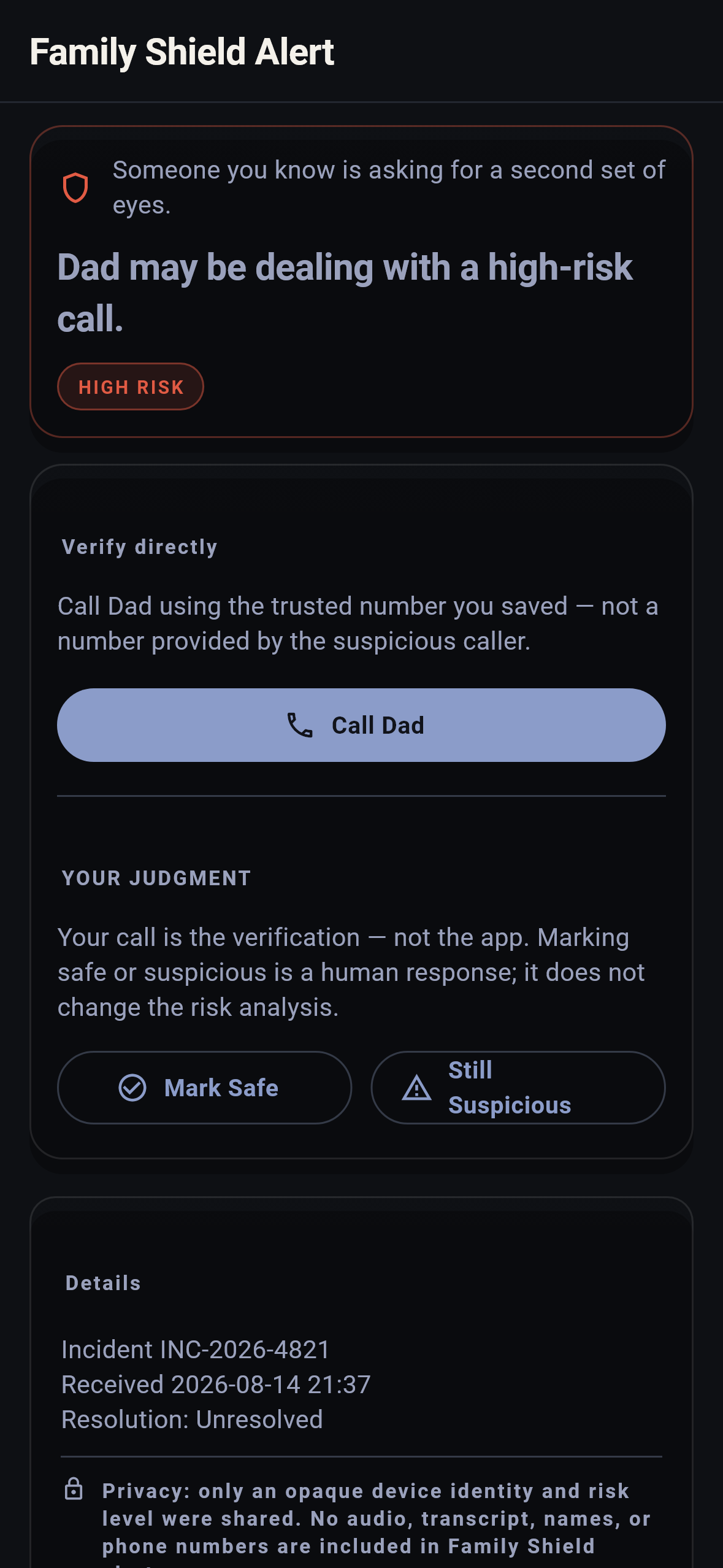
- Family Shield, a privacy-minimal trusted-circle alert flow that never sends raw audio, transcripts, or phone numbers in its alert payload.
- Full localization across English, Arabic with true RTL, Spanish, and French.
How we built it
PauseSignal is built with Flutter 3.41 and Dart 3.11 using a feature/domain/data architecture and flutter_bloc.
Live PCM and generated Demo Attack audio both pass through the same IAudioStreamSource analysis pipeline, so the demonstration exercises the real downstream scoring system rather than a separate fake UI path.
The acoustic engine performs real DSP over PCM audio. The semantic engine uses a deterministic bilingual rule system locally, with optional relay-backed cloud integrations.
Provider secrets are kept out of the mobile client through a minimal Cloudflare Worker relay.
The project currently has:
- 427 passing Flutter tests
- 74 passing relay tests
- GitHub Actions CI
- Automated web deployment
- Android build validation
- 581 localized message keys across each supported locale
RevenueCat integration
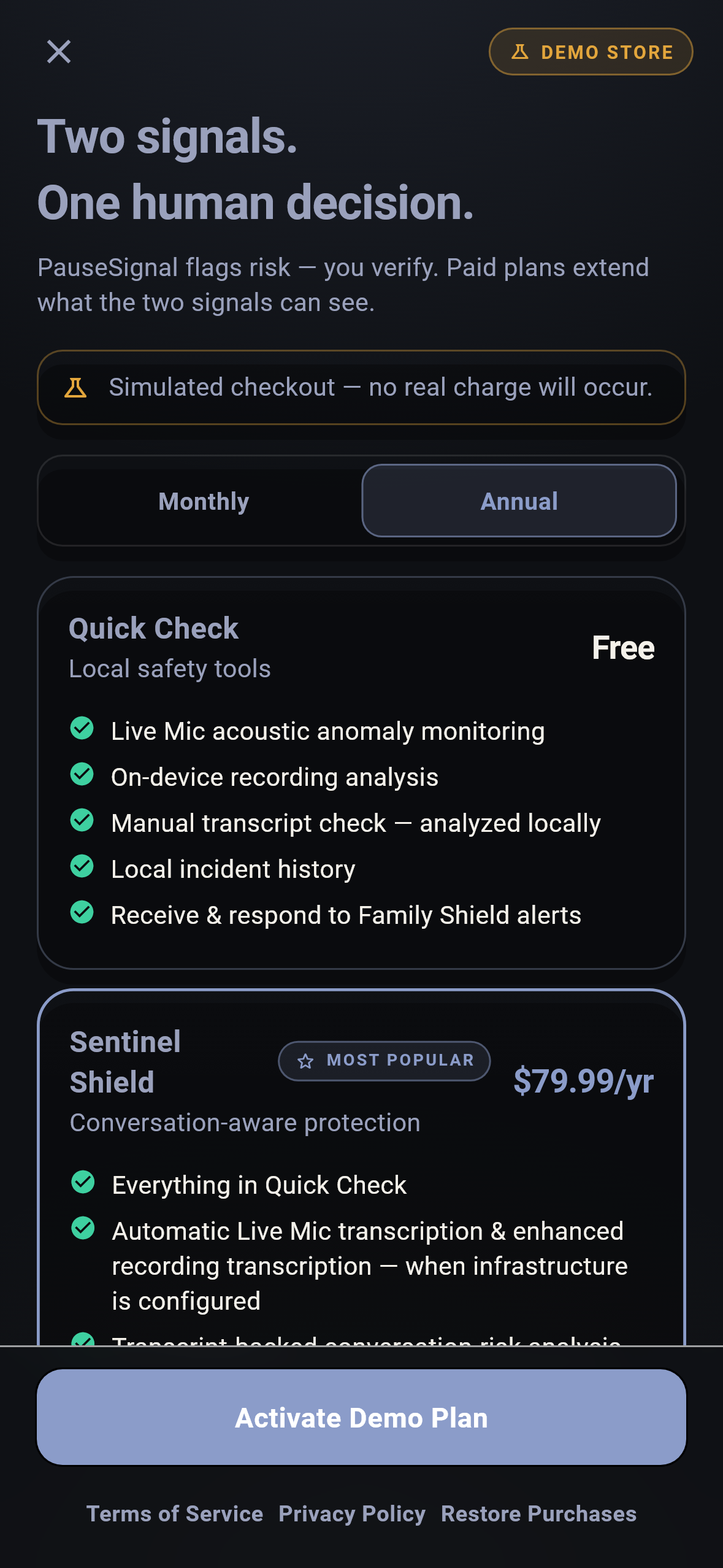
Subscriptions are implemented using the real purchases_flutter SDK with RevenueCat CustomerInfo as the sole entitlement authority.
PauseSignal uses two paid entitlements:
sentinelfamily_vault
For Shipaton judging, we validated the integration against RevenueCat's hosted Test Store using the real SDK.
The live Offering observed through the SDK contained:
$rc_monthly→sentinel_monthly$rc_annual→sentinel_annual$rc_two_month→family_vault_monthly- custom
Annual→family_vault_annual
We completed genuine RevenueCat Test Store sandbox purchases, observed the expected active CustomerInfo entitlements, verified entitlement-driven UI updates, tested Family Vault precedence, verified Restore Purchases, and confirmed that cancelling a purchase grants nothing.
The purchase shown in the demo video is a RevenueCat Test Store sandbox transaction — no real money is charged.
Challenges
One of the hardest parts was keeping the product honest when external integrations were unavailable.
PauseSignal treats degraded capability as a first-class state instead of pretending everything is live. Demo, live, partial-analysis, Test Store, and unavailable states are explicitly labeled.
Another challenge was protecting provider credentials in a mobile architecture. Permanent provider keys stay server-side behind the relay, while release builds reject unsafe direct-key paths.
Egyptian Arabic scam semantics were also implemented as a first-class detection lexicon rather than simply translating the English rules.
Accomplishments that we're proud of
We built a complete consumer-facing safety product rather than a single detection demo.
PauseSignal combines real audio processing, bilingual conversation-risk analysis, evidence-backed incident reports, verification guidance, Family Shield, accessibility and localization work, and a real RevenueCat entitlement architecture.
The repository is fully public, MIT licensed, tested, documented, and continuously validated by CI.
What we learned
The biggest lesson was that safety software is as much about truth management as detection.
A risk tool that overstates its capabilities can be more dangerous than one that clearly explains its limits.
We also learned that deterministic bilingual semantic analysis can provide surprisingly useful scam-risk evidence before requiring a large language model.
What's next
Next steps include physical-device QA, iOS validation, calibrated acoustic models, and live validation of the optional AssemblyAI, Groq, and OneSignal relay-backed paths.
The longer-term goal is a production-ready assistant that helps people recognize manipulation, pause before acting, and verify suspicious requests through a trusted independent channel.
Disclosures
- Demo Attack is simulated using generated audio and scripted dialogue, and is visibly labeled as a demo.
- The subscription purchase shown in the video uses RevenueCat Test Store through the real SDK. It is a genuine sandbox transaction, not a real-money charge.
- AssemblyAI, Groq, and OneSignal relay paths are implemented but are not presented as live-verified in the submission video.
- The demo video was captured on an Android emulator.


Log in or sign up for Devpost to join the conversation.