Inspiration
Children today use the internet for learning, gaming, and communication, but knowing how to use digital platforms does not always mean knowing how to stay safe online. Cyberbullying, phishing links, online scams, privacy risks, and manipulative interactions can affect children who are not prepared to recognise these situations.
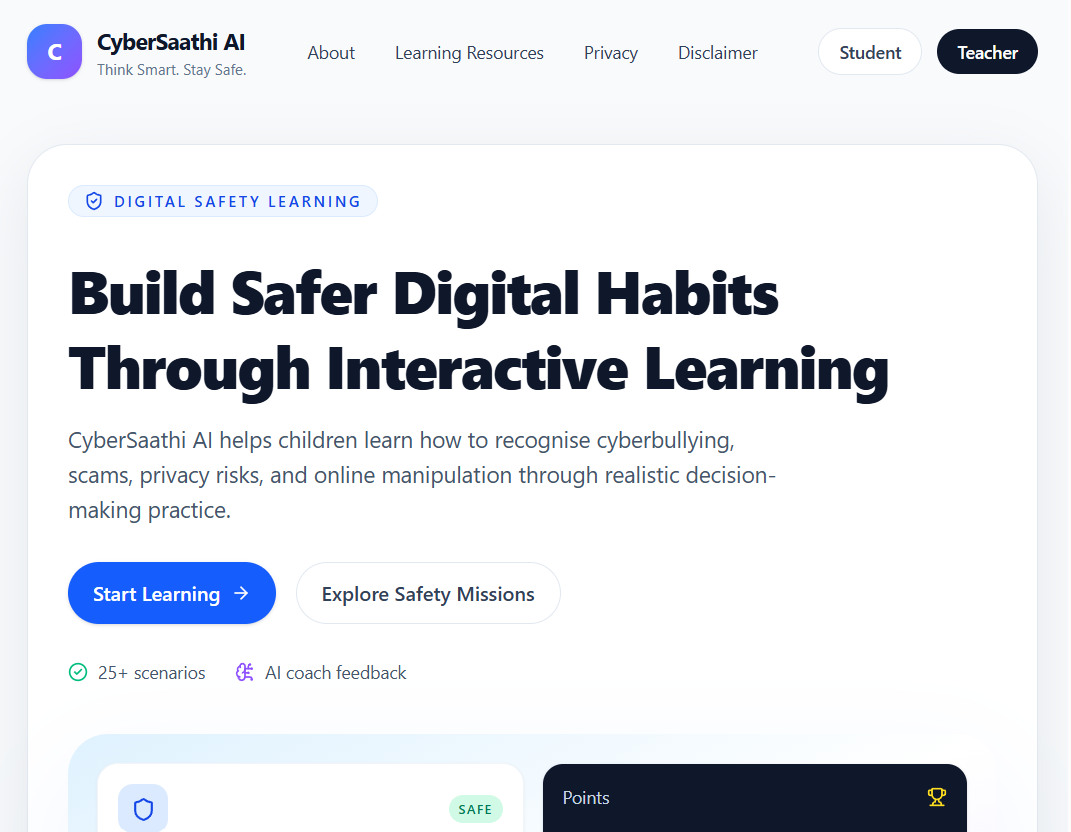
We wanted to create a platform that helps children learn how to respond to online risks through practice rather than simply reading safety rules. This inspired us to build CyberSaathi AI, an interactive digital safety learning platform that combines artificial intelligence, educational scenarios, and personalised feedback to encourage safer online behaviour.
What it does
CyberSaathi AI helps children and teenagers develop practical digital safety skills through interactive missions and quizzes.
Its key features include:
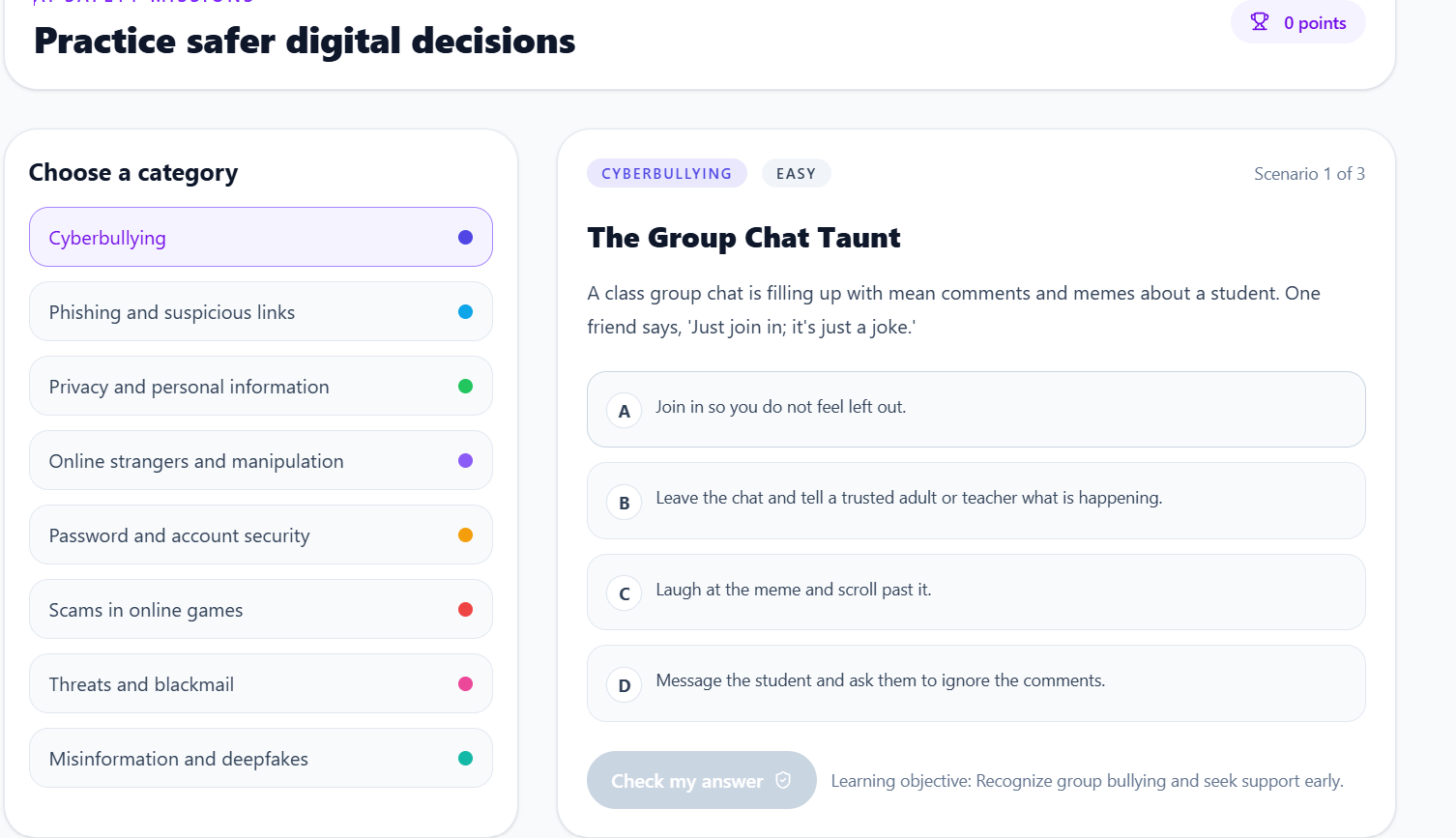
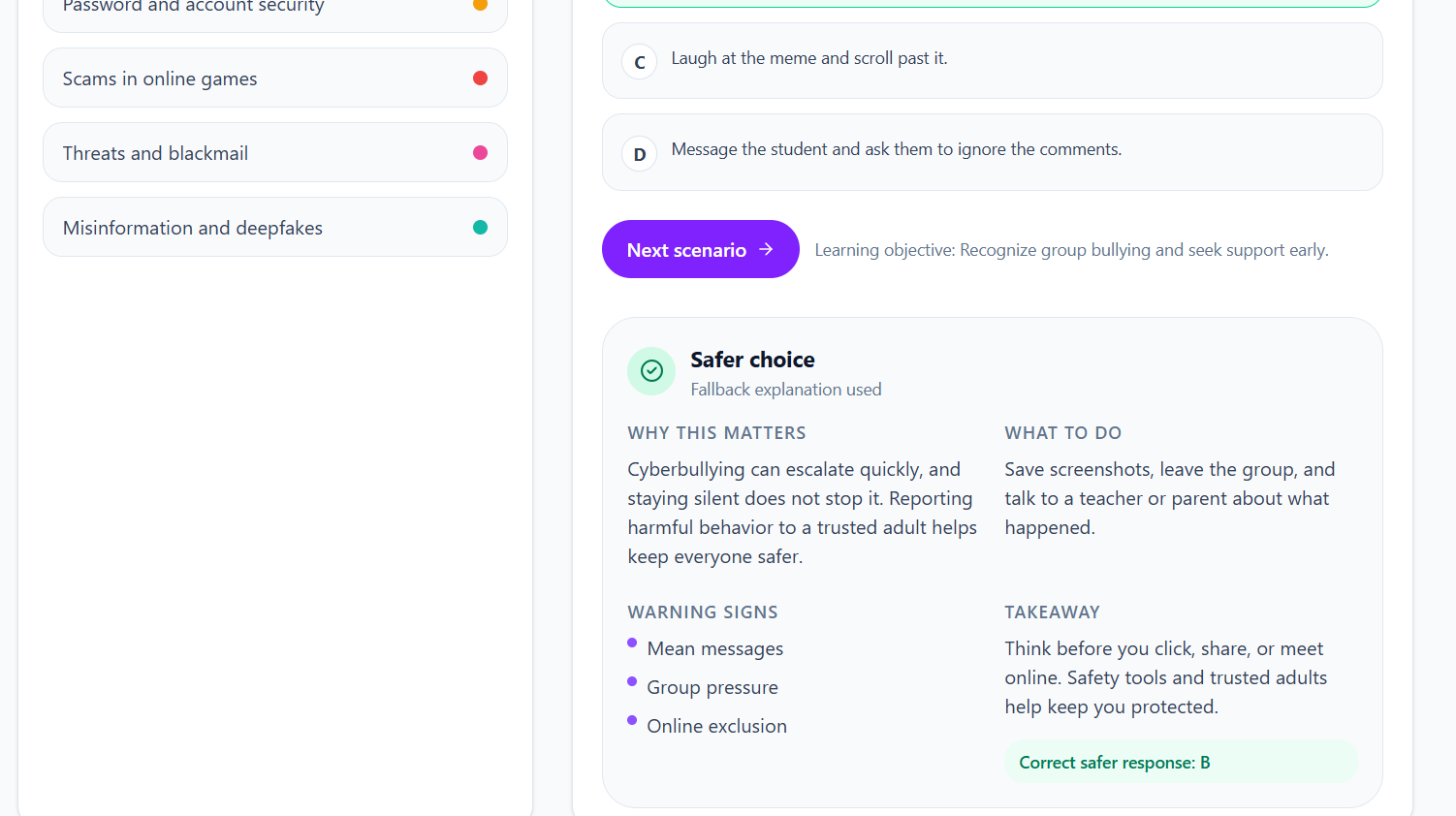
- AI Safety Missions: Fictional online scenarios covering cyberbullying, phishing, privacy, online manipulation, account security, and suspicious gaming rewards.
- AI Decision Coach: Provides simple explanations of why a selected response may be safe or risky.
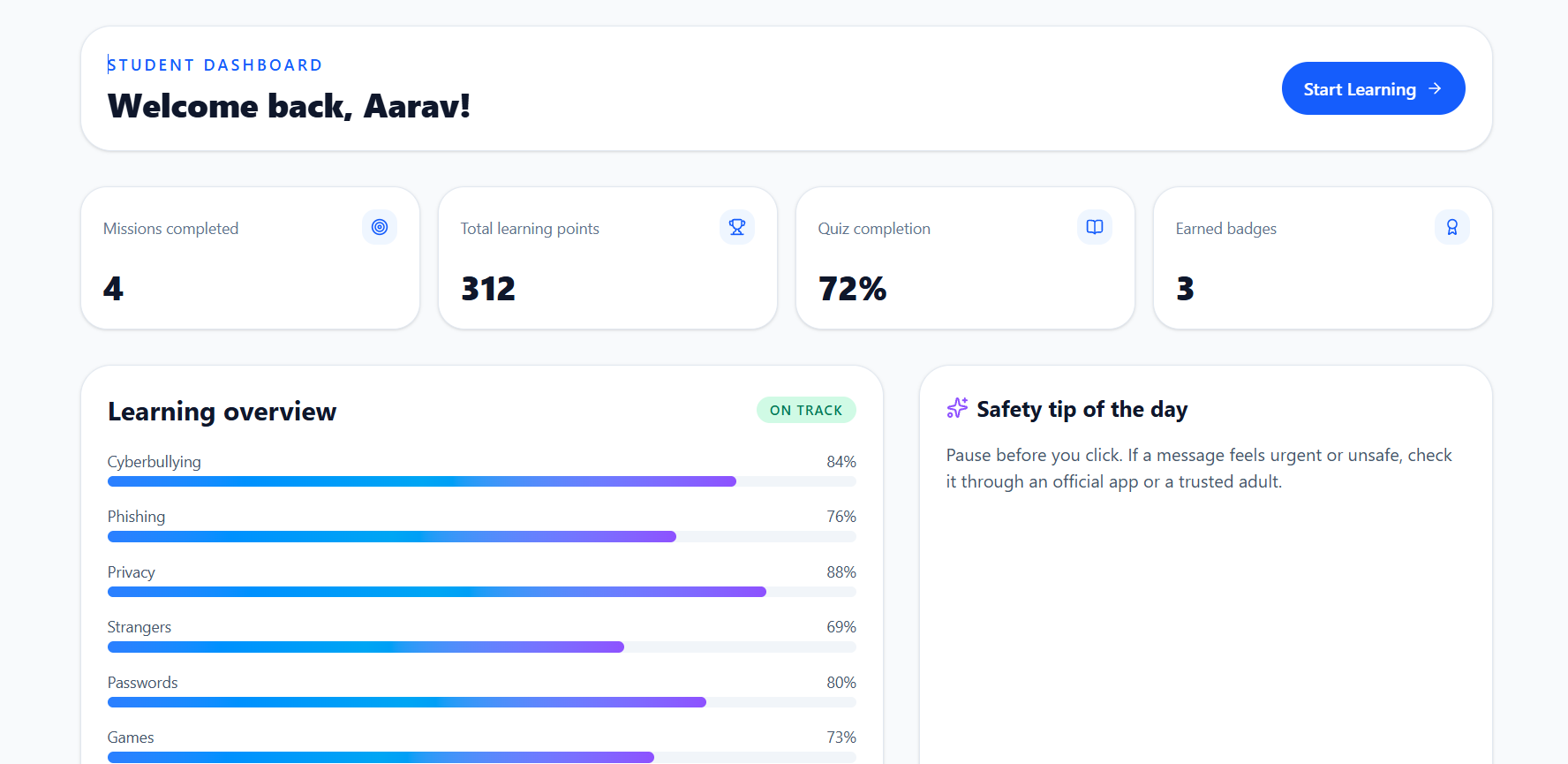
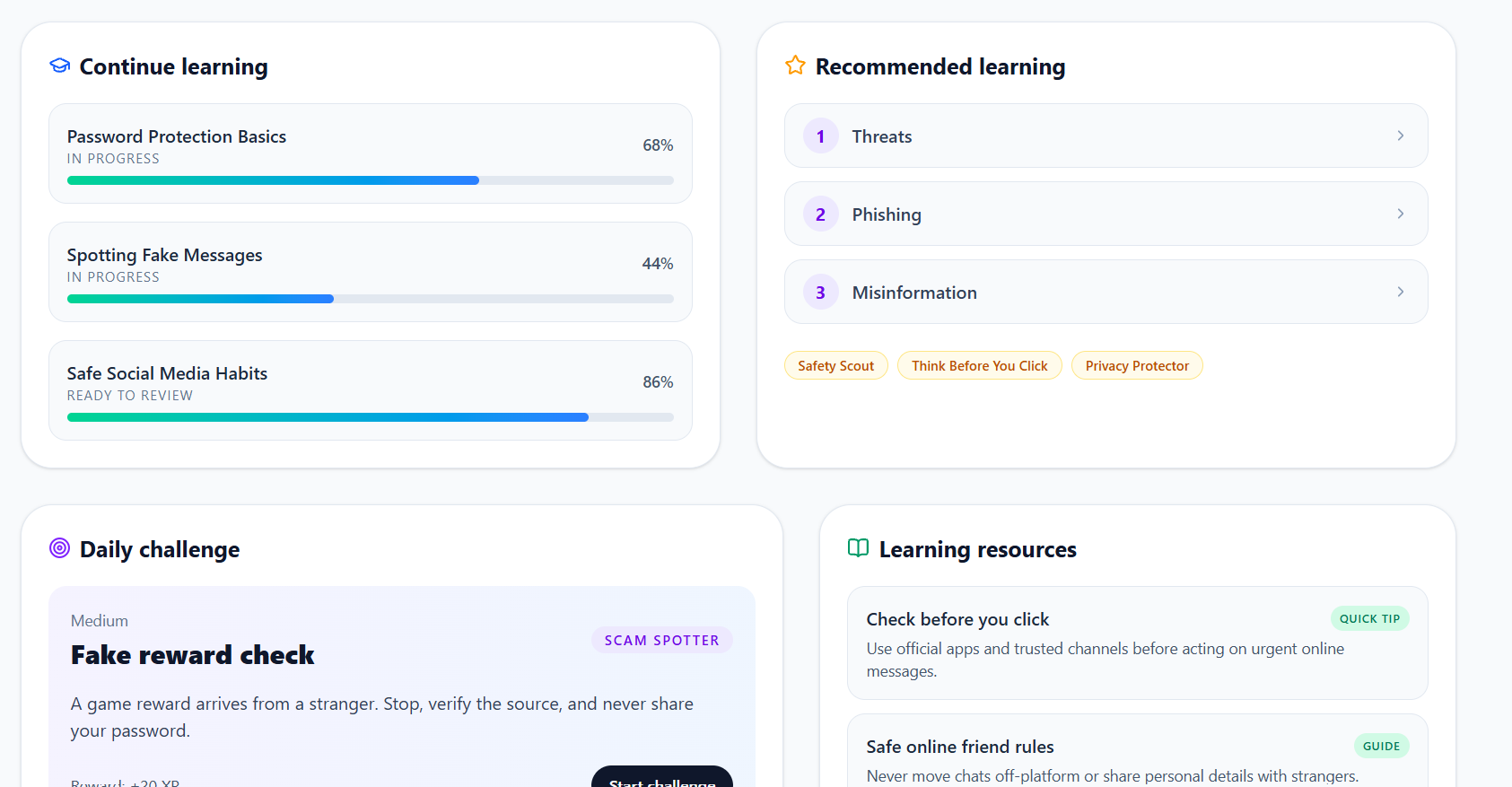
- Gamified Learning: Uses points, badges, quizzes, and progress tracking to encourage continued learning.
- Tamil and English Support: Makes digital safety education accessible to students who prefer either language.
- Teacher Dashboard: Presents class-level learning progress and identifies topics that may need additional attention.
- Digital Safety Resource Centre: Offers practical guidance on recognising online risks, protecting personal information, and asking for help.
The platform focuses on prevention and education, helping children practise safer decisions in a controlled learning environment.
How we built it
We designed CyberSaathi AI as a full-stack web application using React.js, Vite, TypeScript, and Tailwind CSS for the frontend. Python and FastAPI handle backend requests, scenario evaluation, learning progress, and AI integration.
We designed a scenario-based learning engine in which each fictional situation has predefined answer options and a reviewed answer key. The application evaluates student responses using deterministic logic and uses an AI model to provide contextual, age-appropriate explanations when available.
The learning system connects scenario completion with points, badges, quizzes, and progress tracking. We also designed a teacher dashboard to summarise learning outcomes at the class level and help educators identify topics that students may find difficult.
Privacy-conscious design is an important part of the project. The platform minimises personal-data collection and uses fictional educational scenarios rather than requiring children to submit private conversations.
Challenges we ran into
One of our main challenges was designing realistic scenarios that teach important safety lessons without frightening children or introducing misleading information.
Another challenge was ensuring that AI-generated explanations remained accurate, understandable, and appropriate for the student's age. We addressed this by separating answer evaluation from AI-generated feedback and using predefined answer keys for educational scenarios.
We also needed to balance gamification with meaningful learning. Points and badges should encourage participation without embarrassing students or turning safety education into an unhealthy competition.
Supporting both Tamil and English introduced additional considerations around clear translations and consistent educational meaning across languages.
Accomplishments that we're proud of
We are proud of the idea of turning digital safety education into an interactive learning experience rather than a collection of static articles.
CyberSaathi AI brings together scenario-based practice, AI-assisted explanations, quizzes, progress tracking, and teacher-oriented learning insights within one platform.
We are particularly proud of its prevention-focused approach: children can practise identifying warning signs and selecting safer responses using fictional situations before encountering similar challenges online.
Our emphasis on accessibility, privacy, and supportive feedback reflects our goal of making digital safety education more approachable for young learners.
What we learned
Through this project, we learned that effective AI-powered education requires more than generating answers. The system must provide reliable information, explain its reasoning clearly, and adapt its communication to the intended audience.
We also learned the importance of separating deterministic evaluation from generative AI, testing different scenarios, handling incorrect or unavailable model responses, and designing interfaces that are accessible to different users.
Most importantly, we learned that digital safety education should empower children to make informed decisions and seek help when necessary, rather than make them afraid of using technology.
What's next for CyberSaathi AI
Our next goal is to expand the scenario library and evaluate the platform using carefully designed educational tests. We plan to improve Tamil-language support, introduce more age-appropriate learning paths, and provide educators with better aggregate insights into students' learning needs.
Future improvements may include additional interactive simulations, accessibility enhancements, offline learning resources, and collaboration with teachers and child-safety educators to review the educational content.
Our long-term vision is to make CyberSaathi AI a practical digital citizenship learning platform that helps children become more confident, responsible, and safety-aware internet users.
Built With
- artificial-intelligence
- cybersecurity
- fastapi
- gamification
- python
- react
- tailwind-css
- typescript

