-
-
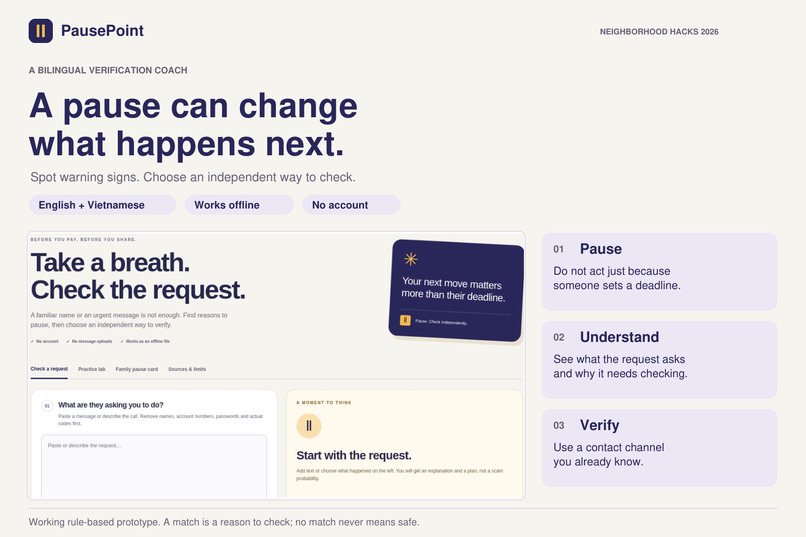
Project introduction
-
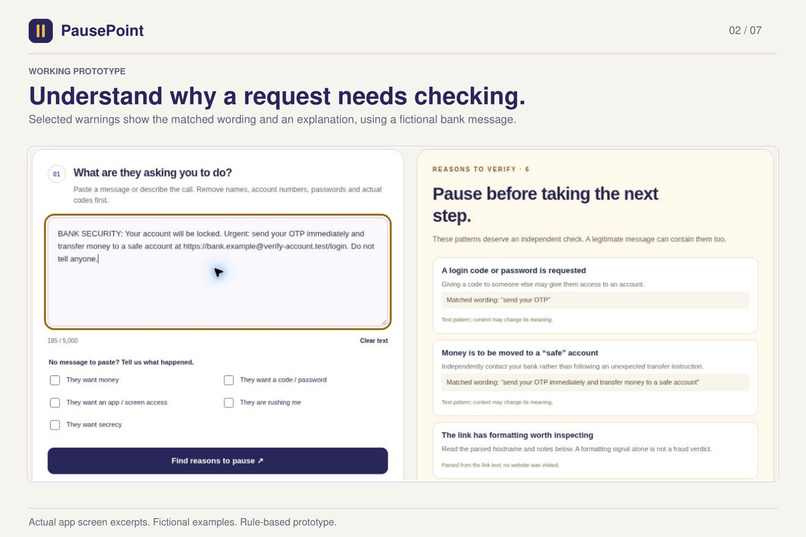
Message warnings and explanations
-
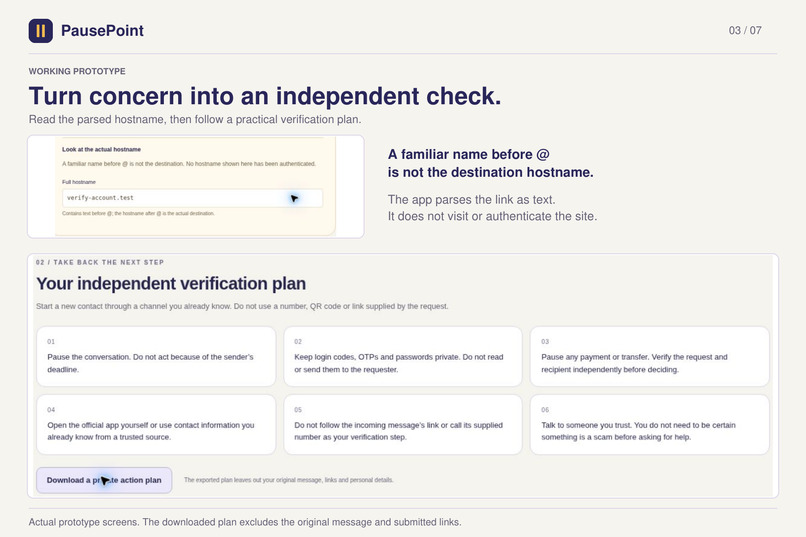
Hostname inspection and next
-
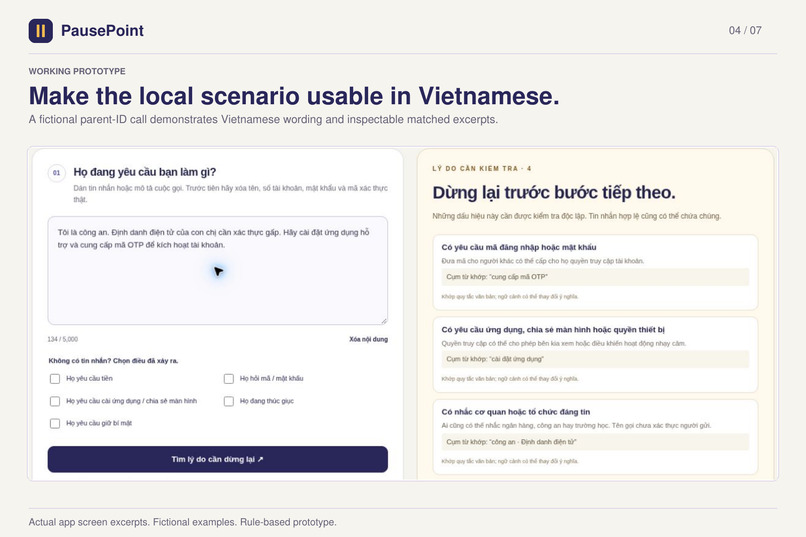
Vietnamese interface
-
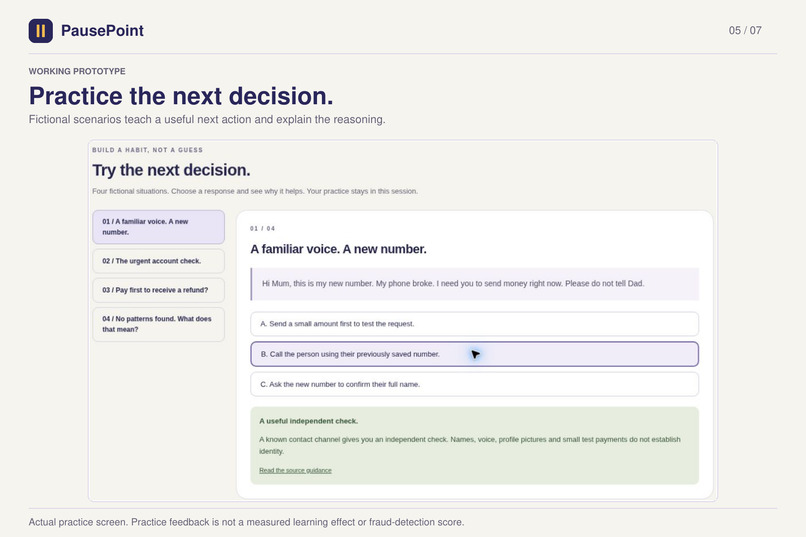
Interactive practice
-
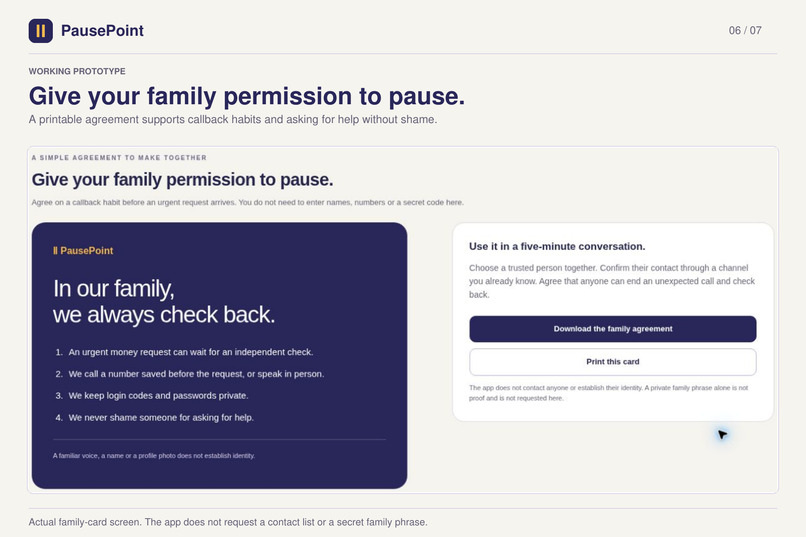
Printable family agreement
-
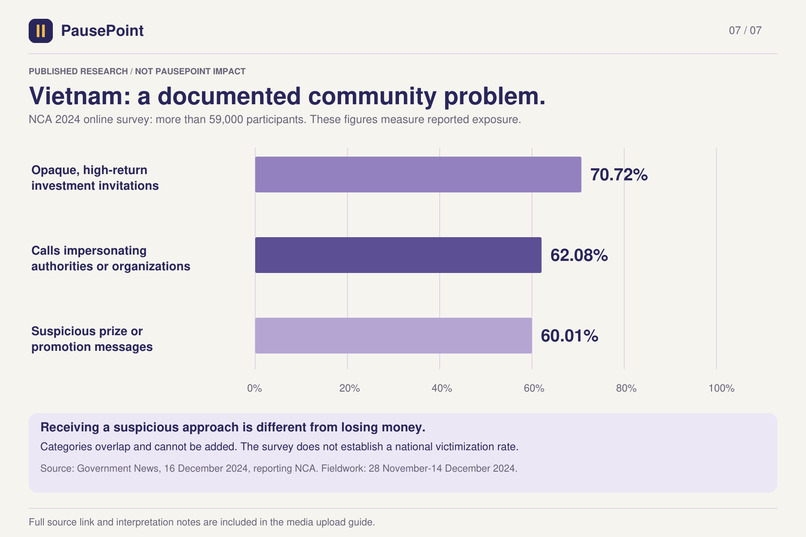
Sourced Vietnam statistics
-
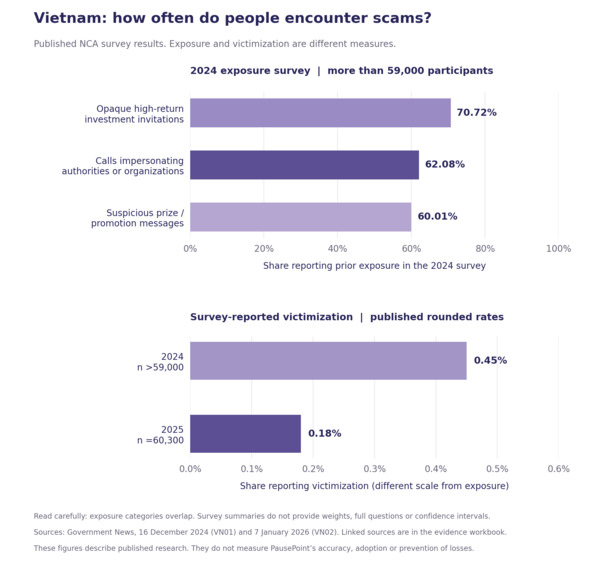
Sourced Vietnam statistics
Inspiration
PausePoint began with a question: When a suspicious request arrives, what should someone do next?
Warnings such as “be careful online” can be difficult to apply when a message claims that a bank account will be blocked, a relative needs urgent help, or an official requires immediate action. PausePoint aims to make the next decision clearer: pause, identify what is being requested, and verify through an independent channel.
What is the specific problem, and how do we know it is real?
Published Vietnamese research shows substantial exposure to suspicious requests.
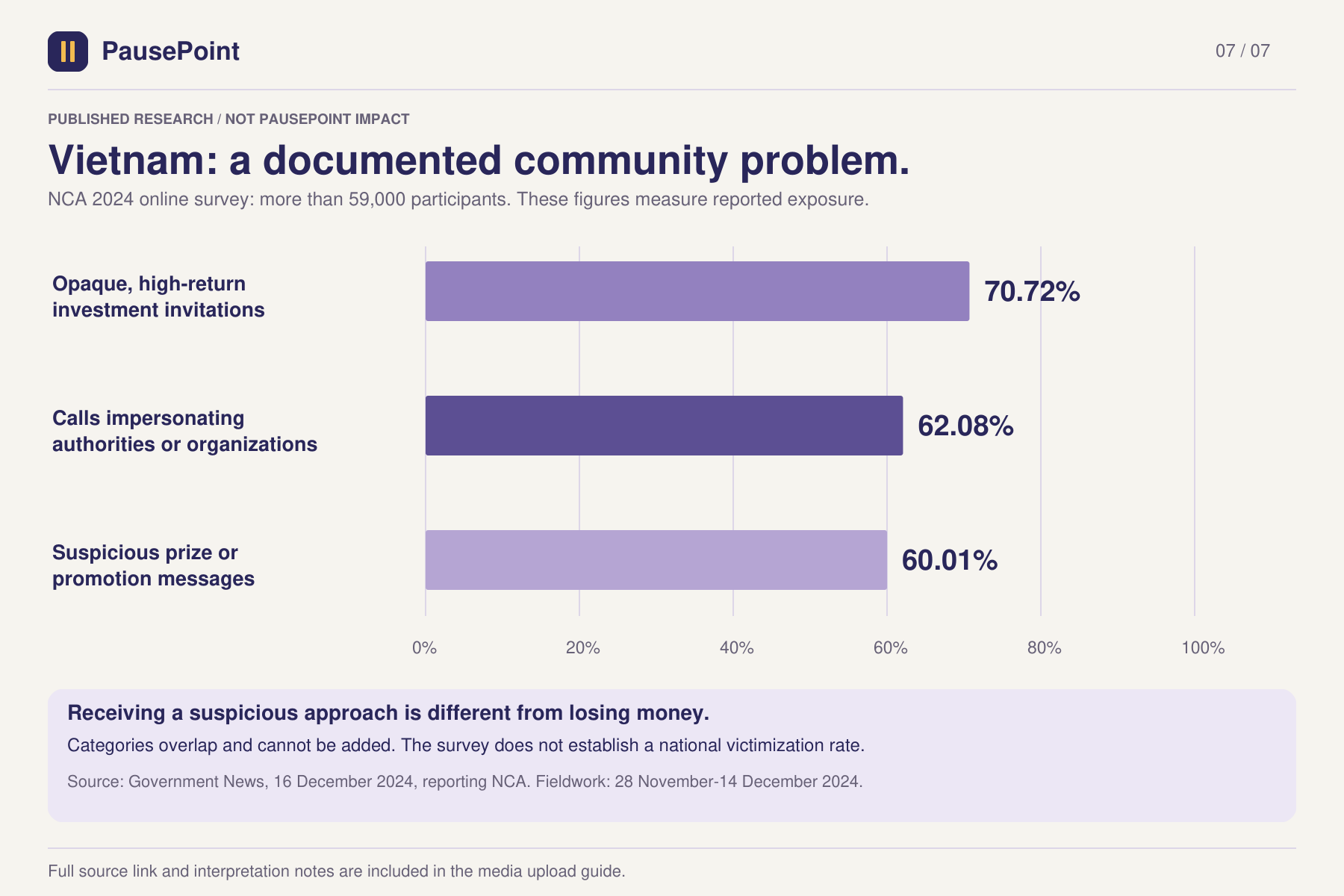
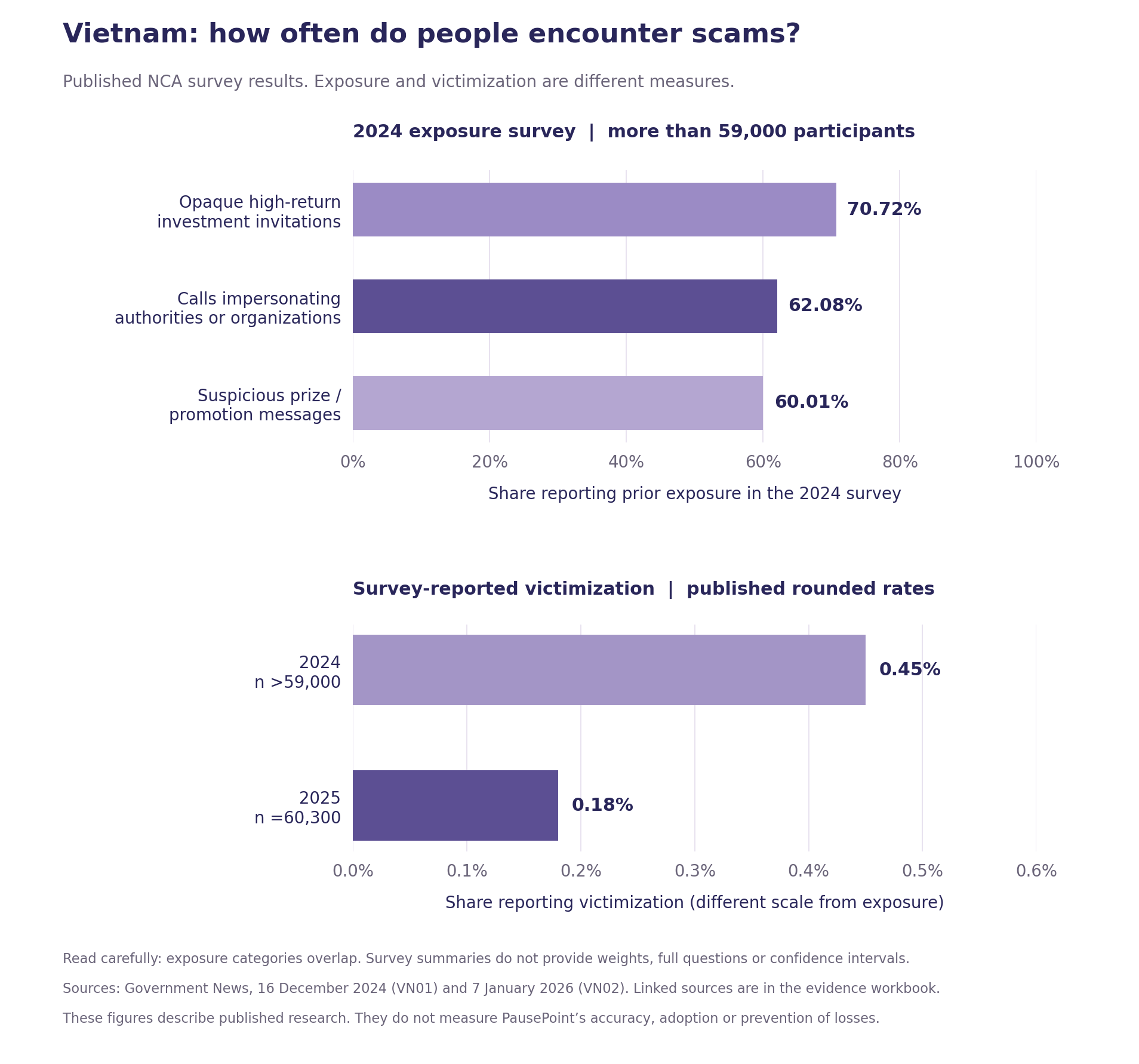
In a 2024 National Cybersecurity Association survey with more than 59,000 participants:
- 62.08% reported encountering calls impersonating authorities or organizations.
- 70.72% reported receiving invitations to opaque, high-return investments.
- 60.01% reported receiving suspicious prize or promotion messages.
These categories overlap. They measure reported exposure, not the percentage of people who lost money.
A separate 2025 survey of 60,300 participants found that only 32.12% of surveyed victims said they reported their experience to authorities. That percentage concerns the victim subgroup, not all respondents.
Sources: Government News—2024 survey and Government News—2025 survey.
These findings support the need for practical verification guidance. They do not establish PausePoint’s effectiveness.
What it does
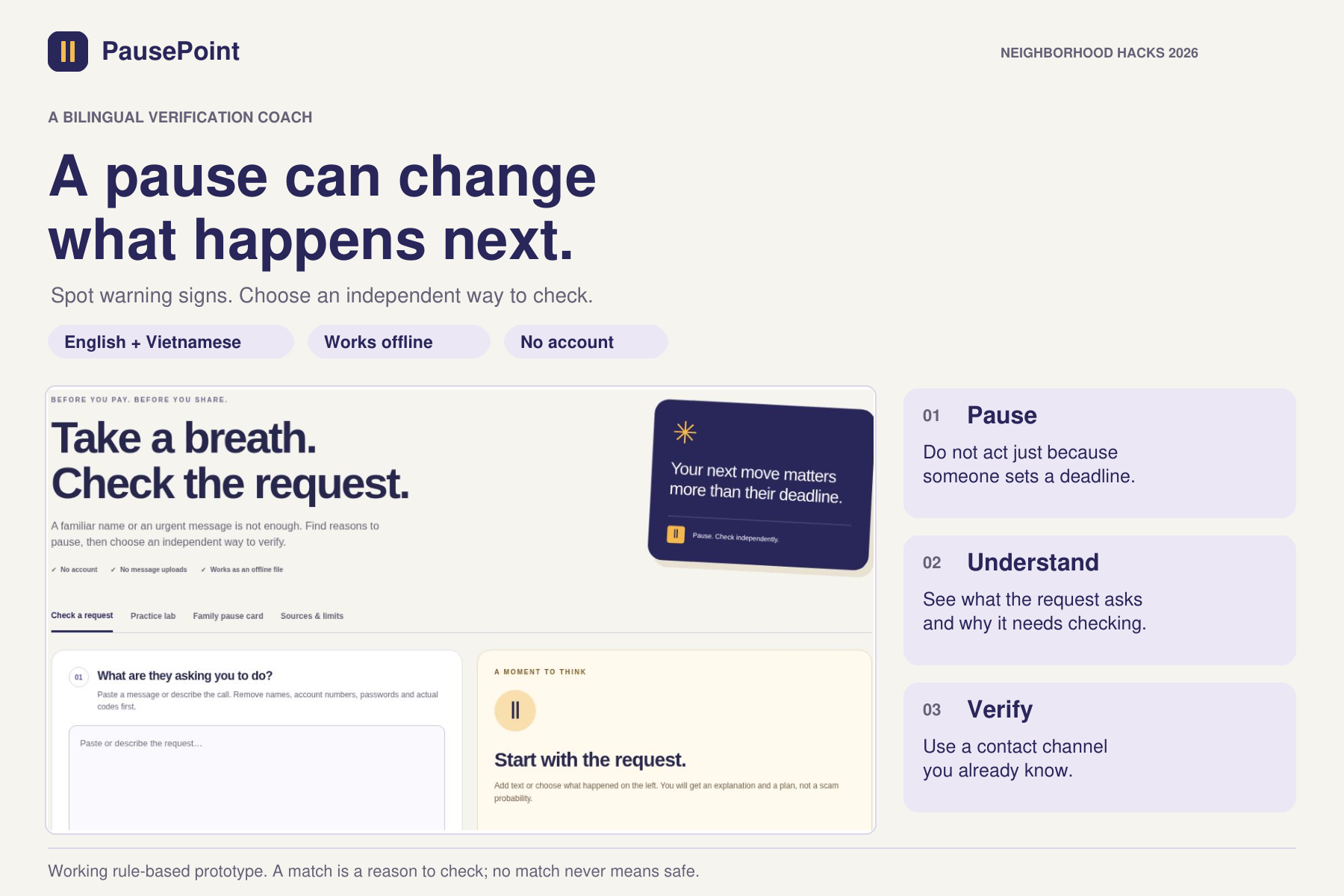
PausePoint is an English/Vietnamese verification coach for suspicious messages, payment requests and impersonation calls.
Users can paste a redacted message or select what a caller requested. The prototype then:
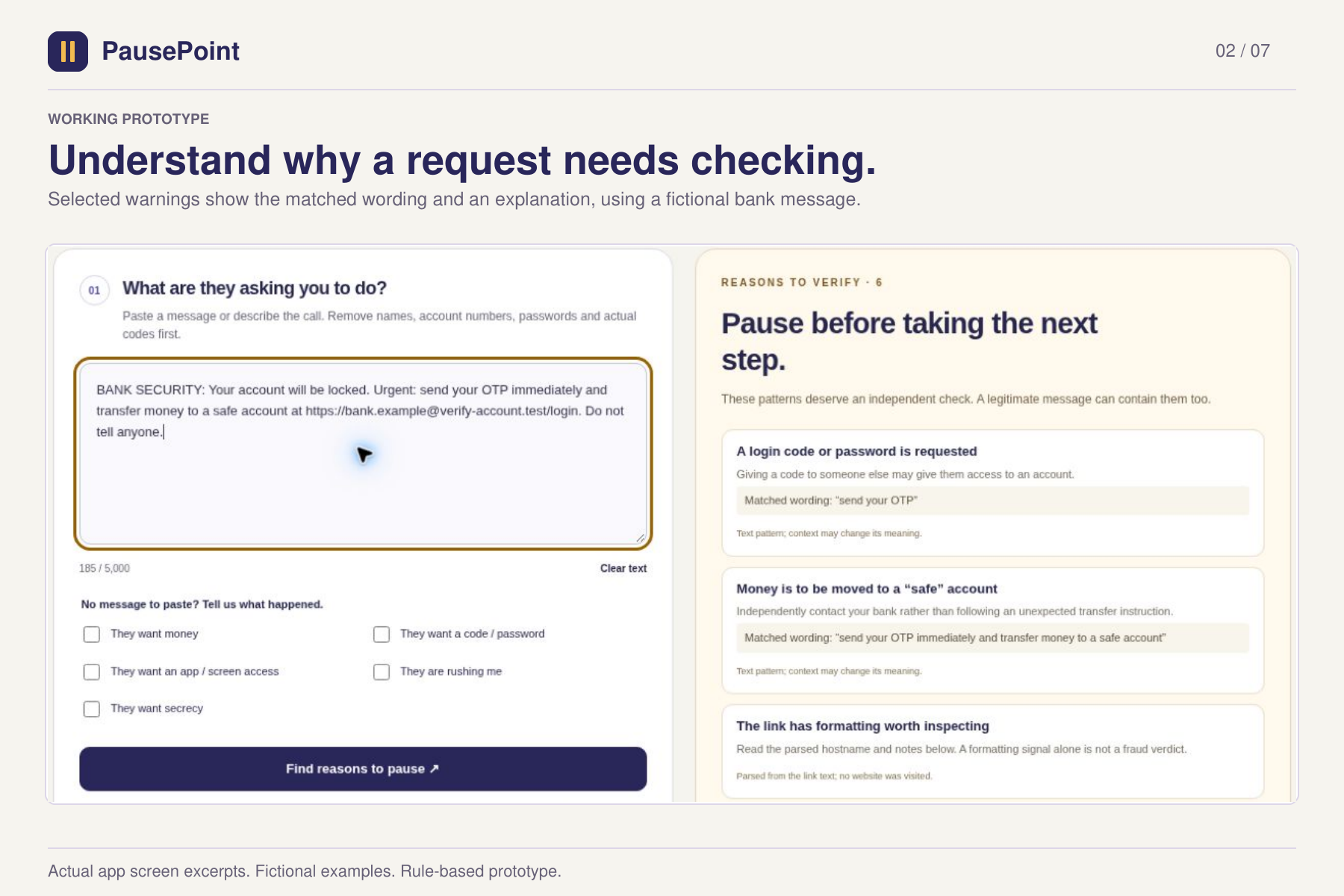
- Explains matched warning signs, such as requests for login codes, device access, secrecy or urgent transfers.
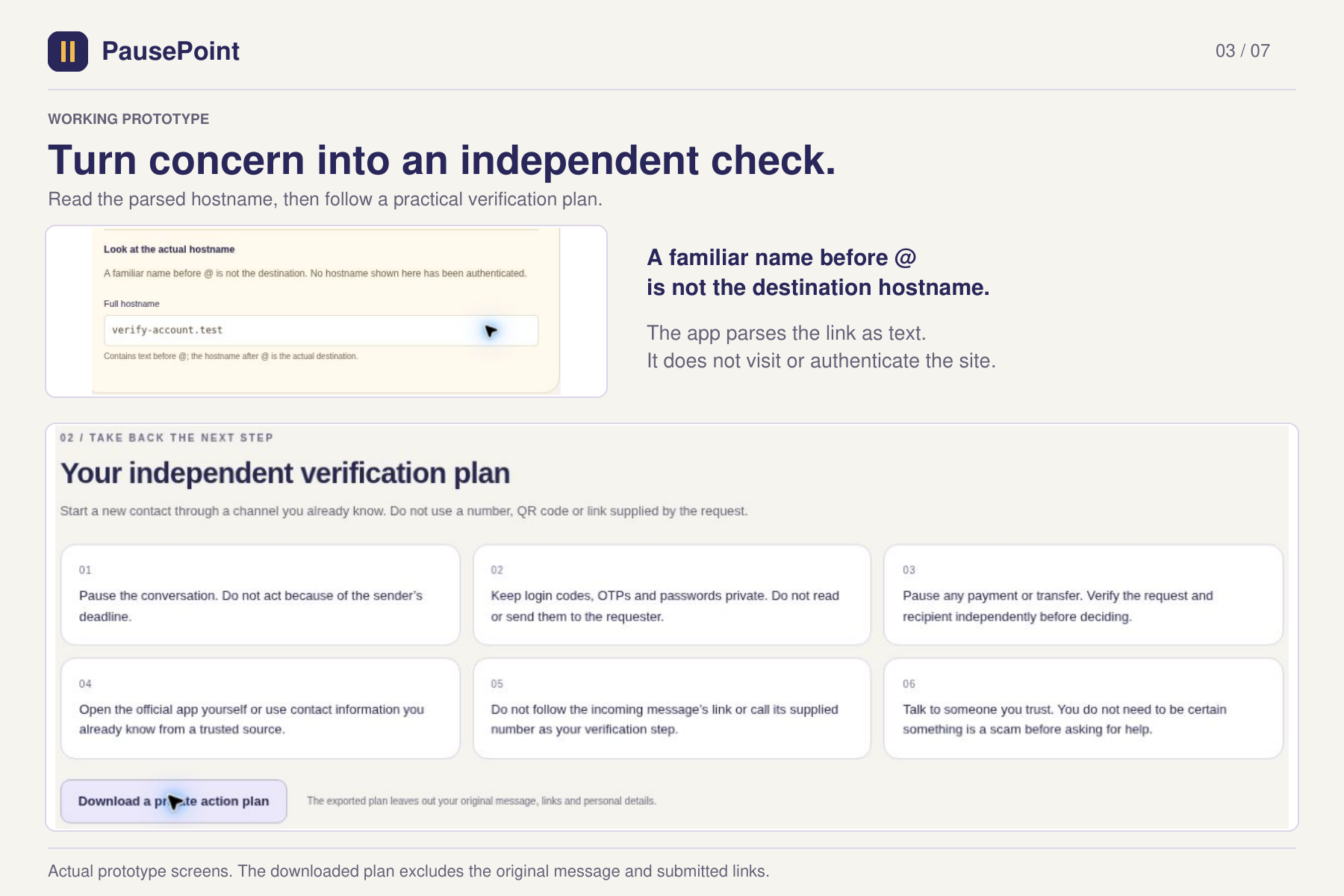
- Shows a link’s actual hostname without opening the destination.
- Creates practical verification steps, such as contacting someone through a previously saved number or independently opening the official service.
- Exports an action plan without including the original message or submitted links.
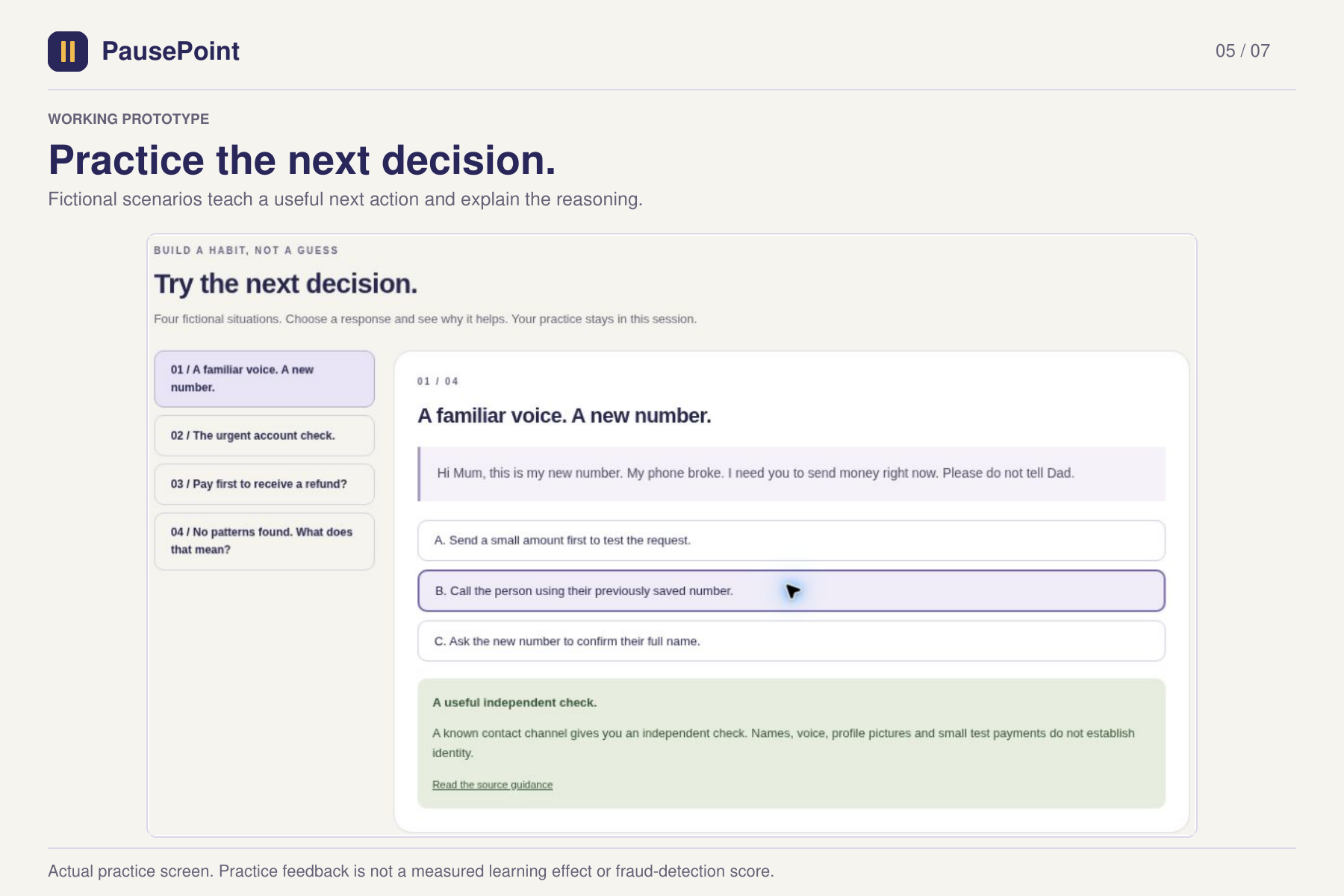
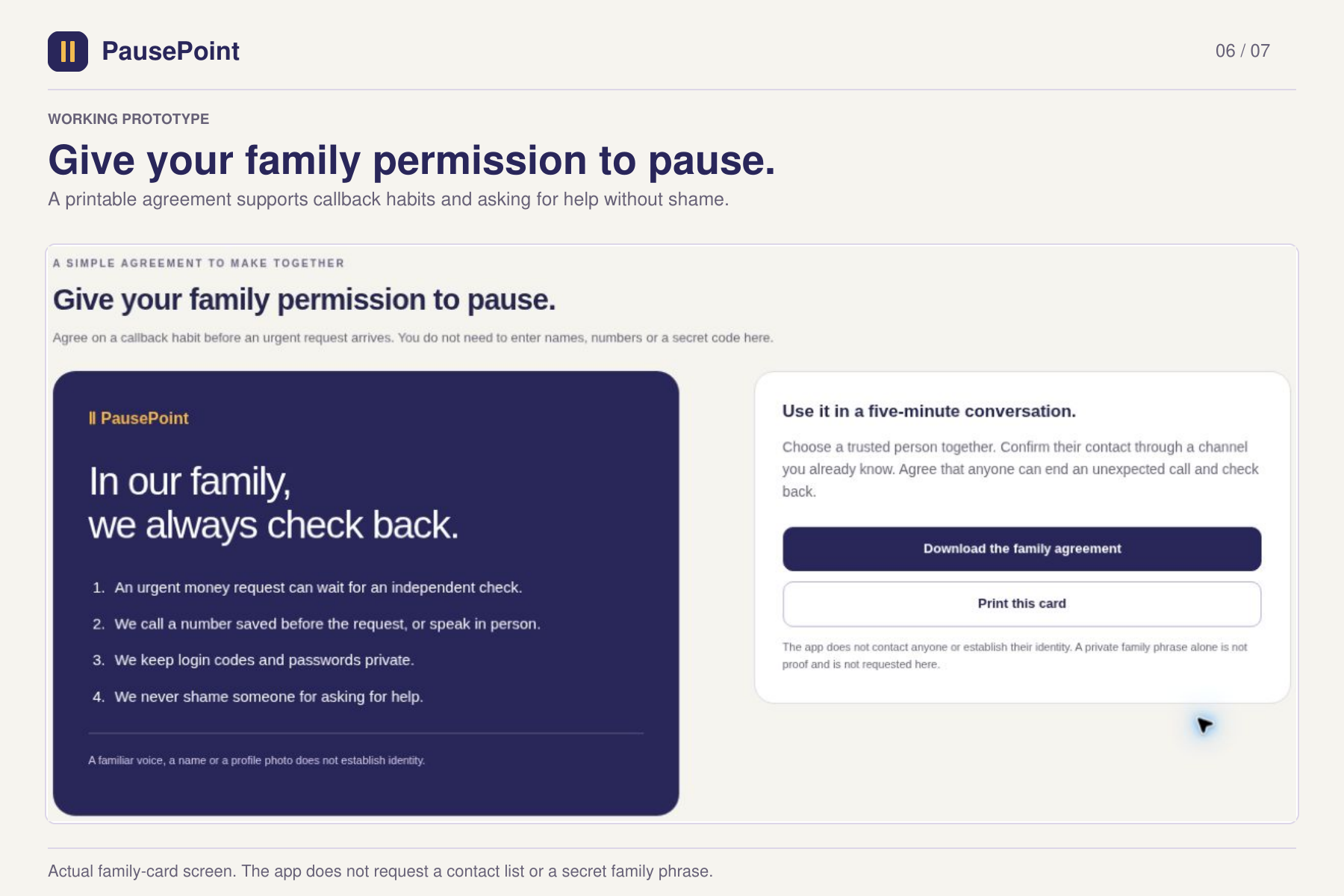
- Offers fictional practice scenarios and a printable family agreement.
No match never means safe. PausePoint keeps the sender’s identity and the request’s legitimacy unverified.
How it was built
The application uses HTML, CSS and JavaScript, with Node.js supporting its build process and automated tests.
The current prototype uses explicit bilingual rules and standard URL parsing. Its core workflow runs offline, without an account or an analysis API. Entered messages are processed in page memory.
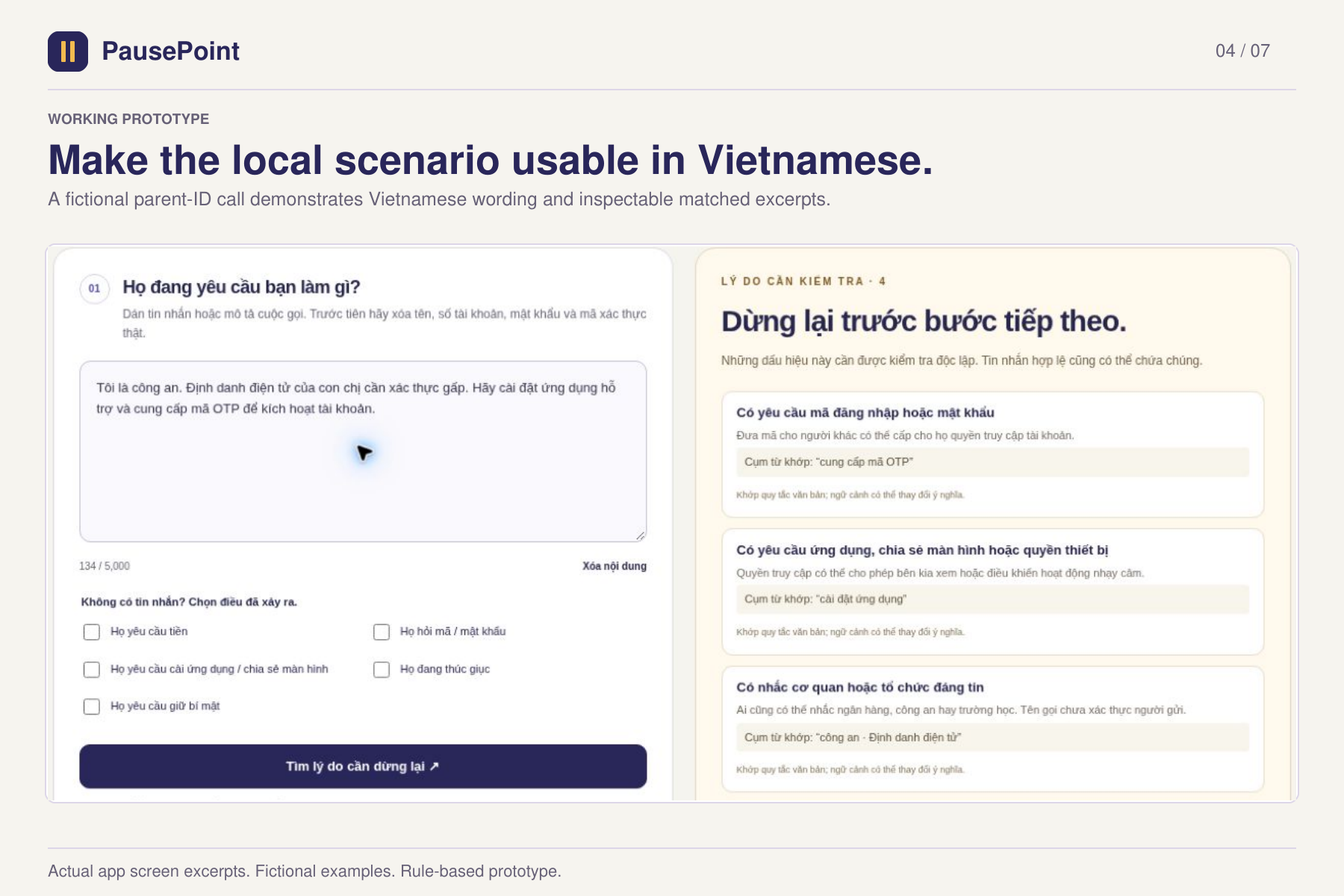
Vietnamese matching preserves the original wording for readable explanations. User input is displayed as text, and changing a request invalidates the previous result.
Challenges
The hardest design problem was avoiding false reassurance. A suspicious phrase can appear in a legitimate message, while a scam can avoid every configured phrase. The interface therefore explains observations without presenting an invented fraud probability.
Other challenges included preserving Vietnamese text during matching and selecting appropriate next steps for different situations.
What was achieved
The package includes a working bilingual application, 19 passing automated tests, source code, a captioned demonstration and a Vietnam evidence workbook.
Testing covers matching, hostname parsing, action selection and export privacy. These are implementation checks using fictional examples, not a real-world accuracy benchmark. No prevented losses or user-adoption results are claimed.
What was learned
A useful response to a suspicious request needs more than a warning: it needs a clear next action.
Another lesson was that exposure, victimization and financial losses measure different things. Keeping their definitions and reporting periods visible is essential to explaining the problem honestly.
What comes next
The next steps are community testing with students, parents and older adults, followed by revisions based on observed confusion and feedback.
A planned AI-enabled version would interpret redacted messages in context and suggest situation-specific verification or recovery steps. That model-based analyzer is not connected in the current prototype. It would require separate privacy controls and evaluation.
AI and resource disclosure
ChatGPT/Codex assisted with research, prototype implementation, interface and bilingual text, tests, documentation and demo preparation. The submitted examples are fictional. Published statistics are attributed to their sources.


Log in or sign up for Devpost to join the conversation.