-
-
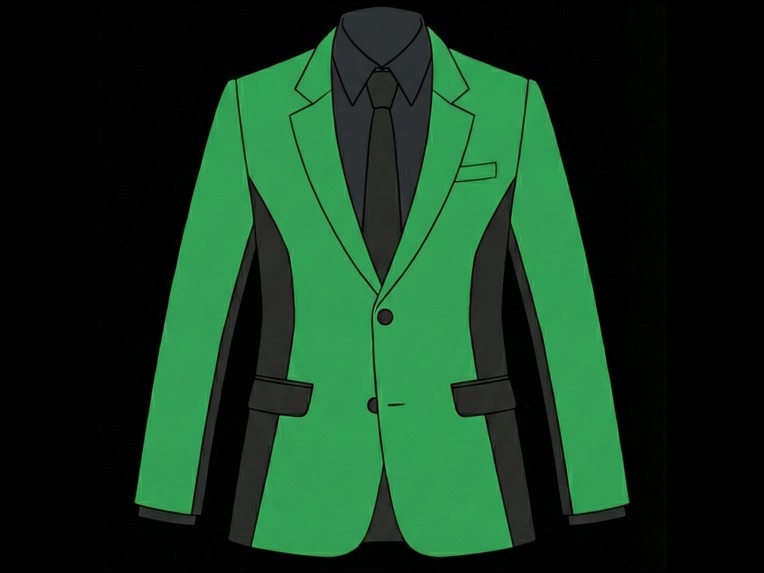
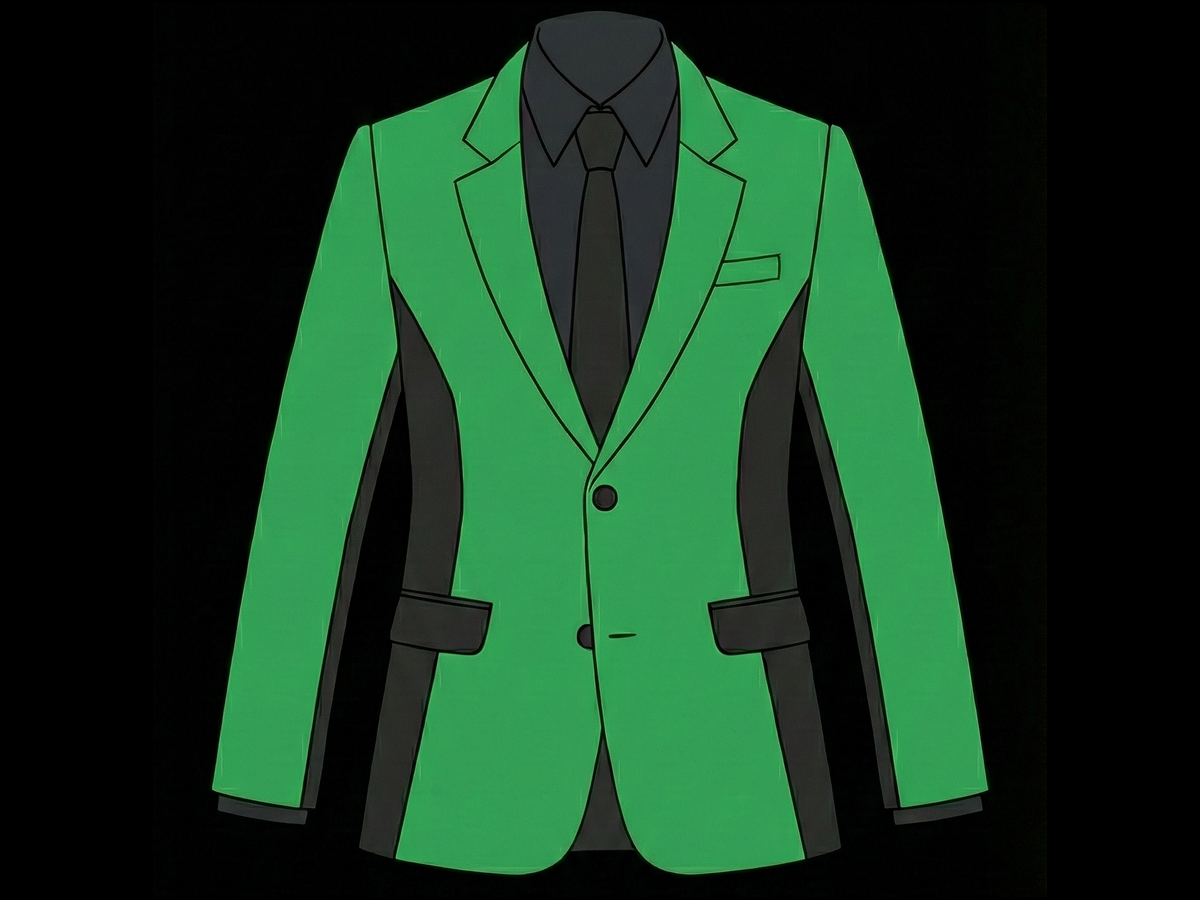
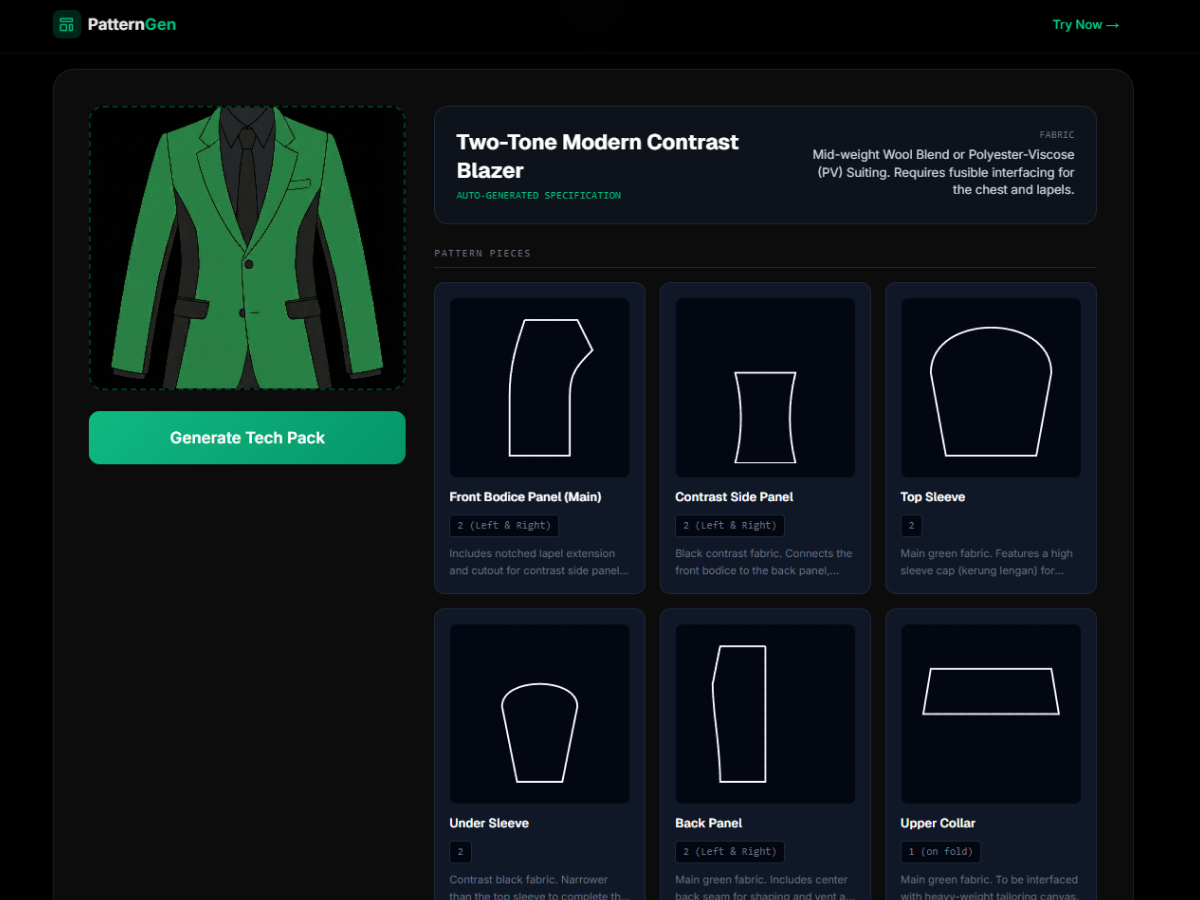
Input Analysis: Gemini 3.0 Vision identifies the complex 'Two-Tone' structure and garment type from a single photo.
-
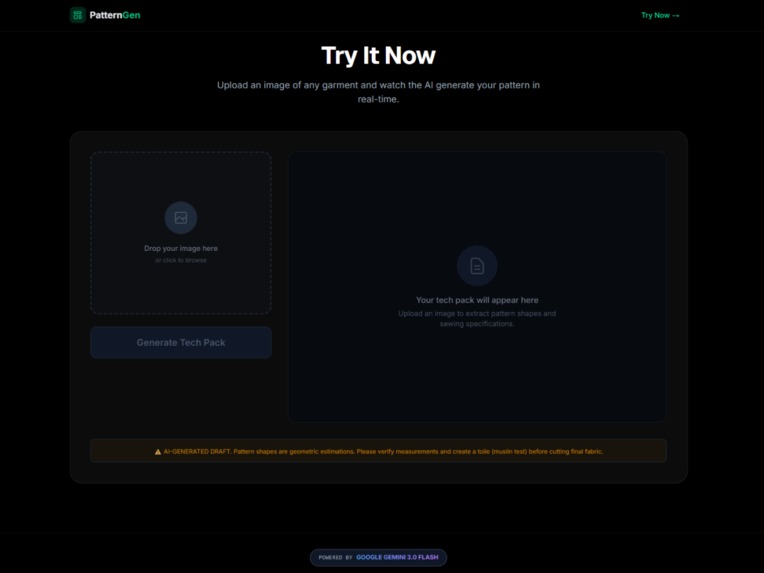
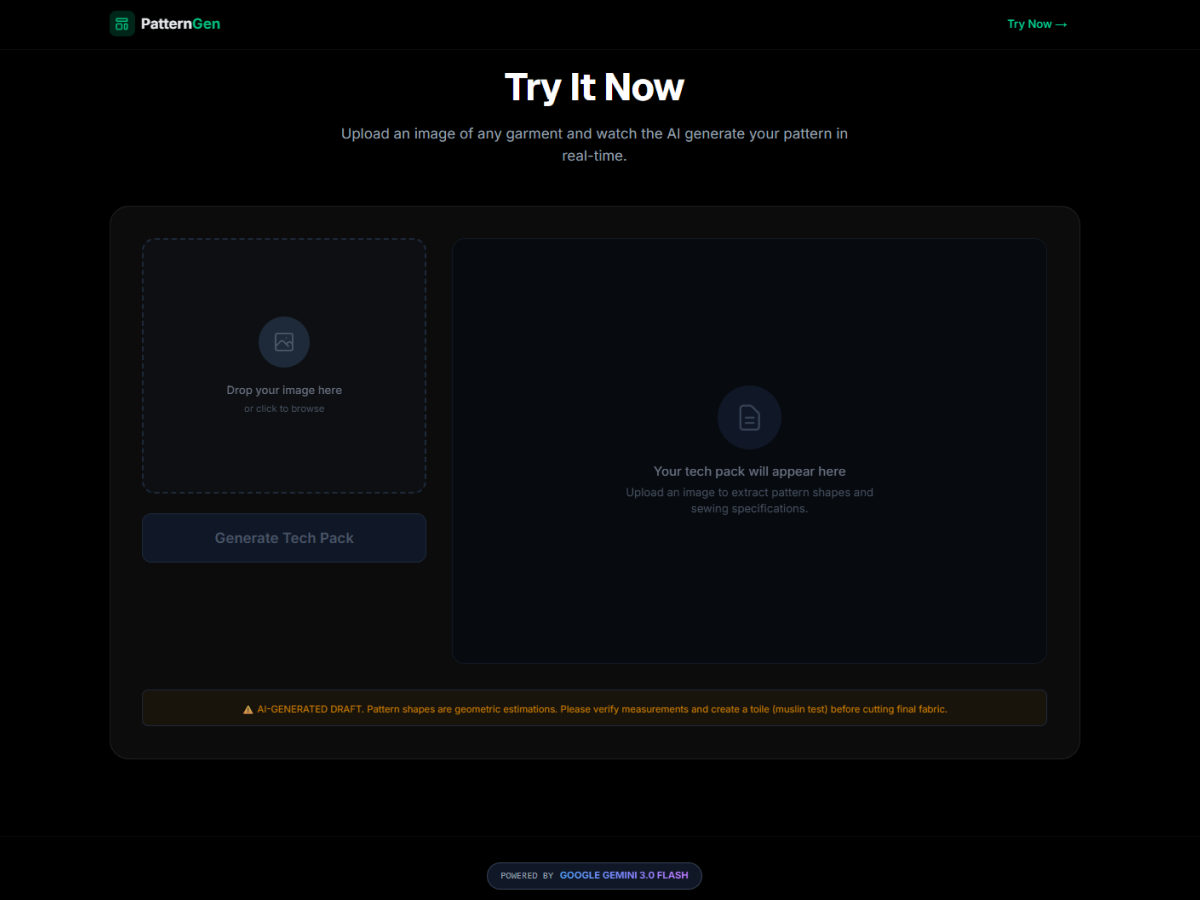
The Workspace: A clean, dark-mode interface designed to minimize distractions, focusing purely on the visual input.
-
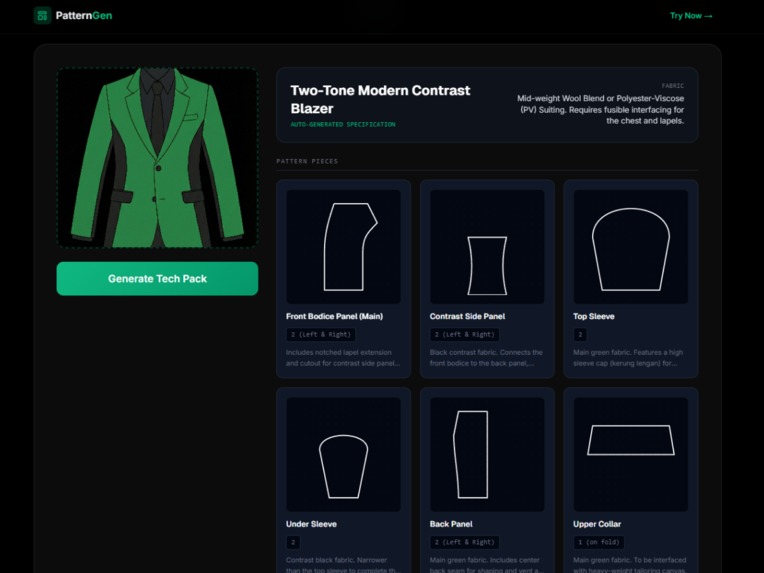
The Result: Automatic generation of a Digital Tech Pack, featuring fabric advice, sewing steps, and AI-drawn SVG pattern drafts.
Inspiration
I grew up in a family of tailors. My parents spent hours just looking at a customer's photo, trying to guess the pattern structure, dissecting the cut, and estimating fabric consumption. It was a manual, error-prone process known as "pecah pola" (pattern drafting).
As a Computer Engineering student, I realized that while Generative AI is great at making new images, there was no tool to help traditional tailors deconstruct existing ones. I built PatternGen to bridge this gap—modernizing a centuries-old craft with the cutting-edge reasoning of Gemini 3.0.
What it does
PatternGen is a "Digital Tech Pack Generator".
- Upload: Users upload a reference photo of a garment (dress, blazer, shirt, etc.).
- Analyze: It uses Gemini 3.0 Flash Preview (Multimodal Vision) to understand the garment's construction, fabric texture, and complexity.
- Generate: It instantly outputs a comprehensive Technical Pack containing:
- Pattern Breakdown: Splits the garment into components (Sleeves, Bodice, Collar).
- Visual Drafts (SVG): Generates 2D vector shapes of the flat pattern pieces directly from the image.
- Sewing Instructions: Step-by-step assembly guide tailored to the specific design.
- Fabric Recommendations: AI-suggested material choices based on the visual drape of the image.
How we built it
Core AI: I utilized the Gemini 3.0 Flash Preview model via Google AI Studio. Its superior multimodal reasoning was crucial for distinguishing between a "visual seam" and a "structural cut."
Frontend: Built with Next.js 15 (App Router) and Tailwind CSS for a clean, "Dark Mode" aesthetic that focuses on the technical details.
Vector Generation: I engineered a complex system prompt that forces Gemini to output valid SVG Path (d attributes) strings within a JSON structure, allowing the app to render geometric pattern estimations in real-time.
Deployment: Hosted on Vercel for instant global access.
Challenges we ran into
The biggest challenge was "3D to 2D Hallucination." AI models tend to draw what they see (a 3D sleeve looking like a tube), whereas a tailor needs the 2D flat pattern (a sleeve looking like a bell/mushroom shape). I had to iteratively refine the System Instructions to force Gemini to think like a Pattern Maker, prioritizing "flat geometry" over "visual representation."
Accomplishments that we're proud of
I am most proud of the SVG Generation feature. Getting an LLM to "draw" vector lines that actually look like sewing patterns—without using any external image generation libraries—felt like magic. It proves that Gemini 3 has a strong grasp of spatial reasoning, not just text.
What we learned
What's next for PatternGen: AI Technical Pack Generator for Tailors
- DXF Export: Converting the SVG drafts into industry-standard .DXF files for CAD software.
- Sizing & Grading: Adding a feature to scale patterns based on user body measurements.
- Community Library: Allowing tailors to share and remix their generated patterns.
Built With
- css
- gemini
- next
- typescript
- vercel

Log in or sign up for Devpost to join the conversation.