-
-
Patina Logo
-
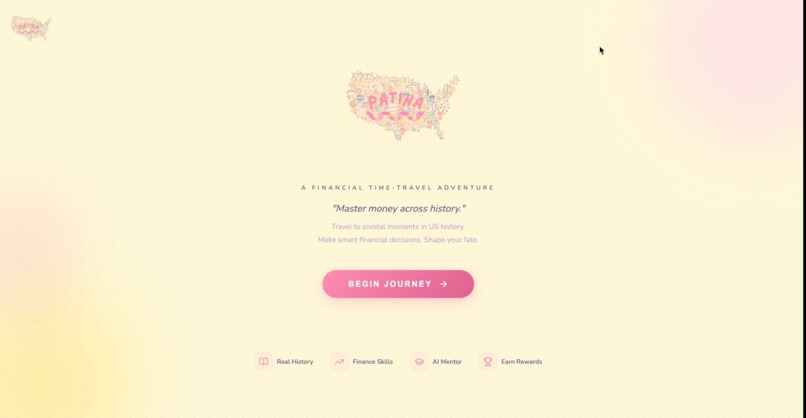
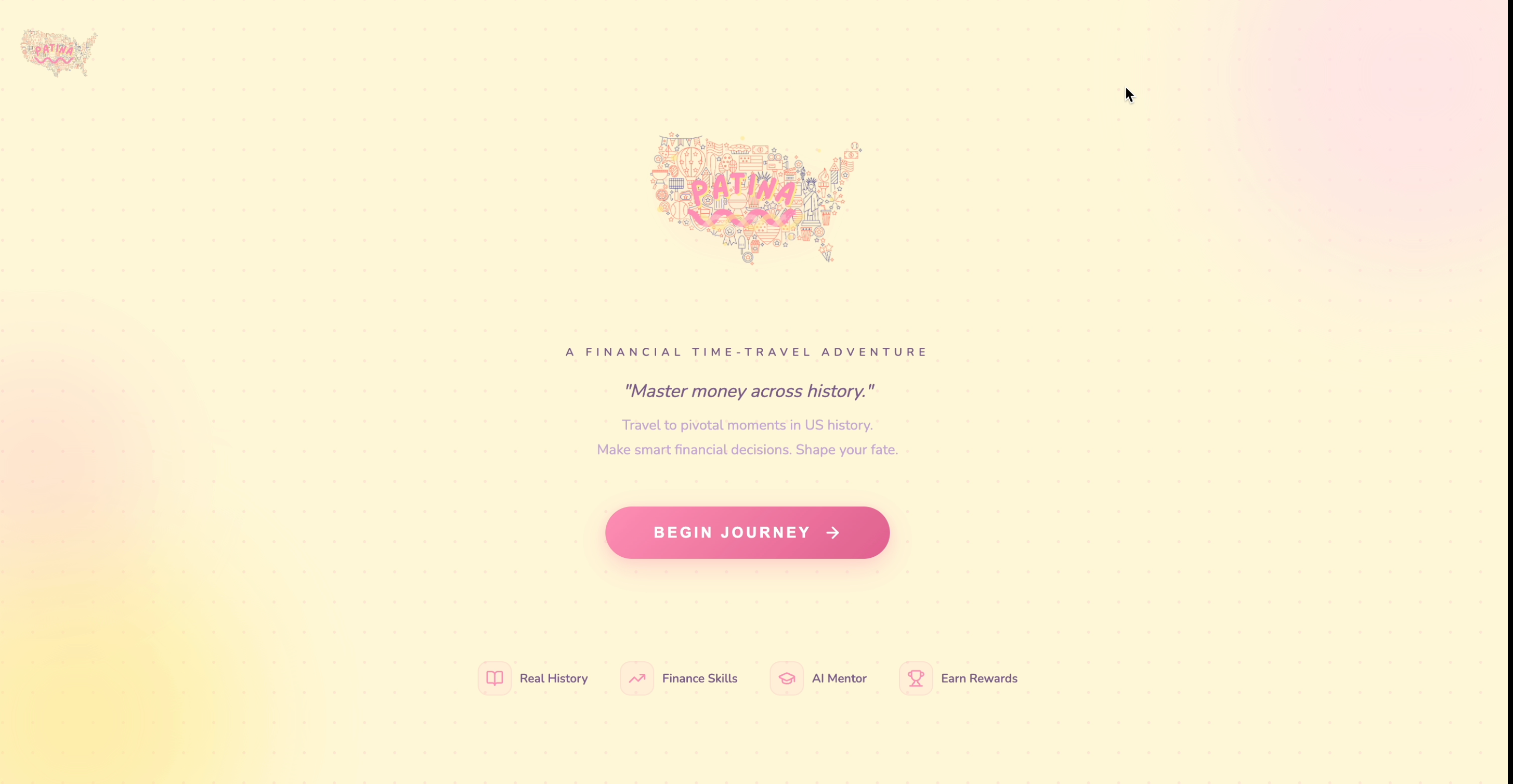
Landing Page
-
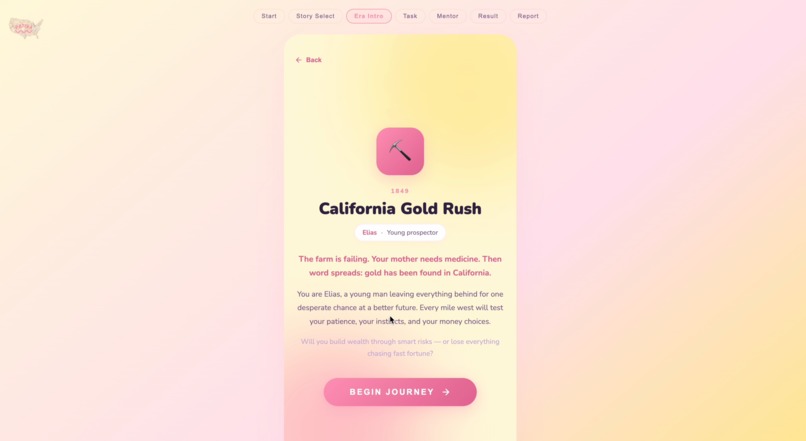
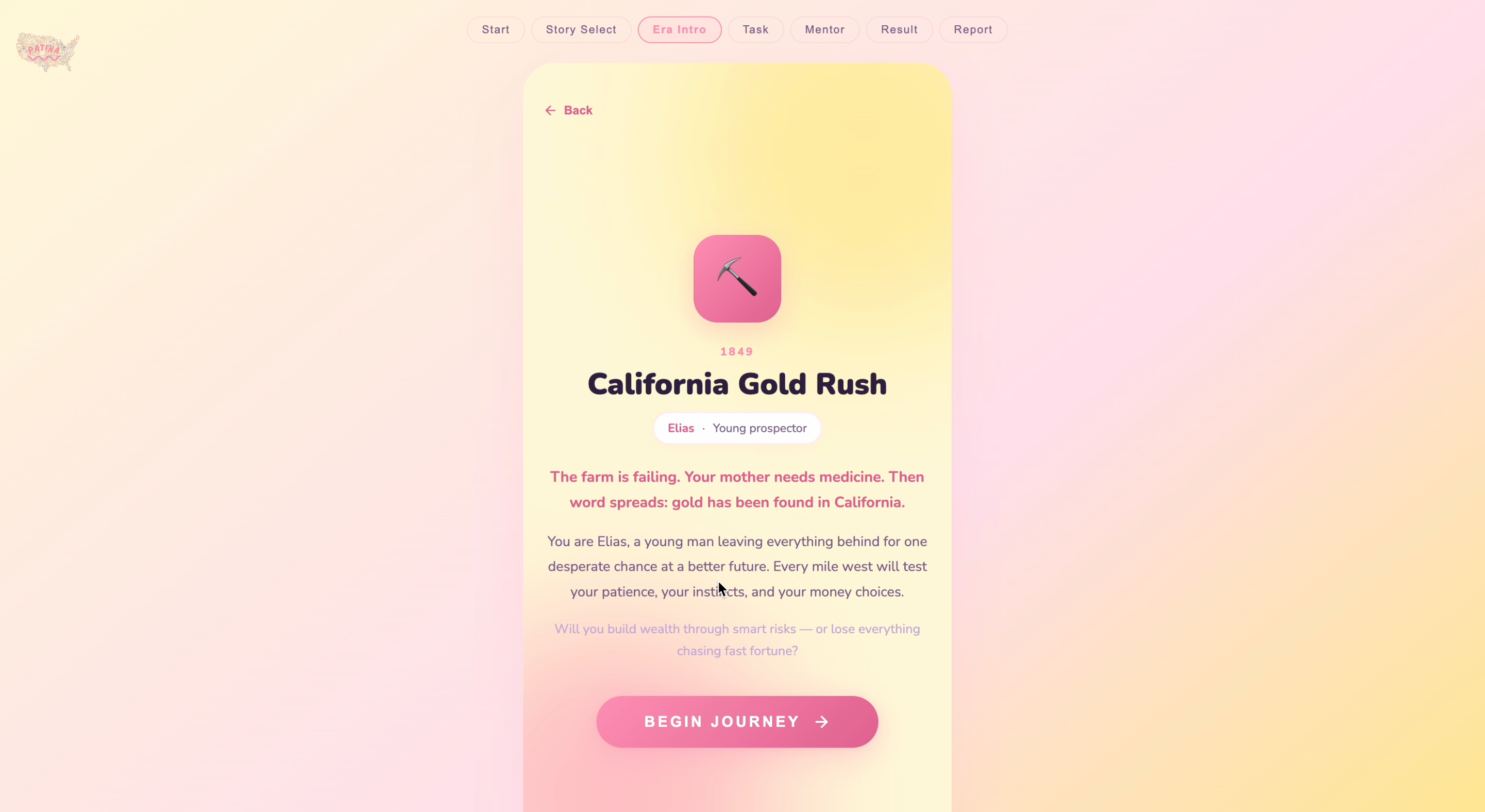
Era Intro Page
-
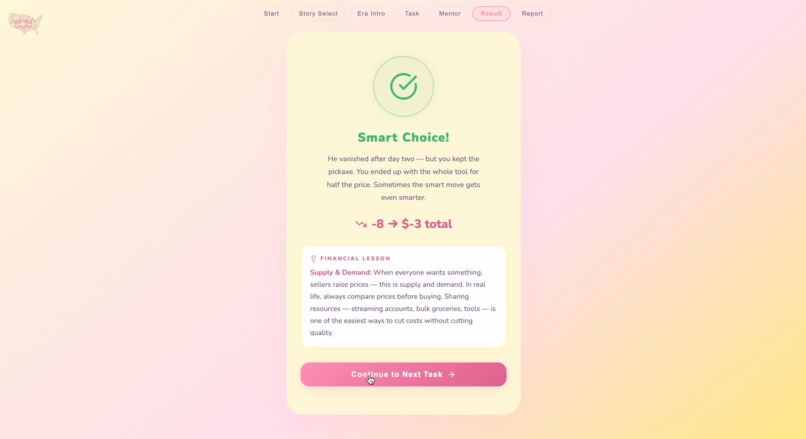
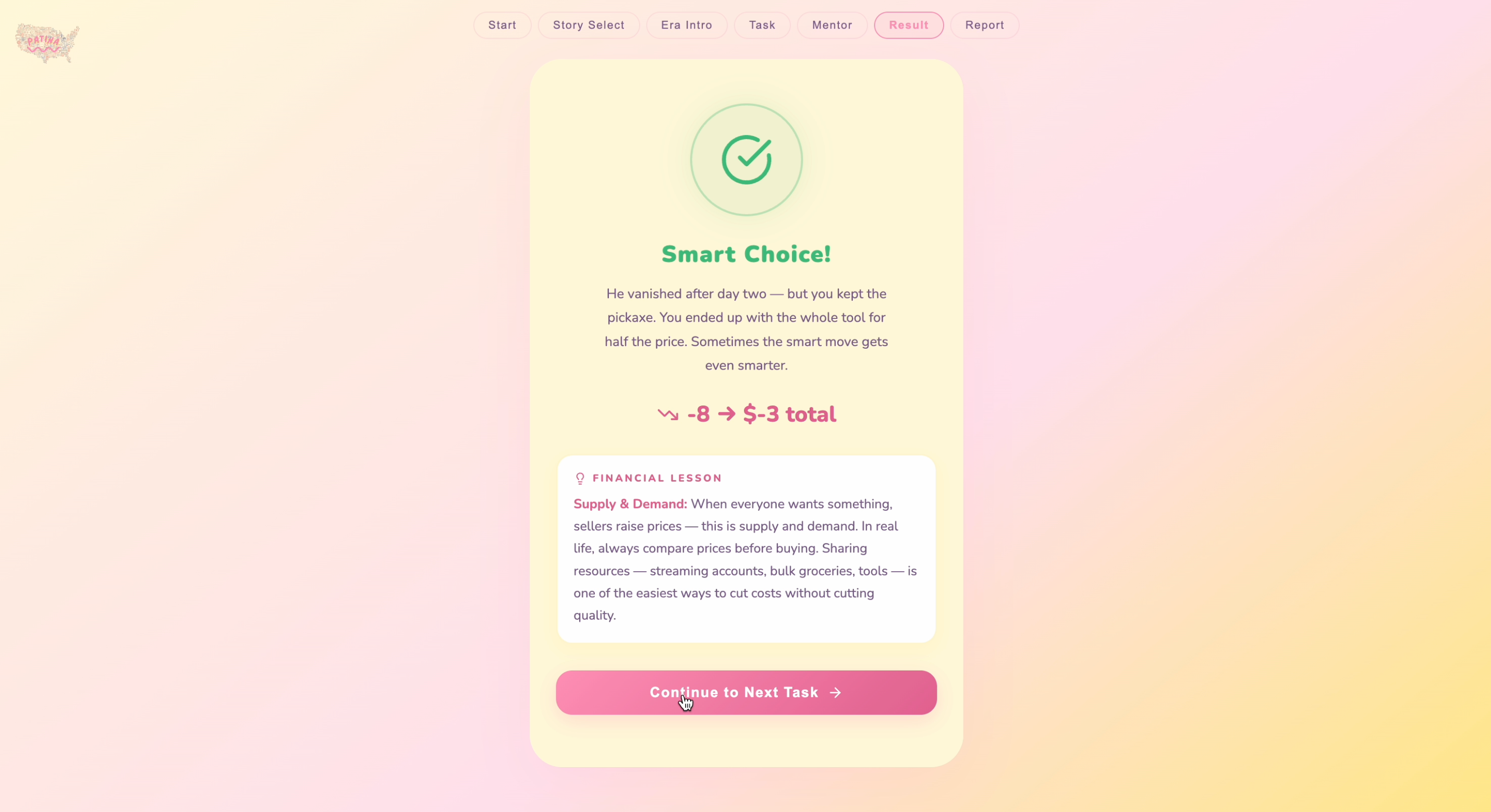
Result Page
-
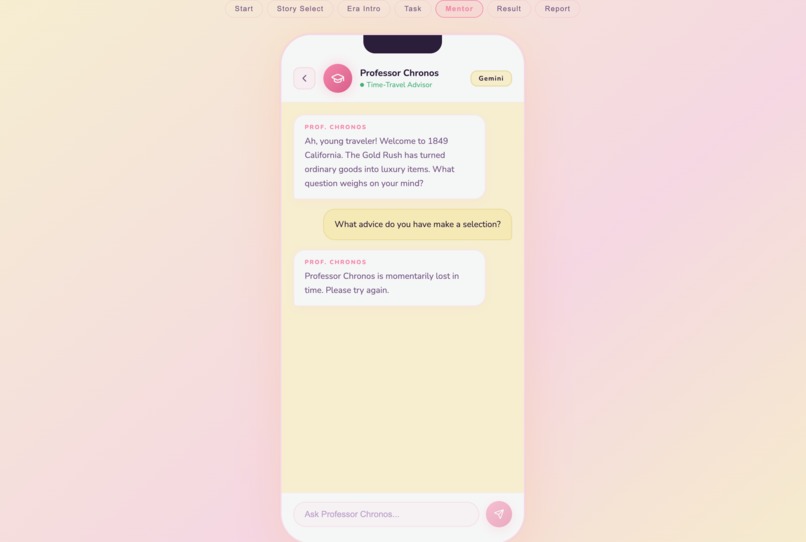
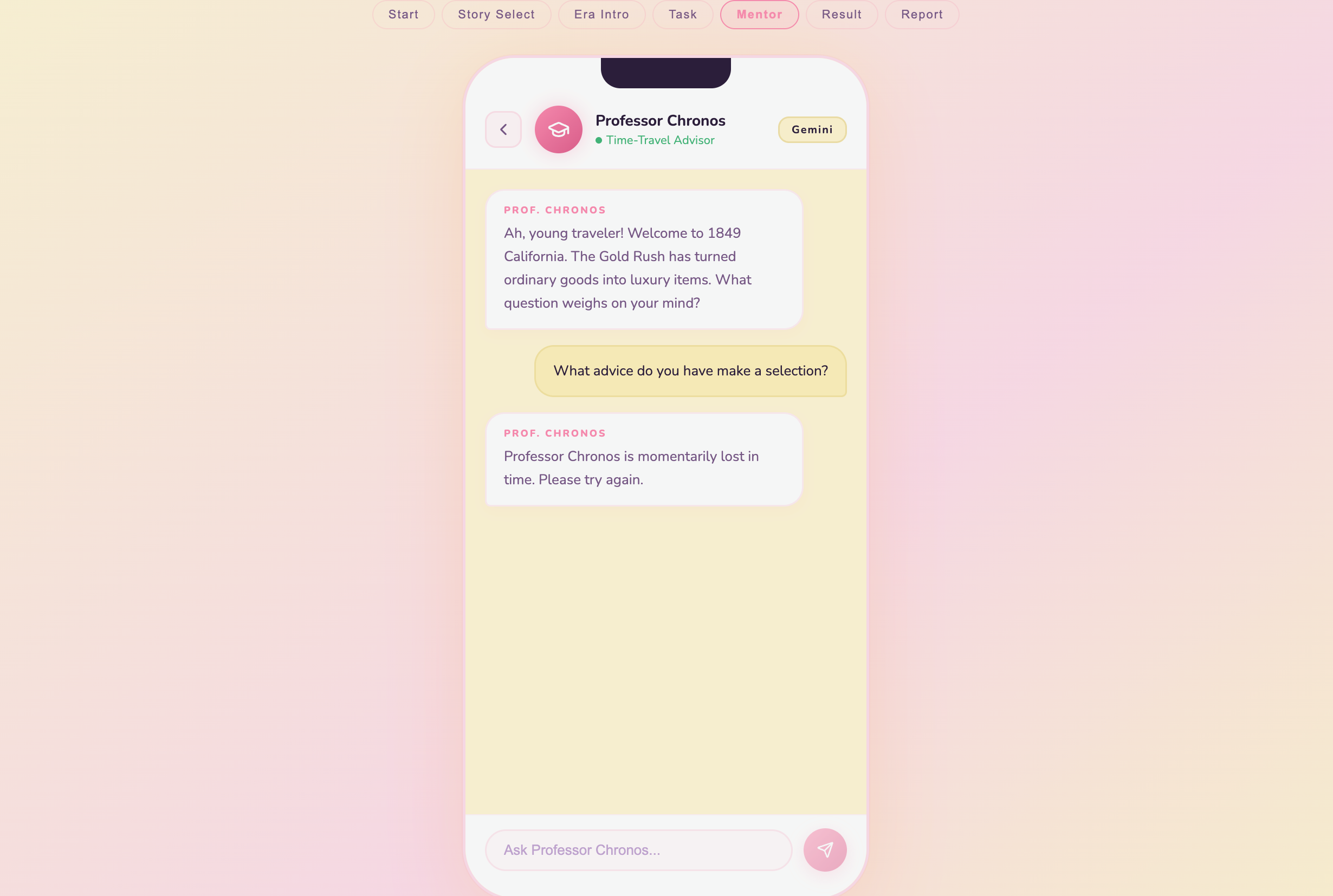
AI Assistant
Inspiration
Financial literacy is among the most critical life skills; however, it's rarely taught in an engaging way. Most high schoolers graduate without understanding inflation, the power of investing, and past economic crises. We asked ourselves, what if students could live through history's biggest financial landmarks instead of just reading about them?
Patina was our solution! The name itself is a nod to that green aged coating that forms on old coins over time, a visual reminder that money carries history. We were inspired by the idea of making real decisions under economic pressure. Watching someone explain the 1929 stock crash is easily forgettable. However, being dropped into it and deciding whether to
What it does
Patina is a mobile-responsive web game where players navigate real financial decisions set during pivotal US economic events. The current build spans two historical eras: the California Gold Rush and the Great Depression.
Each era presents players with: • Authentic economic scenarios drawn from the historical record • Financial decisions (save, invest, spend, borrow) with consequences that ripple across future rounds • A live portfolio tracker showing the impact of their choices in real time
Throughout the game, an AI mentor powered by Google Gemini responds to player questions in natural language, explains economic concepts at an accessible level, and offers hints without just giving away the answer. The goal is guided discovery, not a lecture.
Players can compare their final outcomes to what the "optimal" historical strategy would have yielded, creating a in game debrief for classroom use.
How we built it
We built Patina as a web-based interactive game that combines structured data, decision logic, and real-time updates to simulate financial decision-making.
- The game is powered by a central state system that tracks the player’s money, progress, and past decisions throughout the experience
- Each scenario is defined using structured data, allowing us to organize historical events, choices, and outcomes in a scalable way
- We implemented a decision engine where each player's choice connects to multiple possible outcomes, with probabilities used to introduce uncertainty and realism
- After every decision, the system calculates and updates the player’s financial state in real time, reinforcing cause-and-effect learning
- We integrated an AI mentor (Google Gemini) that processes user questions and generates responses dynamically, providing contextual explanations and guidance during gameplay
- The system also records a history of decisions, which is used at the end of the game to generate a summary and compare the player’s performance to stronger strategies
Challenges we ran into
One of our biggest hurdles was connecting the frontend and backend for the first time. Getting the client to reliably communicate with our server (handling API routes, CORS, and environmental variables across local and deployed environments) took more debugging time than we anticipated. A small misconfiguration caused silent failures that were difficult to trace.
Integrating the AI assistant added another layer. Early on, we struggled to get the GEmini API working end-to-end. We had authentication errors, response parsing issues, and had to figure out how to correctly thread the conversation history through each request. Once the connection was stable, the next challenge was behavioral. We went through many prompt iterations to find the right balance between being a useful guide and preserving productive struggle.
Accomplishments that we're proud of
We're proud that Patina actually feels fun! It's easy to build an educational tool that students tolerate, but it's much harder to build one that they want to keep playing. The historical framing and real stakes of the scenarios create genuine tension in a way a quiz never could.
We're also proud of the Gemini integration. The mentor feels like a character: it adapts its tone to the historical era, references what the player has already done in the session, and occasionally expresses surprise at bold decisions. That personility emerged entirely from prompt design, which felt like a craft achievement. Finally, we shipped a complete, playable game in a hackathon weekend!!
What we learned
We learned that creating educational tools requires more than just accurate information; making content engaging and easy to grasp is essential. We saw how powerful storytelling can be. When players make their own decisions, they become more interested and learn more, showing how your creative input can significantly impact engagement and understanding. Working with the AI mentor showed us that it should guide users, not just give answers, emphasizing how your design can build trust and promote meaningful learning interactions. We also learned how important it is to test and improve. Small changes made a big difference in how the game felt.
What's next for PATINA
Our next step is to expand Patina to include more historical eras and financial scenarios, such as the postwar boom and the 2008 financial crisis, to demonstrate how their efforts directly enhance the platform's relevance and depth. We also want to go beyond financial literacy and explore other areas of education, including economics, entrepreneurship, and everyday decision-making skills, to diversify Patina's offerings. In addition, we plan to improve personalization by adjusting difficulty and mentor guidance based on the player’s experience. We also hope to expand Patina across different platforms, including a full website and mobile apps for iOS and Android, to reach more users and increase our impact. Long term, our goal is for Patina to become a tool that helps students build confidence in real-world decision-making through interactive learning.


Log in or sign up for Devpost to join the conversation.