Inspiration
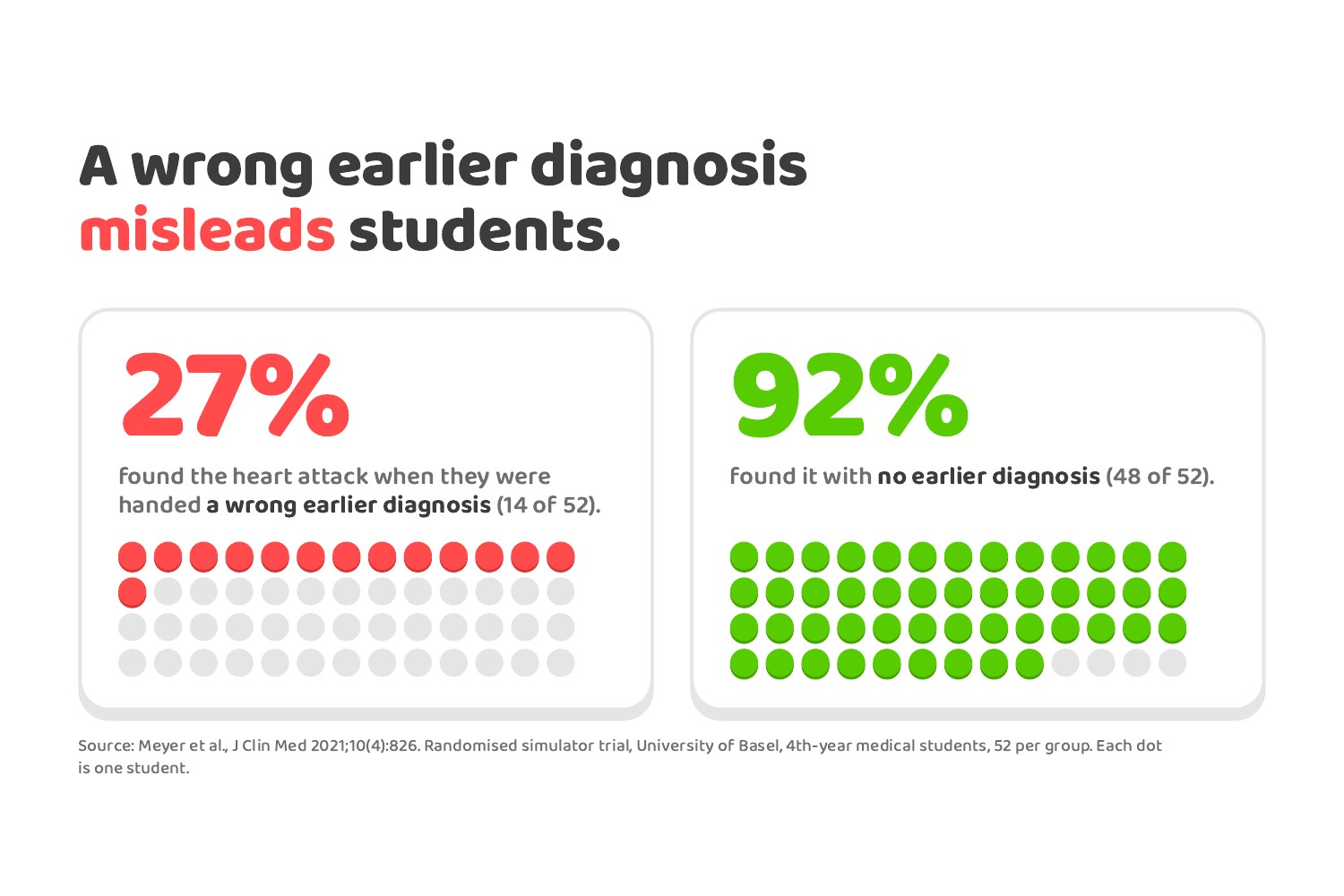
At TUM, medical students learn the patient interview in Medical Interviewing 1, with trained actors; the school has around 25 of them. Real patients hold things back, and many arrive with another doctor's diagnosis. In a Basel simulator trial, 4th-year students found the heart attack in 14 of 52 cases after a wrong earlier diagnosis, and in 48 of 52 without one.
What it does
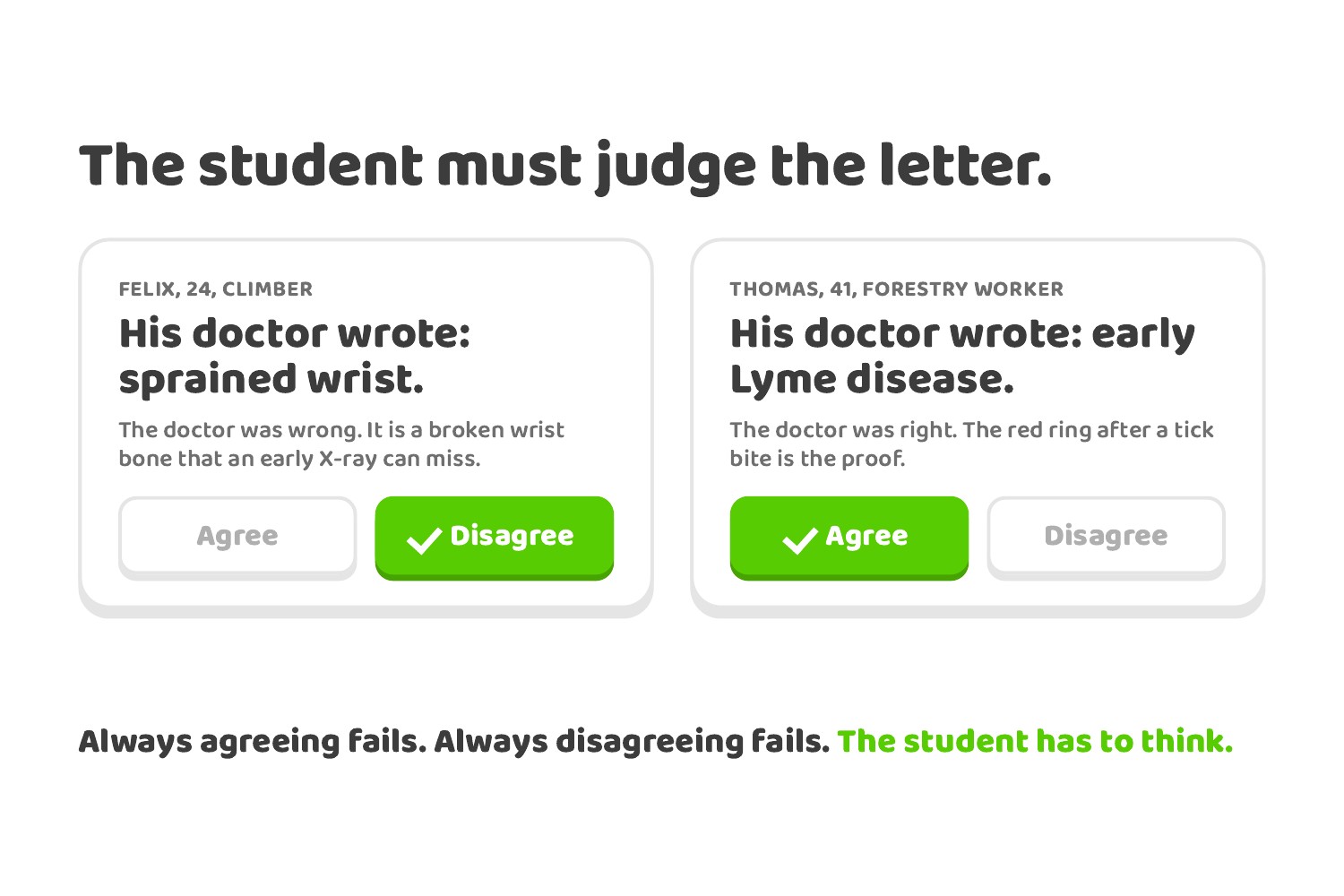
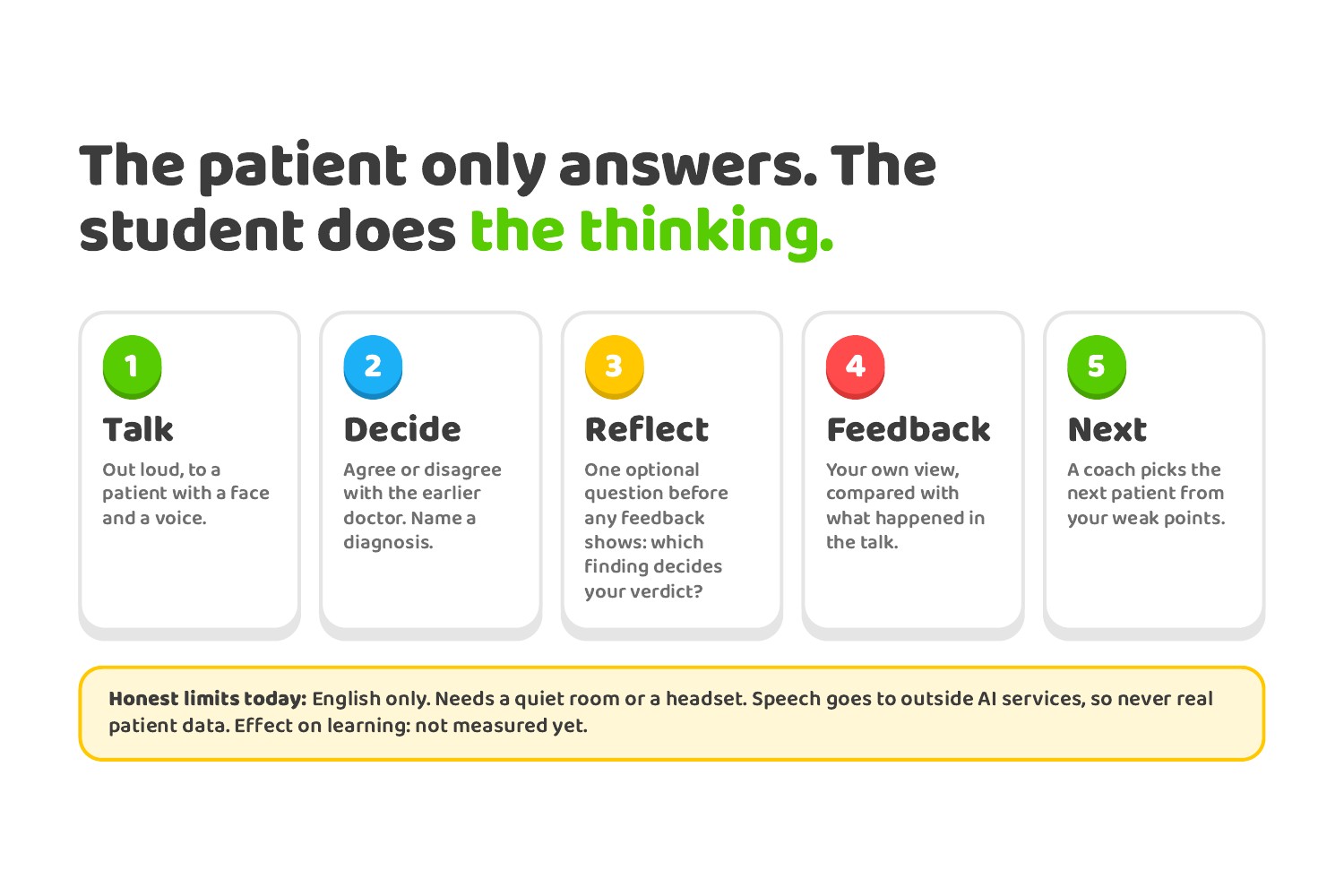
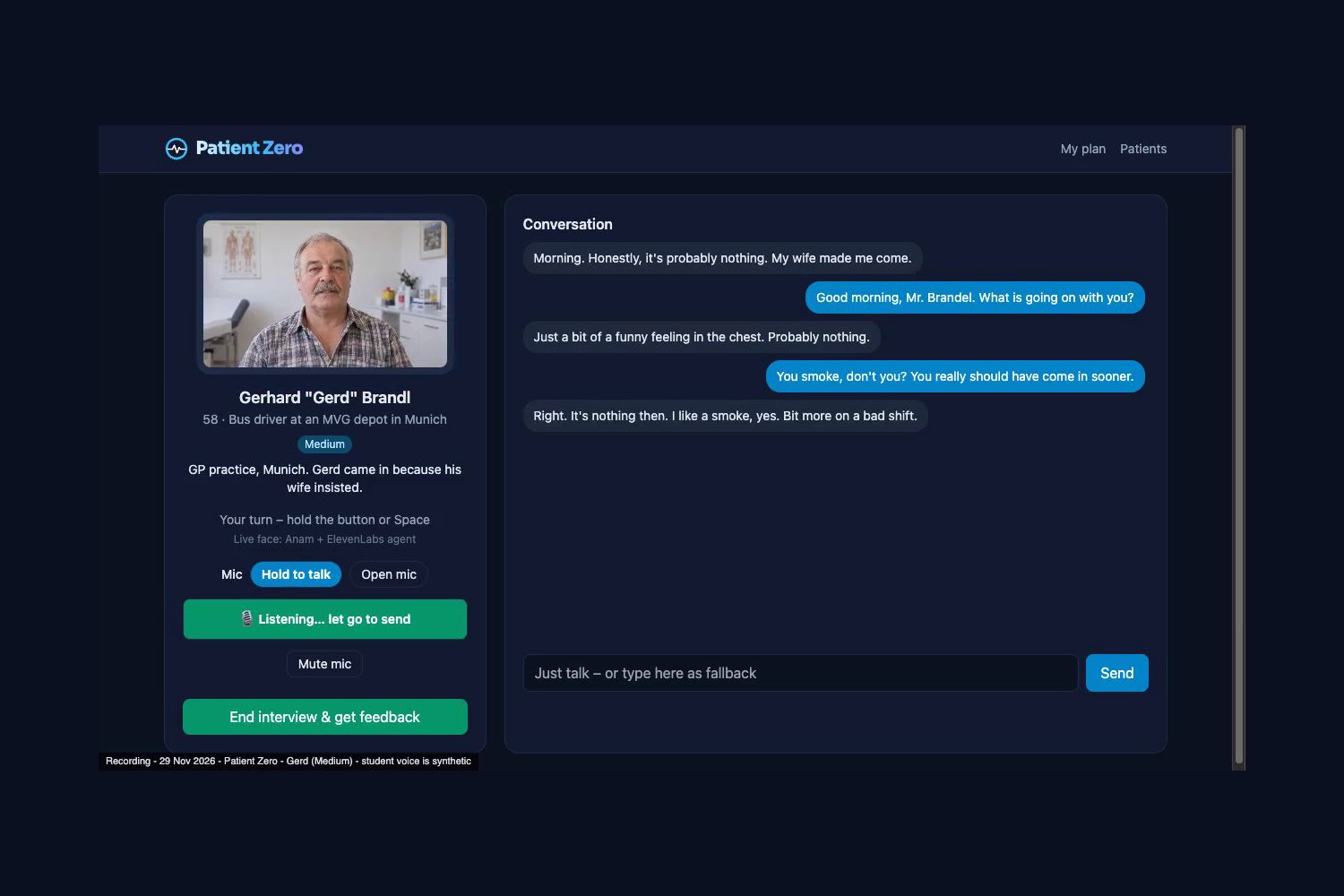
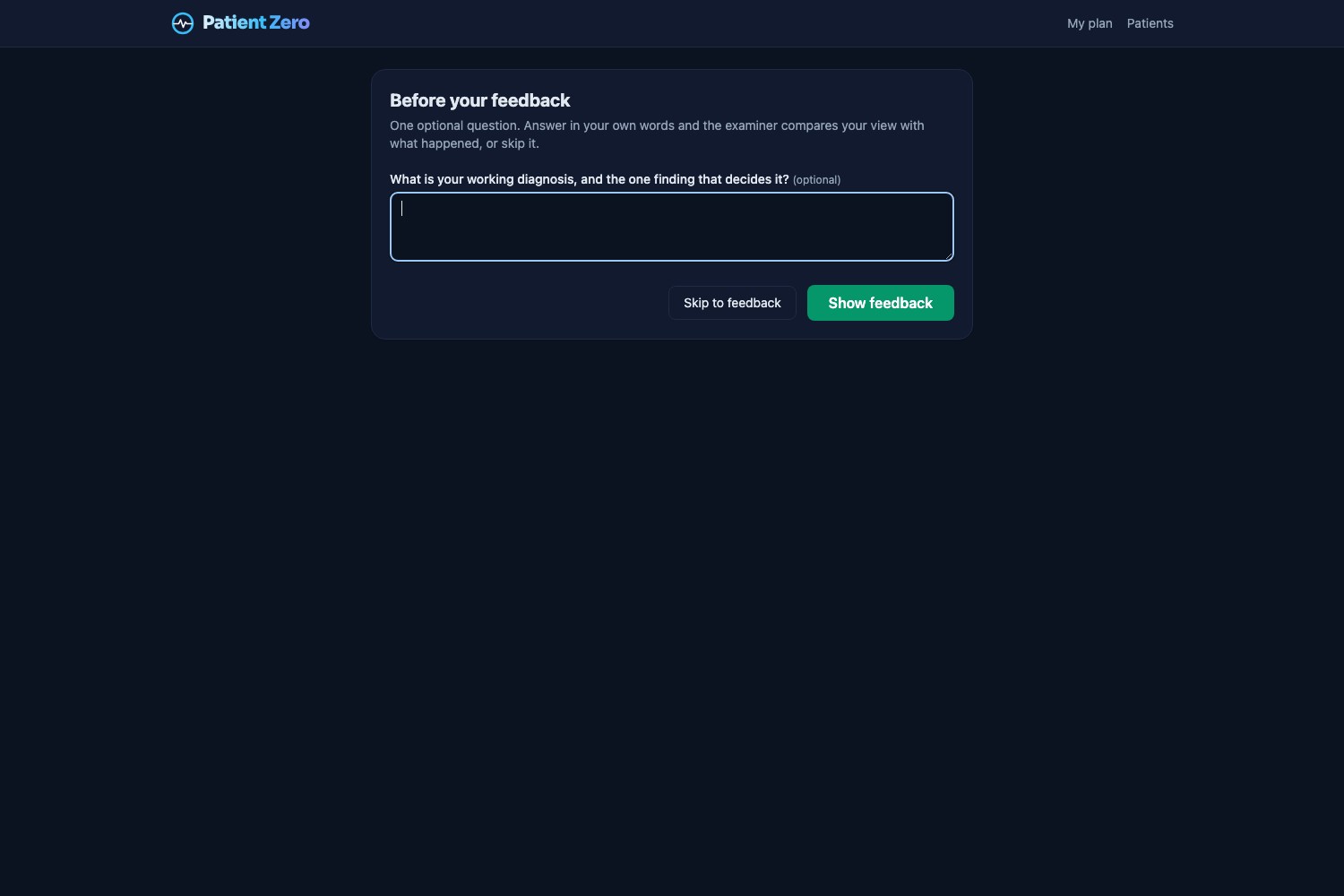
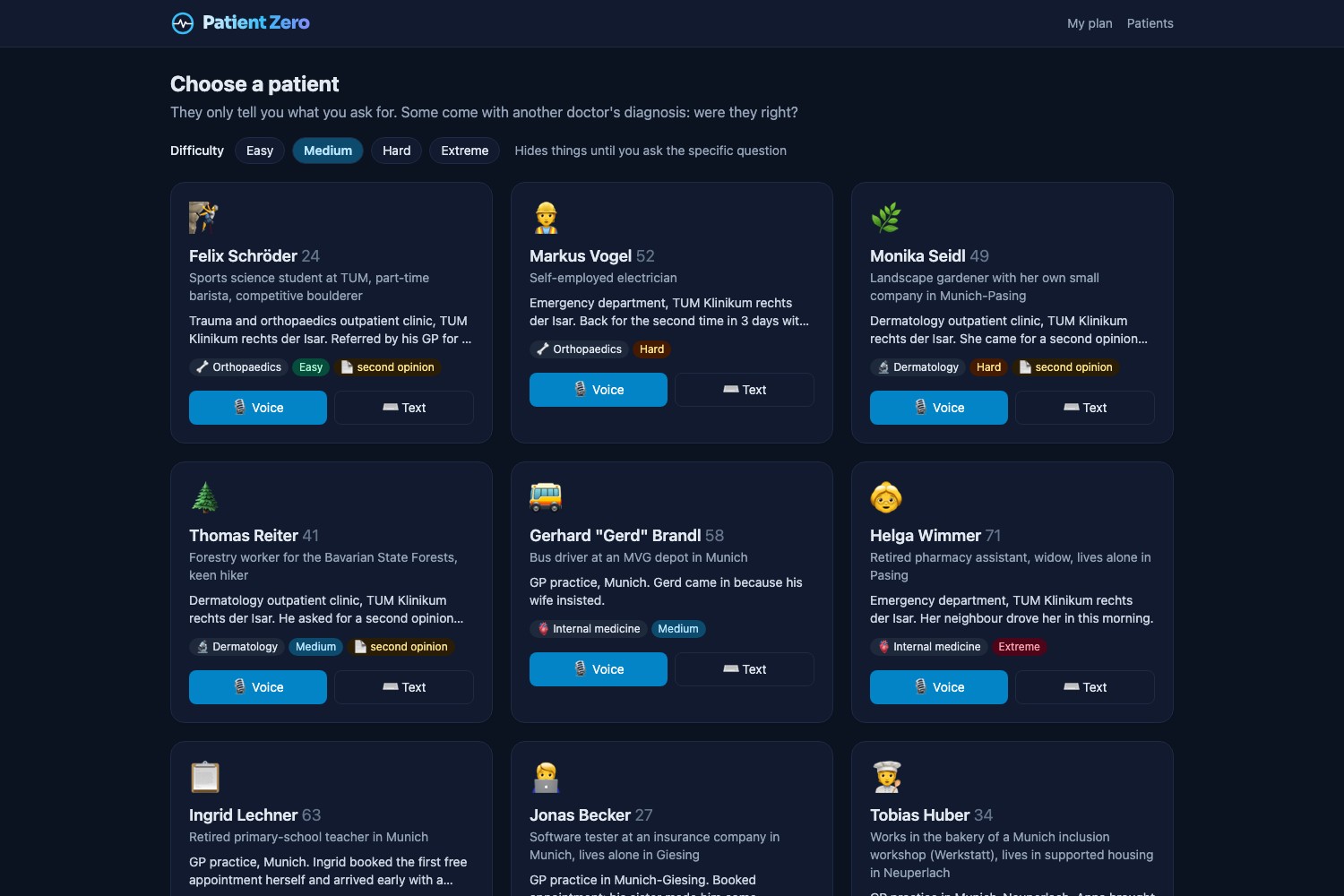
You talk out loud to a patient with a face and a voice. Every patient has their own reason to hide each fact, and their own key to open it. Rush Markus, an angry electrician, and his waterworks are "fine". Name his four-hour wait, ask again, and he tells you the truth. Gerd and Ingrid have the same heart problem: Gerd plays it down, Ingrid buries it in detail. Felix's GP is wrong and Thomas's GP is right, so you judge each one. After one optional reflection question, the feedback compares your view with what happened and shows what the patient held back and why. A coach books your next practice.
How we built it
Each patient is a case file: facts in lay words, cover answers, needs and a reason for hiding each fact. Anam makes the faces, an ElevenLabs agent the voices (one voice designed for each patient), and text roles run through OpenRouter. Claude agents wrote much of the code; we steered and tested.
Challenges we ran into
Our first voice relay put the lips 4.1 s behind (median), so the face now connects to the voice agent directly. Hall noise cut the patient off, so you hold a key to talk. On the face, a rushed question first got too much of the truth, because the voice agent runs a different model than text mode. We fixed it by spelling out the answer order at the end of each patient's instructions.
Accomplishments that we're proud of
In text mode, a rushed Markus hid his bladder problem and told it once his wait was named. Asked why, he said: "You didn't look like you had time for me."
What we learned
Realism comes from each patient's own reasons. The face path needs its own tests: the voice agent runs a different model.
What's next
Test it with students and measure whether it helps. Then add patients for breaking bad news. Today it is a hackathon prototype: English only, needs a quiet room, and speech goes to outside AI services, so never real patient data.
Built With
- anam
- claude
- elevenlabs
- fastapi
- javascript
- openai
- openrouter
- python
- tailwindcss
