-
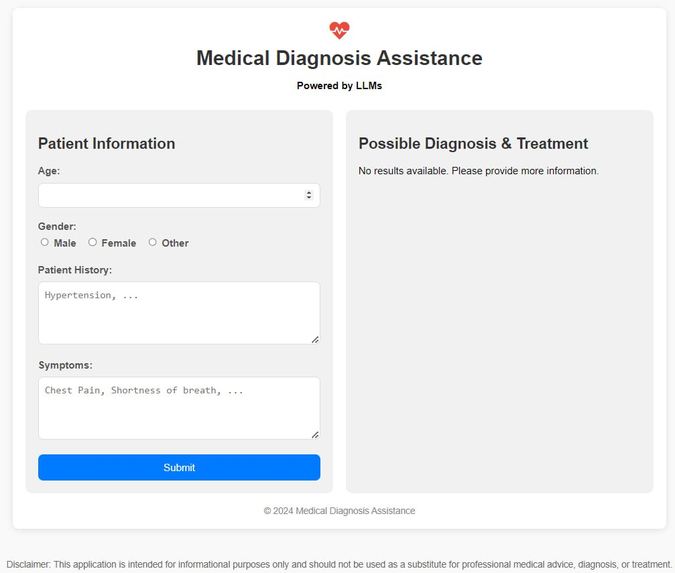
Main page

Introduction
The Patient Safety Technology project aims to address one of the most pressing issues in healthcare: medical errors, particularly medication errors, which lead to significant harm and even fatalities in patients. Leveraging advancements in natural language processing (NLP) and large language models (LLMs), this project proposes a solution that identifies potential medication errors from patient clinical notes, thereby improving patient safety.
ClinicalBERT: A Strong Foundation for Medical NLP
ClinicalBERT, a pre-trained language model specifically designed for the clinical domain, is a natural choice for tackling this problem. Unlike general-purpose language models, ClinicalBERT is fine-tuned on medical data, including clinical notes from the MIMIC-III dataset, making it particularly adept at understanding the nuances of clinical language. It can recognize medical terms and relationships between drugs and diseases and extract meaningful entities from clinical documentation.
Why ClinicalBERT is Ideal for Patient Safety
- Specialized Vocabulary: ClinicalBERT has been exposed to vast amounts of medical data, allowing it to understand medical terminologies, abbreviations, and the context in which they appear.
- Contextual Understanding: Medical language often depends on context. ClinicalBERT's transformer architecture excels at understanding how medical terms are used in different contexts, making it highly effective for tasks like named entity recognition (NER) in the medical field.
- Pre-training Advantages: Since ClinicalBERT has been pre-trained on massive clinical datasets, it can immediately provide a baseline performance in identifying medical entities such as symptoms, diagnoses, and treatments, without requiring extensive initial training.
Fine-tuning for Optimal Performance
While ClinicalBERT is a robust starting point, fine-tuning it on a specific dataset aligned with the project goals significantly boosts performance. Fine-tuning allows the model to adapt to our dataset's style, vocabulary, and content, ensuring it becomes even more sensitive to domain-specific variations in clinical notes.
The Dataset
The dataset used for this project consists of de-identified patient clinical notes, including patient history, symptoms, medications, and treatments. These notes are labeled for drugs, diseases, and symptoms, providing a rich dataset for fine-tuning ClinicalBERT. Given that this dataset mirrors real-world clinical scenarios, it is an excellent resource for adapting the model to perform patient safety and medication management tasks.
Impact of Fine-tuning
Fine-tuning ClinicalBERT on our dataset improves its ability to detect nuances in patient data, such as potential medication interactions or contraindications based on a patient’s medical history. Fine-tuning allows the model to: • Recognize specific patterns in medication errors based on real-world clinical scenarios. • Become more proficient at identifying complex relationships between drugs, diseases, and symptoms. • Improve accuracy and reduce false positives in predicting potential medical errors.
Reducing Medication Errors with Our Model
Our model can play a important role in preventing medication errors by automatically analyzing clinical notes and identifying risky drug combinations or contraindications based on a patient’s history and symptoms. For instance, if a patient with asthma is prescribed a beta-blocker, the model can flag this as a potential contraindication. Additionally, it suggests alternative treatments with lower medication error risks, providing healthcare professionals with actionable insights to improve patient care.
How It Helps
• Proactive Error Detection: By automatically scanning clinical notes, the model identifies potential issues before they lead to harm, allowing doctors to intervene early. • Improved Efficiency: Instead of manually reviewing long clinical notes, healthcare providers can rely on the model to highlight key risks, making the review process faster and more effective. • Learning from Data: With continuous training and fine-tuning, the model adapts to evolving medical practices and new drug interactions, improving its ability to prevent errors over time.
Conclusion
The Patient Safety Technology project, driven by ClinicalBERT and fine-tuned on real-world clinical data, offers an innovative approach to reducing medication errors in healthcare. By leveraging the power of pre-trained language models, fine-tuning, and domain-specific datasets, our model improves patient safety, helping healthcare providers avoid potentially life-threatening mistakes while delivering better patient outcomes.
Built With
- express.js
- node.js
- python
- pytoch


Log in or sign up for Devpost to join the conversation.