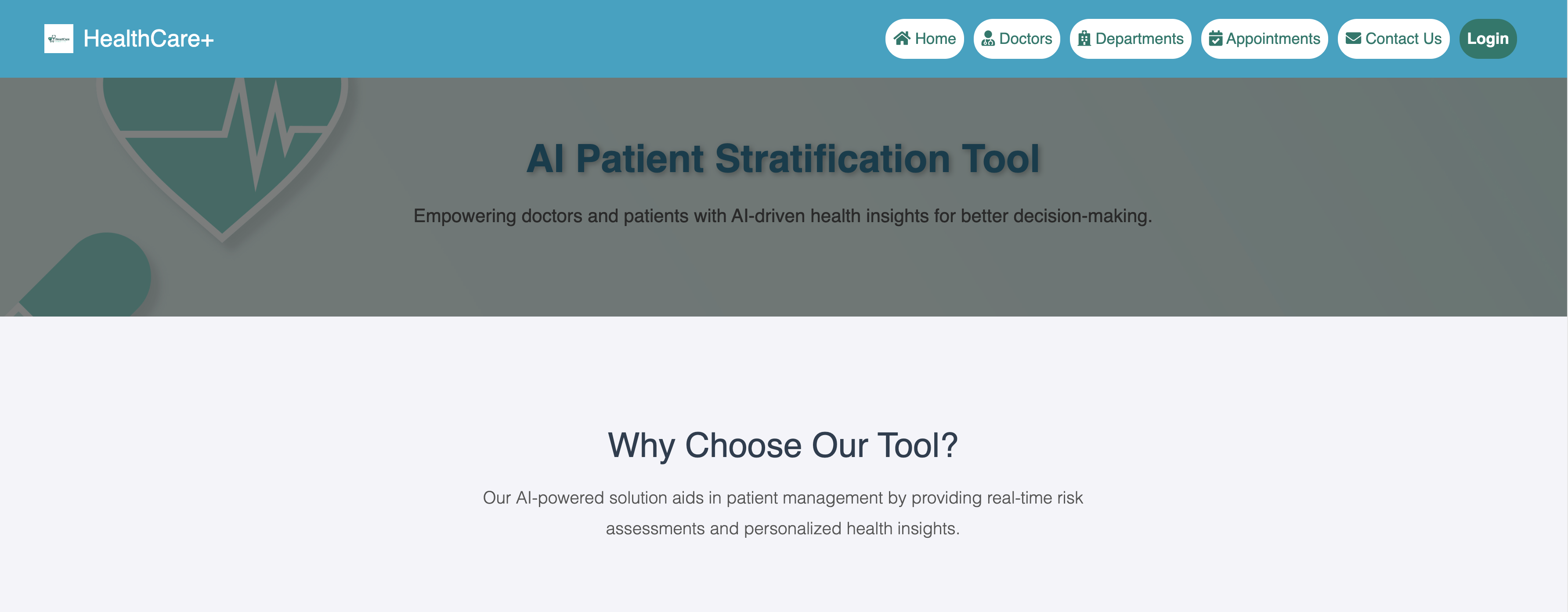

Inspiration The inspiration behind the Patient Risk Stratification Tool comes from the need to enhance patient care through proactive and efficient management. In many healthcare settings, resources like hospital beds and medical staff are often limited. We wanted to create a solution that could help healthcare providers make data-driven decisions, prioritize high-risk patients, and allocate resources more effectively. By leveraging AI and machine learning, our goal is to support healthcare professionals in managing patient risks, ultimately improving outcomes and saving lives.
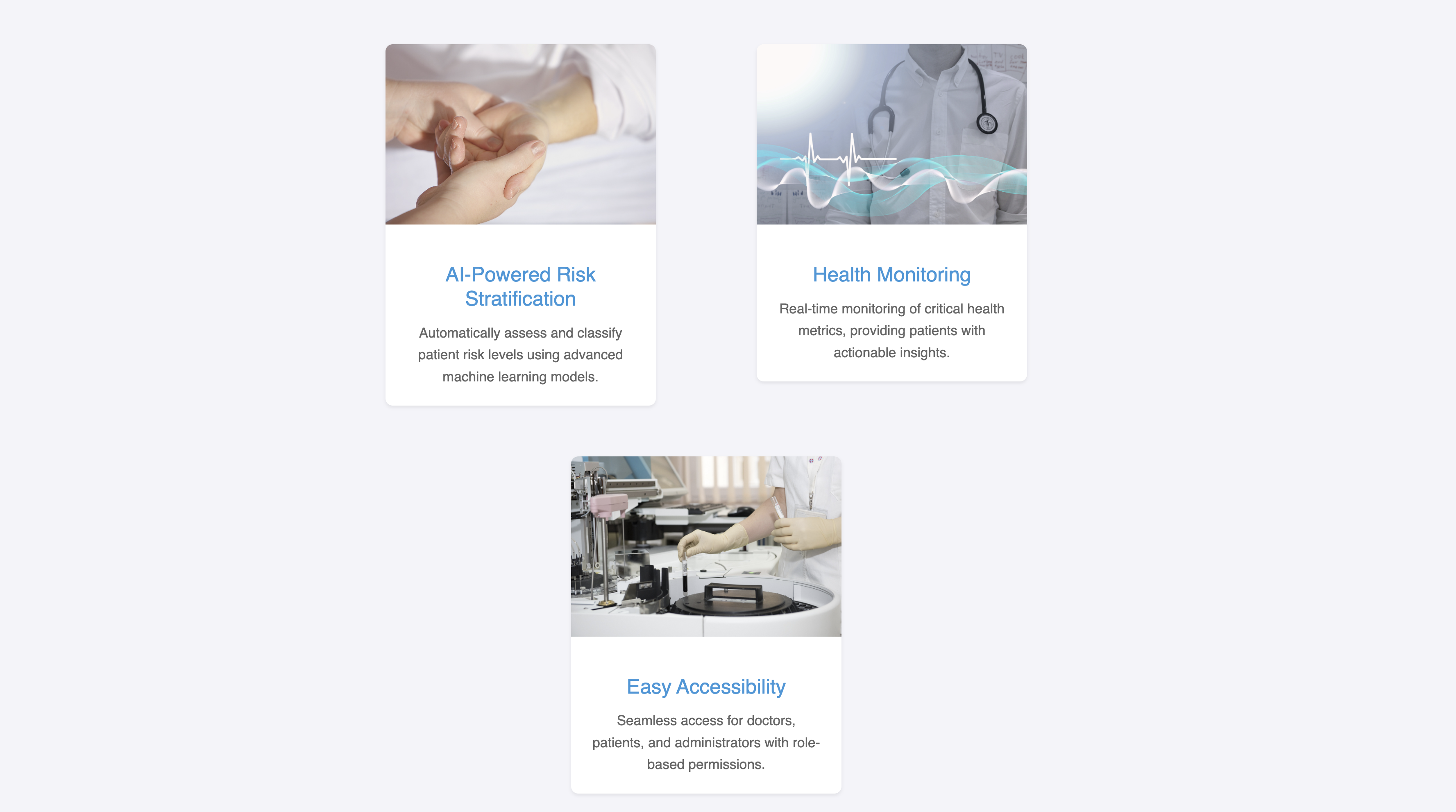
What it Does The Patient Risk Stratification Tool evaluates patient health data to assess and classify patients into different risk levels—high, medium, or low. This classification helps healthcare providers identify high-risk patients in need of immediate attention, allocate resources effectively, and offer personalized care plans based on risk assessment. For each risk level, the tool provides recommendations on medication, exercise, and diet, allowing patients to monitor their compliance and earn points for following prescribed plans. Doctors can also access up-to-date patient data and adjust care plans as needed.
How We Built It The tool was built using: Data Processing and Machine Learning: We used Python and Pandas to preprocess healthcare data, filling in missing values and encoding categorical data. Model Development: We trained an Artificial Neural Network (ANN) in TensorFlow and Keras for risk prediction. The model leverages features like age, BMI, smoking habits, and more to predict patient risk. Backend and API: We used Flask to create a RESTful API that serves the model's predictions. Flask also powers the web interface, allowing users to interact with the tool and access real-time risk assessments. Frontend: HTML, CSS, and JavaScript were used to build a user-friendly interface, while Firebase manages data access controls. Deployment: The tool is deployed on Heroku for easy access and scalability. Challenges We Ran Into Data Quality: Working with real-world healthcare data often means dealing with missing or inconsistent values, which required thorough preprocessing. Model Training: Balancing model complexity and performance was challenging due to the varied nature of input features. Frontend-Backend Integration: Ensuring smooth communication between the frontend, backend, and ML model required careful API design and debugging. Risk Scoring Customization: Creating a custom scoring system that aligns well with clinical insights posed some initial challenges.
Accomplishments That We’re Proud Of Successfully implementing a risk stratification model that provides reliable predictions based on patient data. Designing a user-friendly interface that encourages patient engagement and supports doctors in making informed decisions. Deploying a fully functional web application that is accessible to users and scalable across healthcare facilities. Creating a system where patients can actively participate in their health management and be rewarded for compliance.
What We Learned Data Science in Healthcare: This project highlighted the unique challenges and responsibilities associated with working with healthcare data, especially regarding privacy and accuracy. Model Optimization: We learned valuable techniques for optimizing neural networks to balance accuracy and efficiency, which is crucial for real-time applications. Cross-functional Development: Collaborating across frontend, backend, and data science components underscored the importance of clear communication and integration in complex projects. What’s Next for Patient Risk Stratification Tool Enhanced Personalization: Integrate more patient-specific data to refine risk assessments, such as real-time vital signs from IoT devices. Expanded Medical Features: Include additional conditions and health metrics to broaden the scope of risk assessments. Patient Engagement Features: Add personalized health tips and reminders to further encourage adherence to prescribed plans. Data Security Enhancements: Implement additional layers of encryption and privacy-preserving techniques to ensure data security. AI Model Updates: Continuously retrain and refine the model using new data to keep predictions accurate and relevant.

Log in or sign up for Devpost to join the conversation.