Inspiration
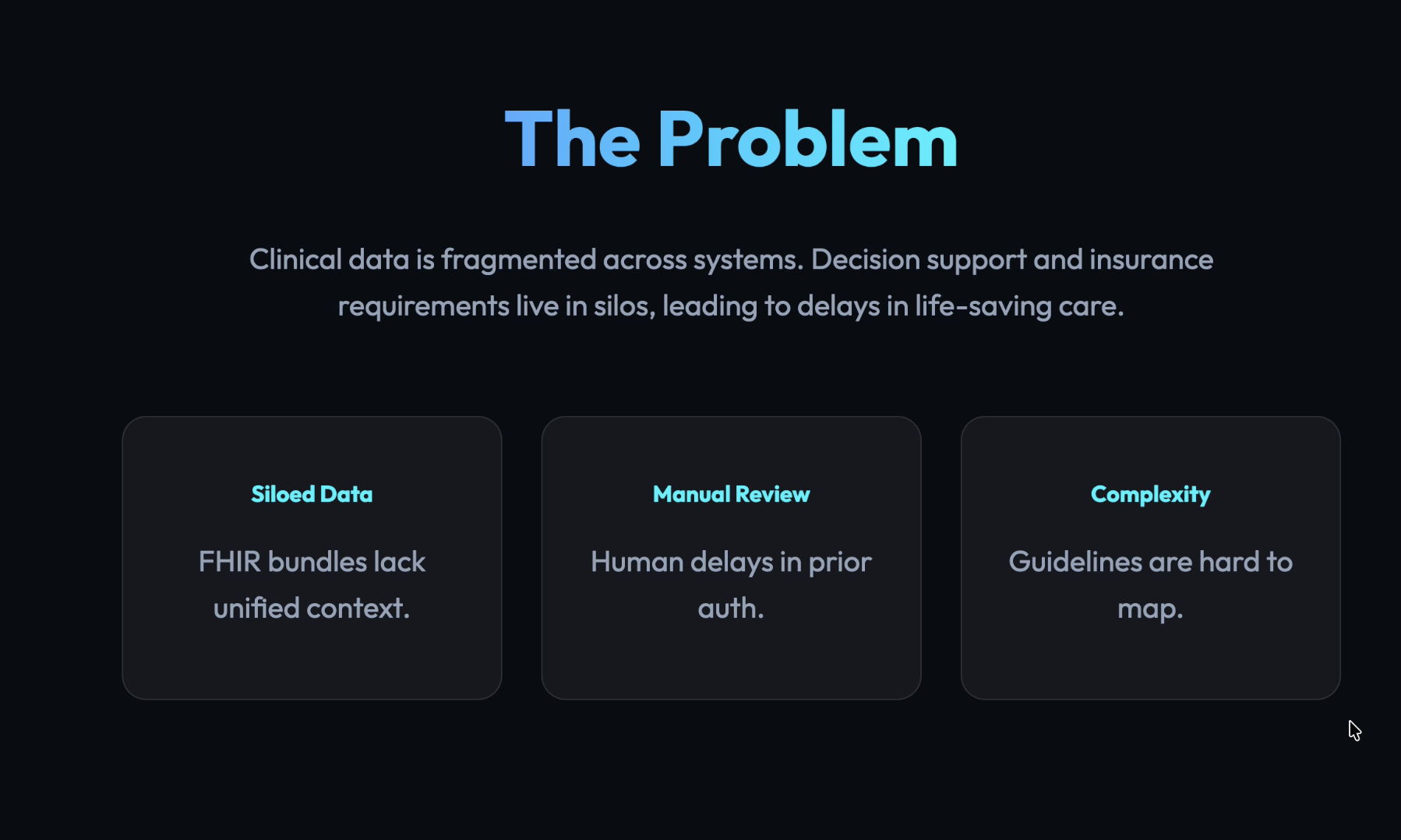
Hospitals readmit 1 in 5 patients within 30 days. The root cause is almost always the same — no one connected the dots between the patient's diagnoses, their medications, and the treatment guidelines before discharge. We built the Patient Risk Stratification Agent to be that connection — an agent that assembles other agents to see the full picture.
What it does
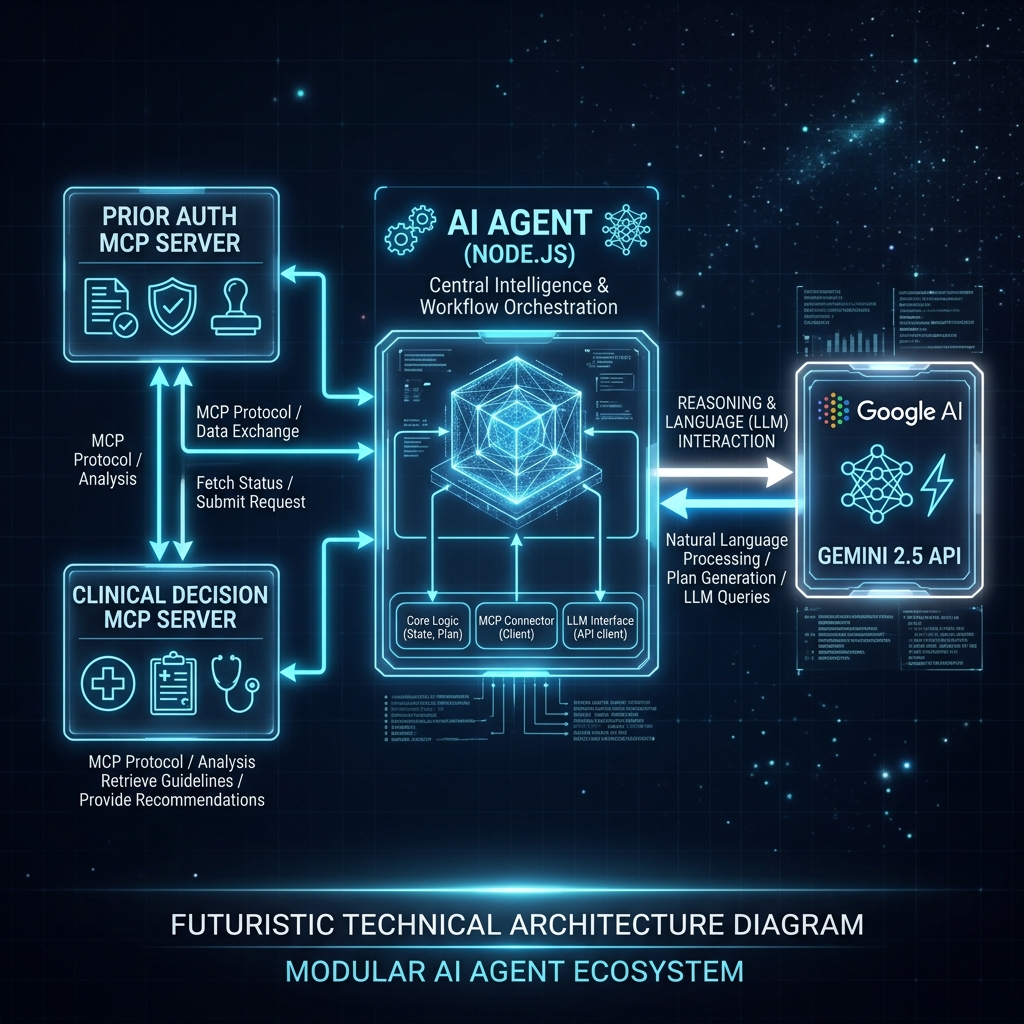
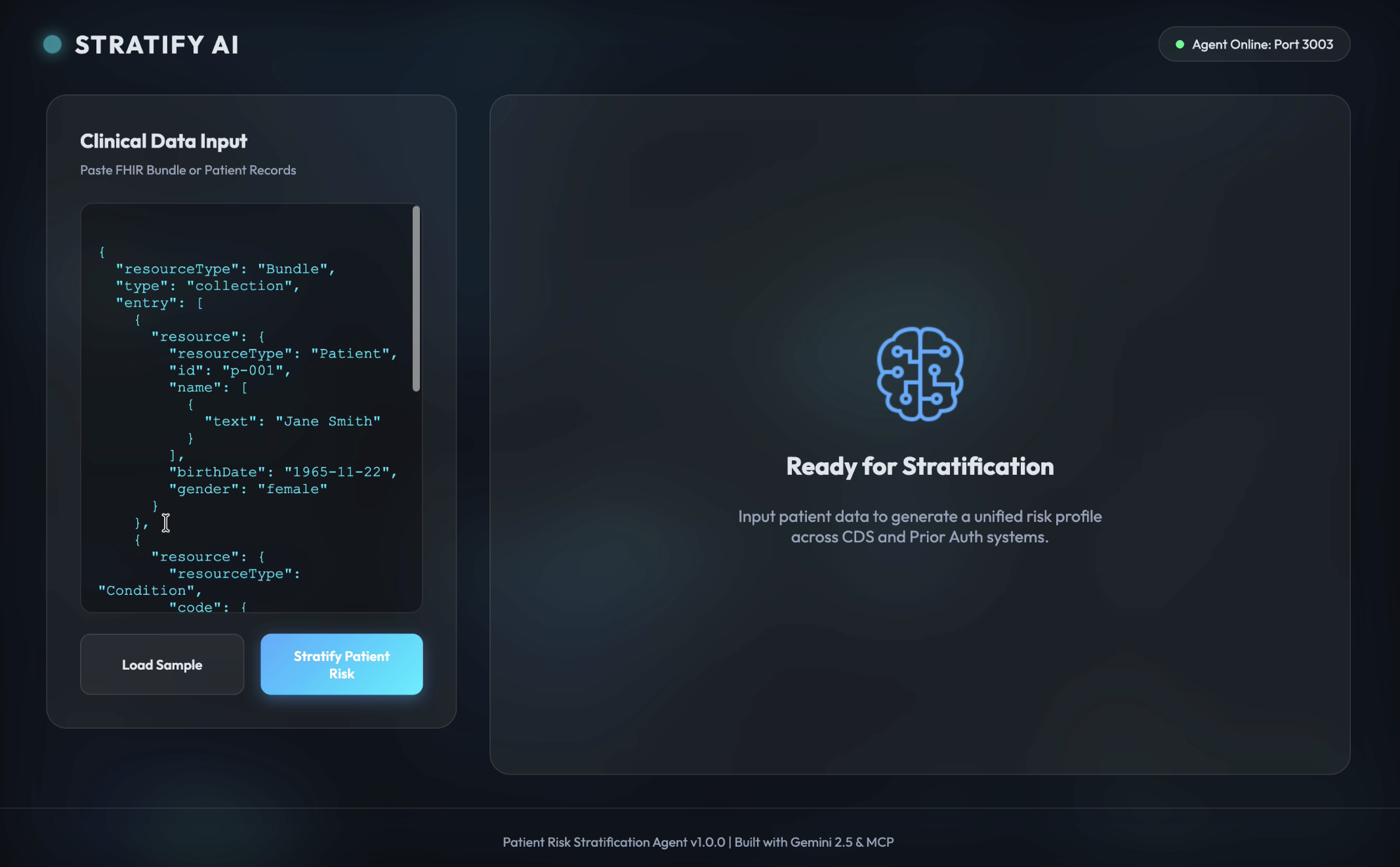
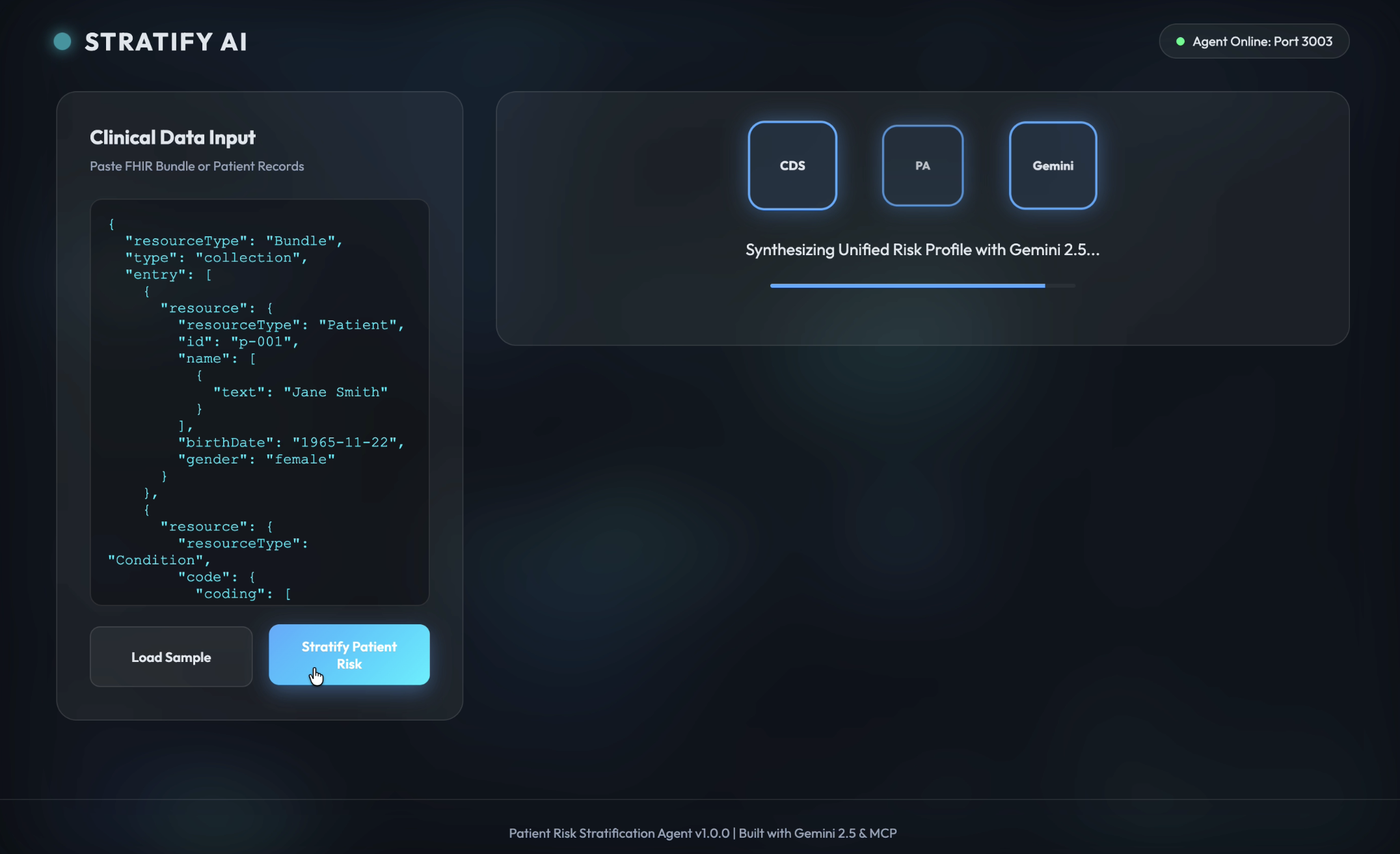
A fully A2A-compliant external agent that orchestrates two MCP servers in real time to produce a unified patient risk profile:
- Calls Clinical Decision Support MCP →
check_treatment_guidelinesandflag_contraindications - Calls Prior Auth Copilot MCP →
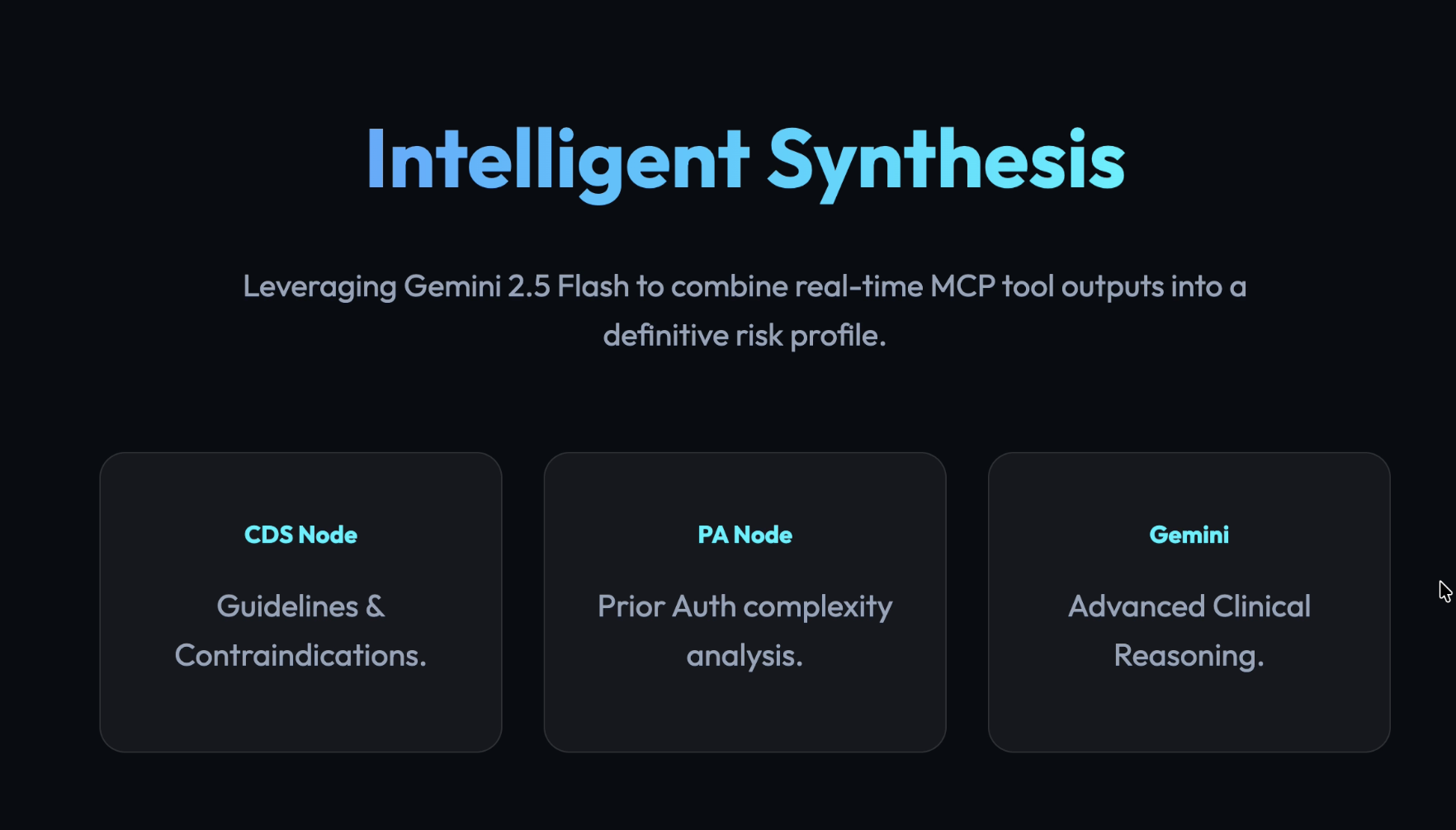
analyze_patient_fhir - Synthesizes all three results via Gemini 2.0 Flash into a structured risk stratification
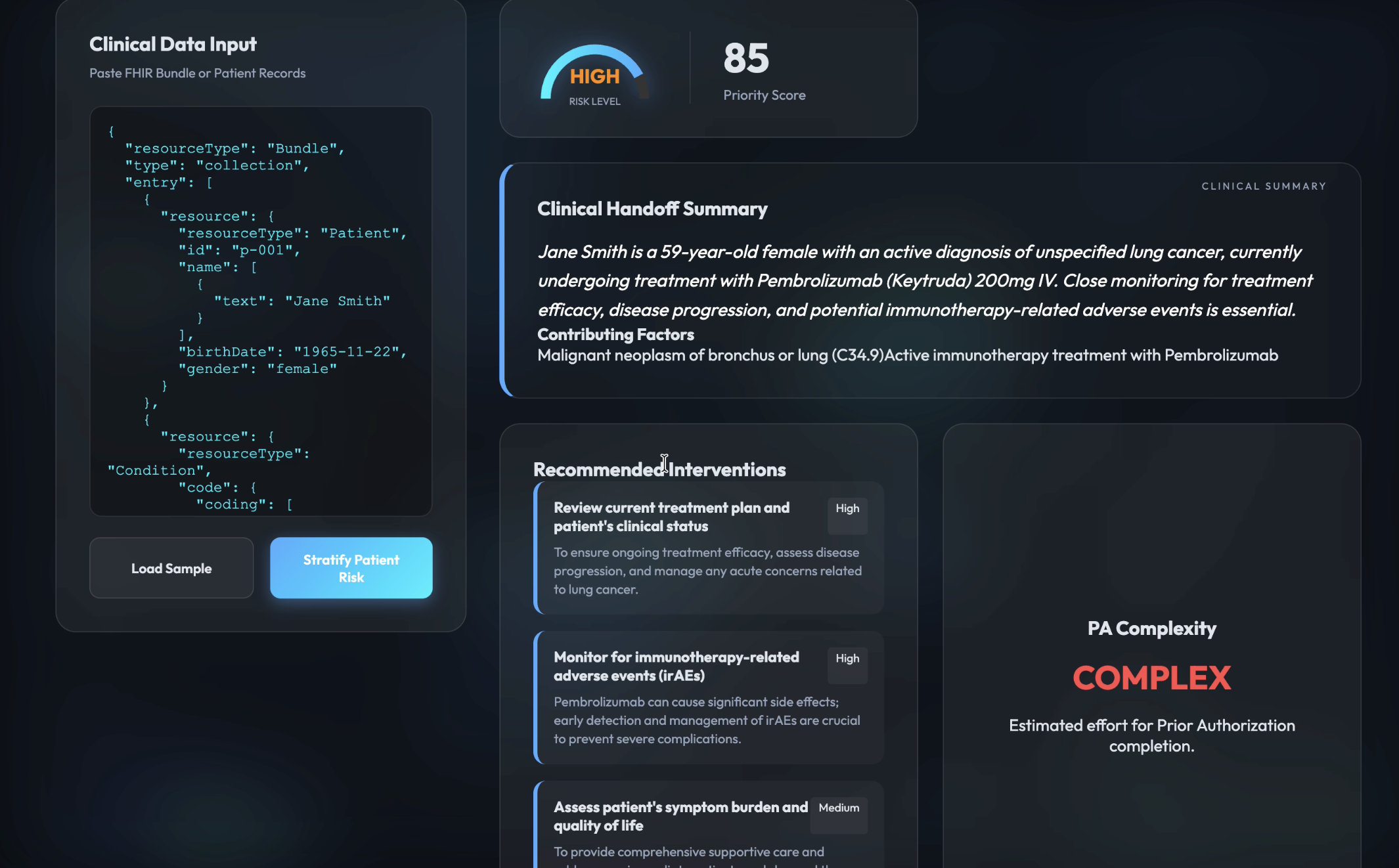
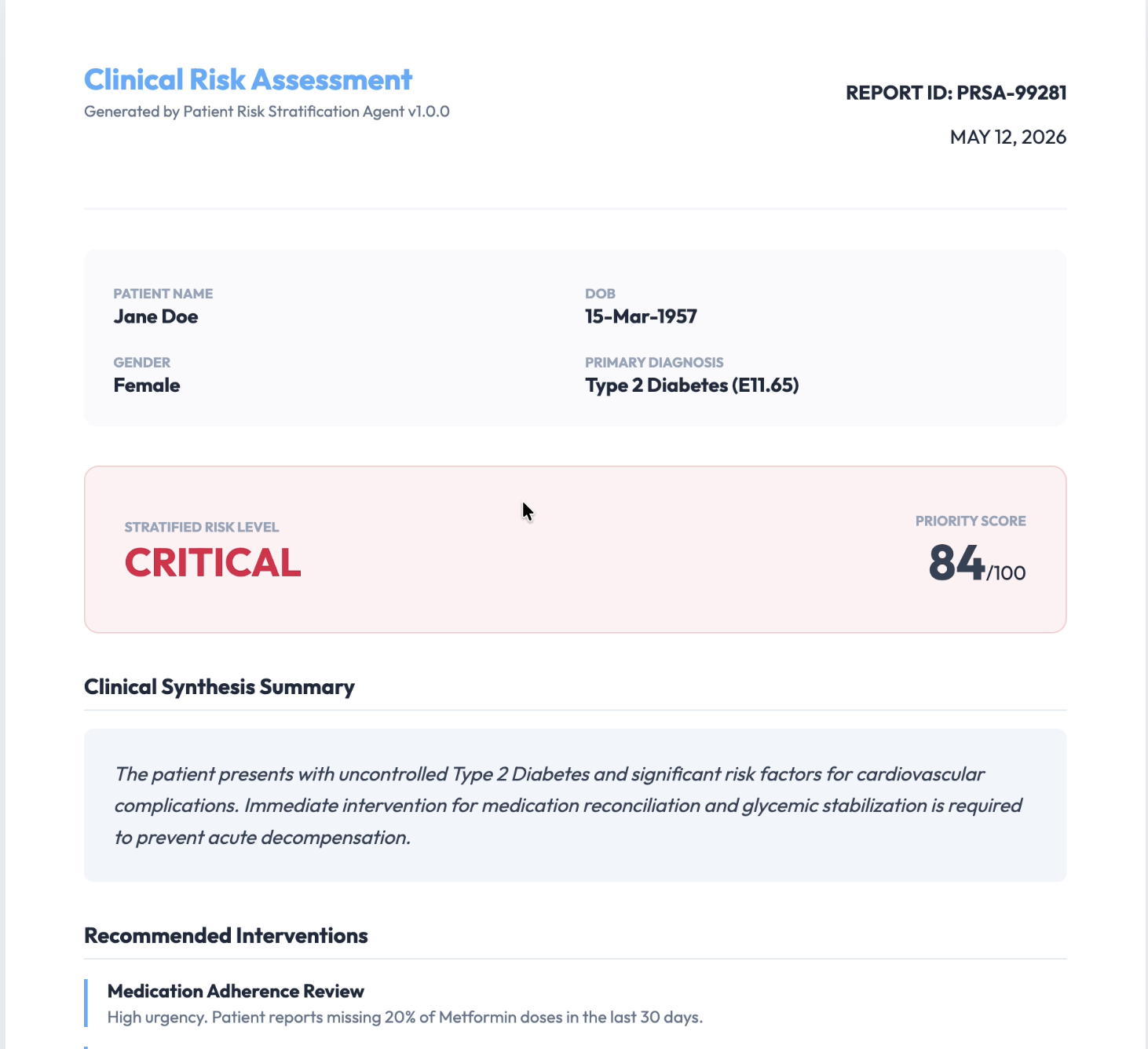
Output includes:
risk_level— critical / high / medium / lowclinical_priority_score— 1 to 100- Top 3 recommended interventions with urgency and rationale
pa_complexity— simple / moderate / complex- 2-sentence handoff summary for care transitions
How we built it
- External A2A Agent in Node.js implementing the Google A2A
protocol —
GET /.well-known/agent.jsonandPOST /a2a - MCP Client using
@modelcontextprotocol/sdkSSE transport to connect to both local MCP servers - Gemini 2.0 Flash via raw fetch with
responseMimeType:
"application/json"
for guaranteed structured output - Cloudflare Tunnel for public accessibility
- Demo frontend — glassmorphism dashboard showing risk score, interventions, and handoff summary visually
- Published to Prompt Opinion as an External A2A Agent
Challenges we ran into
The hardest part was making the multi-agent chain resilient. If either MCP server is down, the agent can't just crash — it needs to degrade gracefully, report what it missed to Gemini, and still return a useful risk stratification. Implementing that fallback logic took careful error handling across three async tool calls.
Getting Prompt Opinion to recognize the A2A agent card also required
serving it at /.well-known/agent-card.json in addition to the
standard /.well-known/agent.json path.
Accomplishments that we're proud of
This is the only submission in the hackathon that demonstrates a true multi-agent chain — one agent orchestrating two MCP servers, synthesizing their outputs, and returning a unified clinical decision. That's literally what "Agents Assemble" means. We built the endgame.
What we learned
A2A and MCP are complementary standards, not competing ones. MCP gives agents tools. A2A gives agents the ability to collaborate. The real power is when you combine them — an orchestrator agent that knows which specialist MCP to call for which problem.
What's next for Patient Risk Stratification Agent
- Add Discharge Summary Translator as a third MCP in the chain — automatic plain-language discharge instructions for high-risk patients
- Real-time EHR integration — triggering risk stratification automatically on admission via FHIR webhooks
- Outcome tracking — closing the loop by comparing predicted risk scores against actual 30-day readmission data
Built With
- 2.0
- a2a
- cloudflare
- css
- express.js
- fhir
- flash
- gemini
- html
- mcp
- node.js
- opinion
- prompt
- protocol
- r4
- sdk
- sse
- tunnel

Log in or sign up for Devpost to join the conversation.