-
-
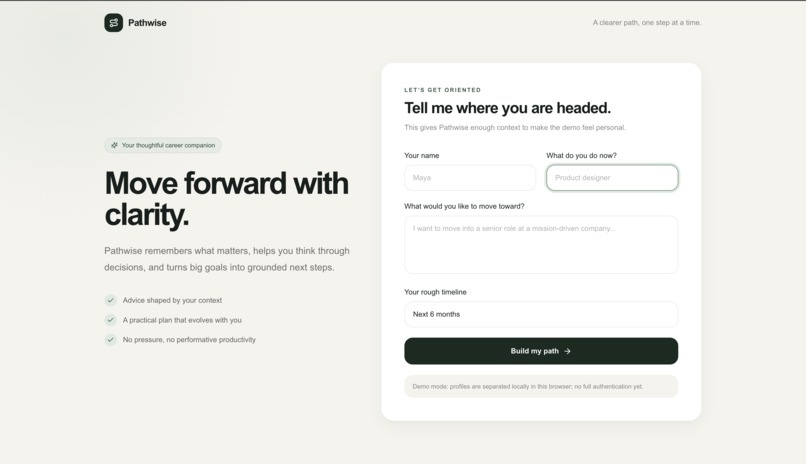
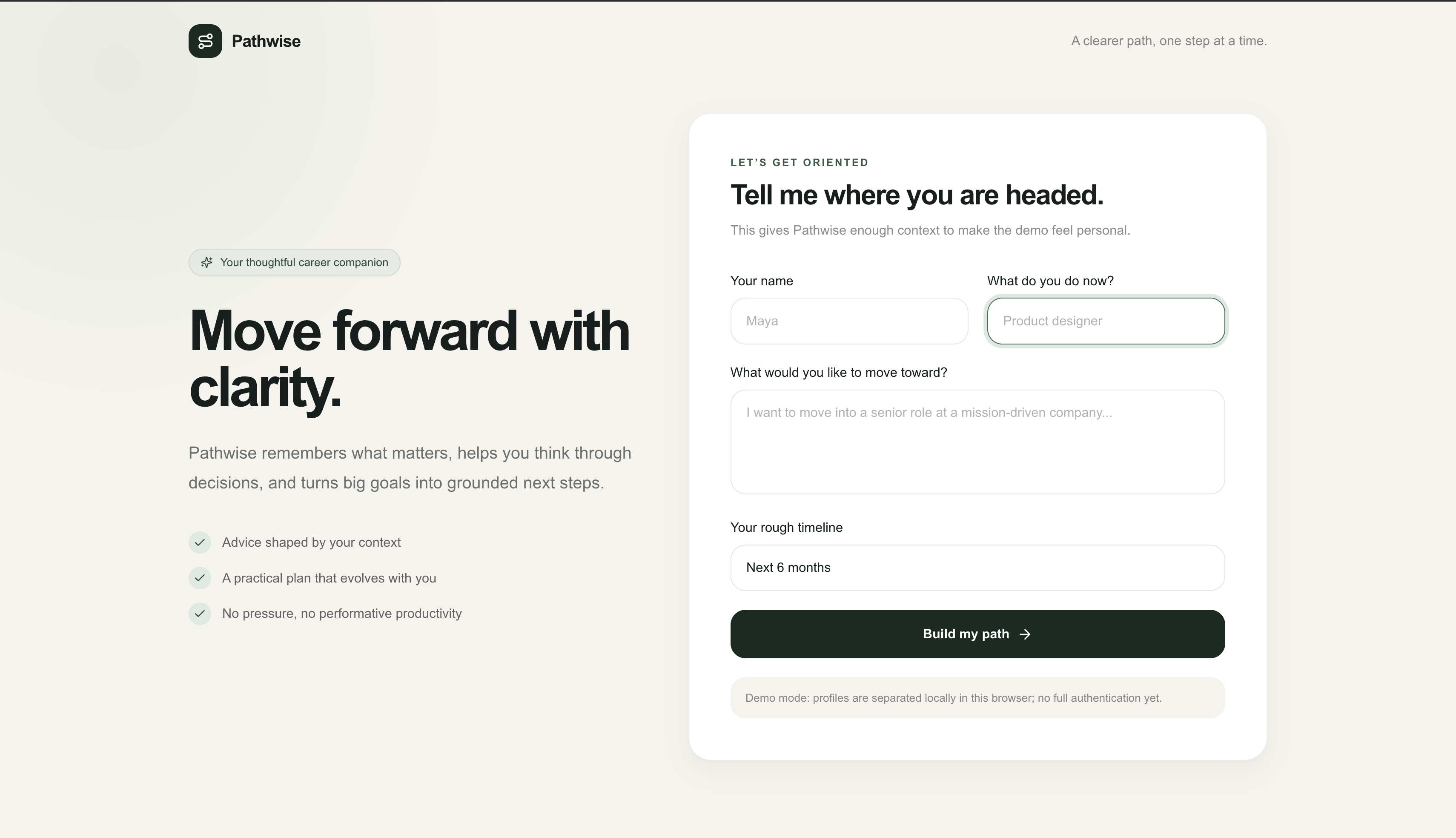
Pathwise's onboarding screen.
-
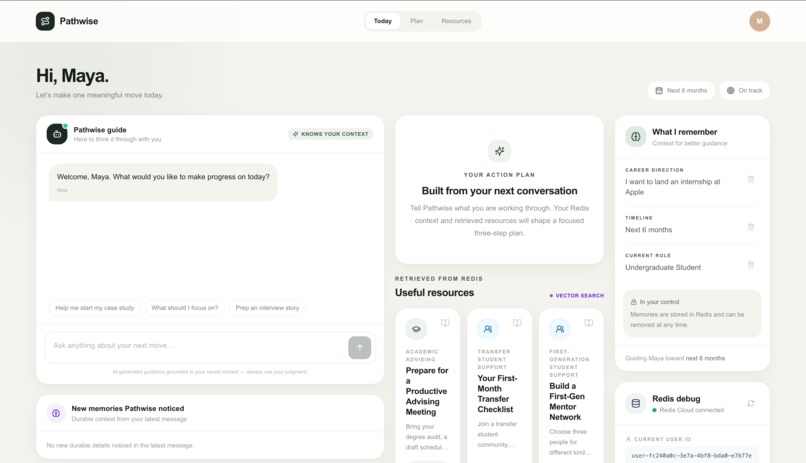
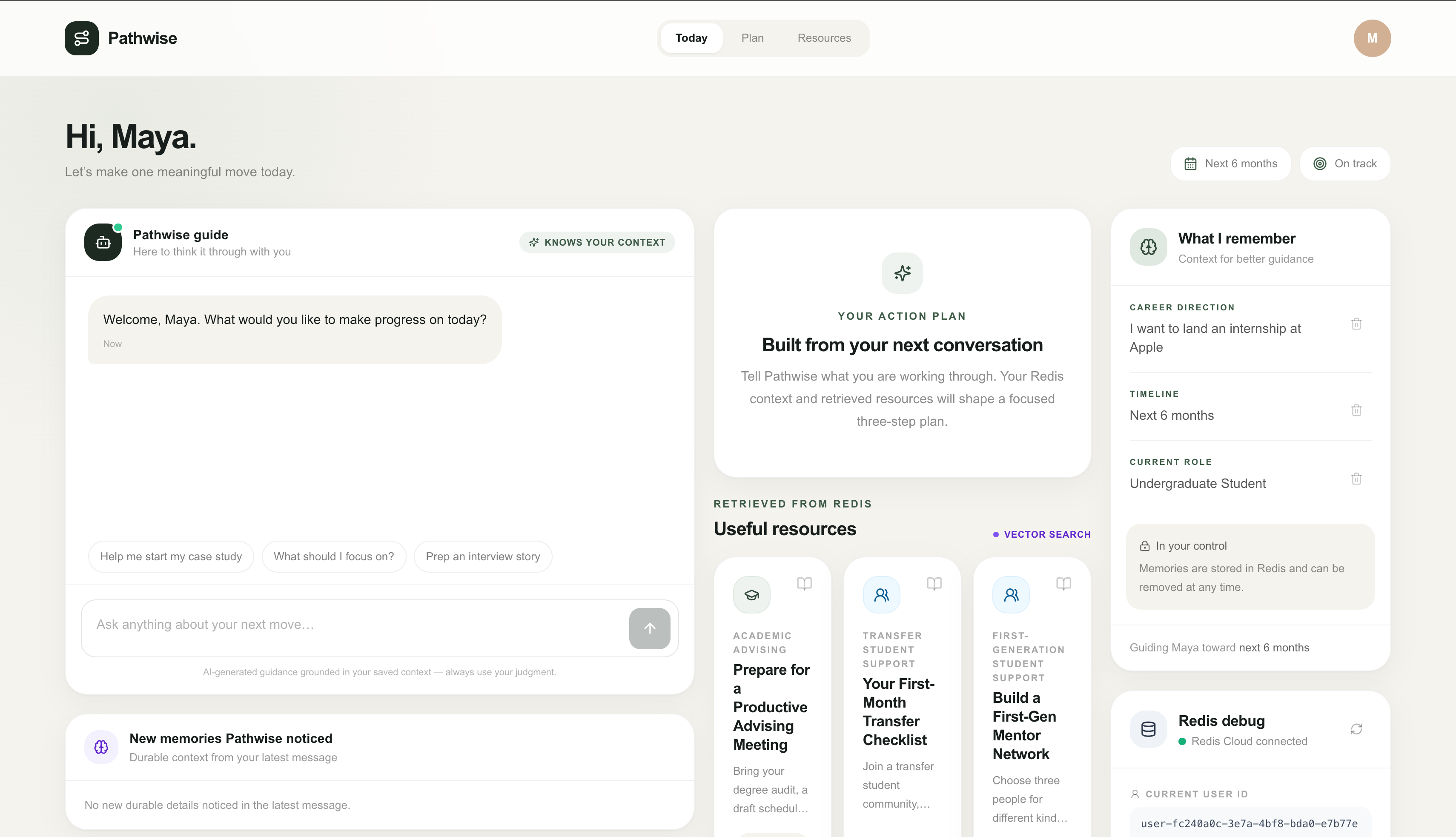
Pathwise's dashboard, part 1.
-
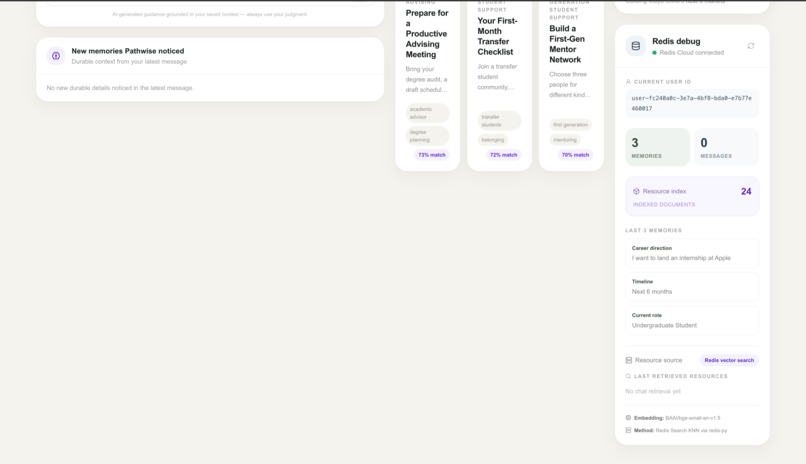
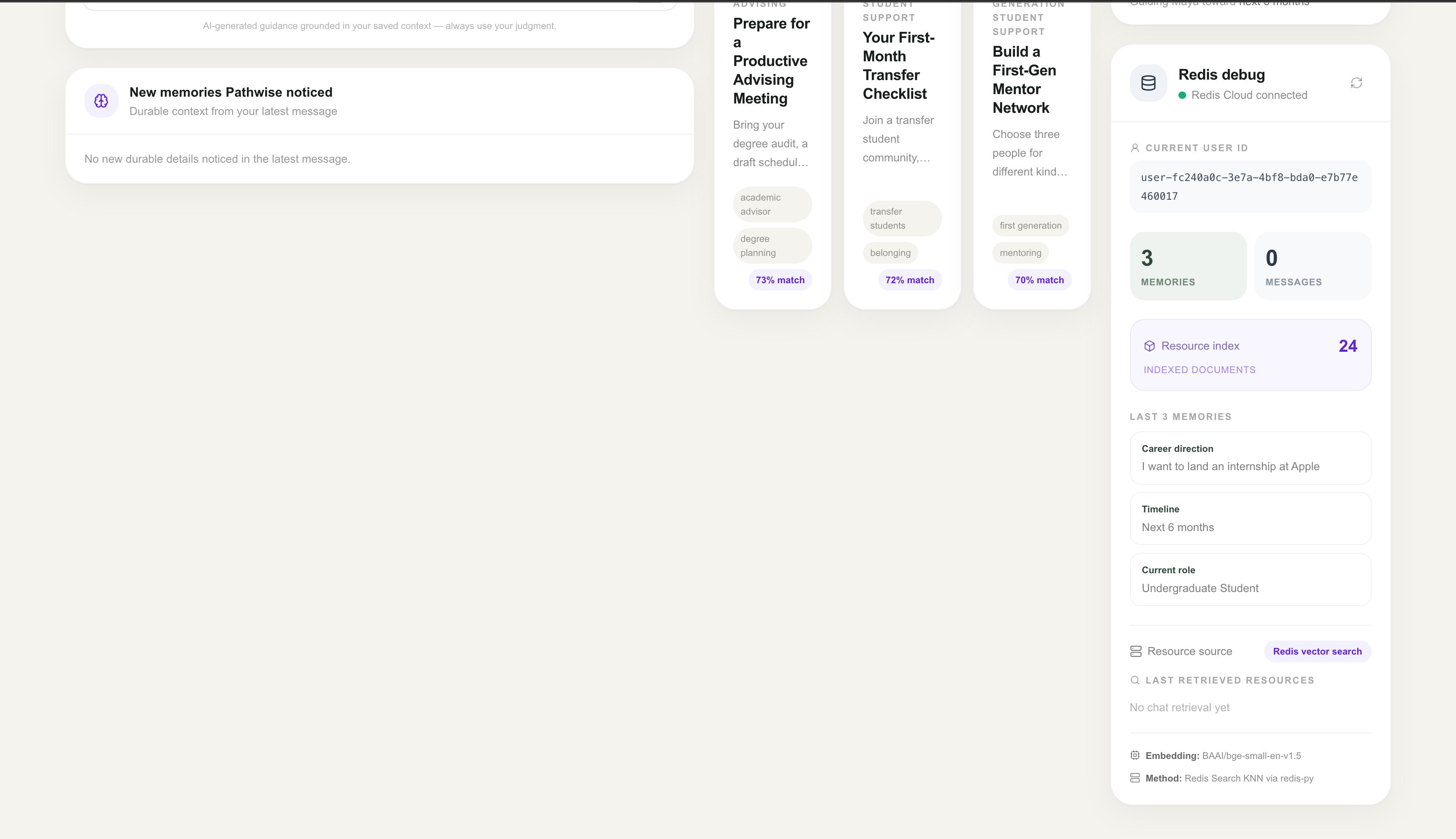
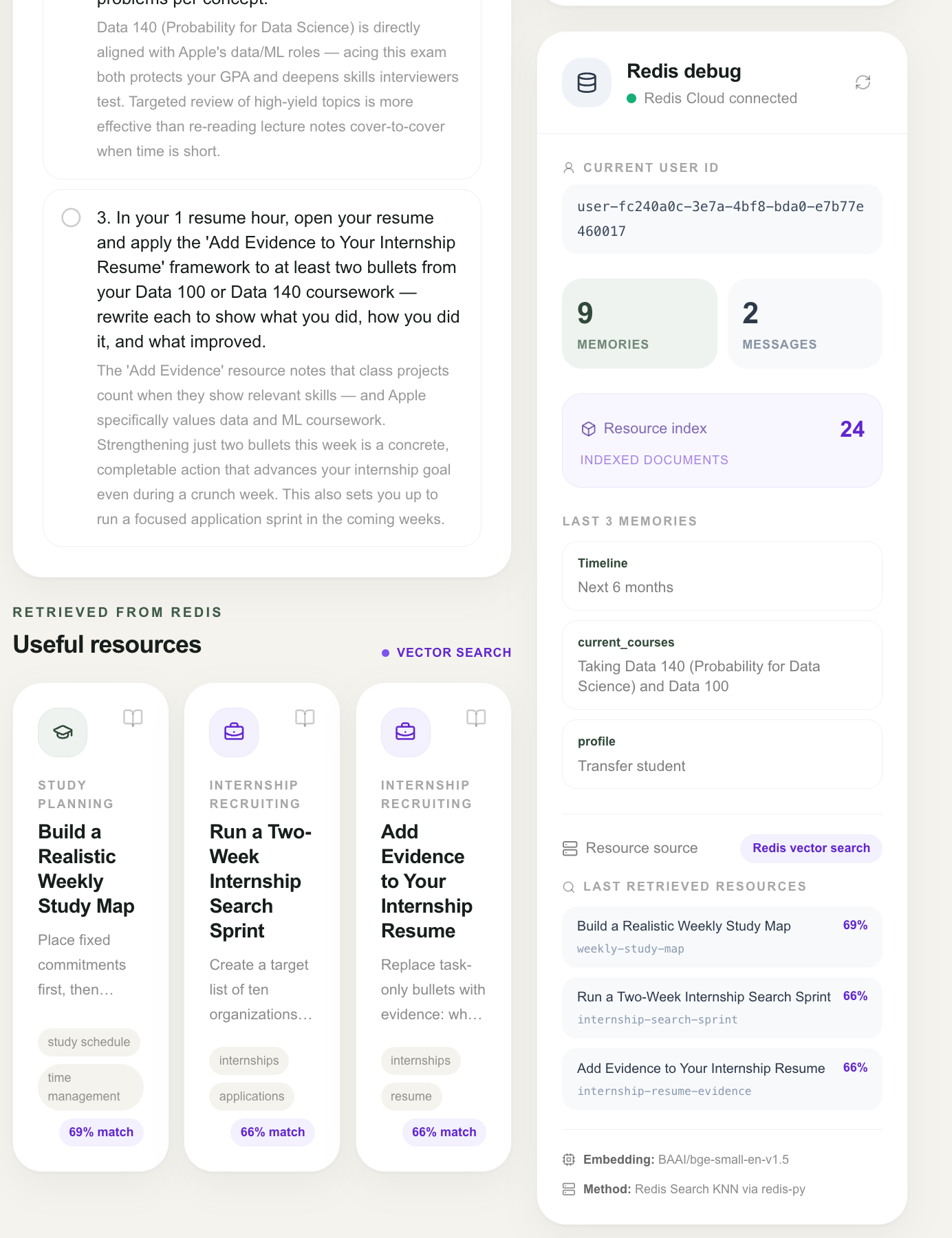
Pathwise's 'Useful Resources' and Redis debug panel, part 2.
-
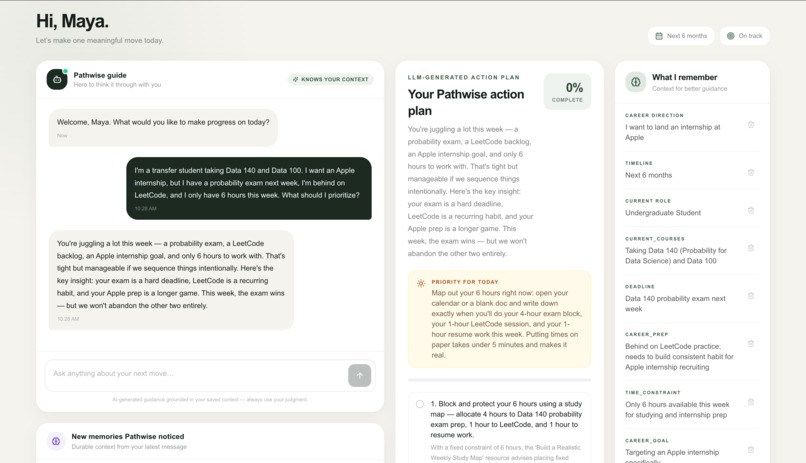
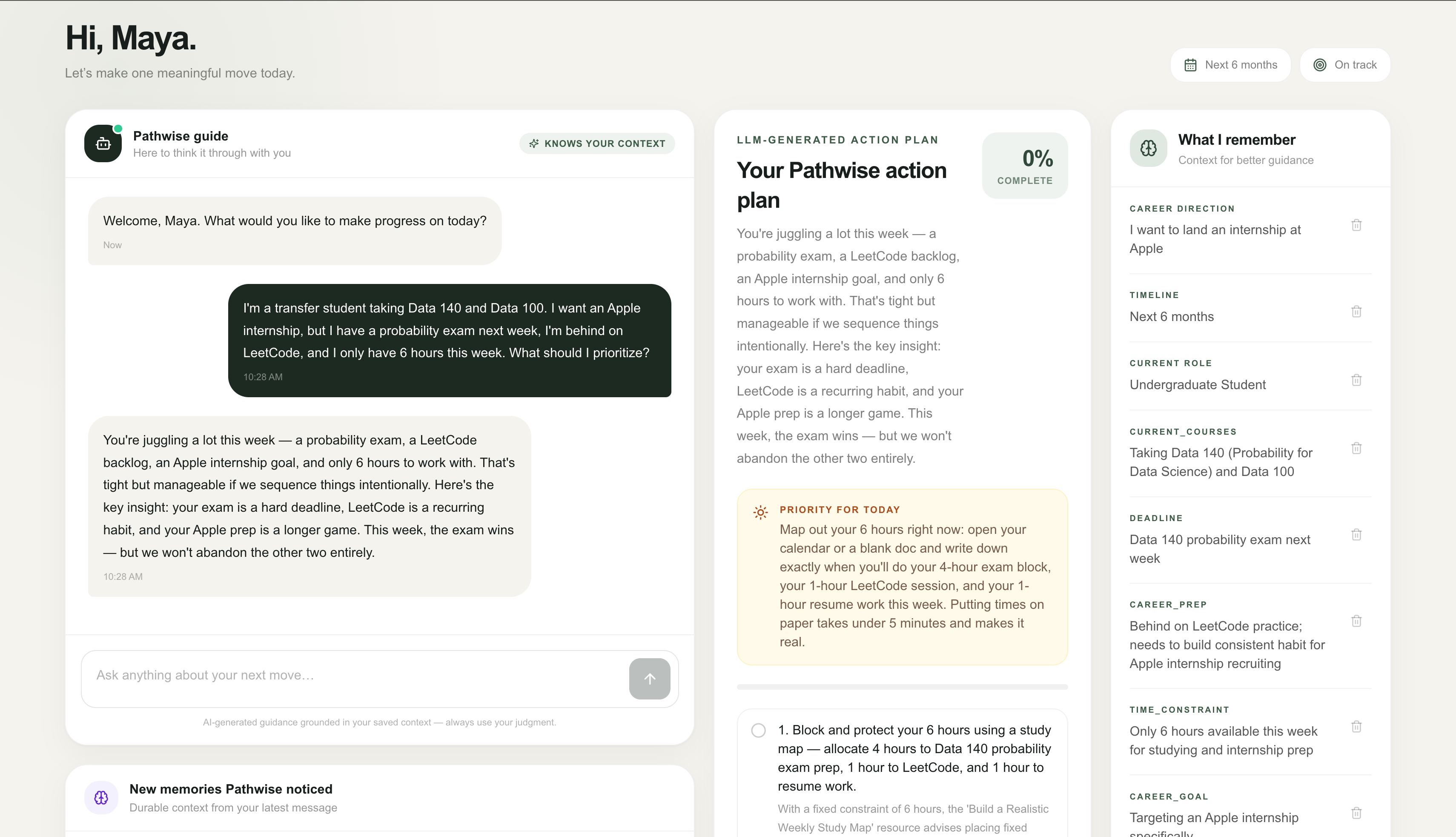
Pathwise's response and generation of the action plan.
-
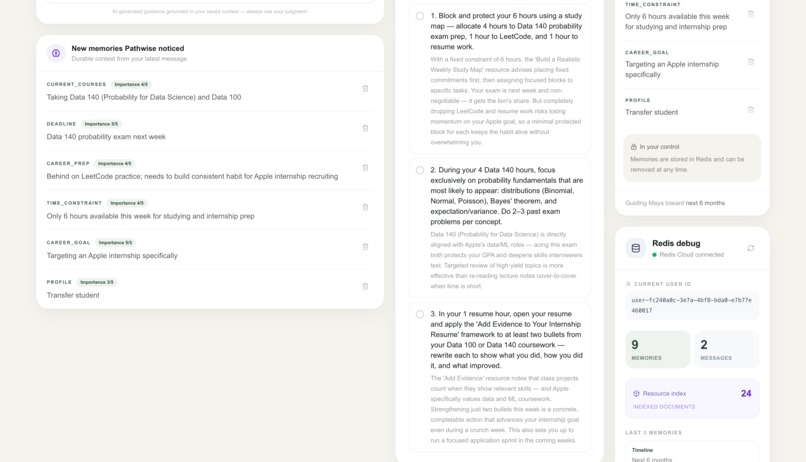
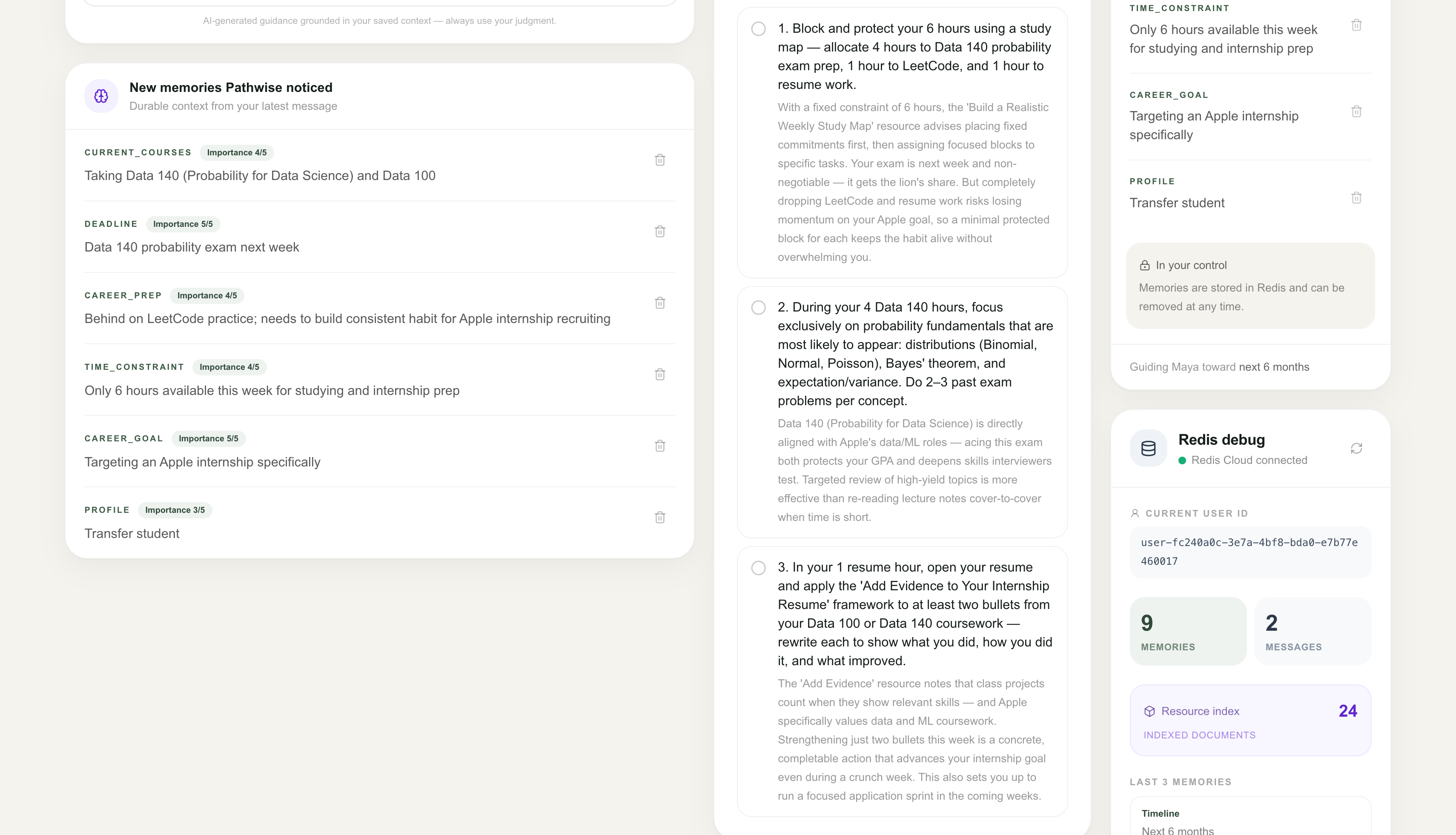
Pathwise's comprehensive action plan, along with new memories that Pathwise noticed.
-
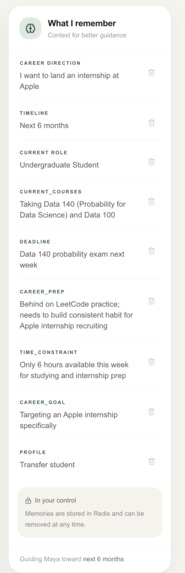
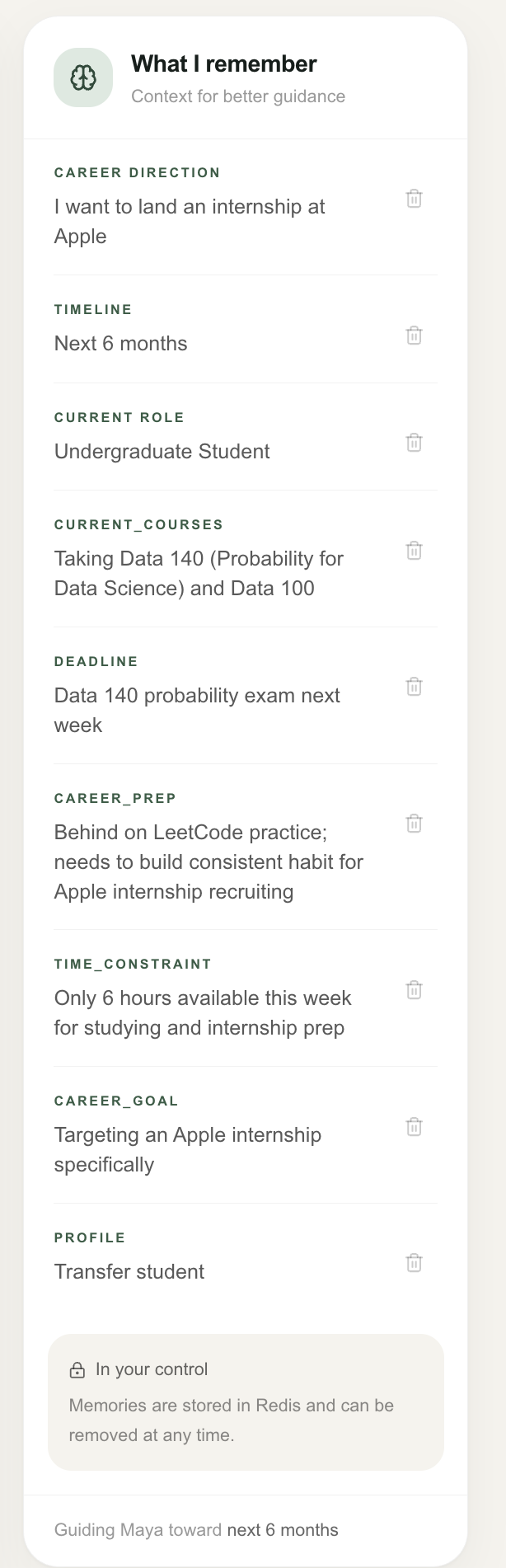
Pathwise's 'What I Remember' tab, where it stores context for better guidance that the user can remove at any time.
-
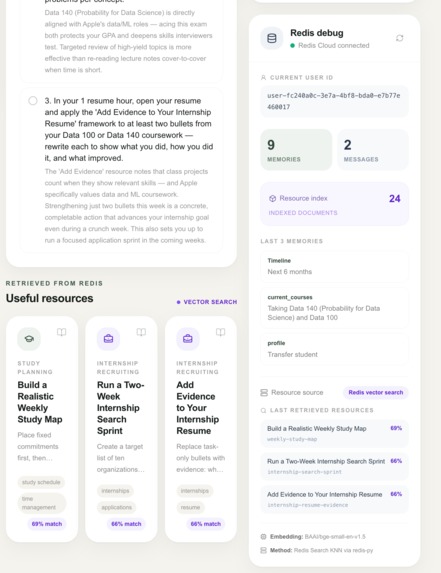
Pathwise updating 'Useful Resources' based on user's conversation, along with Redis debug panel with updated memories and messages.
Inspiration
Pathwise was inspired by the idea that succeeding in college often depends on more than having access to information. Students are surrounded by advising pages, career centers, tutoring, office hours, financial aid resources, transfer programs, and internship advice. When all of these things feel urgent, it is hard to know what actually matters next.
That problem is especially real for transfer and first-generation students, who may be navigating a new university system without the same built-in roadmap or support network as their peers. A generic AI chatbot can answer a question once, but it does not remember a student’s goals, deadlines, constraints, weak areas, or recurring challenges.
I built Pathwise to be a student success memory agent: an AI assistant that helps students make better academic and career decisions by remembering their context over time and grounding its advice in relevant resources.
What it does
Pathwise helps students turn academic and career stress into a clear, personalized action plan.
A student starts by creating a demo profile with information like their name, role, goals, and timeframe. From there, they can check in with Pathwise whenever they feel stuck.
For example, a student might say:
“I’m a transfer student taking Data 140 and Data 100. I want an Apple internship, but I have a probability exam next week, I’m behind on LeetCode, and I only have 6 hours this week. What should I prioritize?”
Pathwise uses the student’s saved memories, recent chat history, and Redis-retrieved resources to generate a structured plan. It returns a priority for today, a concrete action plan, useful resources, and new durable memories that improve future guidance.
Pathwise also gives students control over what it remembers. The dashboard includes a “What I remember” panel where saved memories are visible and removable. Students can also start a new demo profile so different users do not share context.
The resource cards are retrieved from Redis using vector search. Students can open a resource to see why it was retrieved, view its similarity score, and choose to use that resource in the plan. When they do, Pathwise revises the plan using that selected Redis resource as high-priority context.
How I built it
I built Pathwise as a full-stack web app with a Next.js, React, TypeScript, and Tailwind CSS frontend and a FastAPI backend.
The core pipeline is:
Check-in → Redis memory/history retrieval → Redis vector resource search → Claude structured response → Redis memory persistence → dashboard update
Redis Cloud is central to the project. I used Redis to store long-term student memories, chat history, demo profile context, and a catalog of student-success resources. Each resource is embedded with FastEmbed using BAAI/bge-small-en-v1.5, producing 384-dimensional vectors that are stored in Redis.
When a student sends a message, Pathwise embeds the query and runs Redis Search KNN vector search through redis-py to retrieve the most relevant resources. Those resources, along with the student’s remembered context and recent chat history, are passed into Claude.
Claude generates a structured action plan and extracts durable memory updates from the student’s message. These memories are saved back into Redis with fields like user_id, type, content, importance, created_at, and source_message.
On the frontend, I designed the dashboard to make the AI’s context visible. Users can see the action plan, the resources retrieved from Redis, the memories Pathwise saved, and a Redis debug panel showing connection status, memory counts, resource retrieval details, and similarity scores.
Challenges I ran into
One of the biggest challenges was designing memory responsibly. Pathwise needs to remember useful student-success context, but memory can easily feel invasive if it is hidden. I focused on making saved memories visible, scoped to the current demo profile, and removable by the user.
Another challenge was making Redis more than a simple cache. I wanted Redis to act as the assistant’s real-time context engine. That meant using it for persistent memories, chat history, resource storage, vector search, and retrieval metadata.
I also had to fix demo-specific issues that became obvious only after using the app end-to-end. For example, I needed to separate demo profiles so different users would not share memories or chat history, make resource cards actually affect the action plan, and ensure the Redis debug panel was visible during judging.
Finally, I had to balance ambition with hackathon constraints. Instead of building a full education platform, I focused on one strong loop: a student checks in, Pathwise remembers their context, retrieves relevant resources from Redis, generates a plan, and updates memory.
Accomplishments that I'm proud of
I'm proud that Pathwise feels different from a generic AI study tool. It does not just answer isolated questions; it maintains continuity across sessions and adapts based on the student’s remembered goals, constraints, deadlines, and weak areas.
I'm also proud of the Redis integration. Pathwise uses Redis Cloud for long-term memory, chat persistence, profile-scoped context, and Redis Search KNN vector retrieval over student-success resources. The Redis usage is visible in the dashboard, including retrieved resources, similarity scores, and memory counts.
Another accomplishment was making the resource cards interactive. When a student chooses a retrieved resource, Pathwise revises the plan using that resource as high-priority context, making the retrieval loop feel concrete rather than decorative.
Most importantly, I'm proud of the product direction. Many students do not need more information, they need help understanding what to do next. Pathwise is designed around that moment.
What I learned
I learned that building useful AI products is less about the model call alone and more about context. The hardest questions were: what should the system remember, what should it retrieve, what should it ignore, and how should the user stay in control?
I also learned how important transparency is for memory-based AI. If an assistant remembers things about a user, the user should be able to see and remove those memories.
Technically, I learned how to connect Redis-backed persistence, Redis vector search, and Claude structured outputs into a single product loop. I also learned how much the quality of an AI assistant depends on the surrounding system: memory, retrieval, UI, and user control.
What's next for Pathwise
Next, I want to make Pathwise more personalized, more transparent, and more connected to real student workflows.
Future improvements include full authentication, editable memory controls, calendar and deadline integration, voice check-ins, campus-specific resource databases, and stronger safeguards around sensitive information.
Long term, I really want to see Pathwise through as a privacy-conscious student success layer that helps students navigate college with more confidence, especially students who may not already know where to find support.
Built With
- anthropic-claude-api
- baai/bge-small-en-v1.5-embeddings
- fastapi
- fastembed
- git
- next.js
- npm
- pip
- python
- react
- redis-cloud
- redis-py
- redis-search-knn-vector-search
- rest-apis
- tailwind-css
- typescript


Log in or sign up for Devpost to join the conversation.