-
-
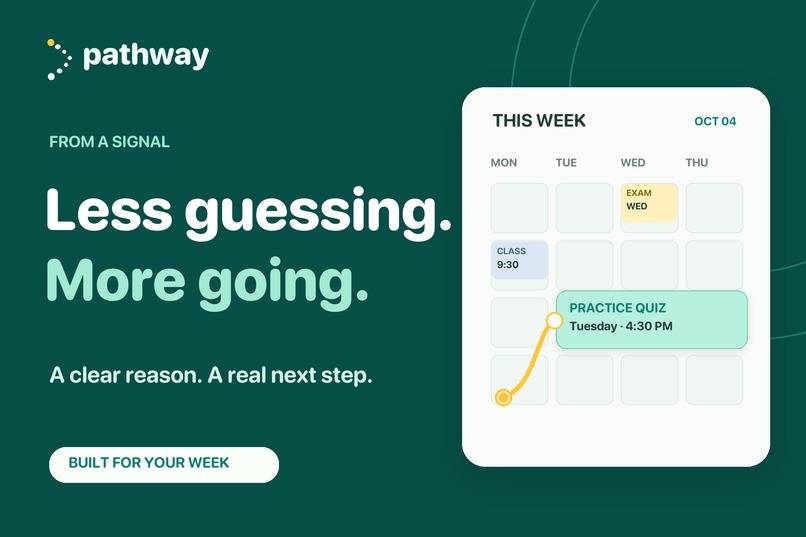
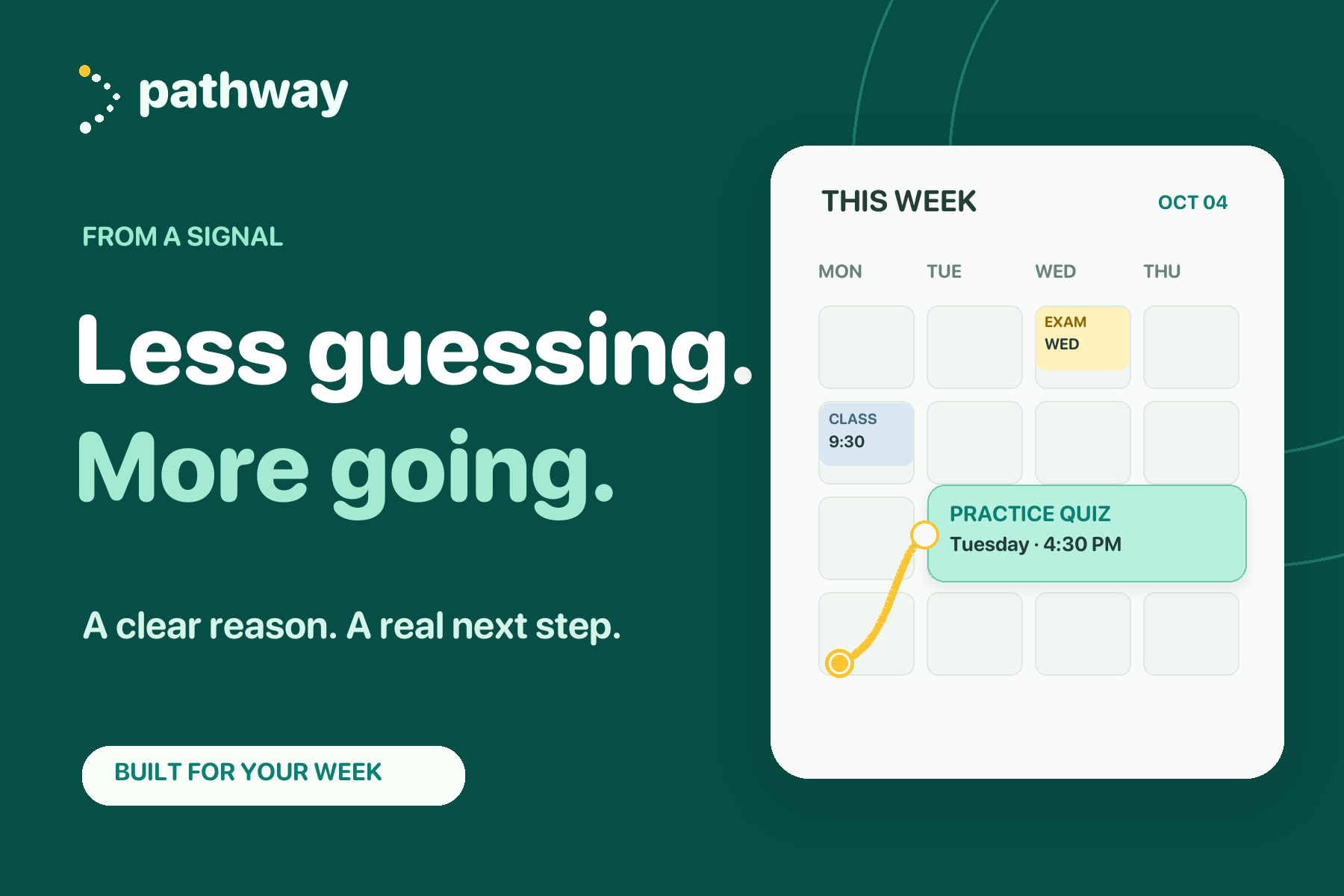
Pathway turns grades, deadlines, and course materials into a clear next move: see why a class needs attention, plan your week, and more.
-
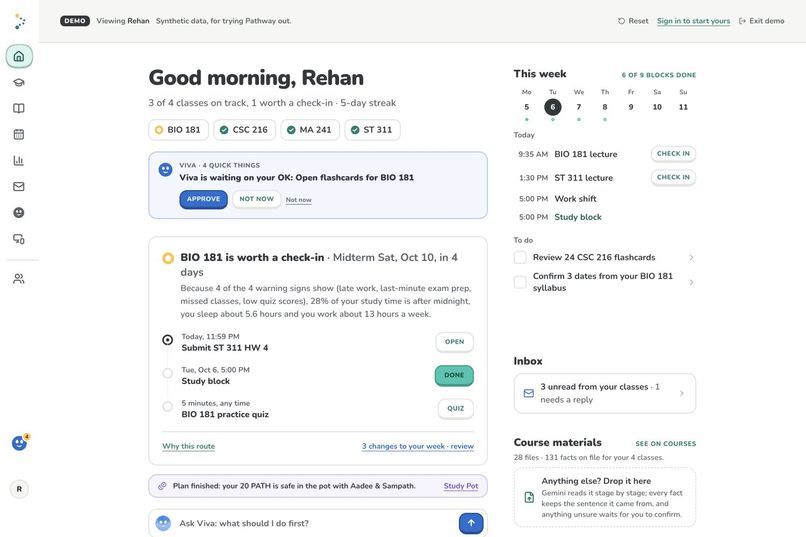
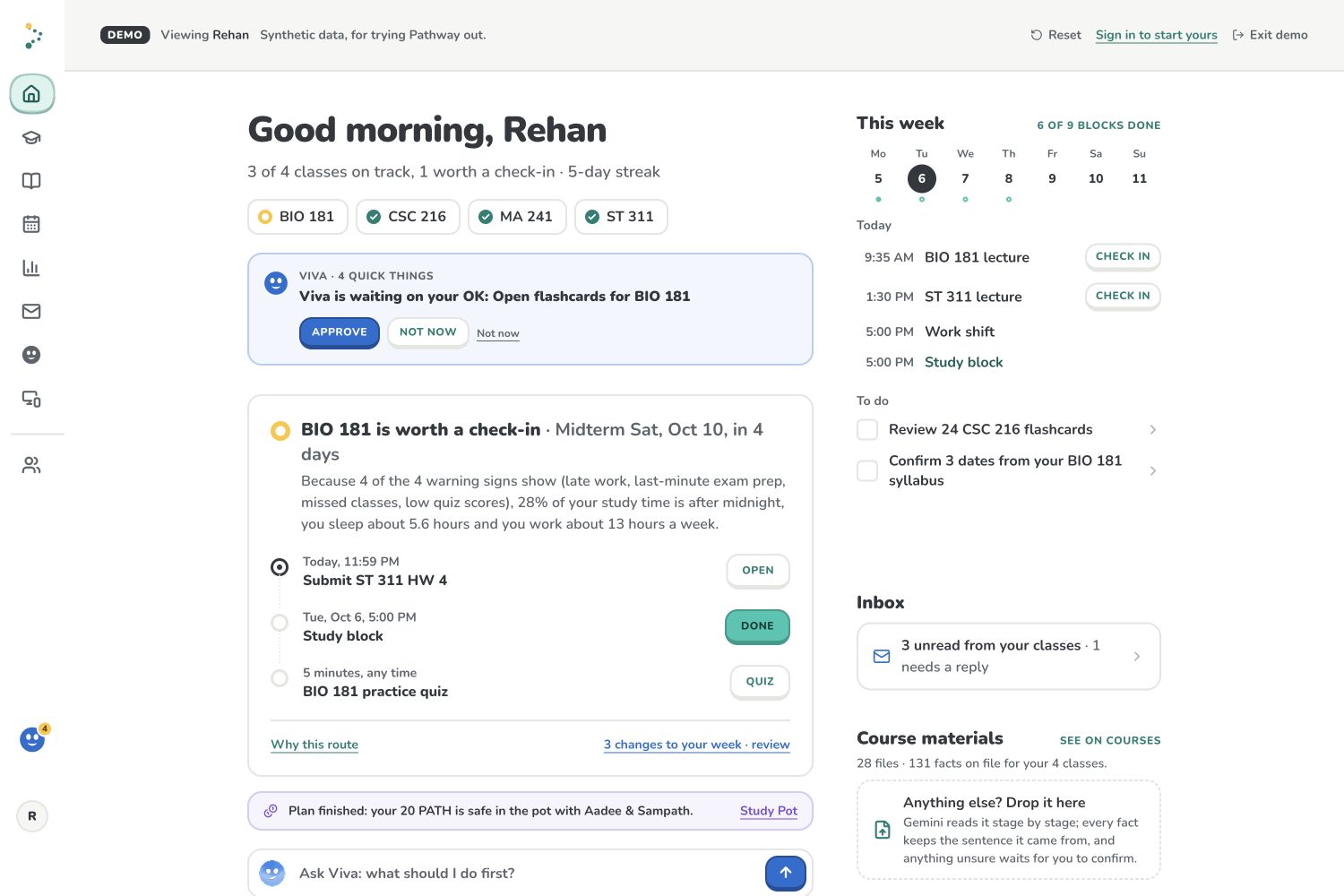
Your semester at a glance. See which course needs attention, what is due today, and what Viva suggests next.
-
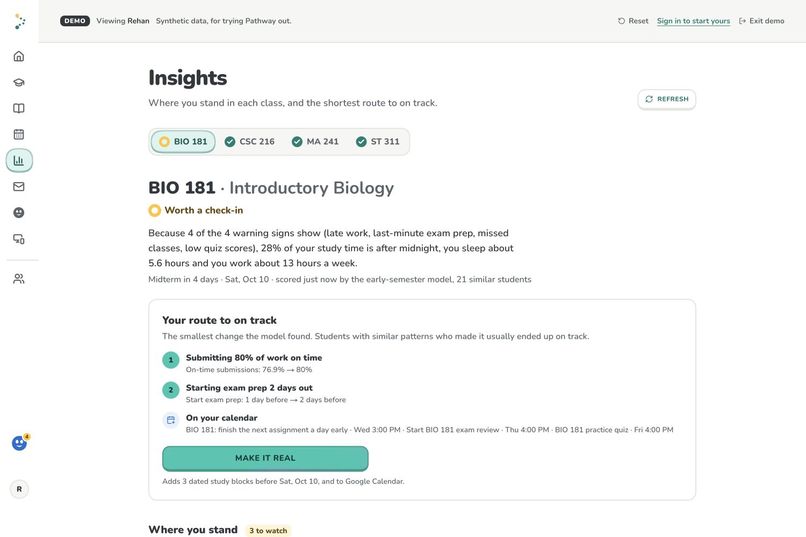
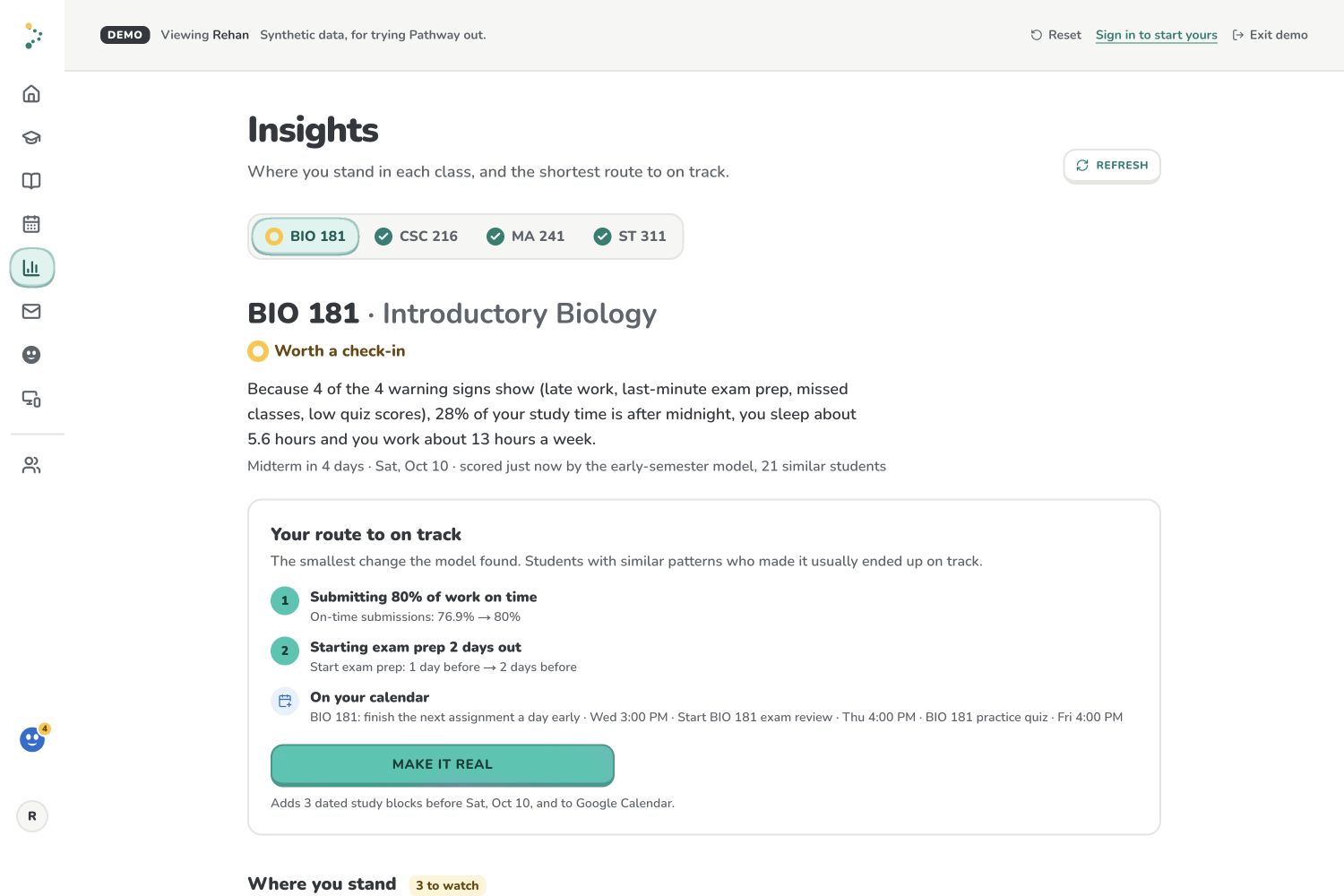
From a check-in to a plan. Pathway explains why BIO 181 needs attention and suggests study blocks before the midterm.
-
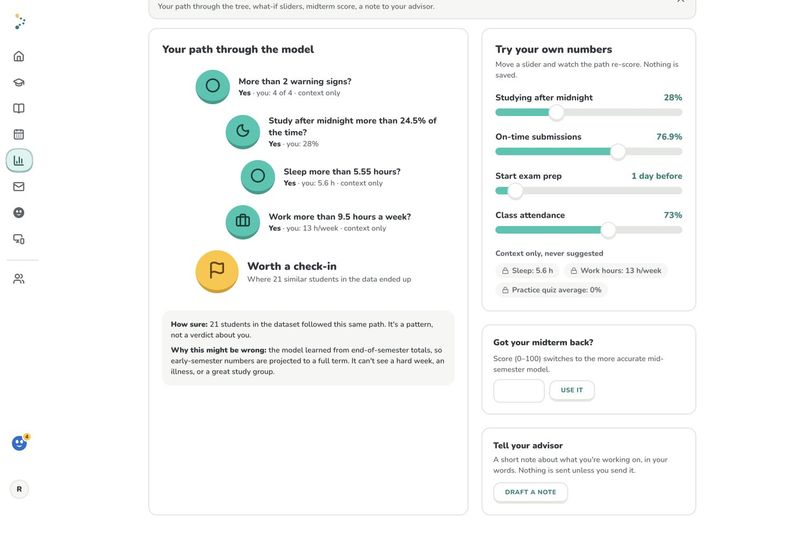
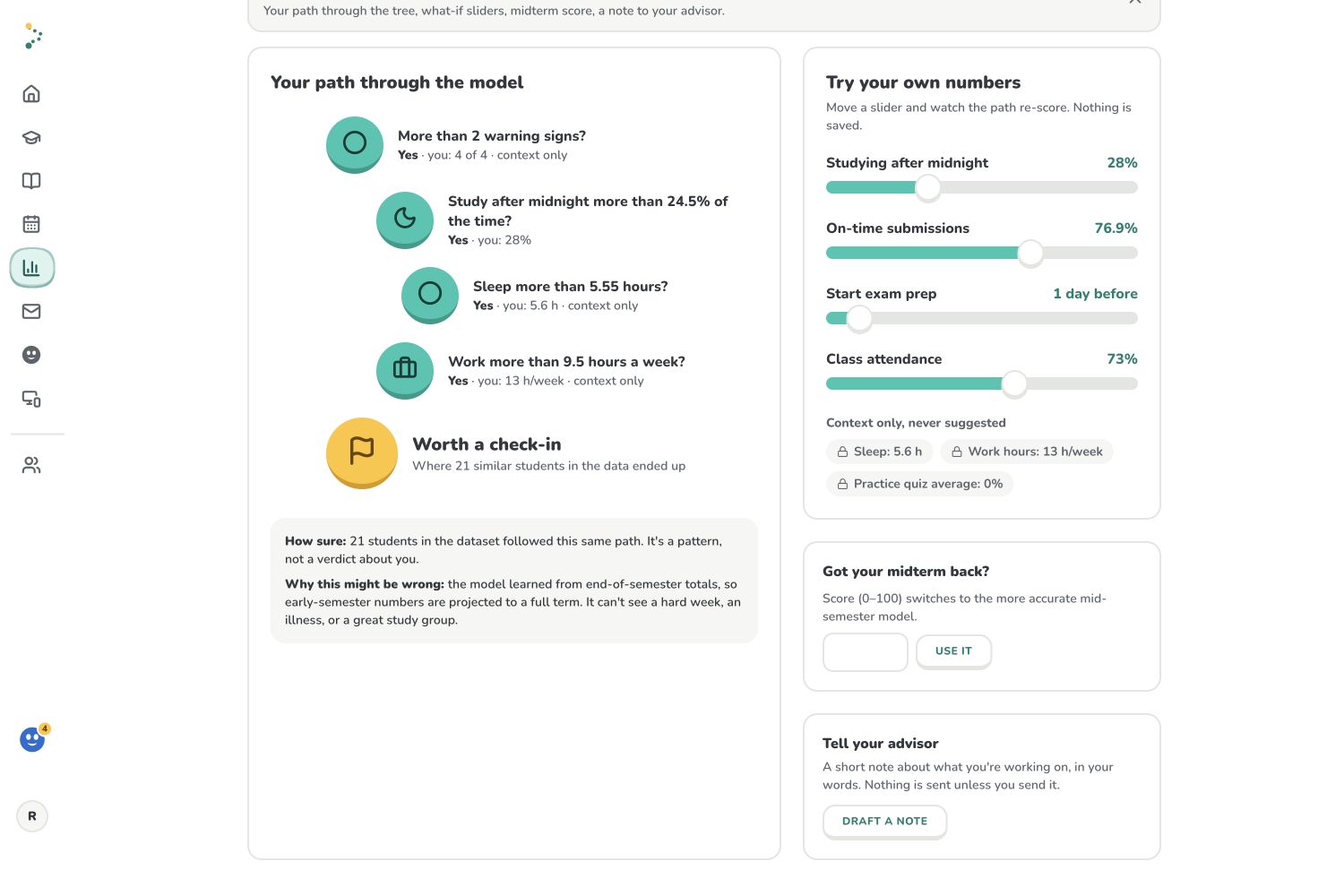
See the reasoning. Follow the decision tree behind a course check-in and test possible changes without saving them.
-
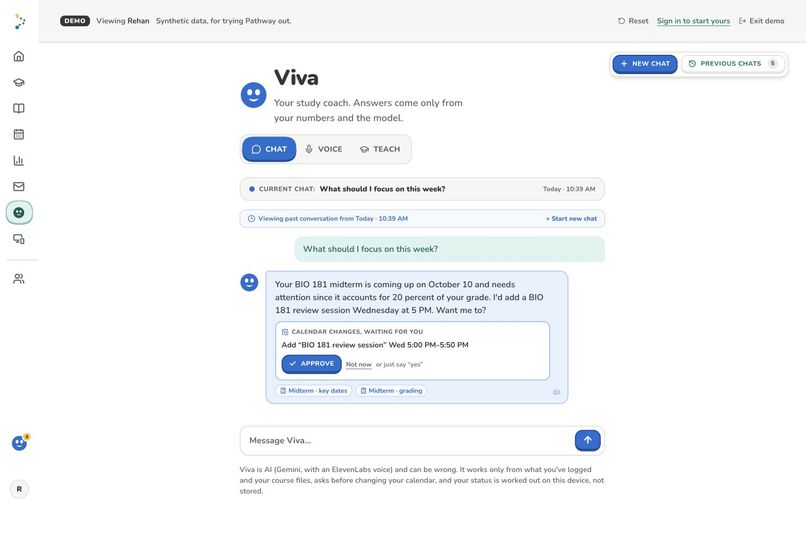
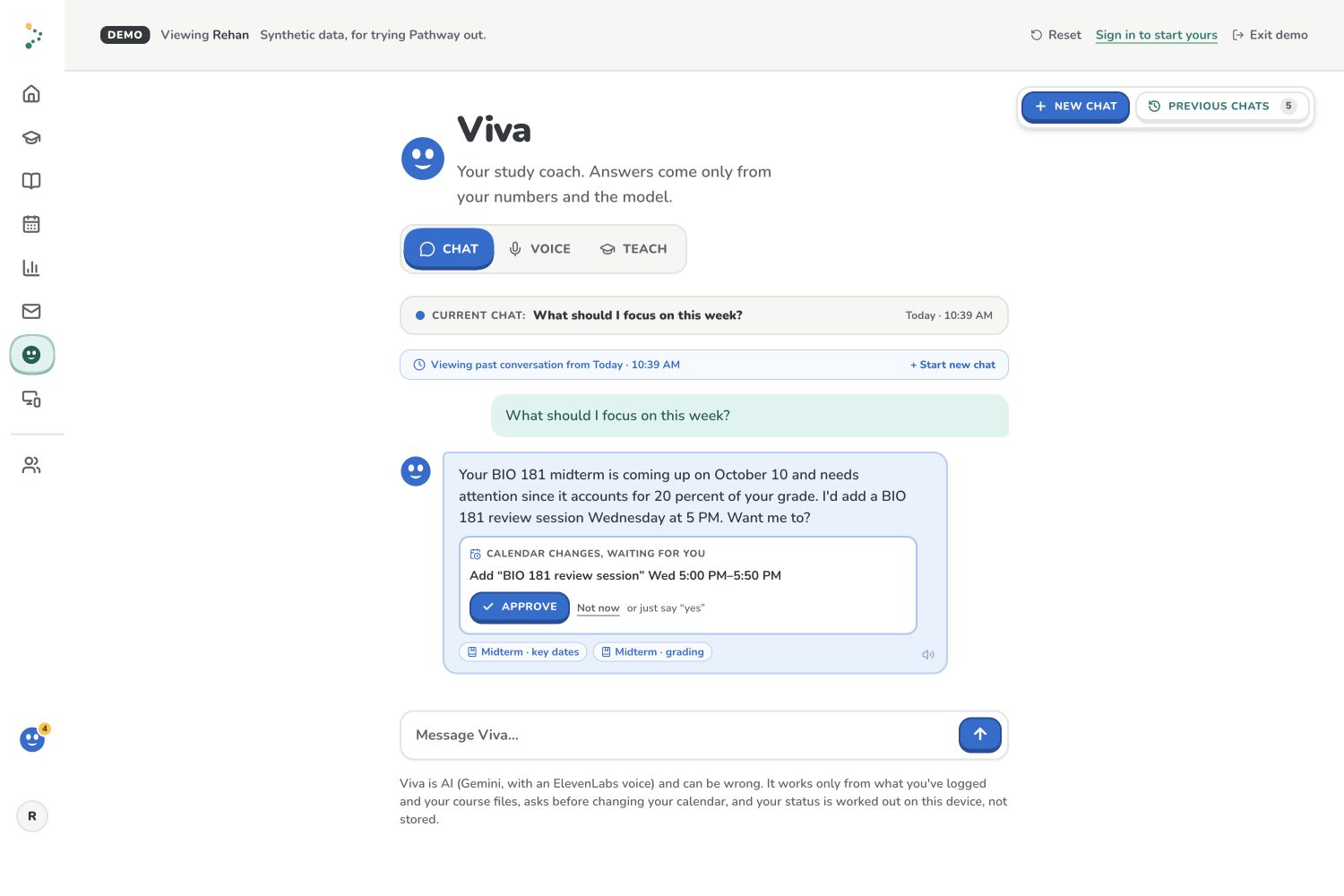
Ask Viva what matters this week. She uses course facts to suggest a calendar action and waits for your approval.
-
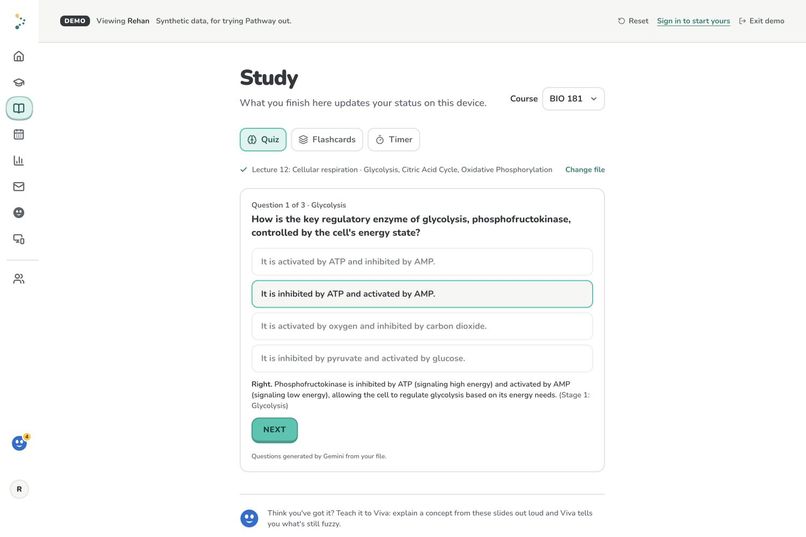
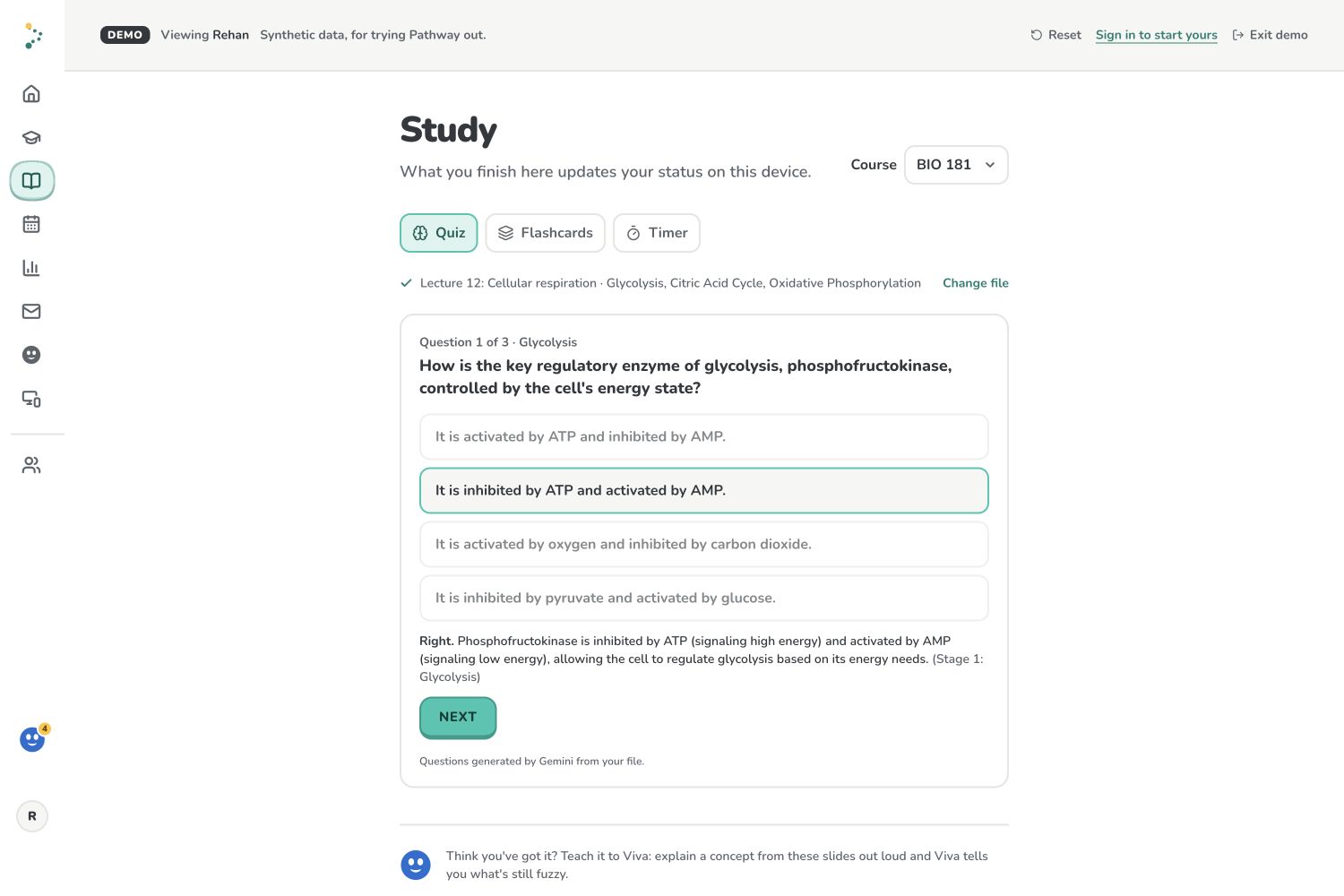
Study from your own materials. Answer a practice question from a lecture file, then see feedback tied to its source.
Inspiration
Students often find out they’re falling behind when a grade is already hard to recover. We wanted to make an early warning feel less like a verdict and more like a useful conversation: what’s happening in this course, why, and what can I do this week?
What it does
Pathway gives students a plain-language check-in for each course. It shows the decision-tree path behind the result of whether a student is at risk of not meeting academic goals, lets students explore which actionable habits could change it, and turns next steps into study blocks on their calendar. As students complete quizzes, check-ins, and study sessions, their course picture updates. Viva, our AI study companion, helps them review material and work through their plan.
How we built it
We built Pathway with Next.js, TypeScript, and Tailwind. We trained separate early- and mid-semester decision trees in Python and exported them as JSON, so the app can calculate and explain results in the browser. Gemini powers Viva and several study tools; ElevenLabs supports voice conversations. We also connected study plans to a calendar and built a database layer for activity inputs.
Challenges we ran into
The biggest challenge was making a prediction useful without overstating it. A small decision tree is easier to explain, but that readability comes with a performance tradeoff. We also had to separate habits a student could reasonably act on from inputs that should only provide context. Finally, we worked to keep the app useful when integrations or network access are unavailable during a live demo.
Accomplishments that we're proud of
We’re proud that a student can follow a result from its exact tree path to a concrete plan on their calendar. The model runs in the browser, and the app does not need to store a student’s status in its database. We also evaluated the trees on held-out synthetic data and included their limitations alongside the results.
What we learned
We learned that an alert is only the beginning. Students need a reason they can understand and a next step they can actually fit into their week. We also learned how much care it takes to communicate model results honestly, especially when the available dataset is synthetic.
What's next for Pathway
Next, we want to test Pathway with real students, improve the study and calendar workflows based on their feedback, and evaluate the model on appropriately collected real-world data. That validation is essential before treating its predictions as reliable student guidance.
Built With
- d3.js
- elevenlabs
- gemini
- google-calendar
- next.js
- postgresql
- python
- react
- recharts
- scikit-learn
- tailwind
- tigerdata
- timescaledb
- typescript
- vercel


Log in or sign up for Devpost to join the conversation.