-
-
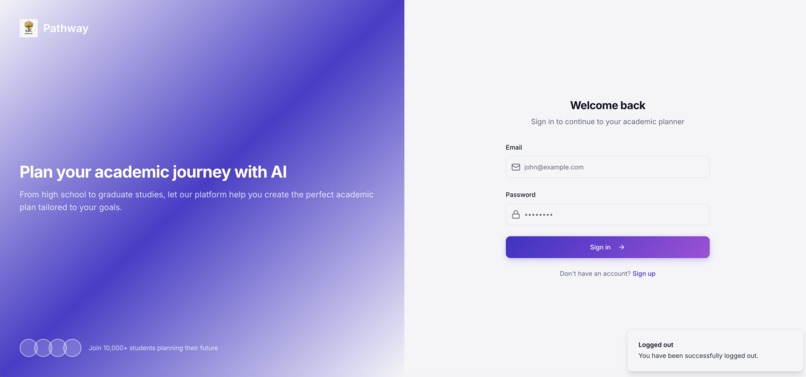
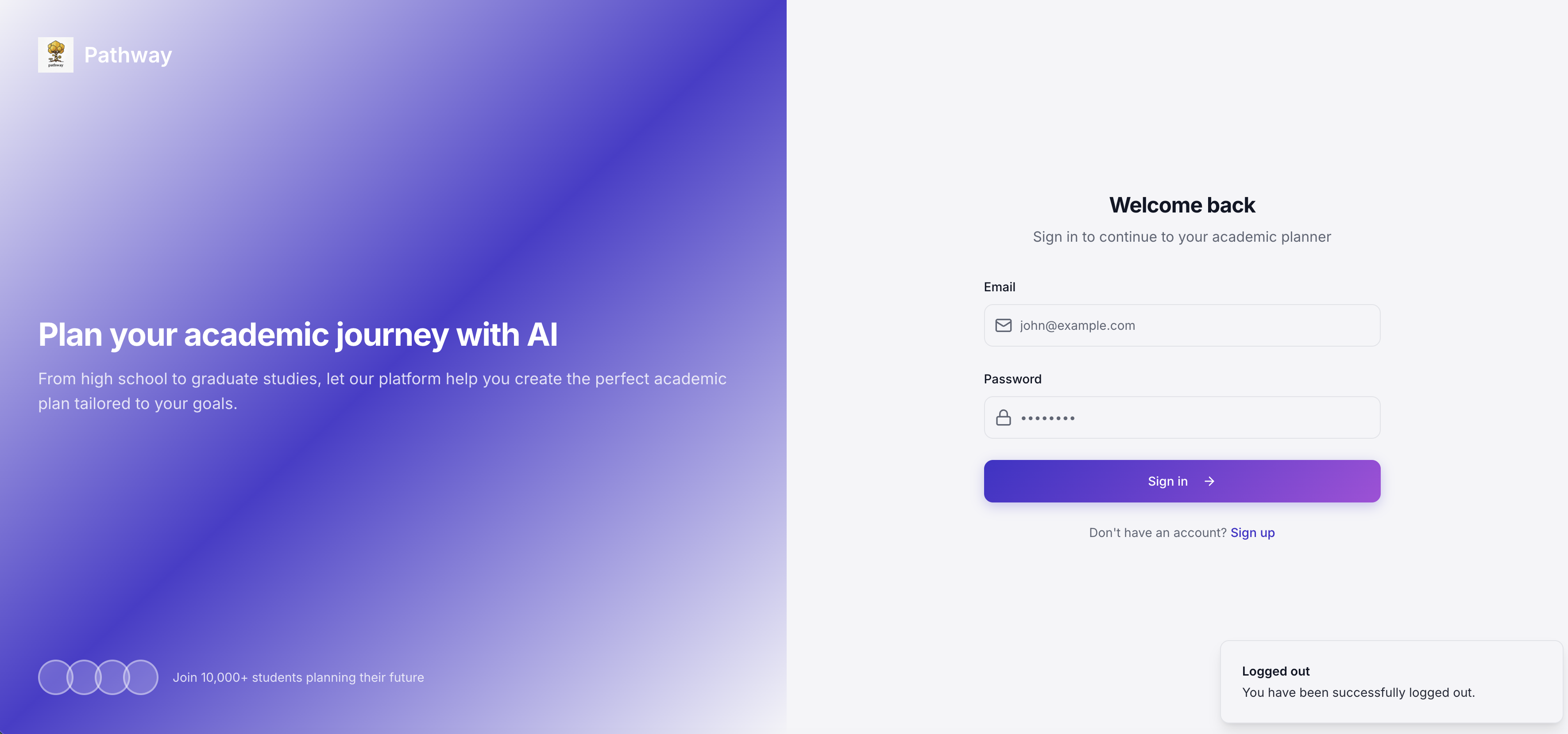
Login/Signup Page
-
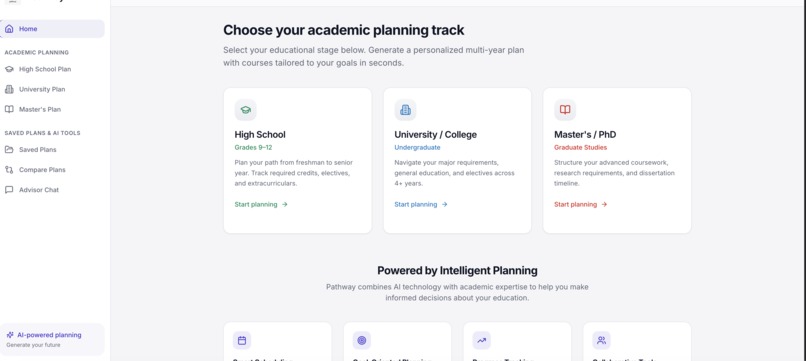
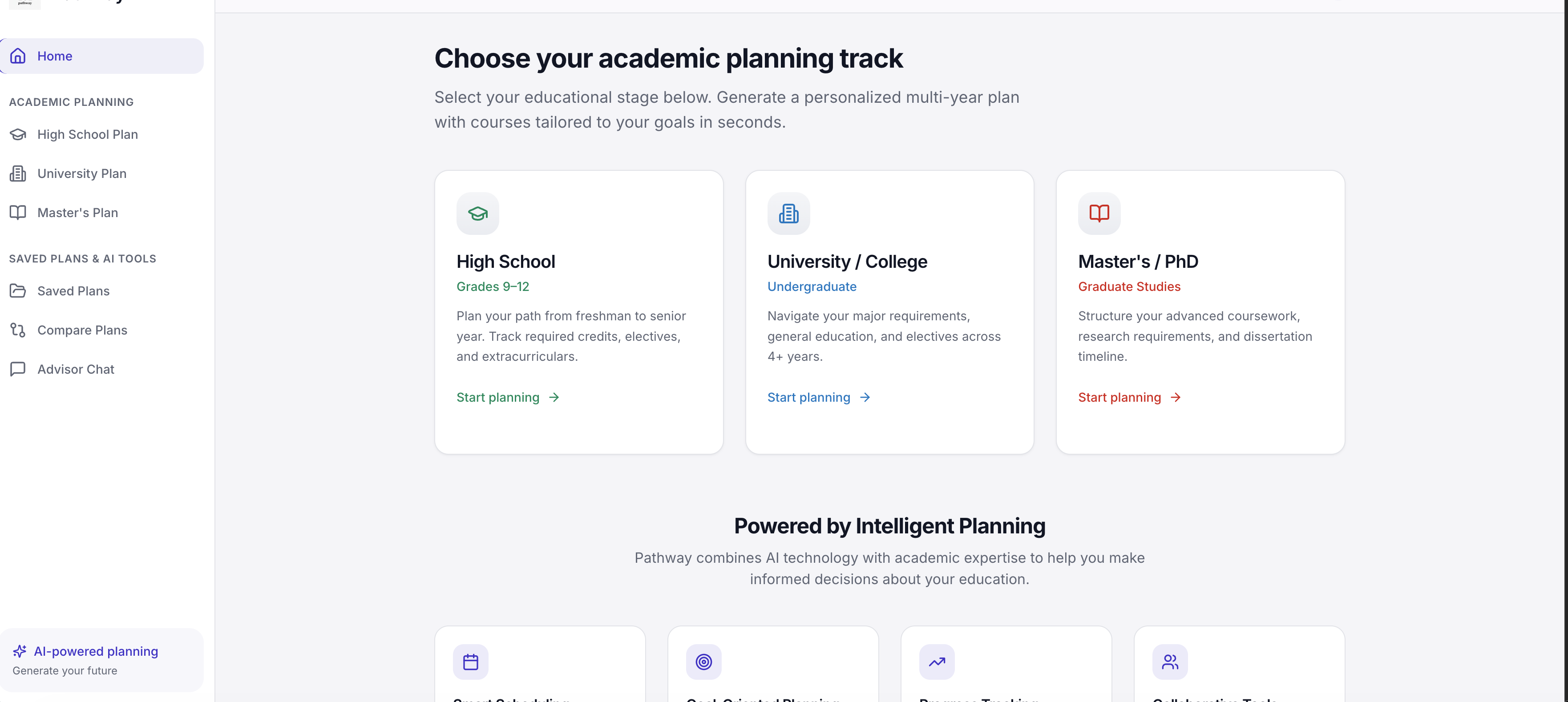
Home Page
-
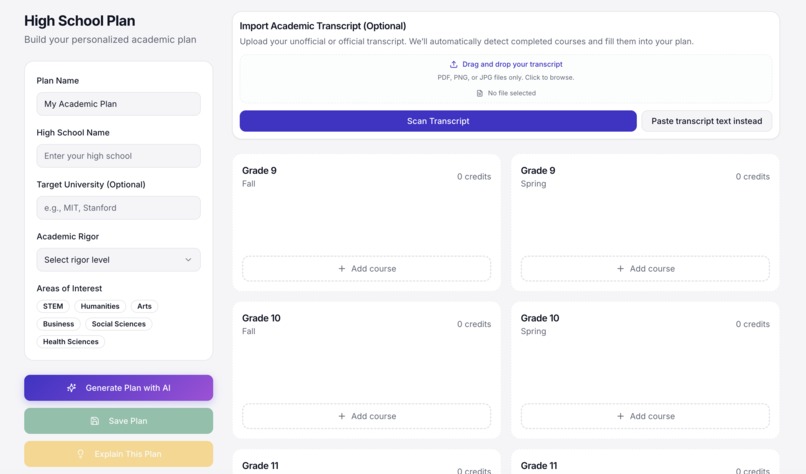
High School Planner Page
-
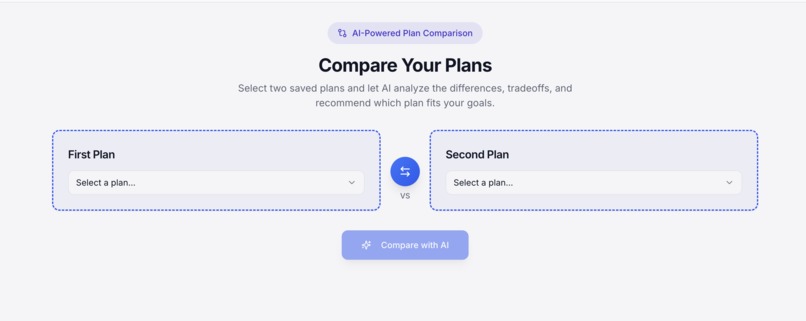
Plan-Comparison Page
-
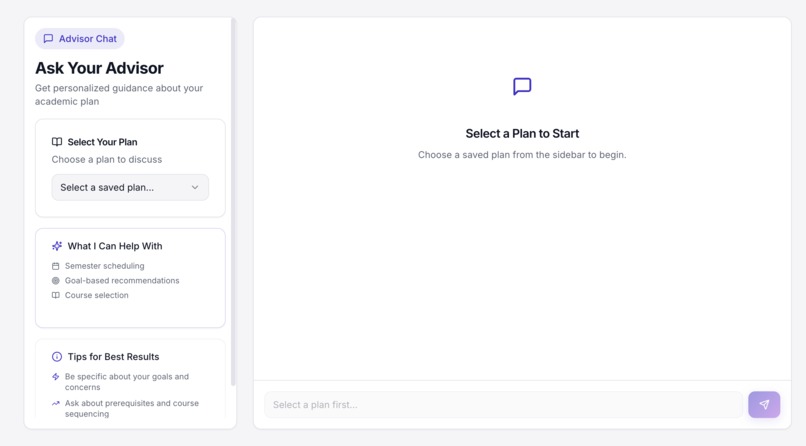
Advisor Chat Page
-
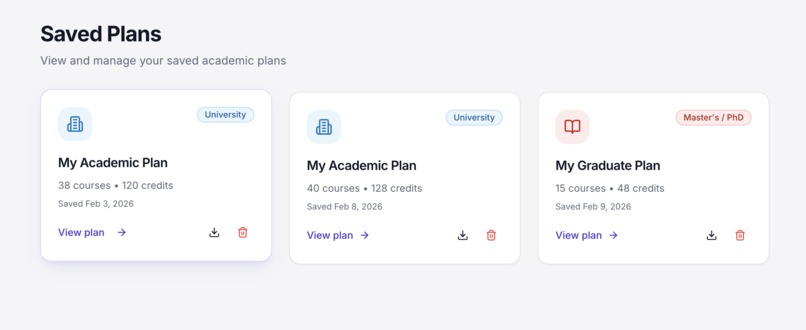
Saved Plans Page
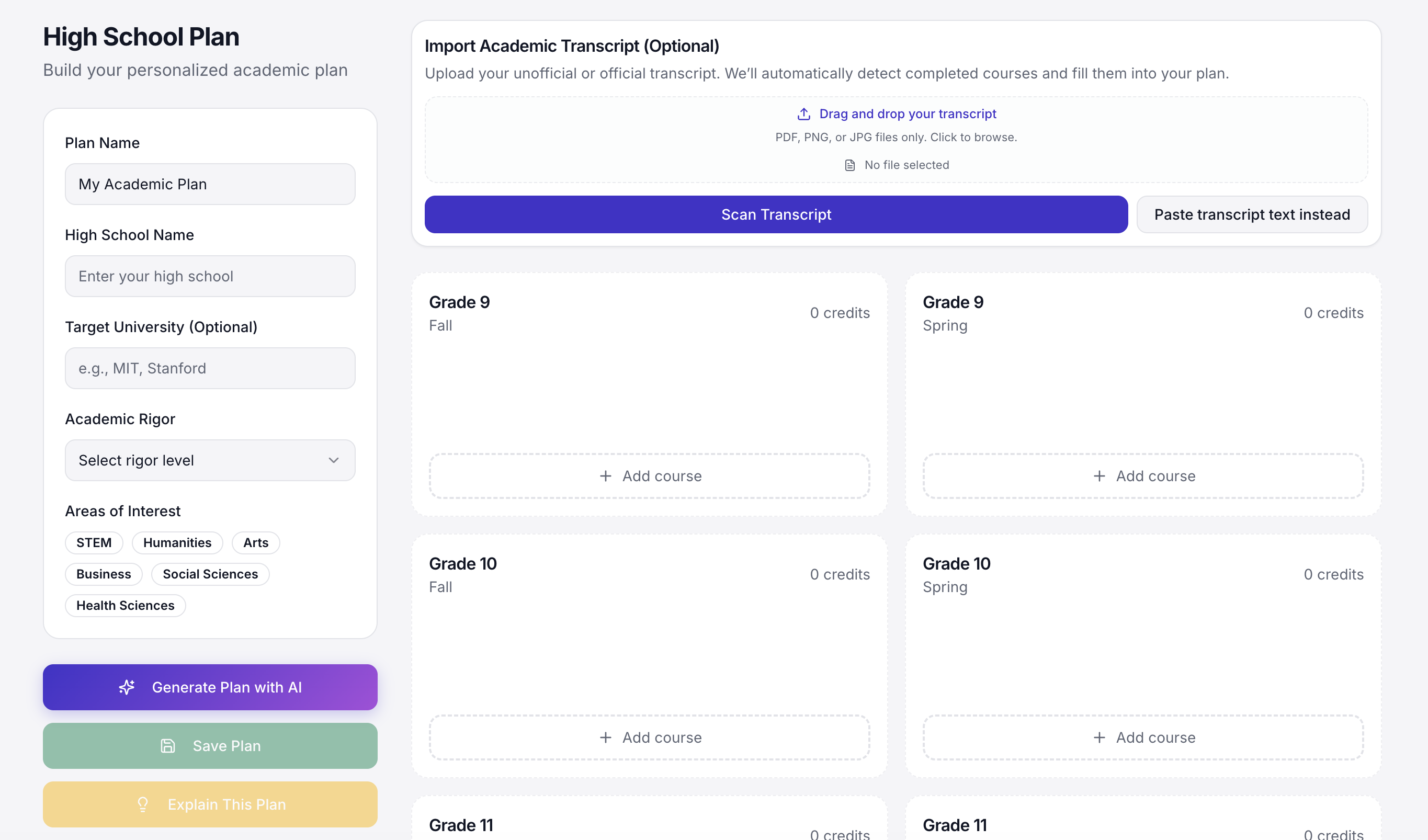
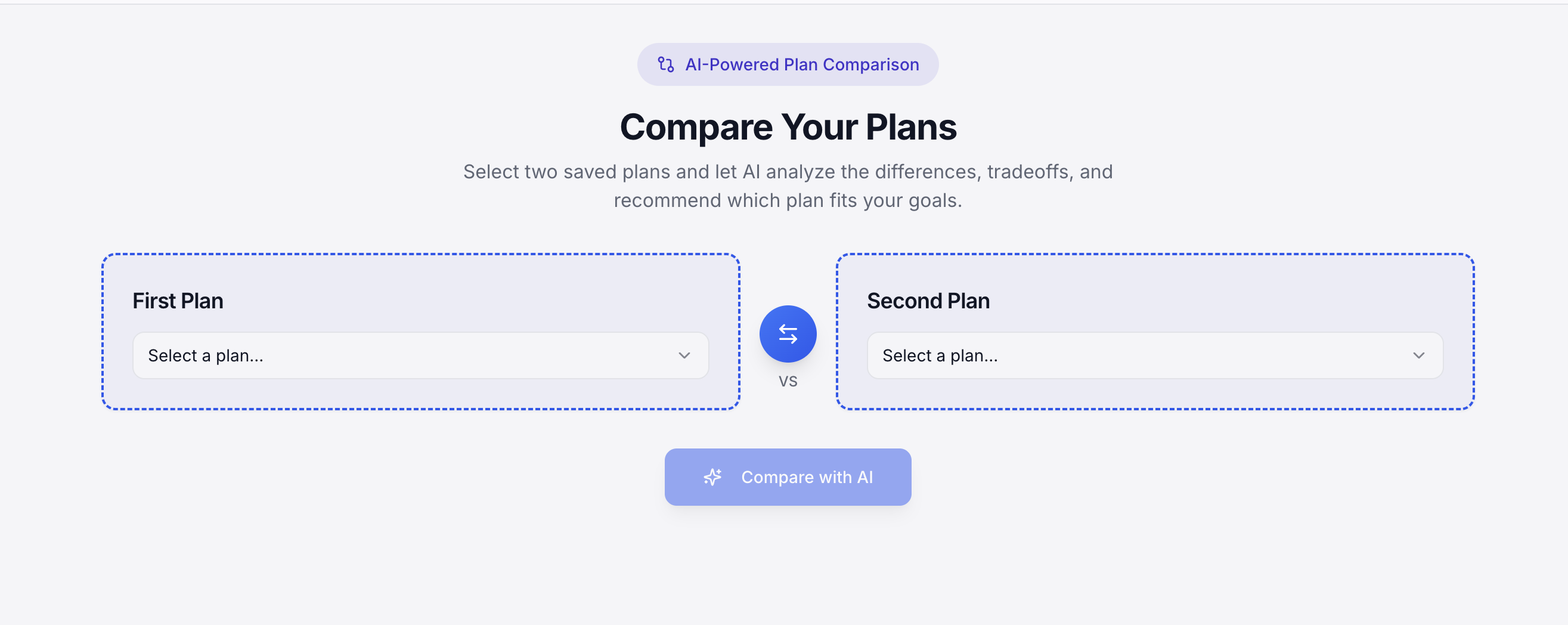
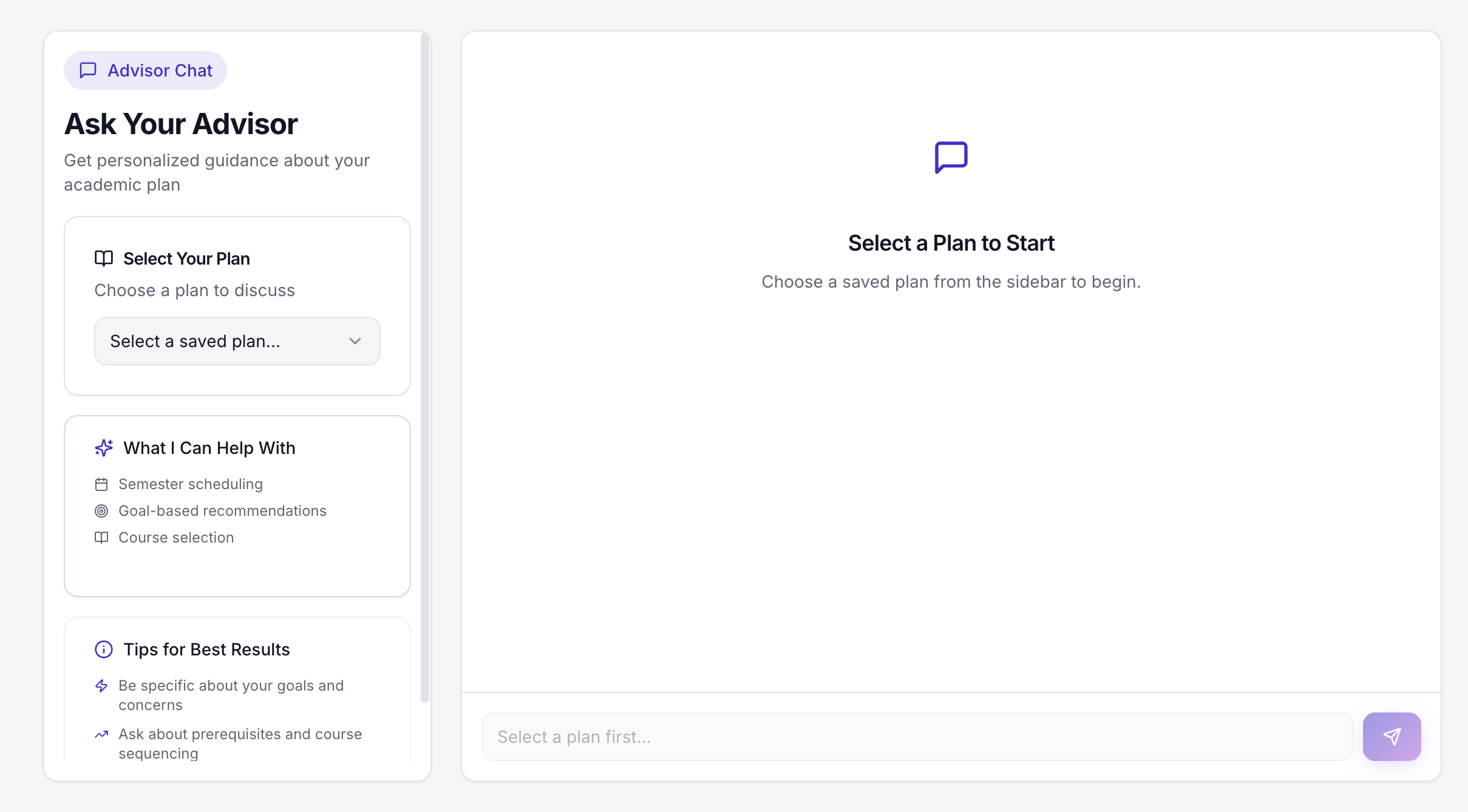
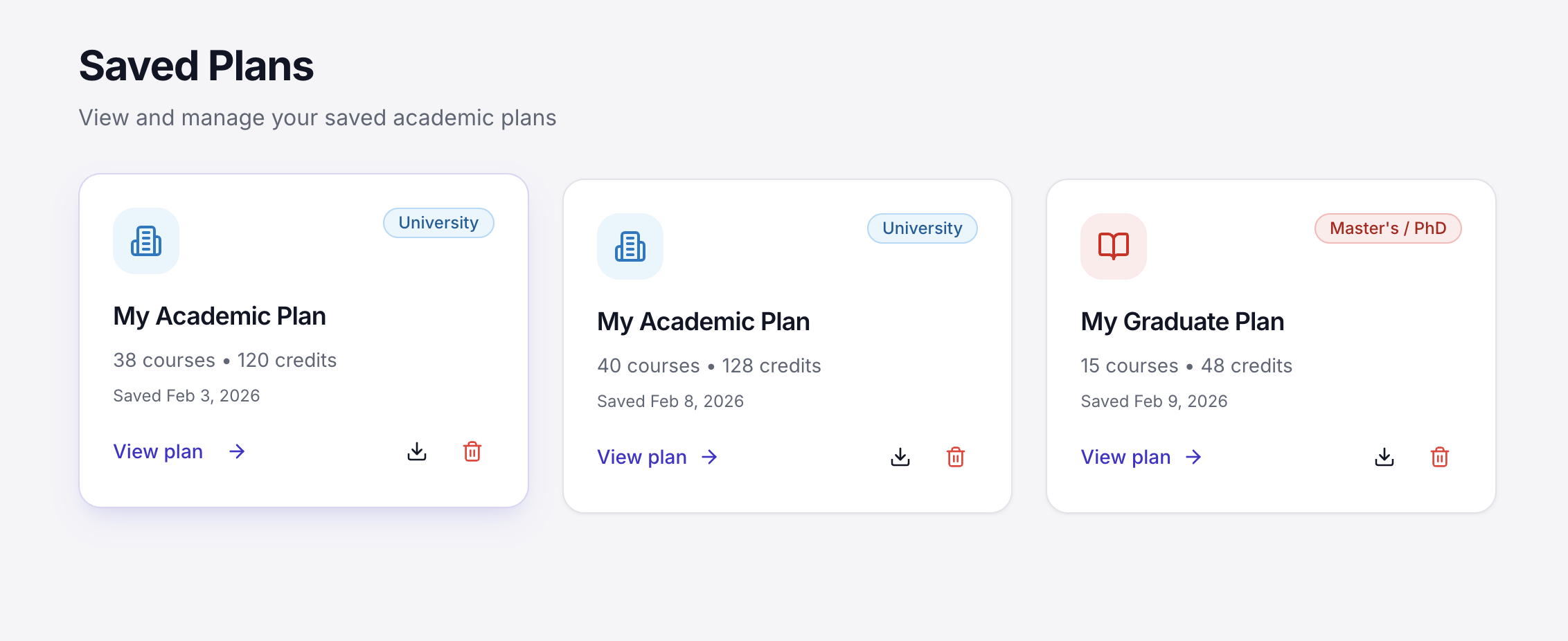
Inspiration
Pathway was inspired by seeing students struggle to juggle degree requirements, electives, and long-term timelines. Turning academic goals into a clear, multi-year plan often requires scattered research and guesswork.
This problem was personal for me. As a student pursuing a Computer Science and Mathematics track within a specific program, I found it difficult to find accurate, up-to-date four-year plans tailored to my niche. Most university resources were either outdated or too generic, offering little support for personalized academic paths. Through this experience, I realized many universities lack tools for creating customized, track-specific plans. Pathway was built to fill that gap by quickly generating realistic academic roadmaps that help students plan with clarity and confidence.
What it does
Pathway generates personalized academic plans in seconds, lets students import transcripts, and organizes courses by semester across high school, undergraduate, and graduate tracks. It supports AI plan generation, scenario simulations, plan explanations, saved plans, PDF exports, and drag-and-drop edits so students can test what-ifs and stay on track. Pathway stands out by modeling real academic structures such as credits, prerequisites, transcripts, and multi-year timelines, which are delivered through a fast, polished workflow tailored to each student’s stage and goals.
How we built it
We built Pathway as a full-stack application with a React + TypeScript frontend and an Express backend designed for structured AI orchestration. The frontend uses Tailwind CSS and reusable planner components to model real academic entities like semesters, courses, transcripts, and plan explanations in an interactive UI. The backend integrates the Gemini API via gemini-3-flash-preview. Each core feature such as plan generation, explanation, comparison, and advisor chat, constructs a structured prompt and routes through a shared callGemini service that handles retries, parses JSON responses, and falls back to plain text when needed.
Plan generation sends the selected track, user inputs, and exact semester IDs so Gemini returns deterministic JSON mapped to the existing semester structure. Plan explanations and comparisons return structured JSON that directly powers the UI, while advisor chat combines the current plan with conversation context for natural guidance. We also built a transcript ingestion pipeline using PDF parsing and OCR to extract and normalize coursework. Plans persist locally with localStorage, allowing users to leave and return without losing progress.
Challenges we ran into
Transcript parsing at scale: Academic transcripts varied widely in format (PDF text vs OCR), with inconsistent layouts, missing terms, and noisy text. We had to prevent false course extraction, normalize credits, detect “in-progress” courses, and reliably map coursework to semesters.
Data correctness and reconciliation: Deduplicating courses across transcript scans, user edits, and AI-generated plans while preserving user-added courses required careful merging logic and edge-case handling.
Structured AI reliability: Keeping Gemini responses valid, deterministic JSON, despite formatting drift, was critical for powering the UI while allowing partial regeneration without breaking existing plans.
UX complexity without clutter: As features grew (themes, explanations, simulations, actions), we had to maintain a clean, readable interface across light and dark modes and avoid regressions when adding or reordering actions.
Accomplishments that we're proud of
Shipped a reliable transcript ingestion system: We successfully handled messy, real-world transcripts across formats, accurately extracting courses, credits, and completion status for use in planning.
Delivered real, personalized academic plans with Gemini 3: We integrated the Gemini 3 API to generate accurate, track-specific, multi-year academic plans grounded in actual credits, prerequisites, and timelines.
Built a complete, usable planning workflow: Users can generate, save, explain, and adjust plans end-to-end, enabling real “what-if” exploration instead of one-off AI outputs.
Implemented clear, meaningful theming at scale: Track-specific color systems improve clarity without sacrificing readability across light and dark modes.
What we learned
We learned that small UI decisions have an outsized impact on clarity and user trust, especially in tools that manage important, long-term decisions. We also saw firsthand how critical robust parsing and data normalization are when working with real-world documents. Building Pathway reinforced the importance of treating AI as one component of a larger system—balancing powerful AI features with strong UX, reliability, and correctness.
What's next for Pathway
Smarter requirement checking and degree audits: Incorporate AP exams, transfer credits, and prior coursework into automated audits to validate progress and catch gaps earlier.
Integrating official course catalogs, prerequisites, and degree requirements per school to enable more accurate planning and reduce AI hallucinations through internal databases.
Flexible academic calendars that support multiple scheduling systems (semester, trimester, quarter) so plans reflect how institutions actually operate.
Built With
- client-side
- html/css-frontend:-react
- javascript
- languages:-typescript
- localstorage
- model-gemini-3-flash-preview)-parsing/ocr:-pdf-parse
- storage:
- tailwind-css-backend:-node.js-+-express-ai-api:-google-gemini-(via-@google/generative-ai
- tesseract.js


Log in or sign up for Devpost to join the conversation.