-
-
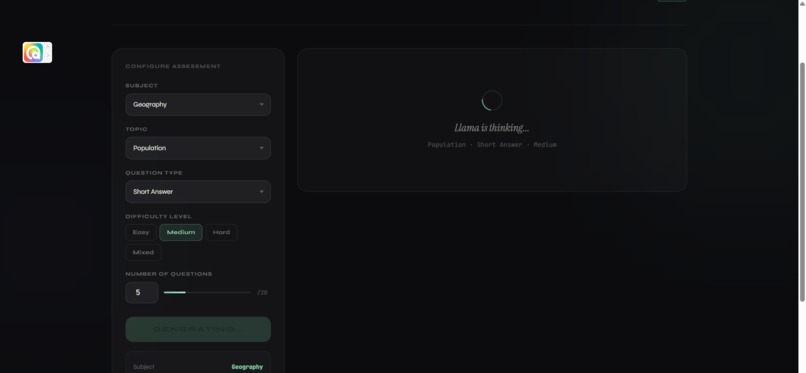
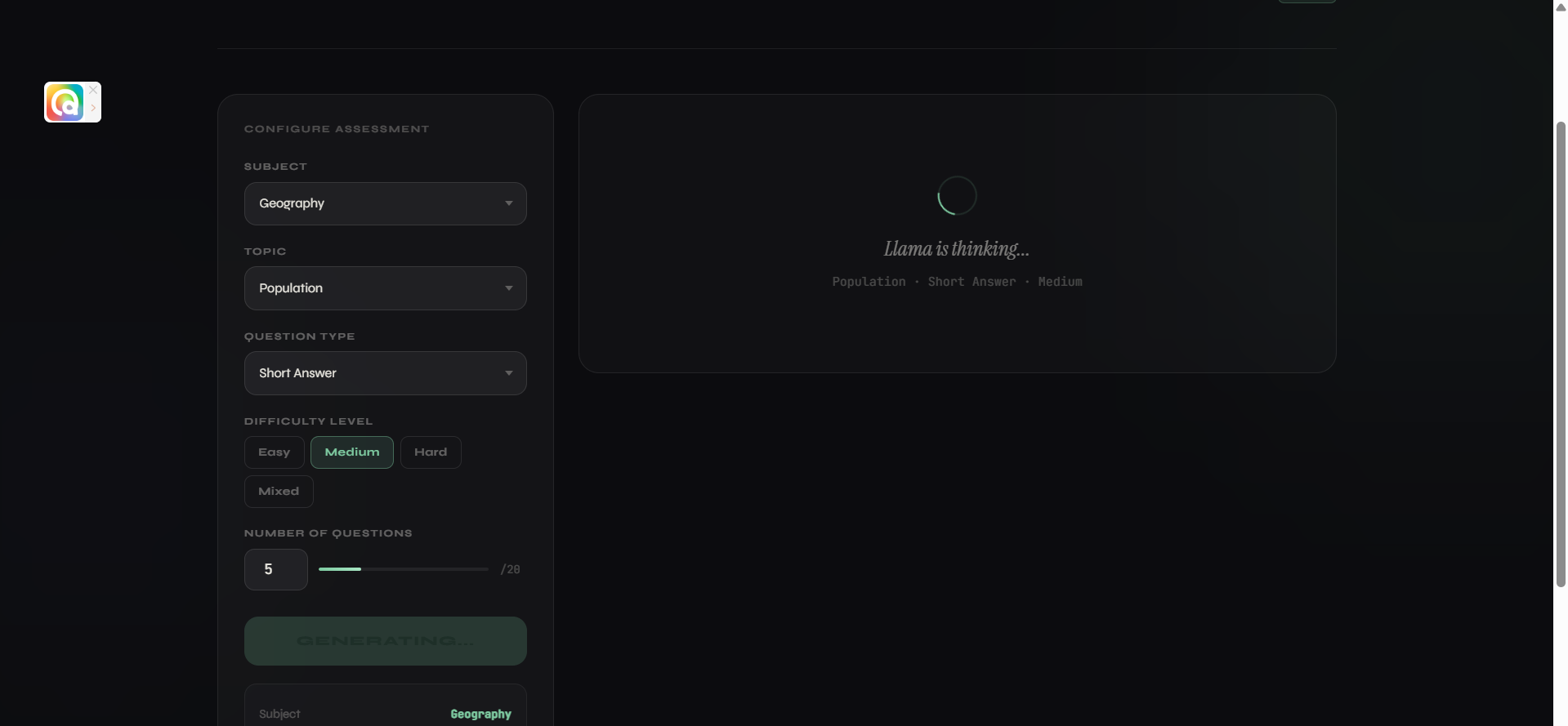
Assessment generator
-

Generated Assessment
-
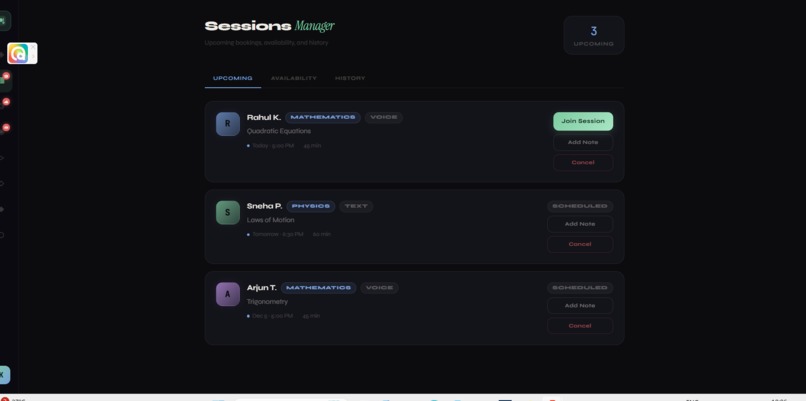
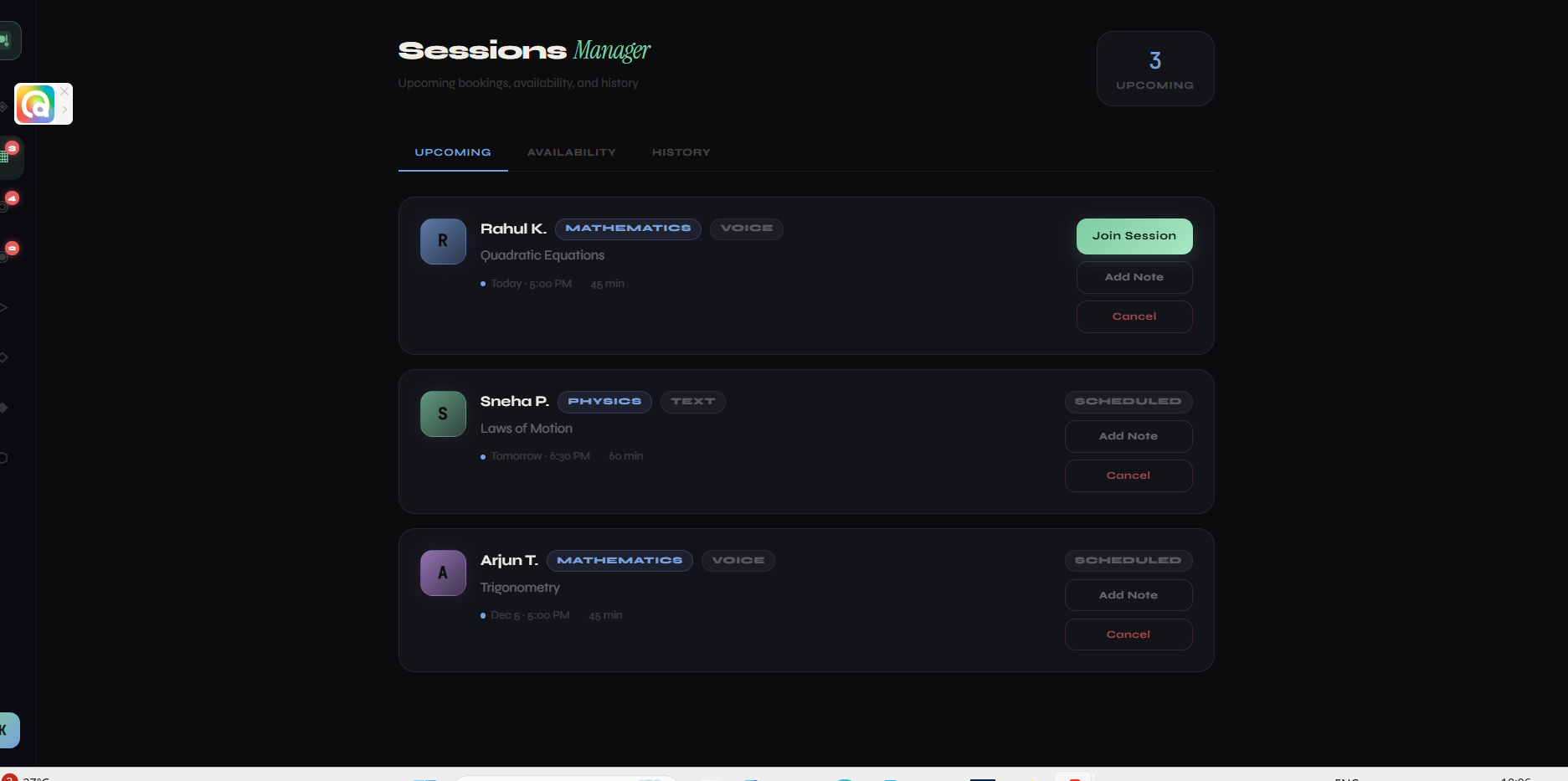
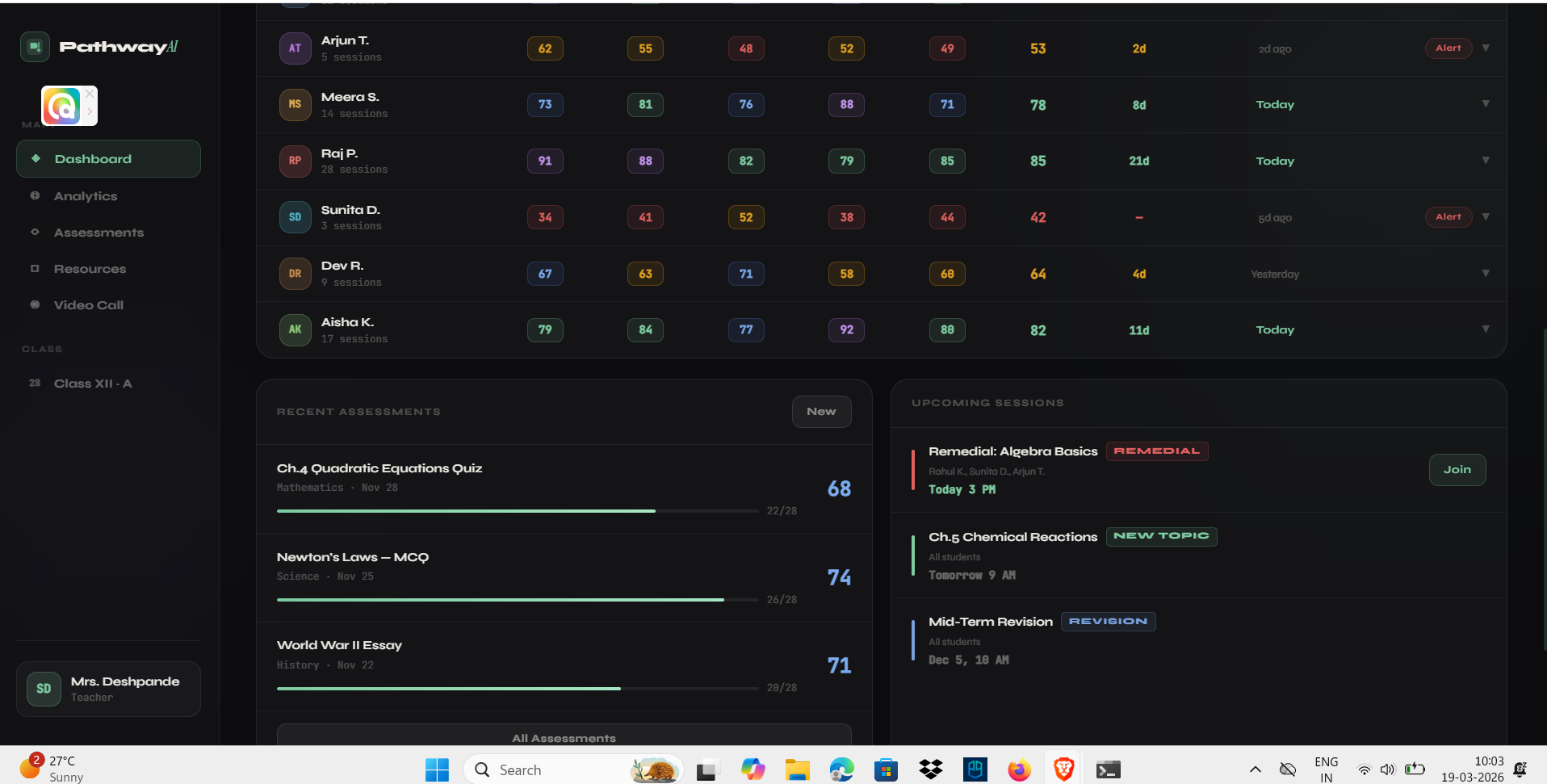
Sessions lined up for the mentors
-
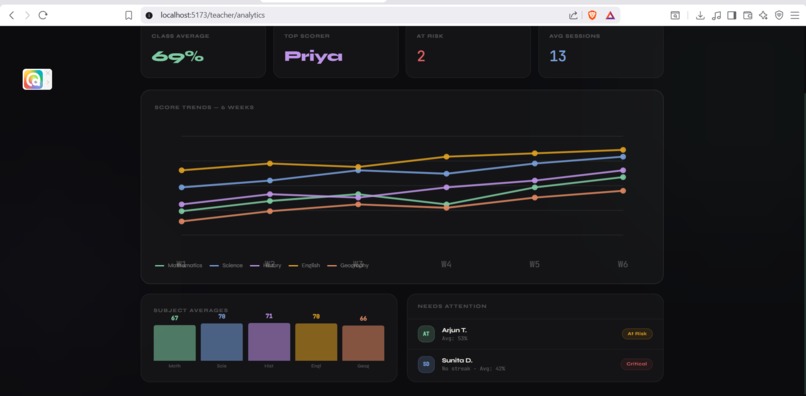
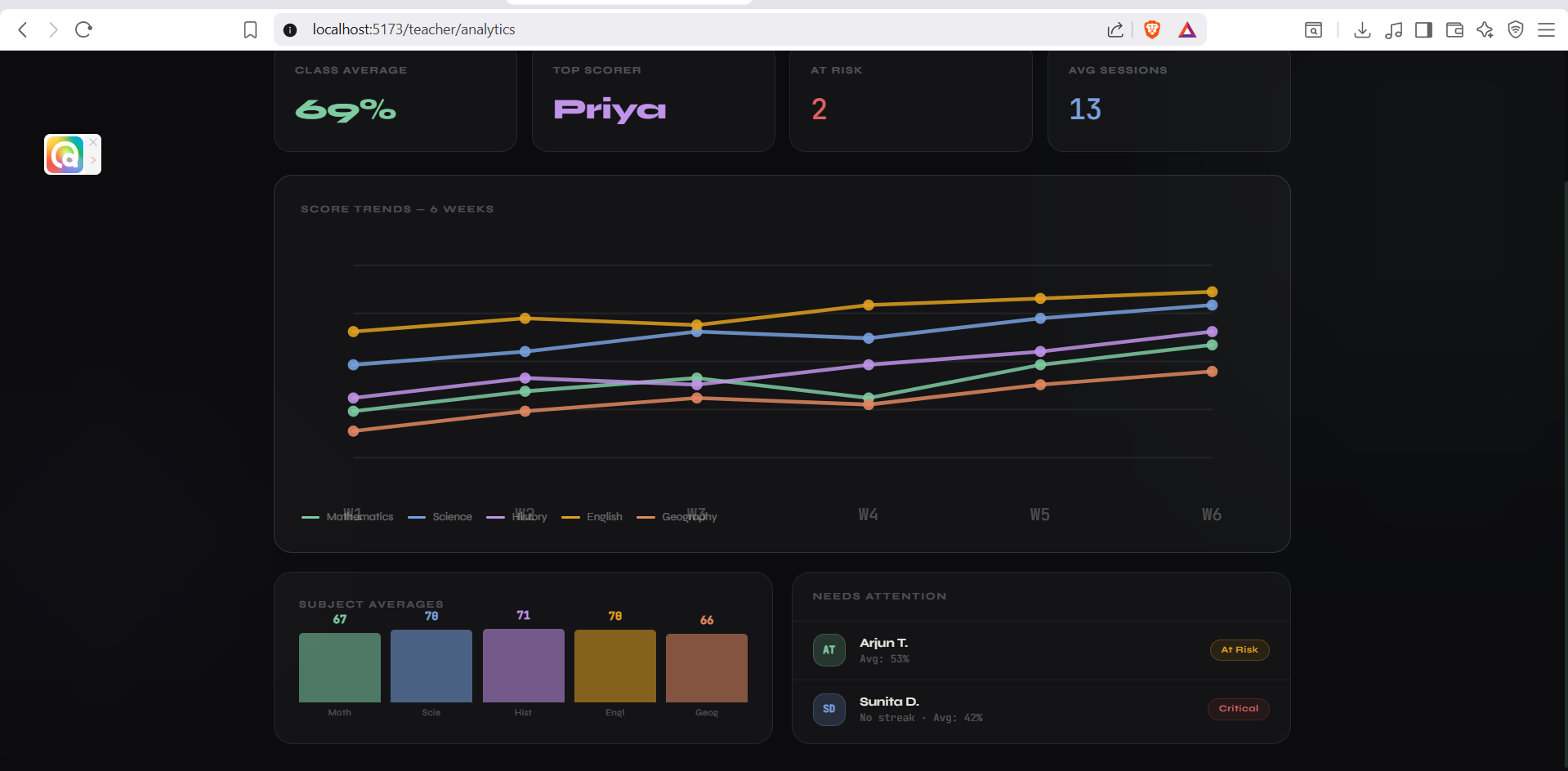
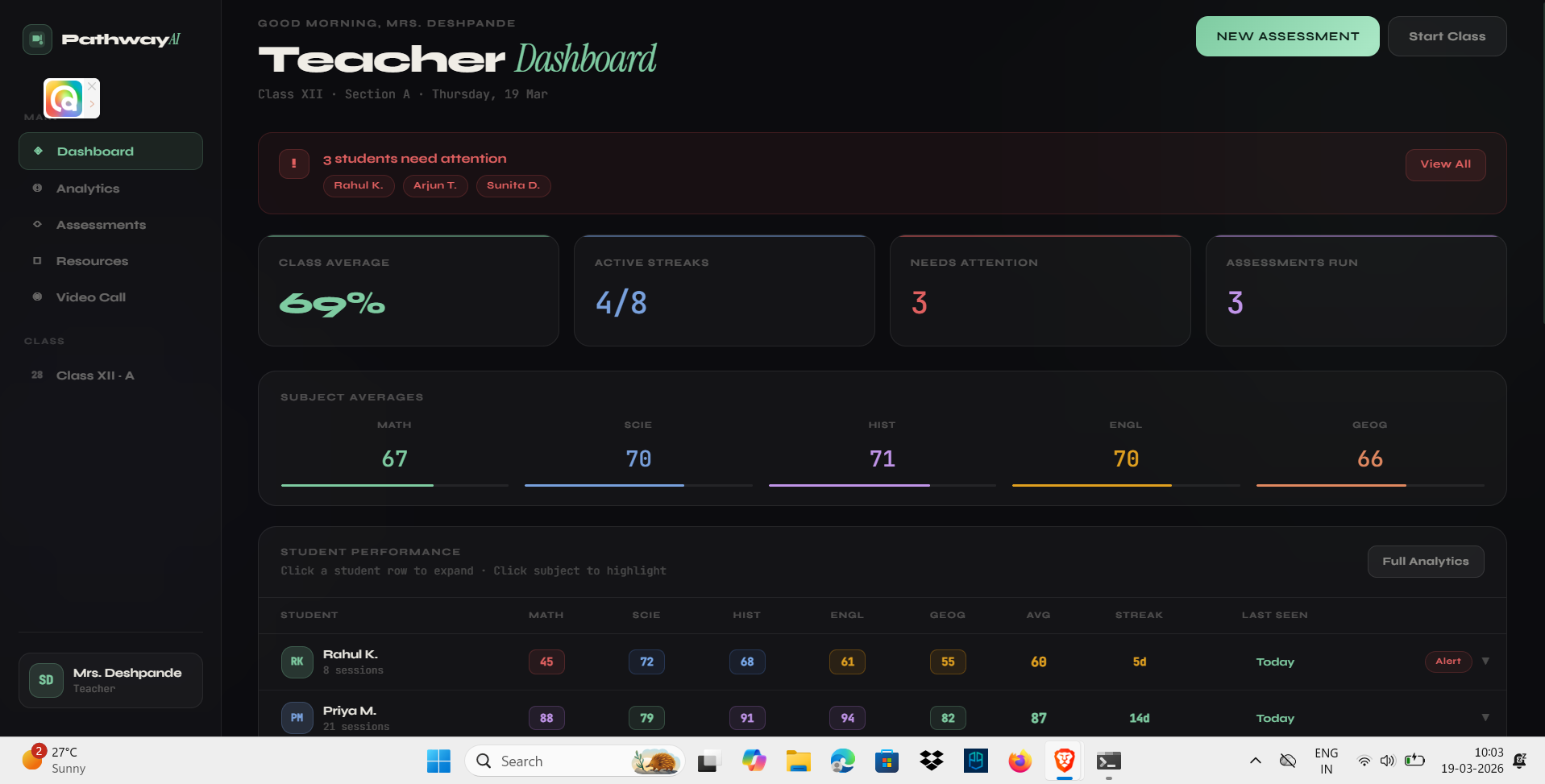
Subject wise performance of the class
-
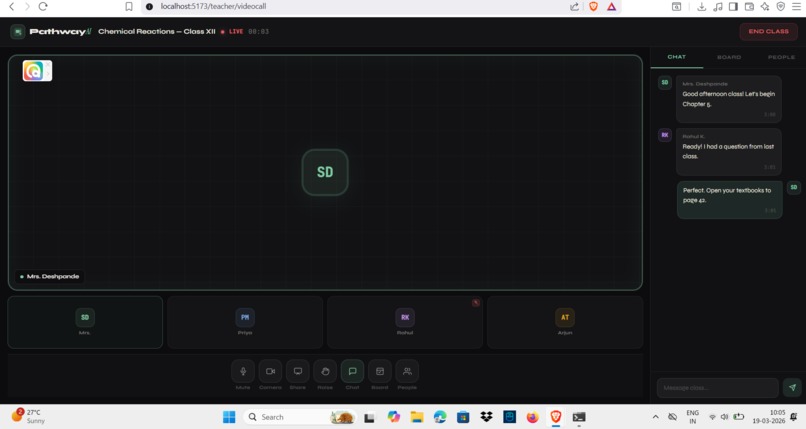
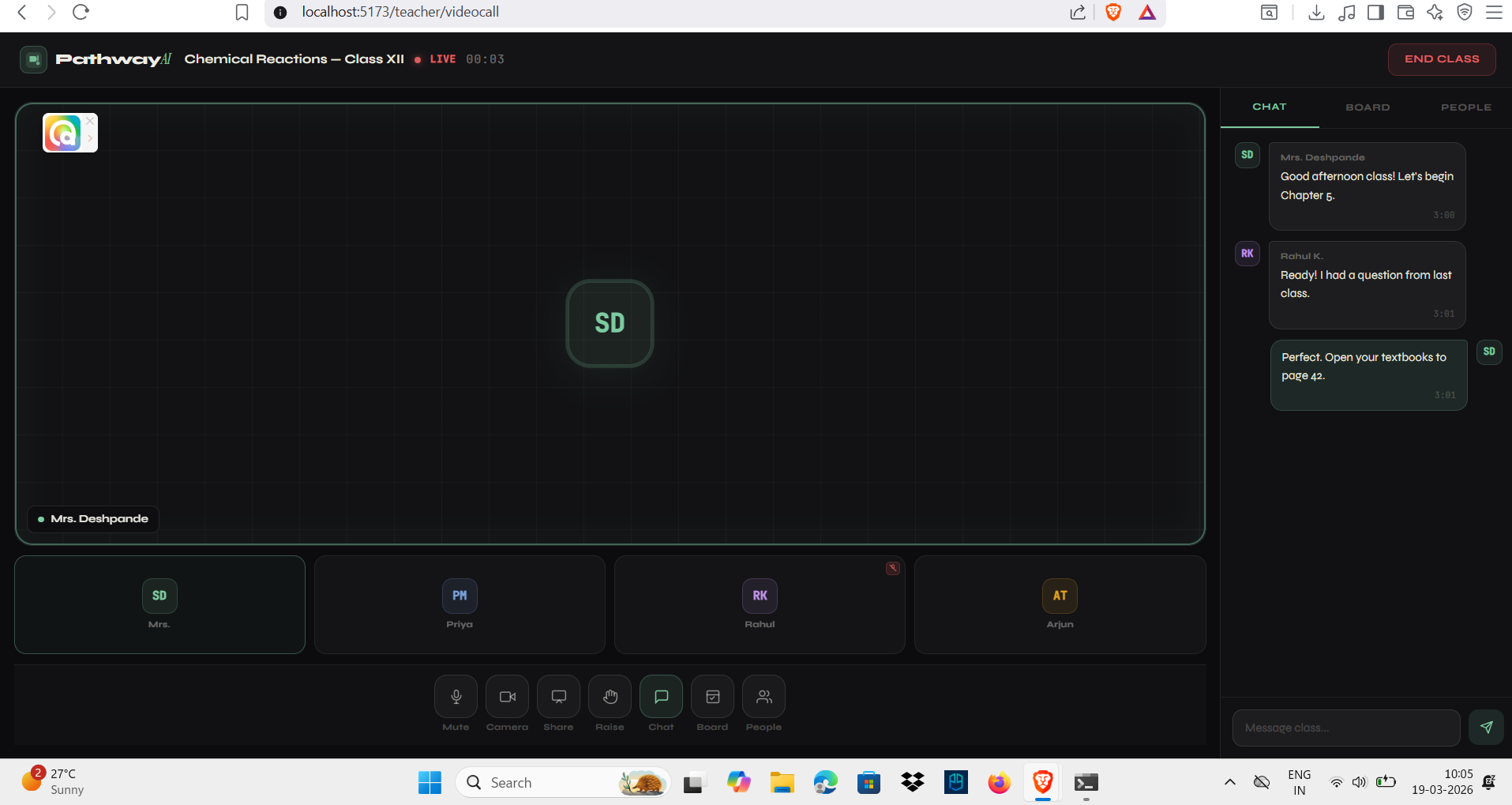
Video call option to clear doubts
-
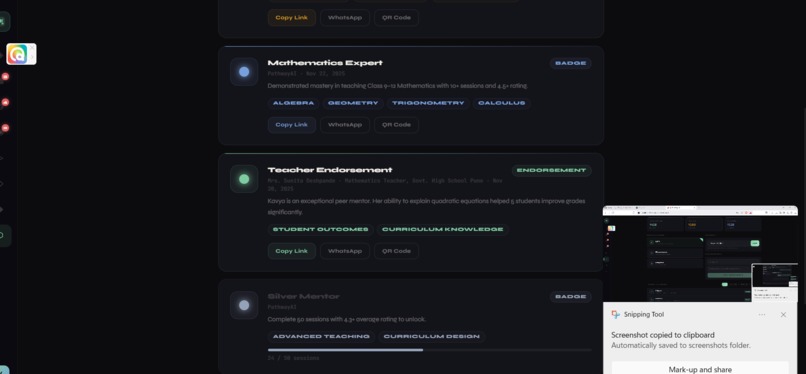
-
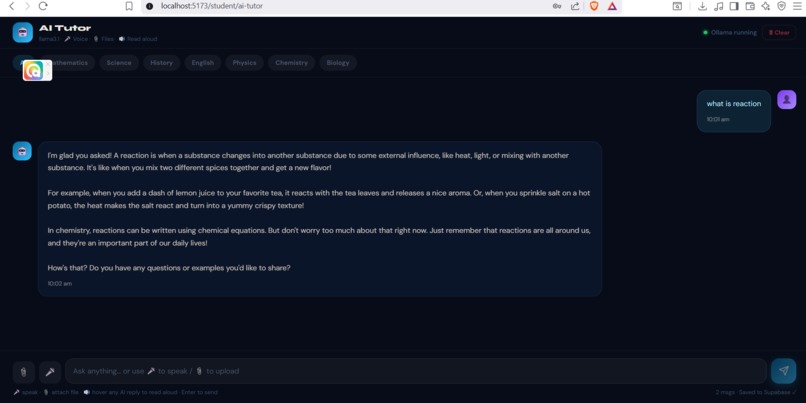
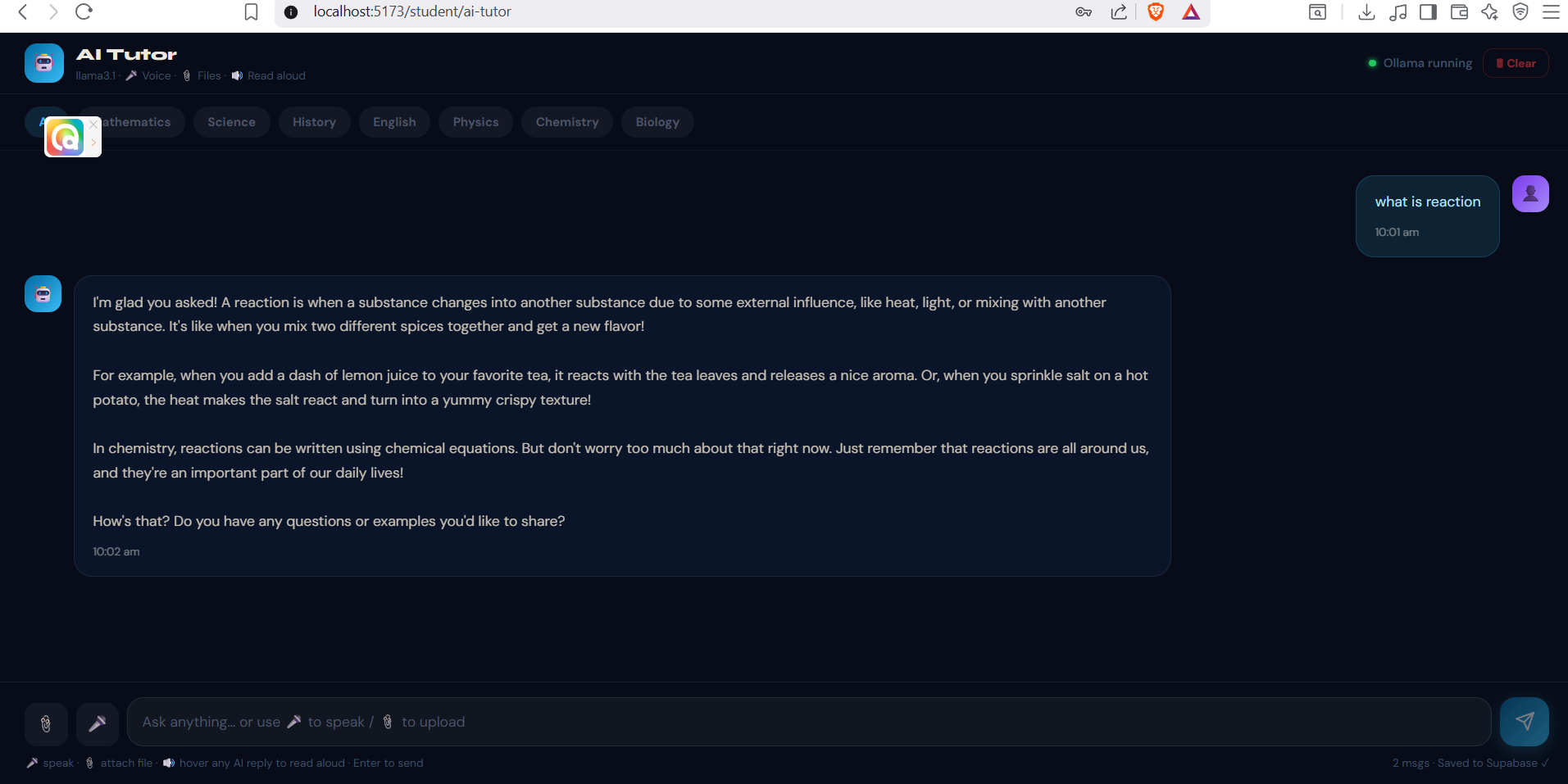
AI doubt solver using LLAMA 3.0
-
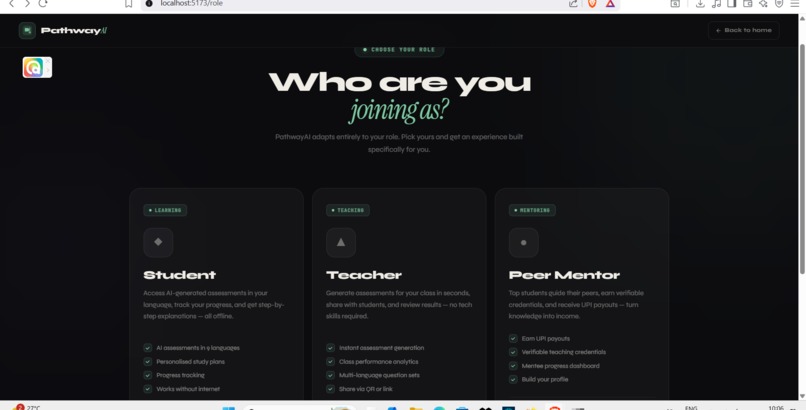
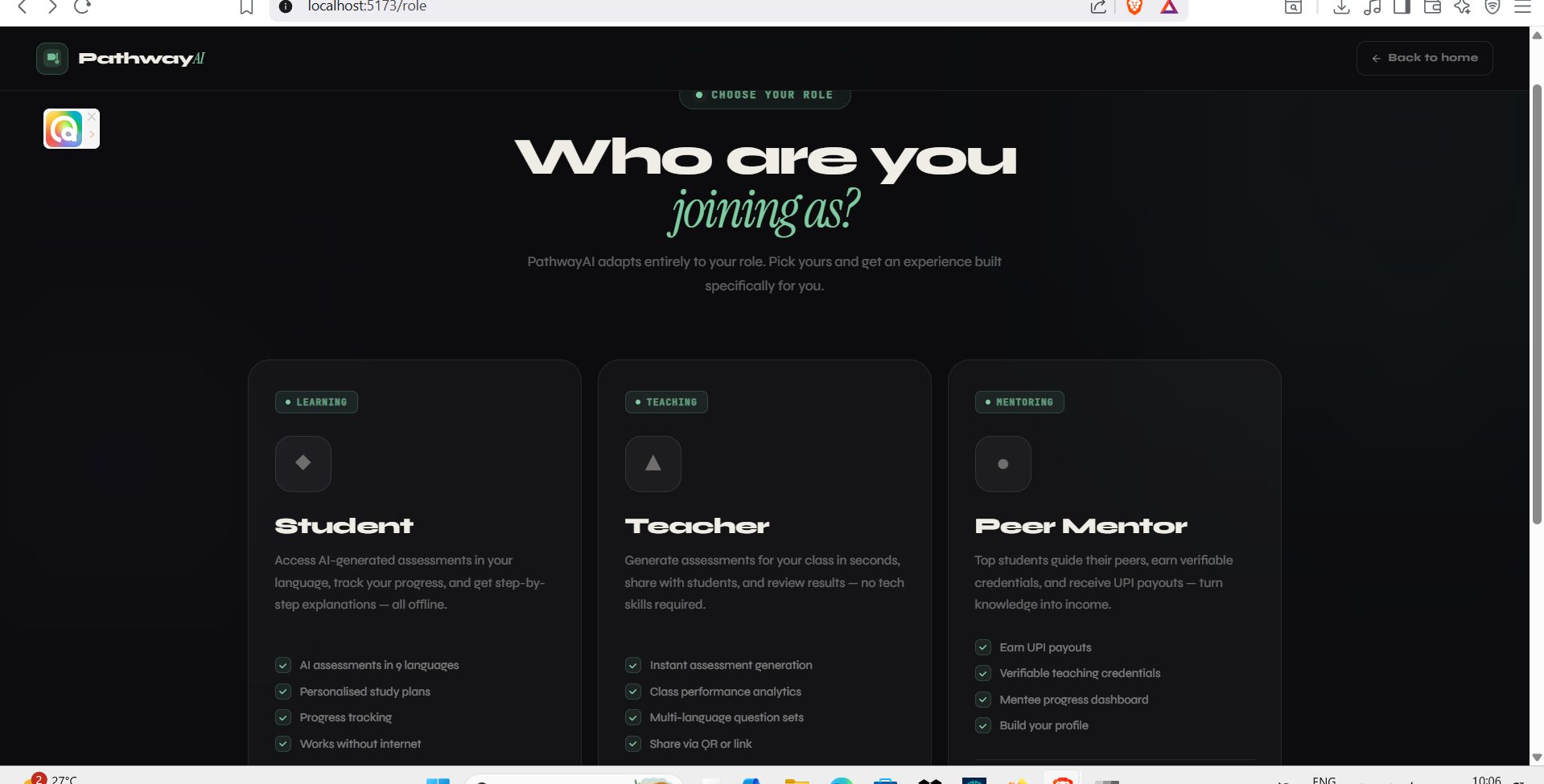
The role
-
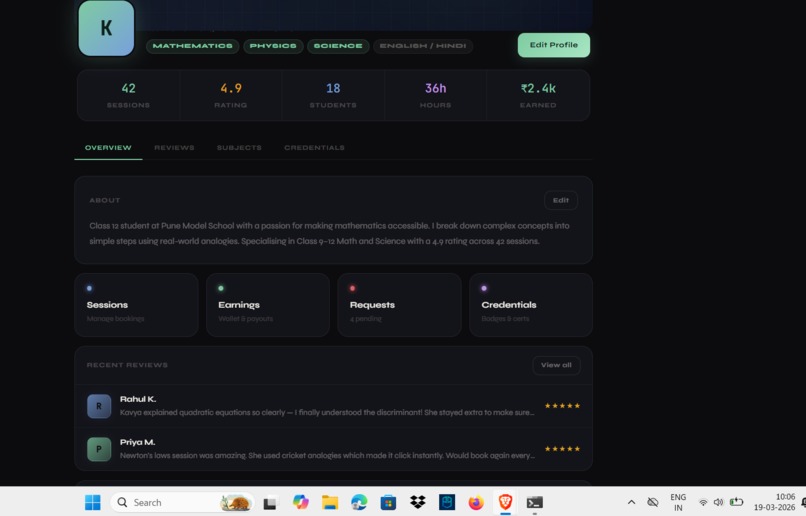
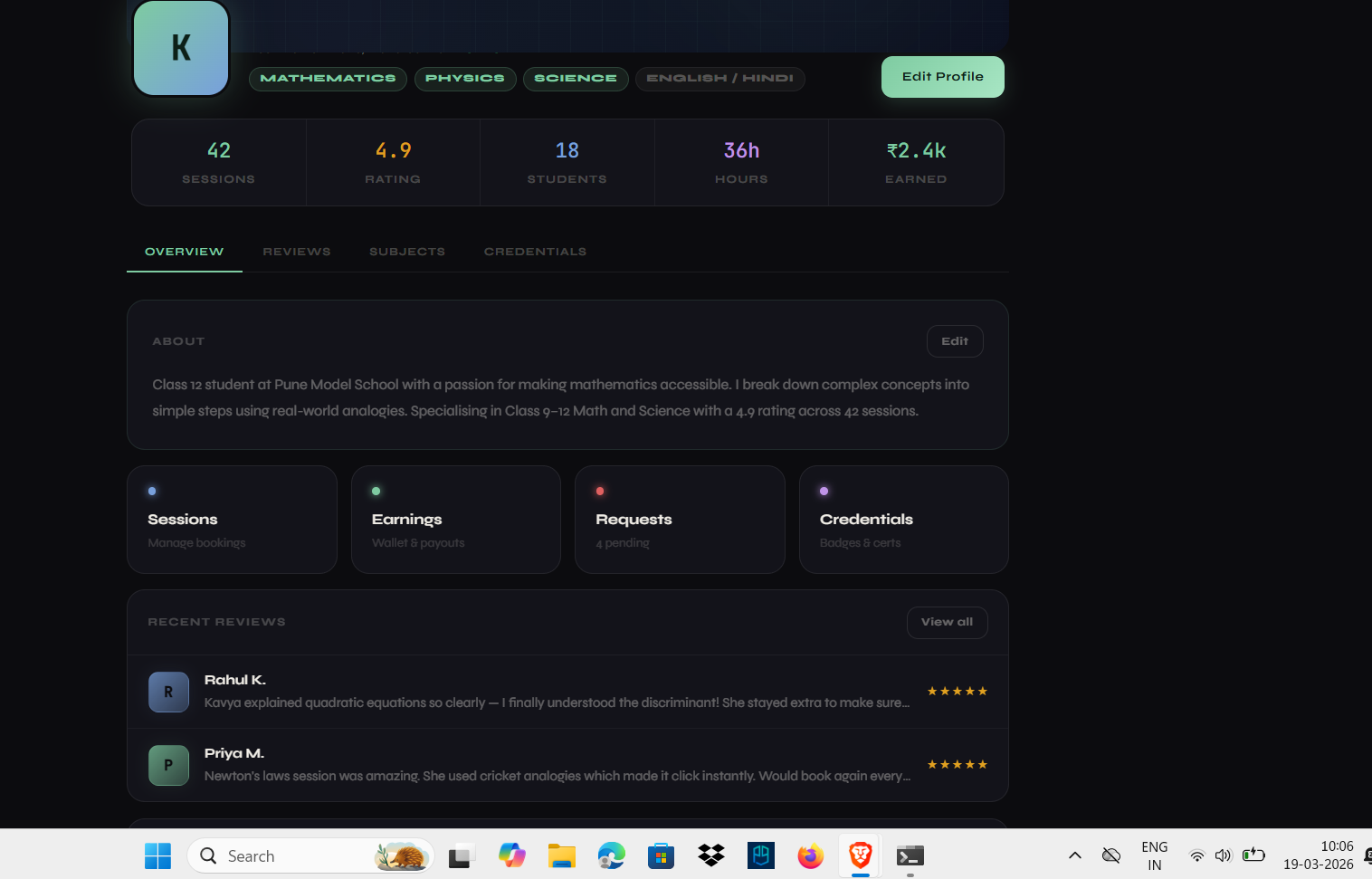
Mentor dashboard
-
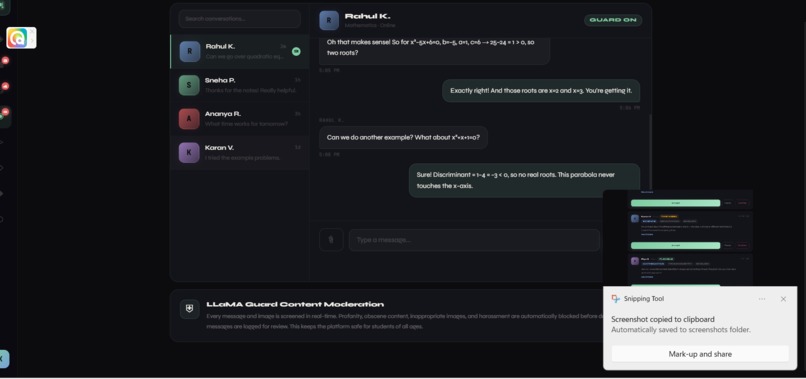
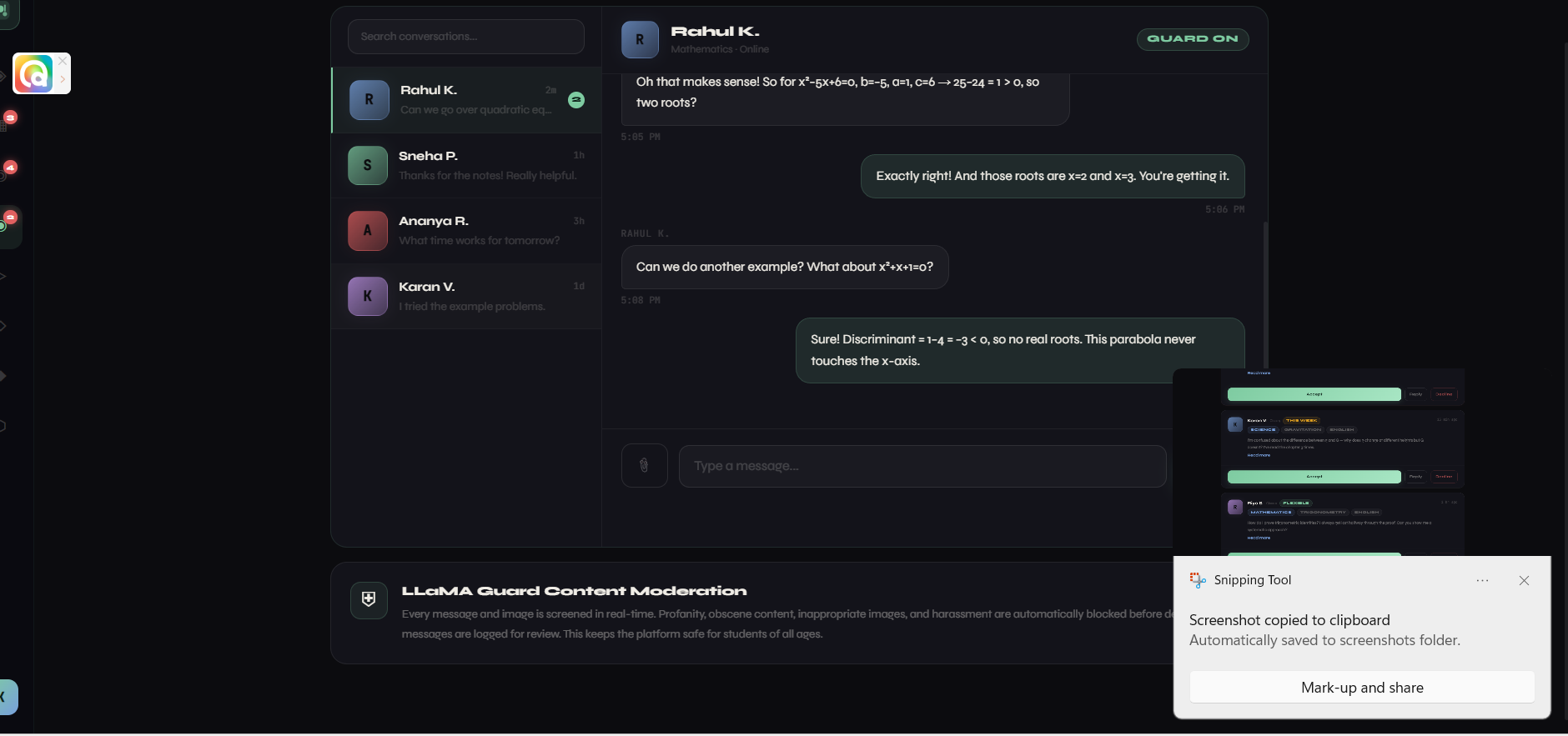
The doubt solving through chat and it is protected by llama to prevent obscene message sharing
-
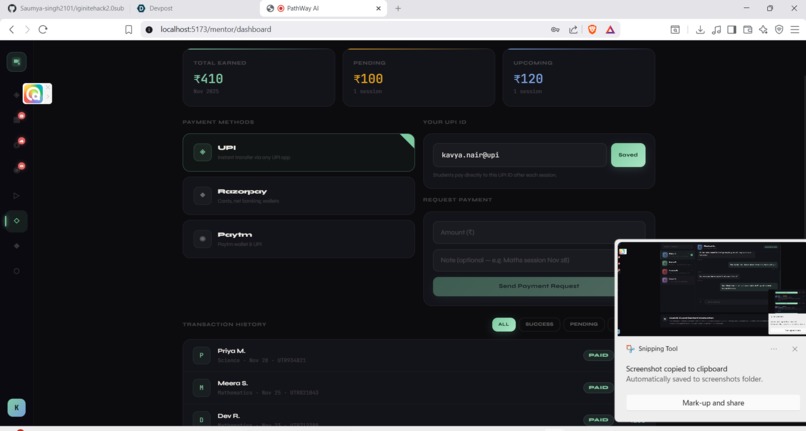
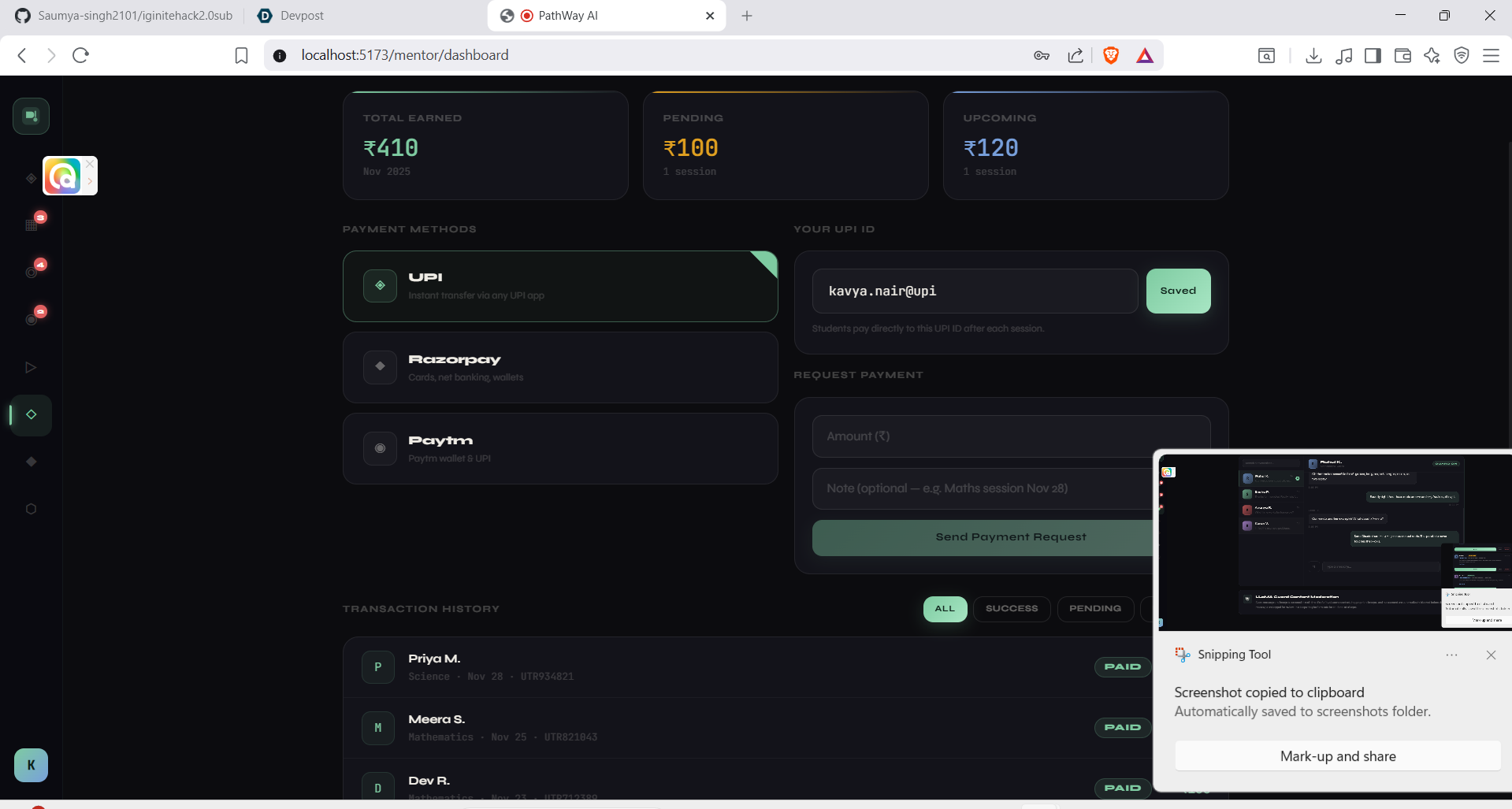
The payment gateway
-
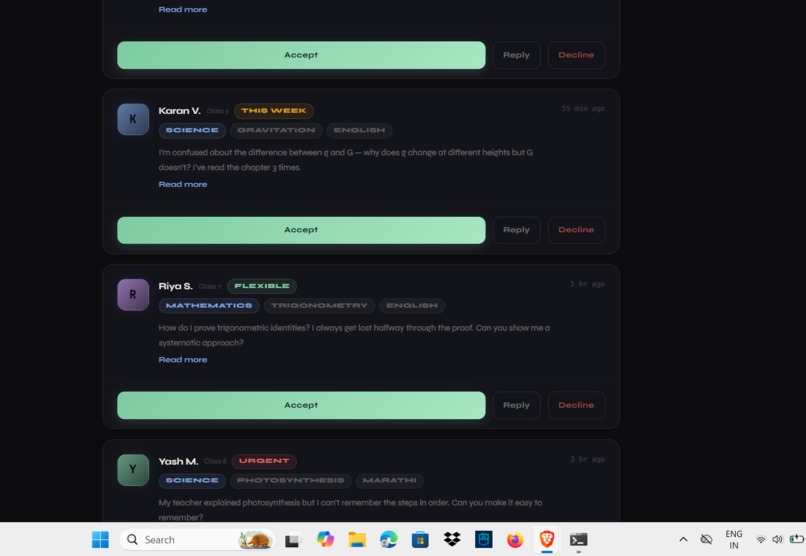
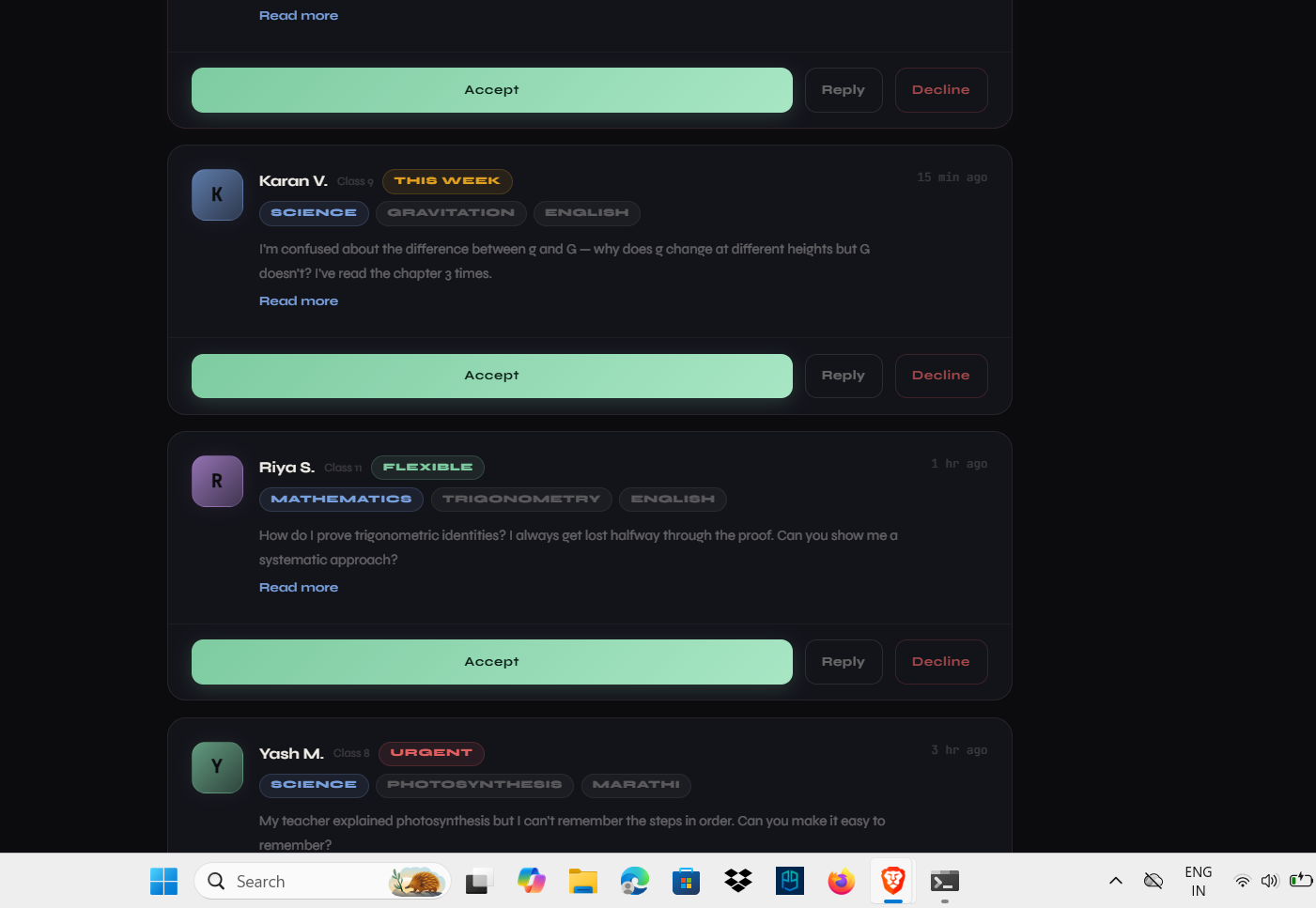
the request recieved
-
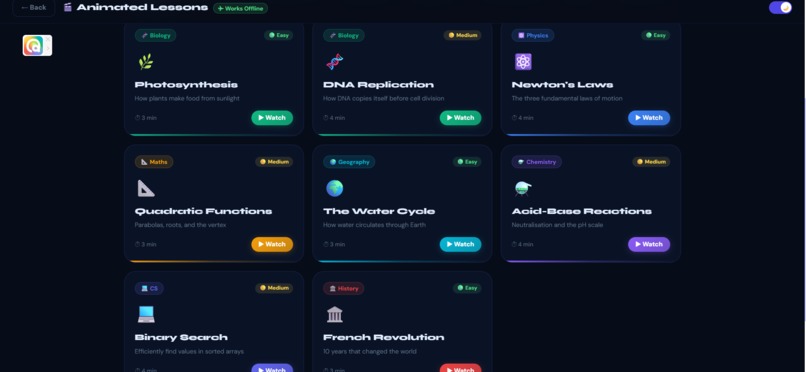
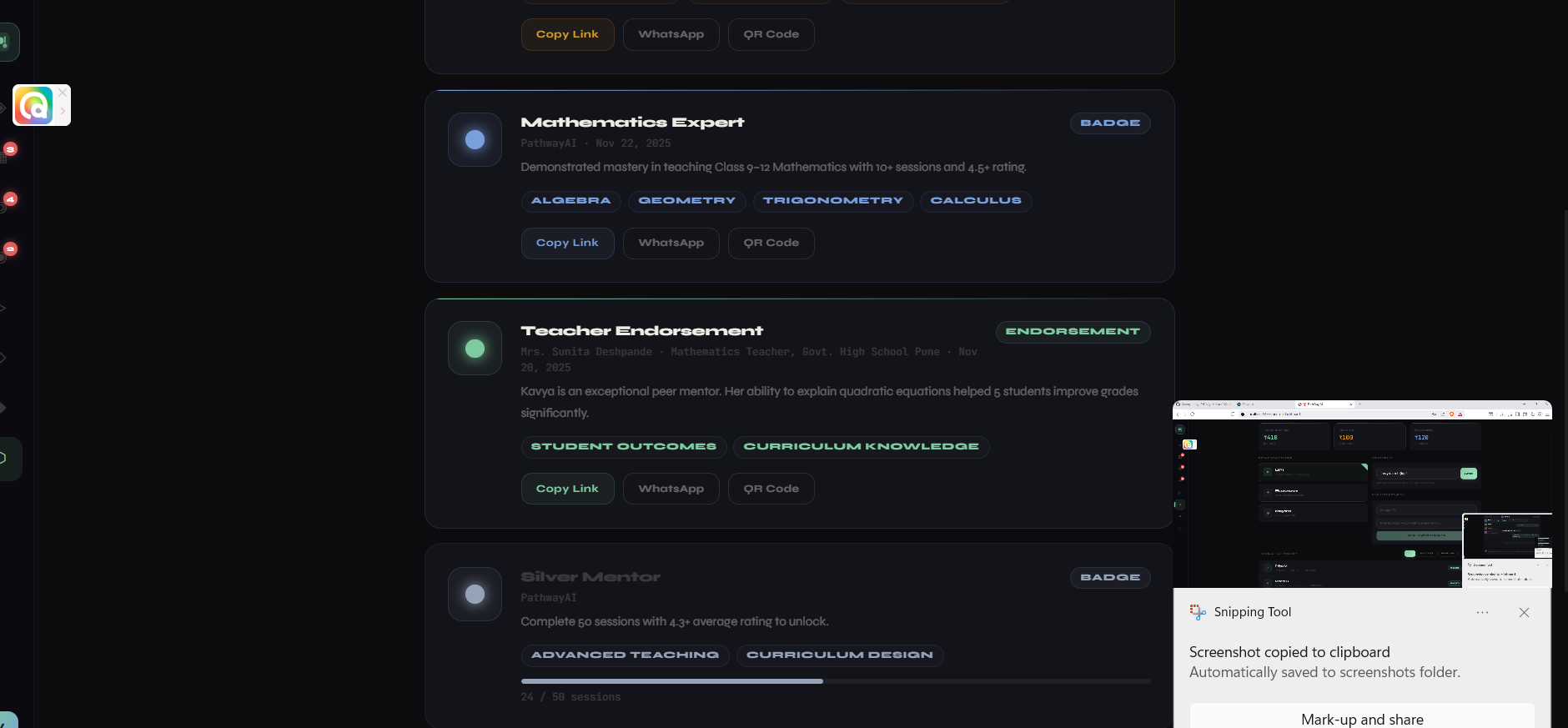
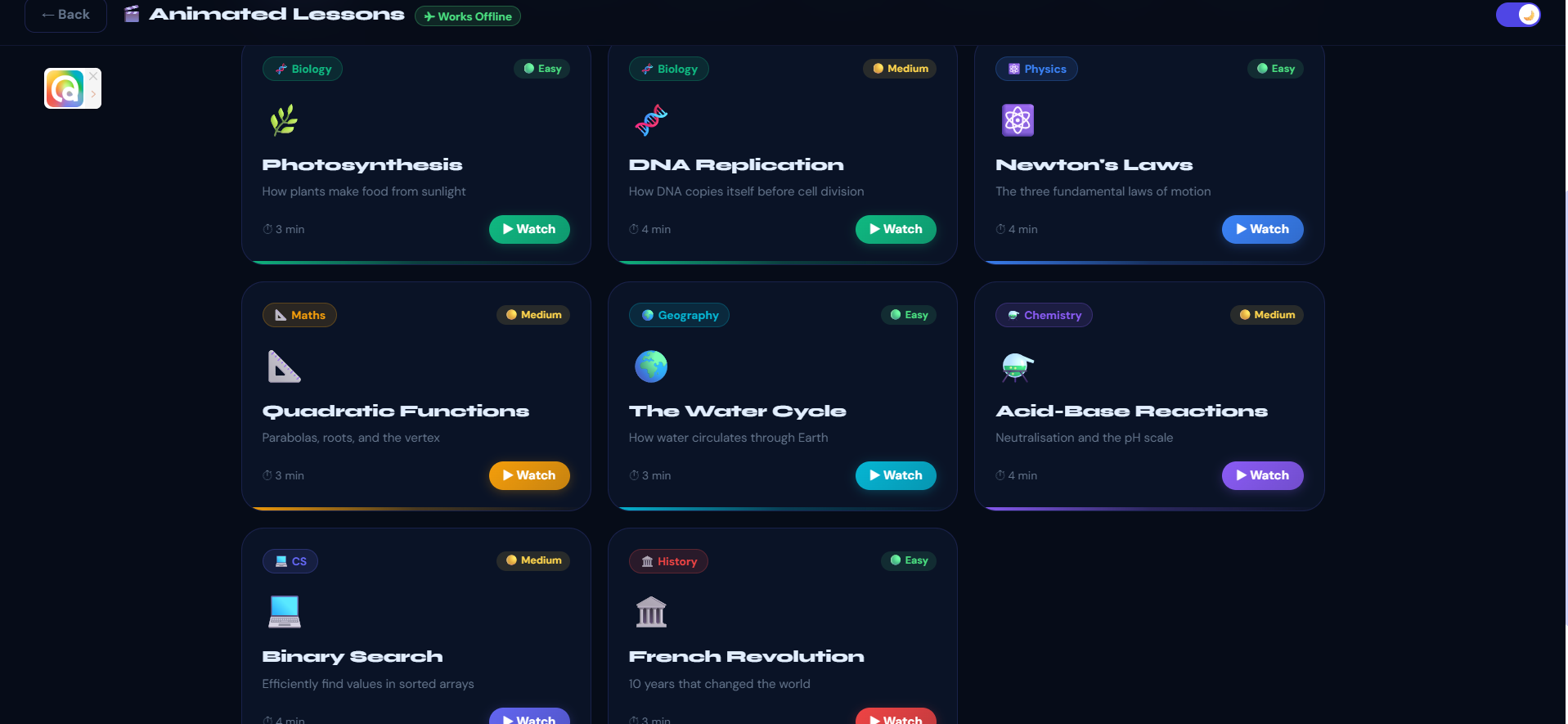
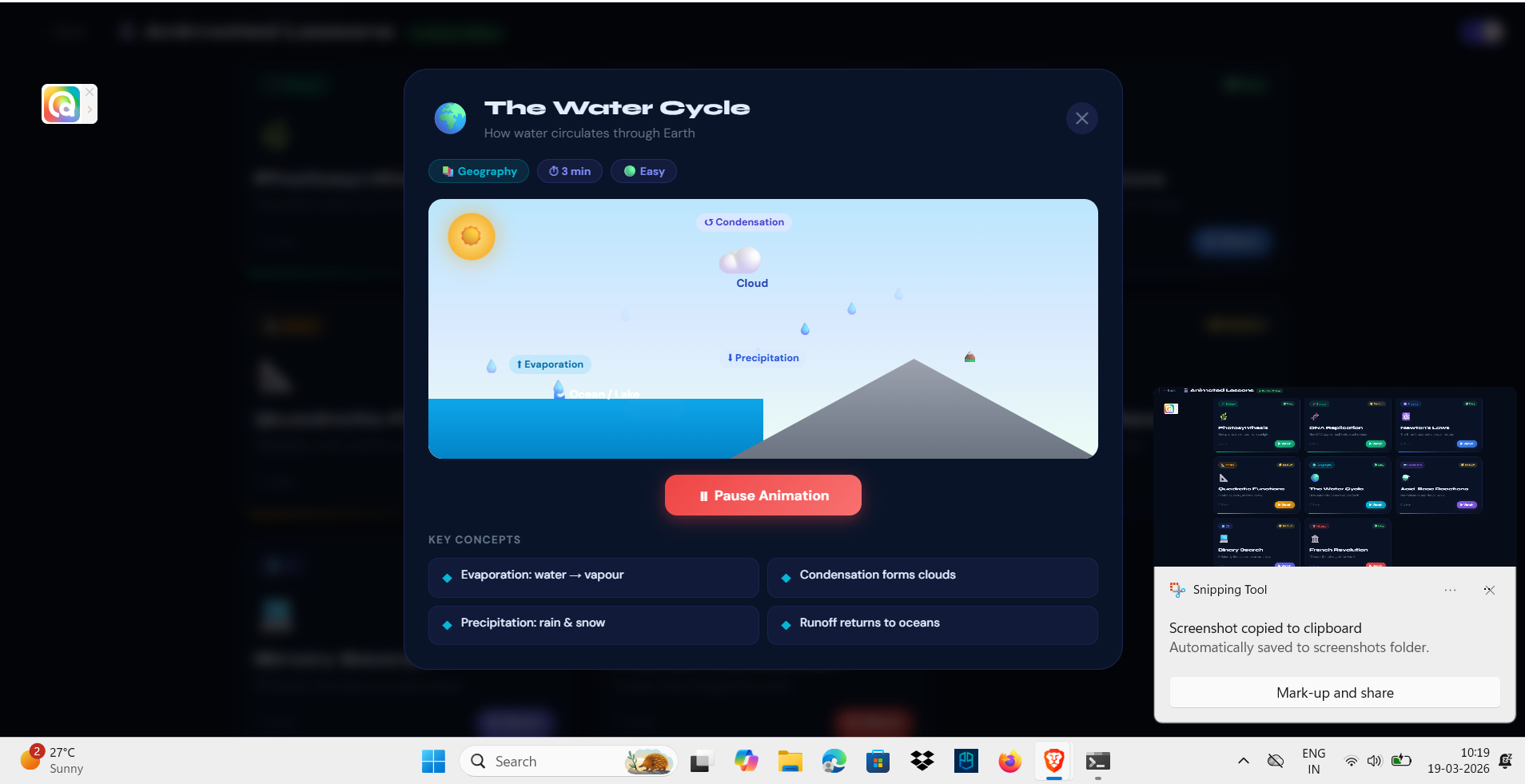
The animated lessons for students to learn about various topics
-

Homepage
-
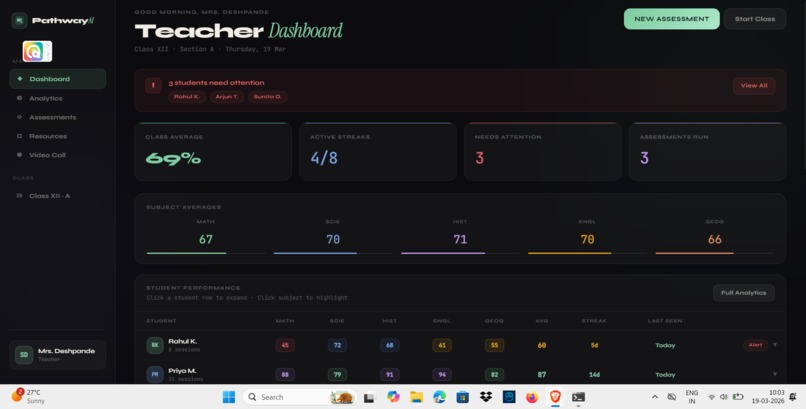
Teacher dashboard
-
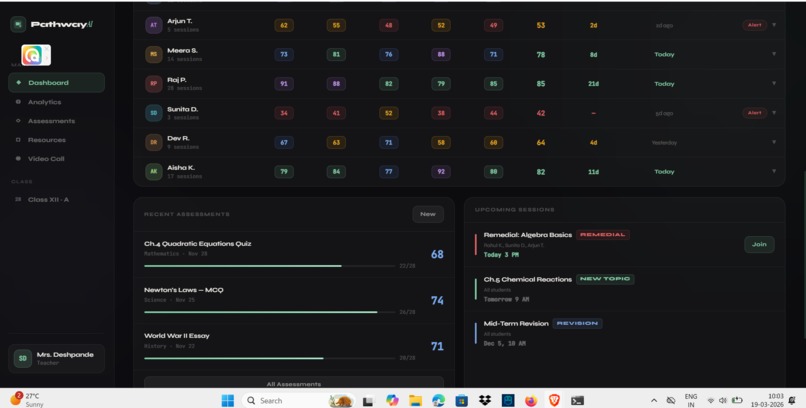
Teacher's dashboard giving a clear idea of his/her class
-
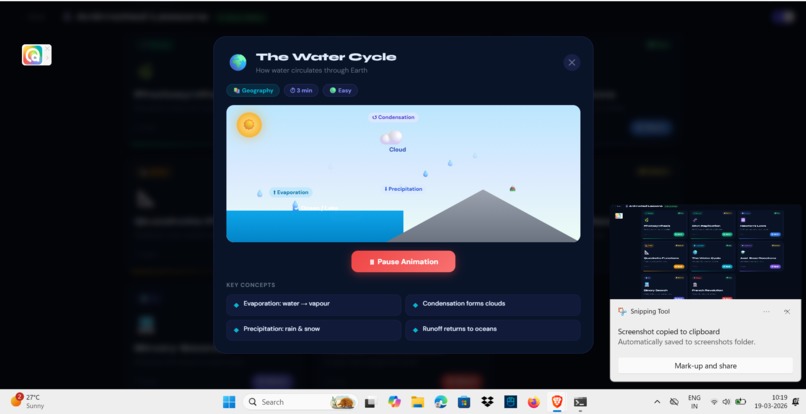
An example of it
-
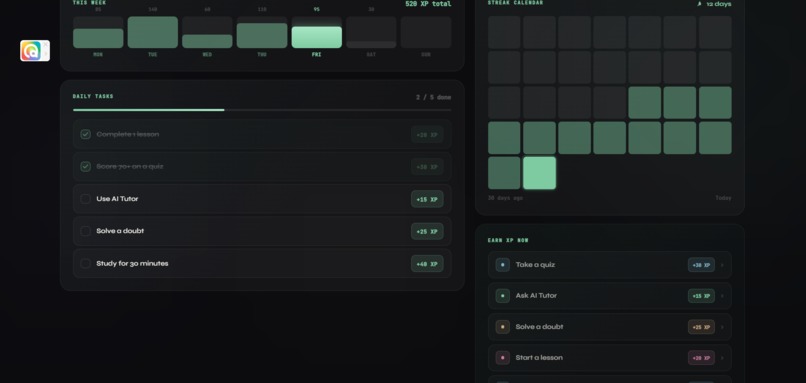
The availability of the mentors
-
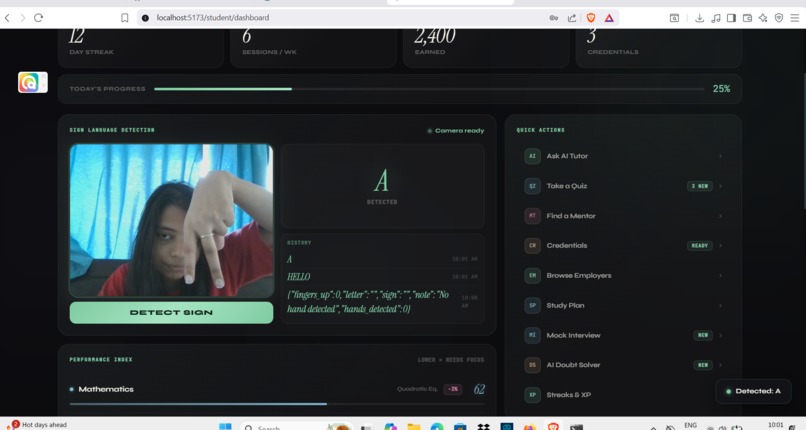
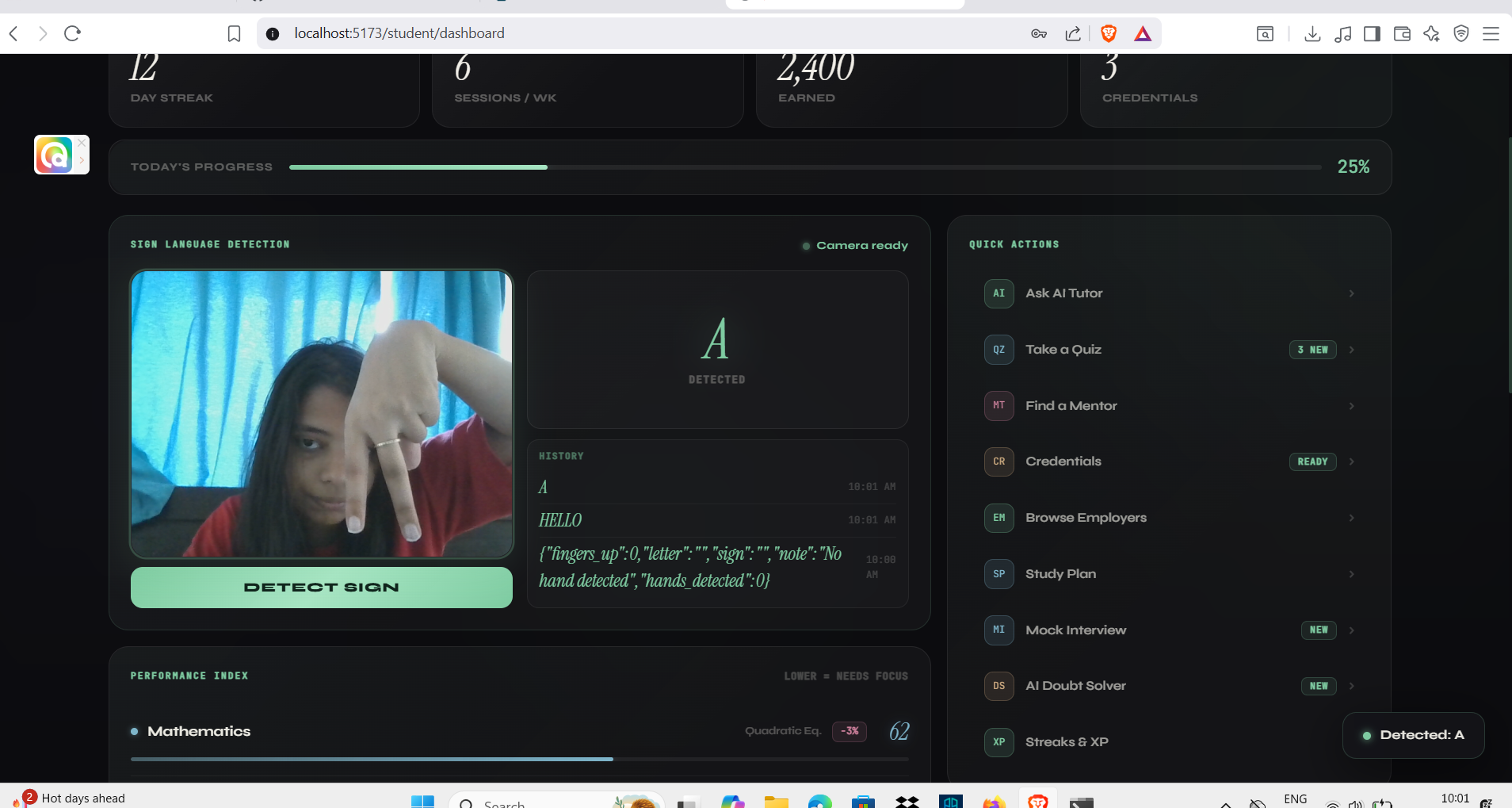
Sign language detector
-
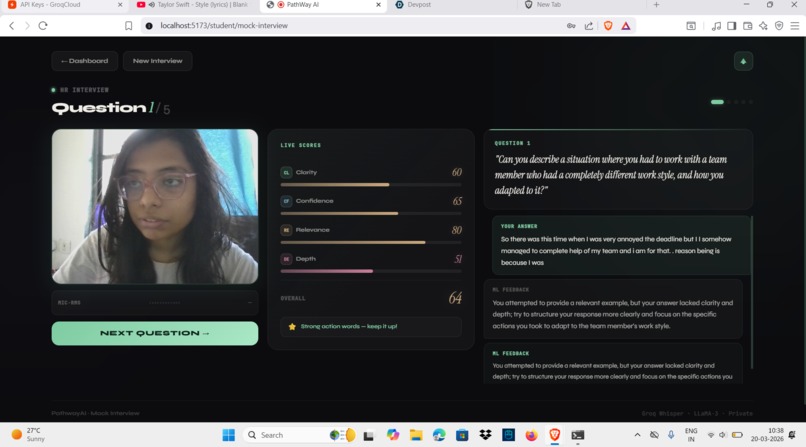
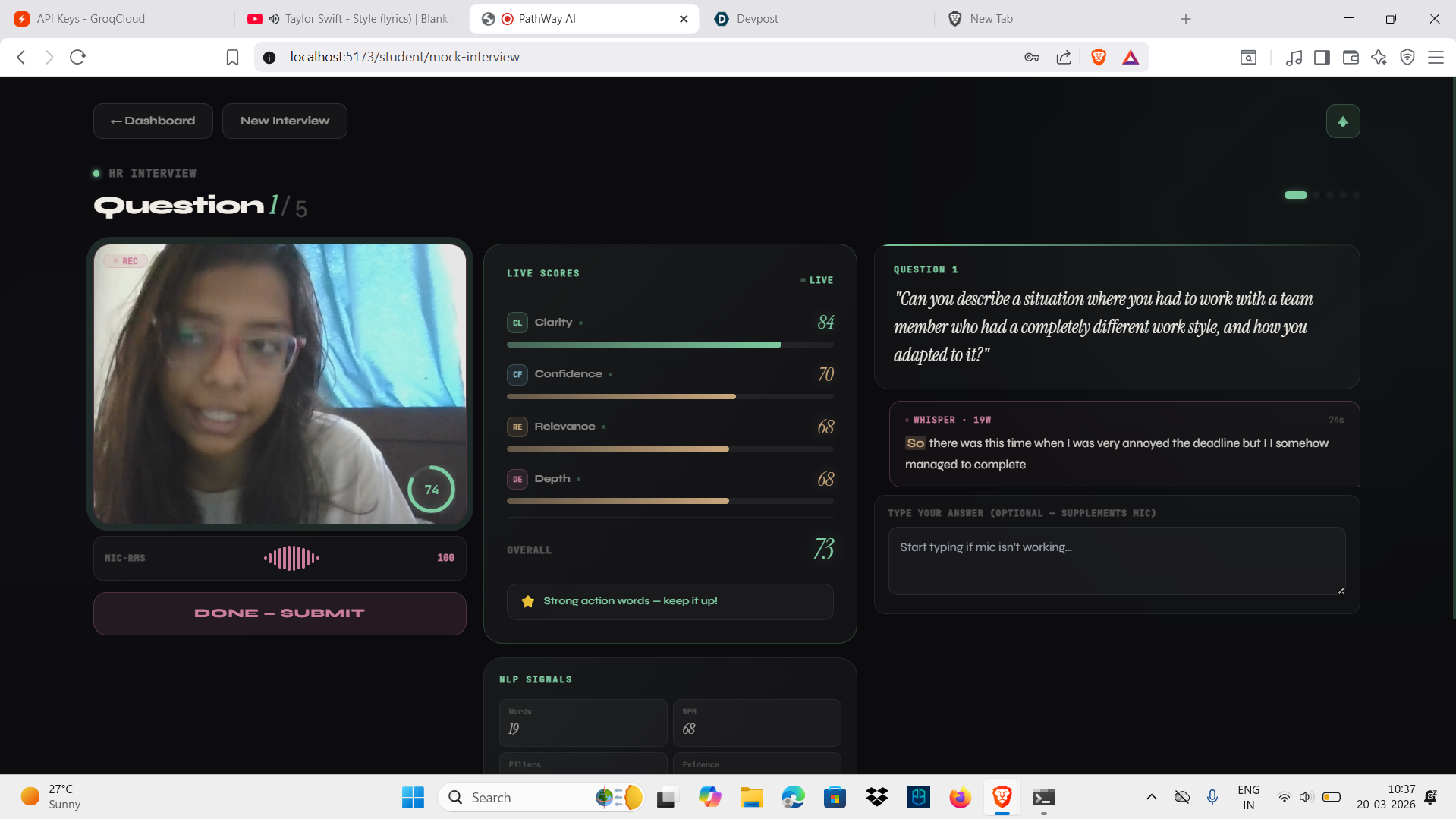
Groq Whisper (STT) + LLaMA-3 (streaming SSE) + in-browser NLP + 60fps AudioContext = real-time.
-
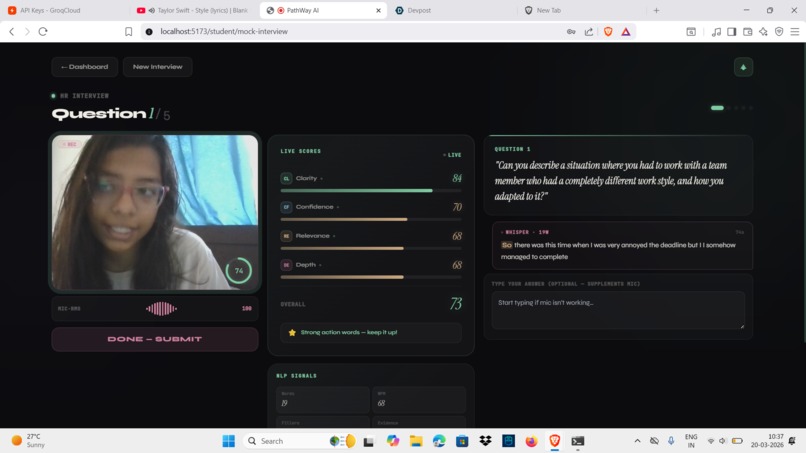
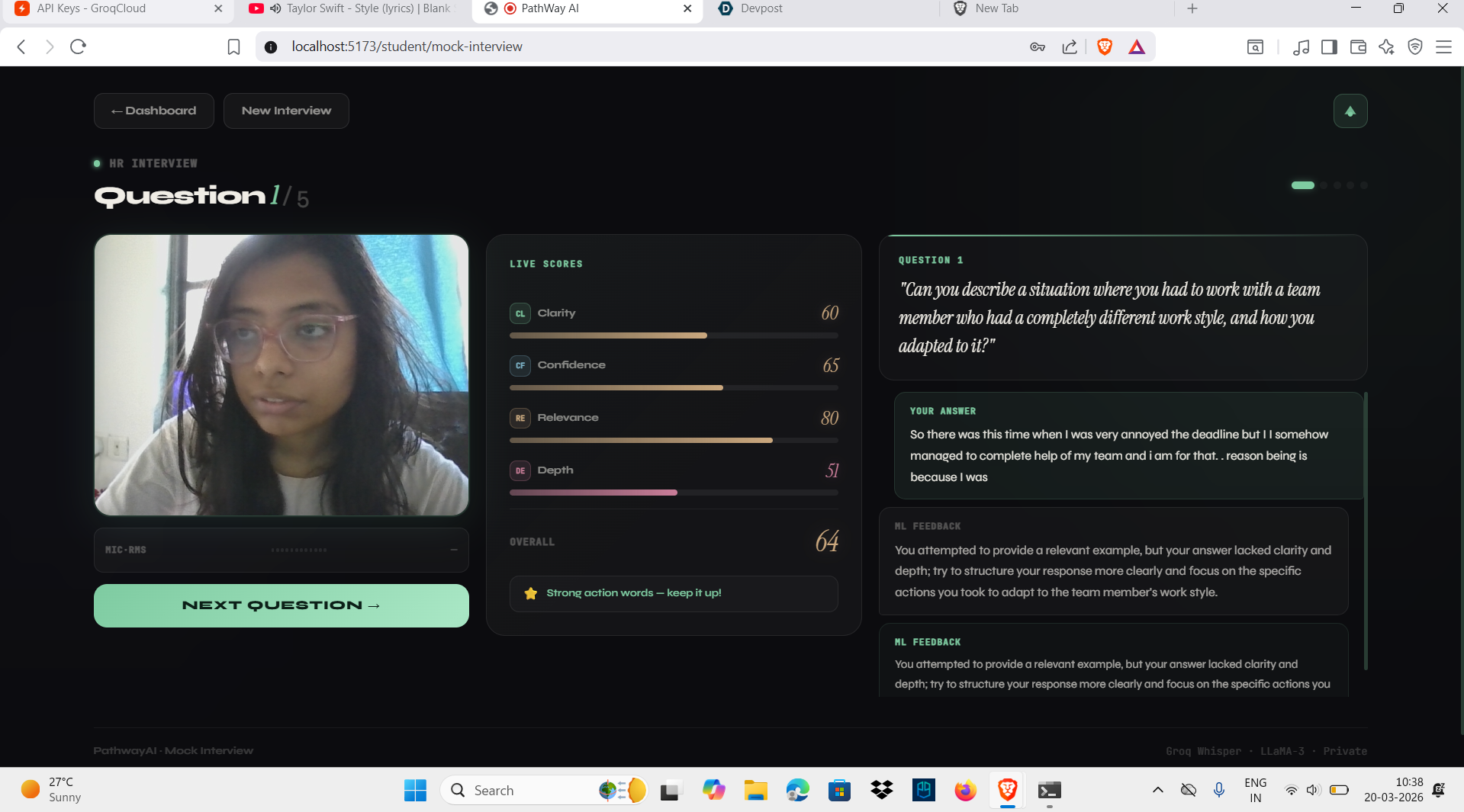
Ai mock interview
-
https://vimeo.com/1179201211?share=copy&fl=sv&fe=ci#t=0


Inspiration
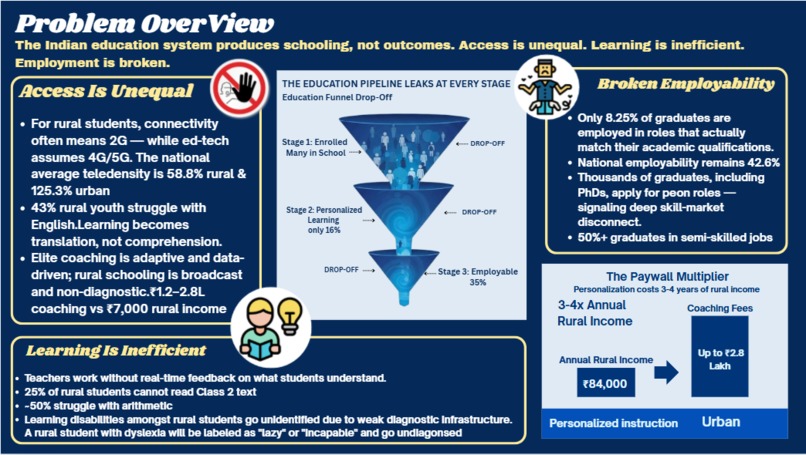
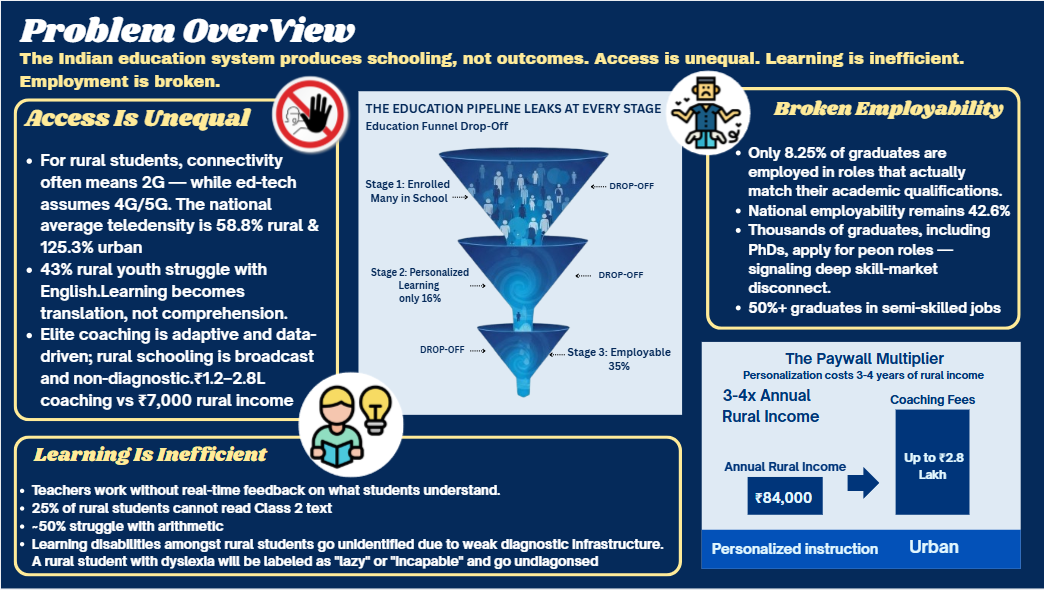
Pathway AI was born out of lived experience. Coming from a humble background, I have personally seen how students despite having the willingness to learn struggle due to lack of access, resources, and guidance. In today’s digital era, where education is assumed to be accessible to all, the reality in Tier 2 and Tier 3 regions is very different. Limited internet connectivity, lack of personalized attention, language barriers, and absence of structured support systems continue to hold students back.
Many students are forced into rote learning without understanding concepts, while others drop out of opportunities simply because they were never guided in the right direction. This gap between potential and opportunity became the core motivation behind Pathway AI to build a system that works for students who are often ignored by mainstream ed-tech solutions.
What it does
Pathway AI is an offline-first, AI-powered learning ecosystem that runs locally on devices, eliminating dependency on continuous internet access. It provides personalized study plans, AI tutoring, real-time doubt solving, and mock interviews to prepare students not just academically, but professionally.
The platform goes beyond learning by introducing a “learn and earn” model, where high-performing students can become mentors, support peers, and earn income. Teachers are equipped with analytics dashboards, AI-generated assessments, and insights to identify and support students who need attention.
It is a complete ecosystem where students learn, mentors earn, and educators guide—creating a continuous cycle of growth and opportunity.
How we built it
We built Pathway AI using React, JavaScript, and Tailwind CSS for the frontend, ensuring a responsive and user-friendly interface. The backend is powered by FastAPI and Node.js, with Supabase handling database and authentication.
For AI capabilities, we integrated LLaMA for on-device intelligence, Groq for high-speed inference, and Whisper for speech-to-text functionality. The entire system is optimized to run locally and can be deployed on low-cost hardware such as Raspberry Pi, enabling full offline functionality for classrooms and communities.
Challenges we ran into
One of the biggest challenges was ensuring data security while maintaining performance. Since the platform handles sensitive student data, we had to design a system where most processing happens locally, minimizing exposure to external servers.
Scalability was another major challenge. Building a system that works for a single user is easy, but designing it to scale across schools, communities, and regions while still being affordable and efficient required careful architectural decisions.
Additionally, optimizing AI models to run on low-resource devices without compromising user experience was a significant technical hurdle.
Accomplishments that we're proud of
We are proud to have built a platform that addresses the needs of a wide spectrum of students from those with limited access to those seeking advanced opportunities. Pathway AI supports different learning styles, languages, and abilities, making it inclusive by design.
Successfully creating an offline-capable AI system that runs on low-cost hardware is a major achievement. We have also built a complete ecosystem that not only focuses on learning but also enables earning, mentorship, and career readiness.
What we learned
Through this journey, we learned that technology alone is not enough solutions must be designed with real-world constraints in mind. Accessibility, affordability, and simplicity are just as important as innovation.
We also realized the immense impact this system can have, especially at the primary school level. Early intervention through personalized learning can significantly improve foundational skills, ensuring that students do not fall behind from the start.
Understanding user behavior, constraints like low bandwidth, and the importance of inclusive design has shaped how we approach problem-solving.
What's next for Pathway AI
The next step for Pathway AI is expansion and real-world deployment. We aim to pilot the platform in schools, NGOs, and community learning centers, particularly in underserved regions.
We also plan to strengthen the hardware aspect by scaling deployments using devices like Raspberry Pi, enabling entire classrooms to run the platform locally with minimal infrastructure.
Further, we aim to expand the mentor marketplace, integrate employer partnerships, and build a larger network that connects learning directly to opportunities.
Our long-term vision is to create a scalable, hardware-enabled ecosystem that can reach millions of students and redefine how education is delivered in resource-constrained environments.
Criteria
Education


Log in or sign up for Devpost to join the conversation.