-
-
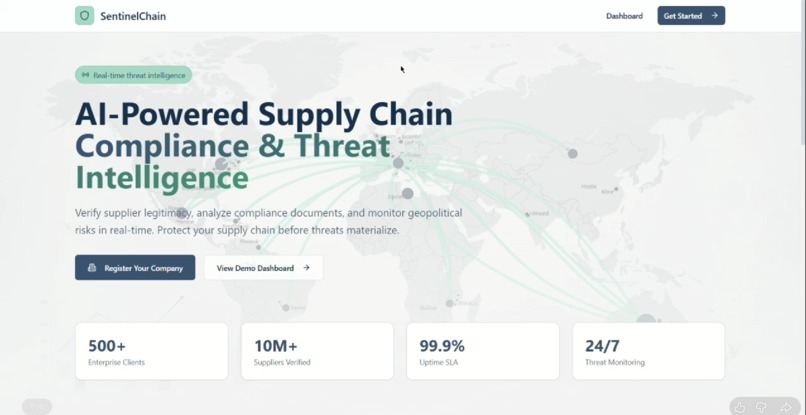
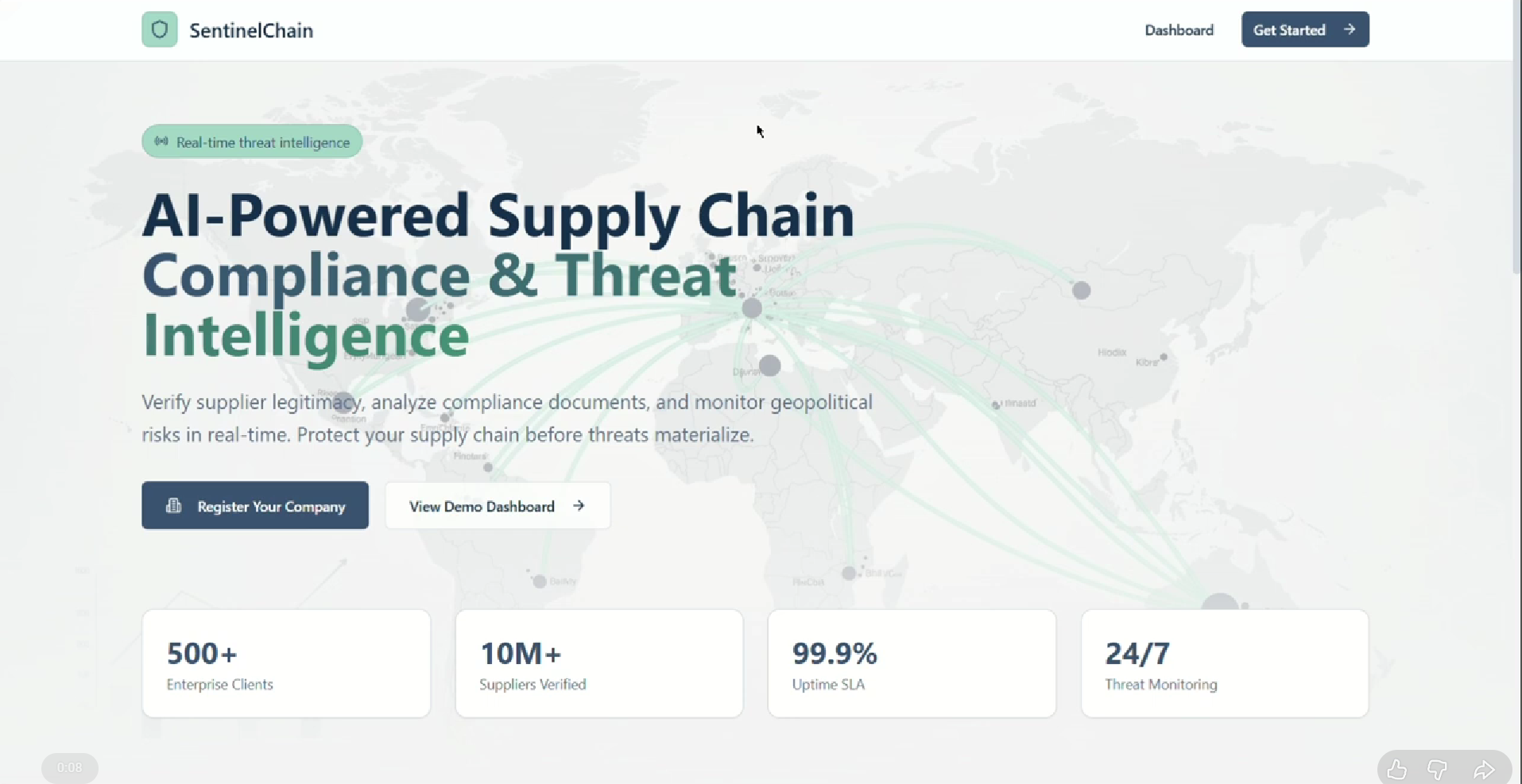
Landing Page
-
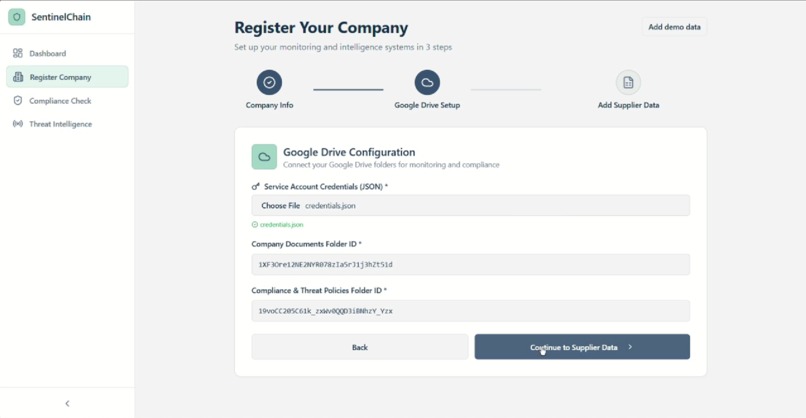
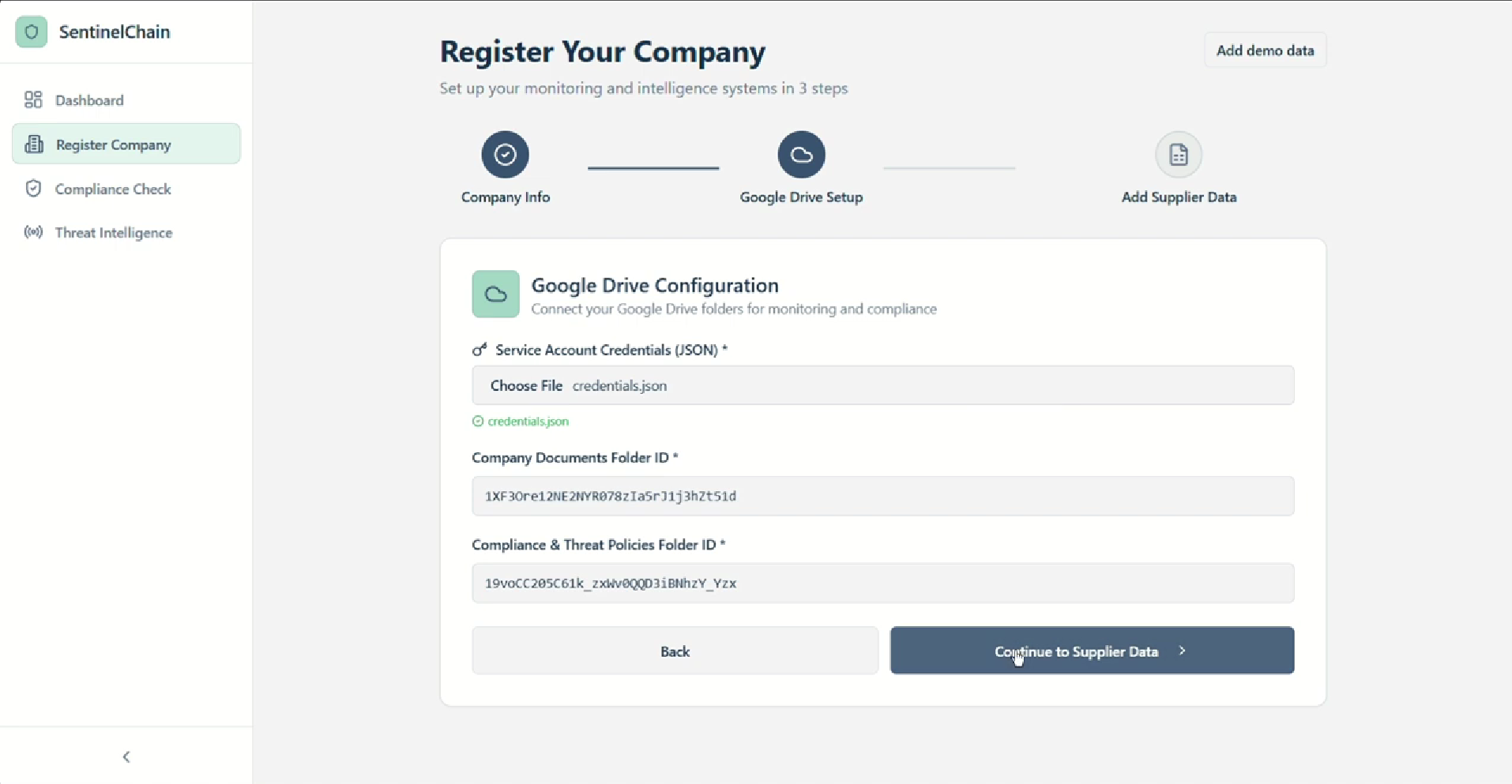
Registration Page
-
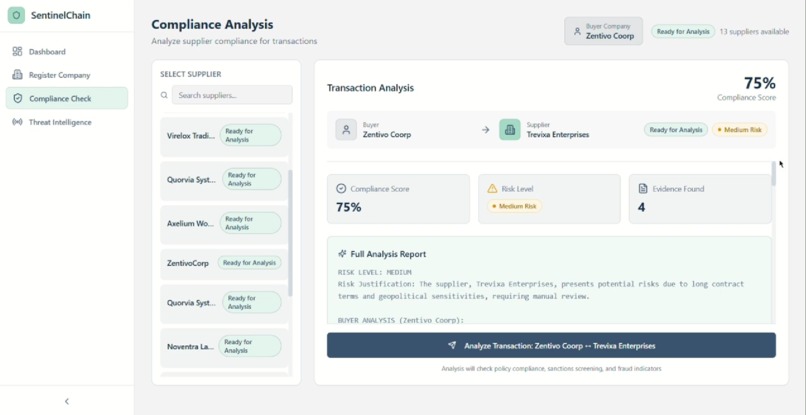
Computational Threats
-
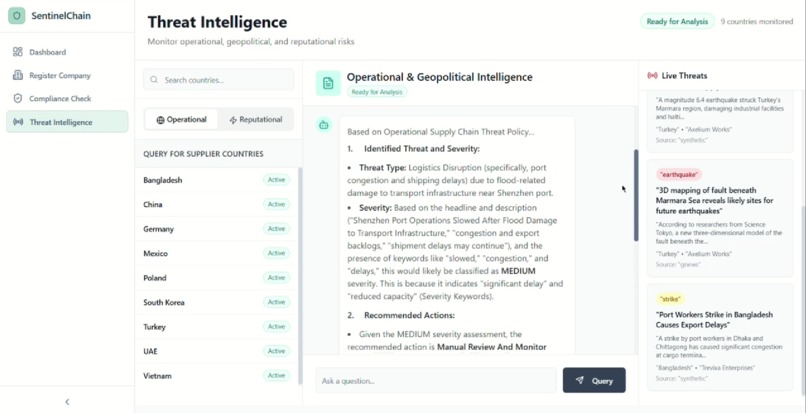
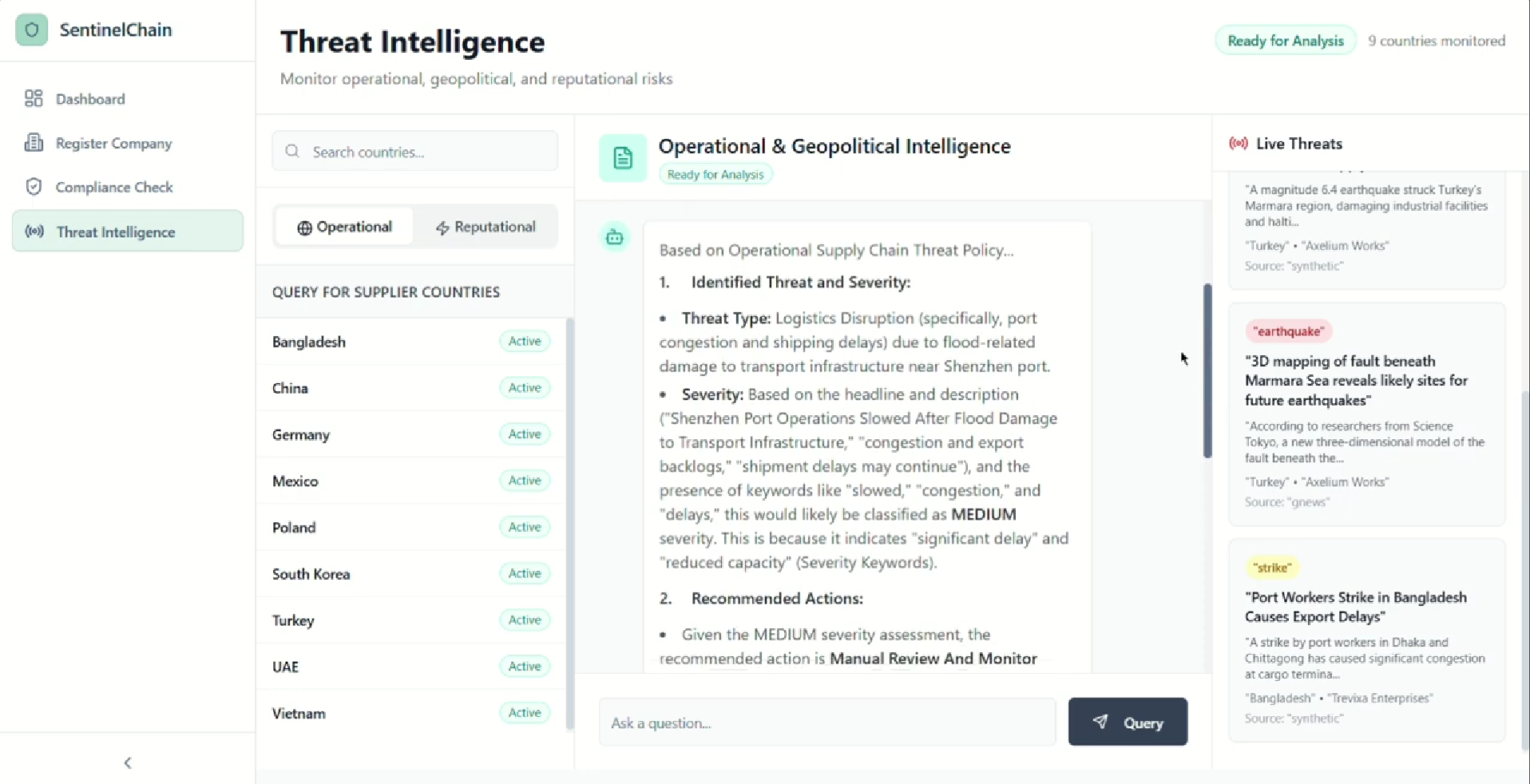
Operational and Geopolitical Threats
-
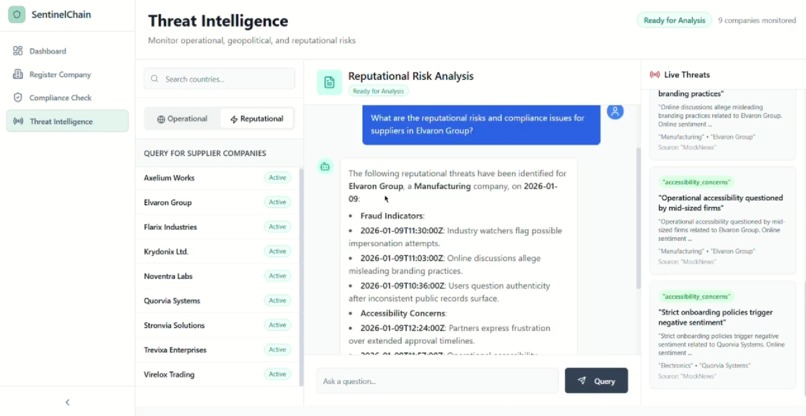
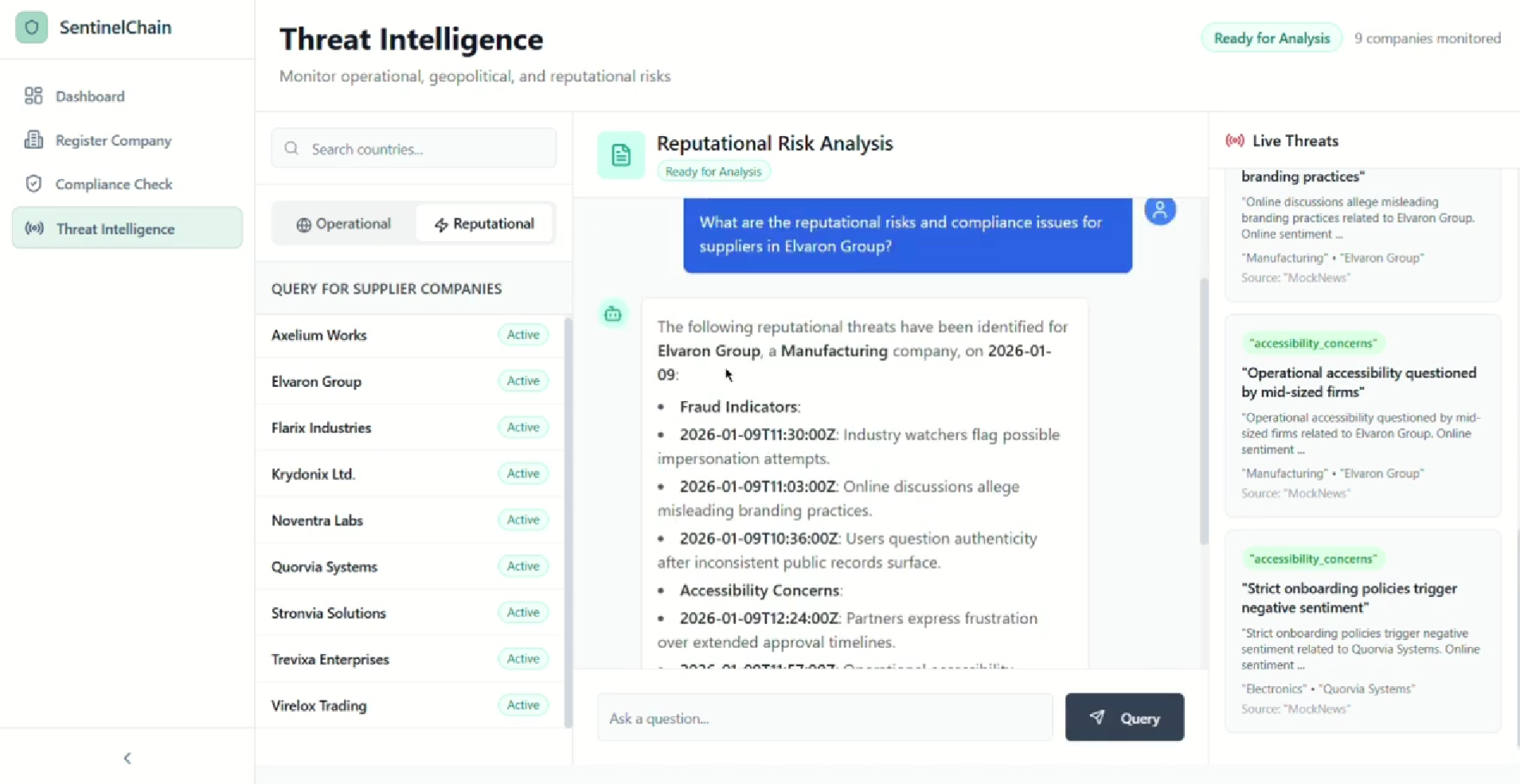
Reputational Threats
Inspiration
The inspiration for Sentinel Chain stems from the critical need for "Live Intelligence" in global operations. Traditional Retrieval-Augmented Generation (RAG) systems often suffer from a "knowledge gap"—the time between a real-world event occurring and the system indexing that data. We realized that for supply chains and corporate compliance, a delay of even a few hours can lead to catastrophic disruptions. We set out to build a system that moves at the speed of the internet, transforming static data into a living, breathing sentinel that guards against geopolitical, operational, and reputational risks as they happen.
What it does
Sentinel Chain is a real-time intelligence and compliance monitoring platform that provides three core modules through a unified dashboard:
- Supply Chain Threat Monitoring: Detects geopolitical and operational threats (like strikes or disasters) in real-time using streaming CSV data and LLM validation.
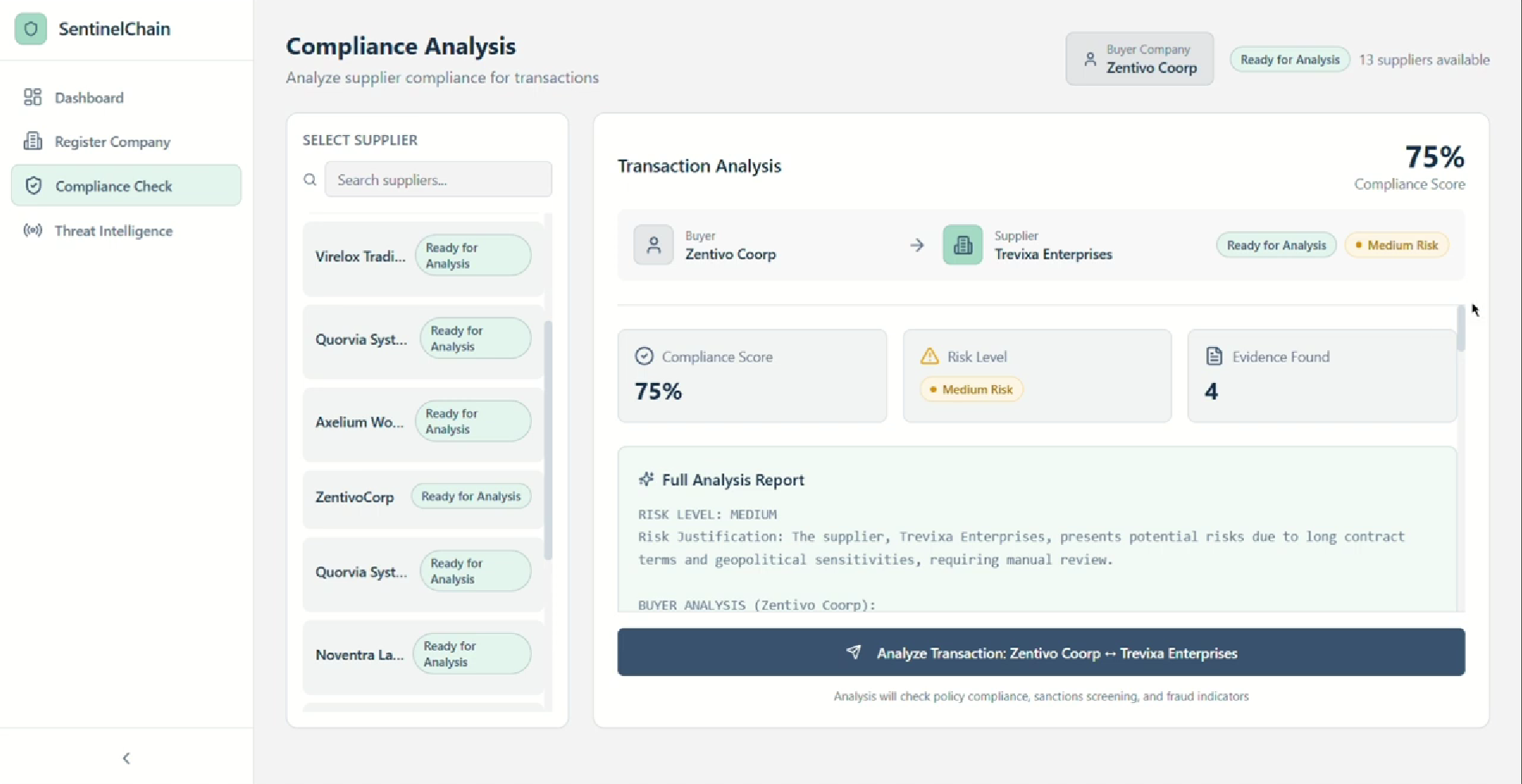
- Compliance Engine: Integrates directly with Google Drive to analyze company documents against threat policies, providing AI-powered transaction risk assessments.
- Reputational Risk Monitoring: Monitors news streams to detect and categorize company-specific threats such as fraud, impersonation, or operational complaints.
- Adaptive RAG: Uses an iterative retrieval process that expands its search context if the initial data is insufficient to answer a query accurately.
How we built it
The platform is built on a high-performance streaming architecture orchestrated via Docker Compose:
- Core Engine: We used Pathway for its unique ability to perform real-time indexing and hybrid search (KNN + BM25) on data streams.
- AI/LLM: We integrated Gemini 2.0 Flash for threat validation and complex reasoning, ensuring that only genuine risks trigger alerts.
- Data Integration: Built custom connectors for Google Drive, real-time CSV streams, and JSONL news files.
- Backend: Developed multiple microservices using FastAPI to serve as proxies between the RAG engine and the user.
- Frontend: A production-ready React 18 dashboard with Tailwind CSS and Recharts for real-time data visualization.
Challenges we ran into
- Data Sync Latency: Coordinating real-time updates from disparate sources—like Google Drive, live CSV streams, and local files—required careful management of Pathway's streaming state.
- LLM Consistency: Tuning the LLM validators to distinguish between "noise" and "genuine threats" across different categories (Fake vs. Legitimate companies) required extensive prompt engineering.
- Windows Compatibility: As Pathway is natively Linux-optimized, we had to build a robust multi-container Docker environment to ensure seamless performance and environment parity across different operating systems.
Accomplishments that we're proud of
- True Real-Time RAG: Successfully built a system where adding a file to a Google Drive folder or updating a spreadsheet instantly updates the "knowledge" of the AI without manual re-indexing.
- Multi-Source Fusion: Our ability to cross-reference live threat alerts with internal company policies stored in the cloud to produce a single, coherent risk report.
- Adaptive Intelligence: Implementing an "Adaptive RAG" pipeline that knows when it doesn't have enough information and automatically digs deeper into the document store.
What we learned
- The Power of Streaming: We learned that treating data as a "stream" rather than a "database" fundamentally changes how AI can be applied to time-sensitive industries like finance and logistics.
- Infrastructure over Models: While LLMs are powerful, the "plumbing"—Docker orchestration, Nginx serving, and data connectors—is what makes an AI application production-ready.
- Hybrid Search Utility: We discovered that combining vector search (KNN) with traditional keyword search (BM25) is essential for finding specific technical details in complex compliance documents.
What's next for SentinelChain
- Multimodal Expansion: Integrating vision-language models (like GPT-4o) to parse complex tables and charts within financial reports more accurately.
- Predictive Alerting: Moving from reactive threat detection to predictive modeling, using historical logs to forecast potential supply chain bottlenecks.
- Enterprise Connectors: Adding native support for enterprise platforms like SharePoint, Slack, and SAP for automated remediation workflows.1
Tracks Applied
We are submitting Sentinel Chain under the following tracks:
- AI-Driven Commercial Decision Systems
- Data Science & Business Analytics
- Business Management & Consultancy Solutions
These tracks best align with our system’s core goal: enabling real-time, AI-powered decision-making for enterprises operating in dynamic and high-risk environments.
Learn More
For a deeper understanding of the system architecture, full data pipeline, and technical design:
Detailed Technical Document (Architecture + Data Pipeline):
https://drive.google.com/file/d/1wzJ7VheJi3i5X4VVtX4jUwijnSpevmdy/view?usp=sharing
This document includes:
- End-to-end data flow (stream ingestion → indexing → validation → alerting)
- Adaptive RAG pipeline design
- Microservices architecture breakdown
- Deployment and scaling strategy
Built With
- fastapi
- gnews
- pathway
- react.js


Log in or sign up for Devpost to join the conversation.