-
-
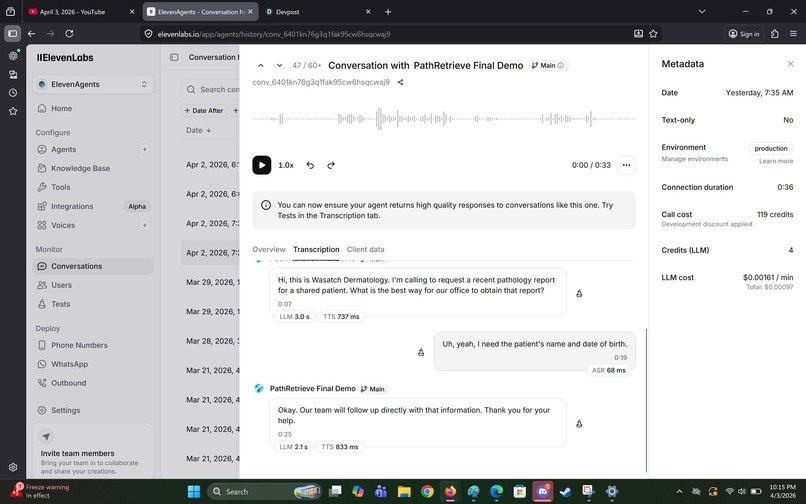
AI agent autonomously calls outside clinics to request pathology records
-
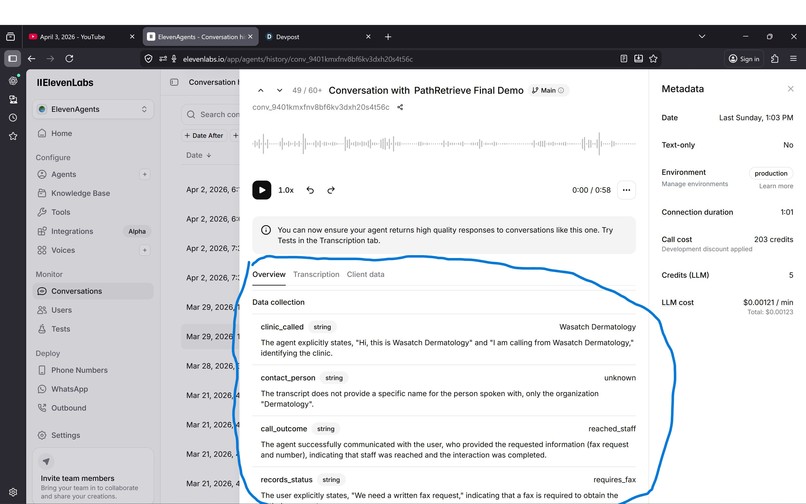
AI converts real phone conversations into structured, actionable workflow data
-
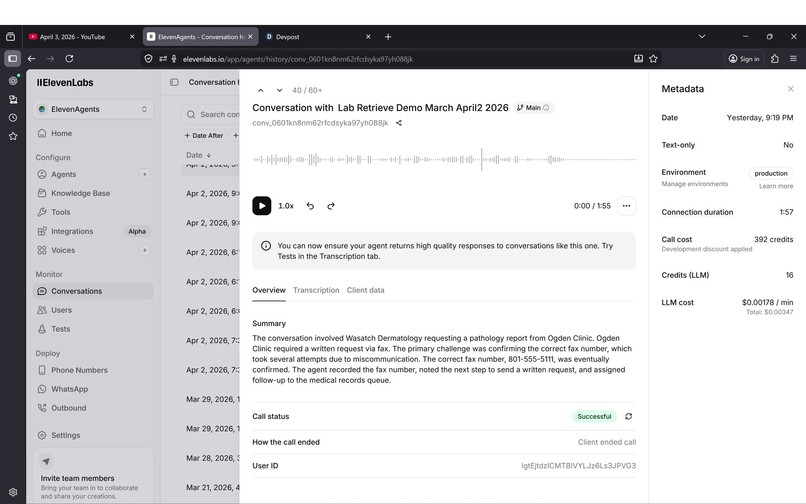
AI agent interprets real world responses and determines next step - even if workflows are unclear
-
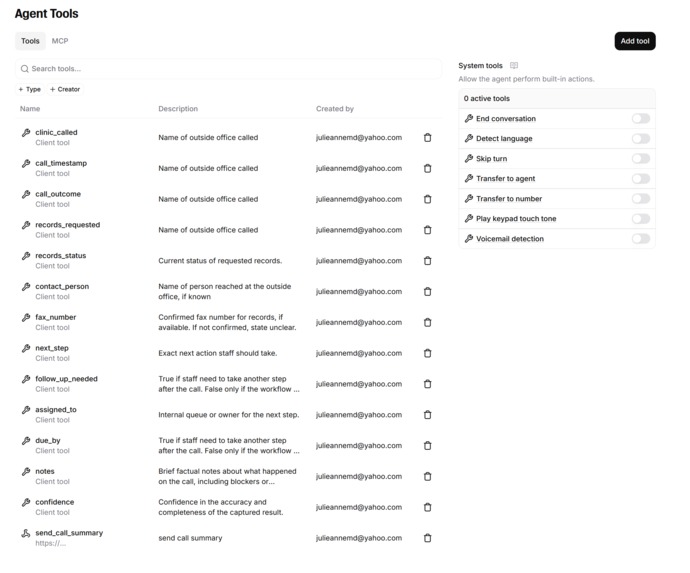
Custom data model enables reliable extraction of clinical outcomes and next steps
-
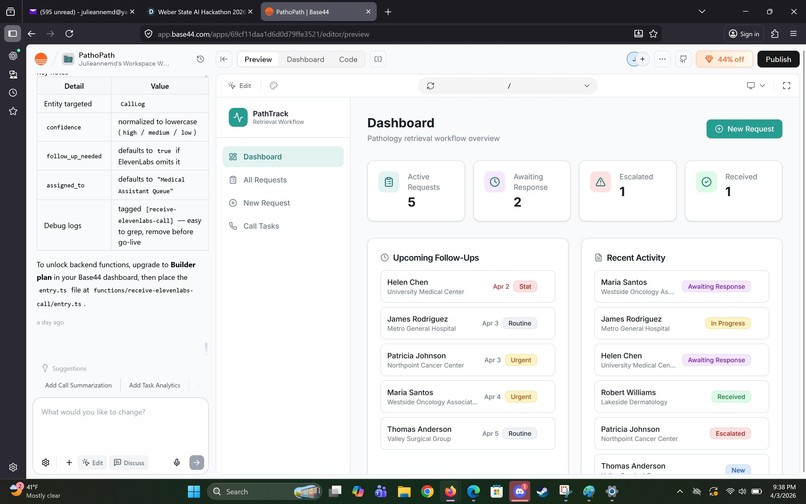
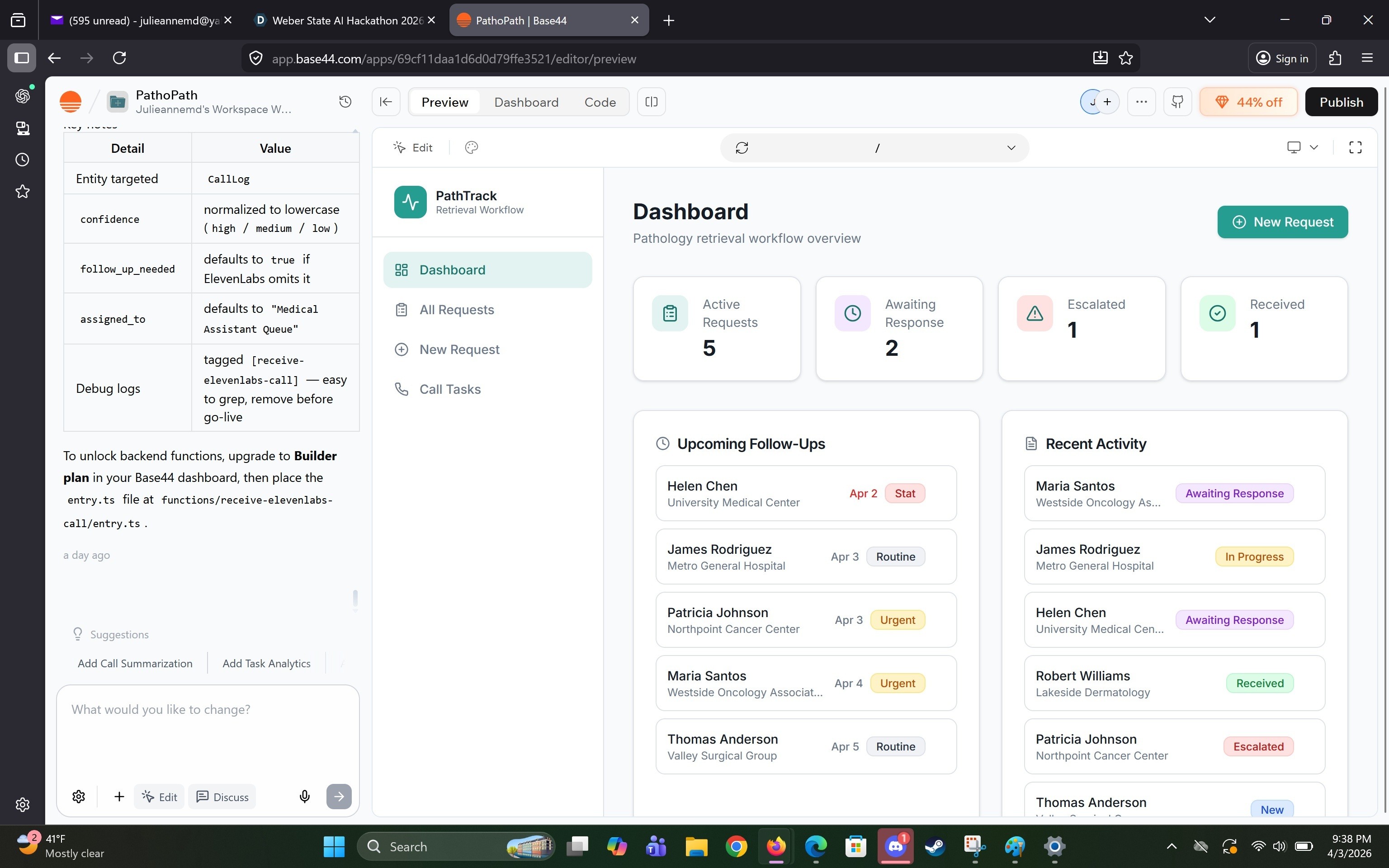
Theoretical Workflow Dashboard
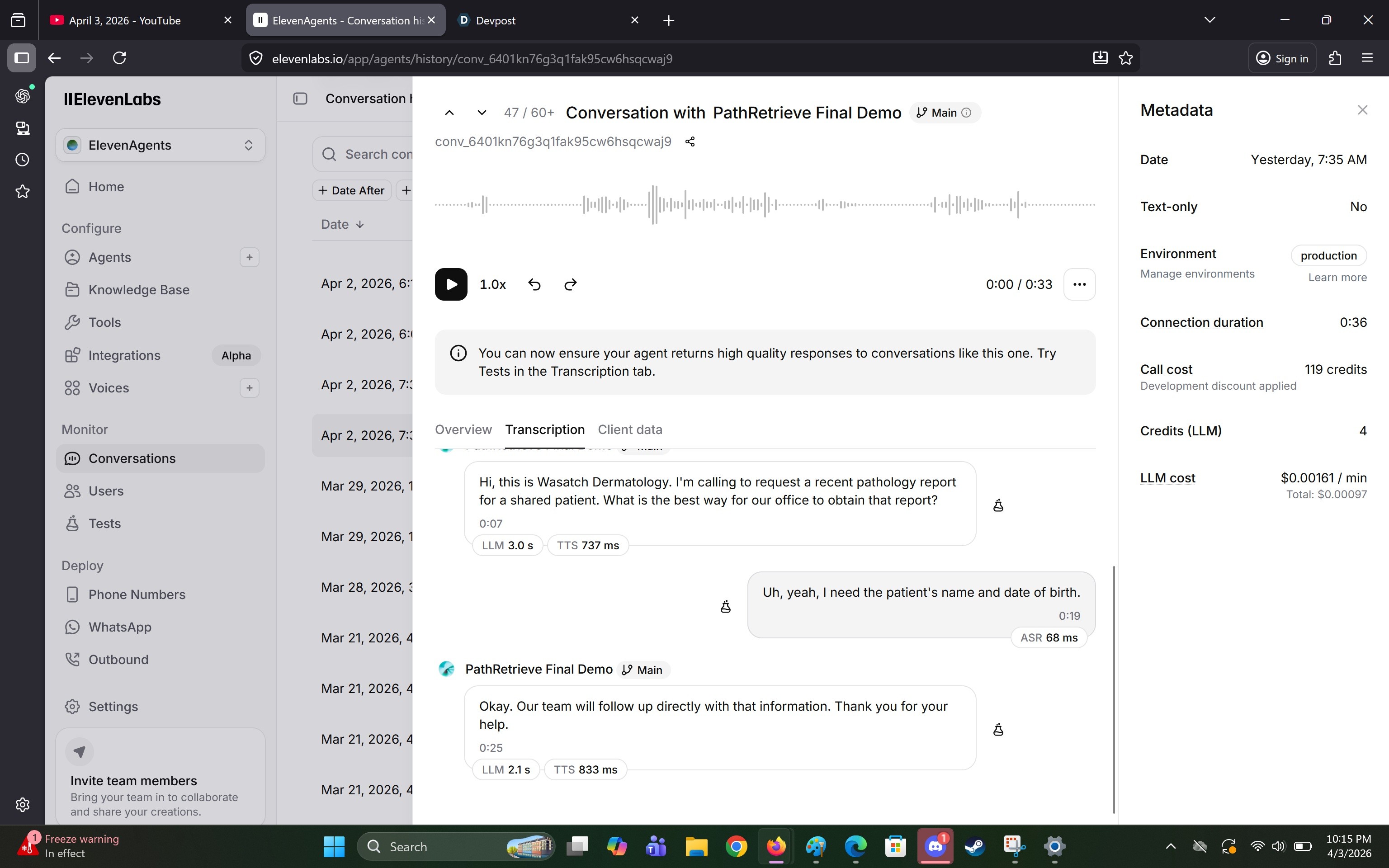
DermRelay: Turning Clinical Calls into Actionable Workflows
Inspiration
In dermatology, especially in skin cancer care, delays are rarely due to lack of clinical knowledge—they come from coordination gaps. A significant portion of staff time is spent calling outside clinics to obtain pathology reports, clarify records, and track down missing information.
These calls are:
repetitive time-consuming difficult to track prone to human error
A single missed follow-up can delay care for days or even weeks.
The idea behind PathTrack was simple:
What if every phone call could automatically become a structured, trackable task?
What it does
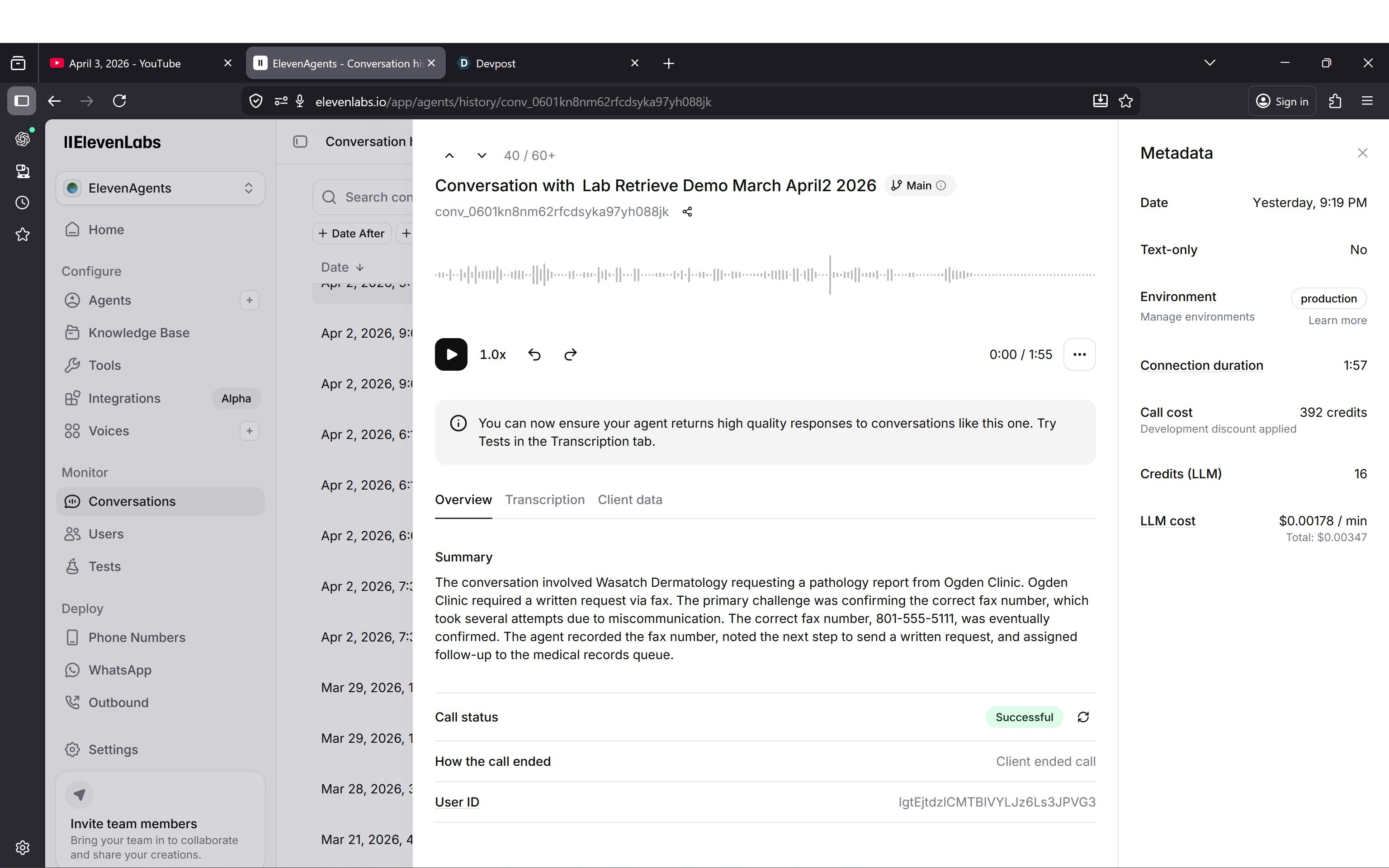
DermRelay is an AI voice agent that calls outside clinics to request medical records and converts those conversations into structured, actionable tasks.
Instead of relying on manual documentation, each call is transformed into:
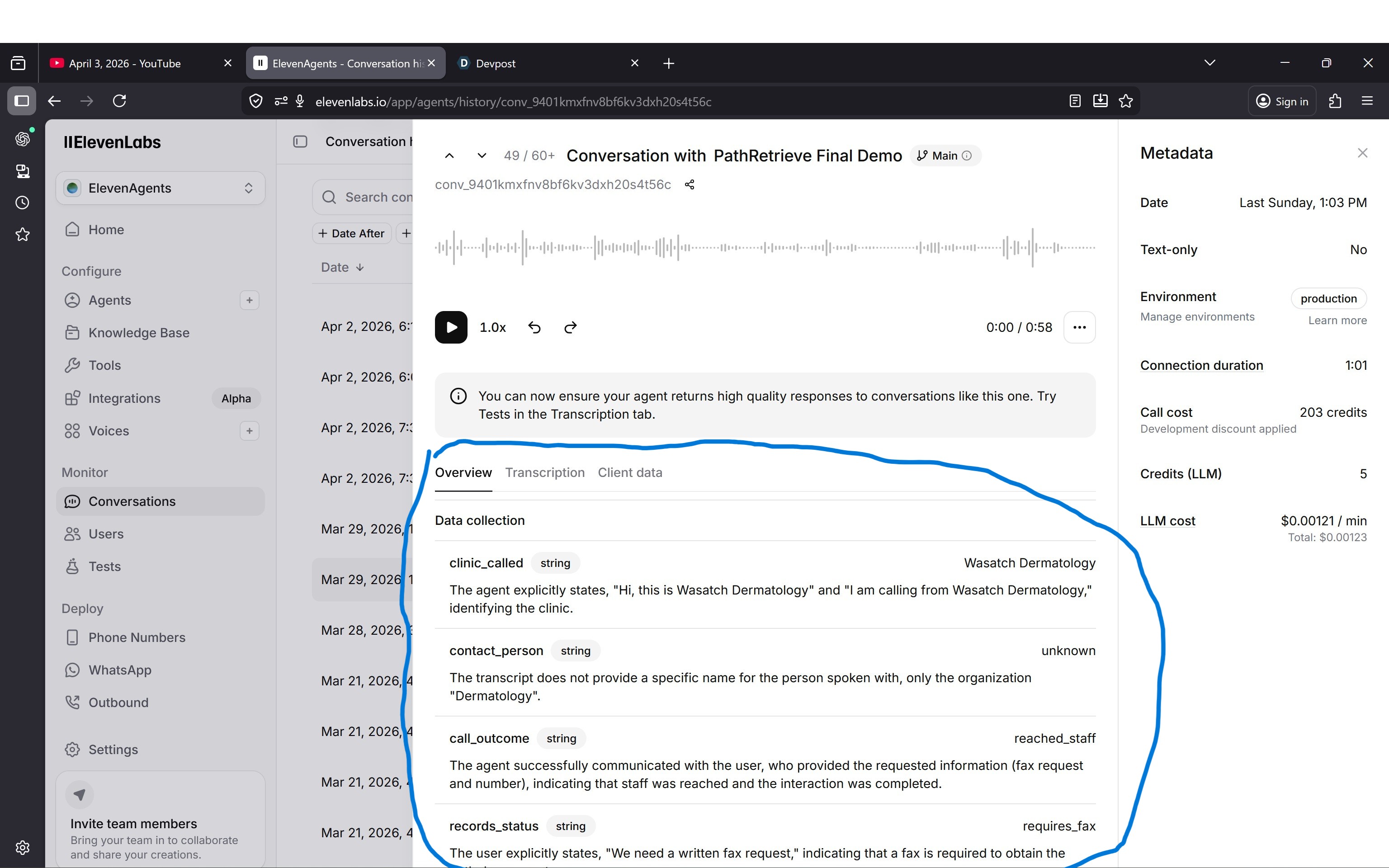
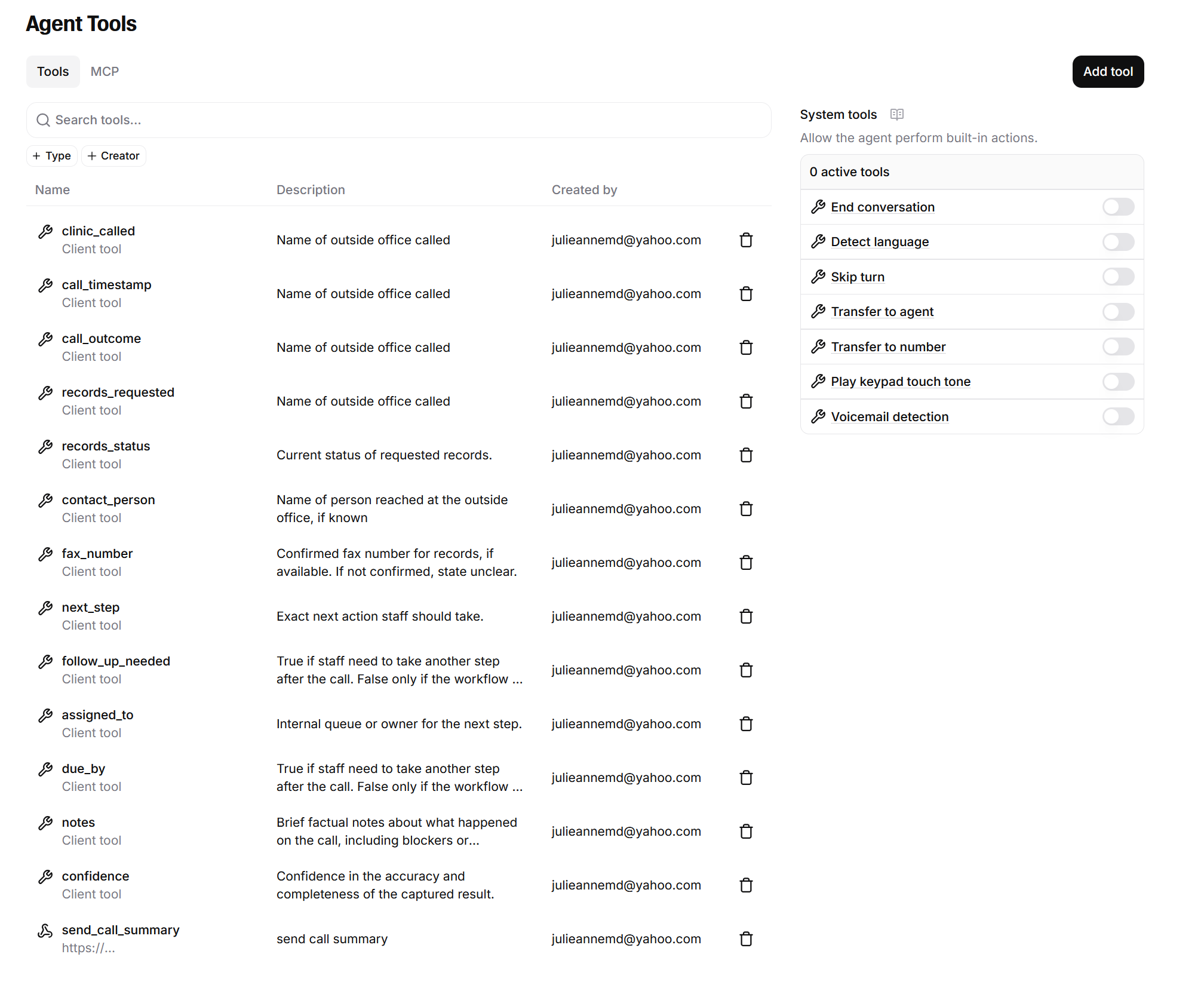
a clear call outcome current records status a defined next step a follow-up timeline an assigned owner Example transformation
Unstructured conversation: “We need a signed release before sending the pathology report.”
Becomes:
call_outcome: Fax request required
records_status: Pending release
next_step: Obtain signed ROI and fax to clinic
follow_up_needed: true
due_by: 2 business days
This allows clinics to move from fragmented communication to trackable, workflow-driven coordination.
How we built it
DermRelay was built as a modular system combining voice AI, prompt engineering, and structured output design.
Voice AI layer: **Built using ElevenLabs to conduct natural, human-like phone conversations **Prompt engineering: Designed to ensure: professional tone, accurate information capture, real-world workflow awareness Structured output system: Converts each call into standardized, machine-readable summaries Workflow simulation: Outputs are designed to feed into a staff task queue (e.g., medical assistant workflow)
The system emphasizes clarity and actionability over raw transcription.
Challenges we ran into
Tooling and integration friction We initially attempted to connect outputs directly to external systems via webhooks, but platform constraints introduced unexpected friction.
Solution: We focused on generating reliable structured outputs and simulated downstream workflow integration.
Separating conversation from computation Early versions of the agent mixed spoken dialogue with internal processing, reducing realism.
Solution: We enforced a strict separation: between conversation and structured output.
Designing for real-world variability Clinic responses vary widely: some require fax, some require signed releases, some provide incomplete or conflicting information
Solution: We implemented flexible logic paths to handle success, blockers, and ambiguity.
Accomplishments that we're proud of
Built a realistic AI voice agent that mirrors front-desk workflows Successfully converted unstructured phone conversations into structured tasks Designed for real clinical constraints (fax workflows, release requirements) Implemented error handling for conflicting or incomplete information Created a system that reflects actual dermatology operations, not just a generic demo
What we learned
The real value is what happens after the call Voice AI alone is not enough. The key innovation is converting conversation → structured action
Workflow awareness matters more than perfect AI Understanding real clinical processes is more valuable than optimizing for purely technical performance.
Error handling is essential Phone conversations are inherently messy. Systems must verify inputs, resolve inconsistencies, communicate uncertainty
Quantifying the Impact
$$ \text{Weekly time saved} = t \cdot n \cdot 5 $$
If each call takes t = 10 minutes and the clinic makes n = 5 calls per day:
Weekly time saved = t × n × 5 = 10 × 5 × 5 = 250 minutes/week
What's next for PathSync
DermRelay represents a new interface for healthcare operations:
Voice → Structure → Action
Next steps include:
integrating with EMRs for automated task creation expanding to prior authorization workflows enabling patient-facing communication building a real-time staff dashboard for task tracking scaling across specialties beyond dermatology
Our goal is to transform fragmented communication into reliable, system-driven coordination that improves both efficiency and patient care.
Built With
- chatgpt
- elevenlabs
- webhook.site

Log in or sign up for Devpost to join the conversation.