-
-
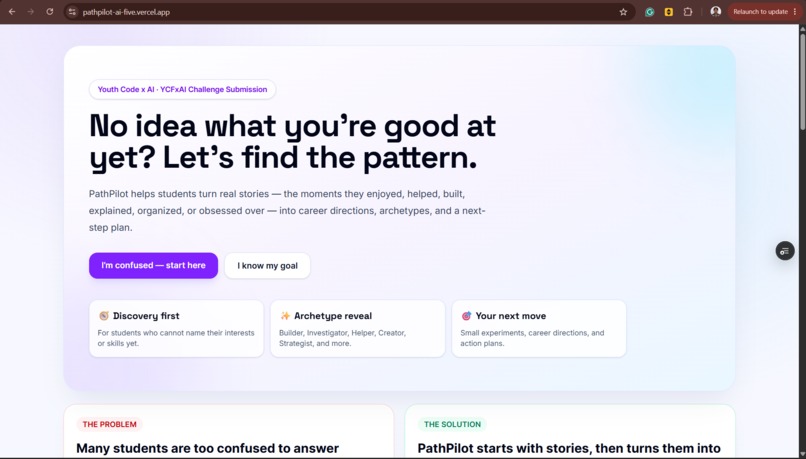
PathPilot helps students turn confusion, interests, and constraints into a clearer next move.
-
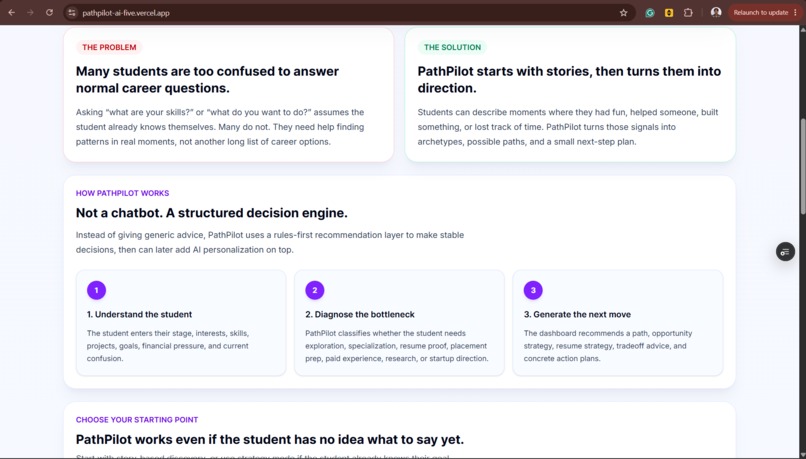
Students have too much career info; PathPilot uses stories, logic, and AI to create direction.
-
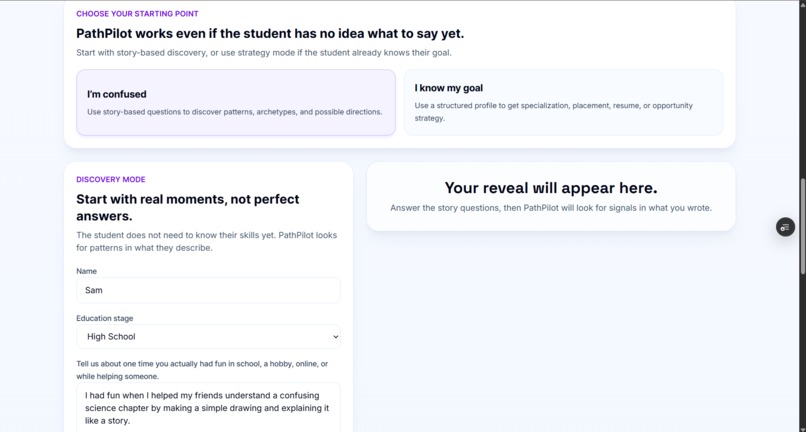
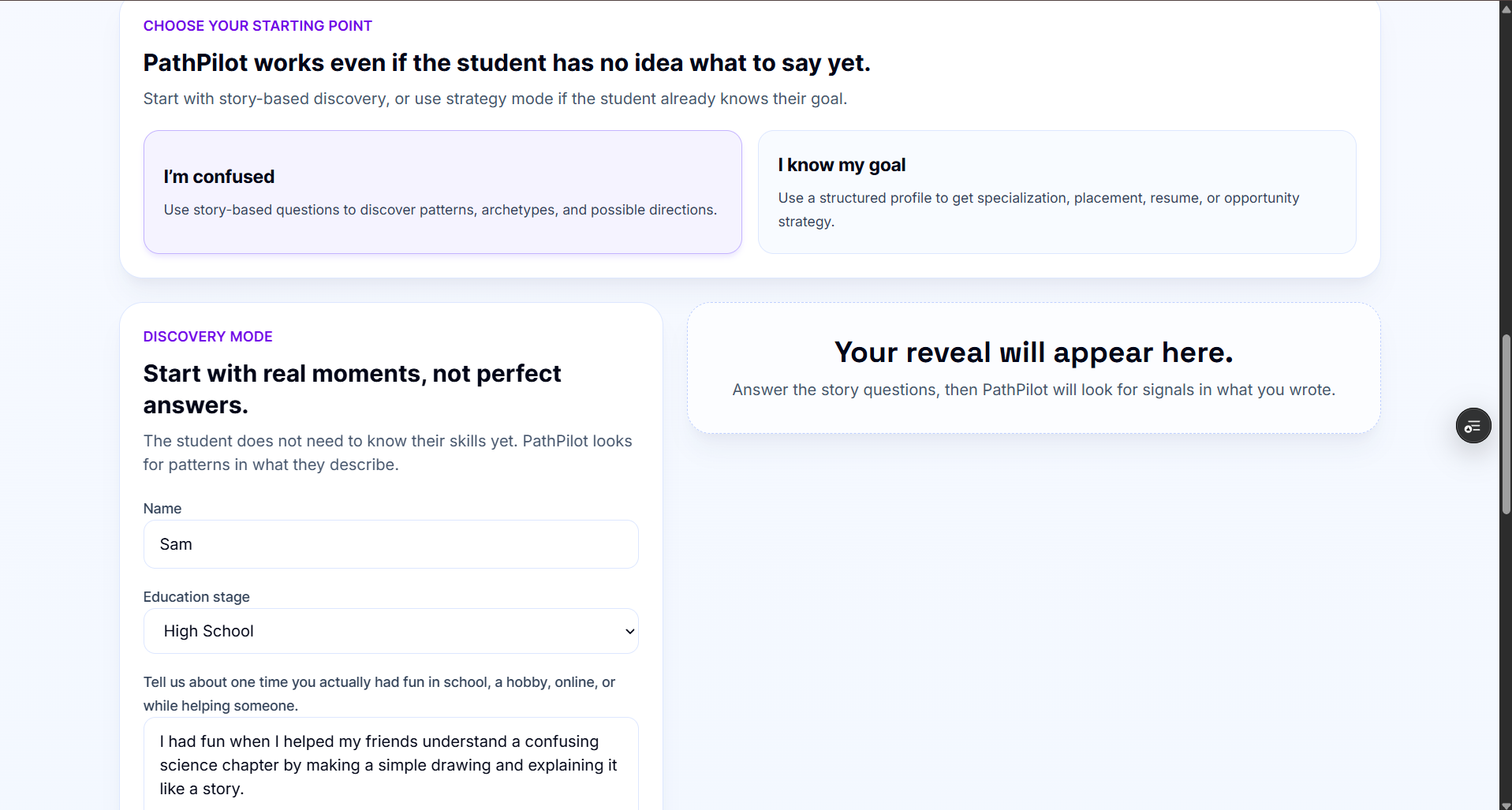
Discovery Mode starts with real moments instead of forcing students to name skills upfront.
-
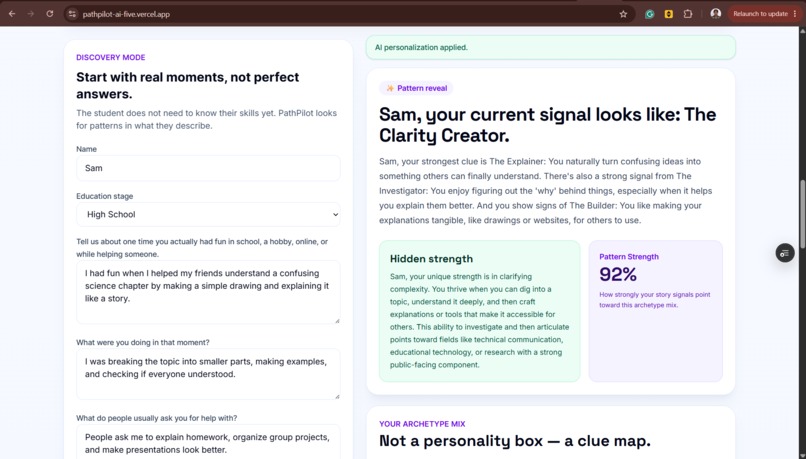
Gemini personalizes the result after the rules engine creates a reliable base recommendation.
-
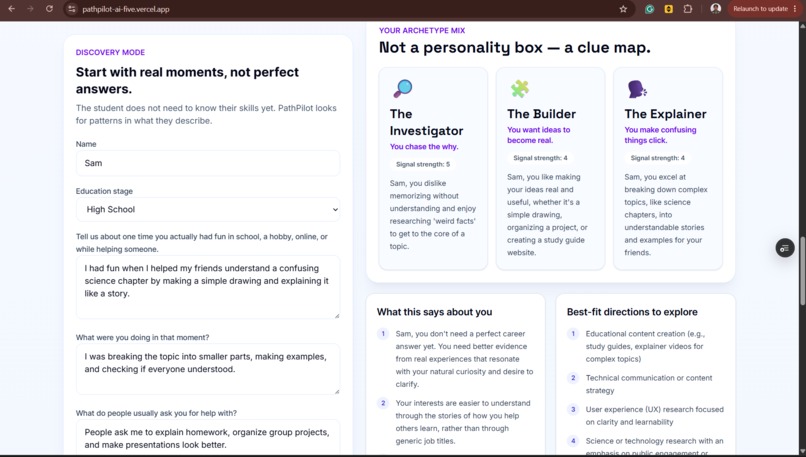
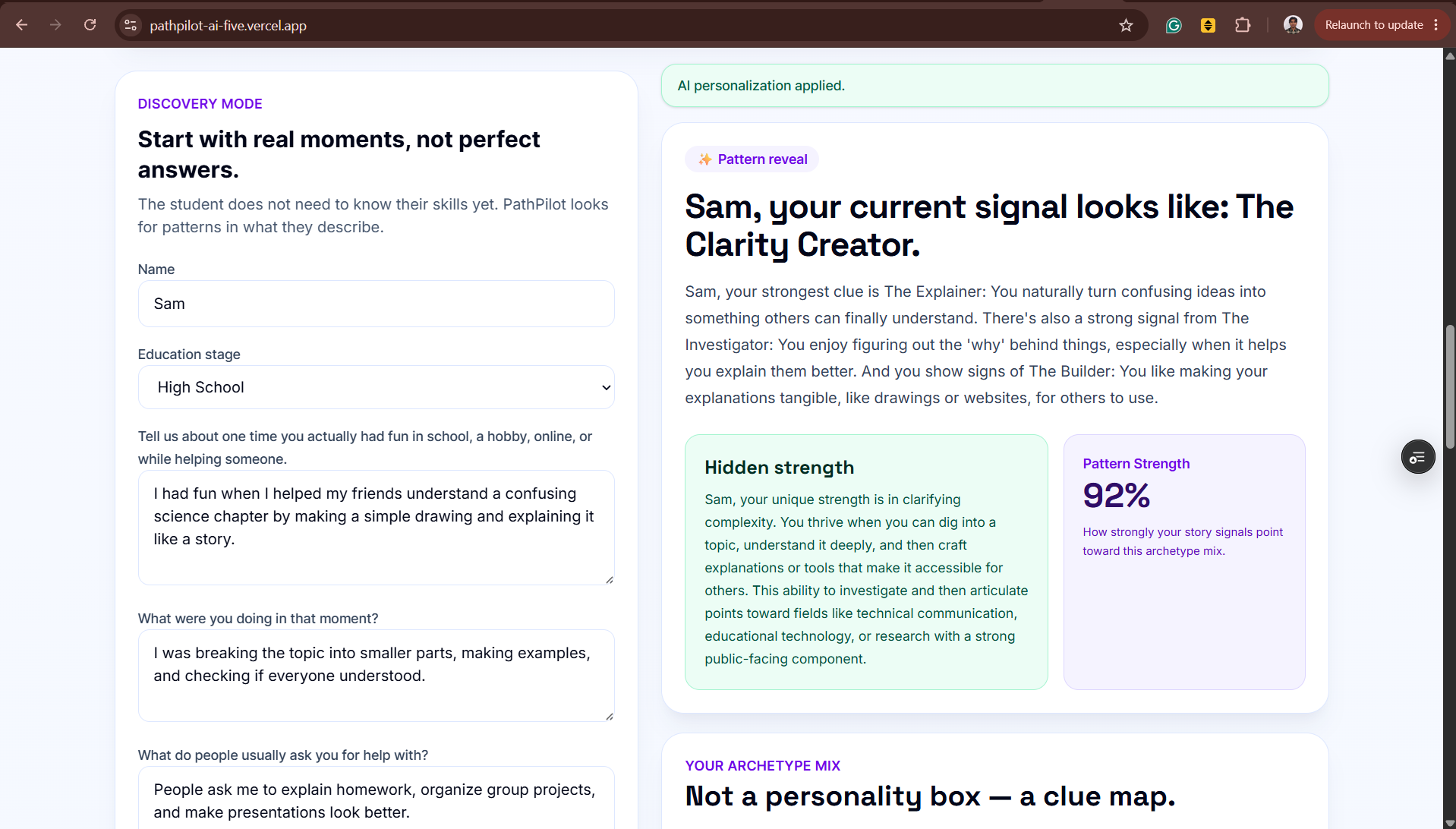
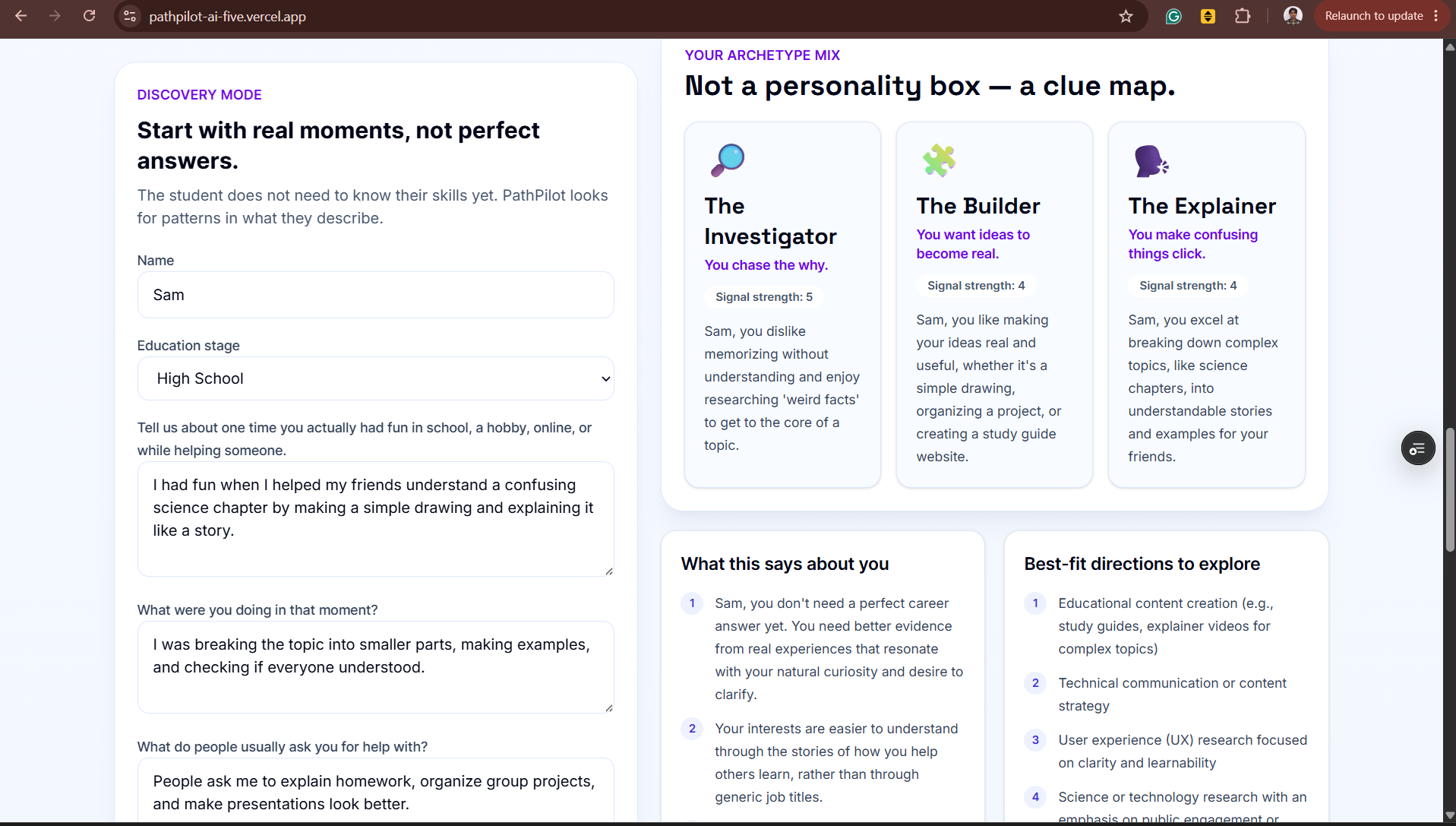
PathPilot turns student stories into strengths, archetypes, Pattern Strength, and next steps.
-
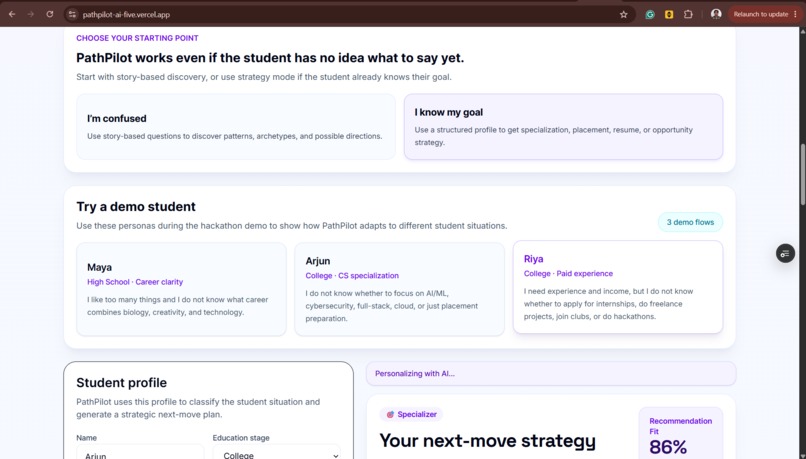
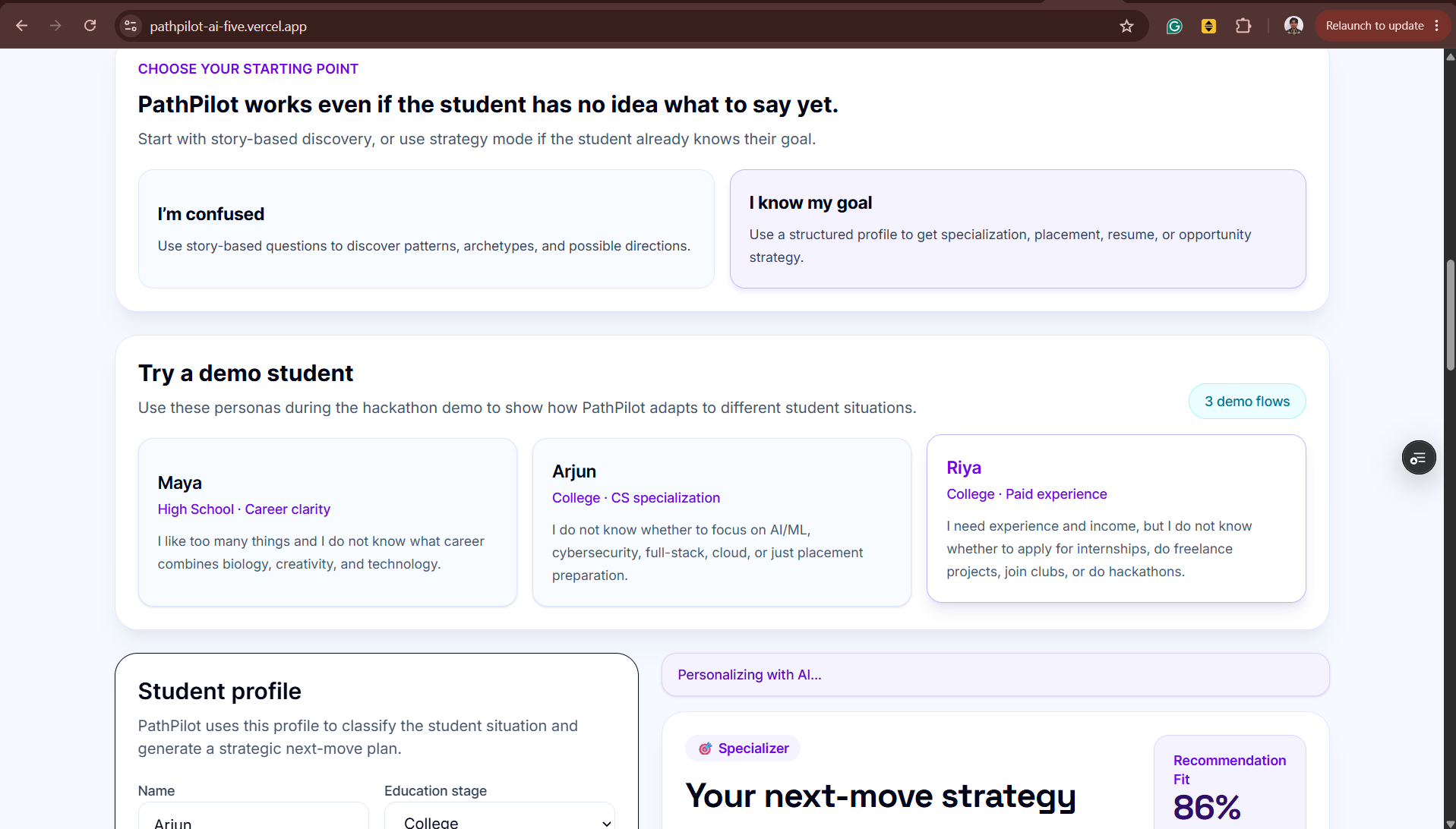
Strategy Mode shows 3 use cases for students with goals, experience, and questions about their smartest next move.
Inspiration
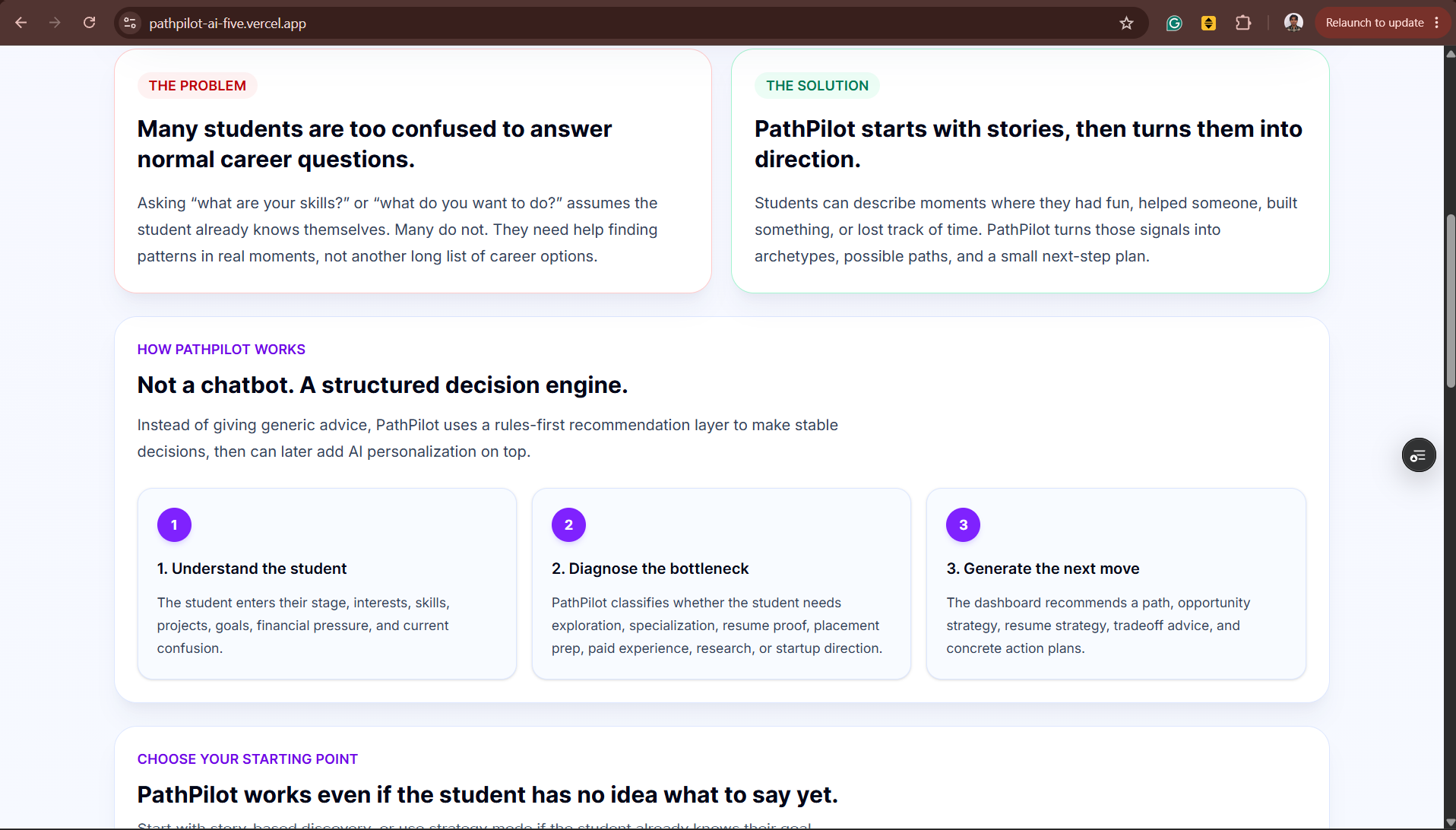
Most career tools ask students questions they may not know how to answer yet.
“What are your skills?”
“What career do you want?”
“What specialization are you interested in?”
But a lot of students are not there yet. A high schooler may not know what they enjoy. A college student may be confused between AI, cybersecurity, full-stack, research, placements, or business. Another student may need paid experience but not know whether to focus on internships, hackathons, freelancing, student chapters, or independent upskilling.
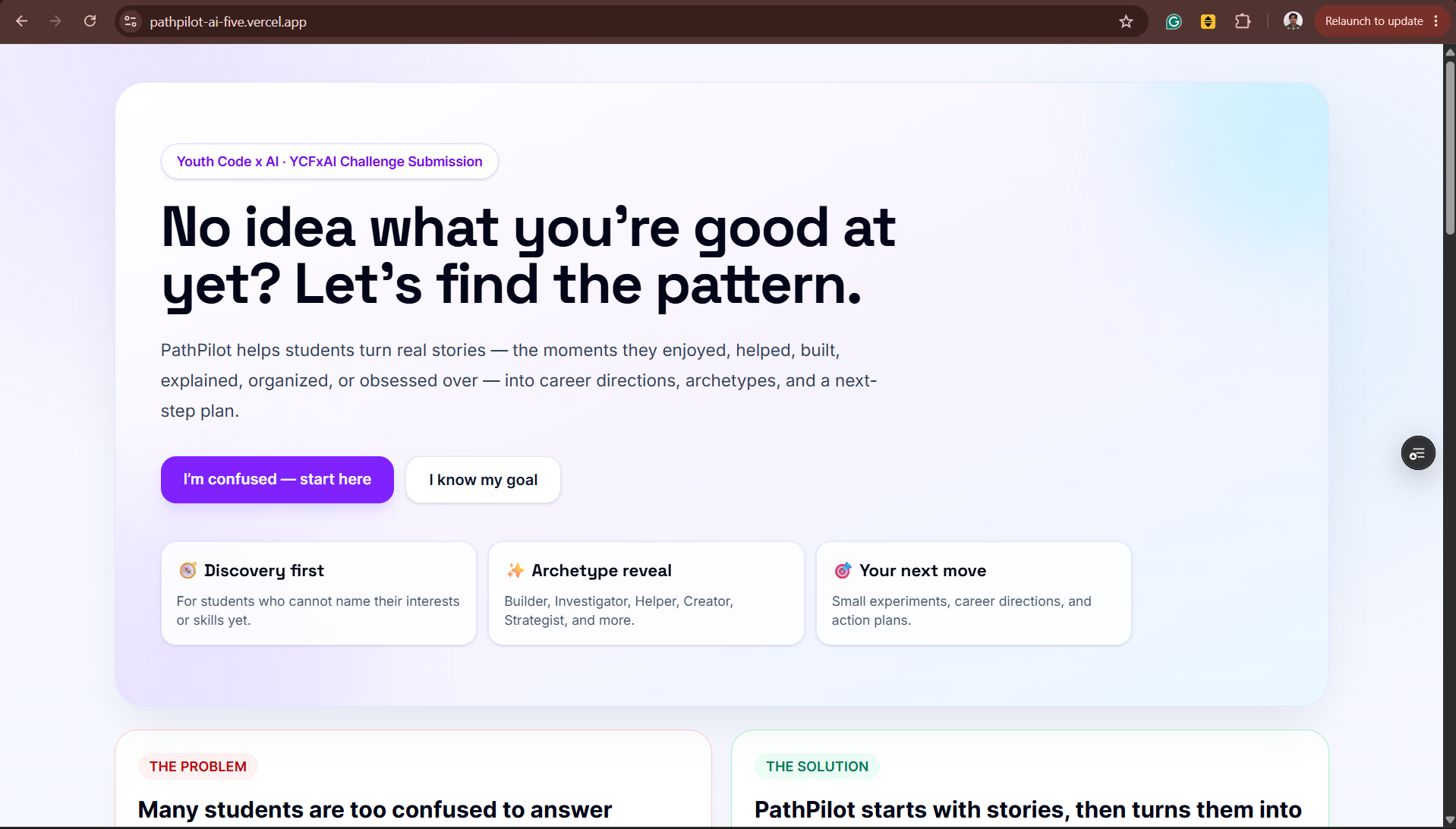
PathPilot AI was built around a different idea: students often reveal their strengths through stories before they can name them directly.
If a student says they had fun explaining a science chapter to friends, organizing a group project, designing slides, building a small app, or researching a weird question for hours, those moments contain clues. PathPilot helps turn those clues into direction.
What it does
PathPilot AI is a student decision engine with two modes.
Discovery Mode
Discovery Mode is for students who are deeply confused and cannot yet name their interests, skills, or career goals.
Instead of asking them to define themselves upfront, PathPilot asks story-based questions such as:
Tell us about one time you actually had fun in school, a hobby, online, or while helping someone.
From those answers, PathPilot identifies practical archetypes such as:
- The Builder
- The Investigator
- The Explainer
- The Helper
- The Strategist
- The Creator
- The Organizer
- The Tinkerer
It then generates an archetype mix, hidden strength, possible directions to explore, tiny experiments to try, what to avoid for now, and a 7-day clarity plan.
Strategy Mode
Strategy Mode is for students who already know their broad goal but do not know the smartest next move.
It helps with CS specialization decisions, placements, paid experience, resume building, internships, hackathons, student chapter vs independent upskilling decisions, and 7-day/30-day action plans.
PathPilot does not just say “you might like this career.” It explains tradeoffs and gives students something practical to do next.
How I built it
I built PathPilot AI using Next.js, TypeScript, Tailwind CSS, Gemini API, GitHub, and Vercel.
The app uses a rules-first recommendation engine for reliability. This means the student always gets a stable result even if the AI API fails.
Then PathPilot uses Gemini AI as a personalization layer. Gemini receives the student’s profile and the base recommendation, then rewrites the explanation to make it warmer, more specific, and more useful.
The architecture is:
Student input
↓
Discovery Mode or Strategy Mode
↓
Rules-first recommendation engine
↓
Base result shown immediately
↓
Gemini personalization API route
↓
Personalized result displayed
↓
Fallback to rules-based result if AI fails
This helped me avoid making a fragile chatbot. PathPilot is structured, explainable, and still personalized.
How AI is used
AI is used to personalize the guidance, not blindly decide everything.
First, the app generates a stable base result from the student’s story or profile. Then Gemini personalizes the explanation so the final guidance feels more human, specific, and relevant to the student.
The AI route is designed with safeguards. PathPilot does not make medical claims, diagnose students, guarantee jobs, or tell students they are destined for a specific path. If Gemini fails, the app falls back to the rules-based result instead of breaking.
Challenges I ran into
The hardest part was realizing that a normal career form was not enough.
At first, PathPilot asked students for their interests, skills, and goals. But that assumes students already understand themselves. A lot of students are too confused to answer those questions honestly.
So I redesigned the experience around story-based discovery.
Another challenge was balancing AI with reliability. I did not want the project to become a generic chatbot or produce random advice. That is why I built a rules-first engine and used AI as a controlled personalization layer.
I also spent a lot of time improving the UI, wording, archetypes, and result screens so the app would feel fun and useful instead of like a boring school report.
Accomplishments that I am proud of
I am proud that PathPilot solves a real student problem in a way that feels approachable.
The app now has:
- a live deployed prototype
- two working modes
- story-based onboarding
- archetype analysis
- AI-personalized results
- rules-based fallback
- practical 7-day and 30-day plans
- a polished UI
- a clear social impact angle
I am especially proud of Discovery Mode because it helps students who do not even know what to type into a normal career tool.
What I learned
I learned that career guidance should not start with “What do you want to be?”
For many students, a better question is:
What moments made you feel curious, useful, excited, or absorbed?
I also learned that AI works best when it is structured. A raw chatbot can be vague or overconfident. But when AI is paired with a stable decision engine, the result is more reliable and more helpful.
What’s next
Future versions of PathPilot could include:
- live hackathon and internship discovery
- resume upload and feedback
- personalized opportunity tracking
- saved student roadmaps
- school counselor dashboards
- college major exploration
- project idea generation
- multilingual support
- accessibility improvements for neurodiverse students
- progress tracking over time
The long-term vision is for PathPilot to become a student navigation tool that helps young people move from confusion to confidence, one practical next step at a time.
Built With
- gemini-api
- github
- next.js
- tailwind-css
- typescript
- vercel

Log in or sign up for Devpost to join the conversation.