-
-
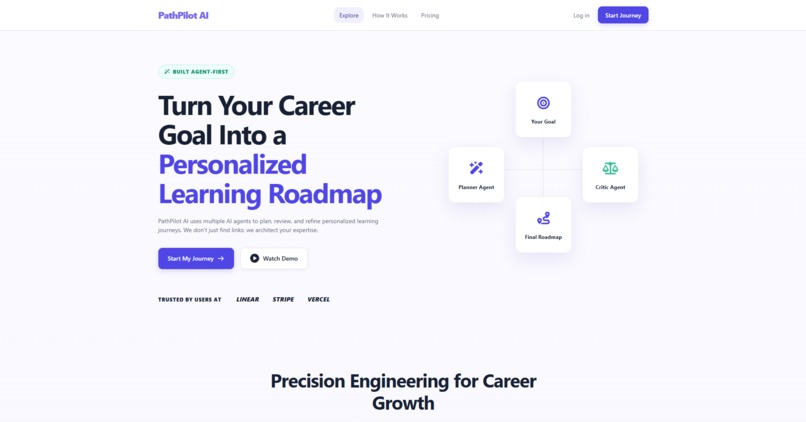
Landing page and project overview
-
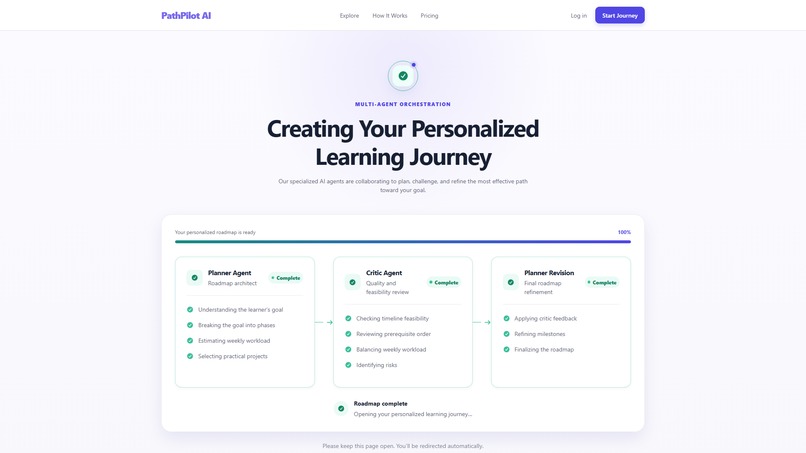
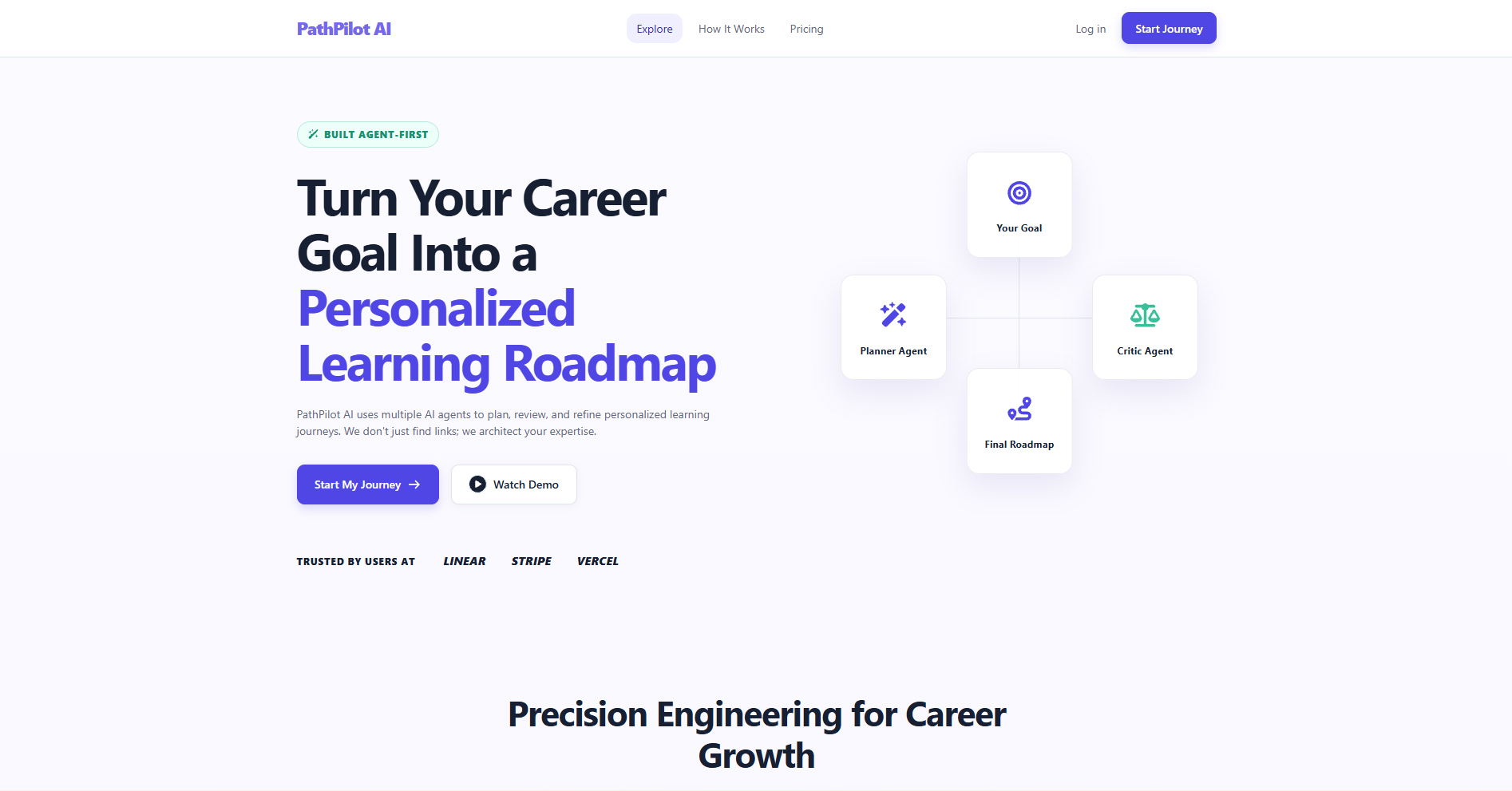
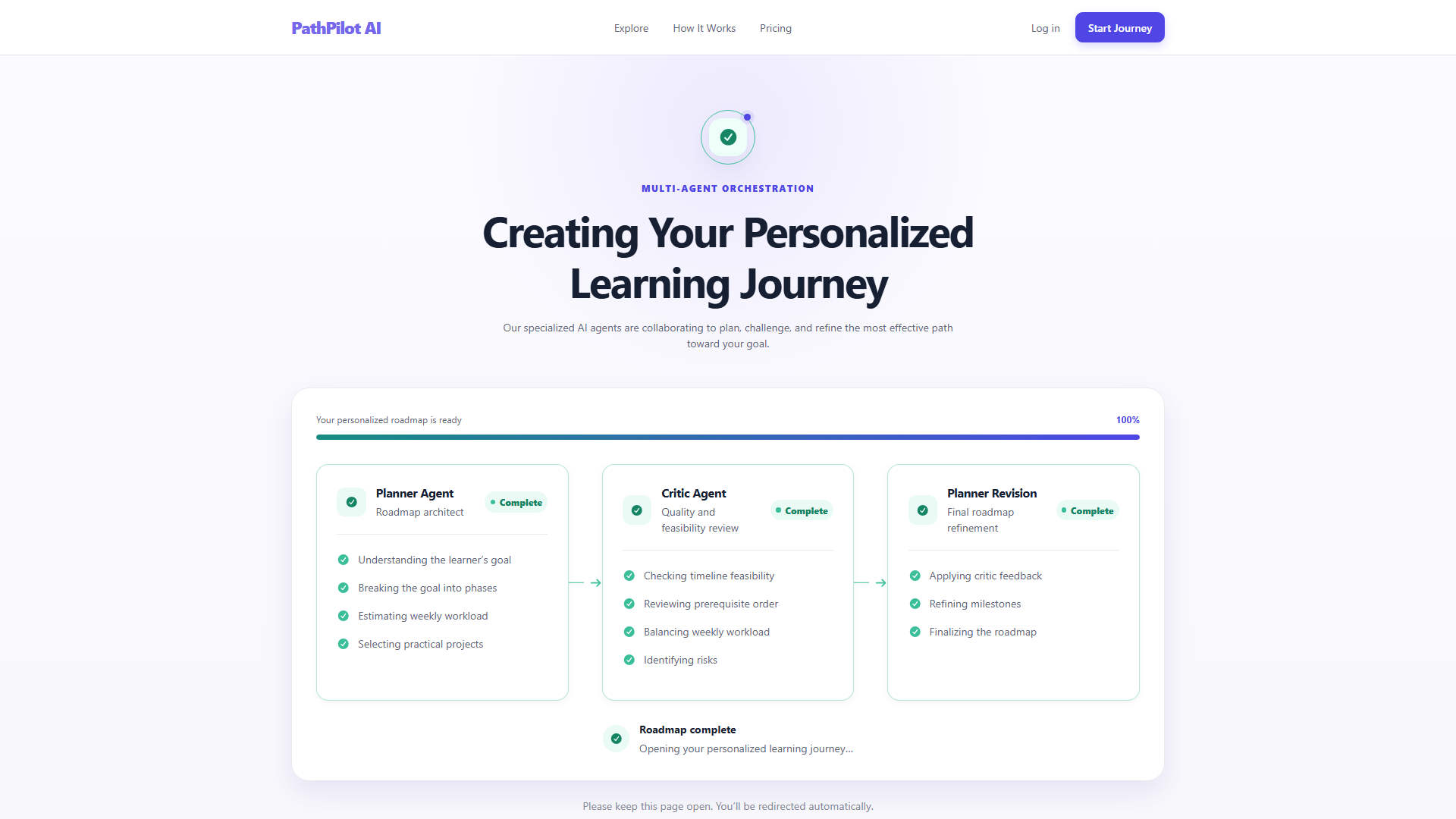
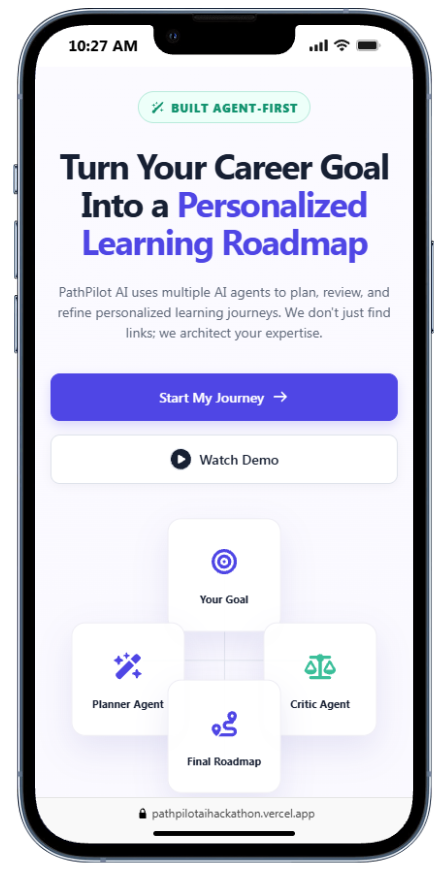
AI agents collaborate to build your personalized roadmap
-
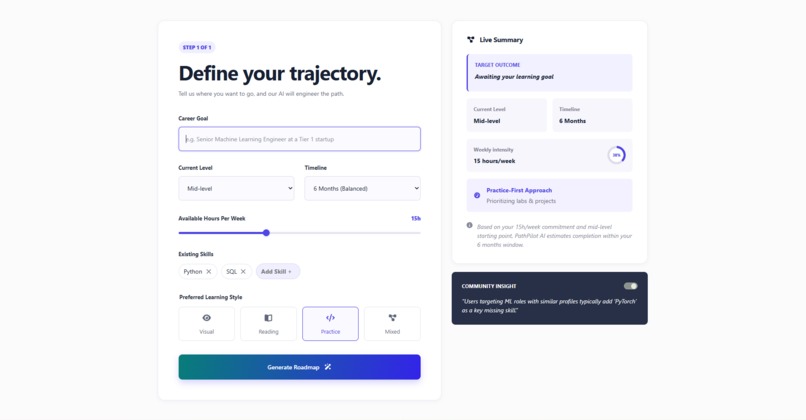
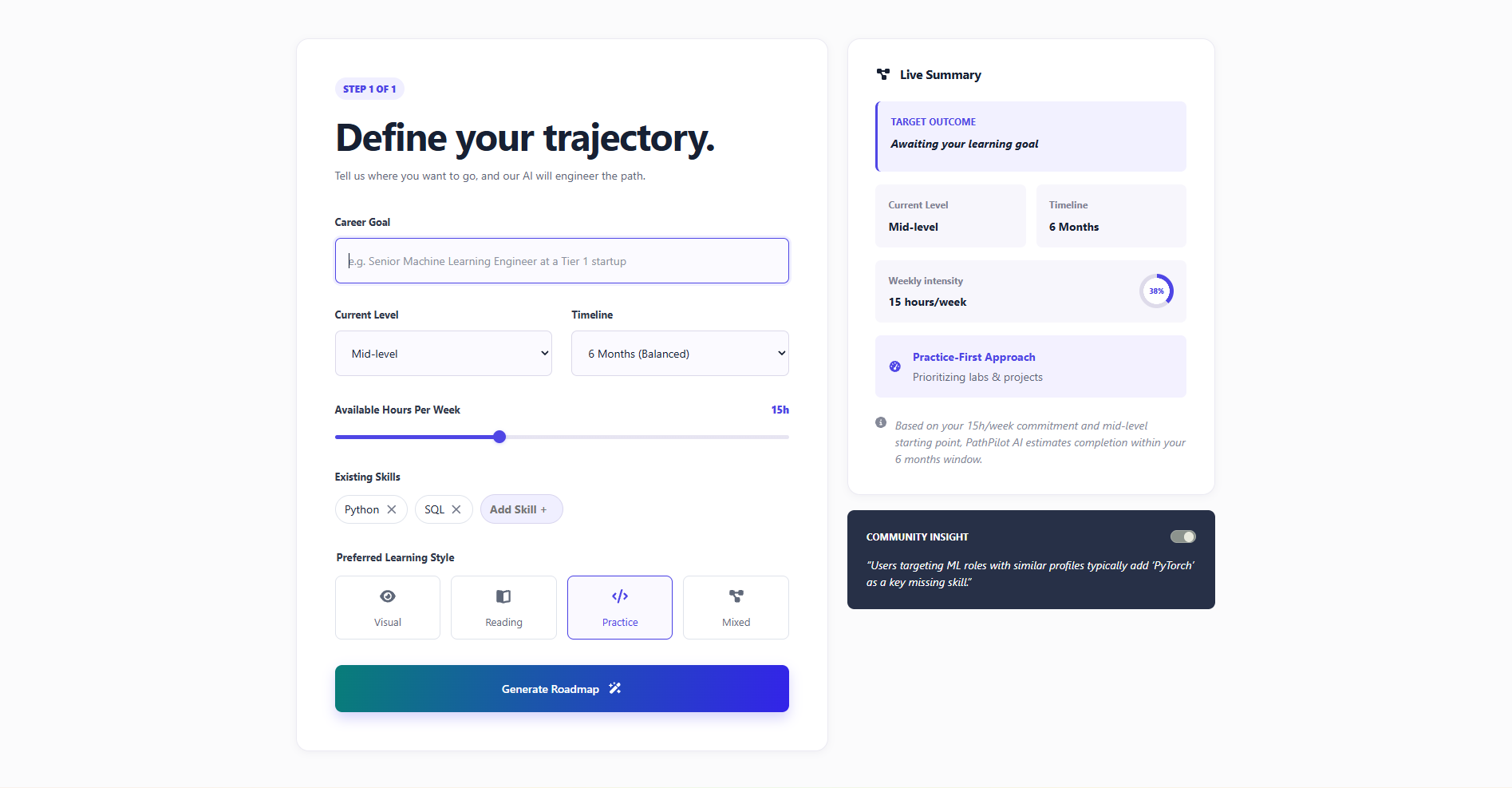
Define your goal and learning preferences
-
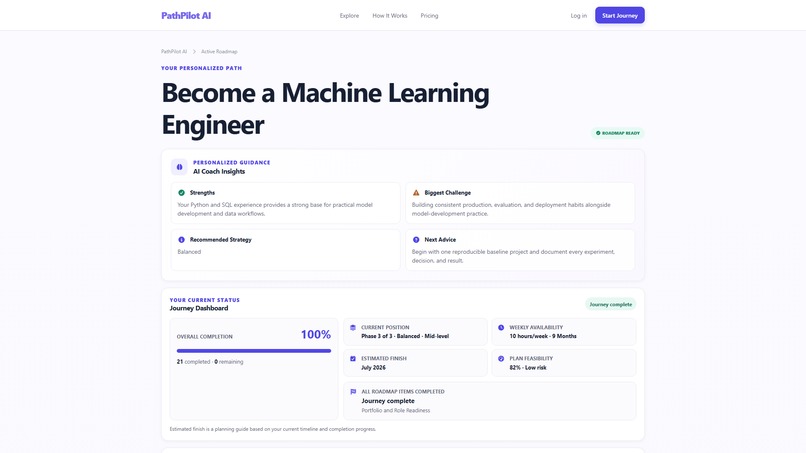
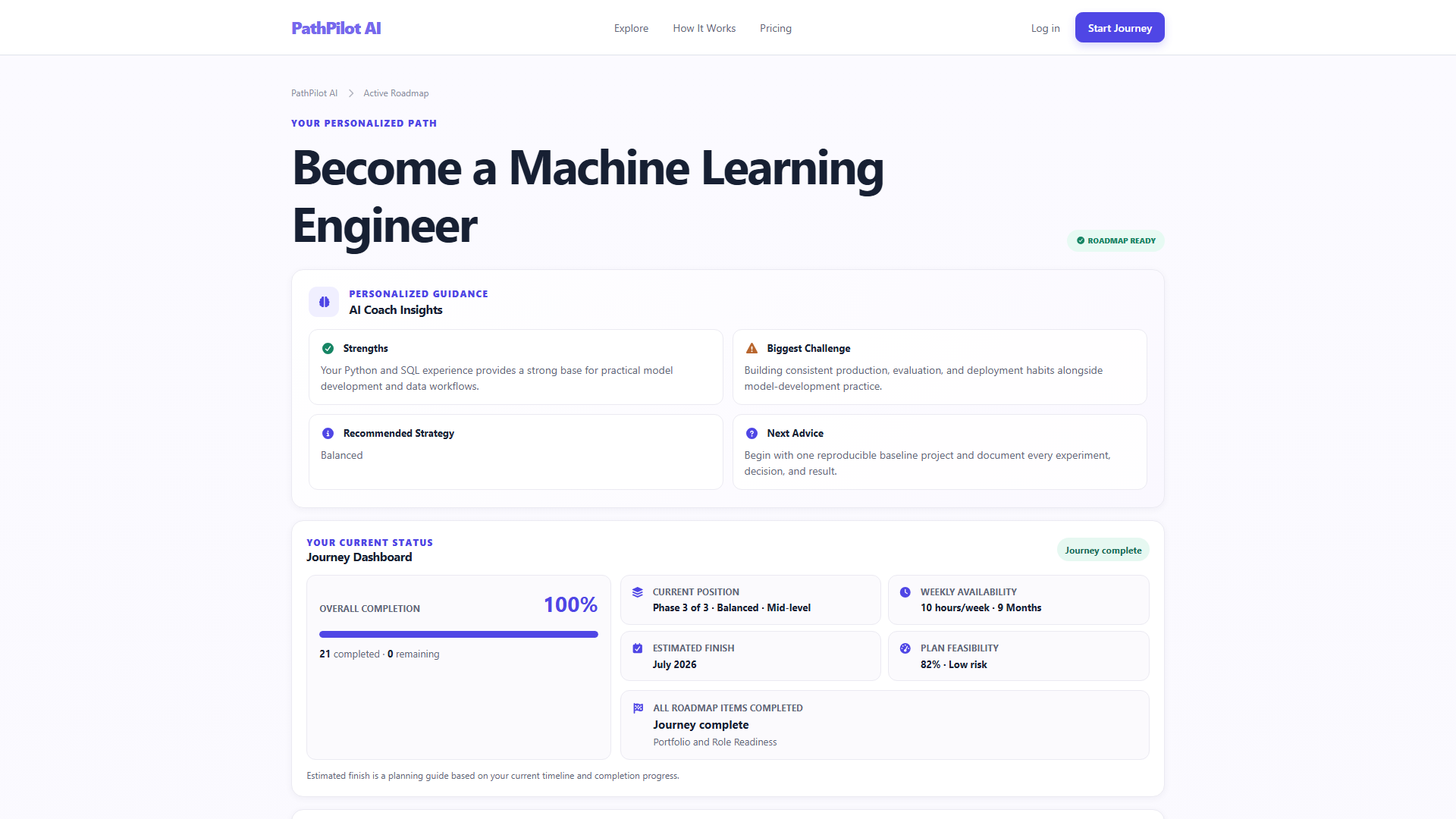
AI-generated personalized learning roadmap
-
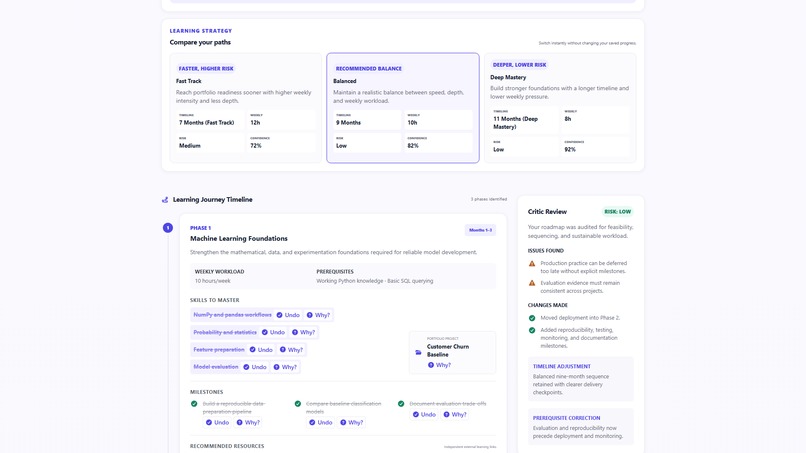
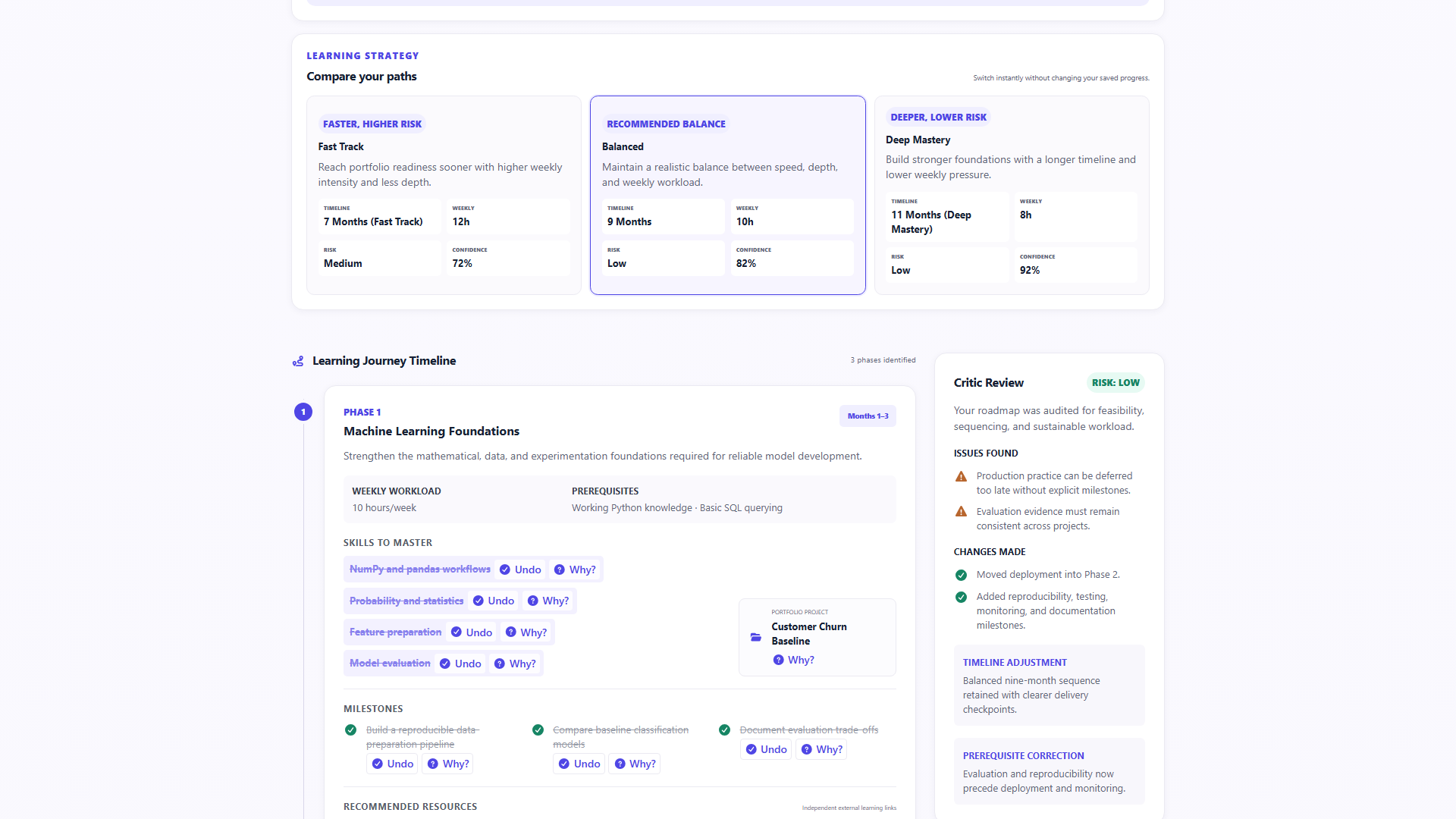
Compare Fast, Balanced, and Deep learning strategies
-
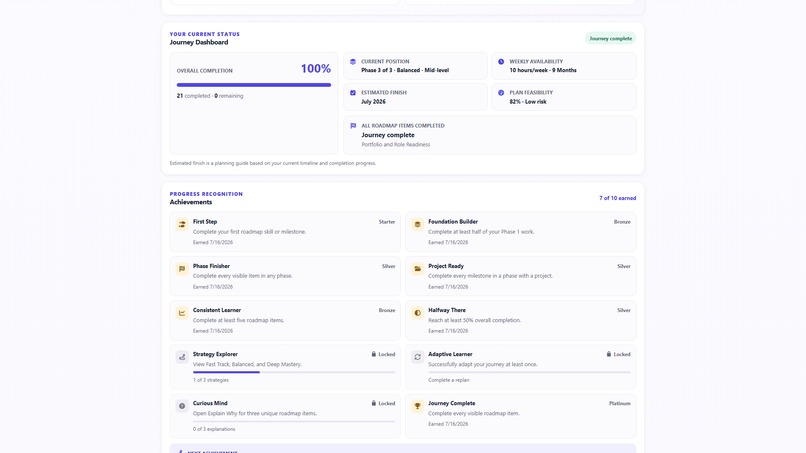
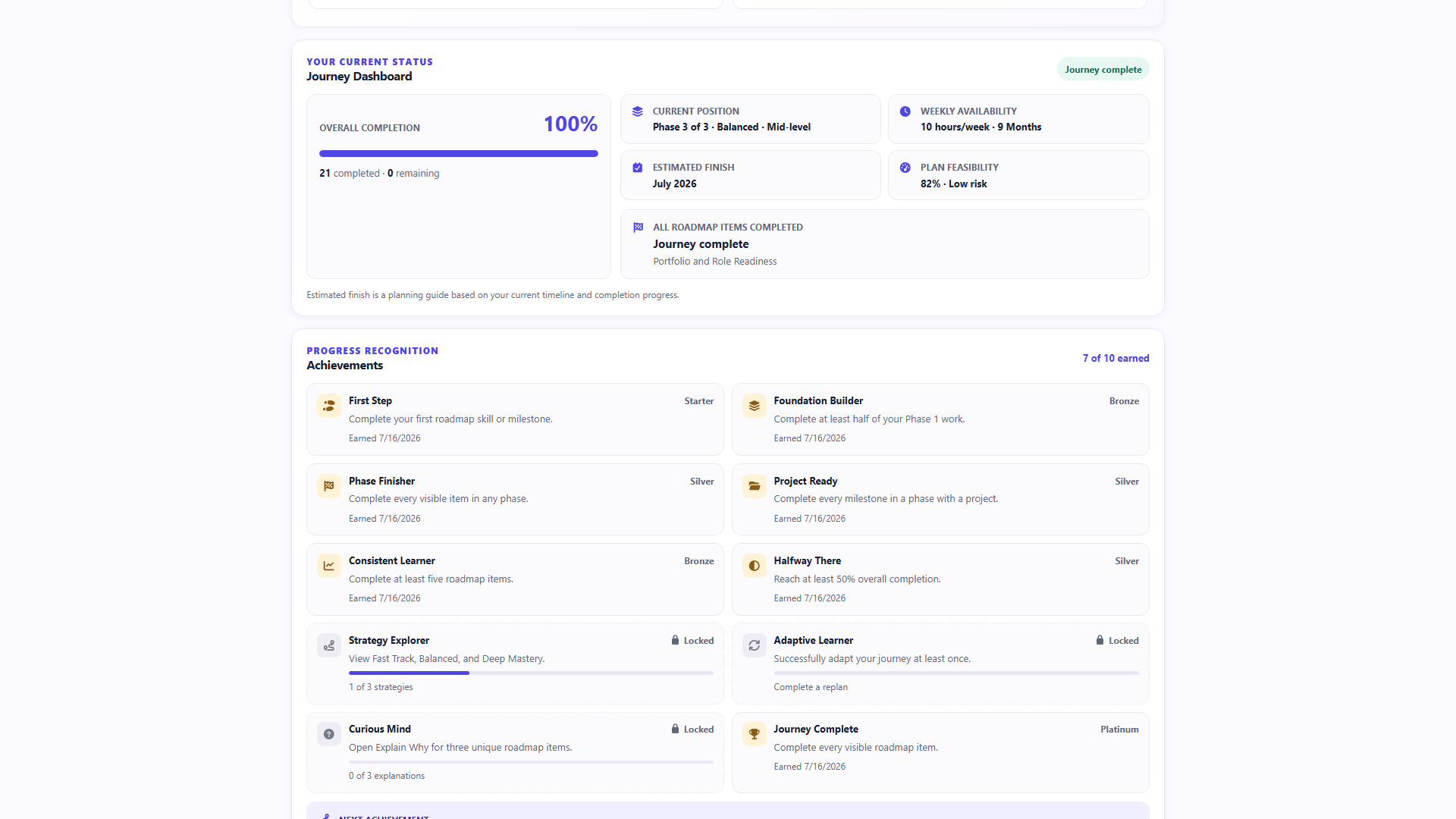
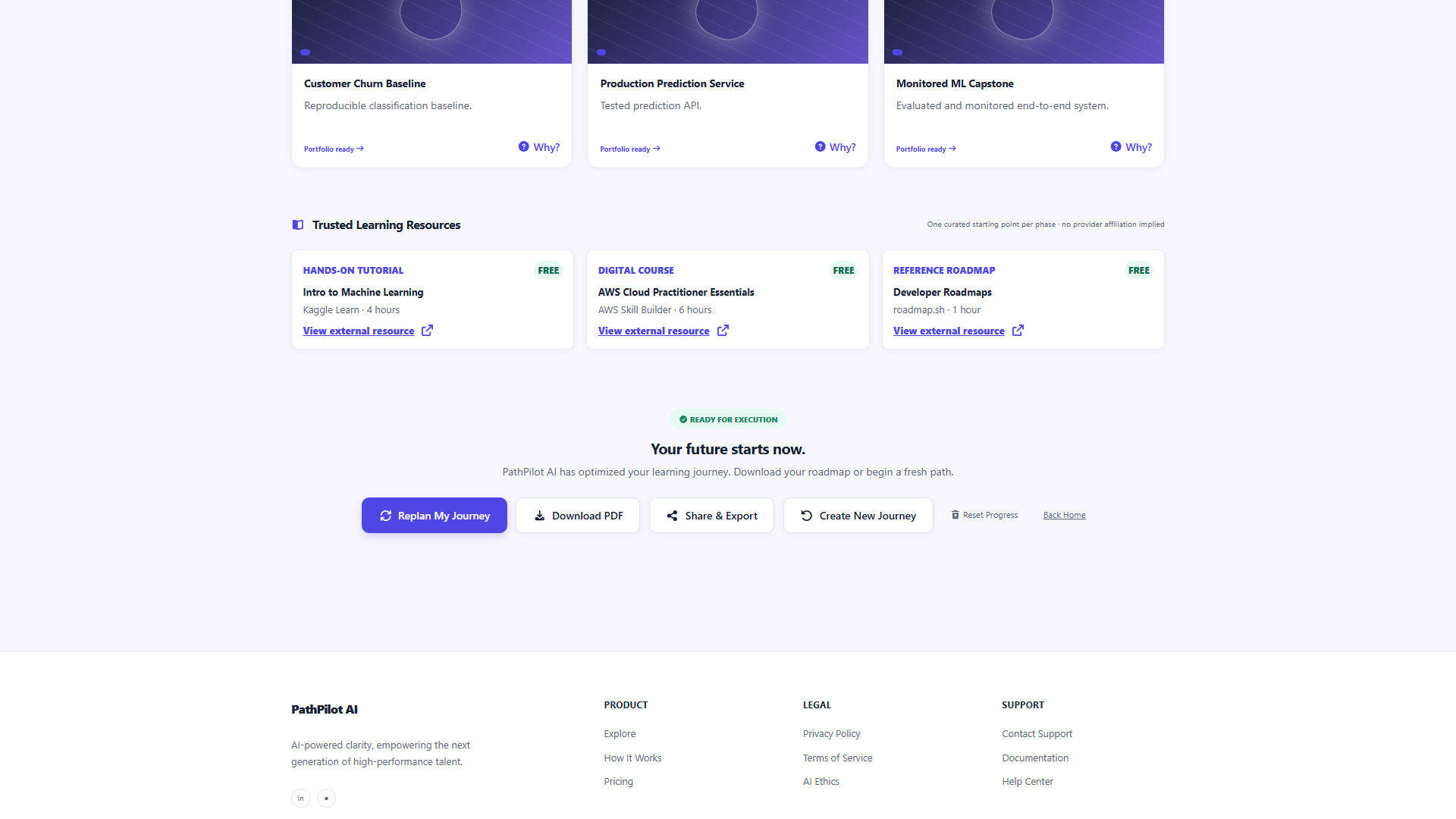
Track progress, milestones, and your learning journey
-
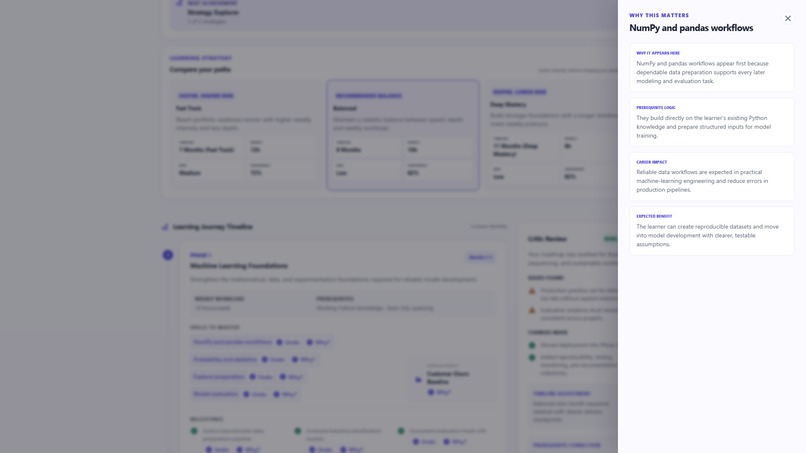
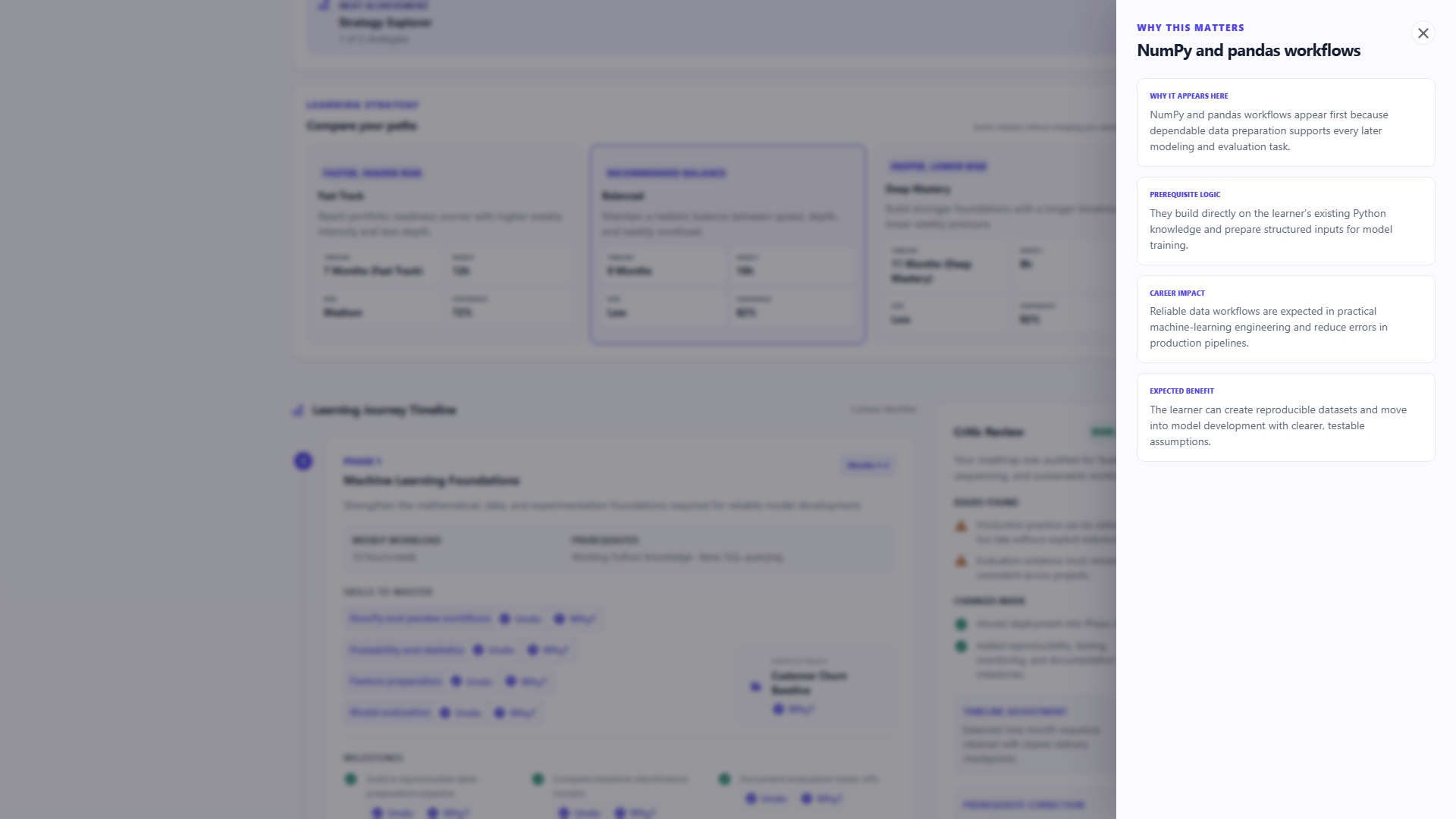
Transparent AI explanations for every recommendation
-
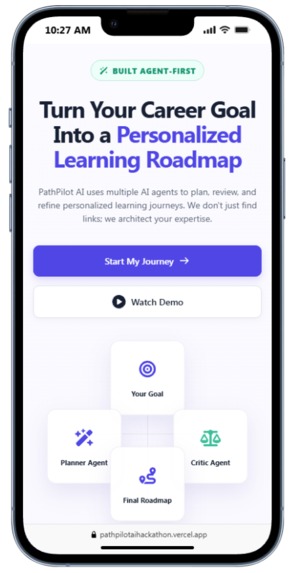
Fully responsive mobile-first experience
-
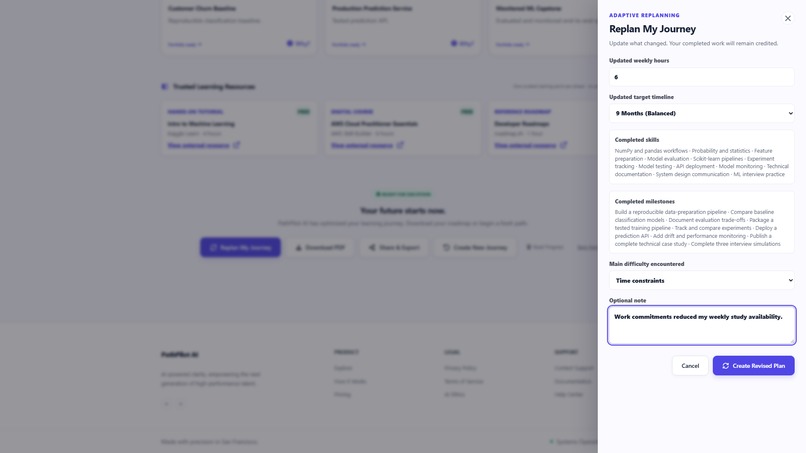
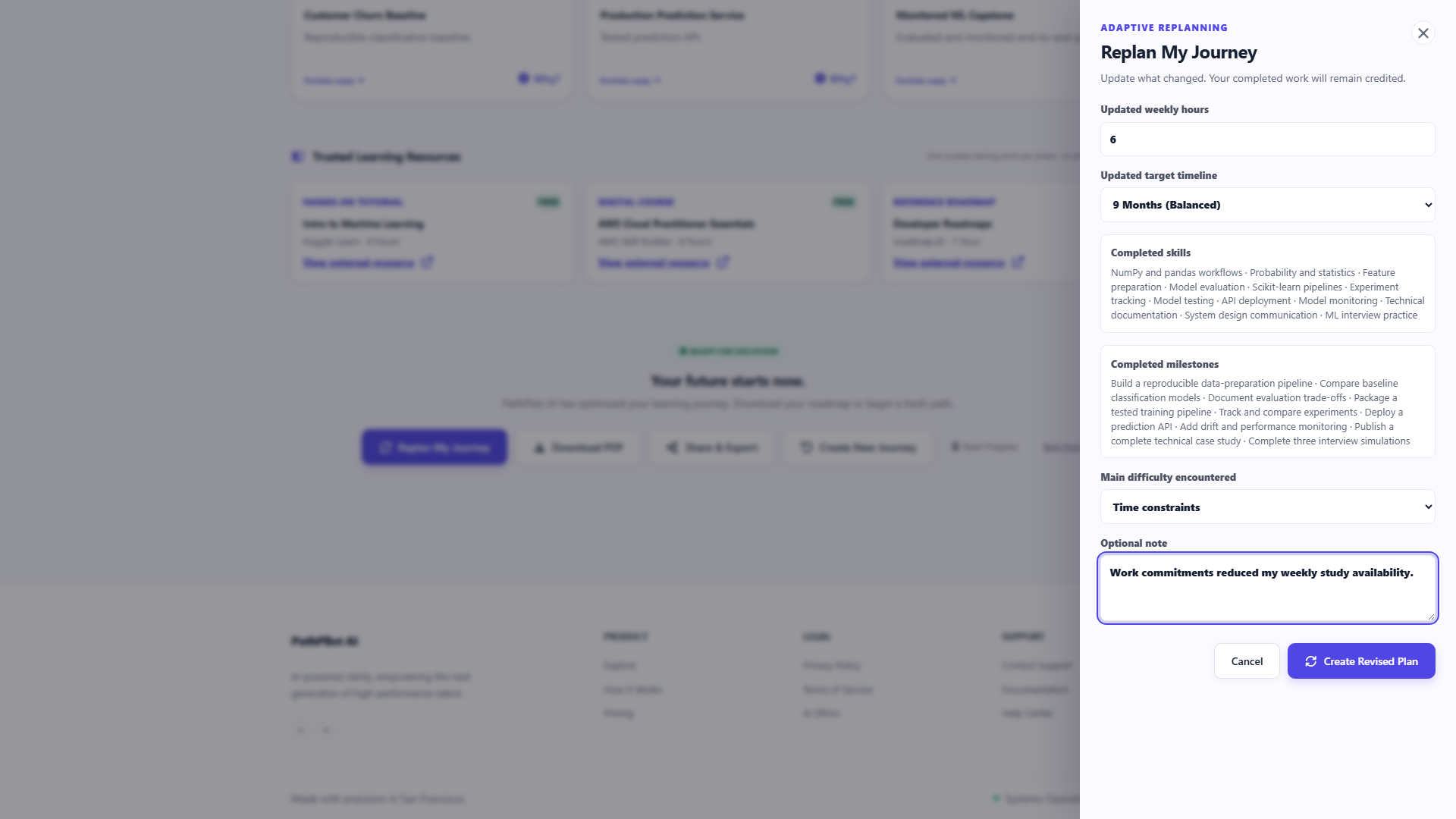
Update your roadmap without losing completed progress
-
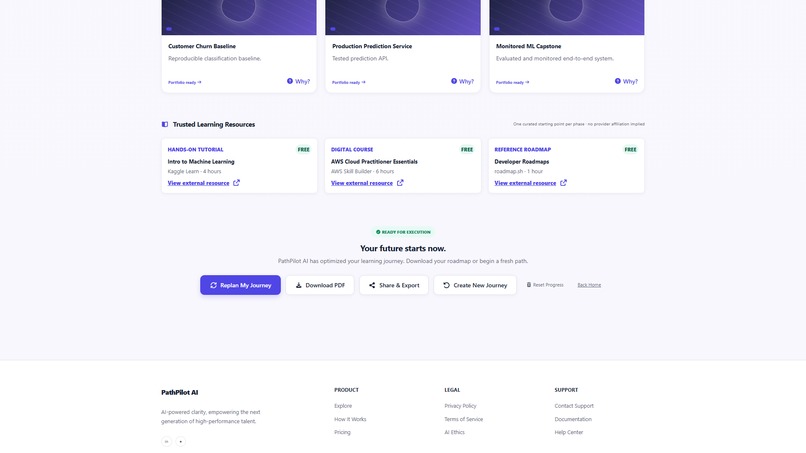
Curated learning resources from trusted providers
-
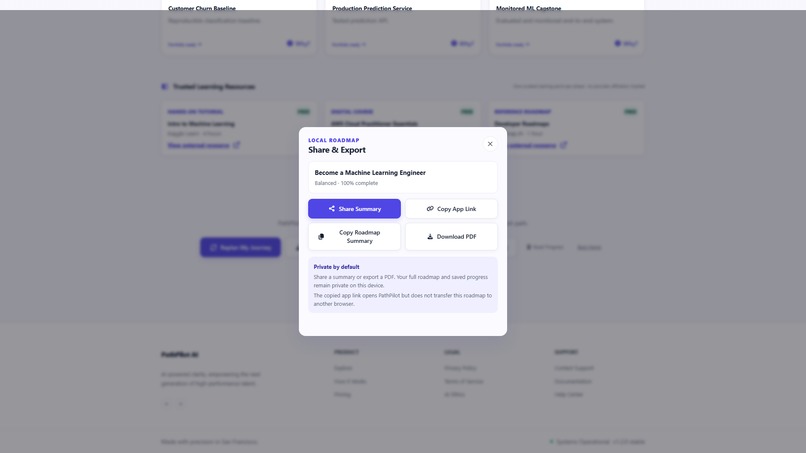
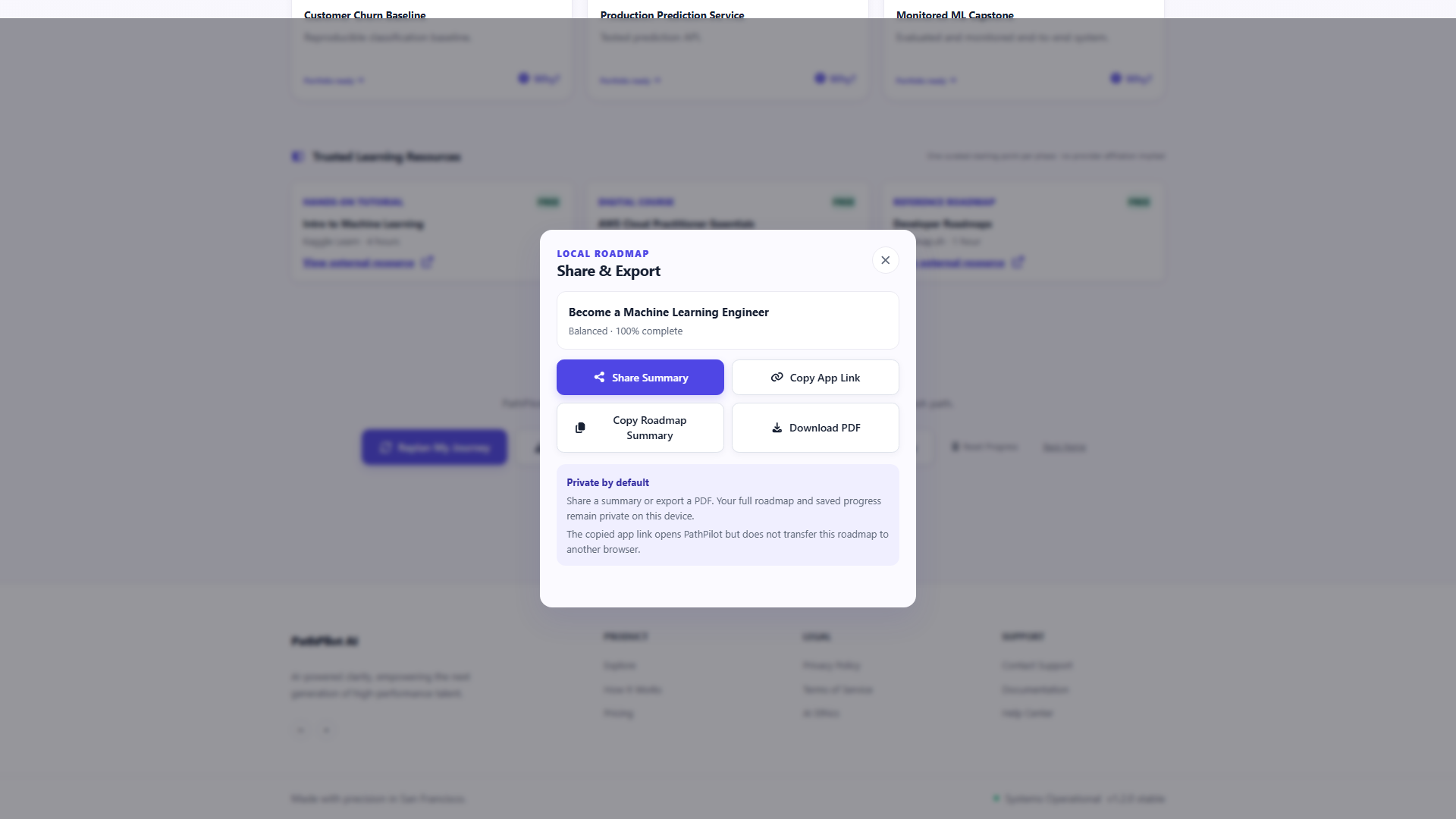
Share your roadmap or export it as a professional PDF
PathPilot AI
Inspiration
There are more learning resources than ever, but one question is still difficult to answer:
"What should I learn next?"
Most AI tools and online courses can answer questions or recommend content, but they rarely provide a learning plan that evolves with you. As goals, skills, or available study time change, those plans quickly become outdated.
We wanted to build something different—an AI coach that stays with the learner throughout the journey instead of generating a one-time roadmap.
That idea became PathPilot AI.
What it does
PathPilot AI turns a career goal into a personalized learning roadmap.
Instead of creating a single static plan, it uses a multi-agent workflow:
- Planner creates the initial roadmap.
- Critic reviews the roadmap for quality and feasibility.
- Revision improves the roadmap based on the feedback.
As learners make progress or update their goals, PathPilot adjusts the roadmap while keeping completed work. Every recommendation also includes an explanation so users understand why the AI suggests each step.
Other features include:
- Explain Why
- Adaptive Replanning
- Strategy Comparison
- Journey Dashboard
- Trusted Resources
- PDF Export
- Shareable Roadmaps
How we built it
PathPilot AI was built with:
- OpenAI Responses API
- GPT-5.6
- React + Vite
- ASP.NET Core (.NET 8)
- Azure
- Vercel
- Remotion
GPT-5.6 powers the multi-agent workflow. It generates personalized learning plans, critiques and improves them, explains recommendations, compares learning strategies, and adapts roadmaps as learners make progress.
Codex played a major role during development. It helped us implement features faster, debug React and ASP.NET Core code, refine the Remotion video pipeline, fix recording alignment and subtitle positioning, and iterate quickly on the final demo.
Challenges we ran into
One of the biggest challenges was keeping learning plans both personalized and consistent.
When users change their goals or available study time, the roadmap should adapt without making them start over. Finding the right prompting strategy to preserve previous progress while generating coherent updates took many iterations.
Creating the demo was another challenge. Besides building the application itself, we spent considerable time producing a polished presentation with synchronized narration, subtitles, screen recordings, and interactive highlights using Remotion.
What we learned
This project reminded us that building an AI product is about much more than choosing the right model.
Good user experience comes from combining strong prompting, thoughtful workflow design, and clear explanations that help users trust AI recommendations.
We also learned how much faster development becomes when using Codex for implementation and debugging, allowing us to spend more time improving the product instead of fighting small technical issues.
What's next
We see PathPilot AI as more than a roadmap generator. Our goal is to turn it into a long-term AI learning companion.
Next, we plan to explore:
- Long-term learner memory
- Calendar and task integration
- Progress analytics
- Community learning
- Mobile applications
- Deployments for universities and organizations
We believe AI should do more than answer questions—it should help people continue learning with confidence over time.

Log in or sign up for Devpost to join the conversation.