-
-
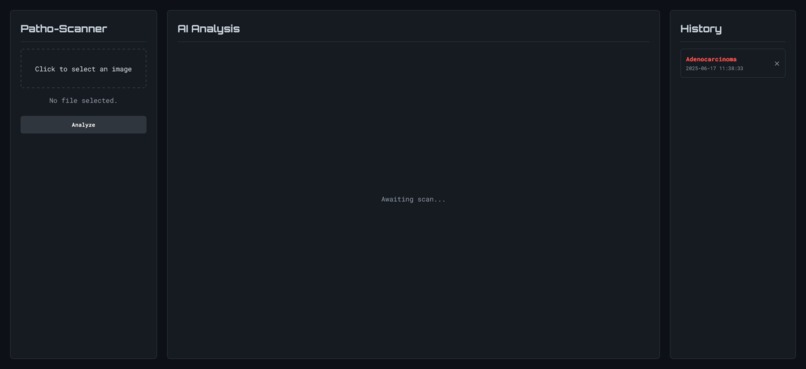
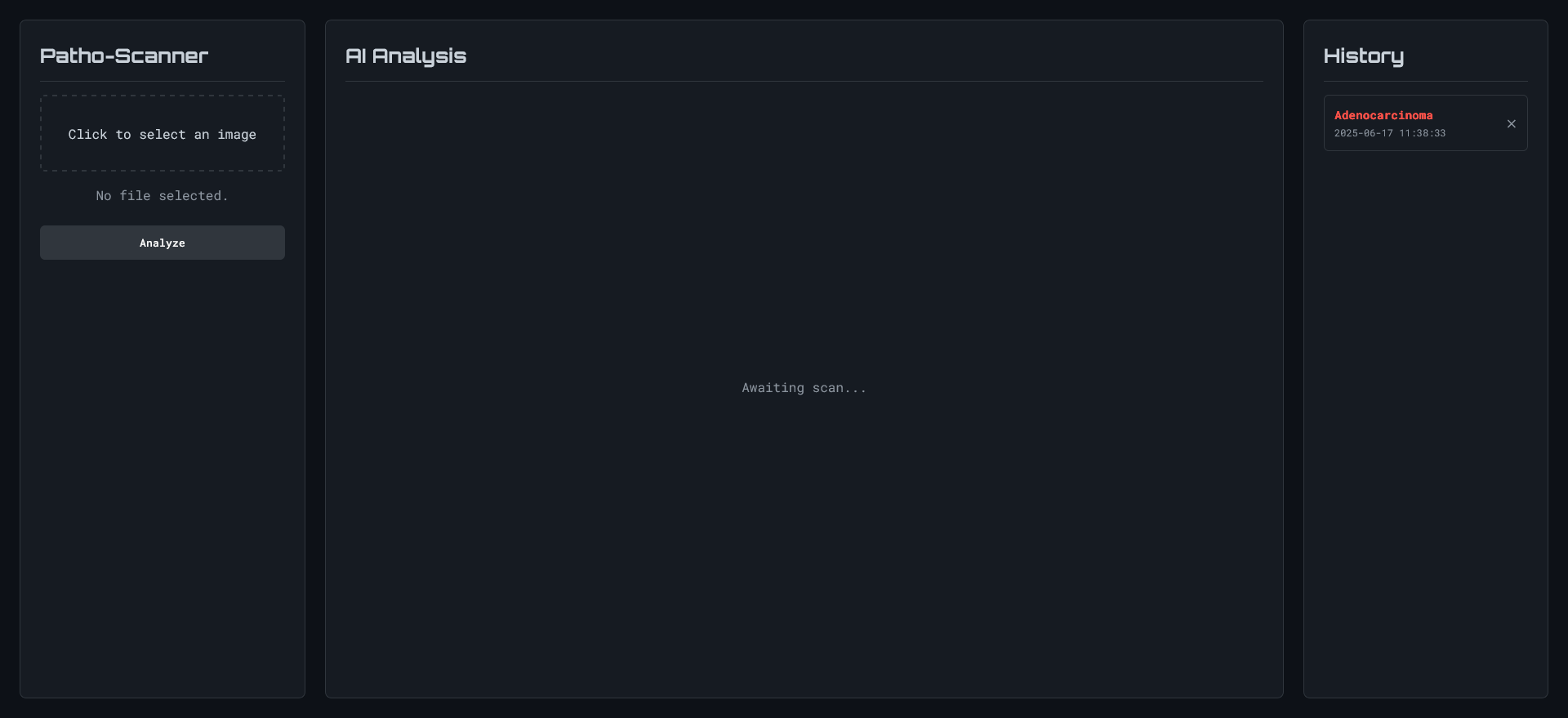
web interface for anaylsis
🚀 Inspiration
The project was inspired by the urgent need for accessible and rapid histopathology analysis. Traditional diagnosis of cancer via microscopic tissue slides is time-intensive and often subjective. As pathology workloads increase, there's a critical need to support professionals with tools that accelerate, standardize, and explain results—especially in low-resource settings. Patho-Scope AI was born from this gap.
🔍 What It Does
Patho-Scope AI is an intelligent diagnostic workbench that:
- Accepts histopathology images (lung and colon tissues)
- Classifies them into one of five trained categories:
  - Colon Adenocarcinoma
  - Colon Benign
  - Lung Adenocarcinoma
  - Lung Benign
  - Lung Squamous Cell Carcinoma
- Displays a confidence score
- Uses Google Gemini to explain results in human-readable language
- Automatically logs all analysis data to a MongoDB-based “lab journal” for easy review and audit
🛠️ How We Built It
- Dataset: 25,000 labeled histopathology images from Kaggle (Lung & Colon Cancer Histopathological dataset)
- Training: Used Google Colab with TensorFlow/Keras to fine-tune a DenseNet121 model. Model saved in
.kerasformat. - Backend: Python Flask
- Frontend: HTML/CSS/JavaScript, fully responsive SPA
- AI Explanation: Google Gemini API generates interpretive summaries
- Database: MongoDB Atlas stores predictions, explanations, and images (as Base64)
⚠️ Challenges We Ran Into
- Training 25K images efficiently on limited compute; resolved via Google Colab
- Achieving fast, low-latency inference with TensorFlow in a Flask environment
- Balancing simplicity with completeness in UI design
- Connecting frontend with AI inference backend smoothly using vanilla JS
🏆 Accomplishments That We're Proud Of
- Seamlessly integrated image classification and AI-driven explanation
- Created a fully functional web-based diagnostic interface
- Achieved consistent classification performance with real-time feedback
- Stored all logs in a searchable, persistent "lab journal"
- Made the system mobile-responsive and user-friendly
📚 What We Learned
- Practical deployment of TensorFlow models in production environments
- Leveraging LLMs like Gemini for medical explanation
- Efficiently converting and storing image data as Base64
- Designing for fluid diagnostic workflows used by actual medical professionals
🛤️ What’s Next for Patho-Scope AI
- Expand classification to more cancer subtypes (e.g., breast, prostate)
- Add batch upload and multi-image comparison
- Enable region annotation for finer diagnosis
- Incorporate user authentication for private workspaces
- Implement trend detection and analytics on user history
Built With
- css3
- flask
- google-ai-studios
- html5
- javascript
- keras
- mongodb

Log in or sign up for Devpost to join the conversation.