-
-
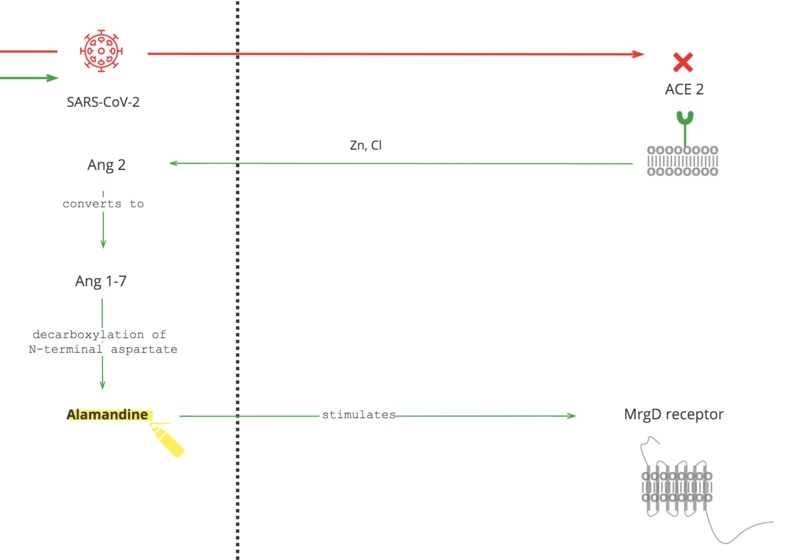
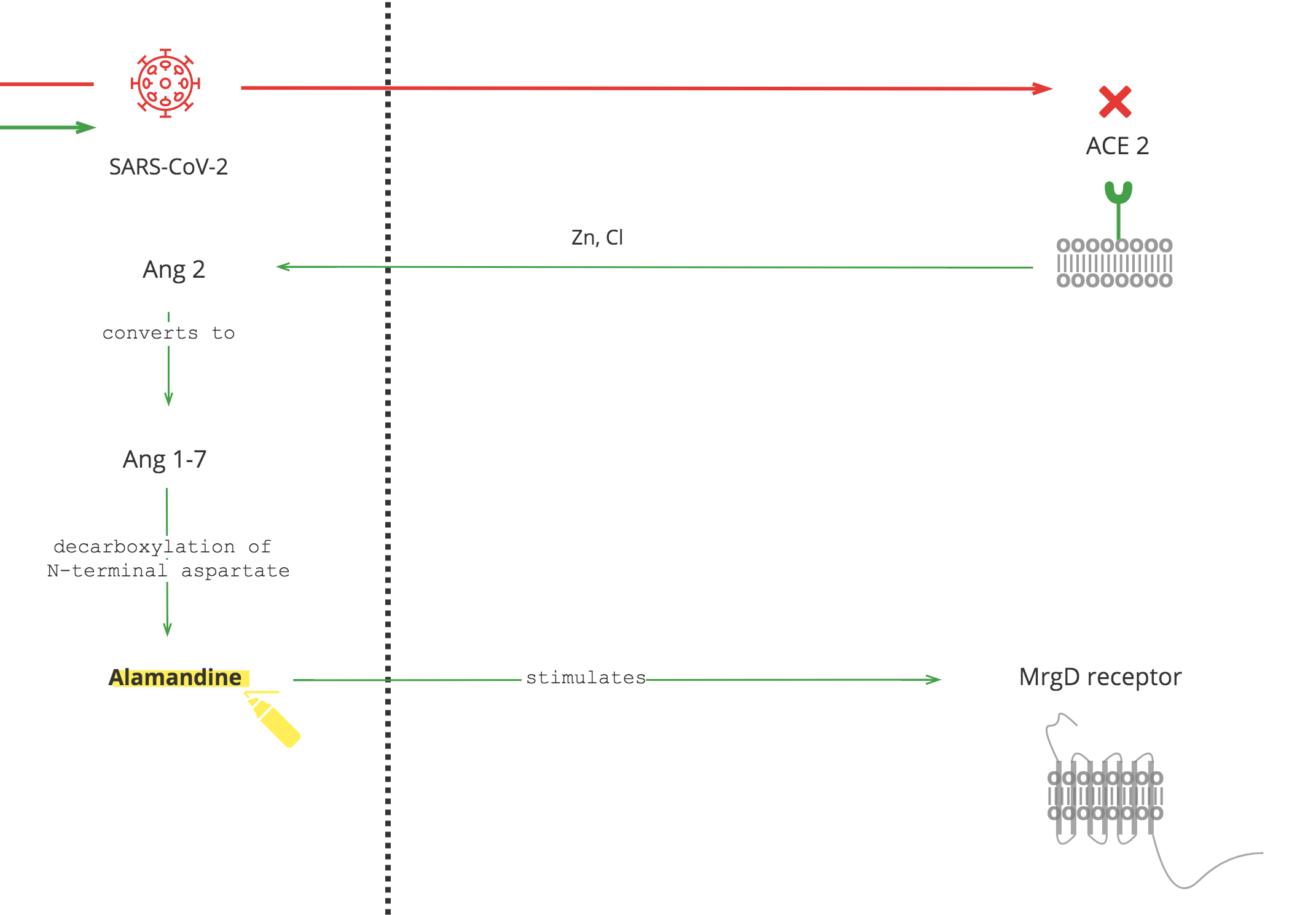
initial part of COVID-19 pathogenesis
-
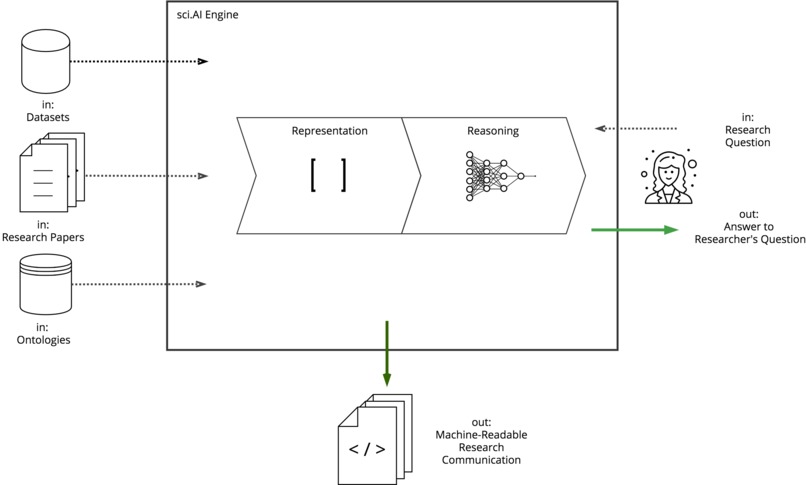
Simple high-level architecture
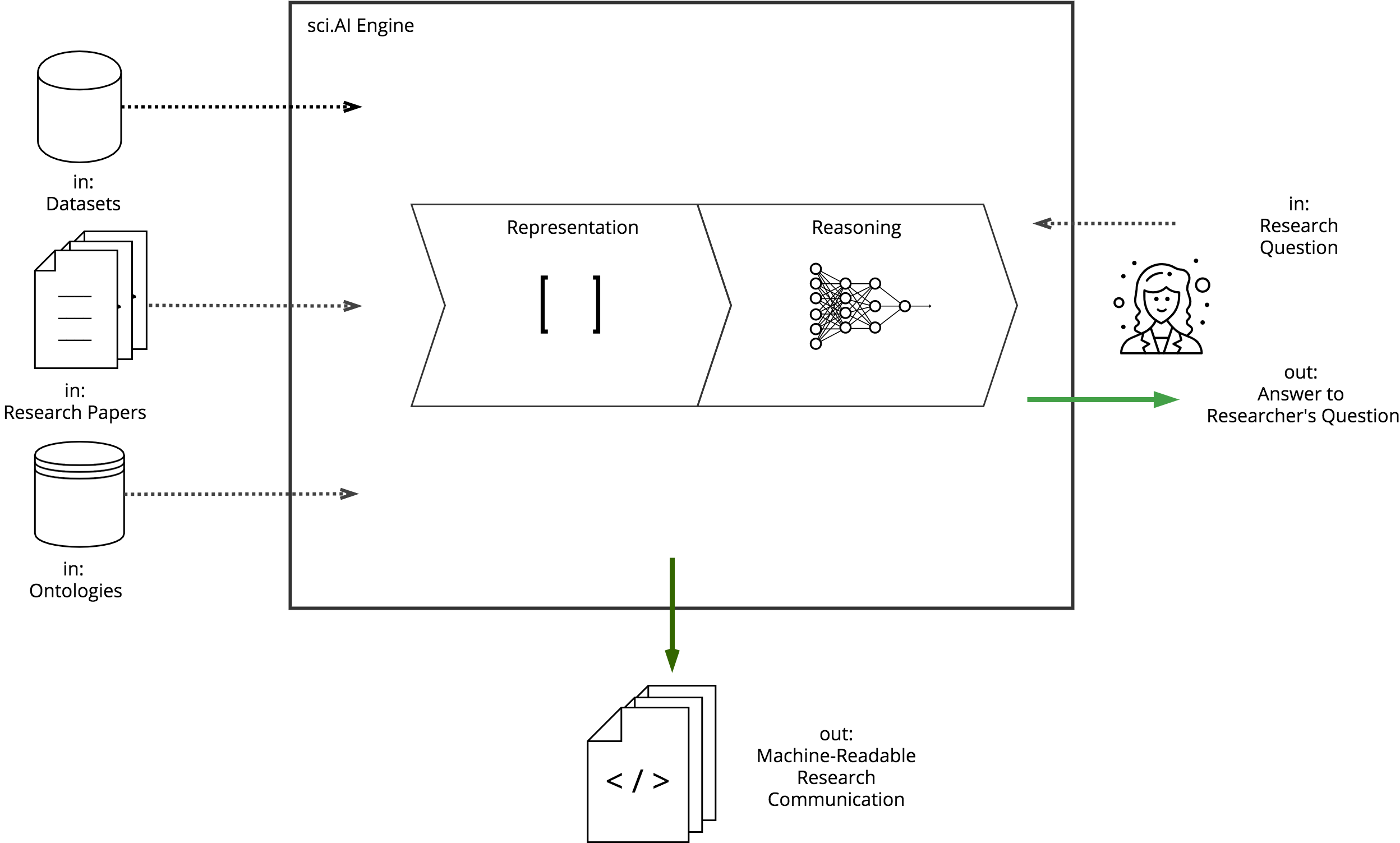
At the hackathon, we apply sci.AI technology to infer COVID pathogenesis and highlight biomarkers. All in the name of a safe treatment.
The system is in closed testing alpha version and is used by our team to run custom research projects.
Results https://doi.org/10.6084/m9.figshare.12121575.
Resulting dataset https://doi.org/10.6084/m9.figshare.12121389.
Inspiration
The situation is only getting worse. Empirical approach alone does not help manage it.
We all need solutions based on first principles.
The problem
There is no holistic and detailed understanding on molecular level that is validated clinically and epidemiologically.
With complete understanding on hands, researchers, clinicians and industry will crack it.
The solution
General solution
System that helps domain expert to synthesize precise complete understanding of phenomena out of disjoint, unstructured, globally distributed data.
COVID-specific solution
- Complete molecular-level explanation how exactly normal biological processes are affected by the virus. Aligns with clinical and epidemiological reports.
- Biomarkers that help navigating safe treatment.
- Potentially beneficial treatments.
Current state
Explanation in the form of pathogenetical pathway is 90% ready. It is the basis for the next research. Biomarkers and treatments are work-in-progress because should be assembled into different packages for different cohorts.
How system works
sci.AI presents complementary facts from distributed sources together to produce a comprehensive explanation of the biological process on molecular level.
When there is a blank space in molecular detalization, epidemiological and clinical observations might suggest direction of research.
Details of sci.AI methodology
https://figshare.com/articles/sciAI_Methodology_pdf/12198021
How we synthesize COVID knowledge
With the help of the system, Yuliya, anaesthesiologist-intensivist herself, queries objects of interest, i.e. "SARS-CoV-2" and runs through suggested interactions. This way the next hero is "ACE2" then "Angiotensin" and etc. By traversing through the knowledge she synthesized metabolic part of COVID-19 pathogenesis.
Technical components
The system consists of data extraction, data conversion, NLP, machine reasoning, backend and frontend subsystems. Most parts are written in Python and the main data storage is PostgreSQL.
Accomplishments that we are proud of
- whole pathogenesis with clinical biomarkers that measure the body's compensatory homeostatic response to SARS-CoV-2 infection,
- based on biomarkers highlighted by our team, fellow clinician has introduced G6PD measurement for critical COVID patients,
- predicted adverse effects of chloroquine that confirmed to be true,
- discovered why NOS3- and G6PD-polymorphic cohorts are more vulnerable to COVID,
- and realized that there will be no one-size-fit-all treatment.
- explained beforehand the reason why (mechanical ventilation will fail)[https://doi.org/10.6084/m9.figshare.12034962]. There are (confirmations)[https://www.bloomberg.com/news/articles/2020-04-22/almost-9-in-10-covid-19-patients-on-ventilators-died-in-study], unfortunately.
What have done during the weekend
With help of fellow clinicians we validated biomarkers such as lactate dehydrogenase (LDH), pyroglutamic acid and triiodothyronine (T3) as really helpful to rely on in severe COVID cases.
We caught some good ideas to discover some potential treatment, for example, treatment with Alamandine to supply nitric oxide (NO) blocked specifically by SARS-CoV-2 basing on the discovered pathogenesis.
We updated preprint following suggestions of mentors and members of #EUvsVirus.
Challenges we ran into
That would be amusing if wouldn't be so sad. The biggest bottleneck is inertia. Even in stopping prescribing deadly medicines when we warning out loud, Don’t Add Fuel To The COVID-19 Fire With Chloroquine, dated April 7th, 2020.
But recently only:
Chloroquine hype is derailing the search for coronavirus treatments
What I regret of
That we didn't start COVID research in January...
With such a pace, by now there would be a lot more answers.
What we learned
Be fast and conscious. Don't afraid to be the first
What's next
Now, when we have full understanding of innards, we can work on safe treatments.
The necessities in order to continue the project
Besides resources to continue development and scaling of the technology, we are looking for partners in the pharmaceutical industry to deliver suggested treatments, clinicians to run local trials and biologists to validate the finding in vitro.
The solution’s impact on the crisis
Helping vulnerable patients here and now in the absence of etiological treatment.
Guiding clinician towards safe and precise treatment with pathogenetically relevant biomarkers.
What is the impact on society if the idea is implemented at scale?
Doctors will outsmart the virus ;)
After COVID, in ideal optimistic world, when we'll have enough computational power and genotyping will be available to everyone, sci.AI will help to uncover most of research questions in biology and suggest personalized treatment to every individual patient.
The value of your solution(s) after the crisis
As a generic knowledge discovery system, sci.AI will be used to support researchers working on chronic conditions, targeted treatments and will be ready to stop any future biological threat.
Does this offer something that hasn't been solved already?
To our best knowledge, there are no up-running-machine reasoning systems in any domain of human activity. Well, actually it will be generic and domain-agnostic. That's our prediction )
Even when we consider status quo in biomedical technologies, sci.AI:
- takes whole context into account to provide researcher with custom models,
- models phenomena on molecular and validates on both clinical and epidemiological levels,
- provides dynamic explanation of interconnected biological processes with daily updates.
How fast can the prototype be turned into a ready to use product?
It is being used by our team for knowledge inference. Requires some time to make it production ready and joyful for external users.
Semanticization of individual documents works already. Testing and implementing external access via API.





Log in or sign up for Devpost to join the conversation.