Inspiration
When a doctor prescribes an antibiotic, they're guessing. They don't know which bacteria in their hospital are already resistant to which drugs. Every wrong antibiotic choice doesn't just fail the patient — it accelerates antimicrobial resistance (AMR), the silent pandemic projected to kill more people than cancer by 2050. We asked: why does every hospital still rely on outdated paper antibiograms updated once a year, when culture report data exists right now? PathMapper is our answer.
What it does
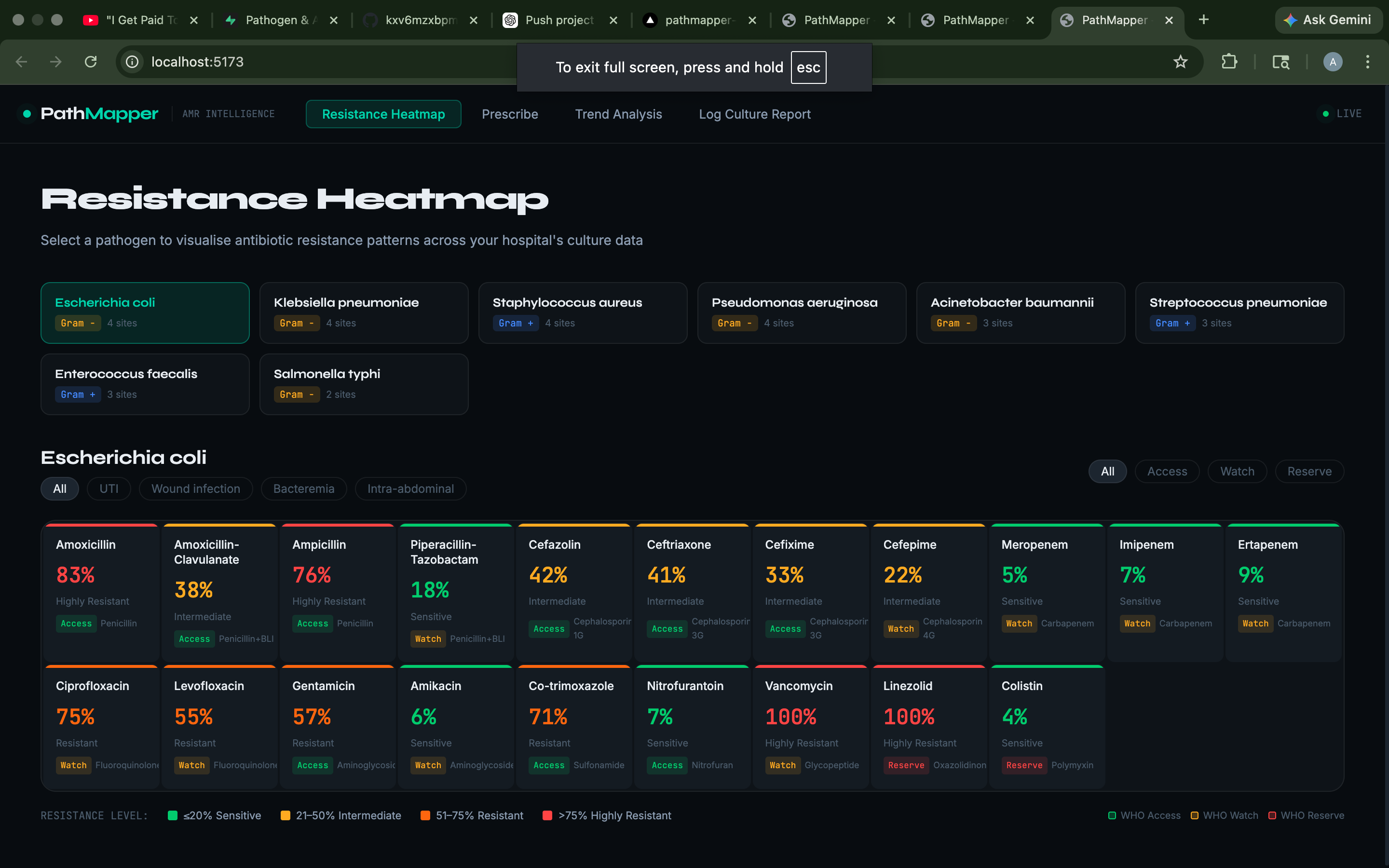
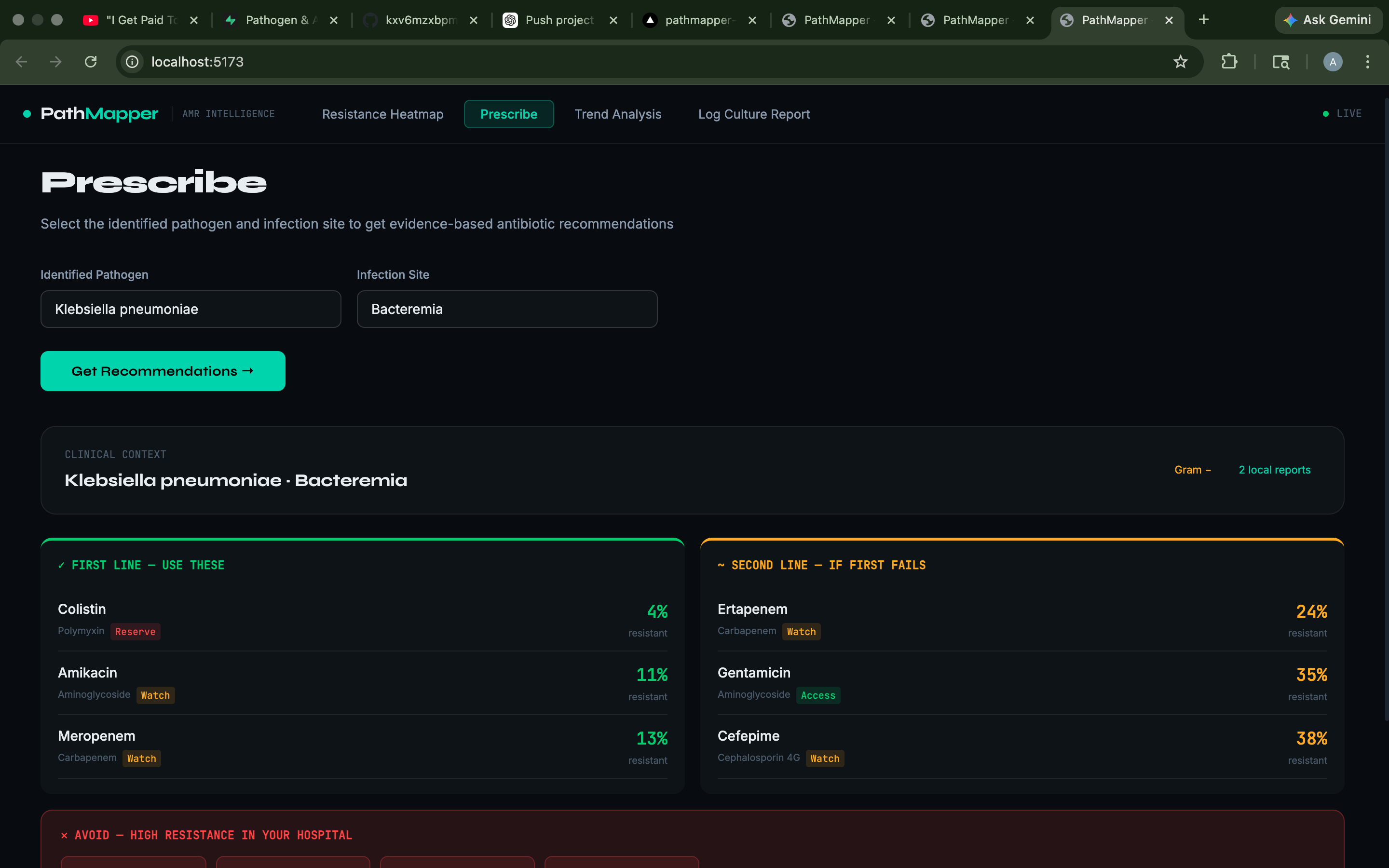
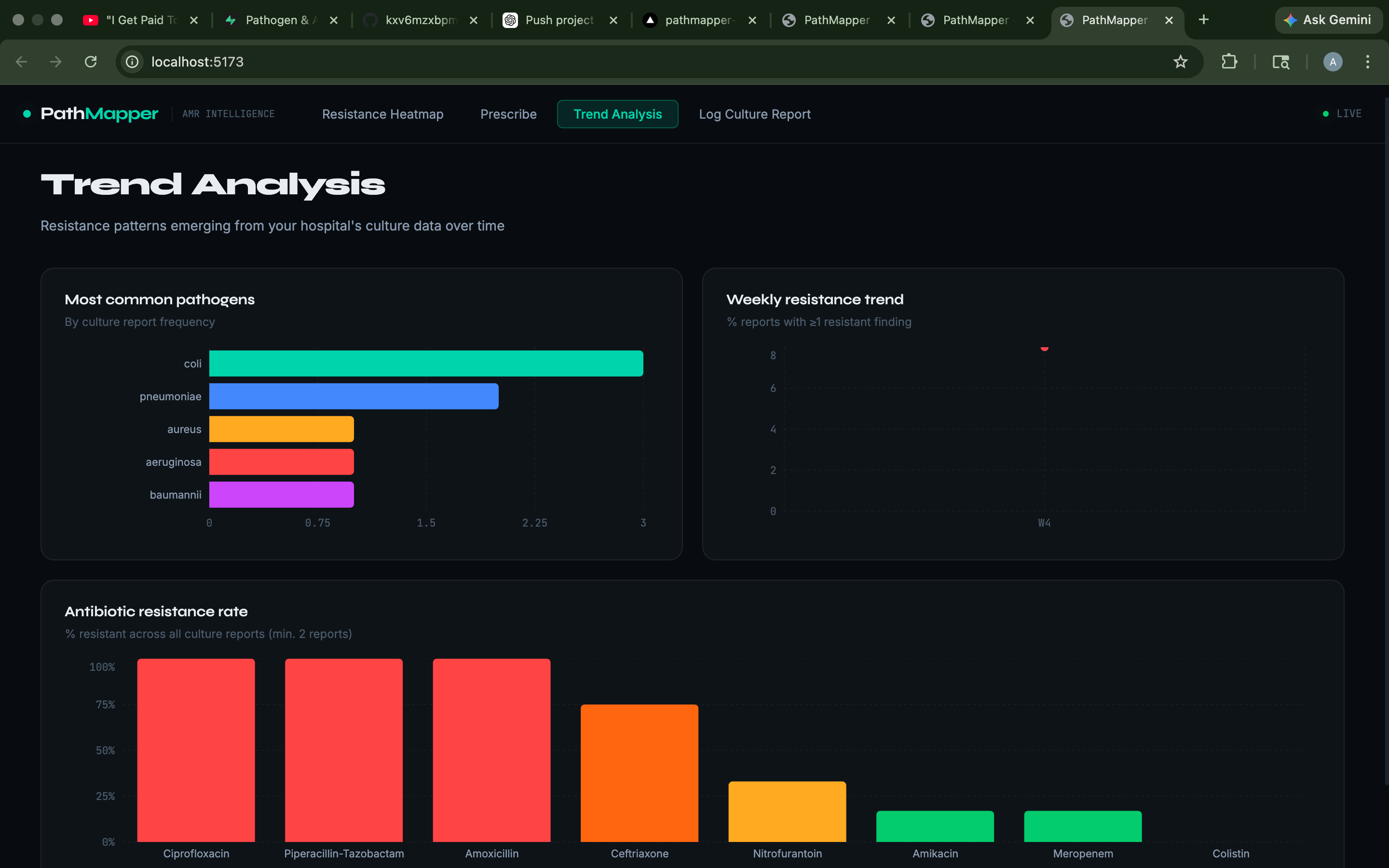
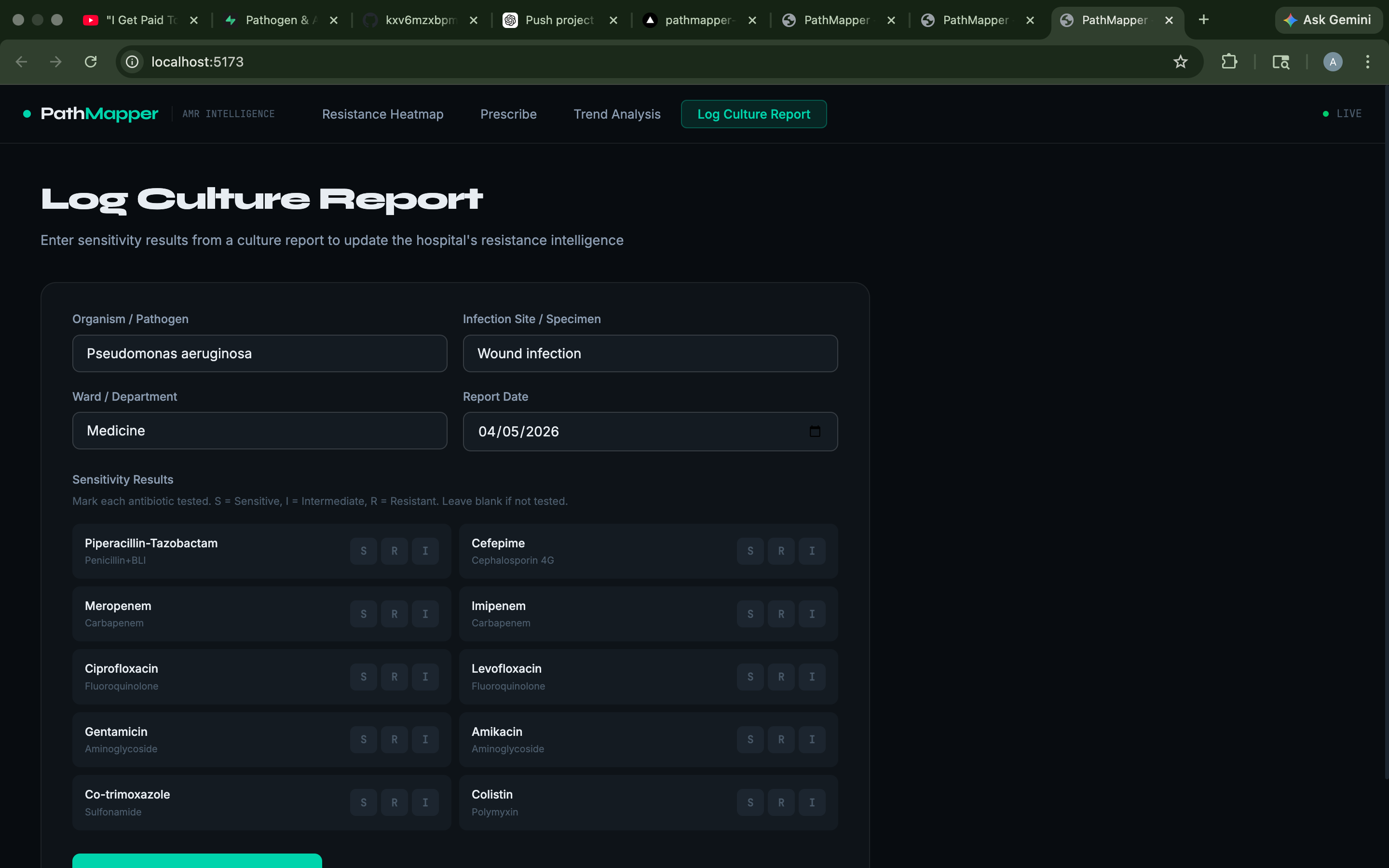
PathMapper is a real-time antibiotic resistance intelligence platform for hospital doctors and pharmacists. It has four core functions:
How we built it
React + Vite for the frontend — fast to build, instant hot reload during development Recharts for all data visualisations — the heatmap grid, trend line charts, and bar charts WHO AWaRe framework integrated into every antibiotic — each drug is tagged Access, Watch, or Reserve so doctors always know the stewardship implications of their choice Blended resistance model — base resistance rates from ICMR 2022 Indian AMR surveillance data, blended 60/40 with locally entered culture reports. The more data entered, the more locally accurate the recommendations become jsPDF for report generation Vercel for deployment — the entire app deploys in under 30 seconds
Challenges we ran into
The hardest part was the resistance blending model — figuring out the right weight between published national AMR data and local hospital culture reports. Too much weight on national data and local resistance patterns get hidden. Too much weight on local data and sparse reports cause wild swings. We settled on a 60/40 blend (national/local) that stabilises once a ward has more than 5 reports for a given pathogen. The second challenge was making the heatmap readable at a glance. Early versions had too much information per cell. We stripped it down to three things only: resistance percentage, sensitivity label, and WHO AWaRe category — everything a prescribing doctor actually needs in 3 seconds.
Accomplishments that we're proud of
1)Built a genuinely usable clinical tool in 6 hours that looks and functions like a production hospital system Resistance data is grounded in real published surveillance — every base rate comes from the ICMR 2022 2)National AMR report, making PathMapper scientifically defensible The Prescribe screen gives a doctor a ranked, actionable recommendation in under 10 seconds — faster than any existing antibiogram lookup workflow 3)Zero external dependencies for the core logic — no third-party medical API, no black-box model. The intelligence comes from real culture data entered by the hospital itself
What we learned
AMR is fundamentally a data problem. The science of which drugs work against which bacteria is well understood — what's missing is a clean, fast interface that puts that knowledge in front of the right person at the right moment. We learned that the gap between "a doctor knows AMR is a problem" and "a doctor changes their prescription because of it" is almost entirely a UX problem. PathMapper is our attempt to close that gap. We also learned that the WHO AWaRe framework is criminally underused at the point of care. Every antibiotic has a stewardship category — but almost no prescribing tool surfaces it. Putting Access/Watch/Reserve right next to the resistance percentage changes the conversation from "which drug works" to "which drug works AND is responsible to use."
What's next for pathmapper
Ward-level segmentation — separate resistance profiles for ICU vs general medicine vs surgery, since resistance patterns differ dramatically between wards Automatic culture report parsing — upload a PDF lab report and extract S/I/R results automatically using OCR, eliminating manual entry Outbreak detection — flag when a specific resistance pattern (e.g. carbapenem-resistant Klebsiella) spikes above baseline in a ward, triggering infection control alerts Multi-hospital network — anonymised resistance data pooled across a hospital network to give smaller hospitals better baseline data and flag regional AMR trends
Built With
- css
- html
- icmr-amr-surveillance-data
- javascript
- jspdf
- react
- recharts
- vite
- who-aware-framework
