-
-
home-hero
-
home-value-proof
-
demo-entry
-
demo-judge-sandbox
-
signup-roles
-
dashboard-next-move
-
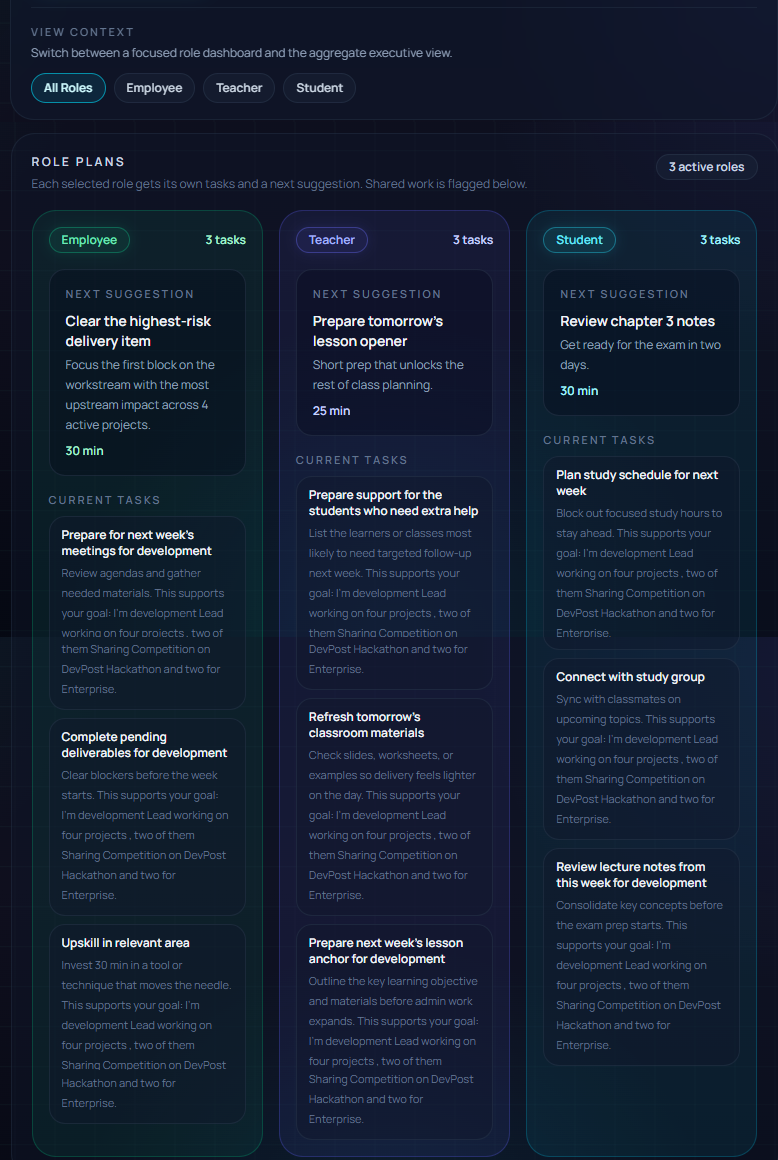
dashboard-role-switcher-and-plans
-
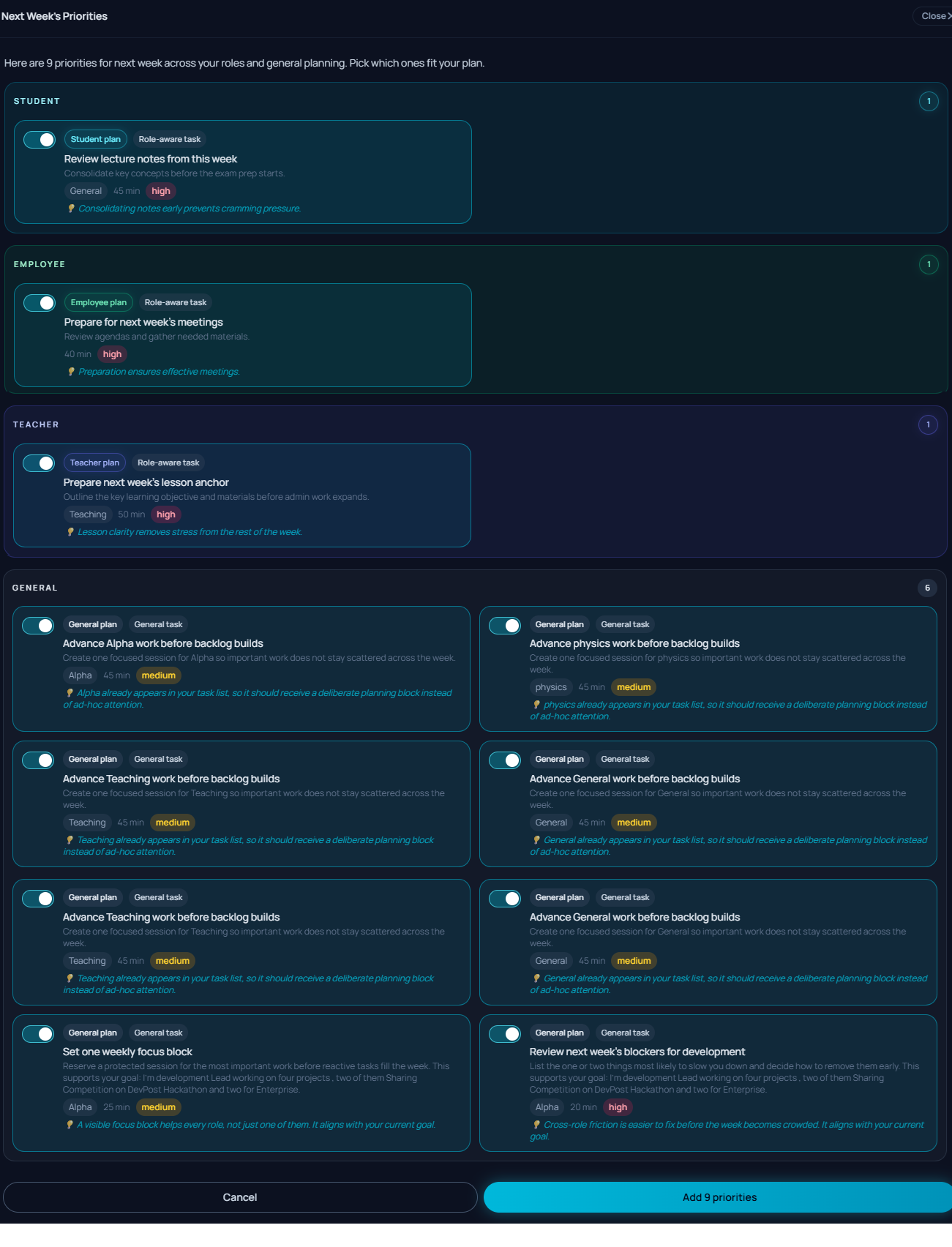
ai-suggest-dialog
-
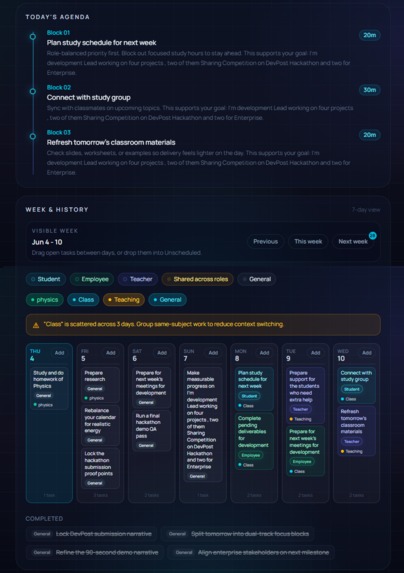
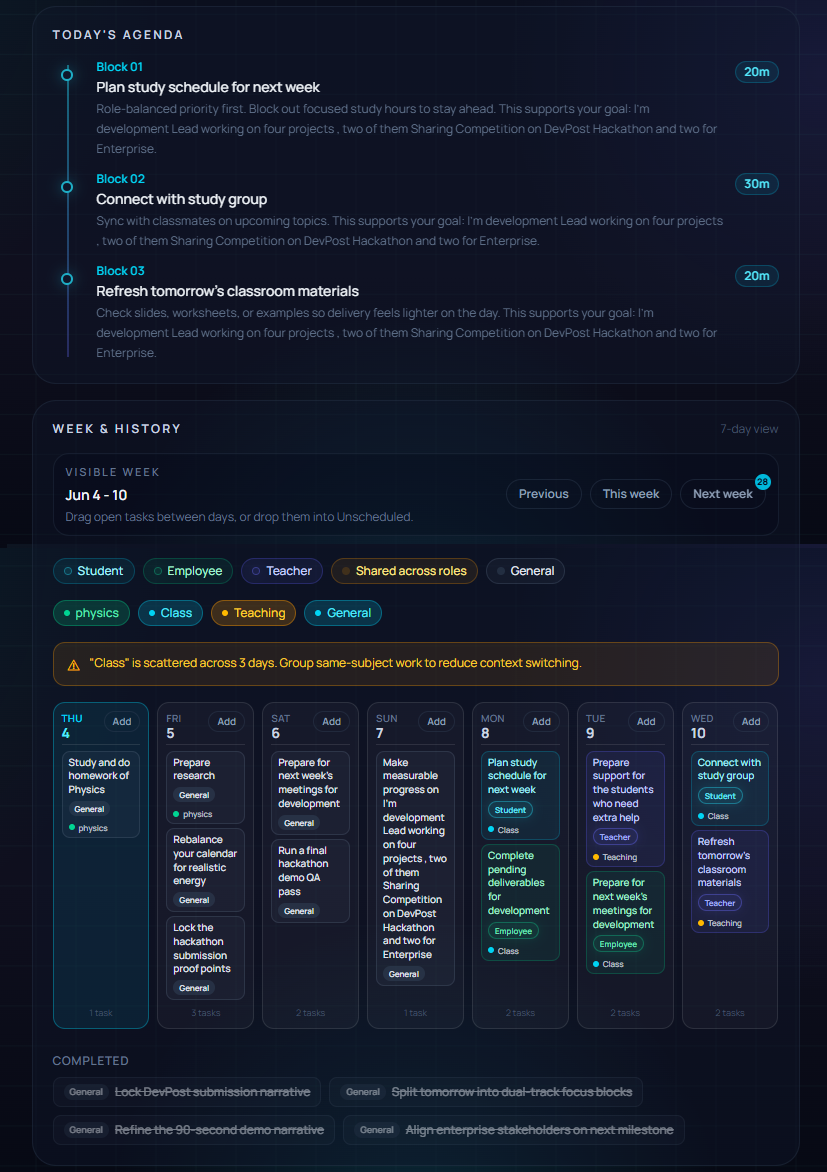
dashboard-calendar-and-task-list
-
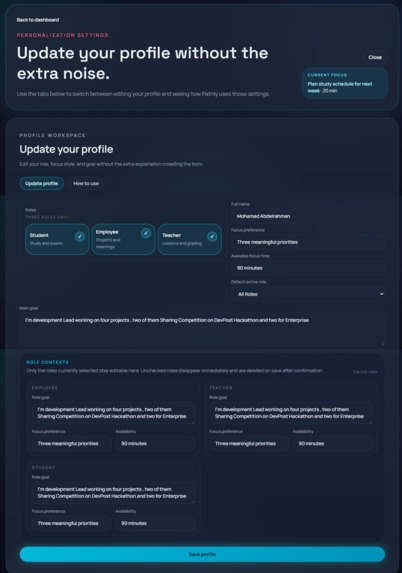
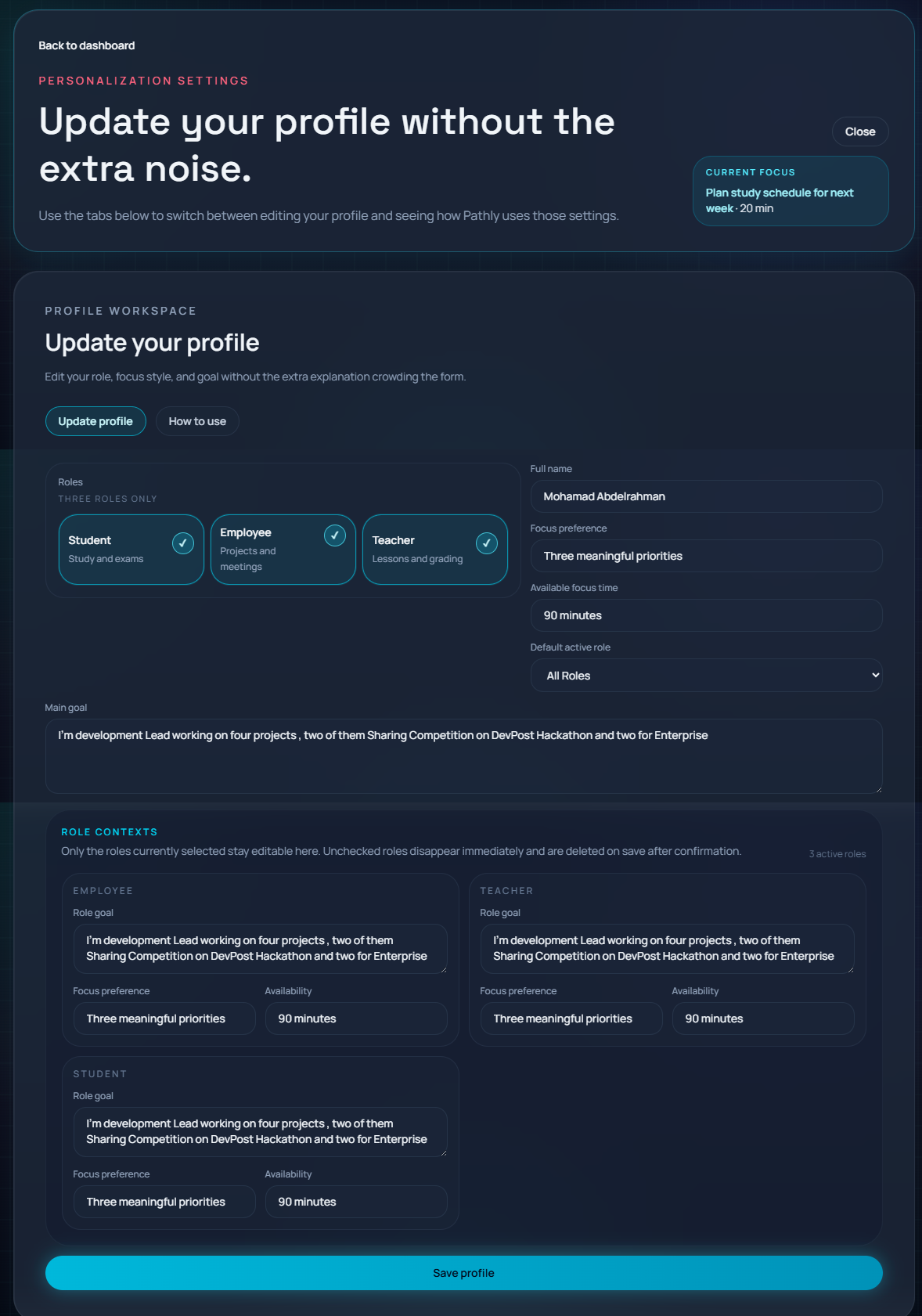
profile-personalization
Inspiration
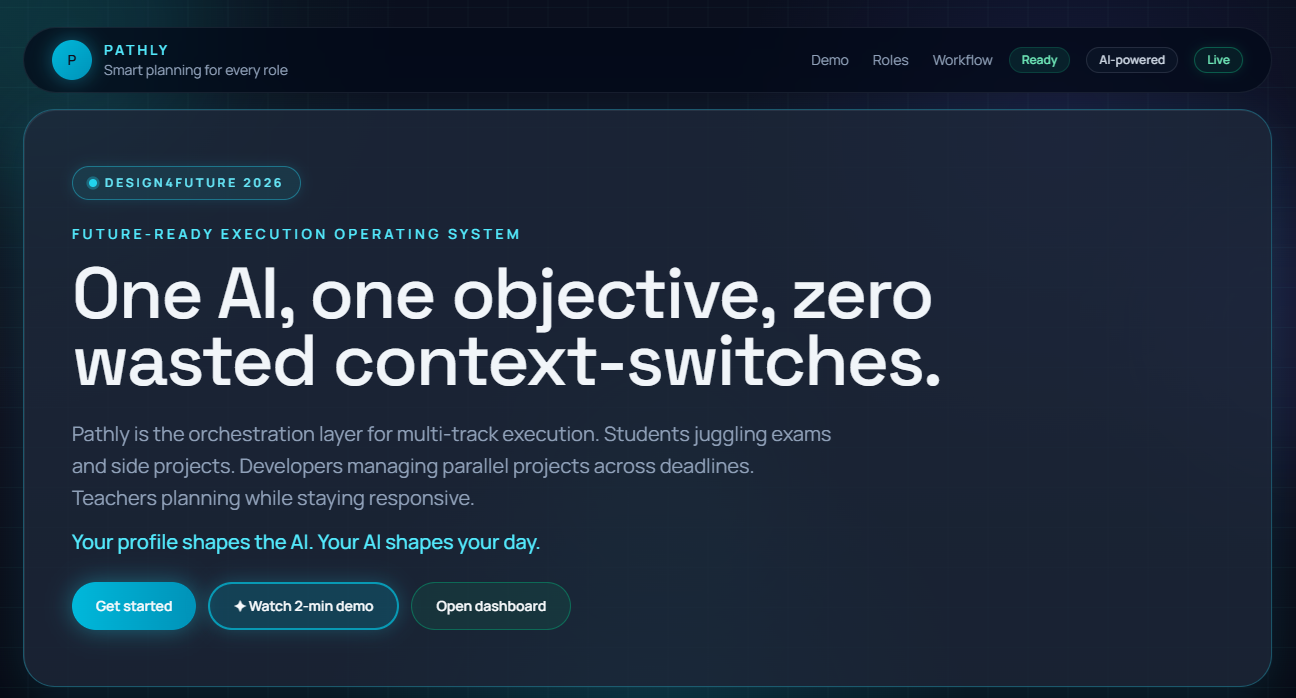
Pathly was inspired by a simple but persistent problem: people usually know everything they need to do, but they struggle to decide what to do first when they are balancing multiple responsibilities at once.
A student may also be an employee. A teacher may also be a parent, mentor, or project lead. Real life is not organized into one neat role, yet most productivity tools flatten everything into one backlog and expect users to sort out the chaos themselves.
We wanted to build something more realistic.
That is where Pathly came from: a multi-role planning and execution system that helps people manage overlapping responsibilities, understand what matters now, and move toward one clear next step instead of a stressful list of disconnected tasks.
What it does
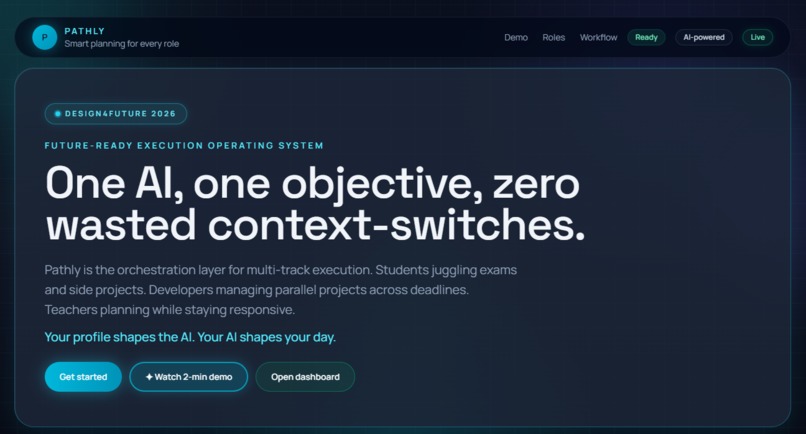
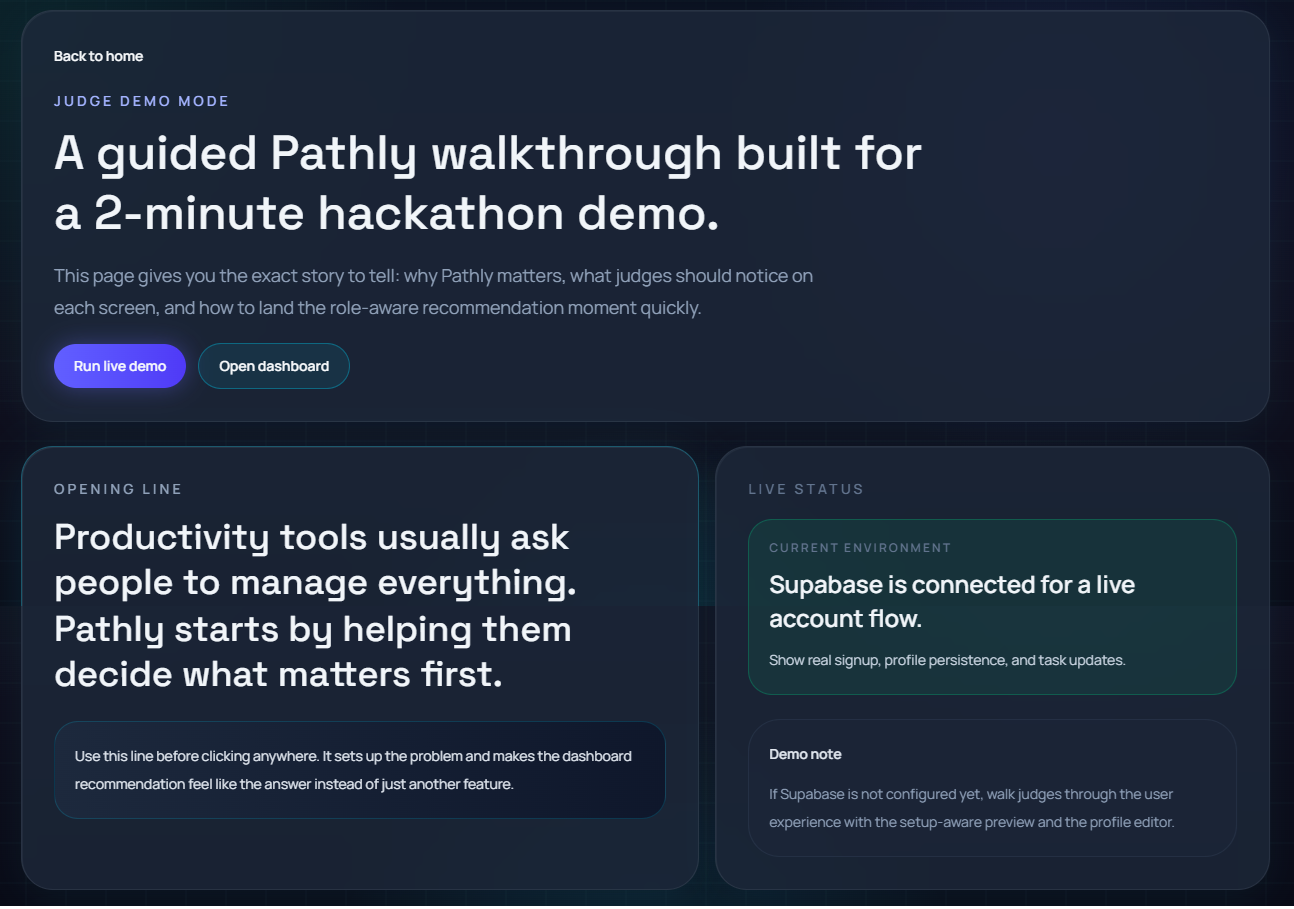
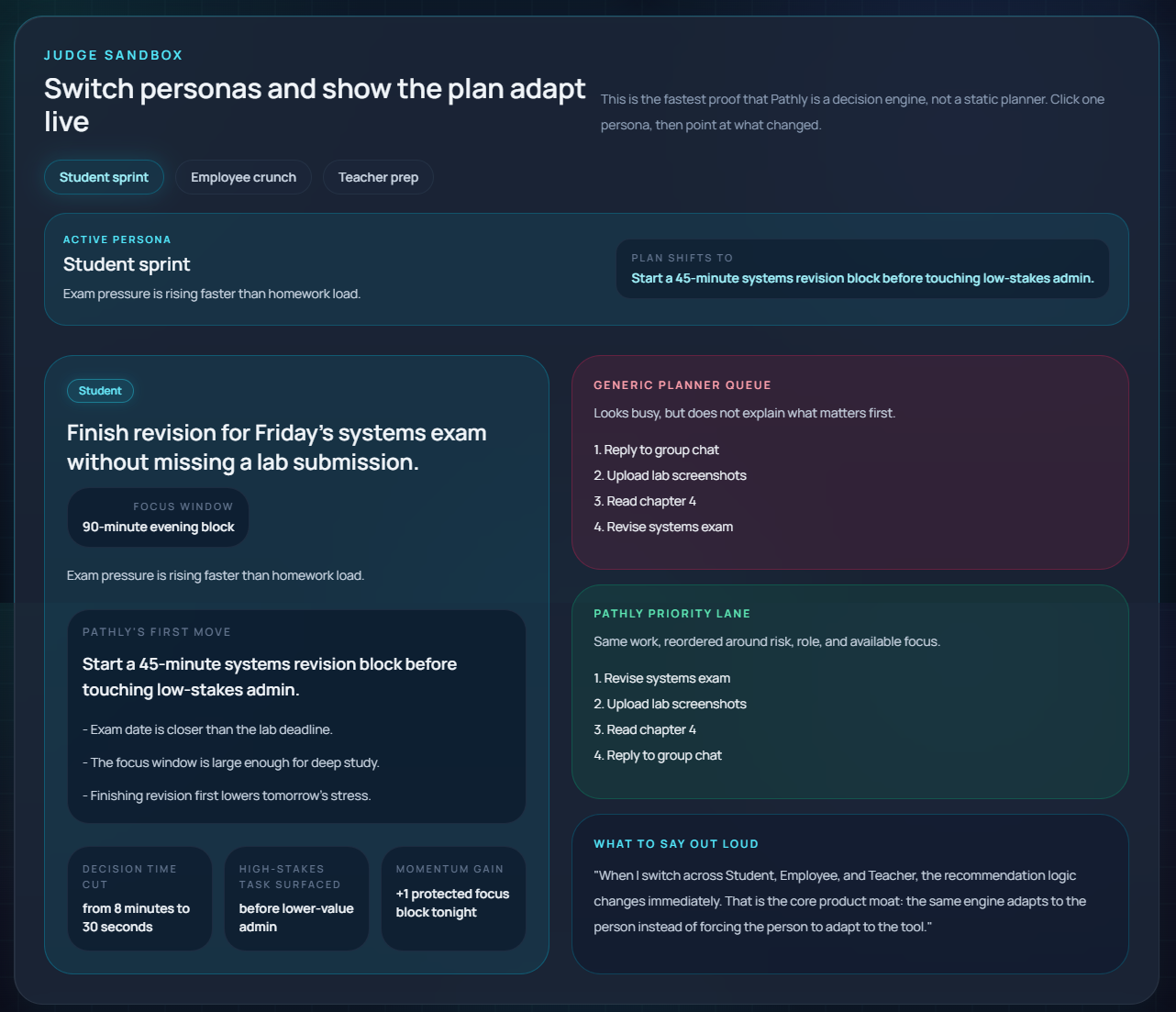
Pathly is a multi-role execution system that helps users plan across different responsibilities, prioritize the right next move, and stay aligned across focused role views and an all-roles view.
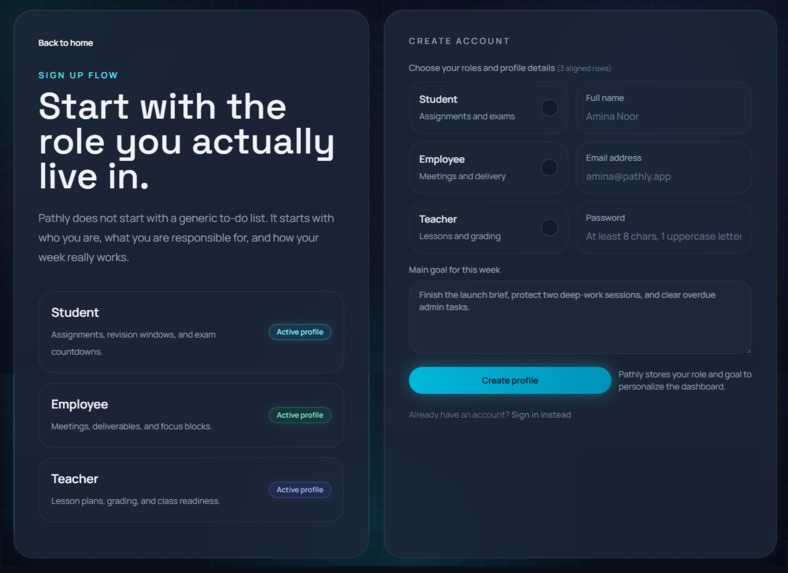
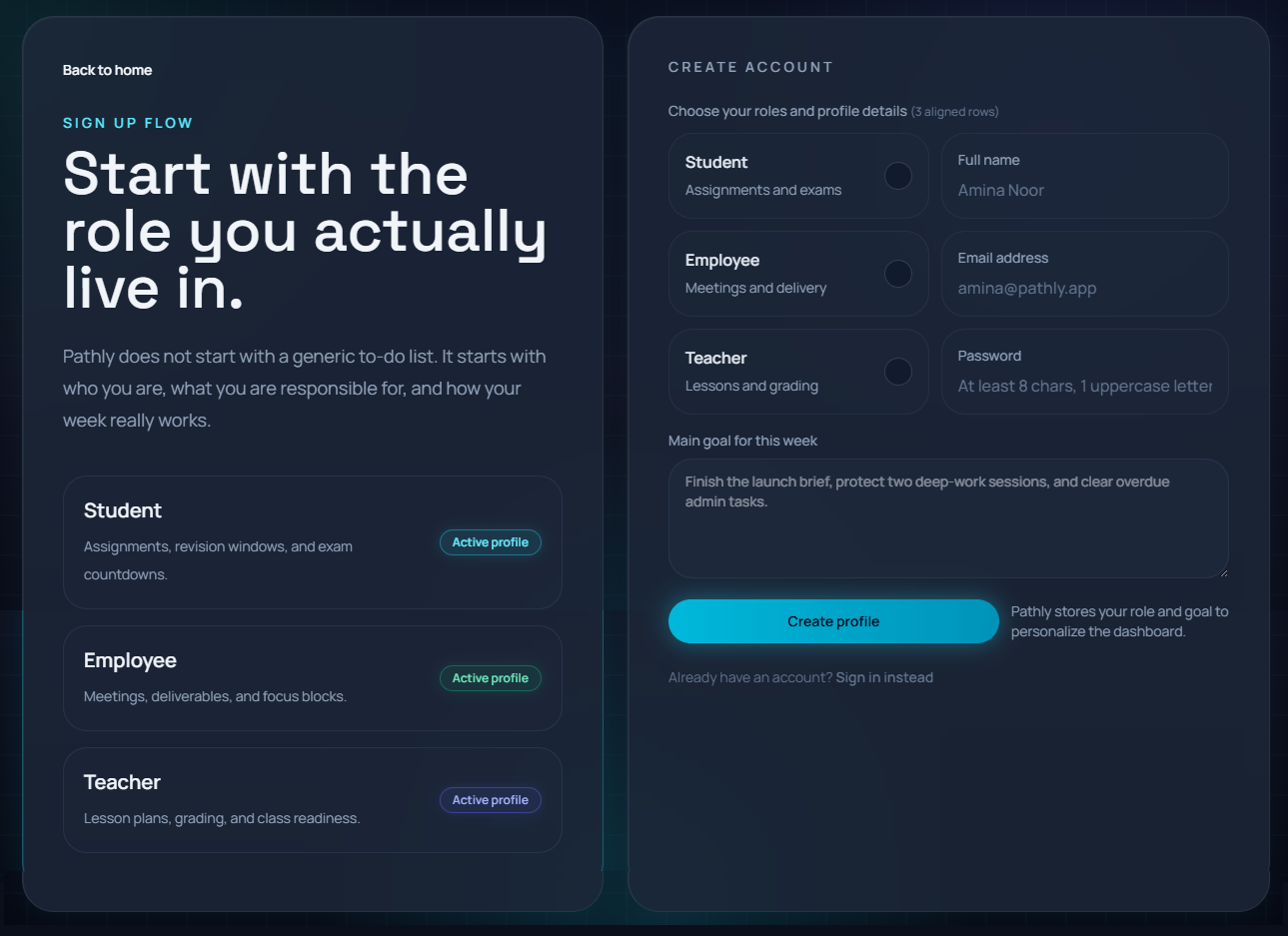
When users sign up, they create one shared profile and activate one or more role contexts such as Student, Employee, or Teacher. Pathly then adapts planning, recommendations, and task organization around those active roles rather than forcing everything into one generic productivity model.
Pathly helps users:
- Maintain one shared account with multiple role-specific planning contexts
- Add goals, tasks, deadlines, and responsibilities in the right role lane
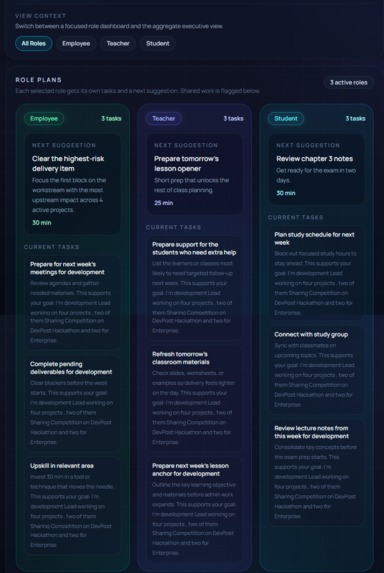
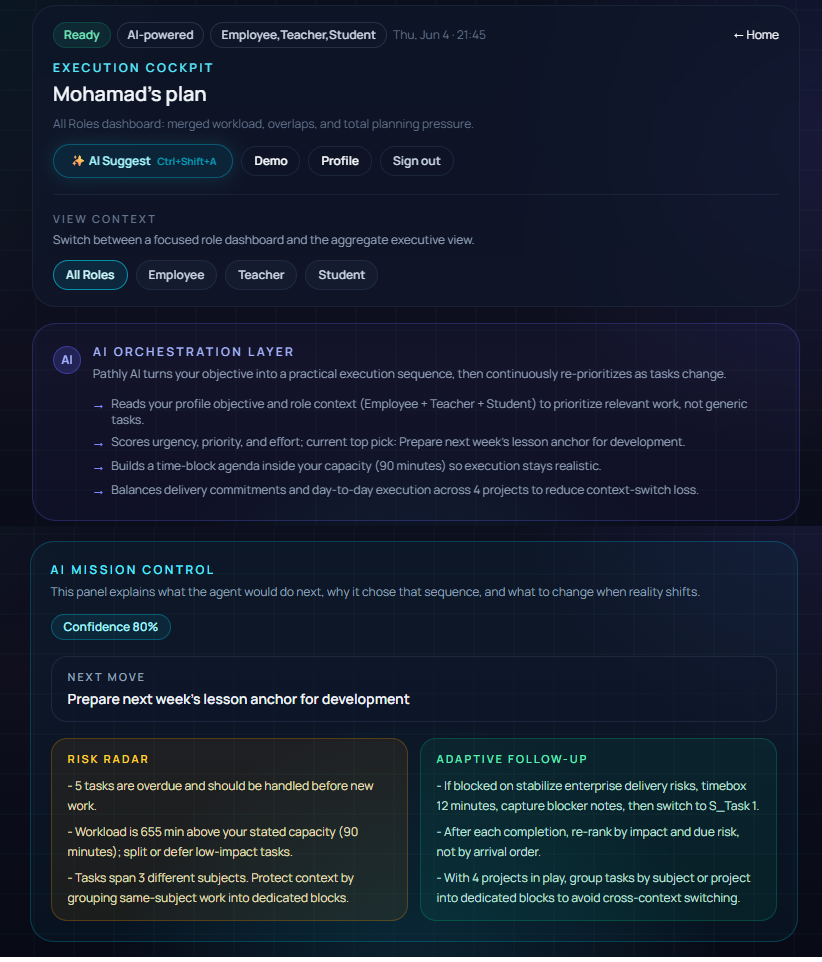
- Switch between focused role planning and an All Roles view
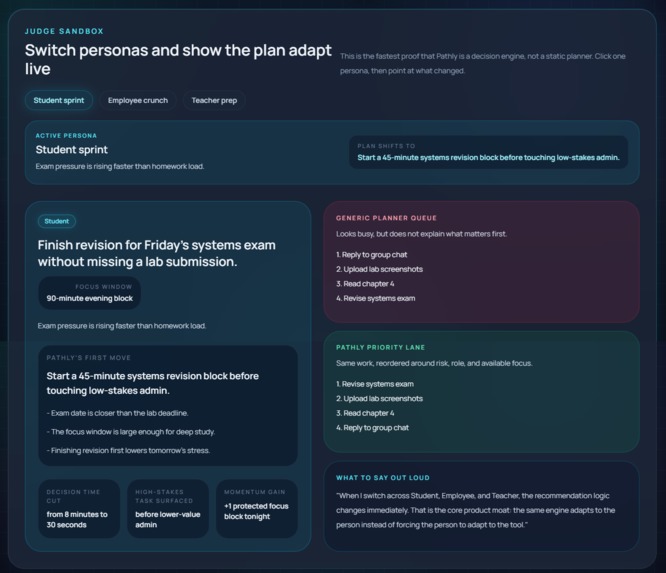
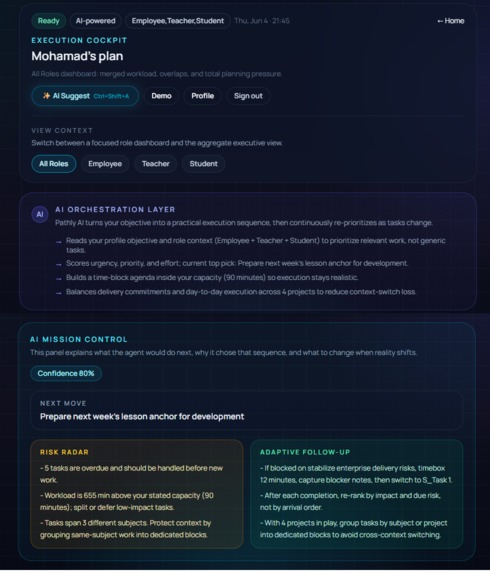
- Receive guidance on the best next move based on urgency, context, and role
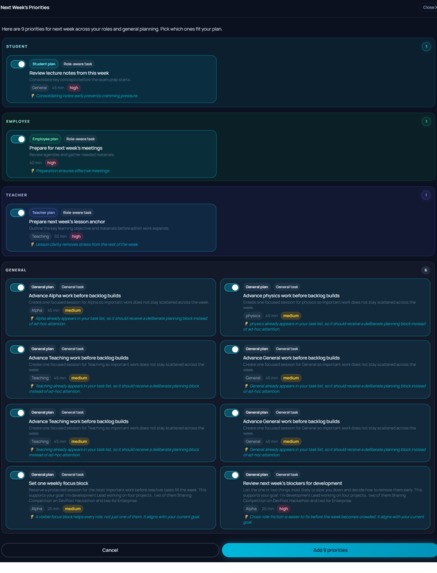
- Review AI-generated suggestions grouped by role
- Use a calendar and grouped task list that follow the same role-aware logic
Rather than acting like another flat task manager, Pathly works as a guide that turns multi-role overload into a clearer execution plan.
How we built it
We built Pathly around the idea that productivity should reflect how people actually live and work: across multiple roles, not inside one generic backlog.
The product begins with authentication and onboarding. After signing up, the user creates a shared profile and selects active roles such as Student, Employee, and Teacher. Those roles become the foundation for how Pathly structures planning across the product.
From there, we built a multi-role system with one base profile, multiple role profiles, and tasks that can be role-owned, shared, or general. This allowed us to support both focused role planning and an aggregated all-roles view without losing context.
We focused on building:
- A clean sign-up and onboarding flow
- One shared profile with multiple role-specific profile contexts
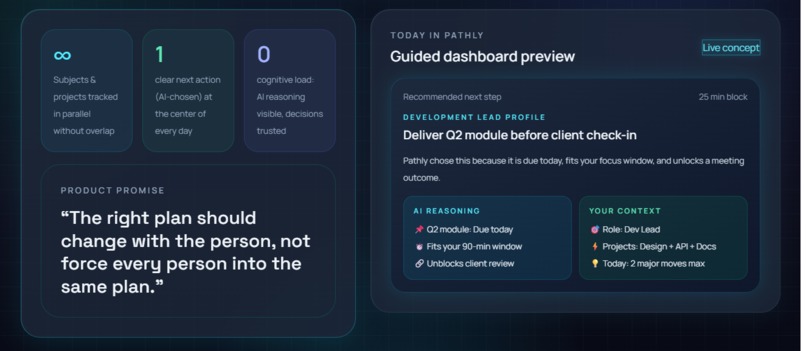
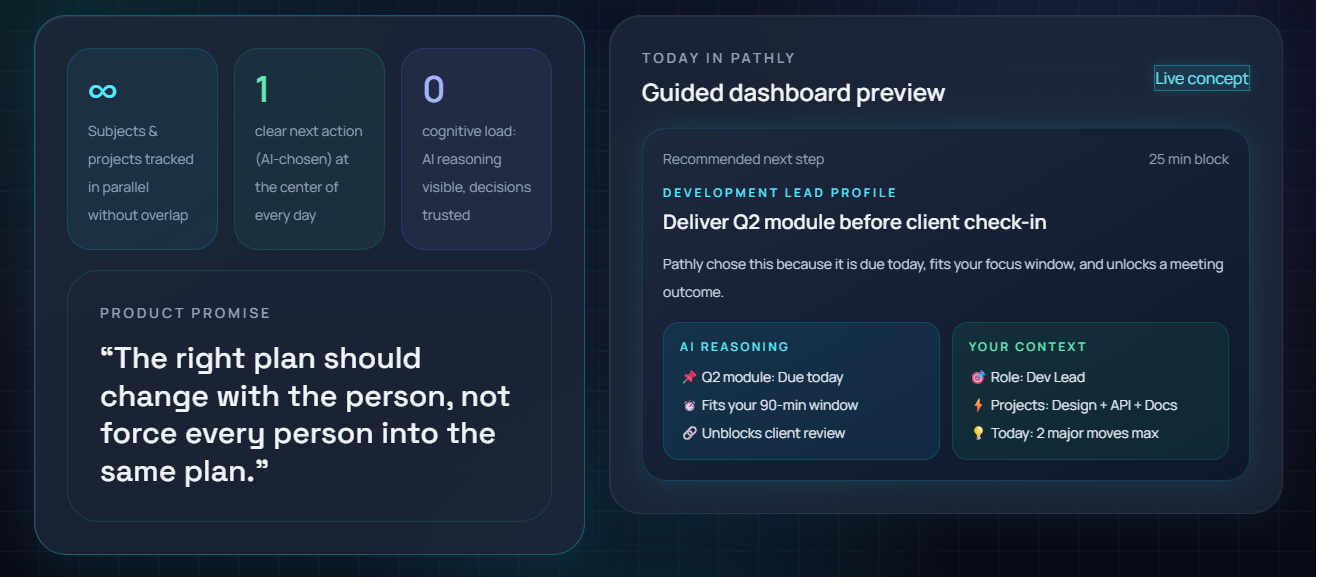
- A dashboard that recommends the next move and explains why it matters
- A role switcher for focused role mode and all-roles coordination
- AI suggestions grouped by role lane
- A task list and calendar that stay aligned with the same role model
We also paid close attention to the user experience so the product feels calm, intentional, and practical instead of overwhelming.
Challenges we ran into
One of the biggest challenges was avoiding a shallow version of personalization.
It is easy to label a product as personalized, but much harder to make that personalization meaningful. We had to move beyond a simple category label and build a structure where roles actually affected task ownership, planning context, recommendations, and the dashboard experience.
Another challenge was balancing focused planning with cross-role visibility. If the product only showed one role at a time, it would miss how real users coordinate across responsibilities. If it only showed everything at once, it would become noisy and generic. We solved that by supporting both focused role mode and an all-roles view.
We also had to stay disciplined on scope. Since this was built during a hackathon, we focused on building the strongest end-to-end experience around multi-role planning instead of trying to build every possible productivity feature.
Accomplishments that we're proud of
We are proud that Pathly became more than a generic planner.
What makes it strong is not just that it stores tasks, but that it preserves context. It recognizes that one person can operate in multiple roles and still needs one clear, practical next step.
We are especially proud of:
- Defining a clear product identity around multi-role planning
- Building one shared profile with role-specific planning contexts
- Designing a dashboard that recommends a next move instead of only listing tasks
- Creating a visible role switcher and all-roles planning model
- Keeping AI suggestions, task organization, and calendar views aligned with the same role system
- Turning a broad productivity idea into a focused and credible MVP
What we learned
This project reinforced that the hardest part of productivity is often not effort, but prioritization under competing demands.
We learned that users do not just need a place to store work. They need help understanding what matters now, especially when multiple roles compete for attention. We also learned that product framing matters a lot: moving from a generic planner idea to a multi-role execution system made the concept much clearer and much stronger.
On the product and technical side, we learned:
- How to model one user across multiple active roles
- How to keep role context visible without fragmenting the product
- How important it is for recommendations, tasks, and calendar views to share the same planning logic
- How much clarity and calm UX matter in productivity products
- How to keep an MVP focused while still feeling distinctive
What's next for Pathly
The next step for Pathly is to deepen the multi-role model and make the system even more useful in real daily execution.
We want to add:
- More supported role combinations such as freelancers, founders, parents, and job seekers
- Smarter recommendation logic based on real usage patterns
- Calendar integrations
- Recurring routines and habit support
- AI-assisted breakdown of larger goals into smaller actions
- Better weekly planning summaries and progress insights
- Stronger support for tradeoffs and overlaps across roles
Our long-term vision is for Pathly to become a personal execution companion that helps people navigate overlapping responsibilities with more clarity, less context switching, and better decisions about what to do next.
Built With
- api
- auth
- css
- next.js
- openai
- postgresql
- react
- supabase
- tailwind
- typescript


Log in or sign up for Devpost to join the conversation.