From Unexpected to Unstoppable: Building a Support System for Young Parents Pursuing Their Dreams
💡 What Inspired Us
It started with something close to home for Martin — his own sister-in-law.
She was 18. Newly pregnant. The father wasn't in the picture. And almost overnight, the conversation at her family table shifted from "which college are you applying to?" to "I guess college isn't happening now."
That hit Martin hard — not just as a moment of sadness, but as a signal of something systemic and unfair. The idea that an unexpected pregnancy should be treated as a full stop on someone's future: on their education, their career, their dreams. That one life event, already enormous and challenging on its own, should also cost a person everything they were building toward.
He brought it to the team. And we couldn't let it go.
Because the reality is: early parenthood doesn't erase ambition. It doesn't cancel out the desire to become a nurse, an engineer, a teacher, an entrepreneur. It just makes the path harder — and the support system thinner. Young parents, especially those without a co-parent, face a brutal triathlon of demands:
- Navigating college applications or enrollment while pregnant or postpartum
- Managing finances on a single income with new childcare costs
- Maintaining physical and mental health without much margin for error
And most of them are doing it without anyone who's designed tools specifically for them.
That's what we wanted to change.
🔨 What We Built
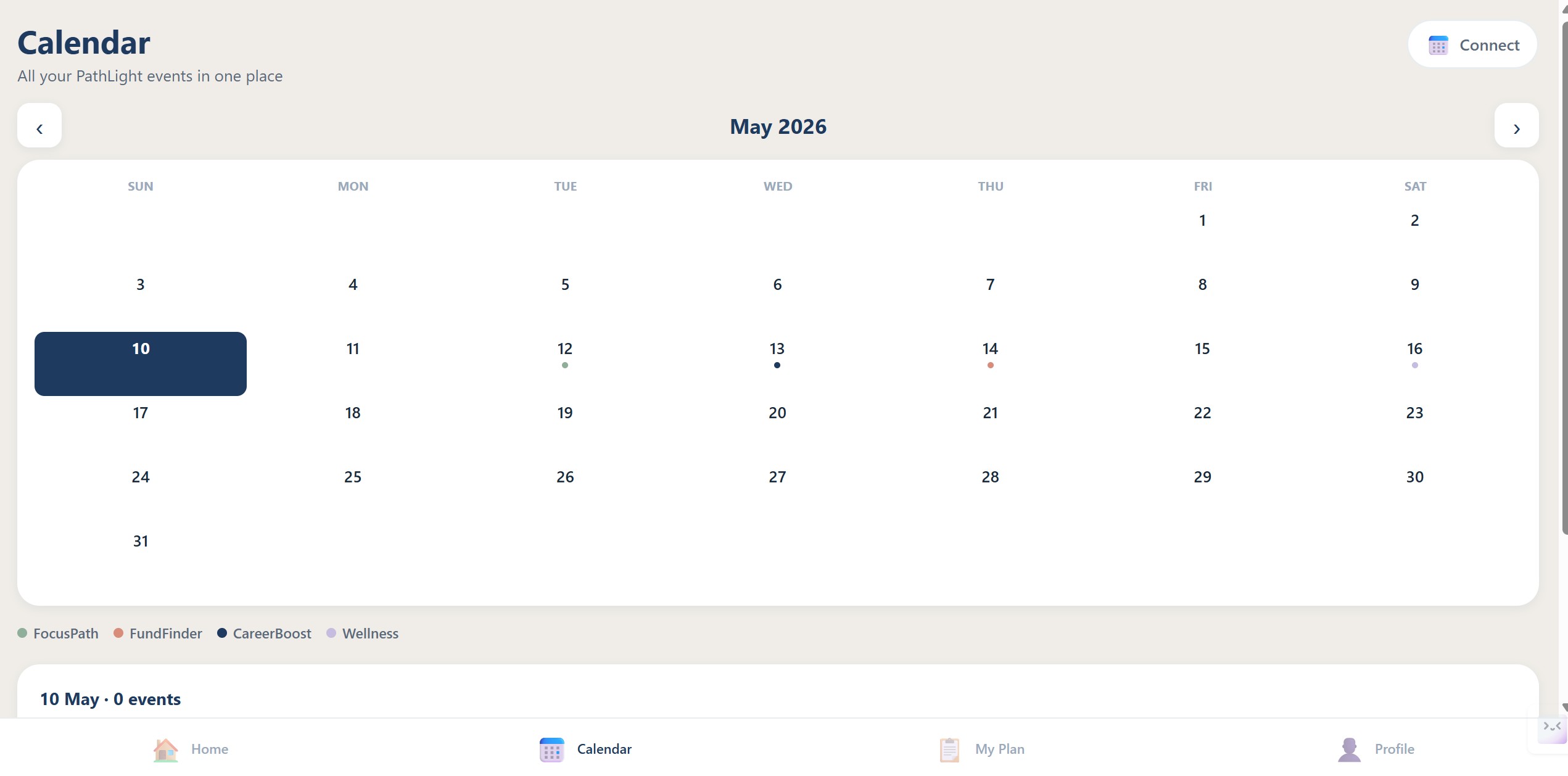
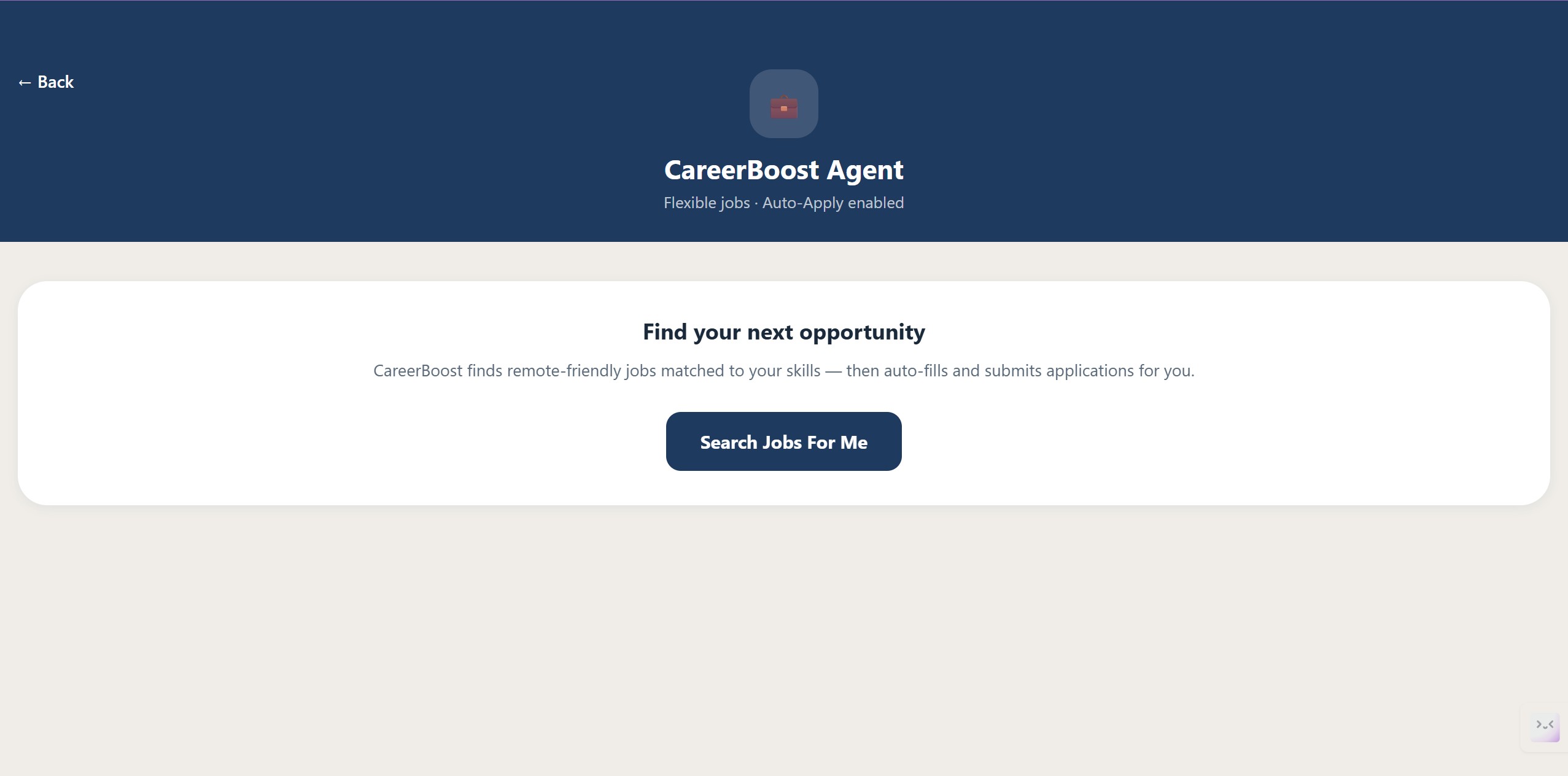
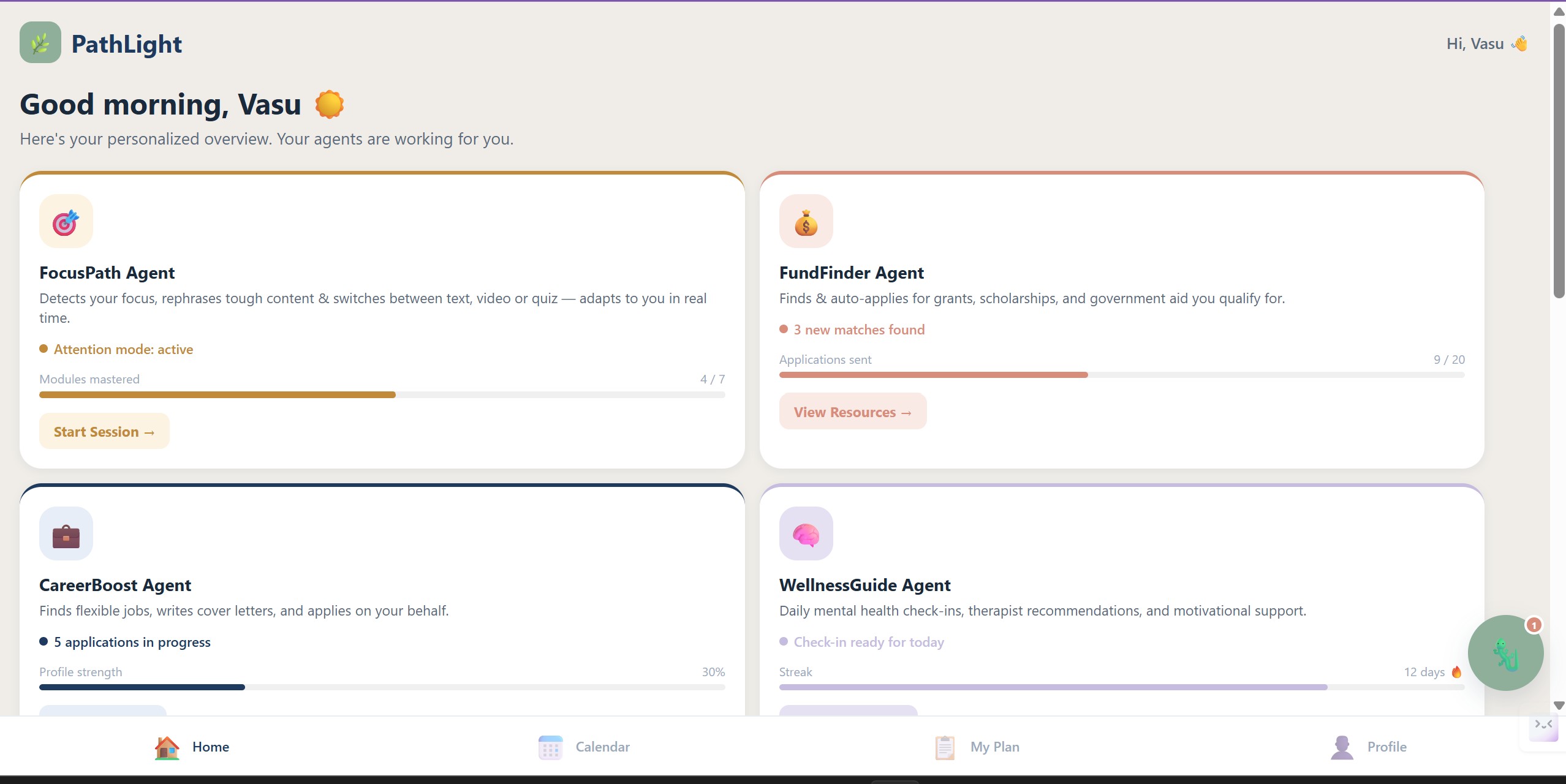
We built an AI-powered platform for young parents (ages 16–24) who are pursuing or want to pursue higher education and a career — without giving up either.
The platform brings together three core pillars into one cohesive experience:
1. Education Navigation
College applications are confusing for any 18-year-old. They're nearly impossible when you're also figuring out healthcare, childcare, and housing. Our system helps users:
- Find colleges and programs with strong parenting student support (on-campus childcare, flexible scheduling, family housing)
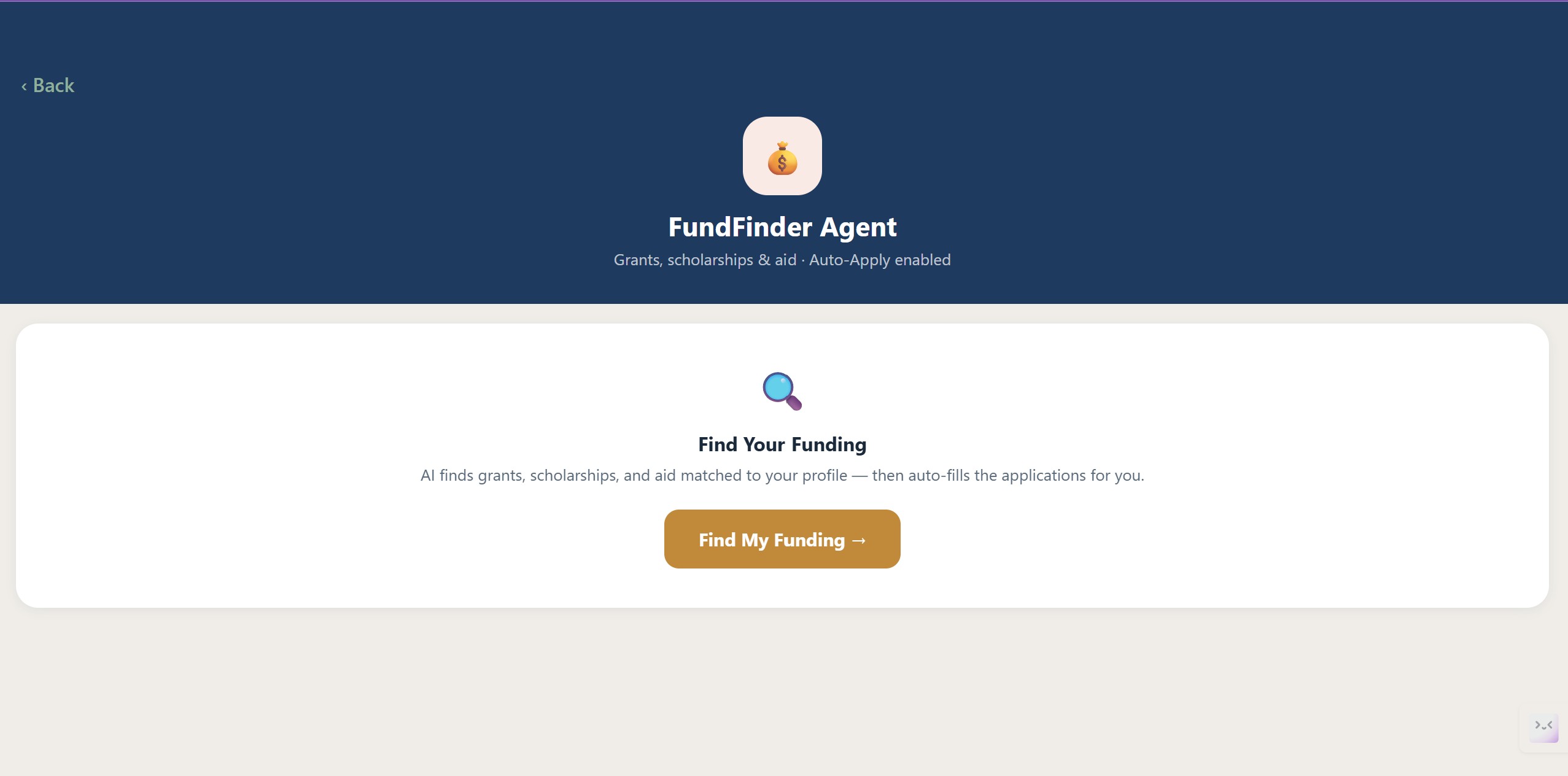
- Understand and apply for scholarships specifically available to student parents
- Navigate FAFSA implications for single-parent households
Using scraped and structured data from institutional sources, we built a knowledge base that an autonomous agent can query on behalf of the user in natural language — no more hunting through 12 different registrar pages.
2. Financial Planning
The math of early parenthood is genuinely daunting. Consider a simplified model of monthly surplus:
$$ S = I - (H + C + F + M + E) $$
Where:
- $S$ = monthly surplus
- $I$ = total income (wages + benefits + aid)
- $H$ = housing cost
- $C$ = childcare cost
- $F$ = food & essentials
- $M$ = medical/insurance costs
- $E$ = education-related expenses
Most financial tools assume a stable adult income and treat childcare as an edge case. Ours treats childcare as a central variable and helps users model realistic budgets, find local and federal benefit programs they qualify for (WIC, SNAP, CCAP, Pell Grants), and plan semester by semester.
3. Health & Wellness Guidance
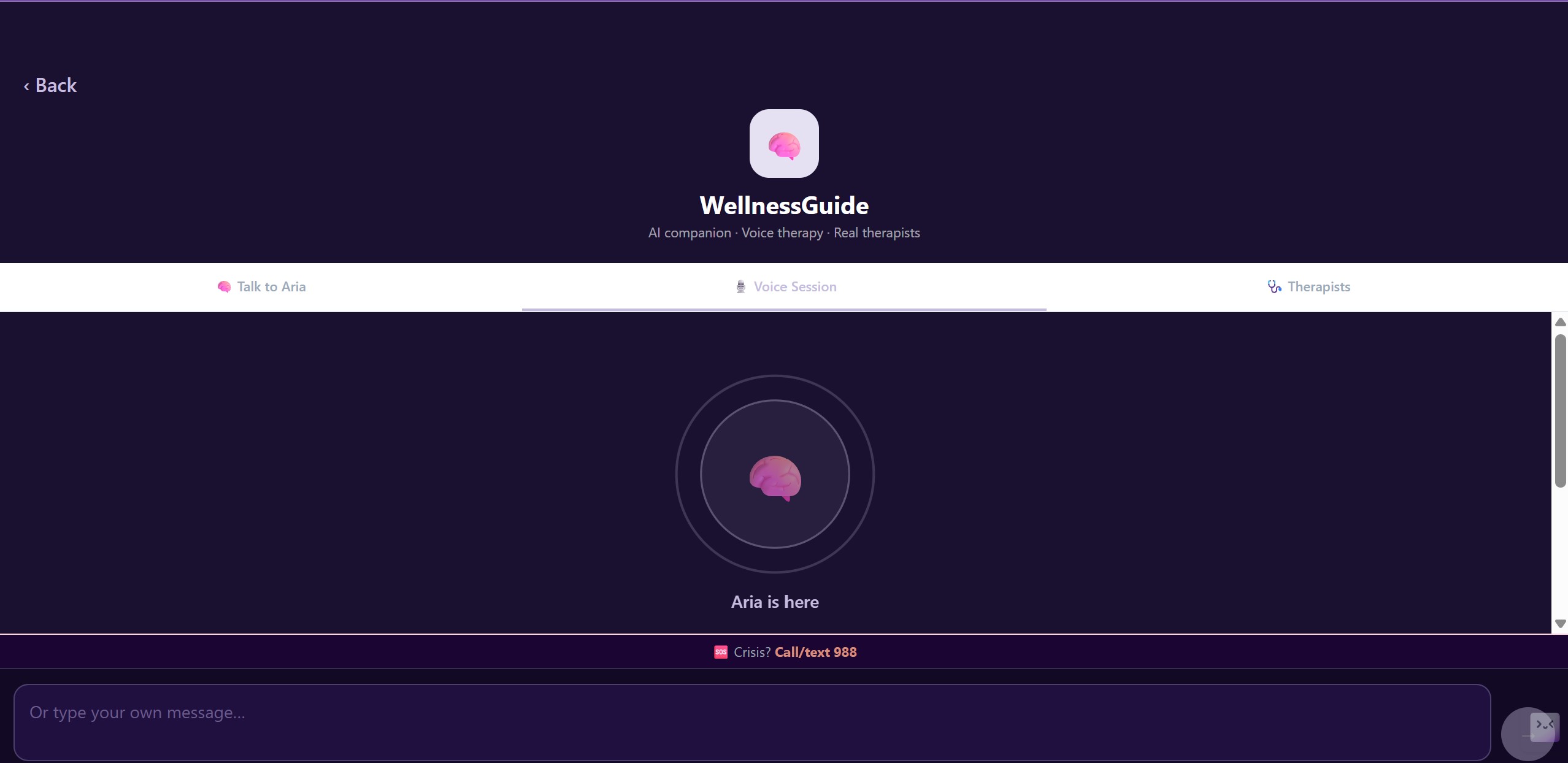
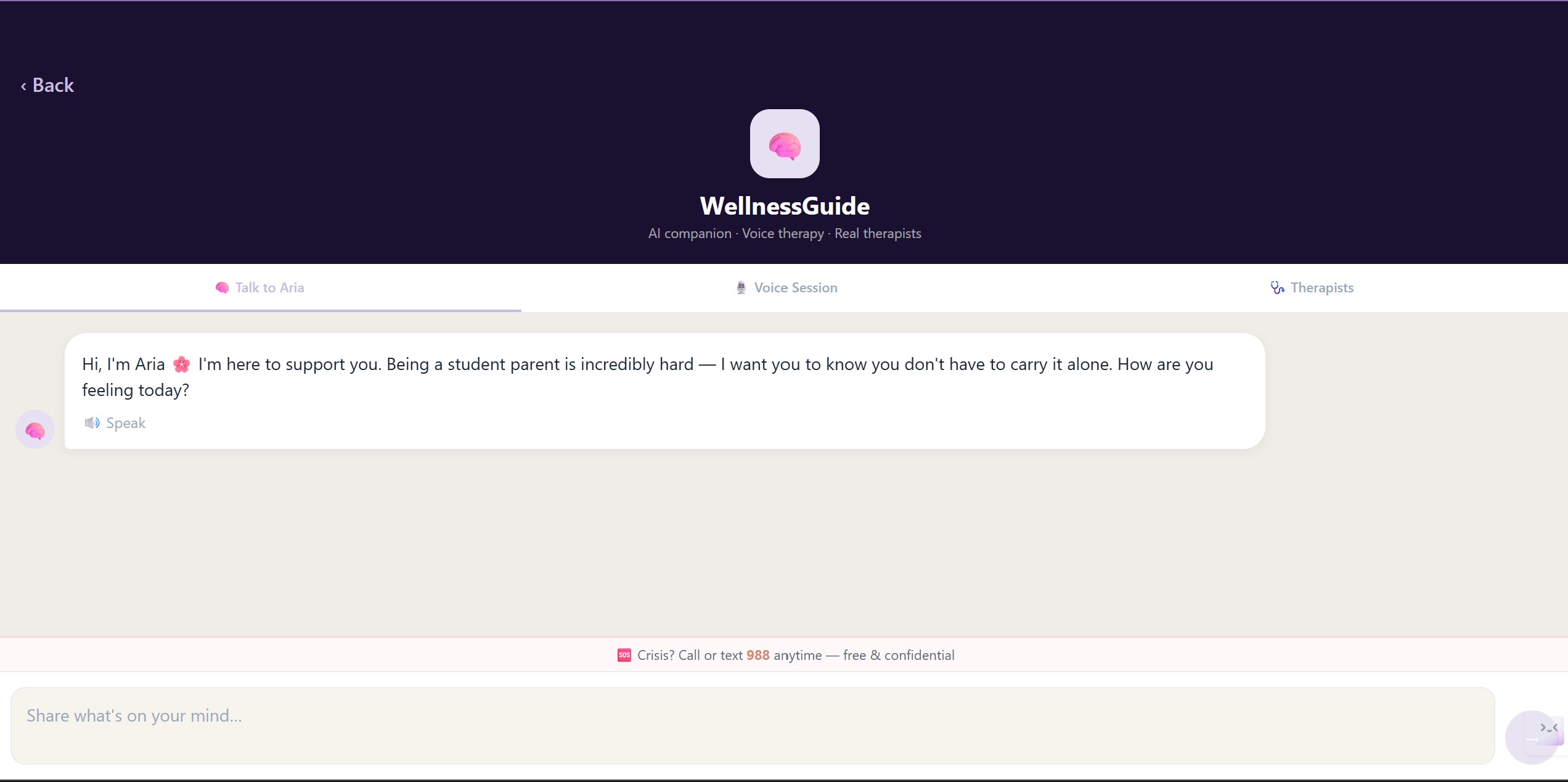
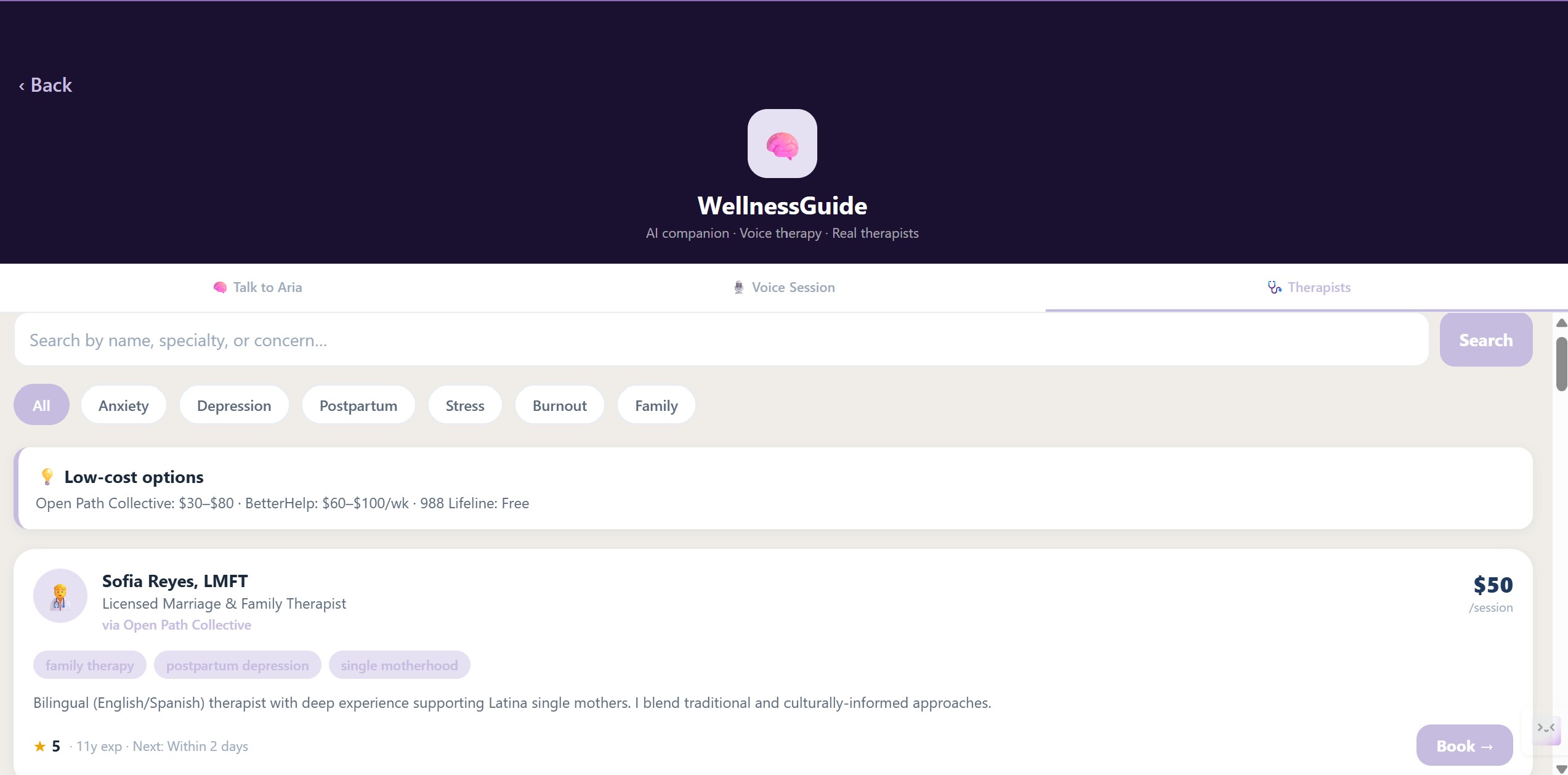
Postpartum health, prenatal care access, mental health under stress — these aren't optional concerns. We integrated a health module that helps users:
- Understand what prenatal and postnatal care they're entitled to under Medicaid expansion
- Find low-cost or free mental health resources for perinatal mood disorders
- Set realistic wellness goals that account for a baby's sleep schedule (because 10,000 steps while running on 4 hours is different math)
⚙️ How We Built It
Our stack centered on an agentic AI backbone with specialized tools for each domain.
Autonomous Agent Architecture
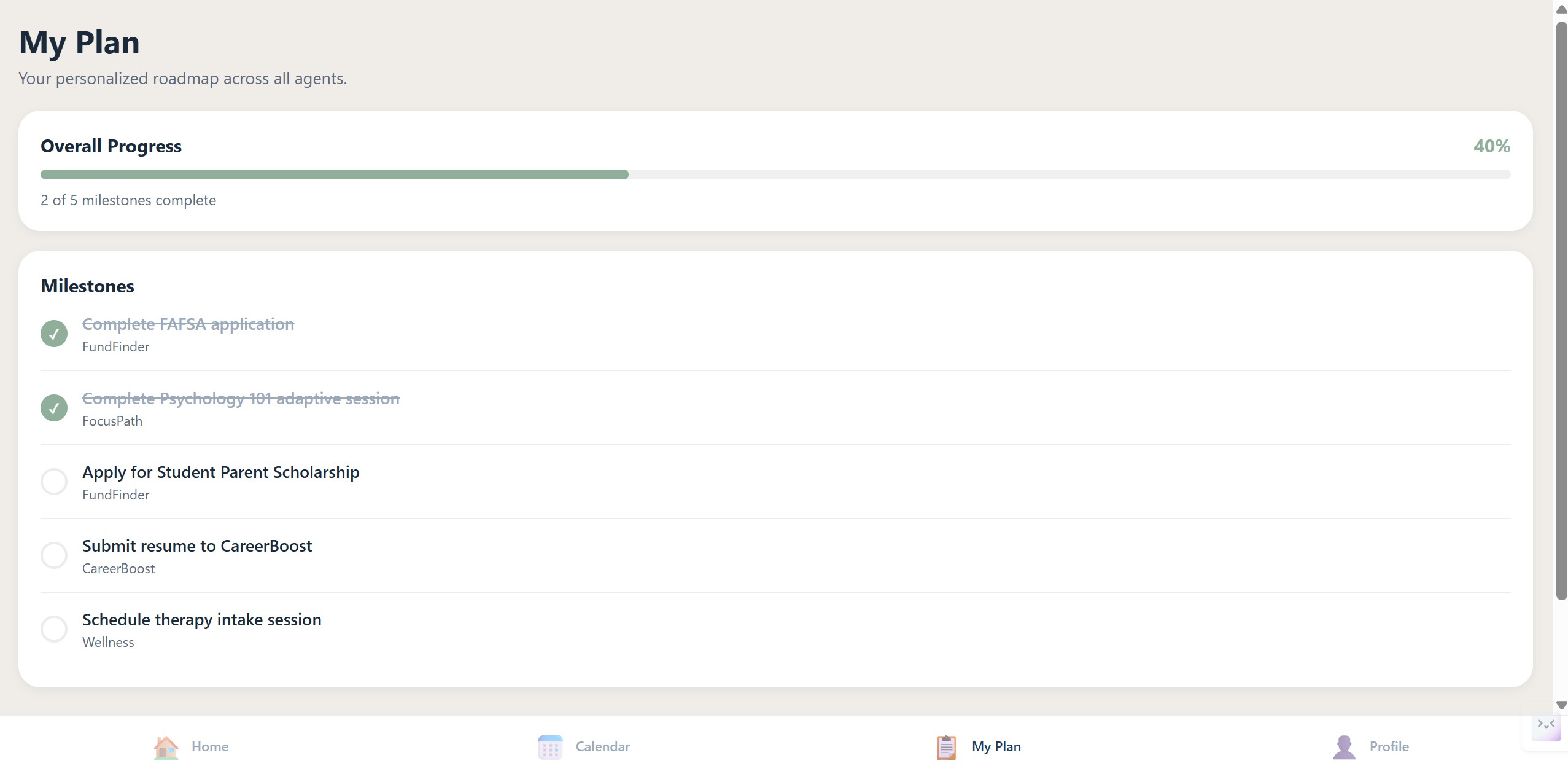
We designed a domain-specific autonomous agent that handles multi-step workflows end-to-end. When a user asks "What scholarships can I apply for as a pregnant college freshman in California?", the agent doesn't just return a list — it:
- Identifies the user's state, enrollment status, and timeline
- Queries our scholarship database (scraped + structured)
- Cross-references eligibility requirements against the user's profile
- Drafts a prioritized action plan with deadlines
The agent uses a tool-calling loop pattern:
$$ \text{Agent Loop} = \bigcup_{i=1}^{n} \left( \text{Plan}_i \rightarrow \text{Tool}_i \rightarrow \text{Observe}_i \right) \rightarrow \text{Final Response} $$
Each iteration tightens the answer until it's specific and actionable, not generic.
Faster Data Scraping
One of our key technical challenges was data freshness. College policy pages, scholarship deadlines, and benefit program eligibility change frequently. We moved from sequential scraping to parallelized async scraping with caching layers:
- Async fetch pools reduced scrape time by roughly 4×
- A TTL-based cache (time-to-live keyed to source update frequency) meant stable data (e.g., degree program info) refreshed weekly, while volatile data (deadlines, aid windows) refreshed daily
- We normalized scraped HTML into structured JSON schemas that the agent could reliably query
🧗 Challenges We Faced
1. Narrowing the Scope Without Losing the Person
This was the hardest challenge — and the most human one.
The problem space is enormous. Young parents face housing instability, legal complexity, relationship strain, career pivots, childcare deserts, postpartum depression, immigration status complications... the list goes on. Every feature we considered felt important because it is important to someone.
But we learned quickly that trying to do everything means doing nothing well. Our first prototype was overwhelming — too many pathways, too much information, not enough clarity on what to do next.
2. Building the Autonomous Agent for Specific Workflows
General-purpose AI agents are impressive. Reliable, narrow agents are hard.
We needed our agent to handle a specific set of workflows without hallucinating scholarship deadlines, inventing eligibility criteria, or giving health advice that should come from a doctor. That meant:
- Constraining tool access so the agent could only surface validated data
- Adding citation layers so every claim was traceable to a source
- Building fallback flows for when the agent couldn't confidently answer — gracefully routing to a human resource or official government link instead of guessing
Getting the agent to know what it doesn't know — and say so — took more iteration than almost anything else we built.
3. Making Scraping Fast Enough to Matter
Early on, a full data refresh took over 40 minutes. That's not a tool — that's a liability. Users needed near-real-time data on aid deadlines and program openings.
We profiled our bottlenecks, moved to async concurrency, implemented domain-specific rate limiting to avoid blocks, and restructured our data model to cache at the right granularity. By the end, refresh cycles for most critical data ran under 8 minutes — a roughly $5\times$ improvement.
📚 What We Learned
Building this taught us things that went beyond the technical:
Empathy is a design constraint. The people we're building for are exhausted, often scared, and have been let down by systems before. Every extra click, every confusing label, every moment of friction is a reason to close the tab. Clarity is kindness.
Scope discipline is a form of respect. Saying "we won't build that yet" is not the same as saying "that doesn't matter." It means we're committed to doing this part right — for the person who needs it today.
Autonomous agents need guardrails, not just capabilities. Power without constraint in a high-stakes domain (health, finance, education access) is dangerous. The agent is most useful when it knows its lane and stays in it.
Data is only as useful as it is current. A scholarship with a passed deadline is worse than no scholarship at all.
Built With
- anthropic
- applecalendar
- asyncstorage
- baai/bge-small-en-v1.5
- bcrypt
- claudeapi
- customscrapers
- docker
- expo.io
- fastembed
- googlecalendarapi
- googleoauth2.0
- httpx
- mongodb
- numpy
- playwright
- pydantic
- python-+-fastapi-pyjwt-(custom-auth
- query
- railway
- react-native
- tanstack
- typescript
- v2
- zustand

Log in or sign up for Devpost to join the conversation.