PathLess — College Major & Career Discovery Guide
1. What It Does
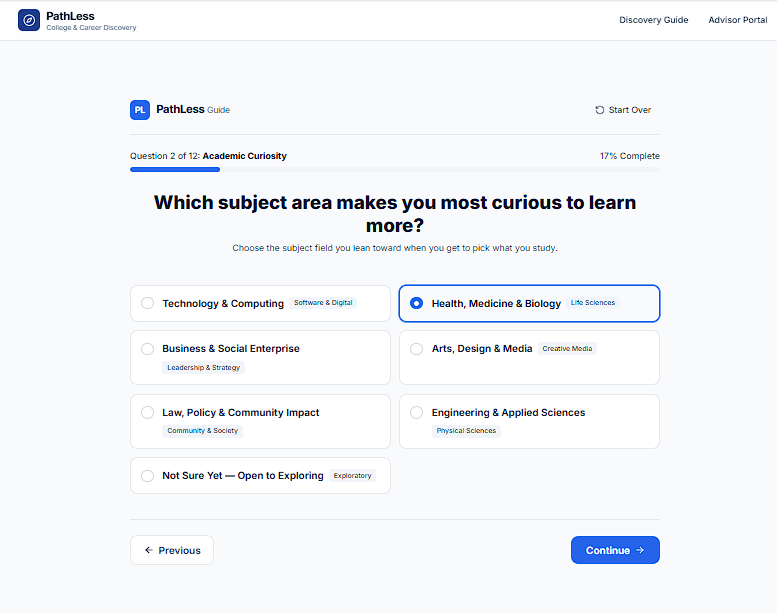
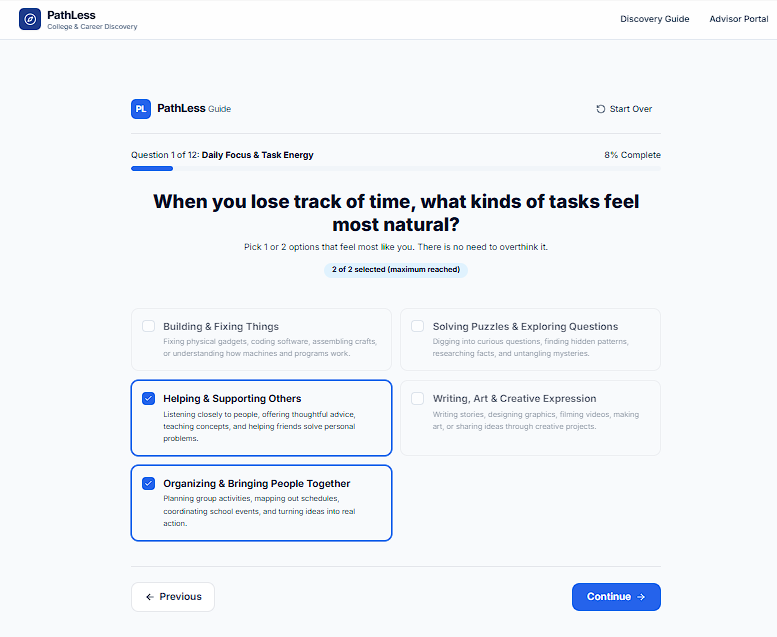
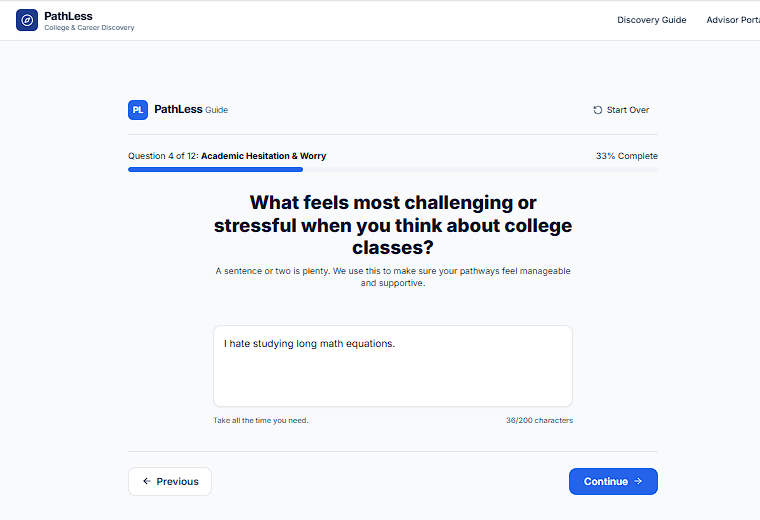
PathLess is a supportive, privacy-first career and higher education discovery application designed for high school upperclassmen (Grades 10–12). Instead of generating overwhelming, unvetted lists or demanding high-stakes psychometric exams, PathLess guides students through a calm 12-question intake experience.
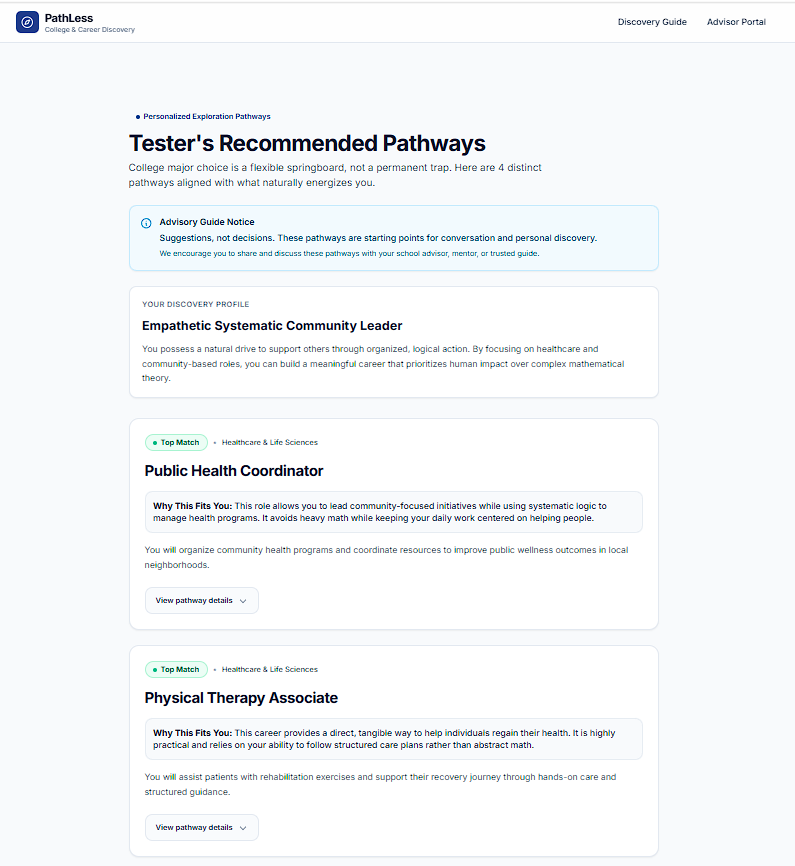
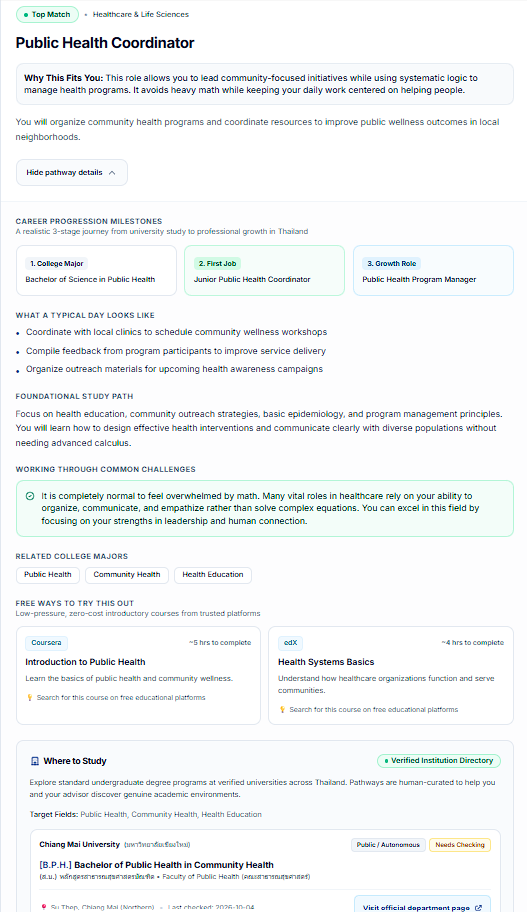
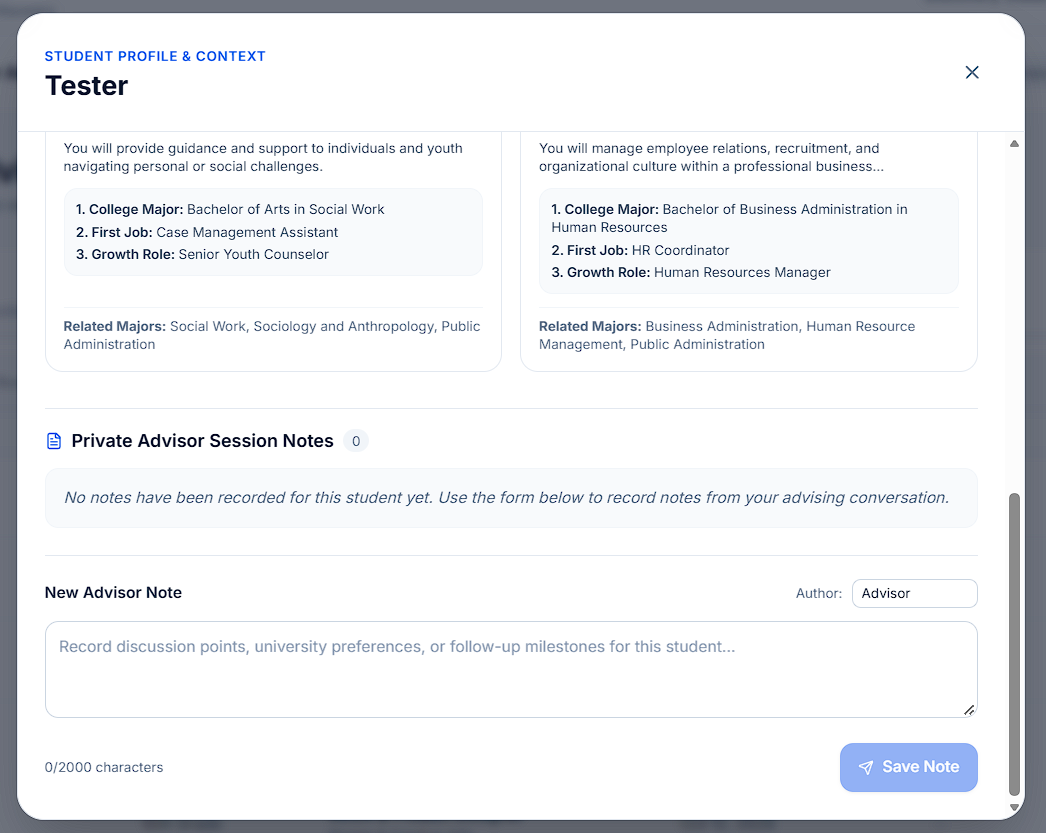
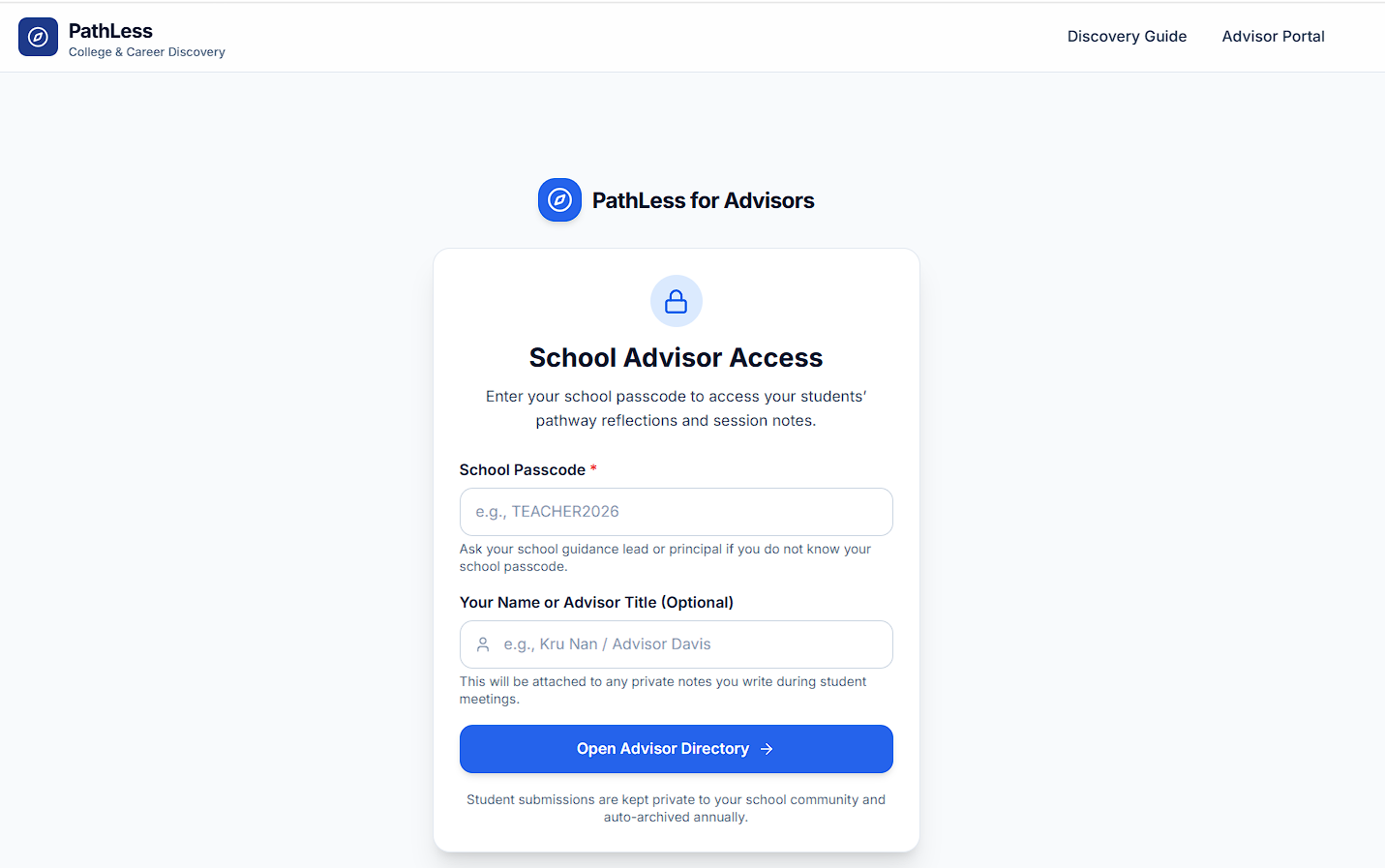
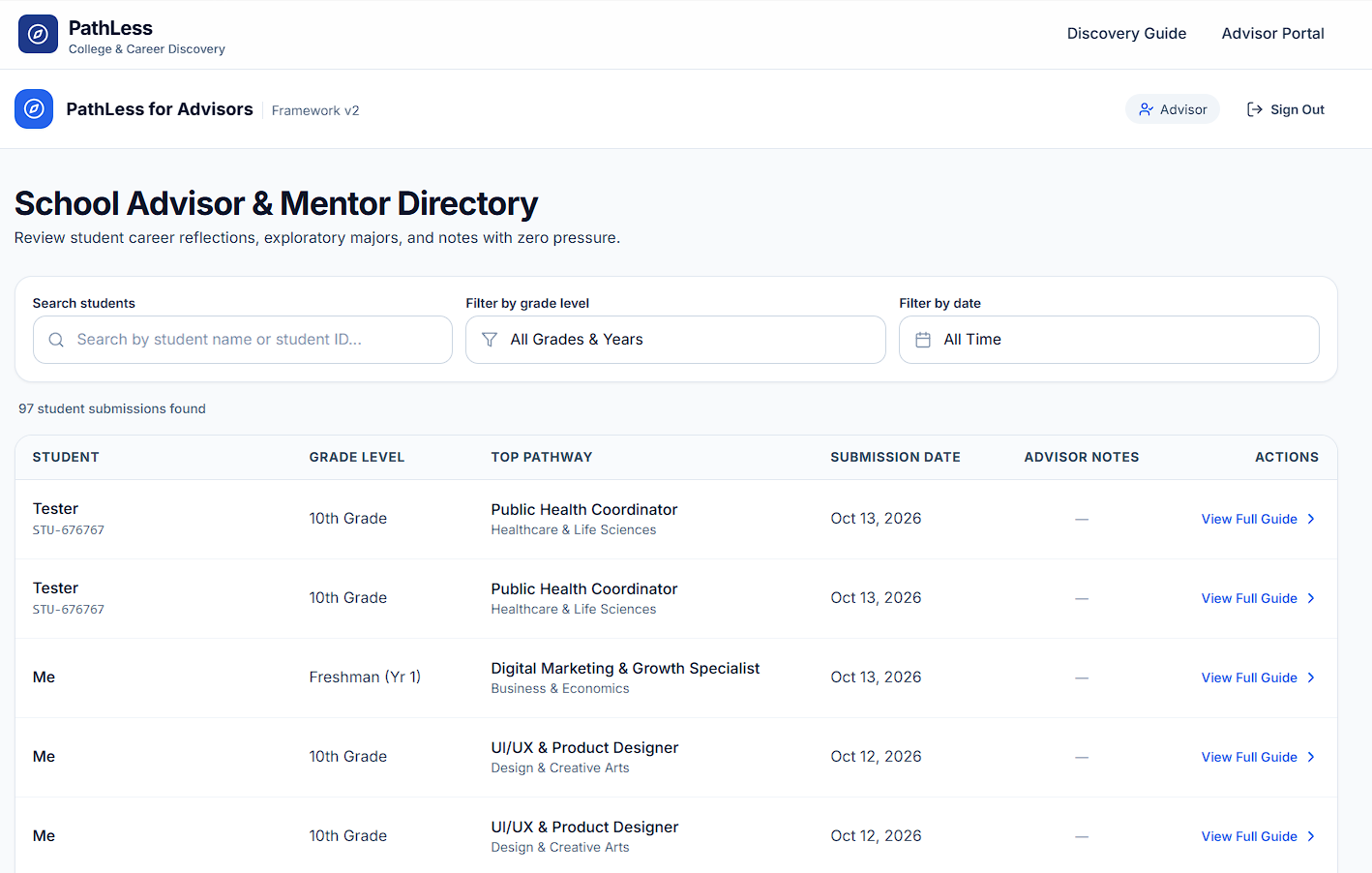
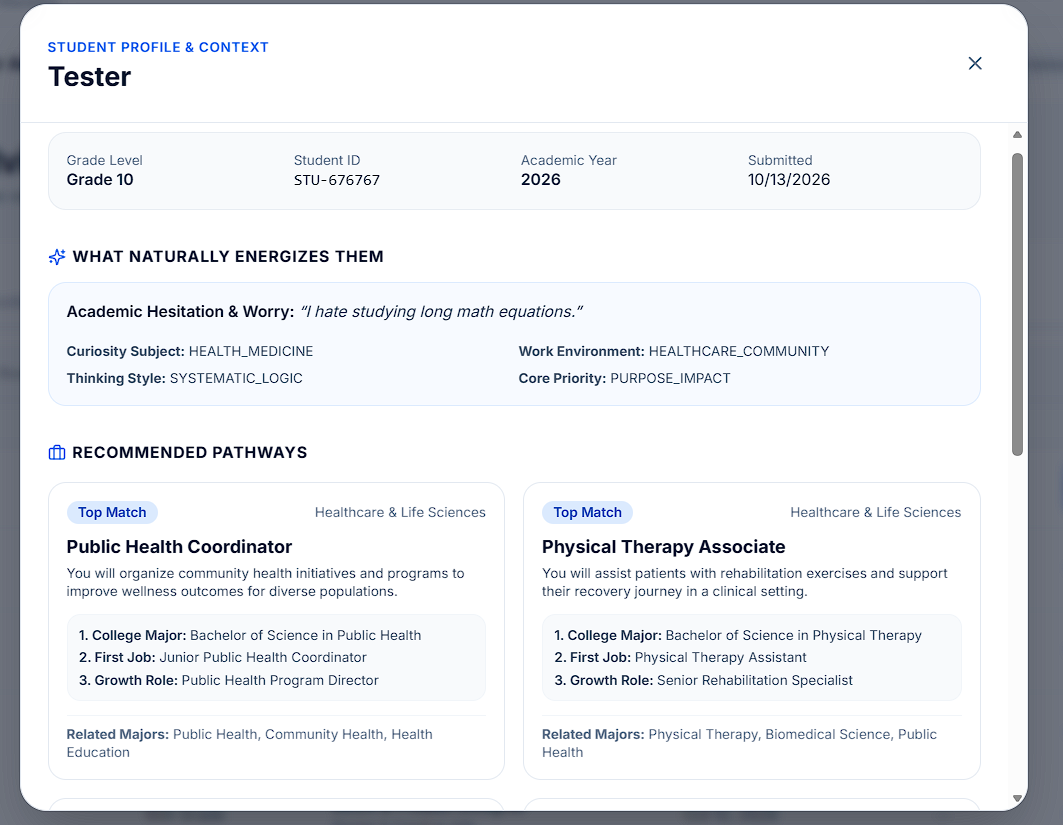
It synthesizes their answers into exactly four grounded career pathways—two direct matches and two exploratory pivots—drawn exclusively from a curated occupational catalog. Each card provides a realistic 3-stage milestone progression (high school preparation, higher education, and early-career realities) paired with verified regional university faculties and an actionable admission verification checklist. Guidance counselors and teachers can review student submissions and maintain private session notes via a lightweight, passcode-gated advisor portal.
2. Who It's For
- Upper-Secondary Students (Grades 10–12): Teens experiencing acute academic anxiety and decision paralysis around university majors and career pathways.
- School Advisors & Mentors: High school educators who need structured, actionable student context for career counseling sessions without managing complex accounts or administrative overhead.
3. Why It Matters & Potential Impact
Traditional career tools often heighten anxiety: chatbots invent non-existent degree programs, psychometric tests assign intimidating percentage scores, and admissions forums circulate outdated entrance criteria.
PathLess takes a fundamentally different approach:
- "Suggestions, Not Decisions": Replaces clinical ratings with qualitative badges ("Top Match", "Explore Also") and clear disclaimers that AI suggestions are starting points for conversation, not life sentences.
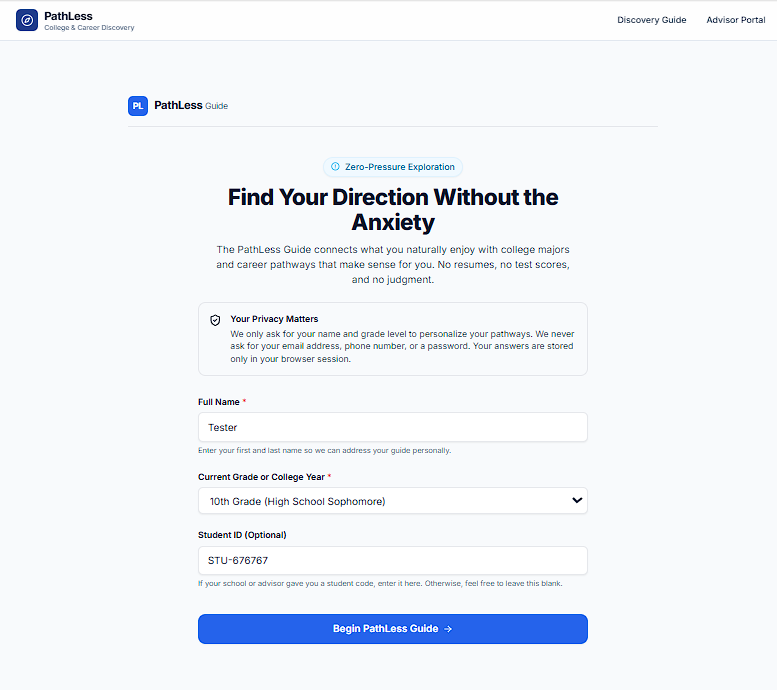
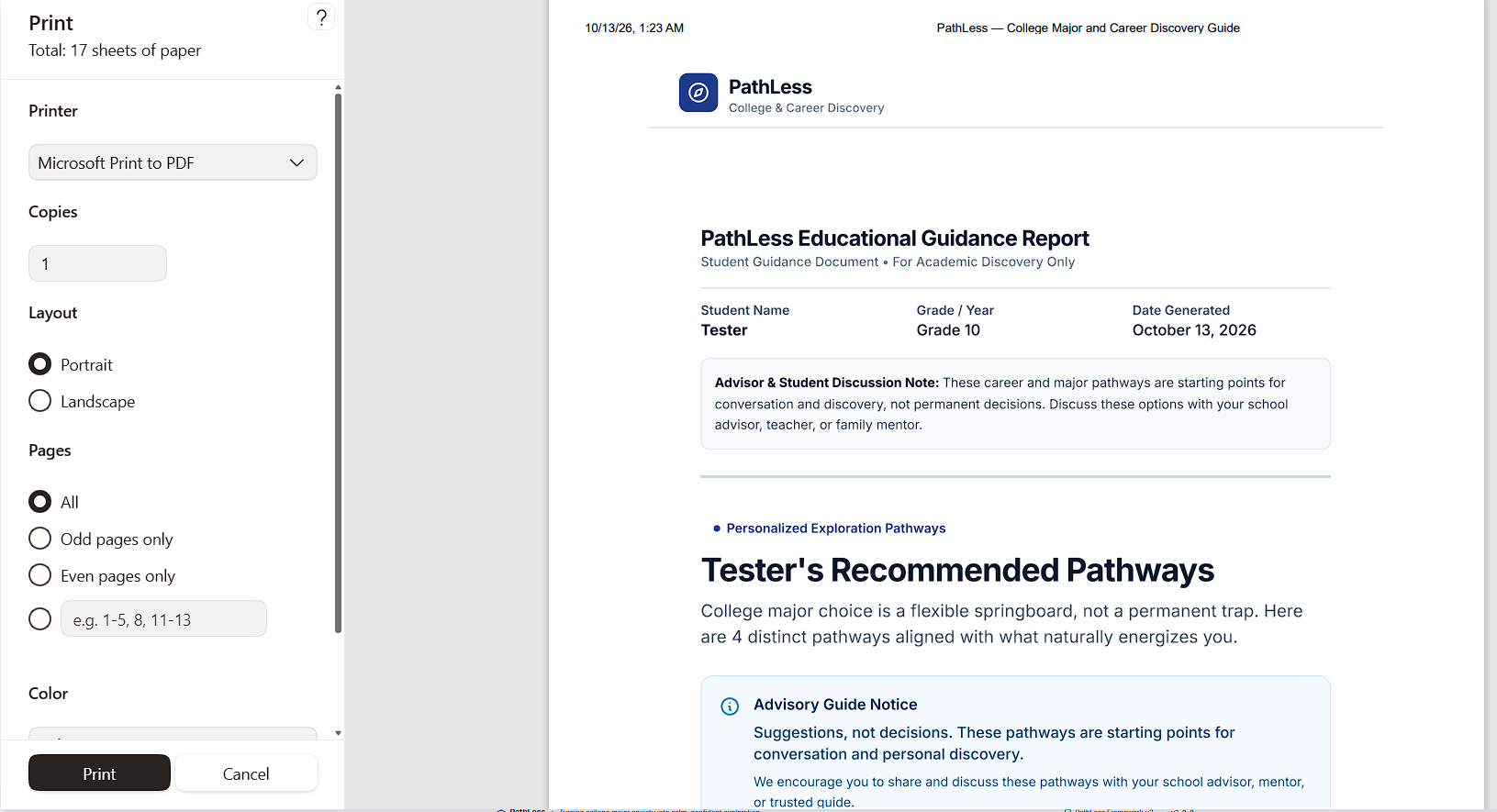
- Zero PII & Child Privacy Safeguards: Collects zero emails, passwords, phone numbers, or academic GPAs. Student IDs are completely optional and automatically excluded from printed PDF summaries.
- Grounded Local Realities: Integrates curated Thai flagship university programs with official faculty portal links, helping students verify entrance criteria directly at the source.
- School Pilot Feedback: Field-tested with high school students who noted that having exactly four structured choices and a printable summary significantly reduced their anxiety compared to open-ended search tools.
4. How We Built It
- Frontend & Architecture: Next.js 14 App Router, TypeScript, Tailwind CSS, Lucide icons, accessible ARIA live regions, and print-dedicated stylesheets.
- AI Synthesis & Safeguards: Google Gemini 2.5 Flash via
@google/genaipaired with a strict catalog whitelist matcher. Delimiter-isolated prompt sanitization defends against injection attacks, while an offline heuristic engine provides instantaneous zero-cost fallback if quotas are reached. - Data & Persistence: Prisma with serverless PostgreSQL, accompanied by an in-memory cross-request sync for zero-database deployments and an automated annual retention purge routine.
- Testing & Quality: Multi-stage Docker containerization, 340+ unit/integration tests, and Playwright end-to-end test suites verifying accessibility (WCAG 2.1 AA) and sliding-window rate limiting.
5. What We Learned
Planning before building—using structured contracts, schema definitions, and persona boundaries—is the single most critical factor in developing ethical AI applications for youth. Designing for anxious students taught us to ruthlessly cut developer jargon, eliminate intimidating fit scores, and treat AI as a grounding collaborator rather than an infallible authority.
Built With
- ai
- api
- development
- fullstack

Log in or sign up for Devpost to join the conversation.