-
-
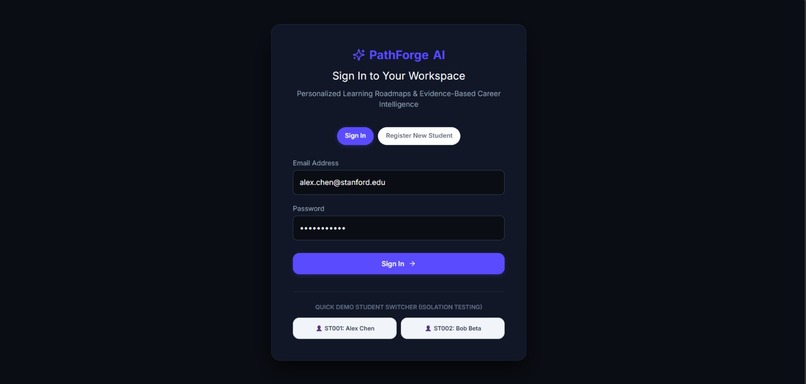
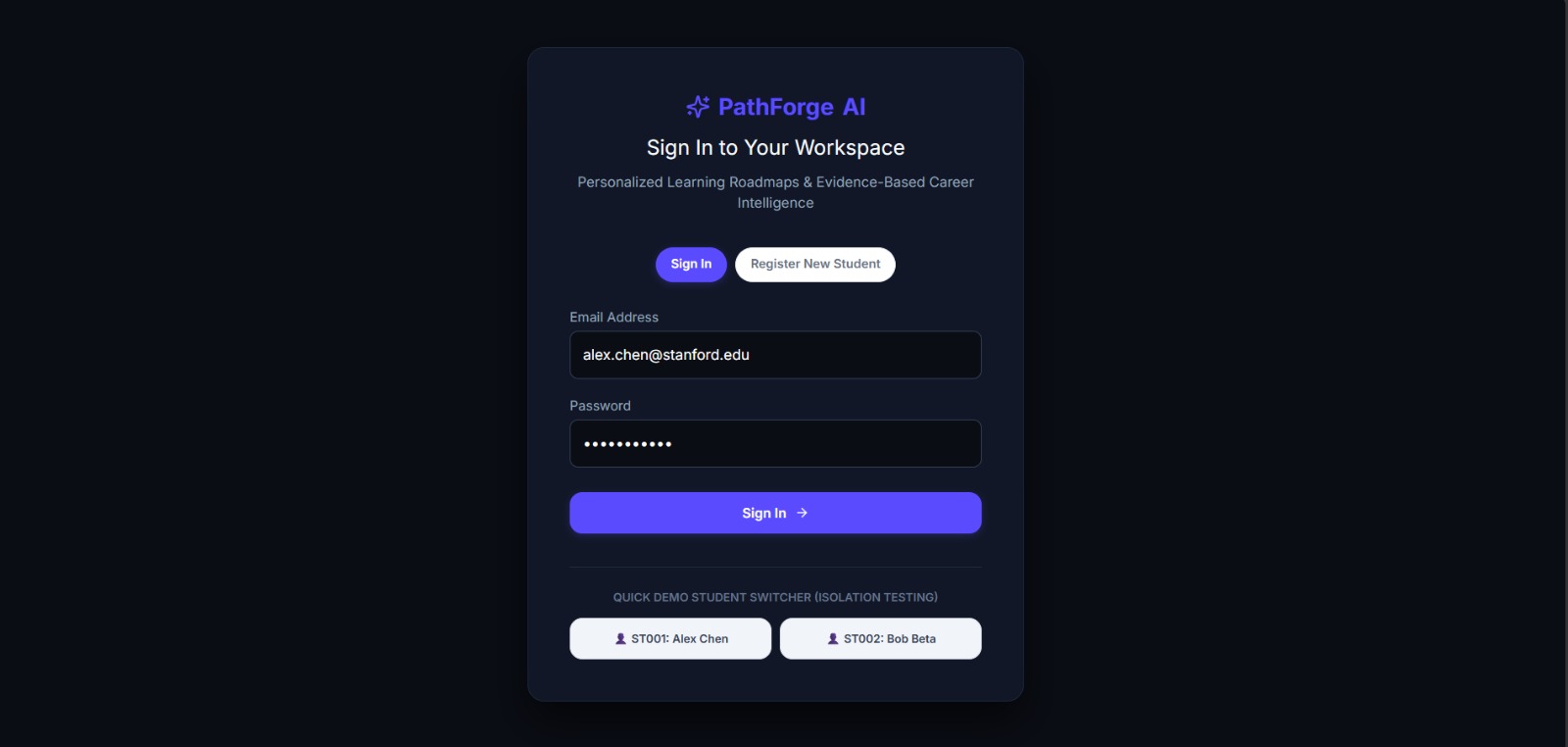
Login page
-
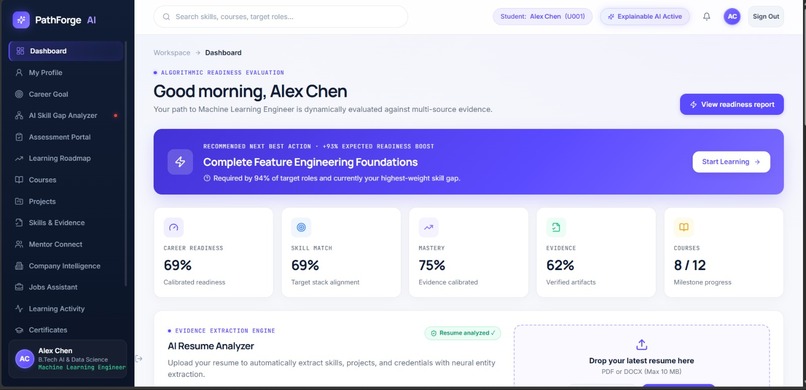
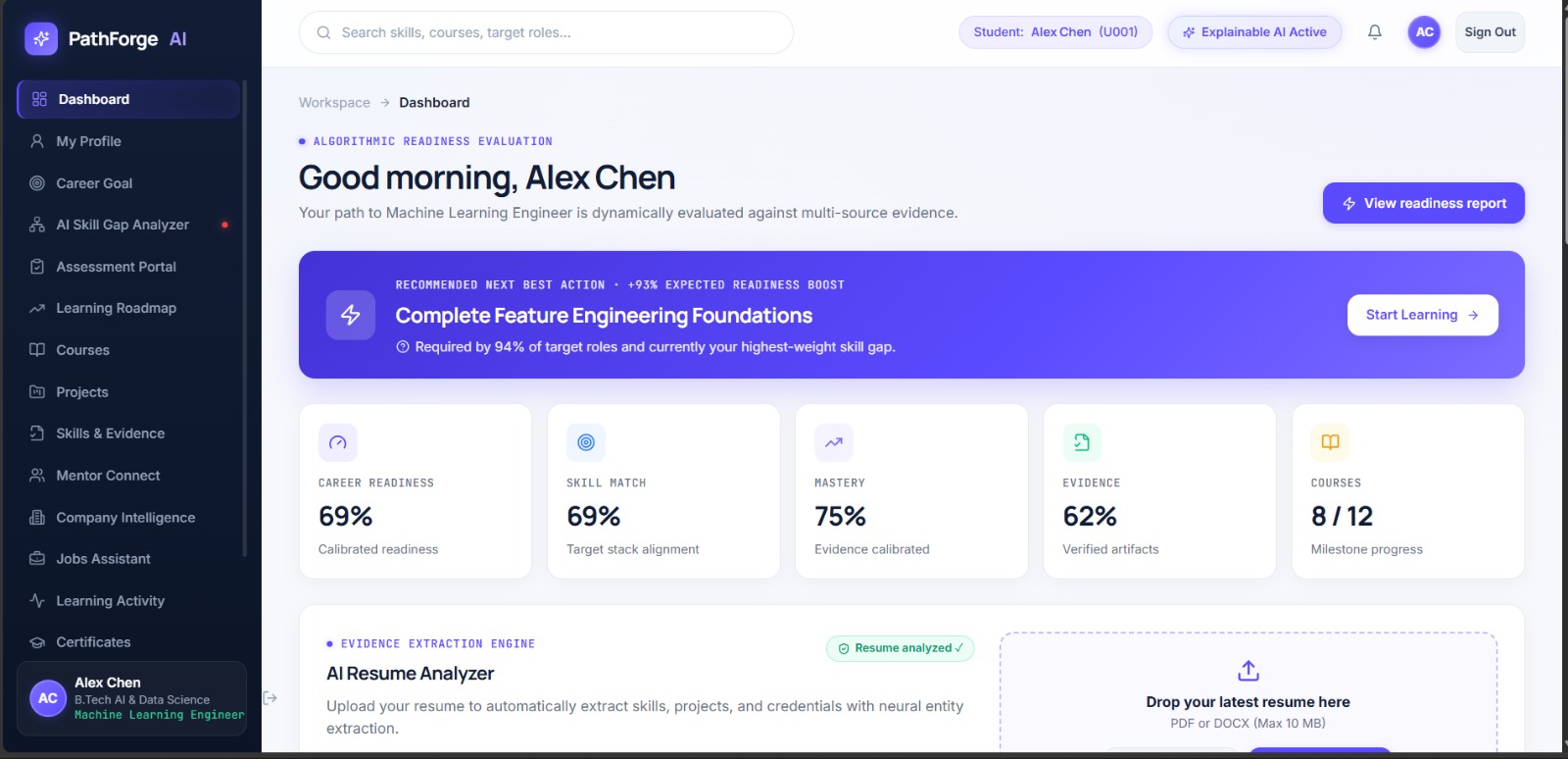
Dashboard
-
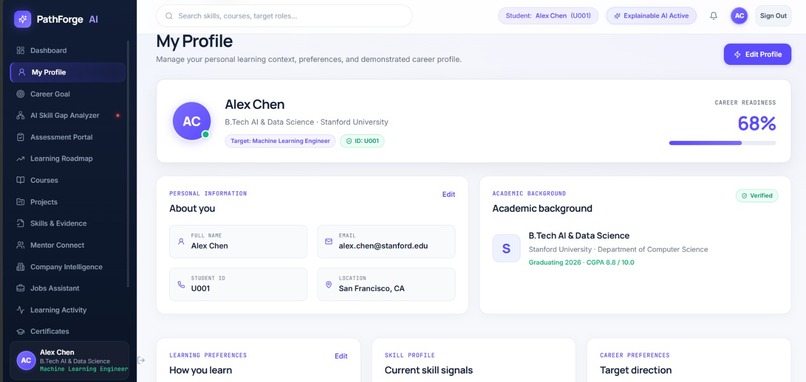
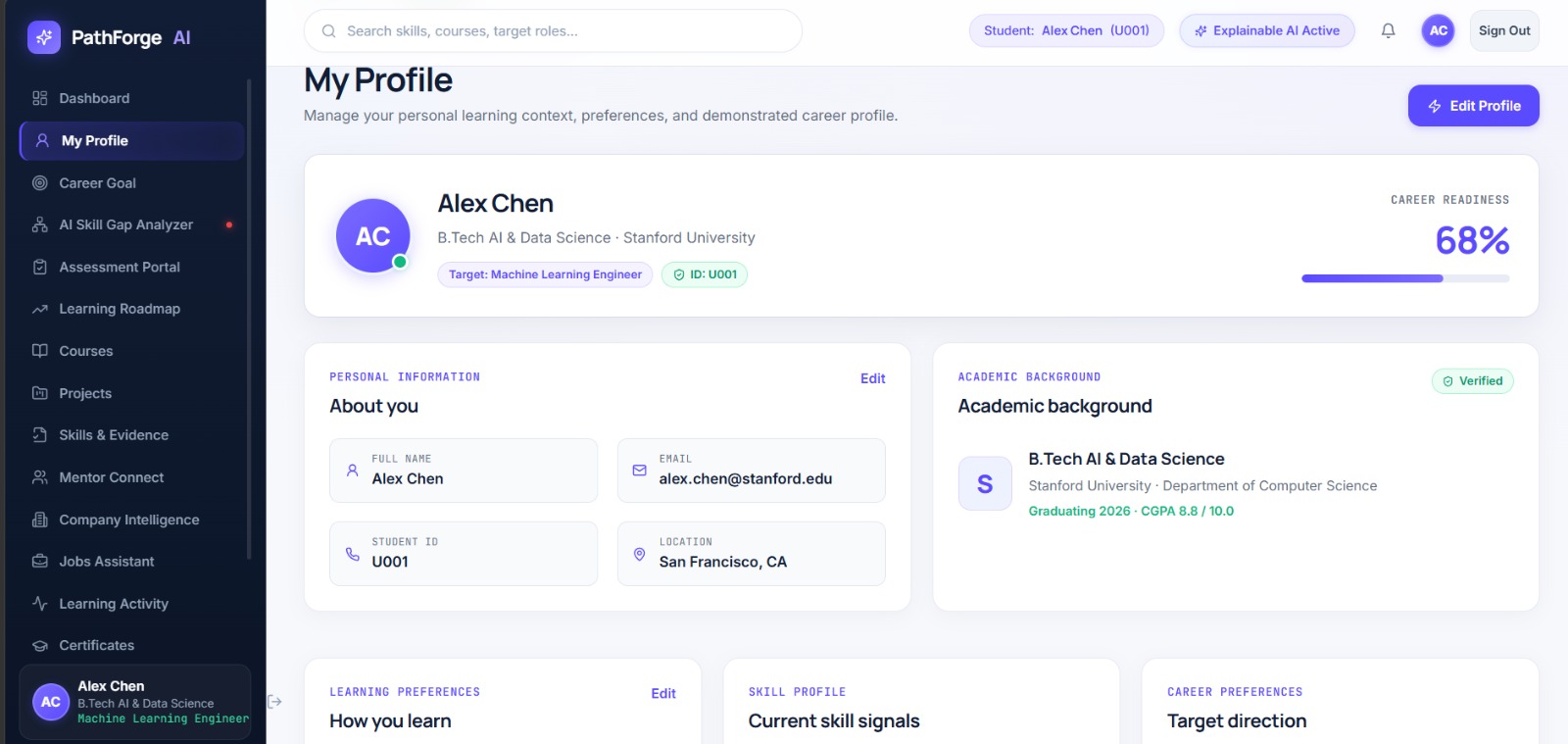
My Profile
-
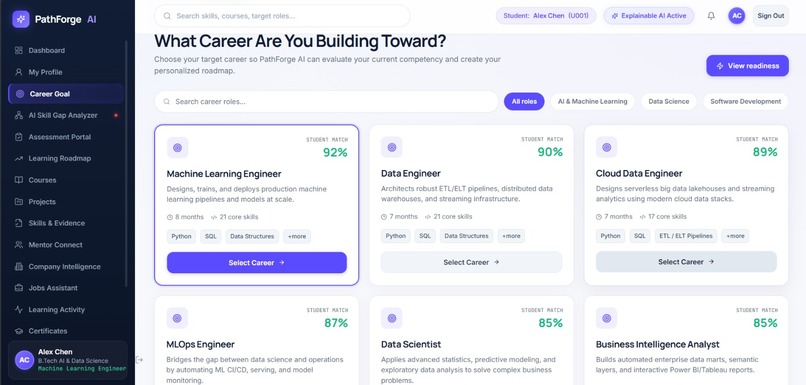
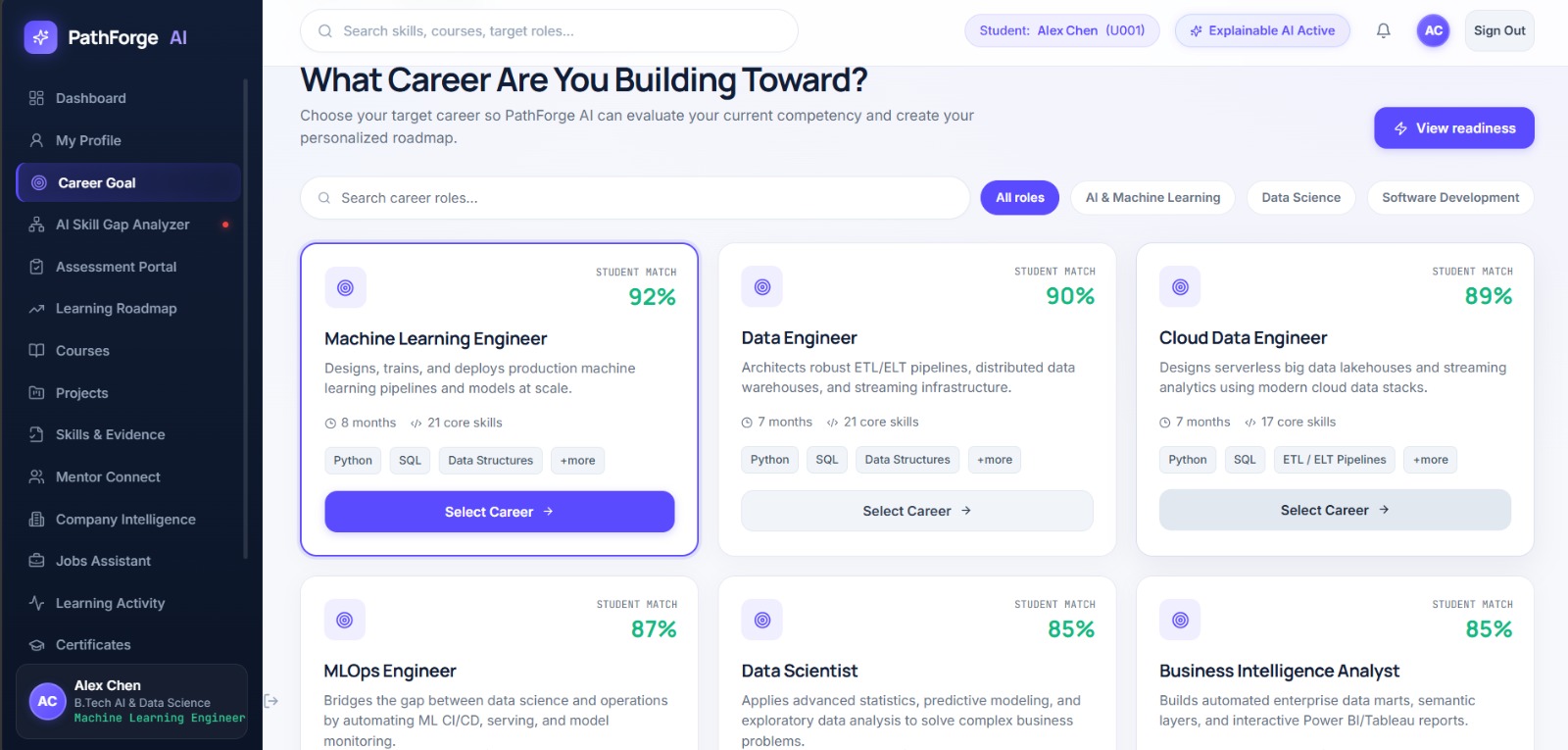
Career Goal
-
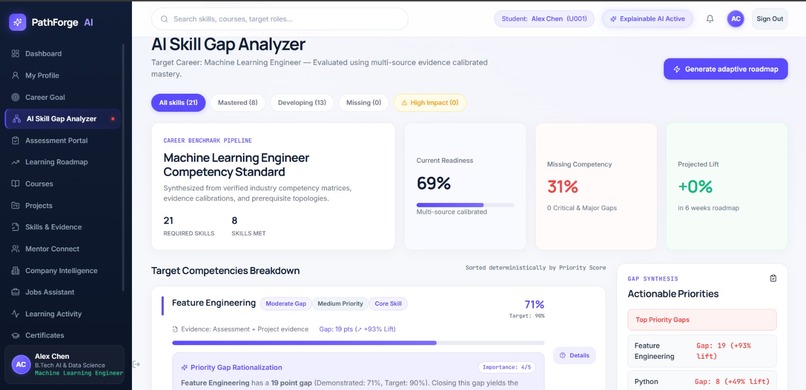
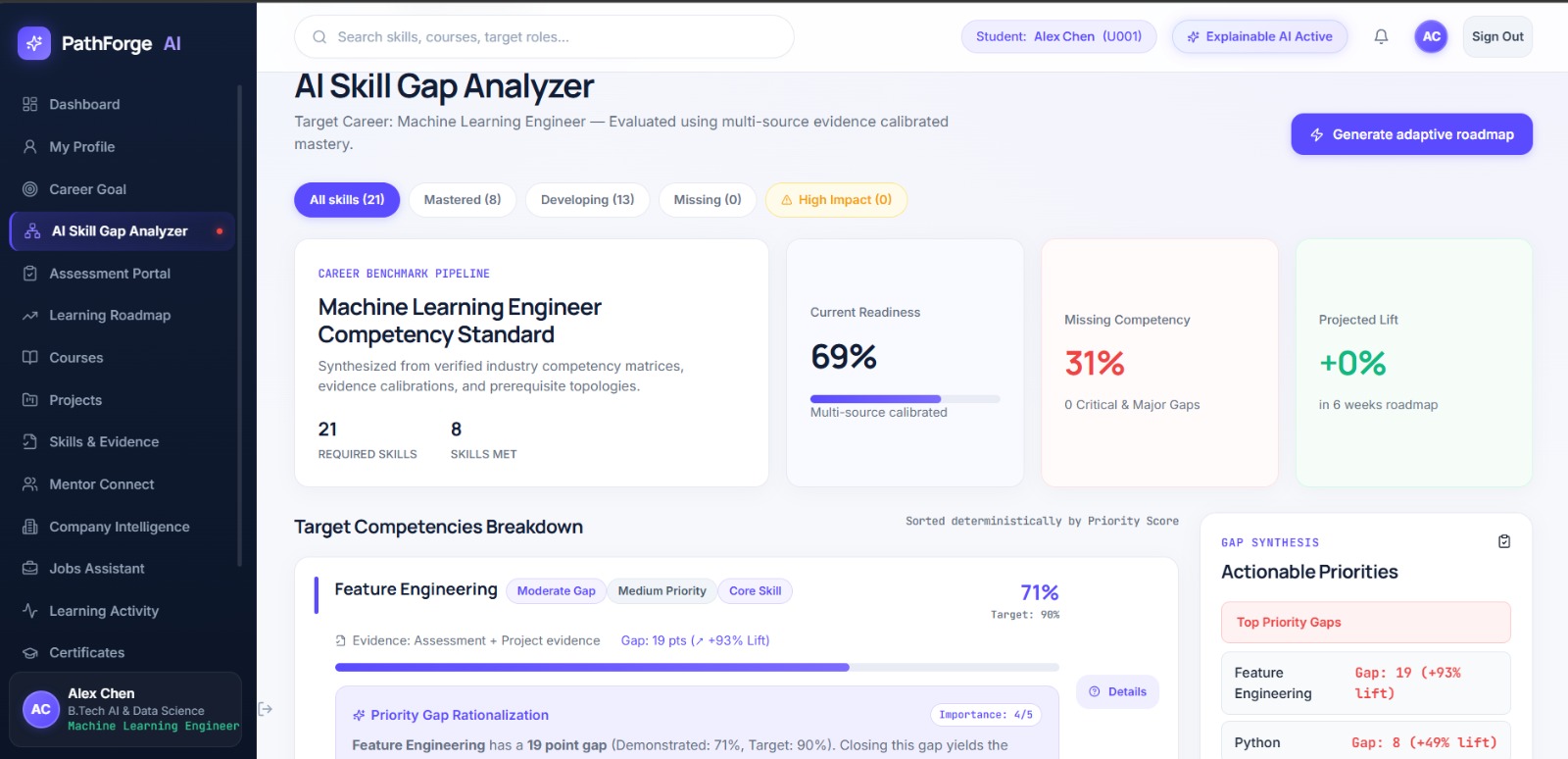
Ai Skill Gap Analyzer
-
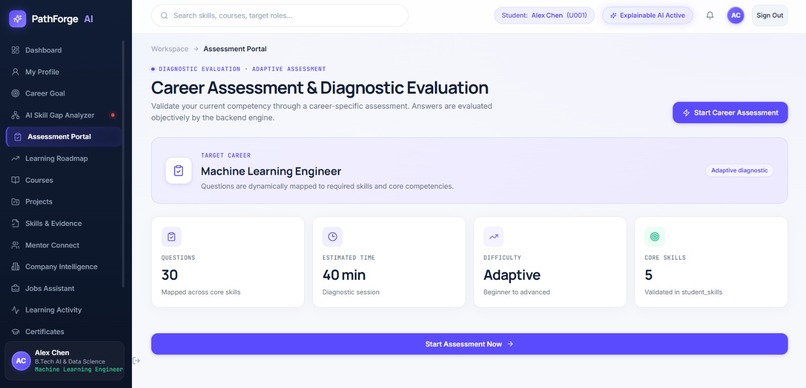
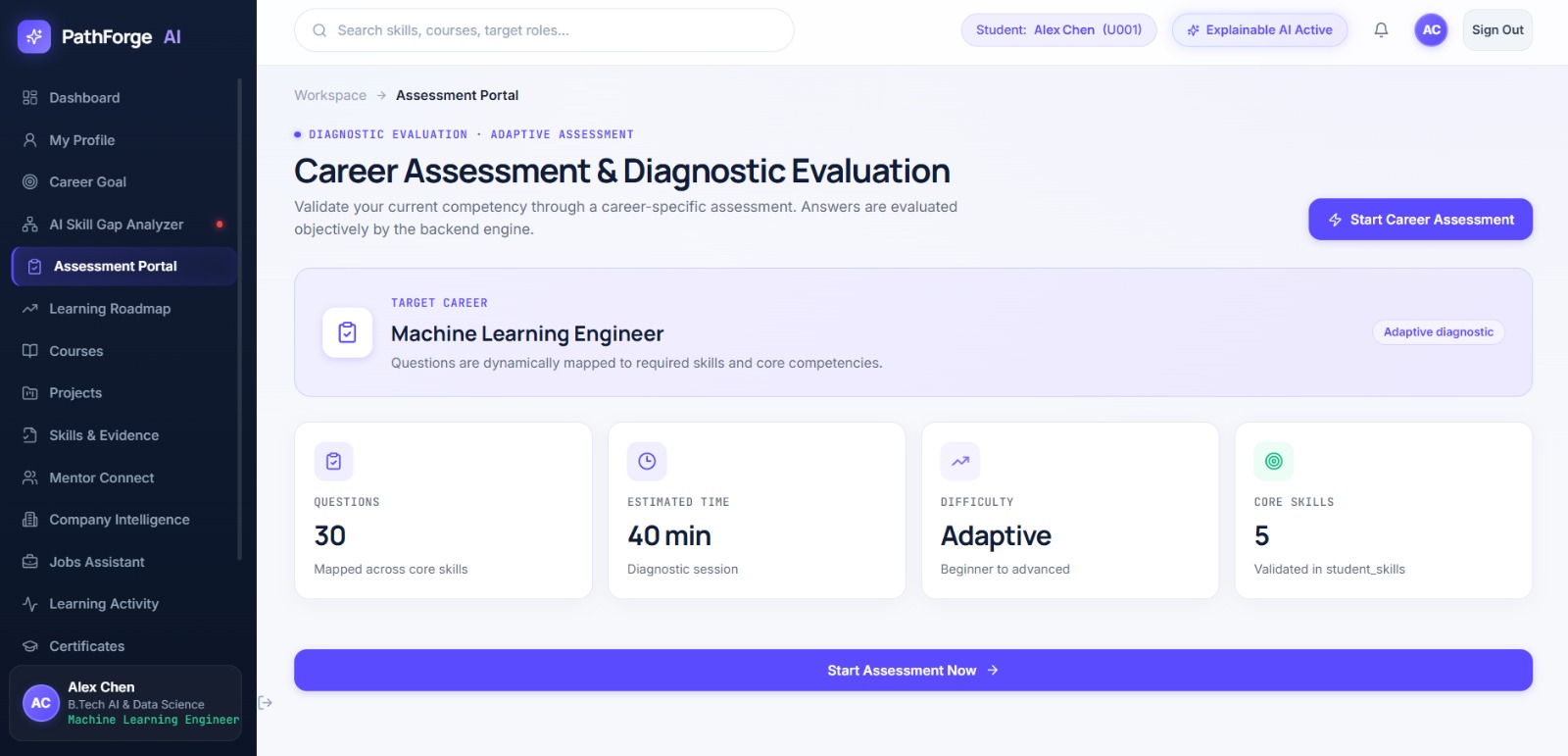
Assessment Portal
-
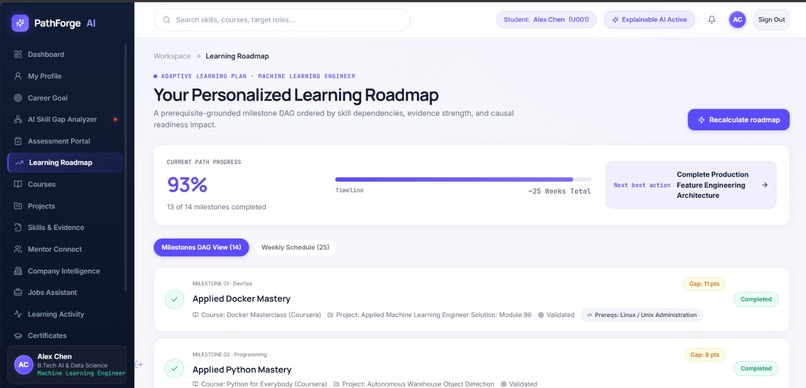
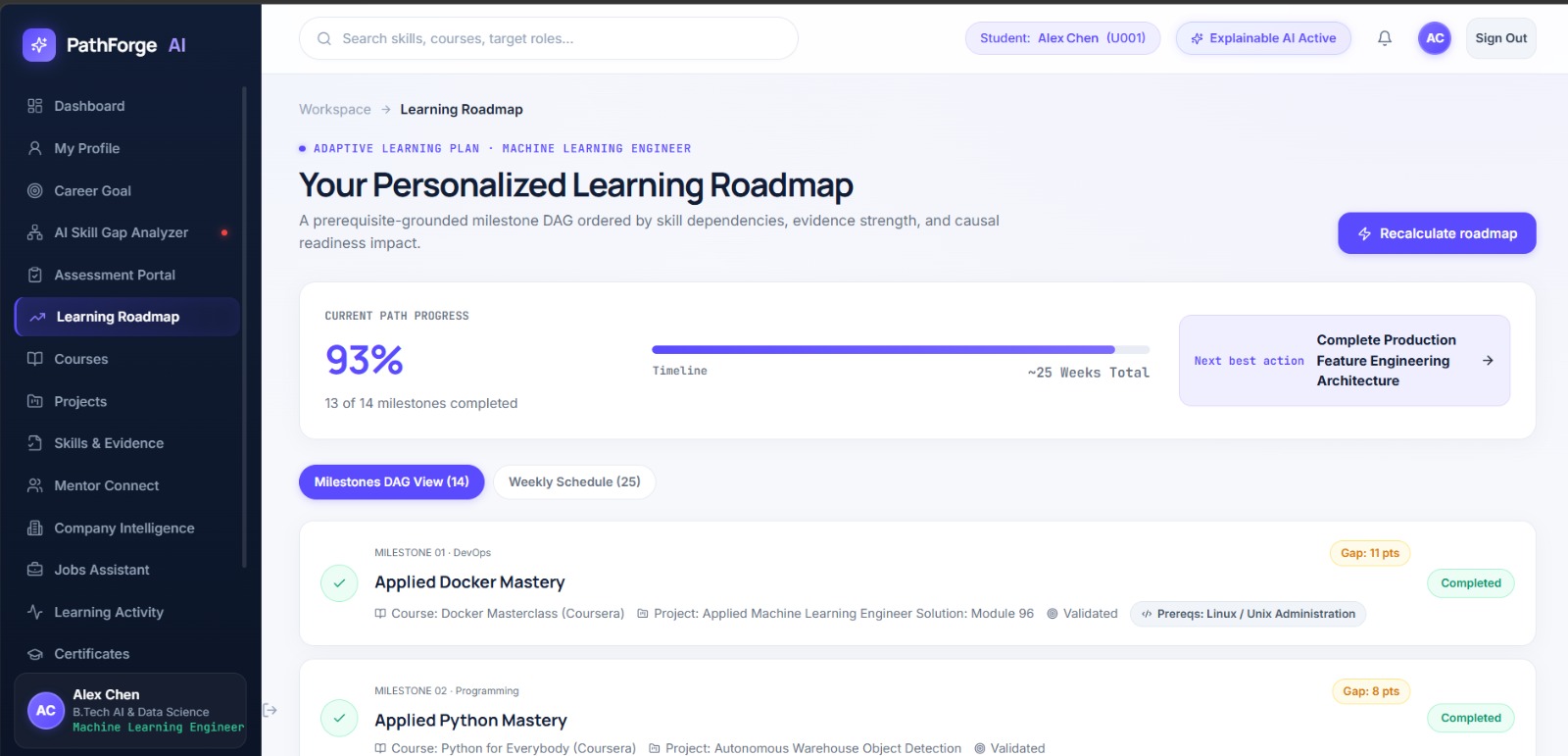
Learning Roadmap
-
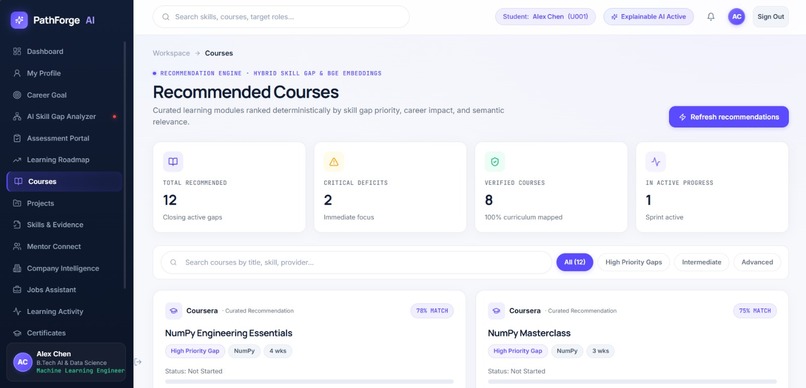
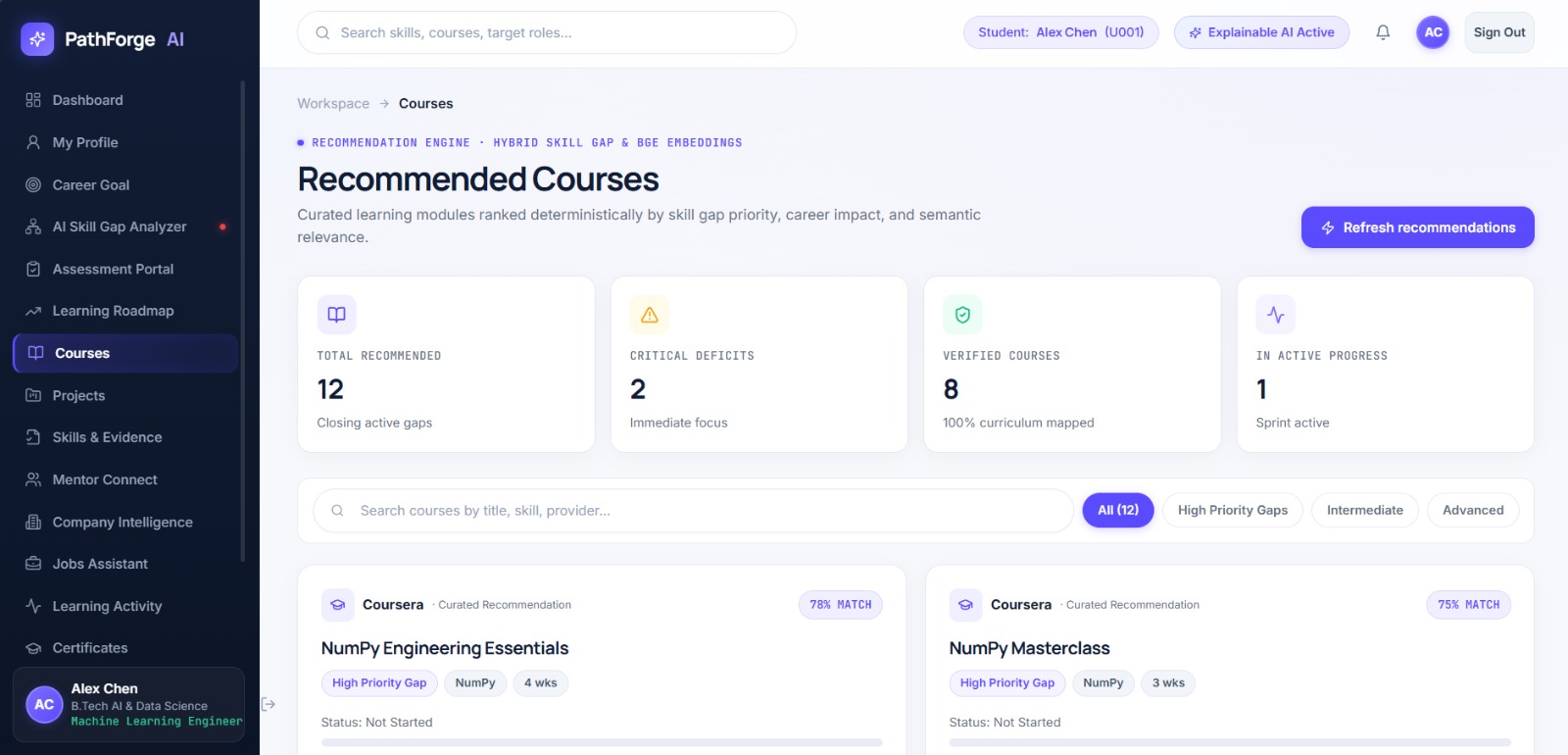
Courses
-
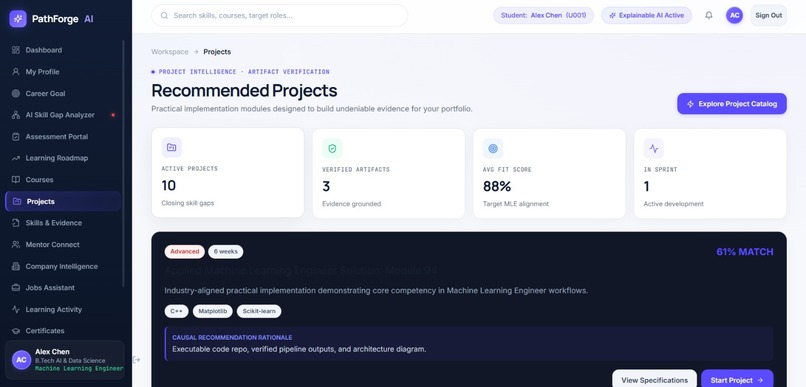
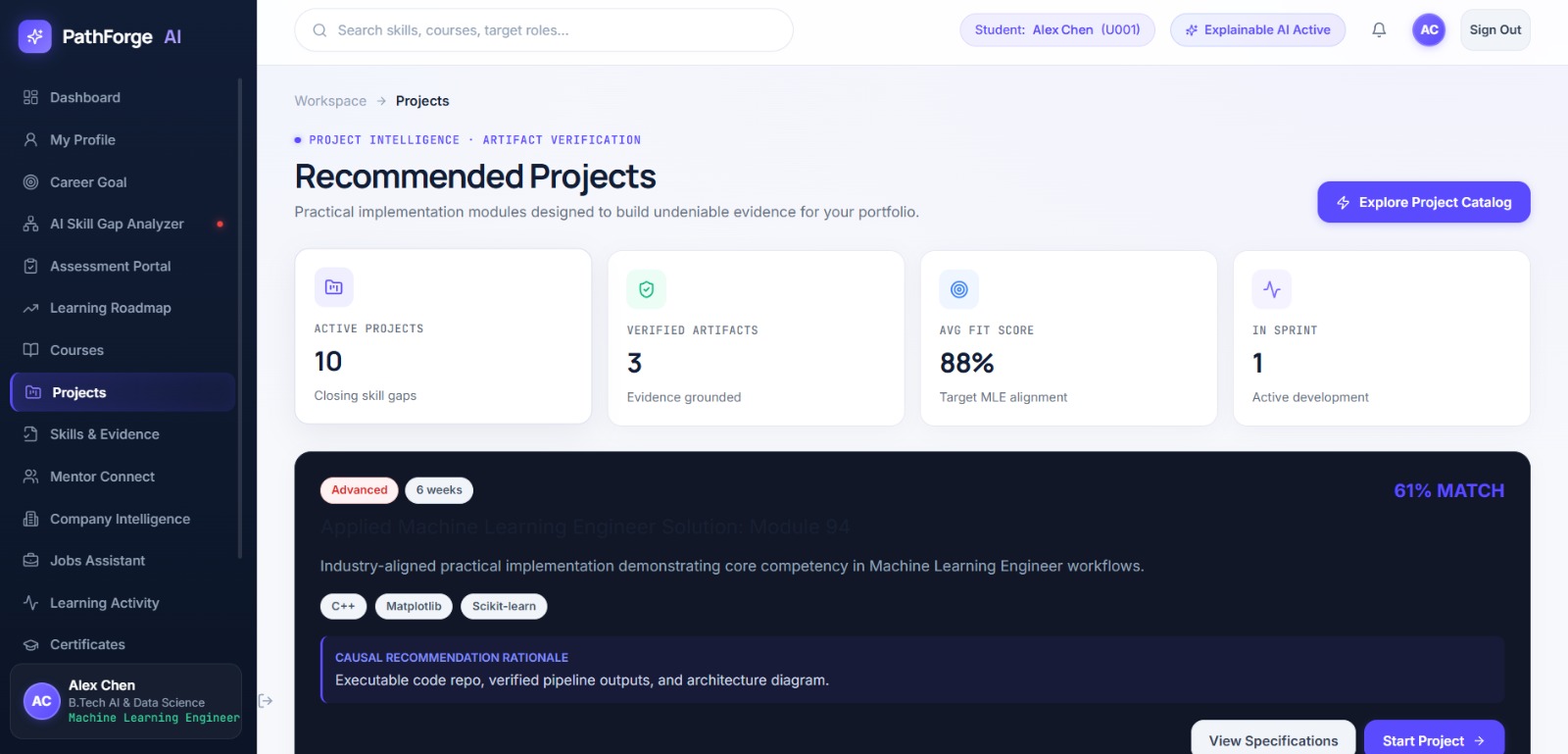
Projects
-
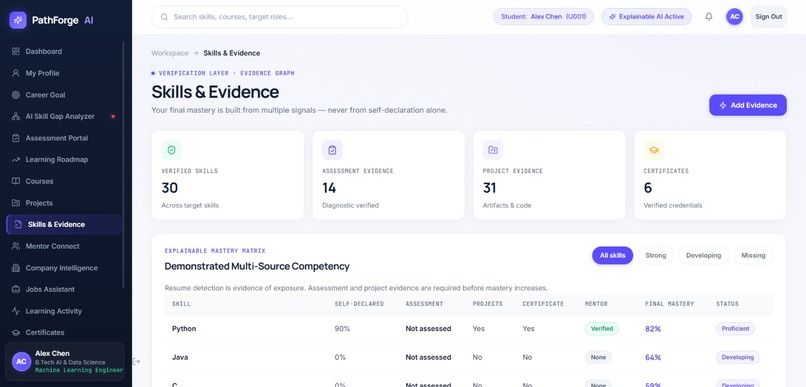
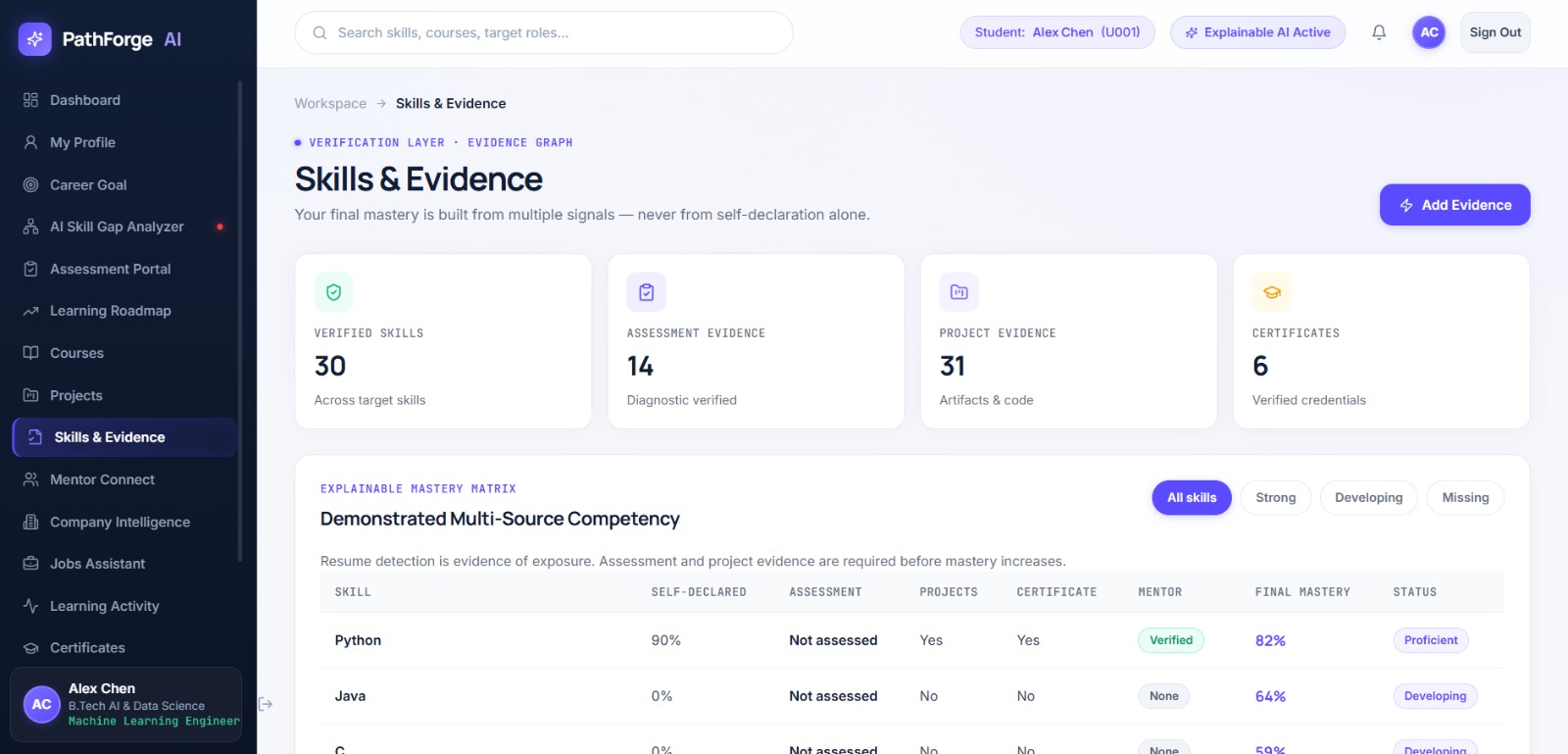
Skills & Evidence
-
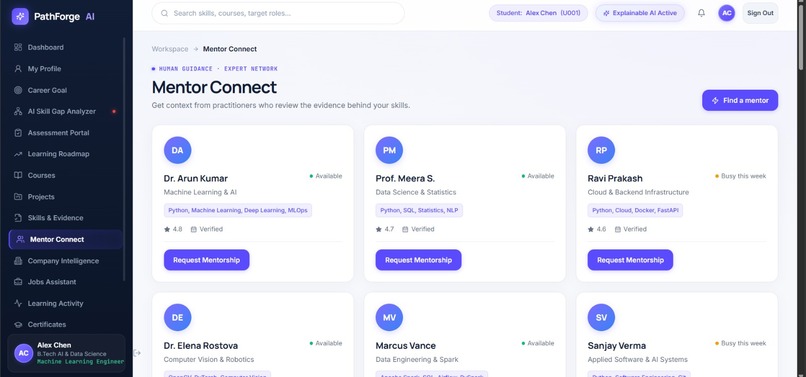
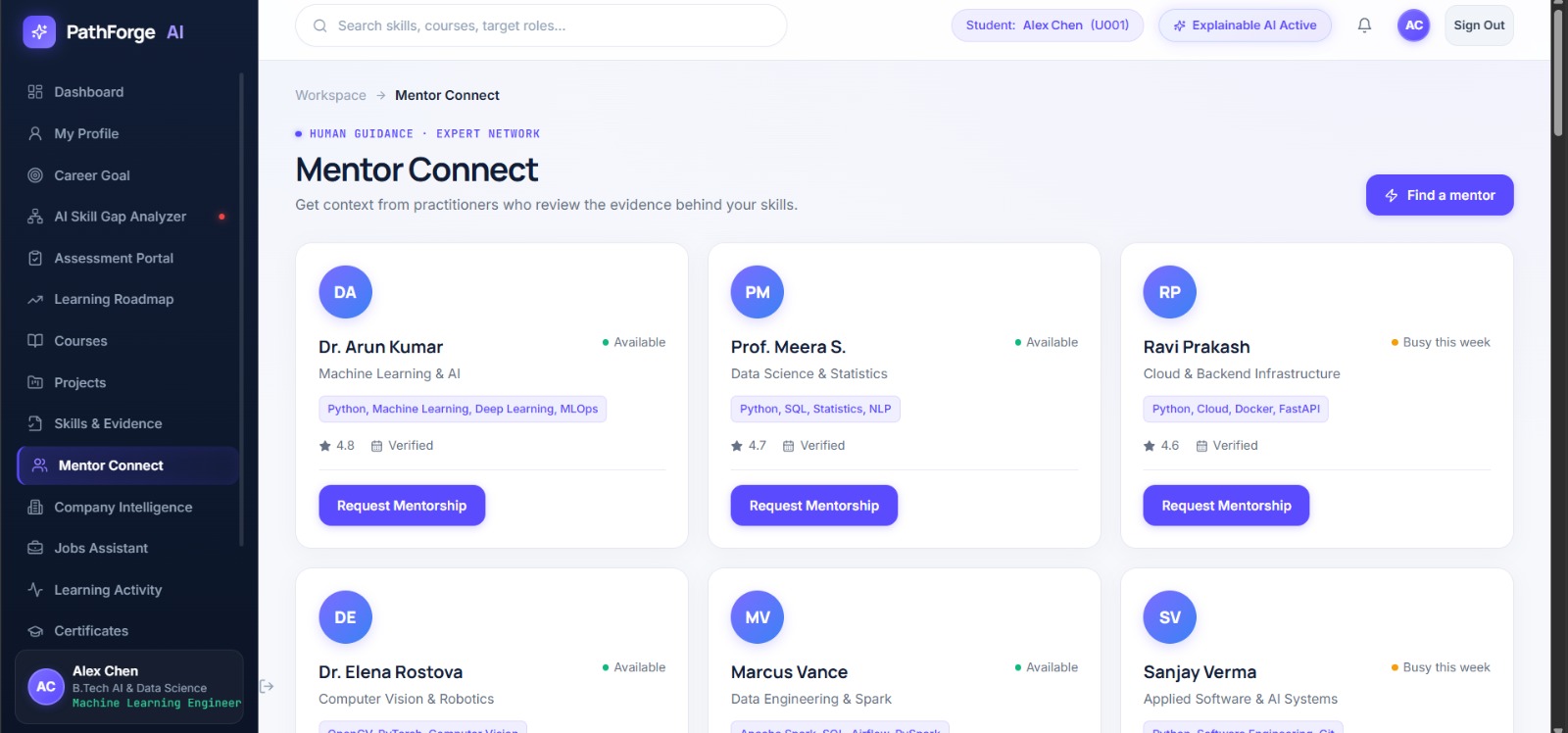
Mentor Connect
-
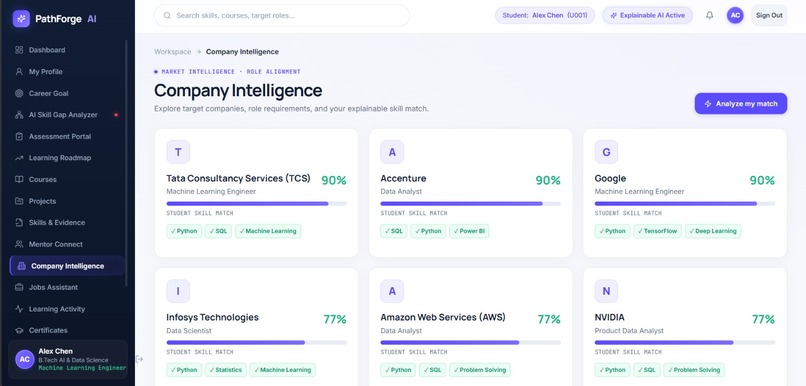
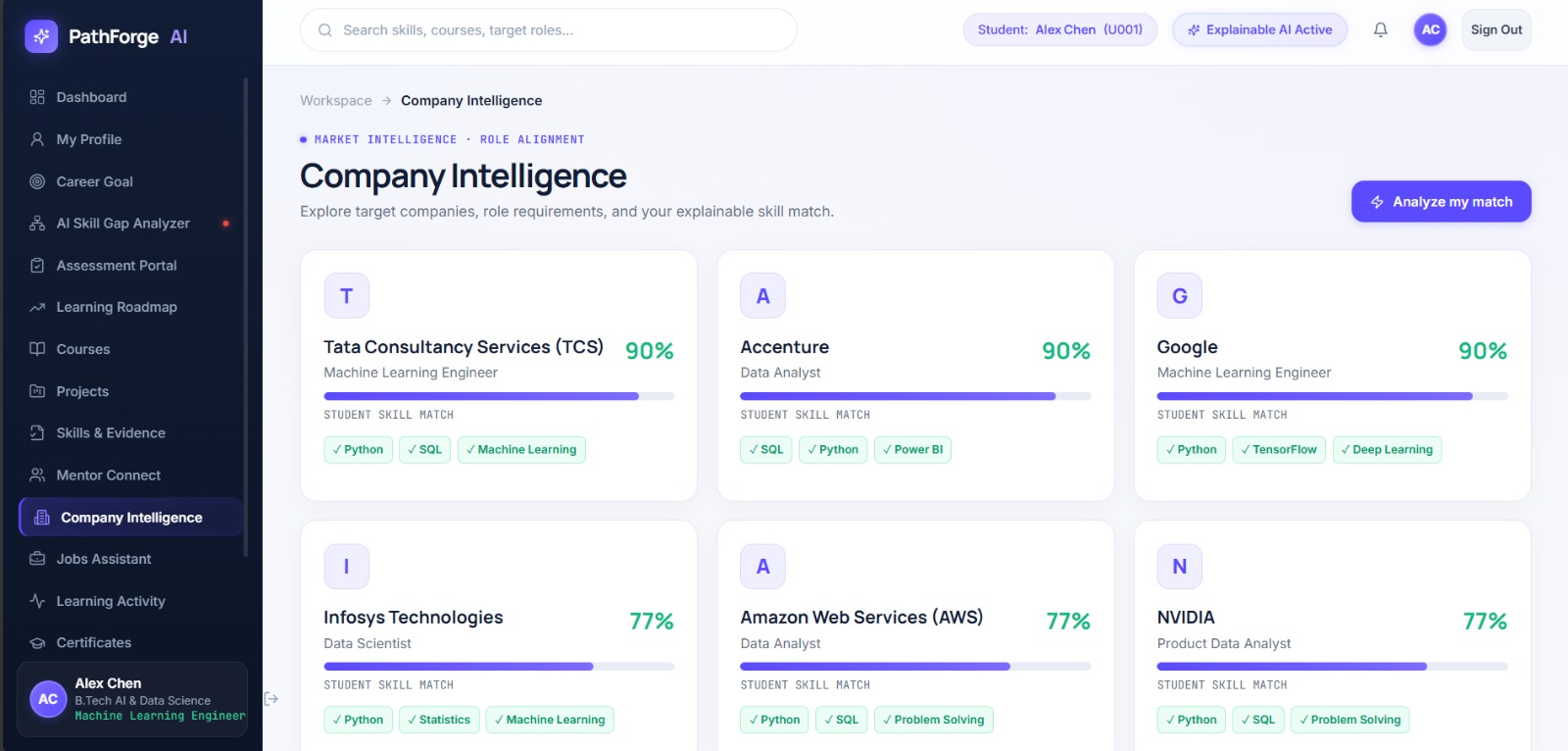
Company Intelligence
-
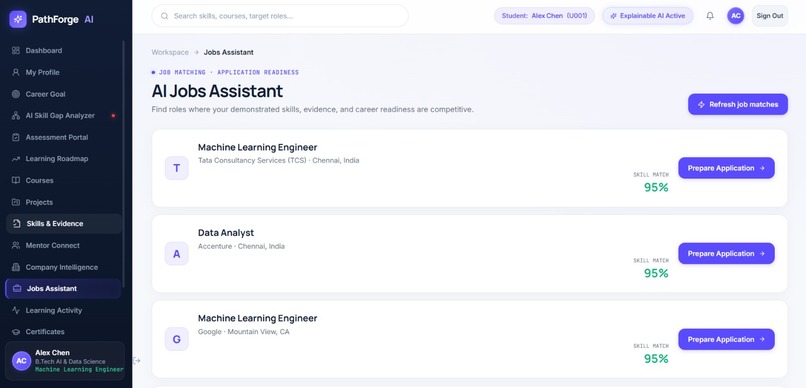
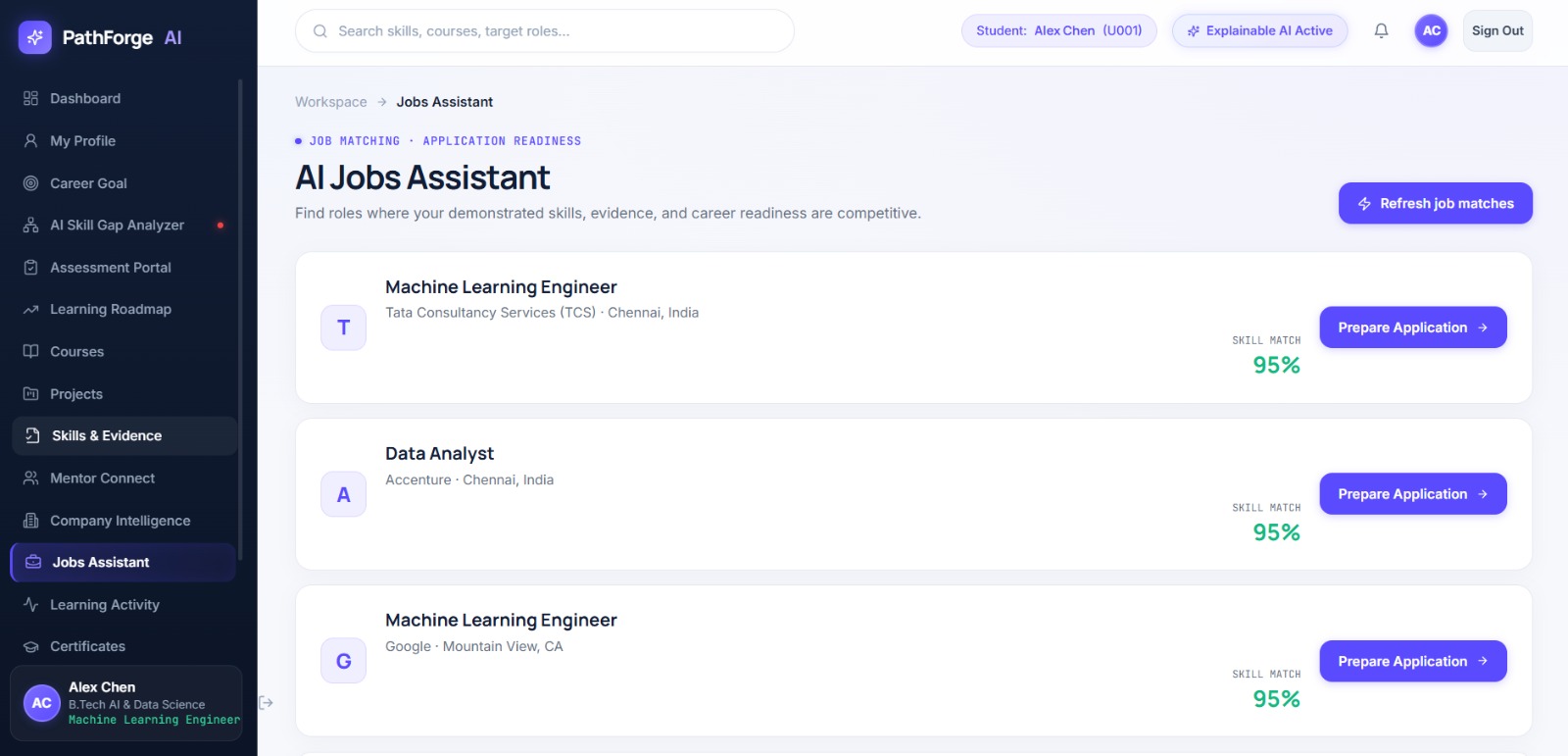
Jobs Assistant
-
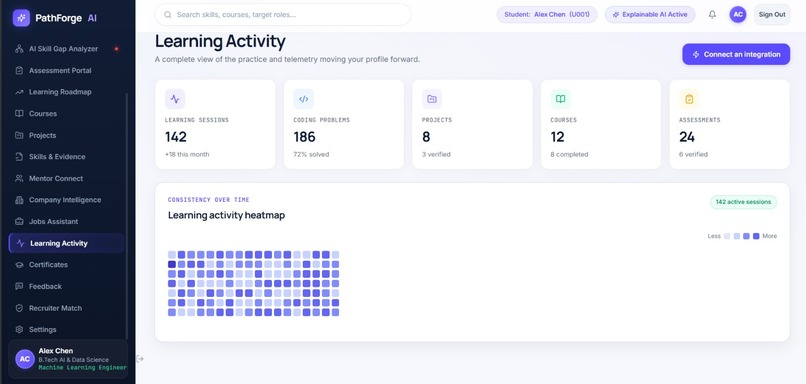
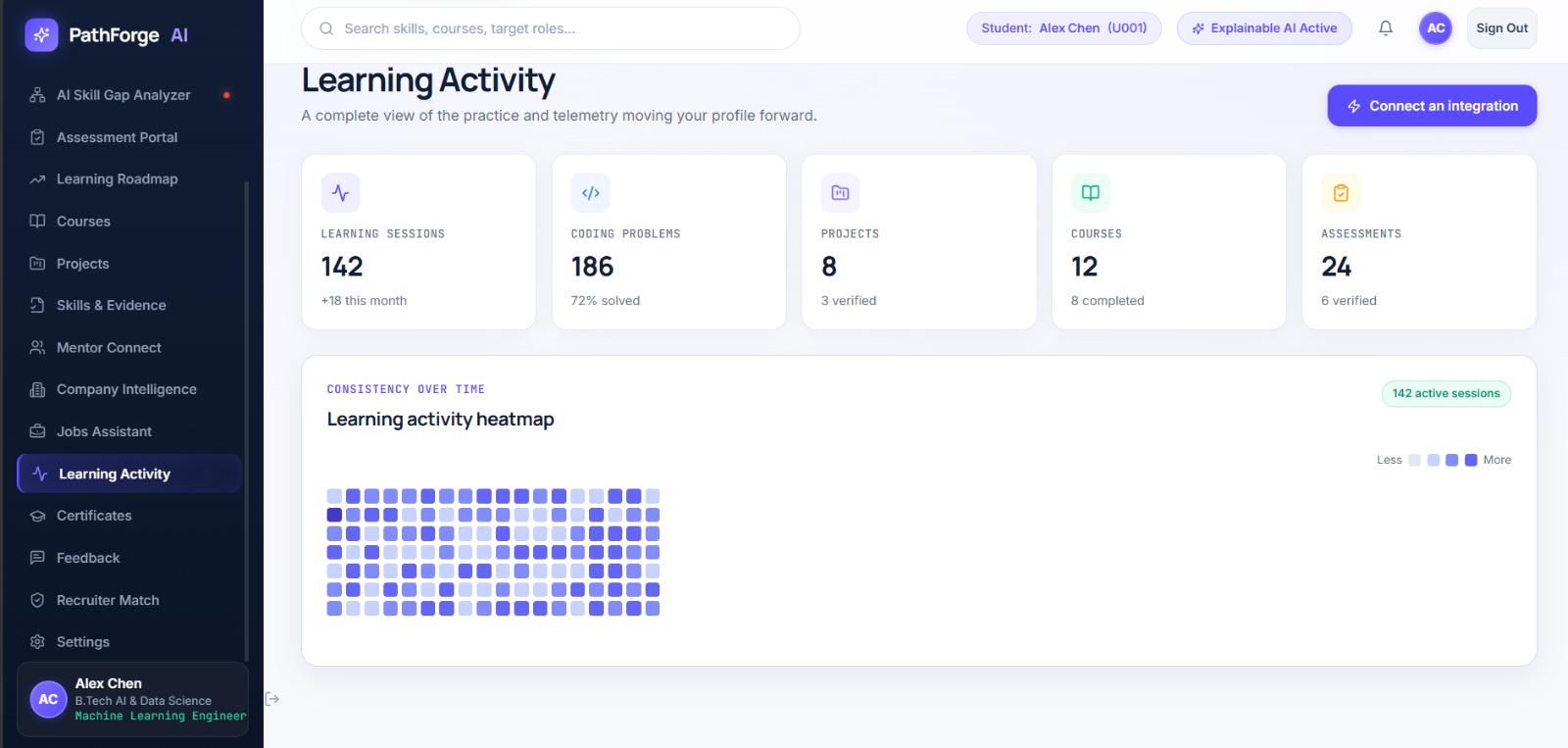
Learning Activity
-
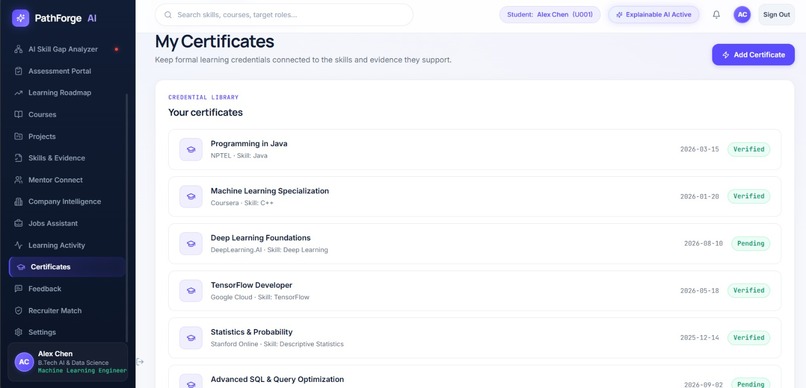
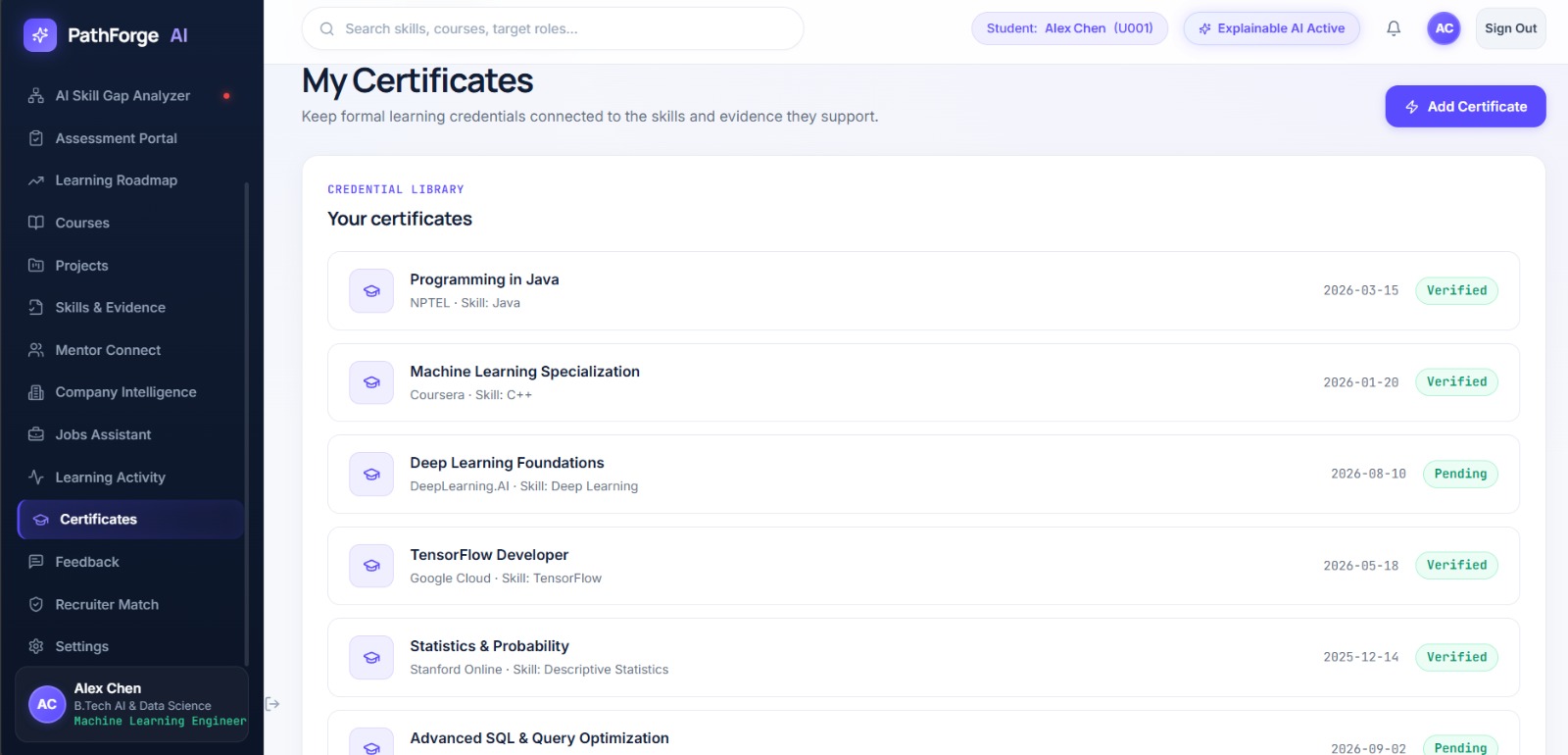
Certificates
PathForge AI: Personalized Learning Roadmap and Career Intelligence
Inspiration
In today's digital world, students have access to thousands of online courses, tutorials, and learning resources. However, many learners struggle to identify what they already know, which skills they are missing, and what they should learn next to achieve their career goals.
We were inspired to address this problem by building a system that goes beyond generic course recommendations. We wanted to create a platform that understands a student's current abilities, evaluates their knowledge, identifies skill gaps, and guides them toward a specific career.
What It Does
PathForge AI is a machine learning-based personalized learning roadmap and career intelligence system that helps students prepare for their desired careers.
The platform aims to:
- Analyze resumes: Extract skills, projects, certificates, and experience from uploaded resumes.
- Assess actual knowledge: Evaluate students through assessments instead of blindly trusting self-declared skills.
- Identify skill gaps: Compare demonstrated skills against the requirements of a selected career.
- Recommend courses and projects: Suggest relevant learning resources and practical projects based on identified gaps.
- Generate personalized roadmaps: Organize learning activities according to skill priorities and prerequisite relationships.
- Track learning progress: Help students monitor their skills, completed learning activities, and career preparation.
- Support career decisions: Provide career-related insights to help learners make informed learning choices.
How We Built It
PathForge AI is designed around a frontend, backend, database, and machine learning architecture.
The frontend provides an interactive interface for students to manage their profiles, select career goals, upload resumes, take assessments, explore recommendations, and track their learning roadmaps.
The backend uses Python and FastAPI to manage API requests, process student information, coordinate machine learning services, and communicate with the database.
The database stores career requirements, skills, courses, projects, student assessment results, and learning progress. Structured datasets connect career roles to required skills and learning resources.
For intelligent recommendations, the system uses machine learning techniques such as content-based filtering and cosine similarity. A BGE embedding model can support semantic matching between skills, careers, courses, and projects. Gemini API integration supports tasks such as resume information extraction and natural-language explanations.
The central idea is to connect all these components into a continuous workflow:
Resume Analysis → Assessment → Skill Mastery → Skill Gap Analysis → Course and Project Recommendations → Personalized Learning Roadmap
The roadmap is intended to adapt as students demonstrate new skills and make learning progress.
Challenges We Faced
One of the main challenges was distinguishing between skills a student claims to know and skills they can actually demonstrate. We addressed this by designing an assessment-driven approach that combines different sources of evidence.
Another challenge was connecting multiple components, including the frontend, backend APIs, database, and machine learning services, into one consistent system.
We also needed to ensure that semantic similarity alone would not incorrectly classify a skill as mastered. Our approach emphasizes explicit skill mappings, assessment results, and other available evidence when evaluating student capabilities.
Generating useful learning roadmaps presented another challenge because recommendations must respect prerequisites, prioritize important skill gaps, and avoid suggesting unnecessary beginner content to students who already possess the required knowledge.
What We Learned
Through PathForge AI, we explored how machine learning, semantic similarity, structured datasets, backend APIs, and database relationships can work together to solve an educational problem.
We learned the importance of separating self-declared skills from demonstrated proficiency, validating AI-generated information, designing personalized recommendation workflows, and maintaining consistency across application components.
We also gained experience in integrating AI services into a practical application while keeping core calculations and skill-gap decisions under controlled backend logic.
What's Next
Our future plans include improving assessment quality, expanding career and course datasets, strengthening roadmap adaptation, incorporating mentor feedback, and developing deeper career intelligence features.
Our vision is to help students move from uncertainty about what to learn toward a clearer, evidence-based path to their desired careers.
PathForge AI — Know Your Skills. Discover Your Gaps. Build Your Future.
Built With
- bge-embeddings
- content-based-filtering
- cosine-similarity
- fastapi
- google-gemini-api
- jwt-authentication
- machine-learning
- natural-language-processing
- personalized-learning
- pydantic
- python
- react
- recommendation-system
- rest-api
- resume-parsing
- sentence-transformers
- sqlalchemy
- sqlite
- typescript

Log in or sign up for Devpost to join the conversation.