-
-
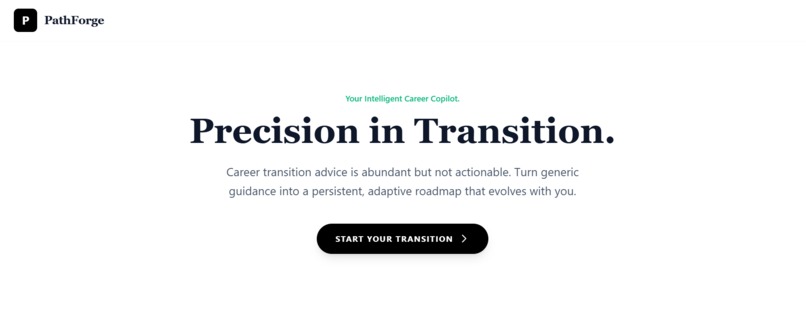
Customer - Landing Page
-
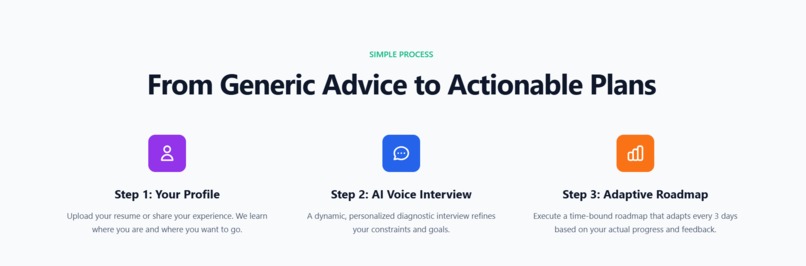
Why PathForge?
-
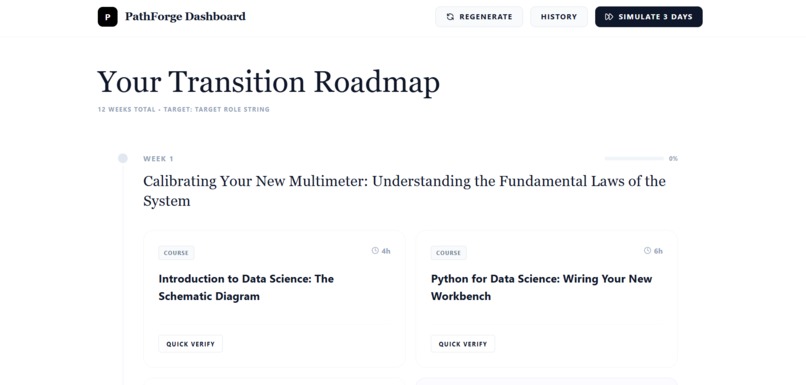
Dashboard
Inspiration
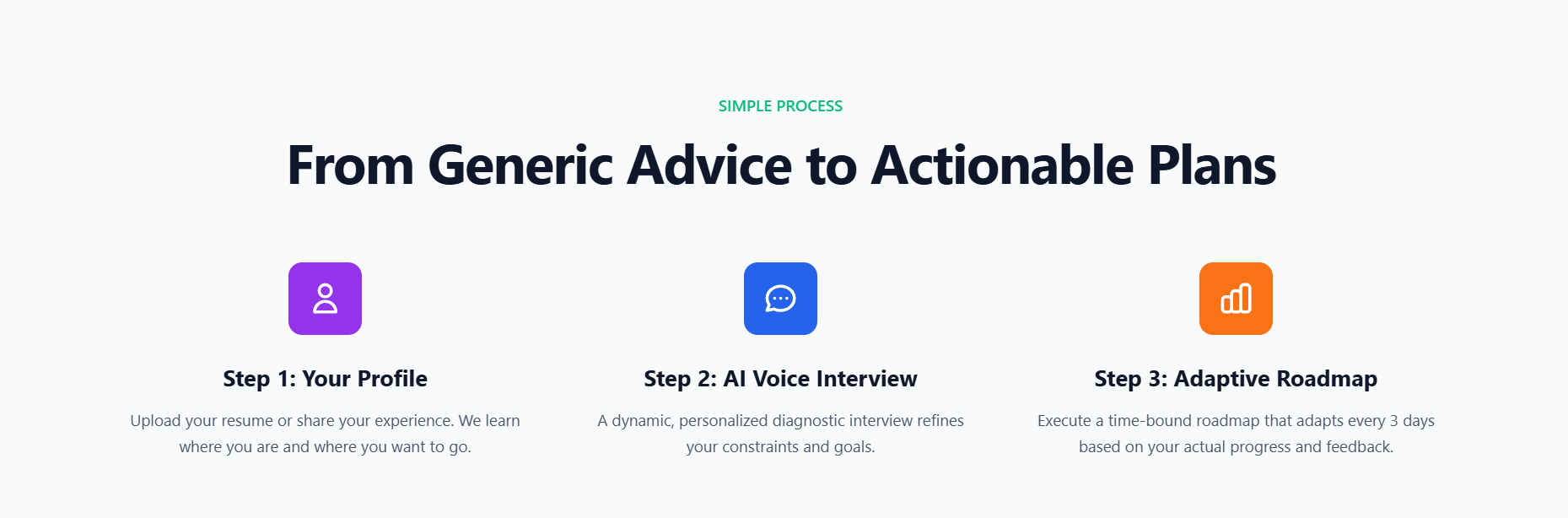
Career transitions are often guided by generic advice that does not match a person's background, time constraints, or learning style. PathForge was inspired by the idea that people should get a roadmap that feels personal, actionable, and adaptive instead of one-size-fits-all.
What it does
PathForge helps users plan and execute a career transition through:
- Profile intake (text, LinkedIn URL, optional resume upload)
- AI-driven diagnostic interview questions
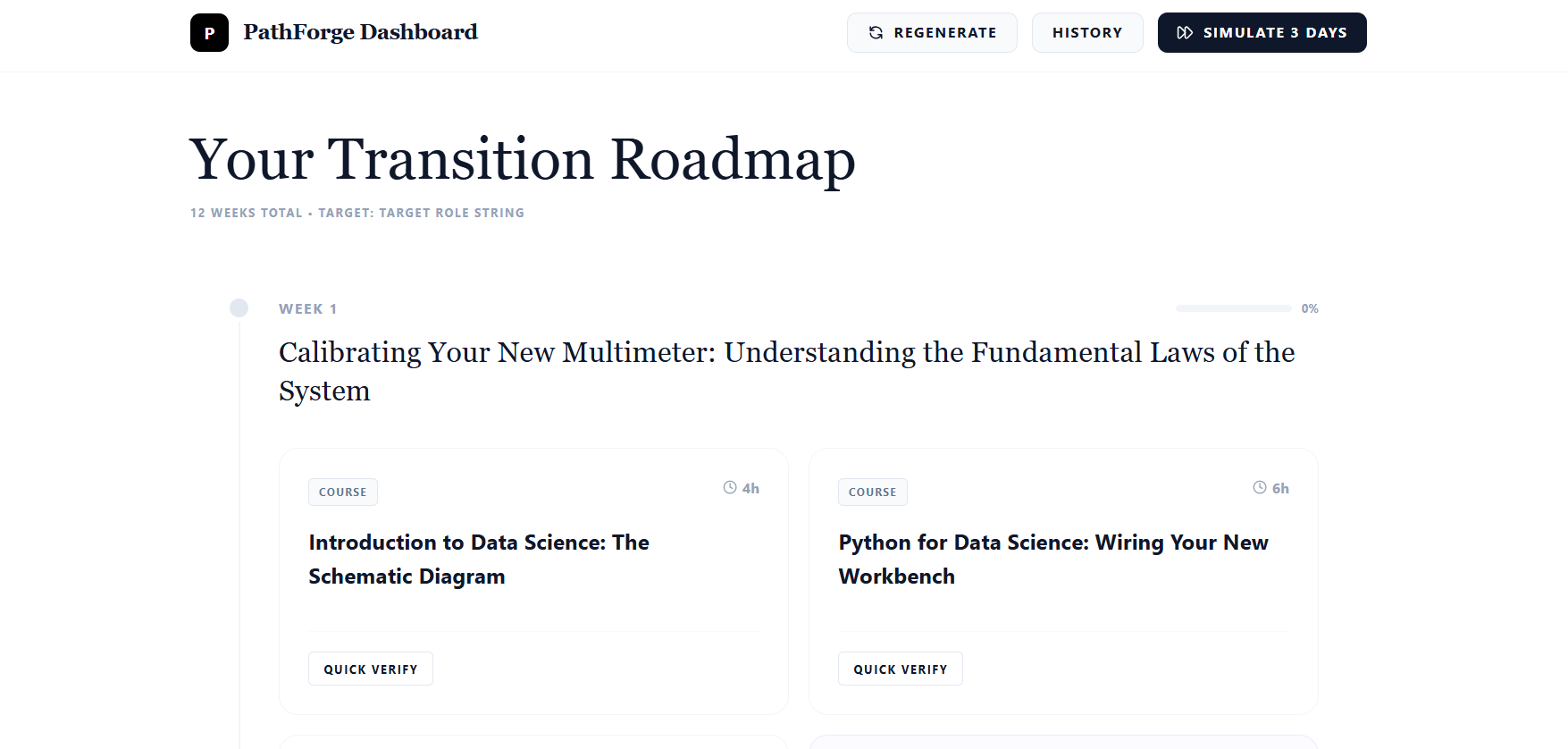
- Personalized roadmap generation with weekly phases and tasks
- Real-world local event recommendations integrated into the roadmap
- Task-level check-ins with reflections, blockers, and time tracking
- Voice reflection transcription (speech-to-text) for faster progress logging
- Adaptive week optimization based on completed work and feedback
- Reflection-based roadmap updates and progress history views
How we built it
- Frontend: React + TypeScript + Vite + Tailwind + Framer Motion
- Backend: Node.js + Express + TypeScript
- AI stack:
- Google Gemini (
gemini-2.5-flash) for interview, roadmap, adaptation, and analogy generation - Gemini search tool for finding relevant local events
- External STT batch API for voice reflection transcription
- Braintrust logging for observability
- Google Gemini (
- Data handling:
- Client-side persistence with
localStoragefor profile, interview context, roadmap, and check-ins - SQLite schema scaffolded for future server-side persistence
- Client-side persistence with
Challenges we ran into
- Getting reliable structured JSON output from LLM responses and handling malformed/partial responses safely
- Managing adaptation logic while preserving task IDs and schema consistency
- Integrating voice recording/transcription flow smoothly into the task check-in UX
- Keeping frontend and backend contracts stable while iterating quickly on roadmap/task schemas
- Avoiding empty or low-quality generations by designing robust fallback behavior
Accomplishments that we're proud of
- Built an end-to-end product flow from onboarding to adaptive execution
- Implemented meaningful roadmap adaptation driven by actual user check-ins
- Added practical task support features (analogies, checklists, resource links, progress history)
- Combined AI generation with real event discovery to ground plans in the real world
- Shipped a polished, modern UX with clear progression and feedback loops
What we learned
- Prompt design and output constraints are critical for predictable product behavior
- Schema-first thinking reduces breakage when multiple AI features evolve in parallel
- Local-first persistence accelerates prototyping but highlights the need for durable backend state later
- User trust improves when AI outputs are contextual, specific, and revisable based on feedback
- Observability for AI workflows is essential for debugging and iteration speed
What's next for PathForge
- Move persistence from
localStorageto fully integrated backend DB models and user accounts - Add authentication and multi-device sync
- Improve interview voice flow with true speech capture/transcription in all interview steps
- Add stronger validation/guardrails for AI outputs and richer fallback strategies
- Introduce role-specific roadmap templates and benchmark milestones
- Expand analytics and coaching insights (consistency trends, risk flags, estimated readiness)
- Prepare deployment-ready env management and production API configuration

Log in or sign up for Devpost to join the conversation.