Inspiration
In my first year of college, I had no idea how to navigate the job search. I didn't know what to build, what skills mattered, or how to prepare for interviews. The career advice I found online was generic — "network more," "tailor your resume," "practice LeetCode." None of it felt personalized to where I actually was.
I kept thinking: what if there was a tool that could assess your current skills, figure out your gaps, and give you a concrete plan — not just vague advice? That's what Pathfinder is. A personal career coach that adapts to you.
What it does
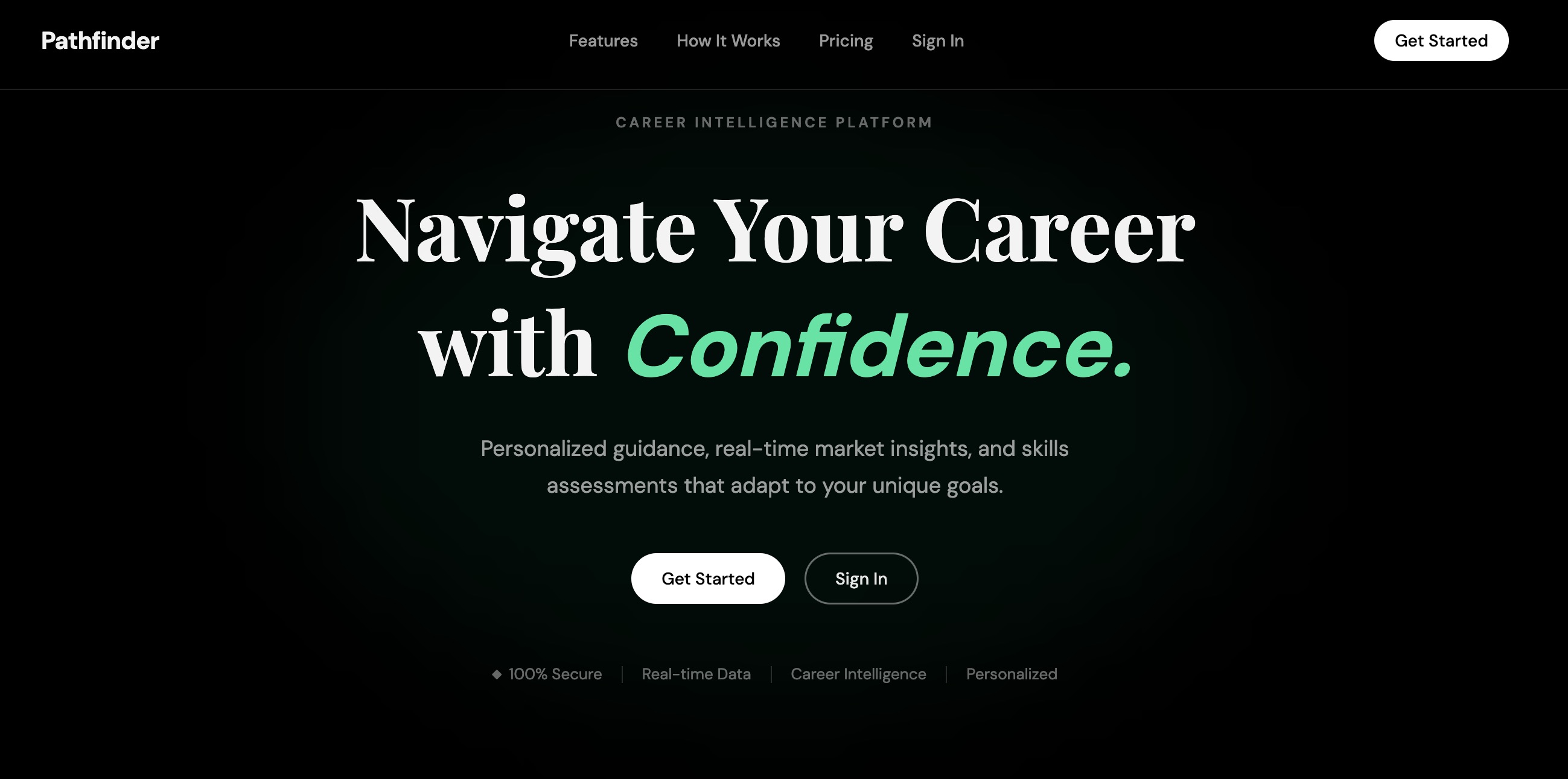
Pathfinder is a career development platform that gives you personalized guidance based on your actual skill level, goals, and what's happening in the job market right now.
The core features:
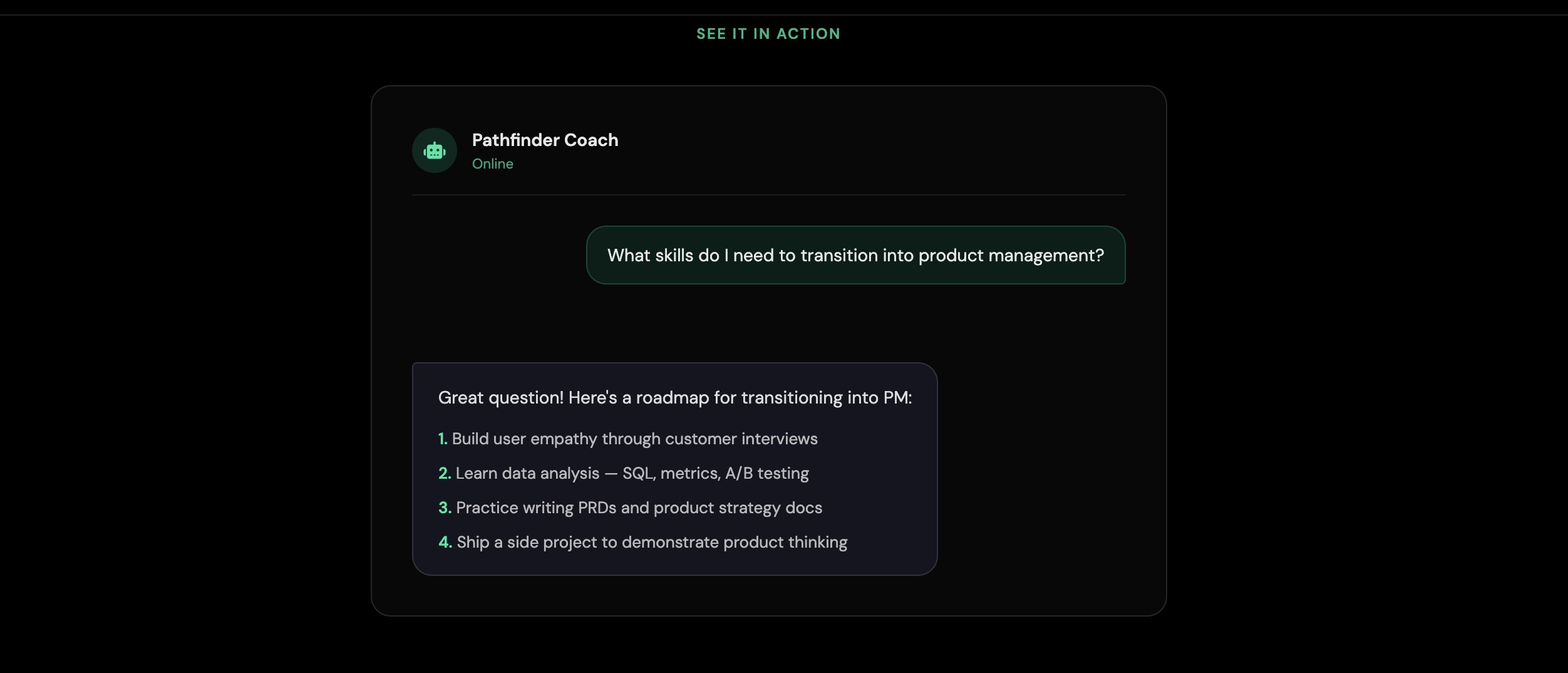
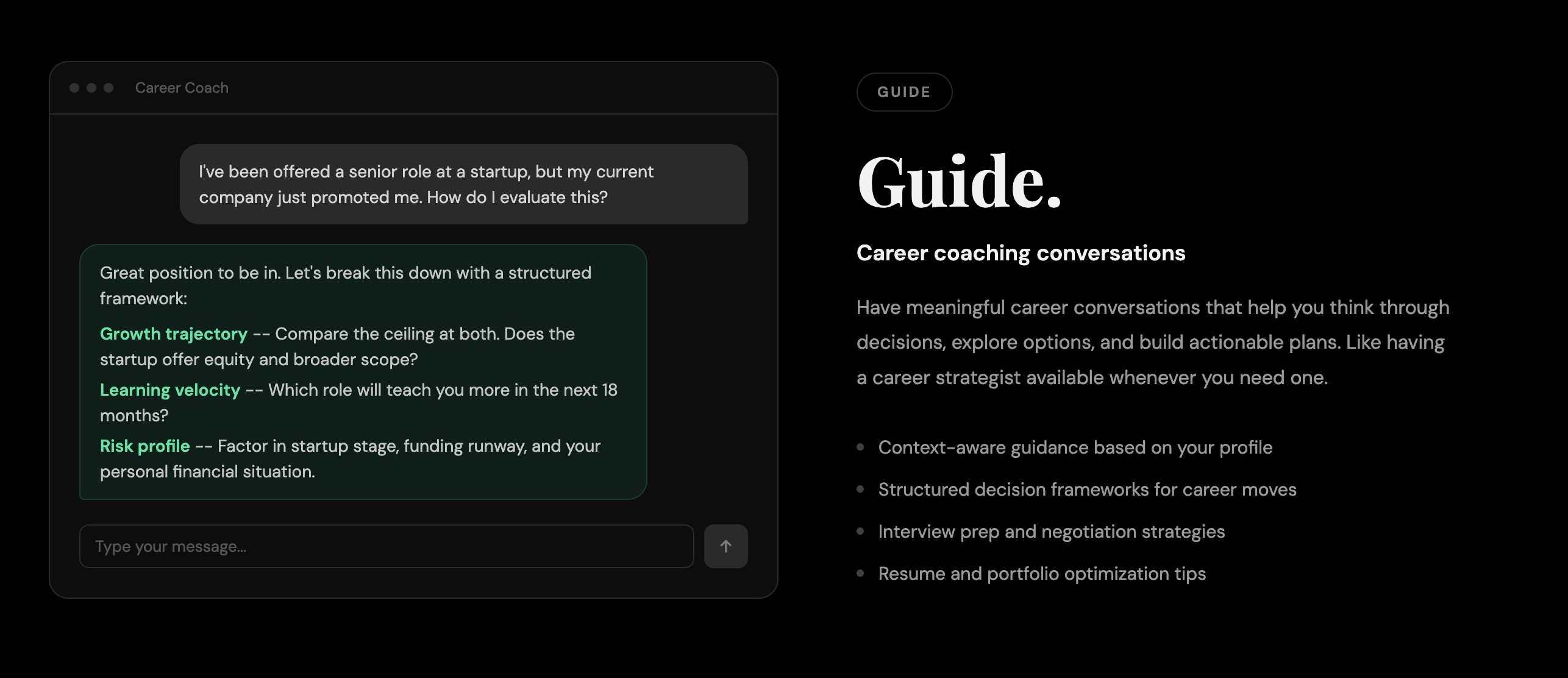
- AI career coaching — a chat interface that gives advice based on your profile, not generic tips. It knows your profession, experience level, and goals.
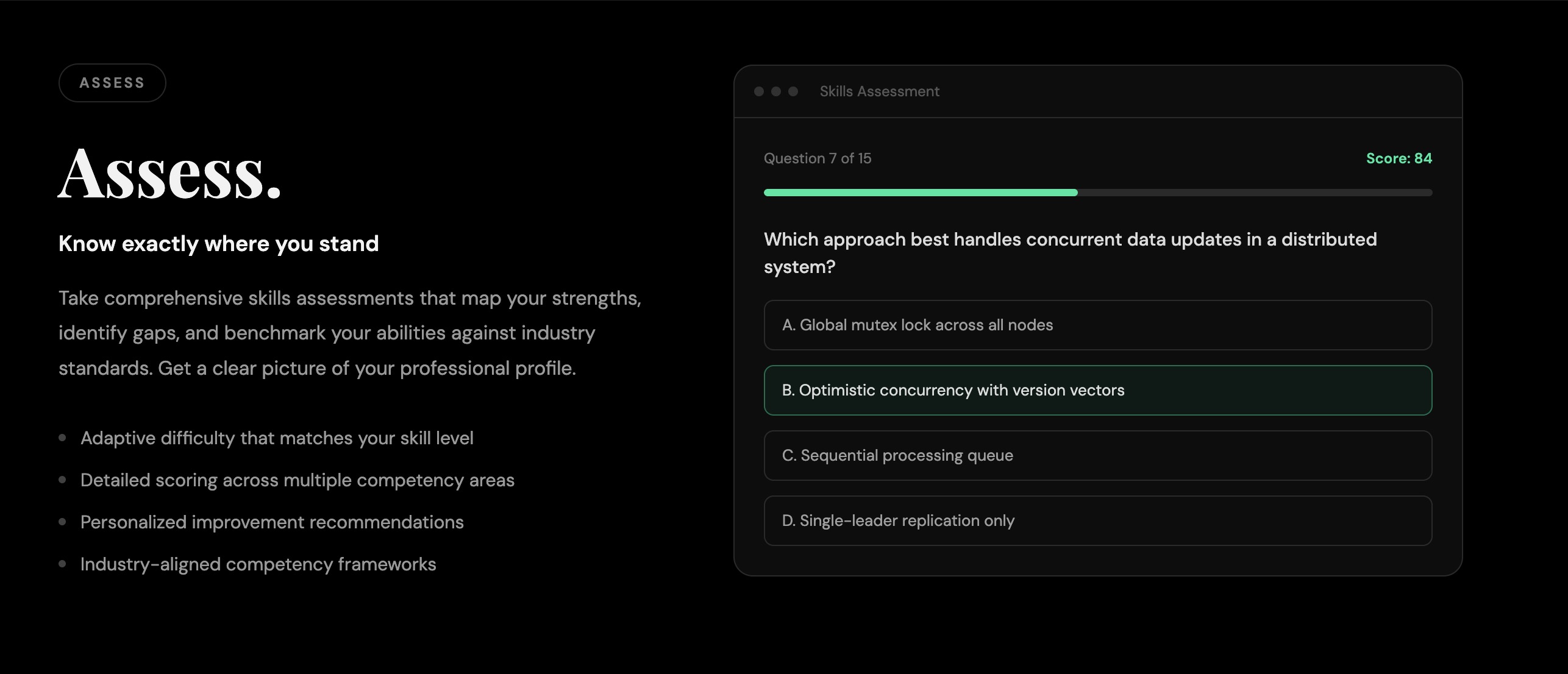
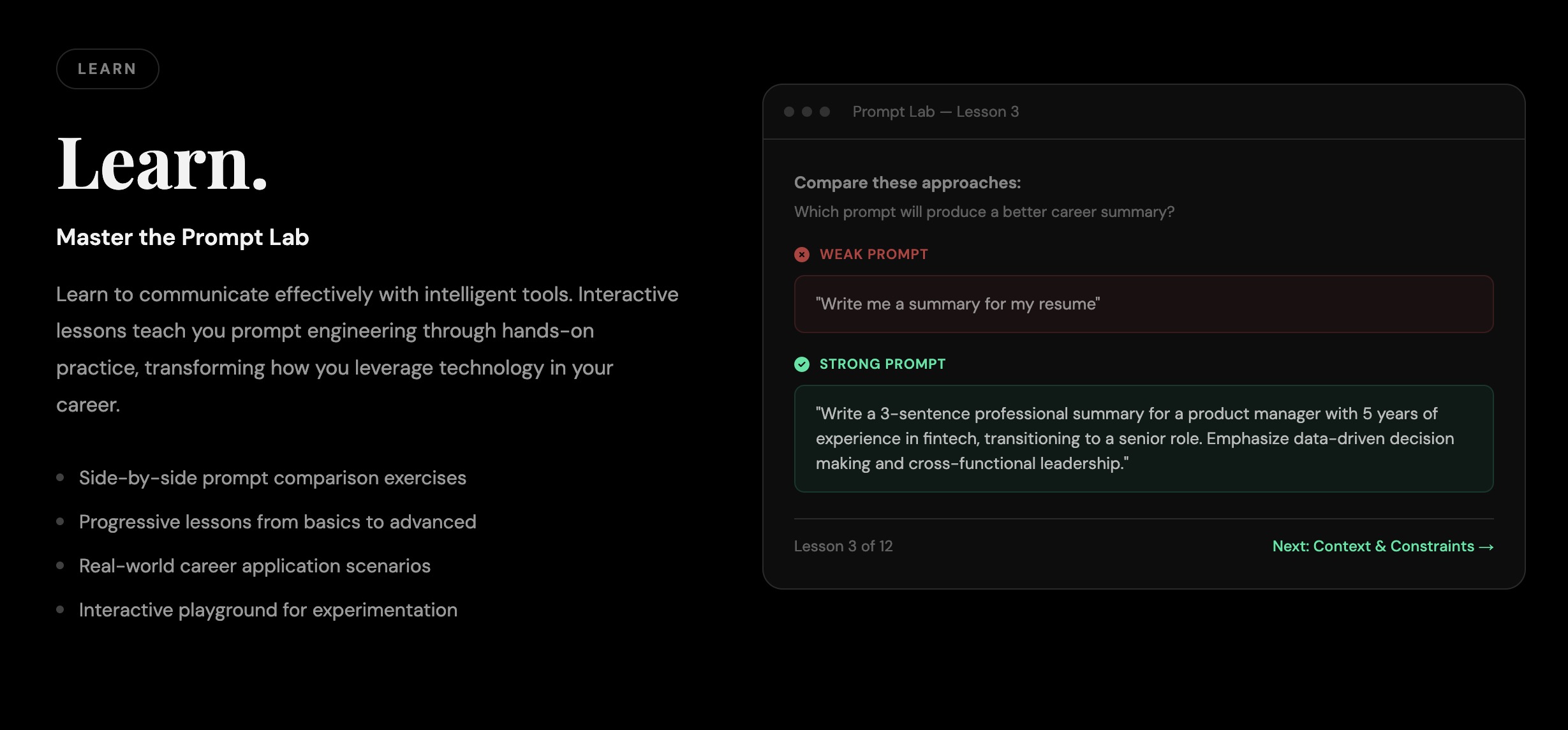
- Skill assessments — dynamically generated quizzes that identify your gaps and create a learning plan based on how you perform.
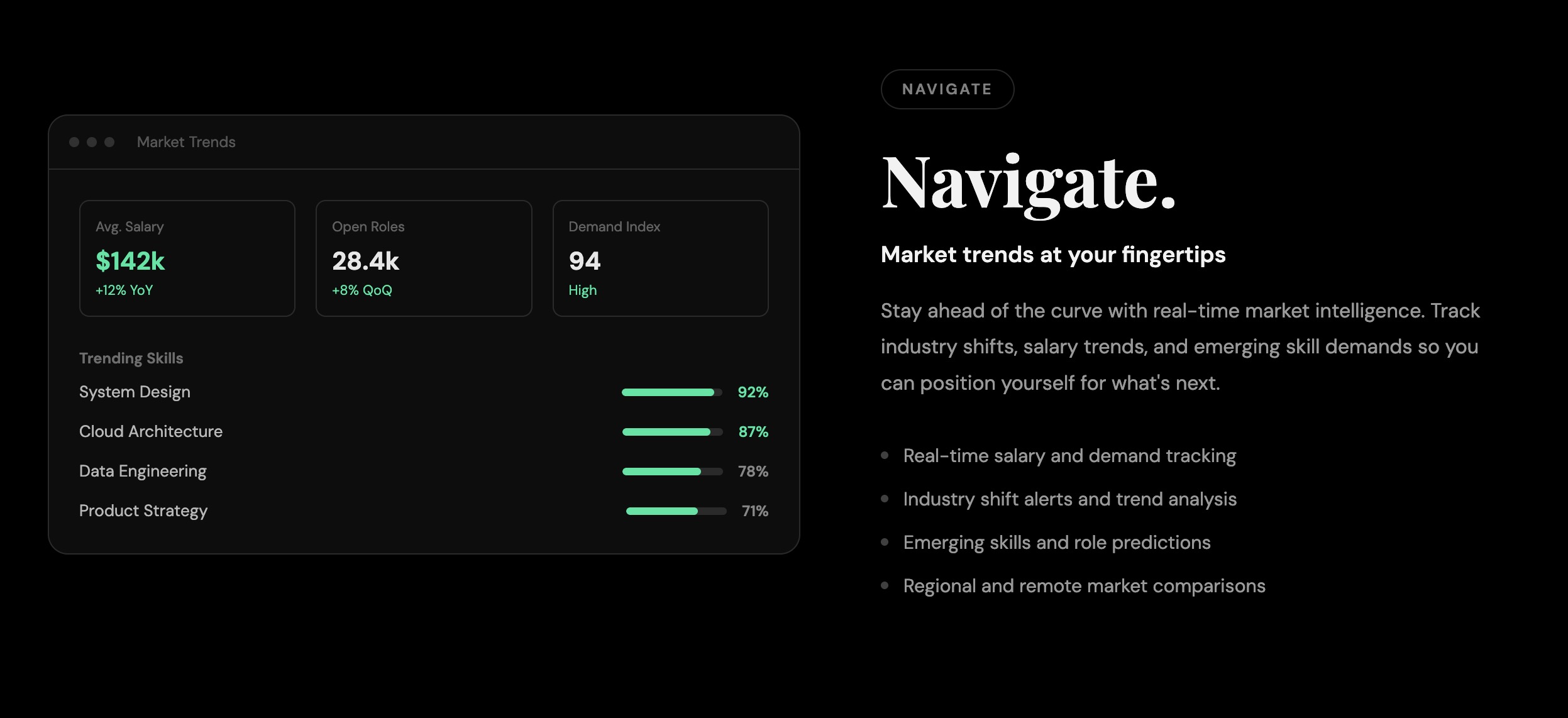
- Industry insights — pulls real-time data from Google Trends so your recommendations reflect what's actually in demand right now, not six months ago.
- Progress dashboard — tracks your assessments, skill development, and career progress over time.
The key idea is that everything connects: your assessment results inform your coaching, your coaching adapts to market trends, and your dashboard shows you where you've been and where you need to go.
How we built it
- Frontend: HTML, CSS, JavaScript with Tailwind
- Backend: Python Flask with SQLAlchemy
- Database: SQLite for user profiles, assessments, and chat history
- AI: Anthropic Claude API for generating coaching responses, assessment questions, and learning plans
- Market data: PyTrends for Google Trends integration
- Auth: Flask-Login for user sessions
The architecture is straightforward: Flask serves the frontend and handles API routes, Claude generates the personalized content, and PyTrends feeds in real-time market data. We built a fallback content system so the app still works if the AI API is down — it serves pre-written career advice instead of breaking.
The database tracks everything per user: their profile and career preferences, chat history with context, assessment scores and performance over time, generated learning plans, and cached trend data.
Challenges we ran into
Google Trends was great. PyTrends is an unofficial API and the data formats are inconsistent. We spent a lot of time handling edge cases and rate limits just to get stable trend data.
Keeping AI responses relevant. Early on, the career advice Claude generated was too generic. We had to iterate on prompts significantly — adding the user's profession, experience level, and assessment history as context before the responses started feeling useful.
Assessment flow was tricky. Managing multi-question assessments across sessions while keeping state consistent required more database work than expected. We went through several iterations of the data model.
Balancing power and simplicity. There's a lot going on under the hood, but we didn't want the interface to feel overwhelming. We cut several features during the hackathon to keep the UX clean.
Accomplishments we're proud of
- The AI coaching actually gives different advice to different users. It's not just a chatbot wrapper — the context-aware prompting makes a real difference in response quality.
- The assessment-to-learning-plan pipeline works end to end. You take a quiz, it identifies your weak areas, and it generates a targeted study plan. That loop is the core value of the product.
- We integrated live market data into career recommendations. When the tool suggests you learn a skill, it's backed by current demand data, not just our opinion.
- We shipped a working, usable product in 24 hours that people could sign up for and immediately get value from.
What we learned
- Prompt engineering matters more than model choice. The difference between generic AI output and actually useful career advice came down to how much context we packed into the prompts.
- Build the core loop first. We wasted time early on building nice-to-have features. Once we focused on the assess → identify gaps → generate plan loop, everything else fell into place.
- Fallback systems aren't optional. When you depend on external APIs (Claude, Google Trends), you need the app to degrade gracefully. We learned this the hard way during development.
- Simple UX wins. We cut features to keep the interface clean, and it was the right call every time.
What's next for Pathfinder
- Industry-specific modules — specialized coaching for different fields (tech, finance, healthcare) instead of one-size-fits-all
- Better analytics — visual dashboards showing skill growth over time and where you stand relative to market demand
- Mobile optimization — making it work well on phones since that's where most people will use it
- Job board integration — connecting assessment results and skill profiles to actual job listings so the tool can recommend roles you're ready for

Log in or sign up for Devpost to join the conversation.