-
-
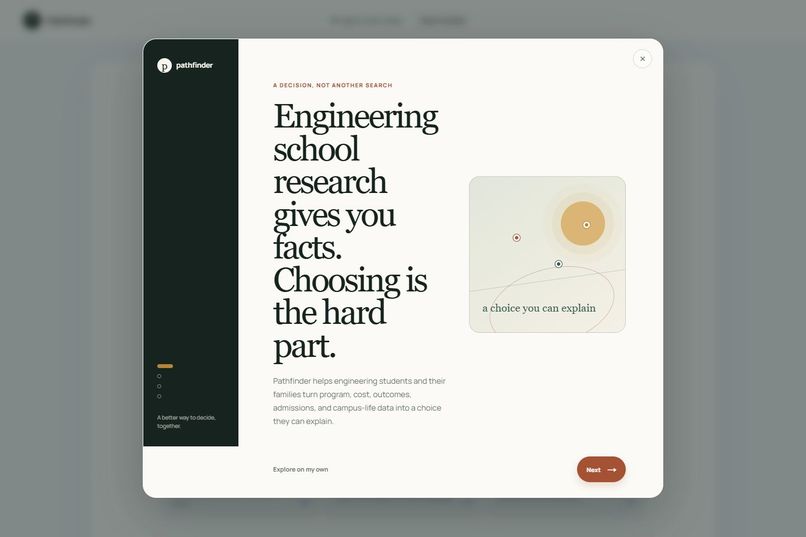
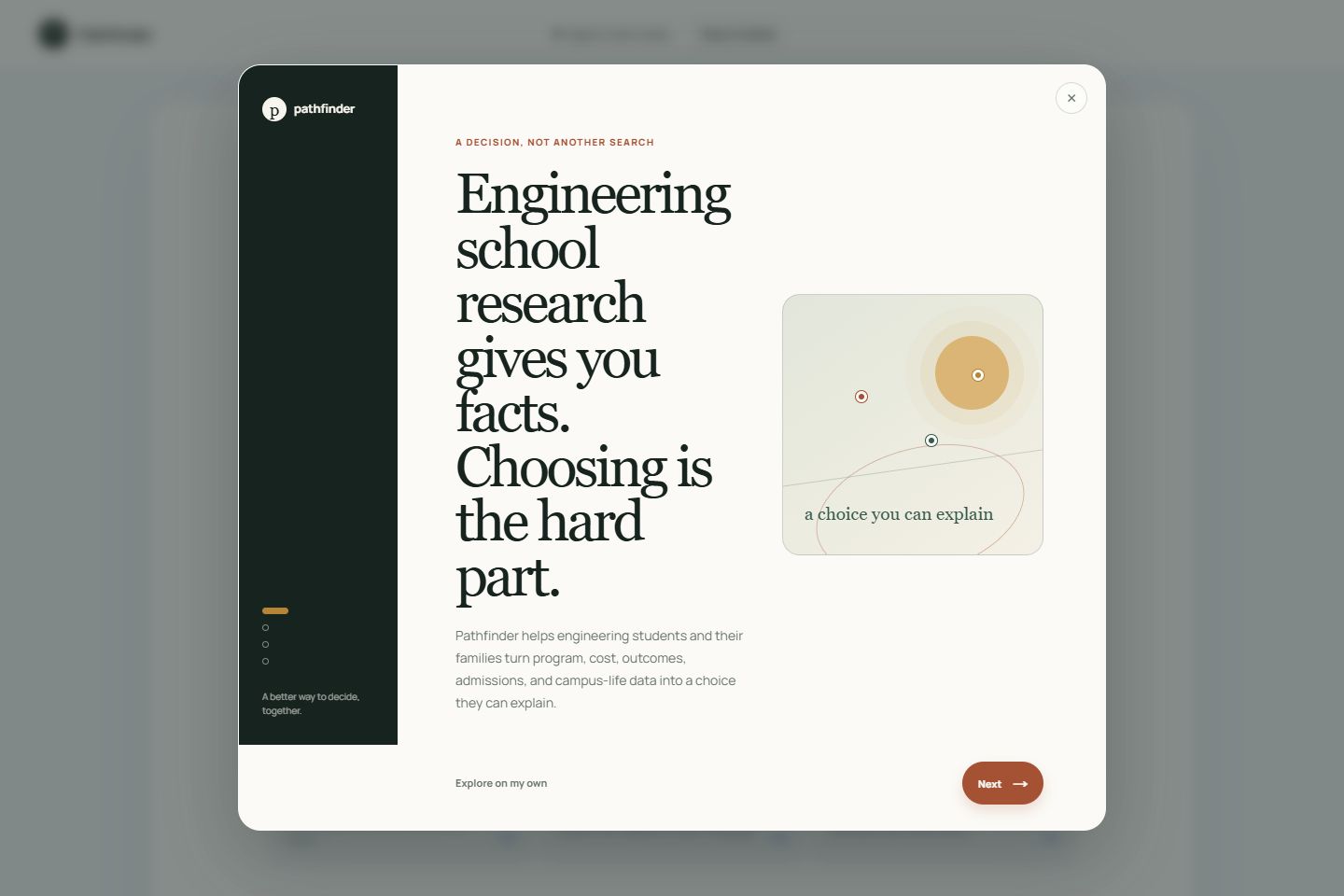
Pathfinder helps students turn overwhelming engineering-college research into a choice they can understand and explain.
-
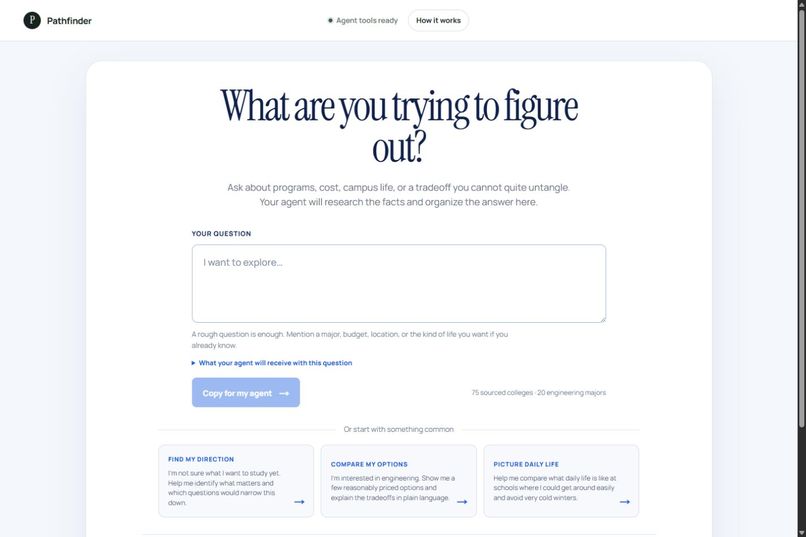
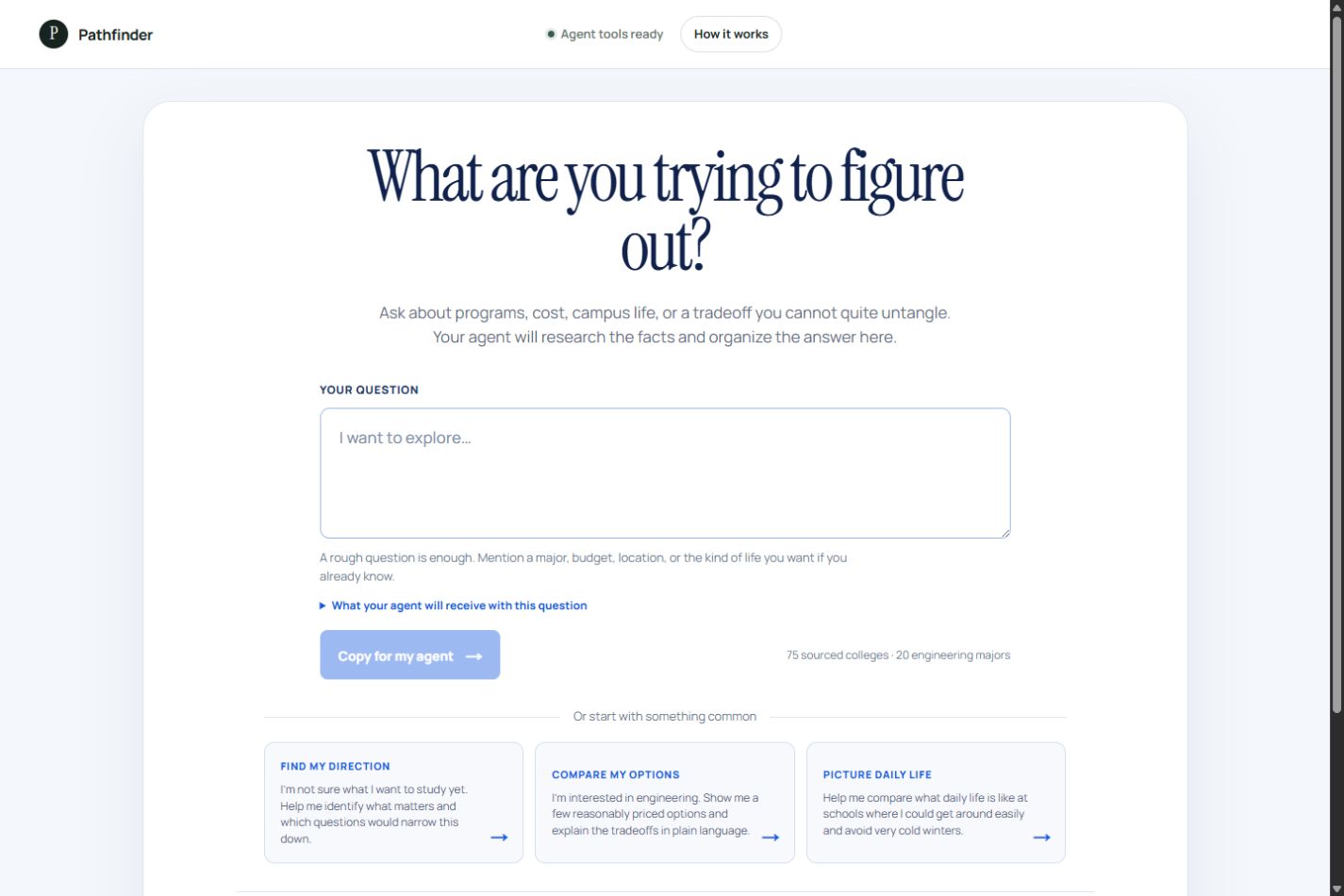
Start with a question in your own words. The agent researches the facts and organizes the decision visually.
-
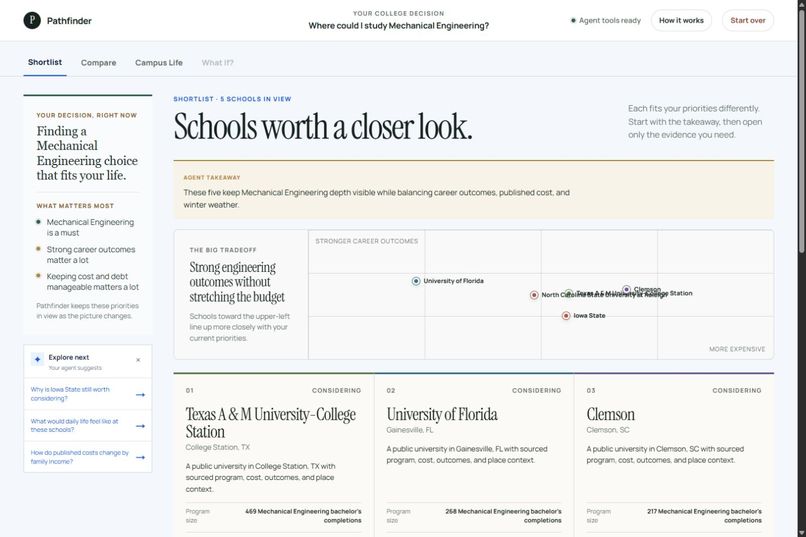
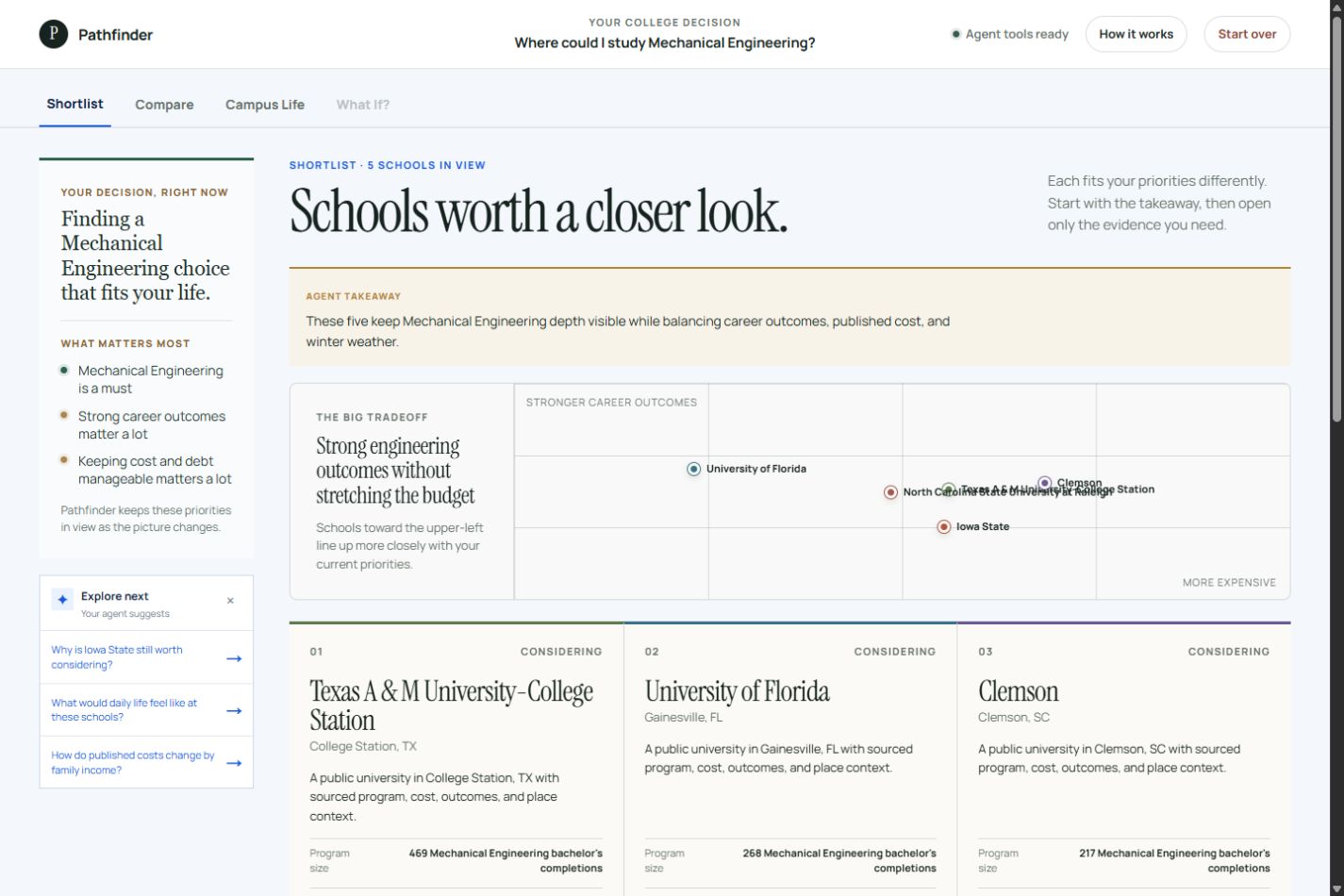
The agent narrows 75 sourced colleges into a focused shortlist shaped around the student’s actual priorities.
-
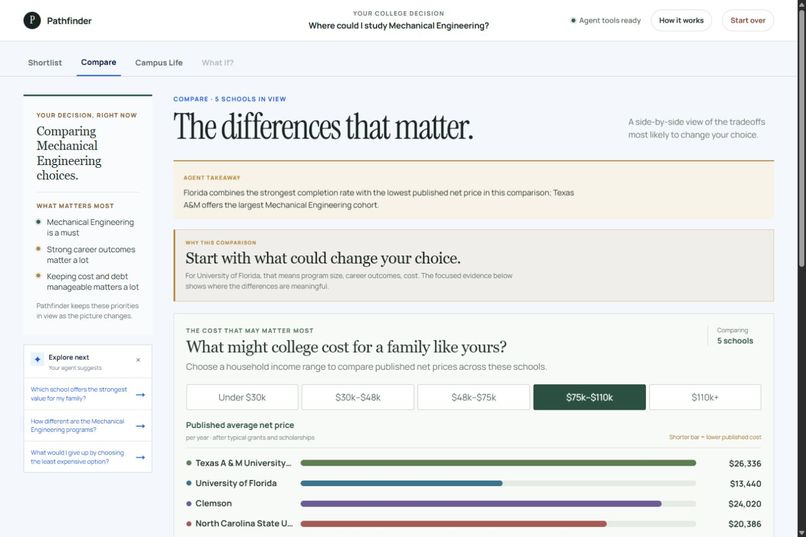
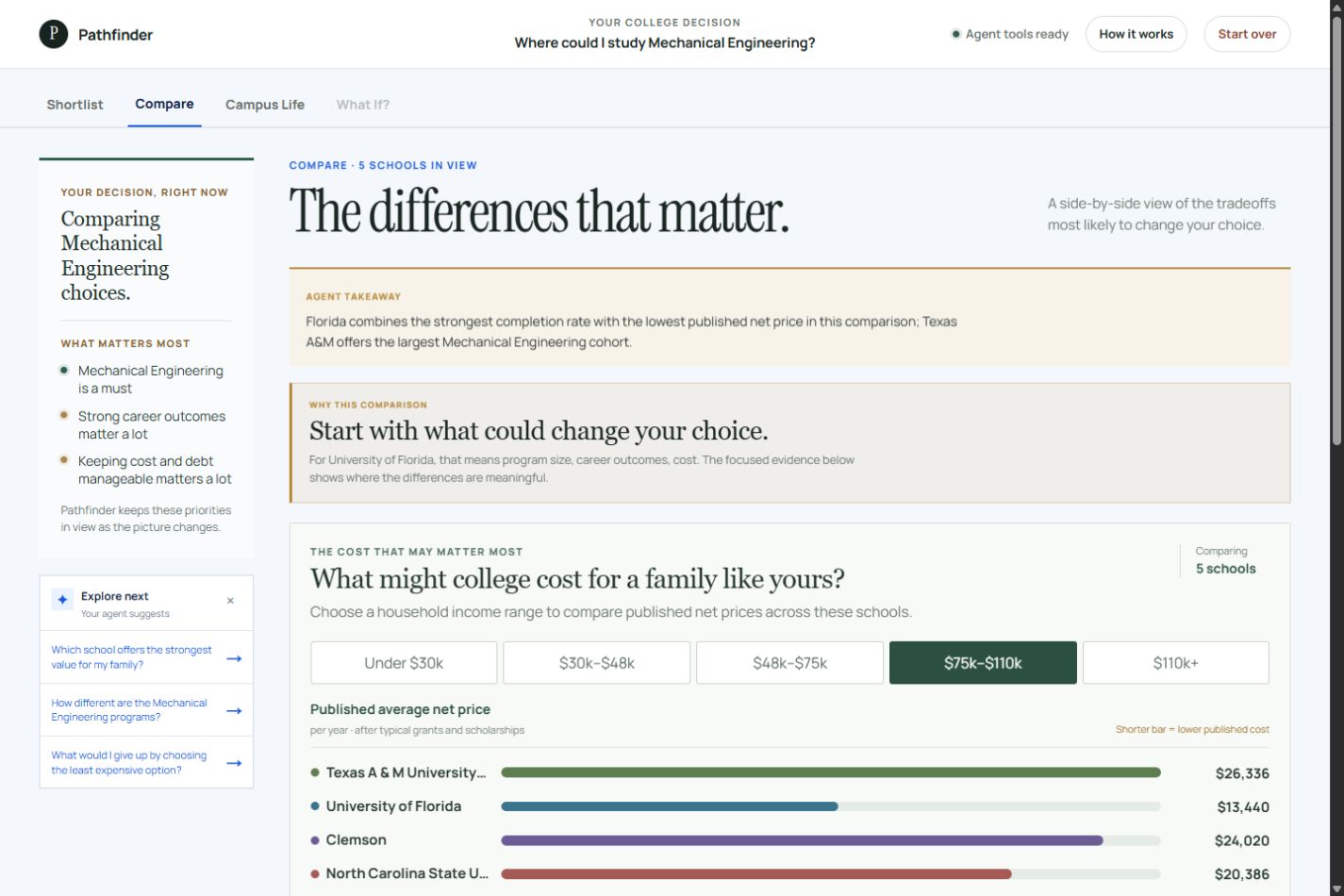
Compare the differences that matter, including published cost, career outcomes, and engineering-program strength.
-
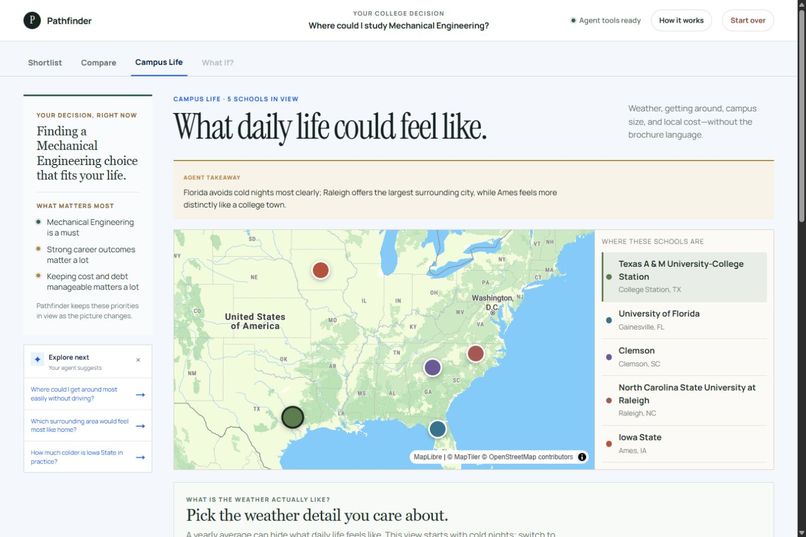
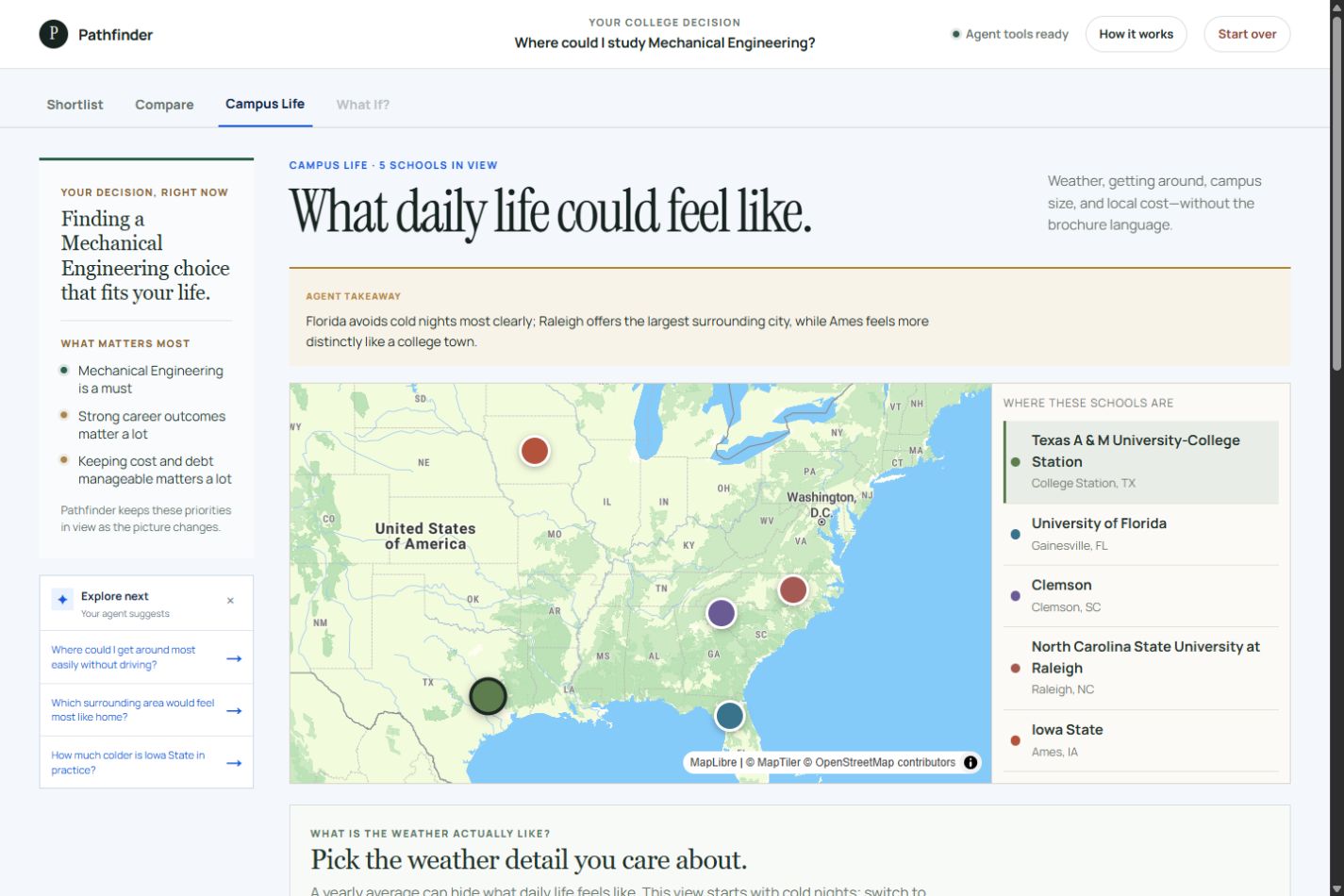
Explore climate, walkability, campus scale, and nearby communities to understand what daily life could feel like.
-
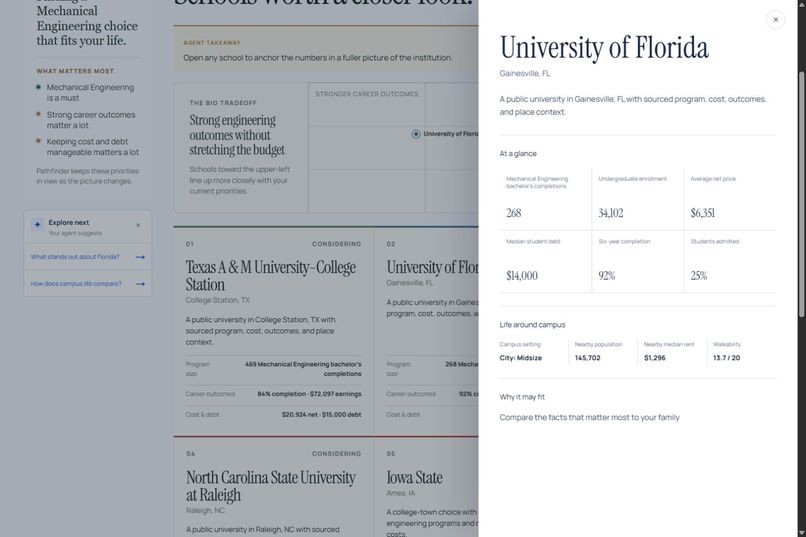
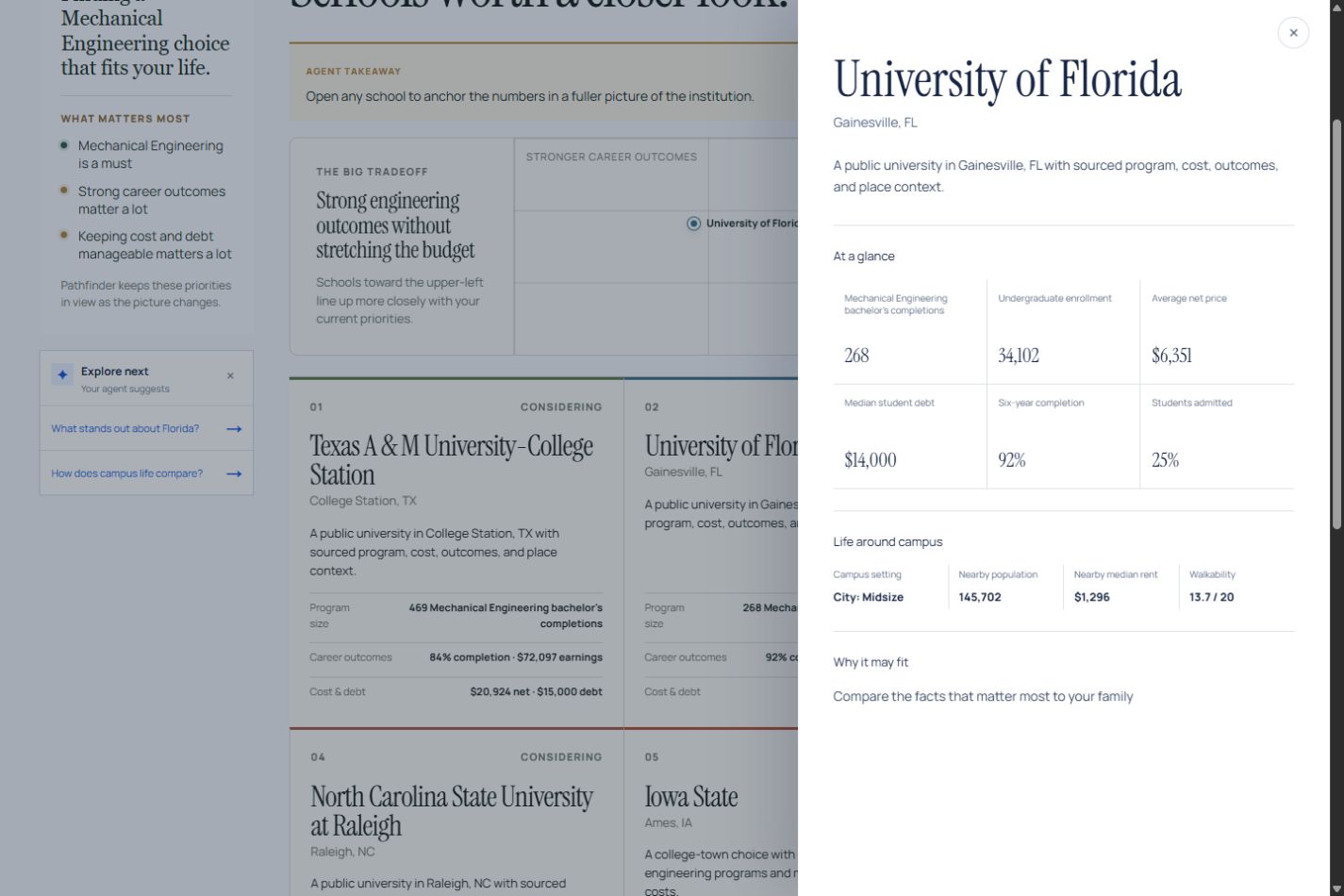
Open any school for a focused view of its program, costs, outcomes, admissions context, and surrounding area.
-
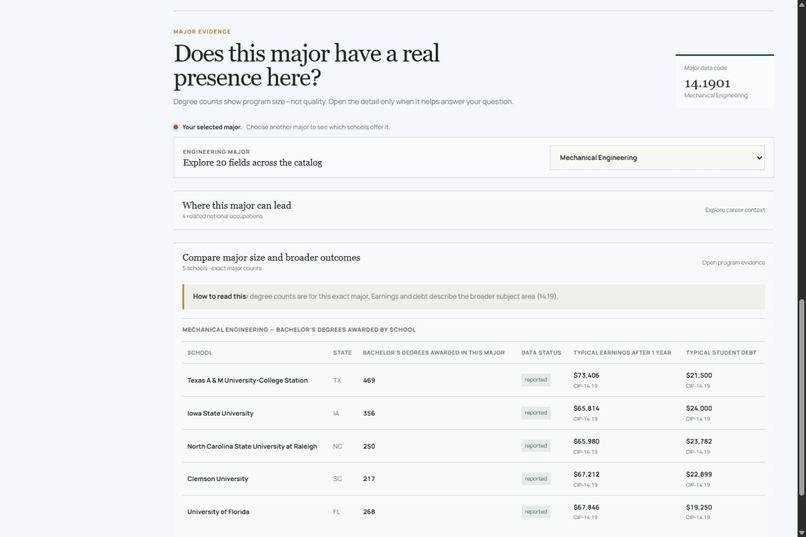
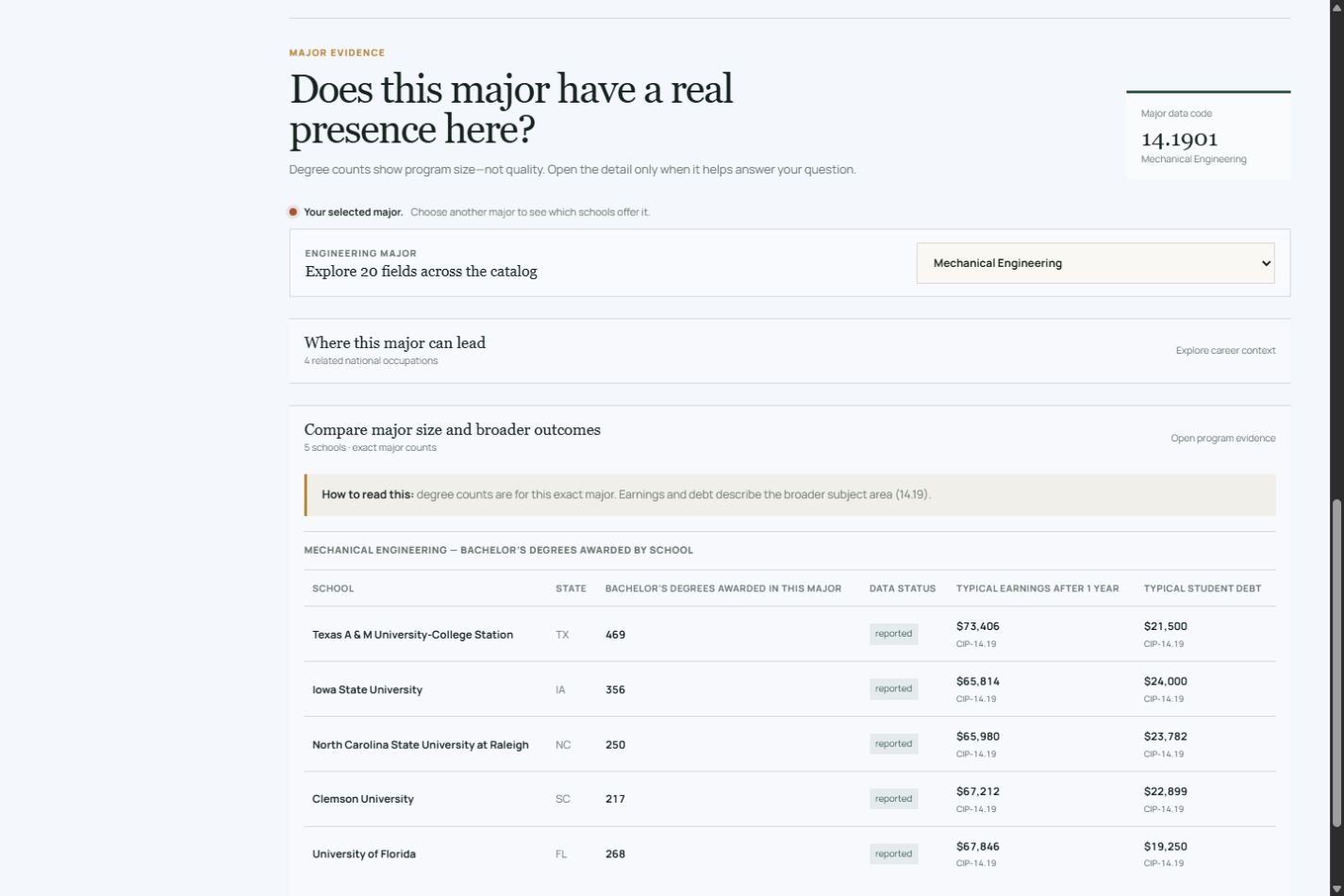
Compare exact-major degree counts alongside clearly separated broader-field earnings, debt, and career context.
Inspiration
College research is not suffering from a lack of information. Students and parents already have access to costs, programs, outcomes, admissions data, weather, and campus-life details. The difficult part is organizing all of it into a decision they can understand and explain.
I built Pathfinder to explore whether an agent could help with that actual decision, not just answer another isolated college question.
What it does
Pathfinder is an agent-first decision space for choosing an engineering school.
A student can start with an imperfect question like:
I’m interested in mechanical engineering. Show me a few reasonably priced schools with good career outcomes, and I don’t want somewhere brutally cold.
The agent can search Pathfinder’s catalog of 75 colleges and 20 engineering majors, inspect supporting evidence, build a focused shortlist, and compose the website around the student’s question.
Instead of returning a wall of text, the agent can create a visual comparison, explore campus life, open a focused school profile, or test a temporary “what if” scenario. The student supplies the priorities and judgment; the agent handles the research and organization.
Why WebMCP
WebMCP turns Pathfinder from a website beside a conversation into a workspace shared with the agent.
Pathfinder exposes fifteen purpose-built tools for reading the student’s decision, searching colleges and programs, retrieving evidence, updating preferences, managing schools, creating temporary scenarios, and changing the visual workspace.
The agent does not need to scrape the page or guess where to click. The student does not need to learn a complicated filtering system. Both work with the same decision state and see the same result.
This also makes interactions possible that are difficult in either a traditional website or a standalone chat. A student can ask a natural follow-up, have the agent reorganize the relevant evidence visually, and continue refining the decision without starting over.
How I built it
I built Pathfinder iteratively with Codex. I would test realistic student scenarios, identify where the agent lacked the right tool or where the interface became confusing, and then work with Codex to redesign, implement, test, and refine the next version.
The application uses React, TypeScript, Next.js, Vite, Tailwind CSS, MapLibre GL, and OpenAI Sites. Its bundled catalog draws from public sources including College Scorecard, NCES IPEDS, NOAA, EPA, Census, and the Bureau of Labor Statistics. Visitors need no account or API key, and their personal decision stays in their browser.
The hardest architectural problem was separating three kinds of state:
- The student’s saved decision
- A temporary what-if scenario
- The visual workspace currently being shown
That separation lets the agent reorganize the page or explore a hypothetical situation without silently changing what the student has actually decided.
What I learned
The central lesson was that agent experiences are stronger when they are designed as shared environments.
A chat response can explain a comparison. A WebMCP workspace can also preserve it, visualize it, expose the evidence, and support the student’s next question.
Pathfinder is not meant to declare one objectively “best” college. It helps students reduce an overwhelming field of information into a focused choice they understand and can confidently explain.
Built With
- codex
- next.js
- react
- tailwindcss
- typescript
- vite
- webmcp

Log in or sign up for Devpost to join the conversation.