Inspiration
As the fall semester piles up with coursework and deadlines, we often find ourselves daydreaming about our next vacation. However, planning a trip can be stressful — switching between countless websites for routes, reviews, and recommendations. We wanted to simplify that process into one seamless experience.
What it does
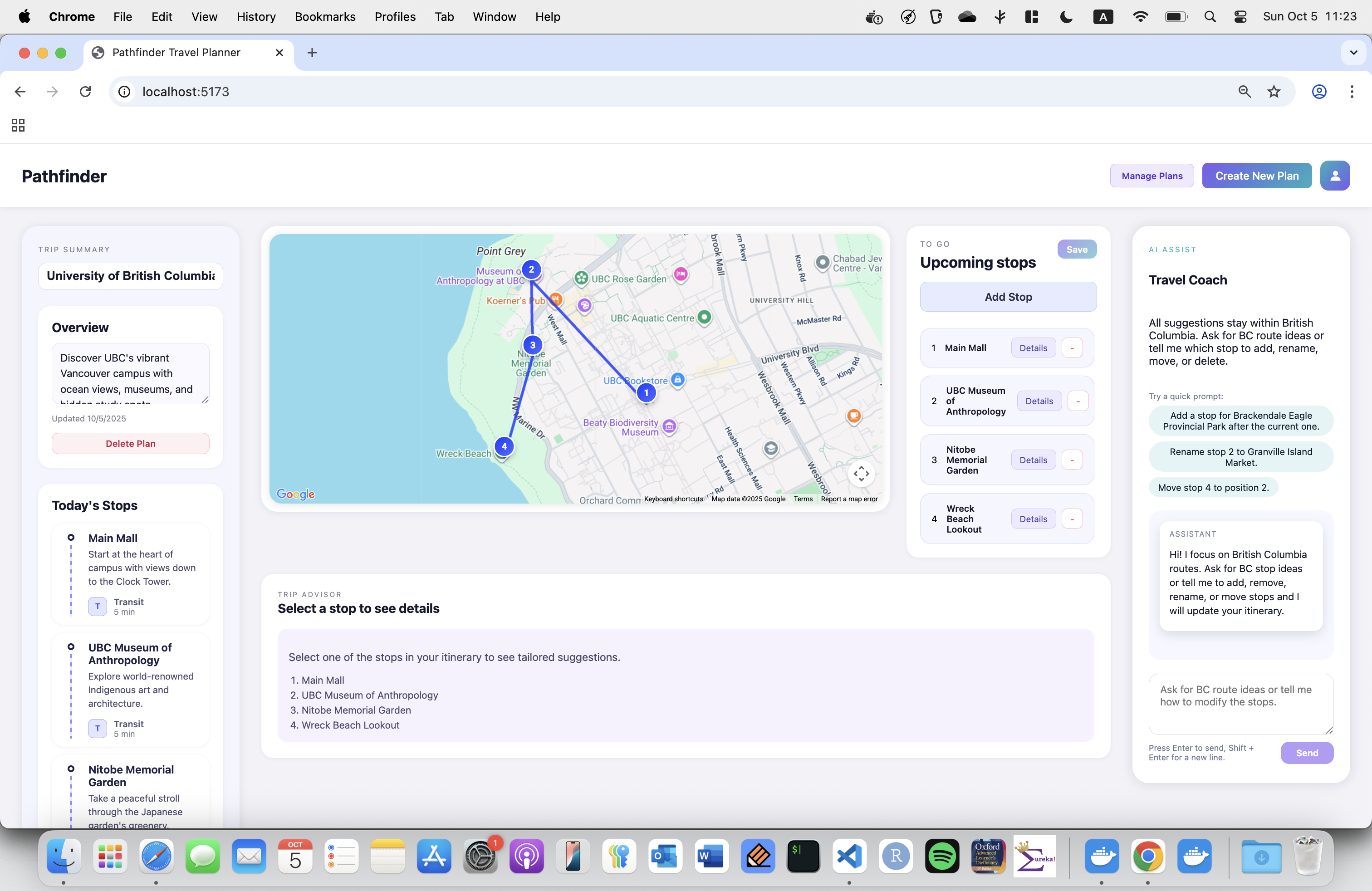
PathFinder enhances the travel planning experience by integrating Gemini AI with TripAdvisor suggestions and Google Maps browsing. Users can chat naturally with Gemini to discover destinations, restaurants, or activities, and instantly see them mapped out. It acts as both a smart travel assistant and an interactive planner — helping users create, modify, and visualize their itineraries with ease.
How we built it
We built PathFinder using a combination of:
- Frontend: React and Vite for a responsive and dynamic interface.
- Backend: Python (FastAPI) to handle API requests and manage data between Gemini, TripAdvisor, and Google Maps.
- APIs: Gemini for conversational intelligence, TripAdvisor’s API for attraction and restaurant data, and Google Maps API for visualization and directions.
- Data management: SQLite for storing user plans and preferences.
Challenges we ran into
- Integrating multiple APIs with different data formats and rate limits.
- Making Gemini’s natural language output translate into structured backend actions (e.g., adding a destination to the itinerary).
- Ensuring the map and chatbot stay synchronized when users add, delete, or modify stops.
- Designing an intuitive UI that balances chat interactions and map navigation.
Accomplishments that we're proud of
- Successfully linking Gemini with both Google Maps and TripAdvisor to create a unified travel planning experience.
- Implementing function calling within Gemini to let the chatbot trigger backend actions like
add_itemorupdate_plan. - Creating a clean, minimal UI that makes travel planning enjoyable instead of overwhelming.
- Building a working demo within the hackathon timeframe that integrates AI and real-world APIs seamlessly.
What we learned
- How to combine LLM function calling with REST APIs to bridge natural language and application logic.
- How to handle asynchronous data from multiple sources while maintaining frontend responsiveness.
- The importance of user experience in AI-driven apps — clarity and responsiveness matter as much as intelligence.
What's next for PathFinder
- Add personalized travel recommendations based on budget, interests, and time constraints.
- Implement social sharing so friends can co-edit trip plans.
- Integrate hotel booking and flight search.
- Expand support for public-transit routing using OpenTripPlanner or OpenRouteService.
- Deploy a stable beta version for public use.
Built With
- fastapi
- javascript
- python
- react


Log in or sign up for Devpost to join the conversation.