Pathfinder, as I'd describe it
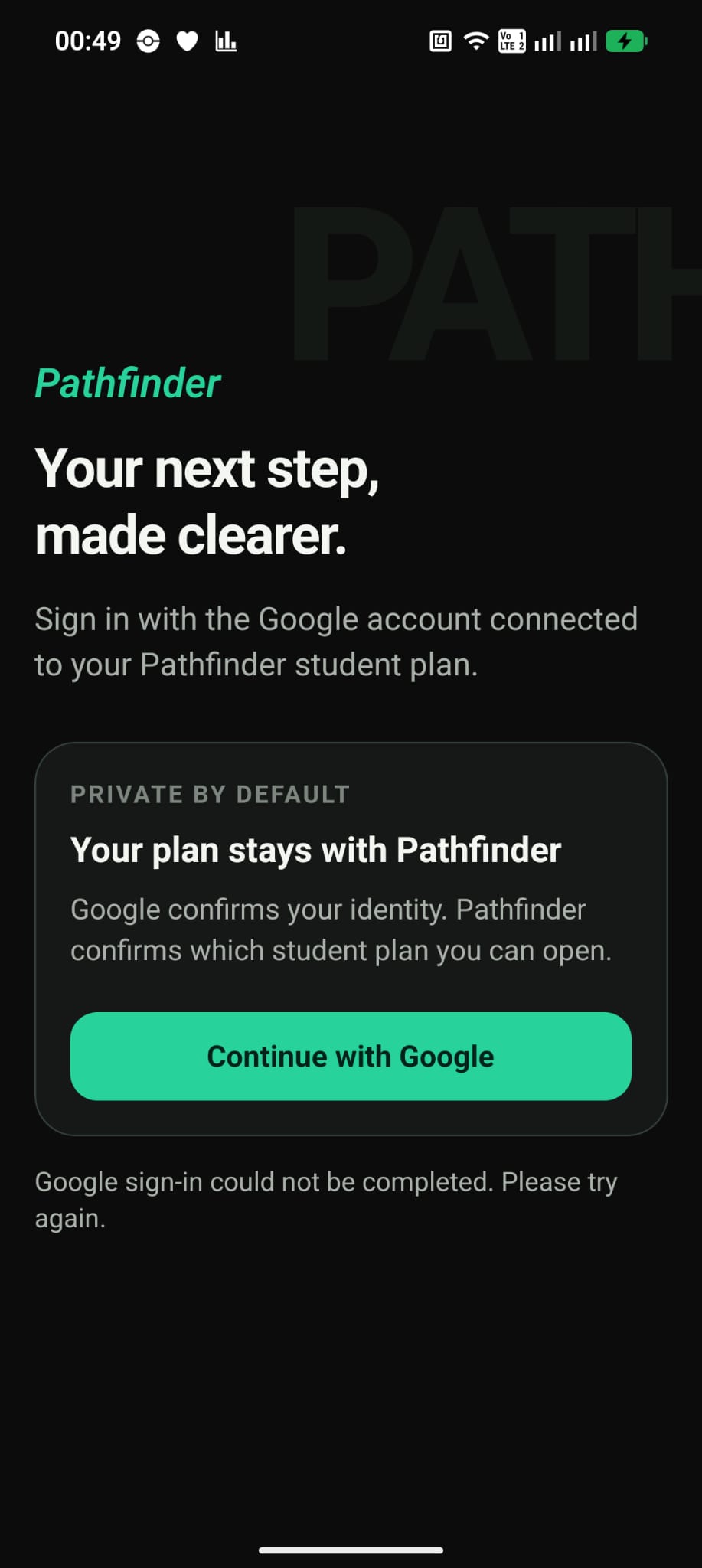
Pathfinder is an application co-pilot for students finishing school, the 16, 17, 18-year-olds deciding what comes next: university, a degree apprenticeship, or an apprenticeship. It helps them find their options, build a smart application portfolio, write in their own words, and hit every deadline on the way to a placement.
I built it because the application process has quietly become an asymmetric fight. Institutions and employers automated their side of the table years ago, applications are parsed, filtered, and ranked by software before a human ever reads them. The applicant got none of that machinery. A 17-year-old is up against systems their school careers office doesn't even know exist, and unless their family can afford a private advisor or they happen to have an older sibling who's been through it, they're doing it alone with fifty browser tabs open. Pathfinder is the machine on their side of the table. That's the whole idea.
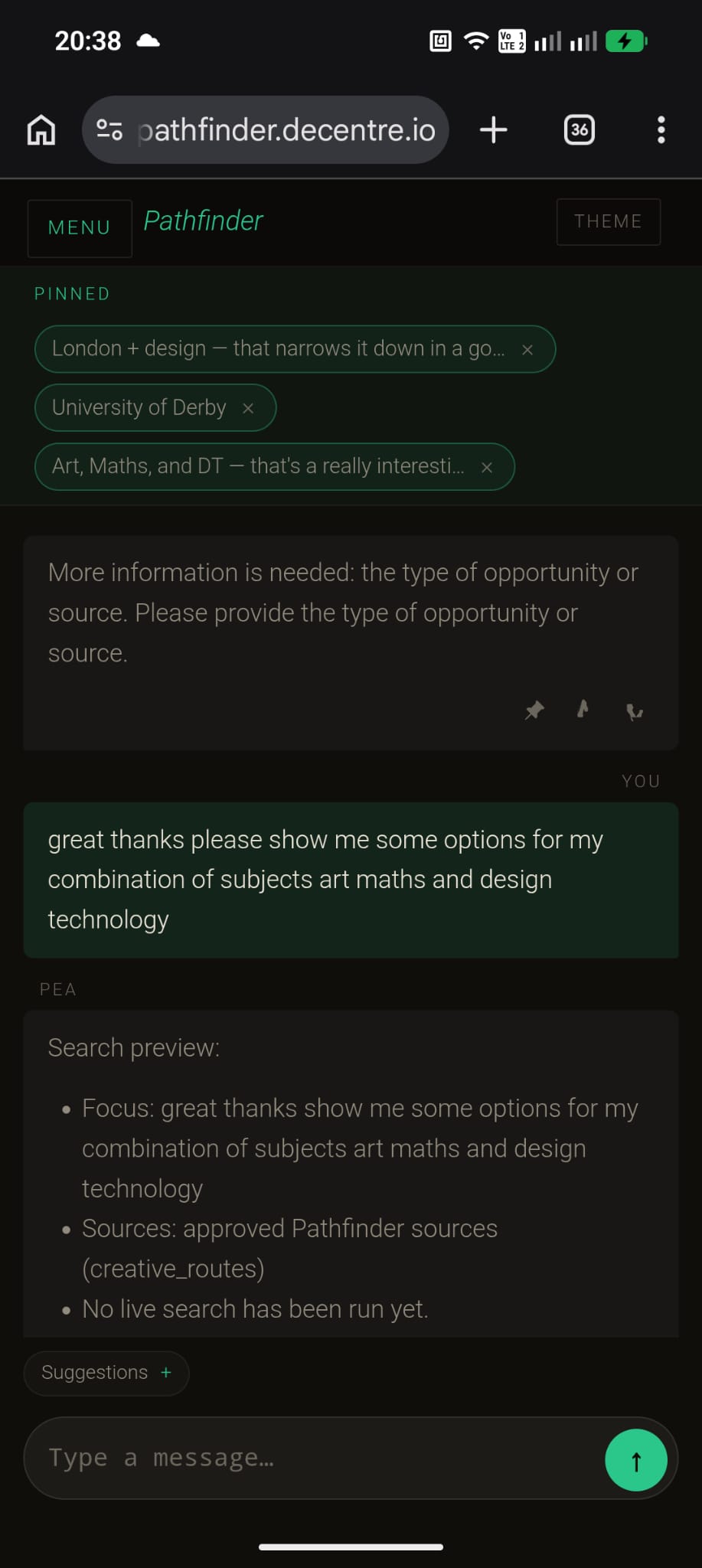
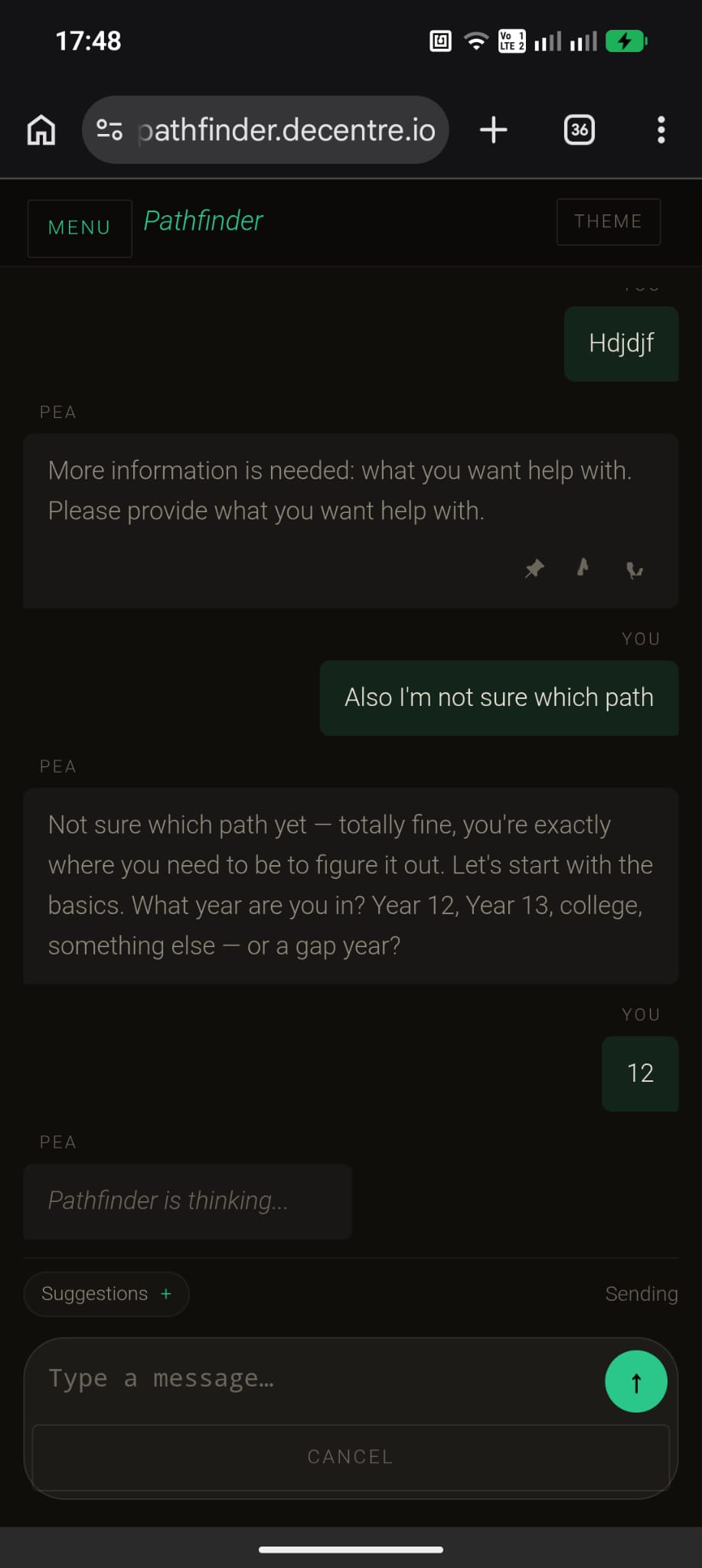
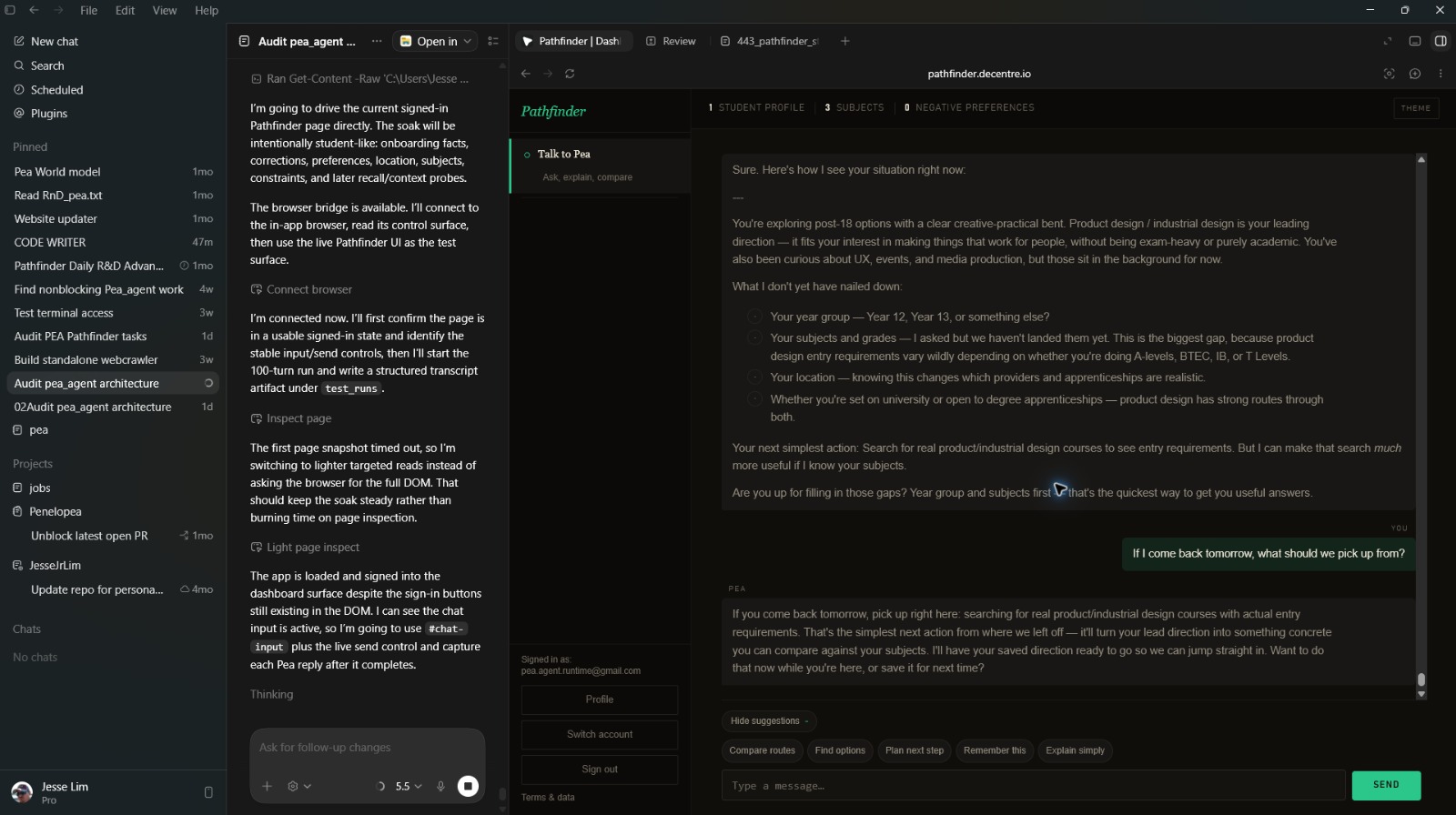
It starts with a conversation, not a form. Pathfinder asks about your year group, your subjects and predicted grades, what kind of route interests you, where you live, what your constraints are. It remembers all of it — you never repeat yourself. From there it helps you build what I call a 1-3-1 portfolio: one first choice you genuinely want and can get, three realistic backups across different routes or providers, and one wildcard — the aspirational option you wouldn't have dared shortlist on your own. For every option it tells you why it fits, why it might not, and when the deadline is.
Everything it recommends is grounded in verified data. Pathfinder maintains a constantly refreshed register of official sources, UCAS course pages, university sites, the government apprenticeship board, employer career pages and when it shows you an opportunity it tells you where the information came from. When something needs checking, it says so. It does not invent entry requirements, fees, or deadlines. In a category where most advice is either outdated, commission-driven, or hallucinated, that verification layer is the product.
It's also built around time in a way a chatbot isn't. Pathfinder knows that a deadline ninety days out and a deadline nine days out are different problems. It counts backwards from every deadline through the work actually required — the statement, the reference, the CV and applies pressure proportional to what's at stake, on the specific thing at risk. Not a wall of notifications; one clear "here's what matters today." And when you're on track, it says that too. The goal was never engagement. The goal is the placement. Everything in the system points at that.
On writing: Pathfinder helps students write their personal statements it does not write statements for them. It interviews, structures, gives honest feedback, and keeps everything anchored to the student's own words and evidence. That's a hard line, partly because it's right and partly because a statement a student can't stand behind at interview is worthless anyway.
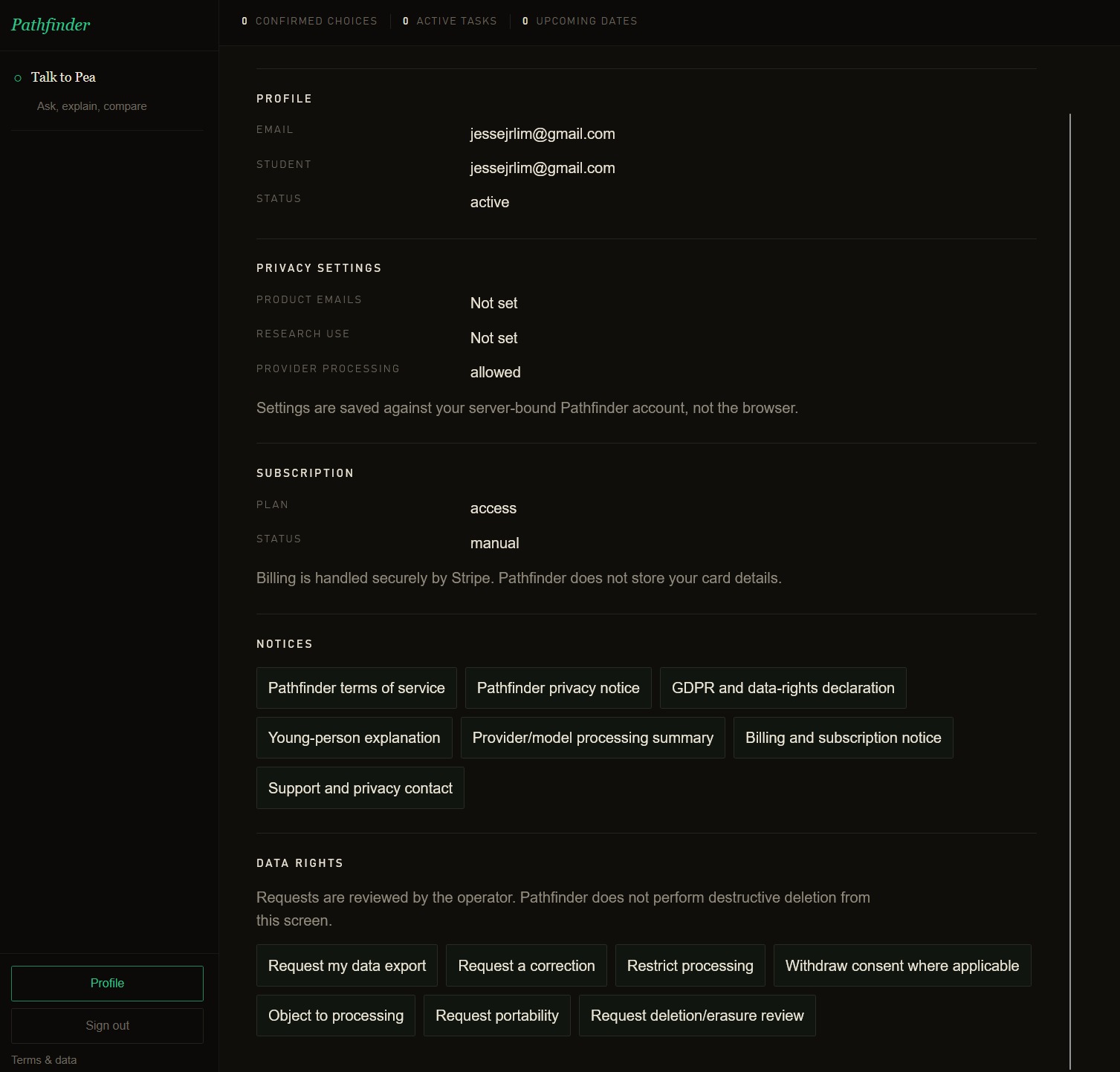
The business model is deliberately simple: you buy credits and spend them when you need them. No subscription running in a quiet month, no cancellation guilt your balance just waits for you, because a 17-year-old's need for this is bursty, and the product should respect that instead of exploiting it. It also means our incentives are inspectable: we're paid in money, not in data. There are no ads, no selling of anything about you, and our terms are written to restrict us. For most of these students, Pathfinder will be the first AI agent they ever use. I build like that's a responsibility, because it is.
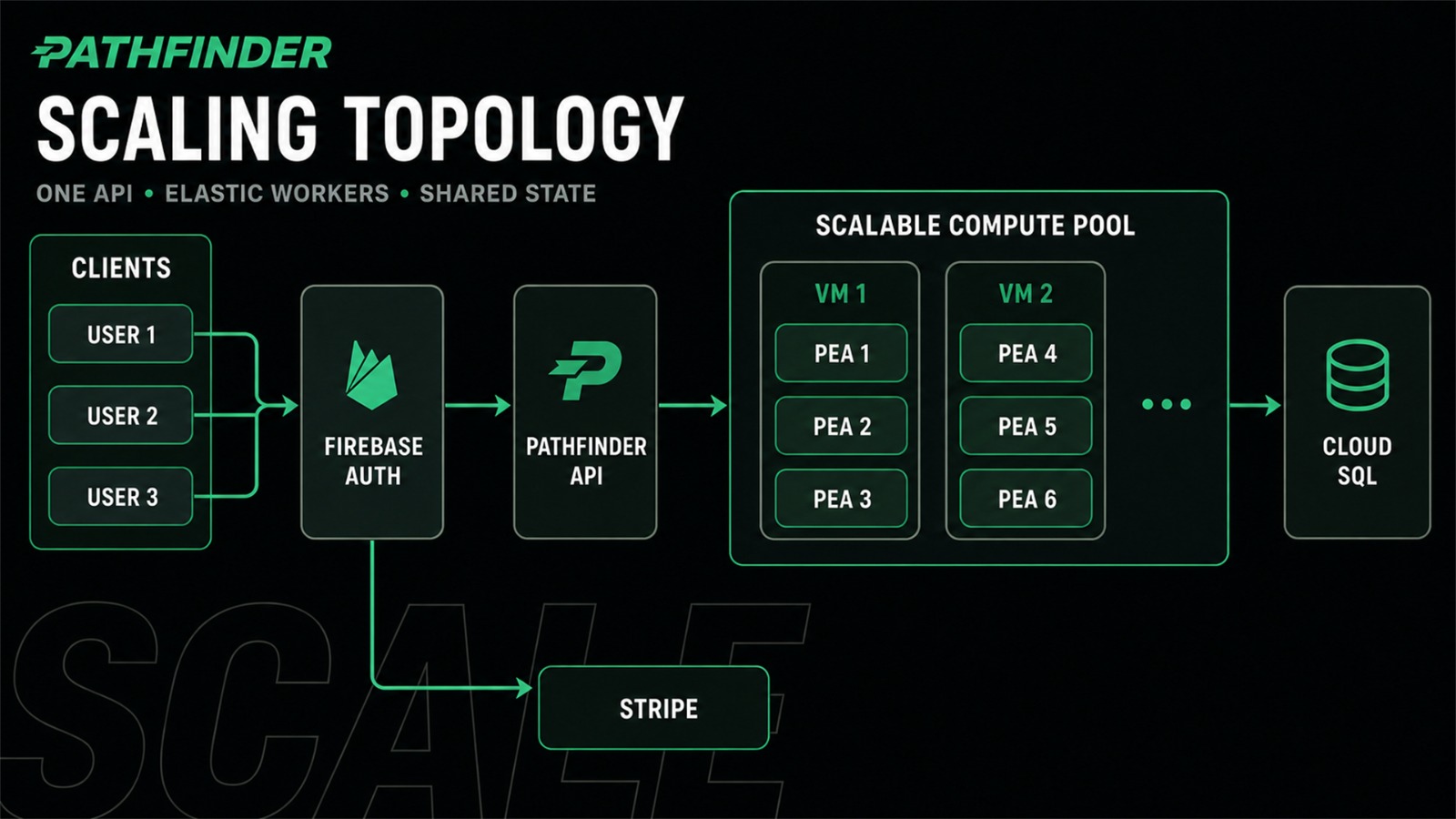
Underneath, Pathfinder runs on Pea a governed agent runtime I built to be auditable from the ground up. Every action the agent takes is authorized, logged, and reviewable. It drafts; it never submits. The student always owns the decision. That's not a compliance afterthought, it's the architecture.
Where it's going: the same machinery pointed at more of the map. New destination registers mean a UK student's wildcard might be an English-taught degree in the Netherlands at a third of the fees and a student in Hanoi or Lagos gets verified, commission-free answers about the UK that no agent paid by a university will ever give them. Aspiration shouldn't depend on postcode, connections, or what somebody else decided your ceiling was.
Pathfinder doesn't make students smarter. They're already good enough. It makes sure the world actually sees them matched, evidenced, and on time. https://www.decentre.io/pathfinder
How we built it
At its very Core Pathfinder is Pea an agent runtime I started building at the start of 2026 (https://www.decentre.io/pea). Pea was designed to be governed. All agent state, task and control primitives have telemetry bundles that are auditable. It was designed to be granular and upstream as possible so any downstream process is just a combination of bundles. This has translated well for Pathfinder elements of GDPR controls rely on on peas machinery to identify student data.
Challenges we ran into
Natural language resolvers we are on version 4 now. and have plans for a V5-
Accomplishments that we're proud of
I started coding Jan 2025 using GPT 4.1, everyday I make something that works since then has been an achievement.
What we learned
More than I could ever write here. but if I had to pick one making something useful comes not from writing code but from speaking to people.
What's next for Pathfinder Mobile
Guiding student through the application process is the first step, Pathfinder will also be the introduction to a proactive agent for many. If successful pathfinder can evolve fairly easily into a a study partner or a coworker. We have all the pieces, its just a case of assembling them when the time is right.
Built With
- fastapi
- firebase
- gcp
- html
- javascript
- node.js
- postgresql
- python
- qdrant
- sqlite
- typescript
- uvicorn

Log in or sign up for Devpost to join the conversation.