-
-
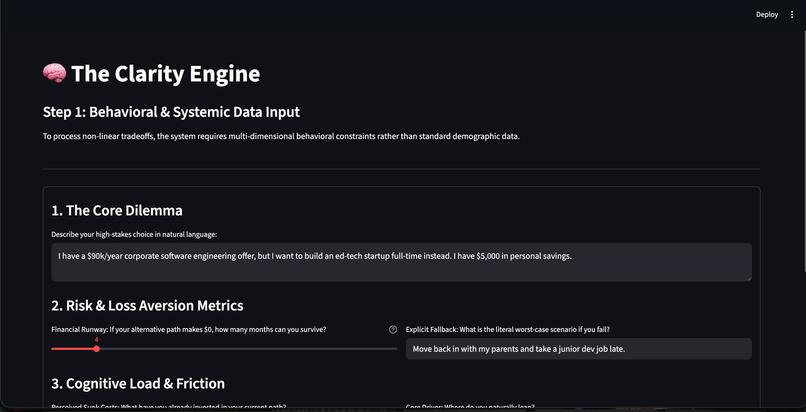
Front page of the website
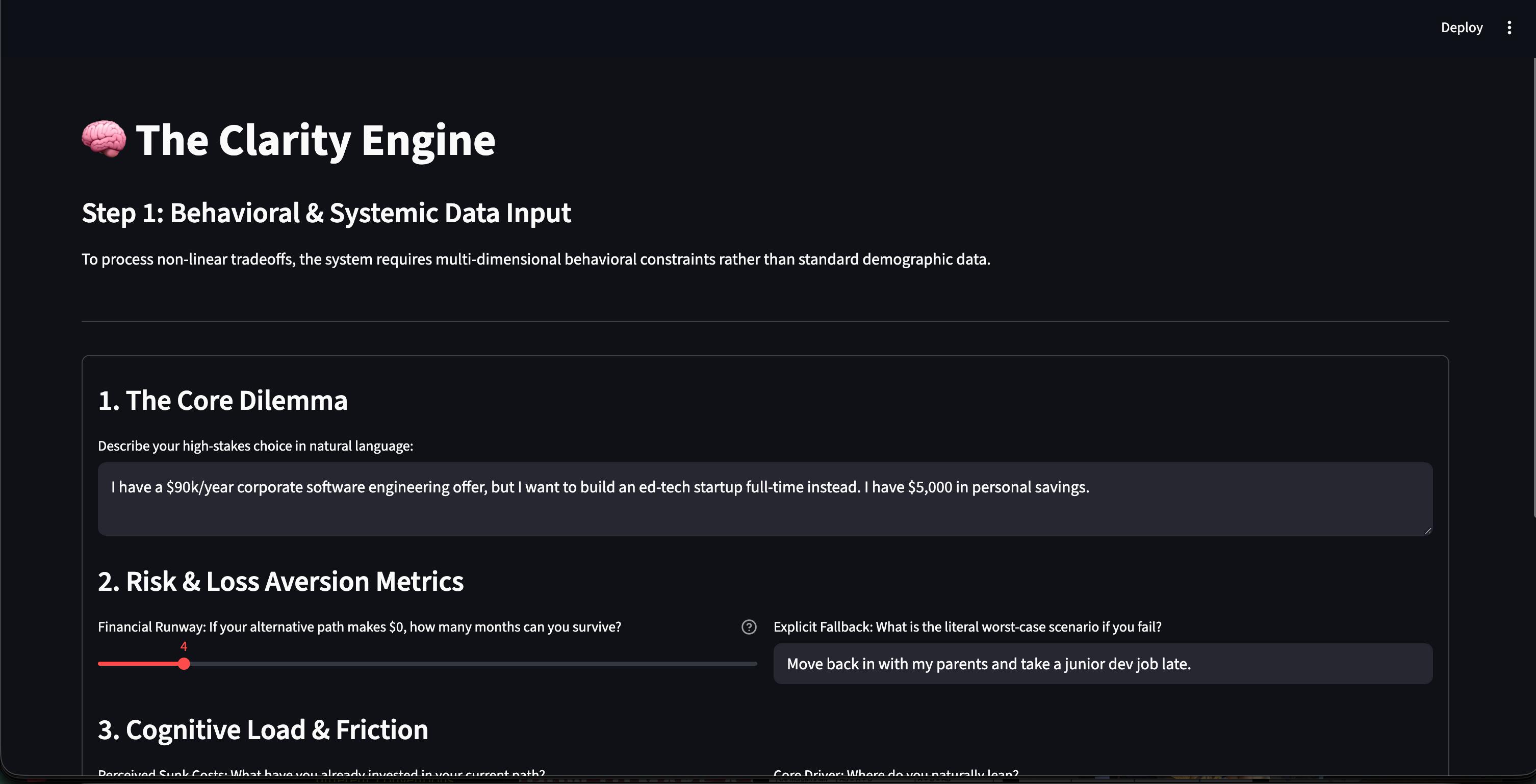
Inspiration
Choosing a career is one of the biggest decisions that high school students, university students, and recent graduates face, yet many feel overwhelmed by the number of options available. This struggle is something we experienced ourselves. As students facing important educational and career decisions, we often found that existing tools gave generic answers without considering our individual goals, circumstances, or priorities. PathFinder was built to provide the kind of guidance we wished we had when making those decisions. Traditional career quizzes or spreadsheets often provide generic results and don't account for individual goals, financial situations, academic interests, or changing priorities. We wanted to create an AI-powered career advisor that feels like having a conversation with a mentor. It helps students explore possibilities instead of simply telling them what to do. Our goal was to make career guidance more accessible, personalized, and less intimidating.
What it does
PathFinder is an AI-powered career guidance chatbot that helps students navigate important educational and career decisions.
Through a guided conversation, it gathers information about a student's:
- Interests
- Skills
- Academic background
- Career goals
- Preferred work environment
- Values and priorities
Based on this information, PathFinder can:
- Recommend suitable careers
- Suggest university majors or postgraduate pathways
- Compare different career options
- Explain why each recommendation is a good fit
- Surface potential trade-offs and considerations that students may not have initially considered
- Identify skills the student should develop
- Allow users to explore "What if?" scenarios (e.g., postgraduate studies vs. entering the workforce)
AI is particularly valuable for this problem because career decisions are highly personal and involve many interacting factors. Traditional quizzes rely on fixed questions and static scoring systems, while PathFinder can interpret open-ended responses, adapt its follow-up questions, and provide personalized reasoning based on each student's unique situation.
As a result, students can evaluate career options more confidently, compare trade-offs side-by-side, and move from uncertainty to a structured decision process.
How we built it
PathFinder combines several AI technologies:
- Conversational AI for natural interactions
- Natural Language Processing (NLP) to understand user responses
- Recommendation algorithms to match students with suitable careers
- Knowledge retrieval from curated education and career resources
AI Architecture
Student Input
      │
      ▼
Natural Language Processing
      │
      ▼
Extract Interests, Skills, Goals & Preferences
      │
      ▼
Recommendation Engine
      │
      ▼
Career Knowledge Base
      │
      ▼
Personalized Recommendations
      │
      ▼
Student Reviews & Makes Final Decision
The recommendation process can be viewed as:
$$ R = f(I, S, G, V, P) $$
where:
- (I) = Interests
- (S) = Skills
- (G) = Goals
- (V) = Values
- (P) = Preferences
PathFinder uses Natural Language Processing (NLP) to interpret student responses, a recommendation engine to analyze interests and goals, and knowledge retrieval to provide career-related information and personalized guidance.
Challenges we ran into
Some of our biggest challenges included:
- Ensuring users understand that AI is providing guidance rather than making life decisions for them.
- Designing recommendations that are personalized without being overly prescriptive.
- Preventing bias toward only popular or high-paying careers.
- Handling incomplete or vague user responses while still producing useful recommendations.
- Balancing conversational flexibility with accurate and reliable information. To address these challenges, we designed prompts that explicitly instruct the system to consider multiple career pathways, avoid over-weighting salary or popularity, and respond appropriately to incomplete inputs. We also structured the system to consistently present trade-offs instead of single-path recommendations, and reinforced that the output is for guidance only, not decision-making.
Accomplishments that we're proud of
We're proud that PathFinder:
- Provides personalized recommendations instead of generic results.
- Explains why it recommends each career.
- Encourages students to explore multiple pathways rather than a single "correct" answer.
- Uses Responsible AI principles by keeping humans involved in the final decision.
- Makes career exploration more engaging through natural conversation.
What we learned
Through this project, we learned that successful AI is about helping users make better decisions. Designing responsible AI systems requires more than technical accuracy. Users need transparency, explanations, and clear boundaries so they understand that AI is a tool for guidance rather than a replacement for human judgment.
We gained experience in:
- Conversational AI
- Natural Language Processing (NLP)
- Recommendation systems
- Human-centered AI design
- Responsible AI practices such as transparency, fairness, and human oversight
Most importantly, we learned that AI works best as a decision-support tool rather than a decision-maker.
What's next for PathFinder
Future improvements include:
- Real-time labor market and salary data
- University and scholarship recommendations
- Personalized career roadmaps
- Resume and portfolio feedback
- Multi-language support
- Integration with university career centers
- AI-powered interview preparation
- Personalized learning and certification recommendations
Our long-term vision is for PathFinder to become a comprehensive AI career companion that supports students throughout their academic journey and professional careers.
Built With
- large-language-models
- llms
- natural-language-processing
- pandas
- python
- streamlit
- visual-studio-code

Log in or sign up for Devpost to join the conversation.