-
-
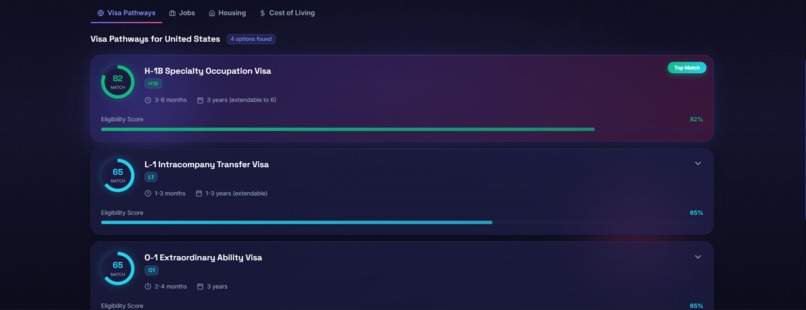
List of Visa
-
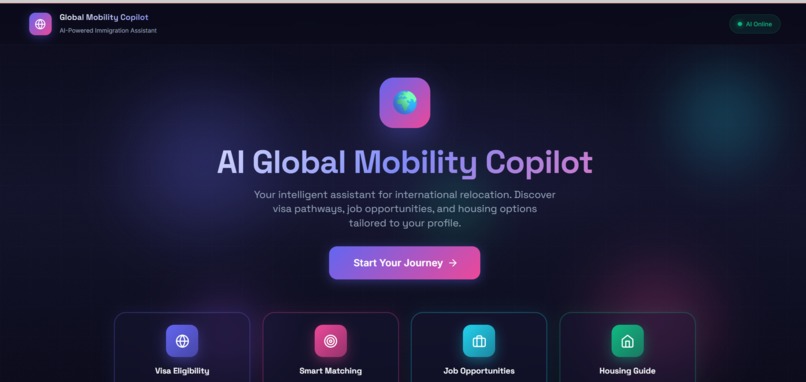
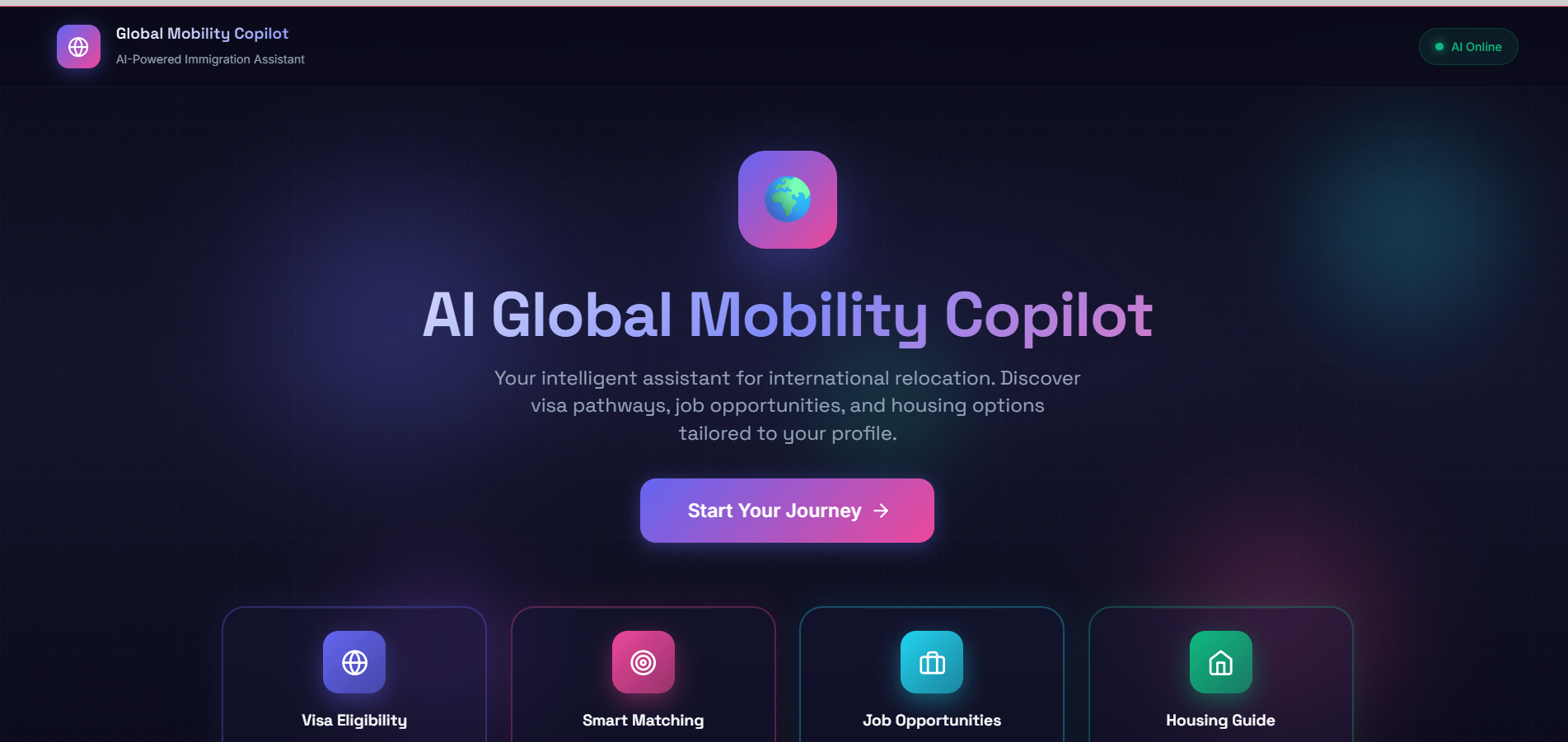
Landing Page
-
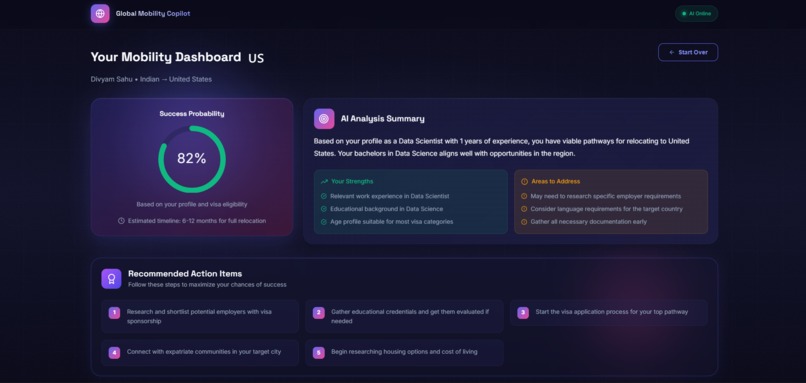
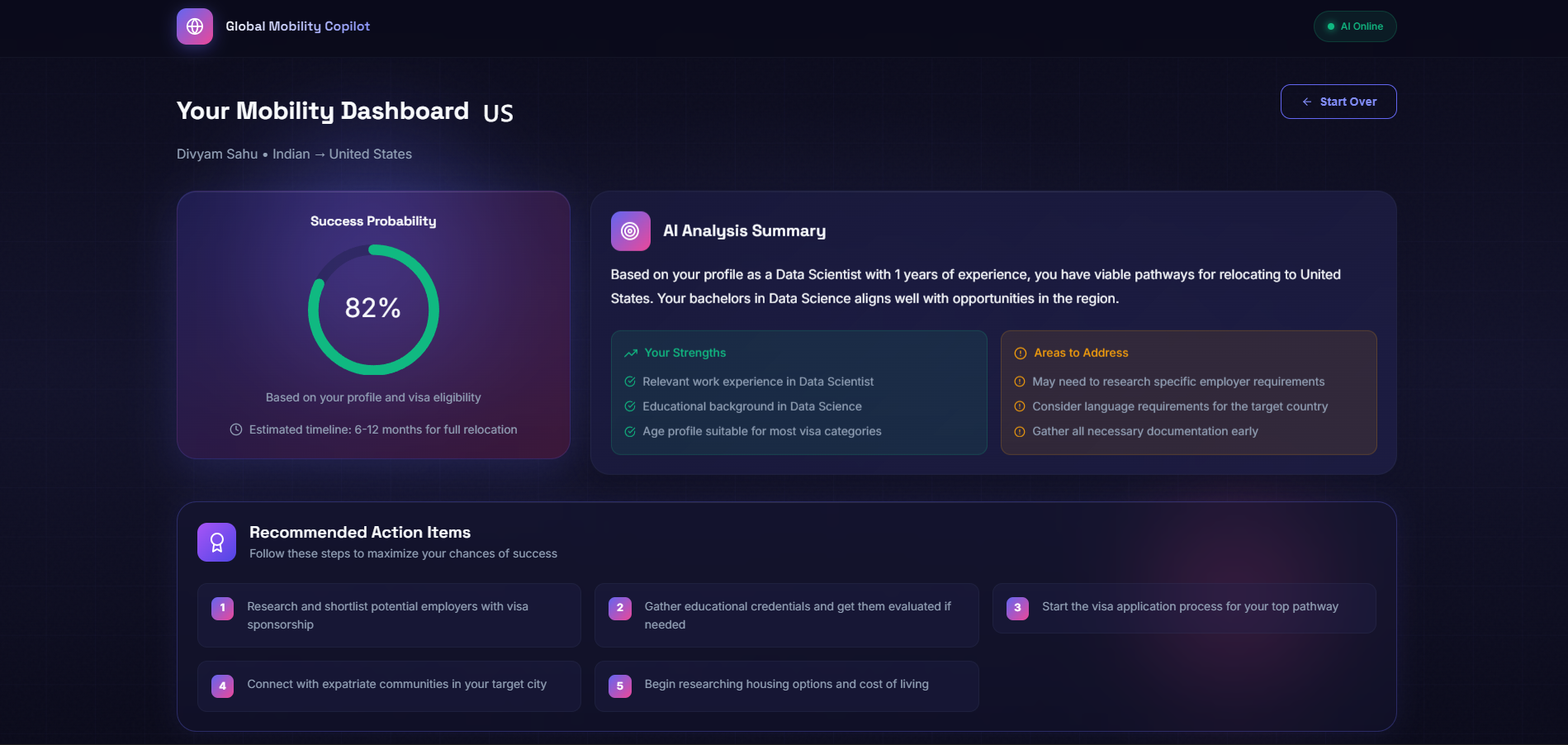
Profile analysis
INSPIRATION :
The idea for Pathfinder AI was born from a personal frustration many of us face: the overwhelming complexity of international relocation. With over 280 million international migrants worldwide, the process of understanding visa eligibility, finding jobs with sponsorship, and locating suitable housing remains fragmented across dozens of websites, government portals, and forums. We asked ourselves: What if AI could be your personal immigration consultant? One that analyzes your unique profile, understands visa requirements across multiple countries, and delivers a personalized roadmap—all in under 60 seconds.
WHAT IT DOES
Pathfinder AI is an intelligent relocation assistant that:
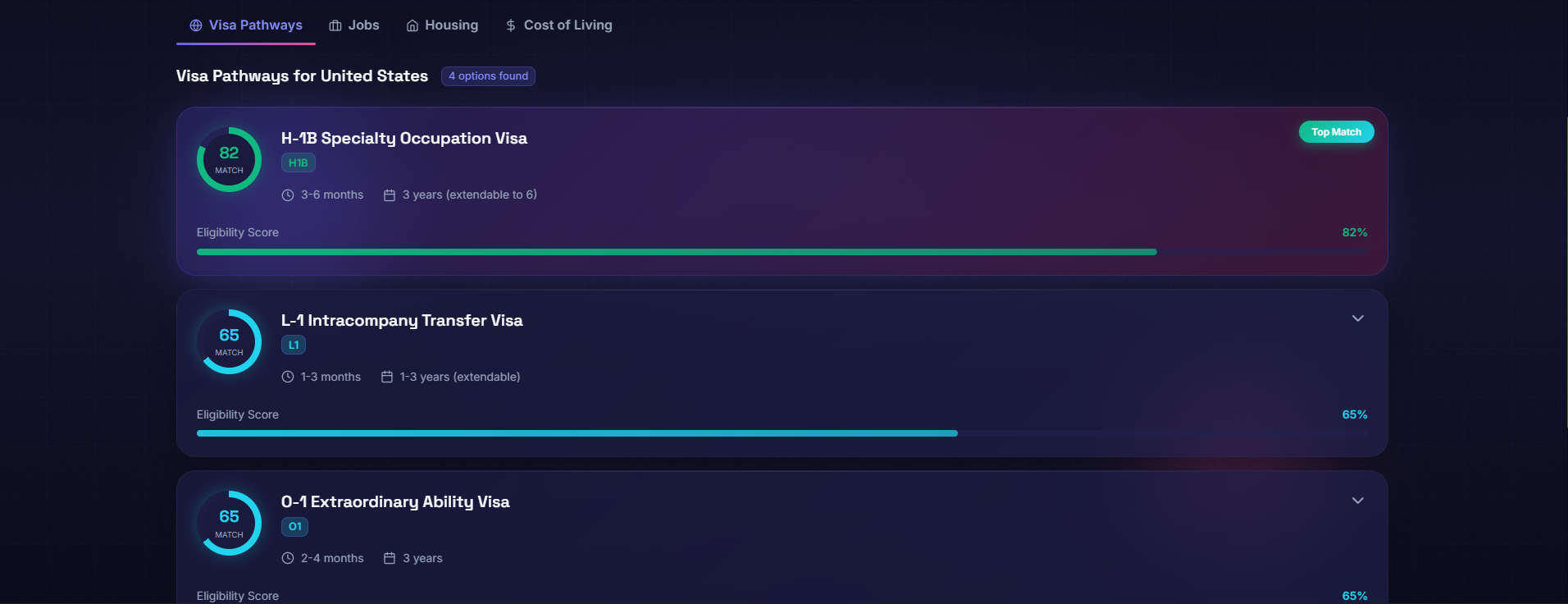
- Evaluates Visa Eligibility - Using a hybrid AI model that combines rule-based logic with Google's Gemini AI to analyze 50+ visa types across 8 countries
- Calculates Success Probability - Provides a data-driven assessment of your relocation chances
- Recommends Job Opportunities - Curates positions with visa sponsorship that match your profile
- Suggests Housing Options - Finds accommodations in your target destination
- Provides Cost of Living Analysis - Breaks down monthly expenses so you can plan financially
HOW WE BUILT IT
We architected Pathfinder AI as a modern full-stack application: Backend Architecture:
- Built a REST API with FastAPI for high-performance async operations
- Implemented a two-stage hybrid AI model:
- Stage 1: Deterministic rule engine evaluating profiles against visa requirements
- Stage 2: Gemini AI for deep analysis, personalized recommendations, and natural language insights
- Structured data using Pydantic models for type safety and validation Frontend Experience:
- Created an immersive UI with React 18 and TypeScript
- Designed a custom dark theme with glassmorphism effects using Material-UI
- Implemented fluid animations with Framer Motion - floating orbs, page transitions, and micro-interactions
- Built data visualizations using react-circular-progressbar and custom components AI Integration:
- Engineered prompts for Google Gemini API to return structured JSON responses
- Implemented fallback mechanisms for API resilience
CHALLENGES WE RAN INTO
- Prompt Engineering for Structured Output - Getting Gemini to consistently return valid JSON required careful prompt design and response parsing with fallback handling
- Visa Rule Complexity - Each country has unique visa categories with different requirements. We had to normalize this data into a queryable format while preserving accuracy
- Type Safety Across Stack - Ensuring TypeScript interfaces matched Pydantic models required careful coordination between frontend and backend
ACCOMPLISHMENTS THAT WE ARE PROUD OF
- Built a production-ready full-stack application in a hackathon timeframe
- Achieved sub-2-second AI analysis response times
- Created a UI that feels like a premium SaaS product, not a hackathon prototype
- Implemented a hybrid AI approach that combines deterministic rules with generative AI
WHAT WE LEARNED
- The power of combining rule-based systems with LLMs for reliable, explainable AI
- Advanced prompt engineering techniques for structured data extraction
- Building performant animations that enhance rather than hinder UX
- The importance of graceful degradation when external APIs are unavailable
WHAT'S NEXT
- Real-time job integration with LinkedIn and Indeed APIs
- Document checklist generator for visa applications
- Timeline planner with milestone tracking
- Community features connecting users with successful migrants
- Multi-language support for global accessibility
Built With
- axios
- fastapi
- framer-motion
- material-ui
- pydantic
- python
- react
- typescript
- vite


Log in or sign up for Devpost to join the conversation.