-
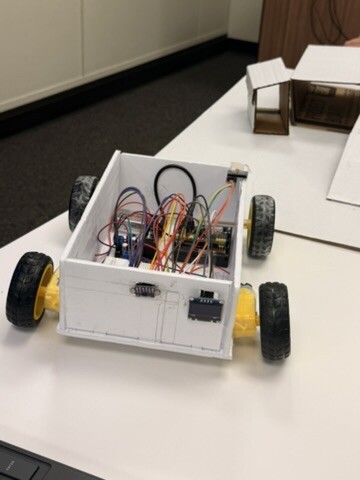
The front and internal wires
-
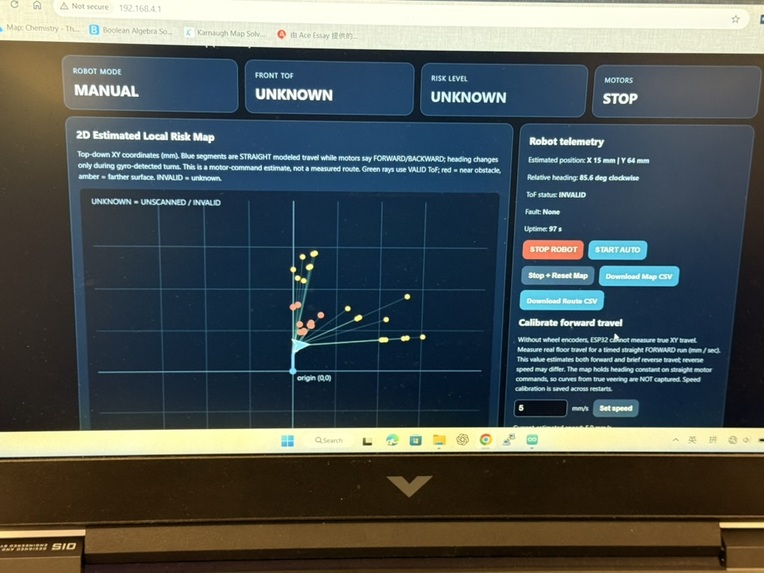
mapping obstacles that it encounters as it moves
Inspiration
Rescue dogs and people often hurt themselves when they are traversing through debris that are sharp and unstable. So we are making a robot to map a path that is stable and have minimal obstacles so that it can ensure safety of the rescue people/dog.
What it does
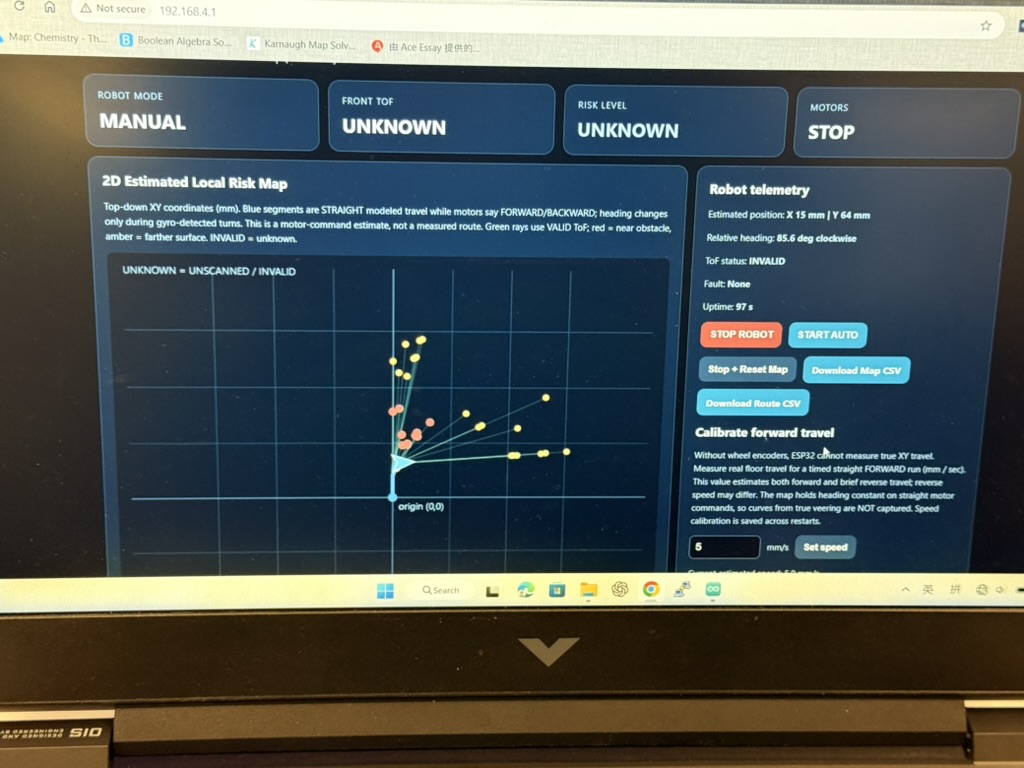
It detects obstacle on its path, autonomously drive around it. Meanwhile, it maps its path and obstacles and sends it wirelessly to a website.
How we built it
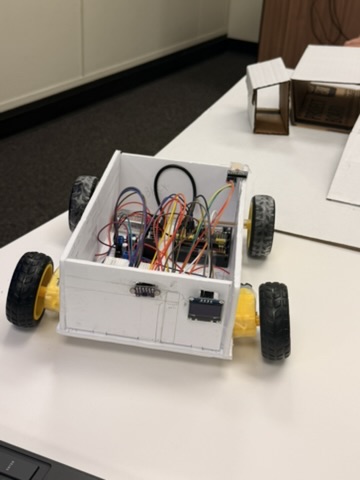
We built the chassis of the robot using foam board and popsicle sticks for the wheels and motors. The self-driving system is built using by connecting the motors to motor driver to the ToF sensors at the face of the car to detect an obstacle in front. ESP 32 is used to tell what each parts need to do and how to react to different levels of input, in order to make it turn.
Challenges we ran into
We originally wanted to make a suspension system for the car so it could traverse through difficult surfaces with more flexibility. However, we were unable to attach the suspension with the servo and attach it to the car while ensuring stability and drive-ability of the car
Accomplishments that we're proud of
We were able to make the car turn fast enough with only two motors in the front. We also made the autonomous driving possible.
What we learned
We learned how to use Arduino IDE, how to utilize ESP32 to communicate between electric parts, how to integrate parts into a system, and mechanical and physical considerations when building the robot
What's next for Path-Mapping Autonomous Vehicle
Due to the time clutch, we were unable to make our suspension system. We plan to redesign our suspension system and connect it to the ESP32 as well so that the car can flexibly adjust the height of itself to traverse through more complex terrain
Built With
- ardiuno
- c++
- esp32
- mapping
- oled
- tof

Log in or sign up for Devpost to join the conversation.