

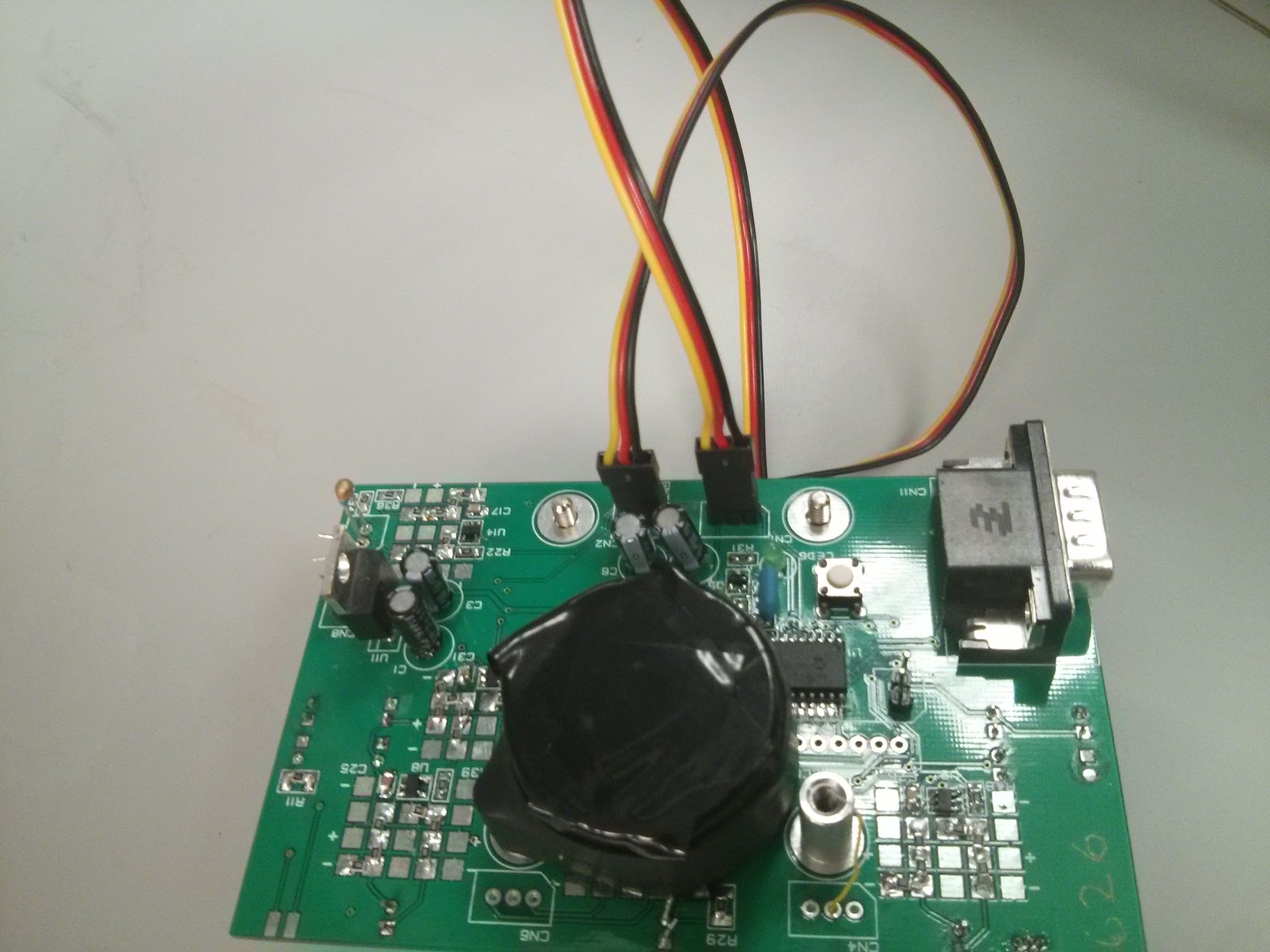
Created a path following robot from scratch using various components.
This robot was created during seven labs. During each lab, we added another component to the robot, pre-designed our circuit and tested the output.
Line Following
The surface was illuminated with known amount of infrared light from an LED and using photo-diode, we can measure the light at two points on the ground. The difference of the reflected light will help us steer our robot accordingly.
Optical Encoders
Optical Encoders were used to characterize the wheels of the robot. For purpose of learning, we designed our own encoders. Our optical encoder was composed of a single light- emitter and a two light-detectors.We used infrared because it is less sensitive to changes in ambient light, as well as being less expensive than components in the visible spectrum. The second light detector must be set 90 degrees off phase from the first. Using transmissive configuration, we were able to detect the direction of the robot based on the pulse generated. This pulse was fed into an op-amp which removed any jitters in the signal
Hall Effects Sensor
Hall Effect sensors are capable of detecting magnetic fields. In our robot, we were expect to turn the LED on for three seconds when we detect a north pole and for south pole, we were expected to blink for three seconds. The output of the Hall effect sensor is nominally 2.5V when no magnetic field (0 Gauss), is present. The output ranges from 2.5V to 4.0V with increasing strength of one polarity of the field, and 2.5V to 1.0V with increasing strength of the opposite polarity. Therefore, we want to change the ground reference about which the input signal is amplified to 2.5V.
Result
We test ran our robot twice on the track and received a perfect grade!
Built With
- c
- opamp
- oscilloscope

Log in or sign up for Devpost to join the conversation.