-
-
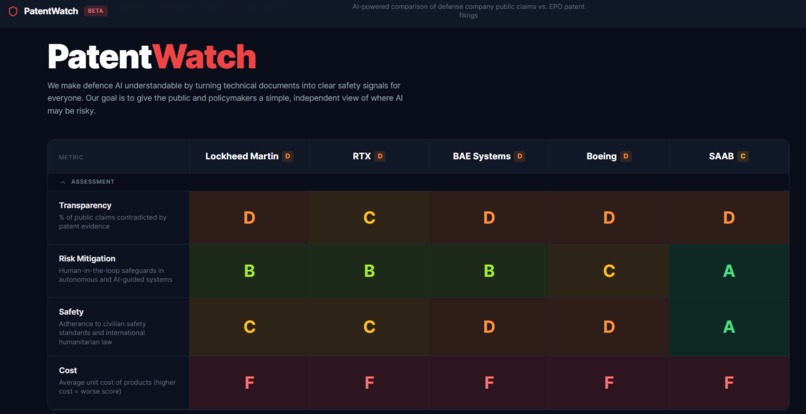
Landing page
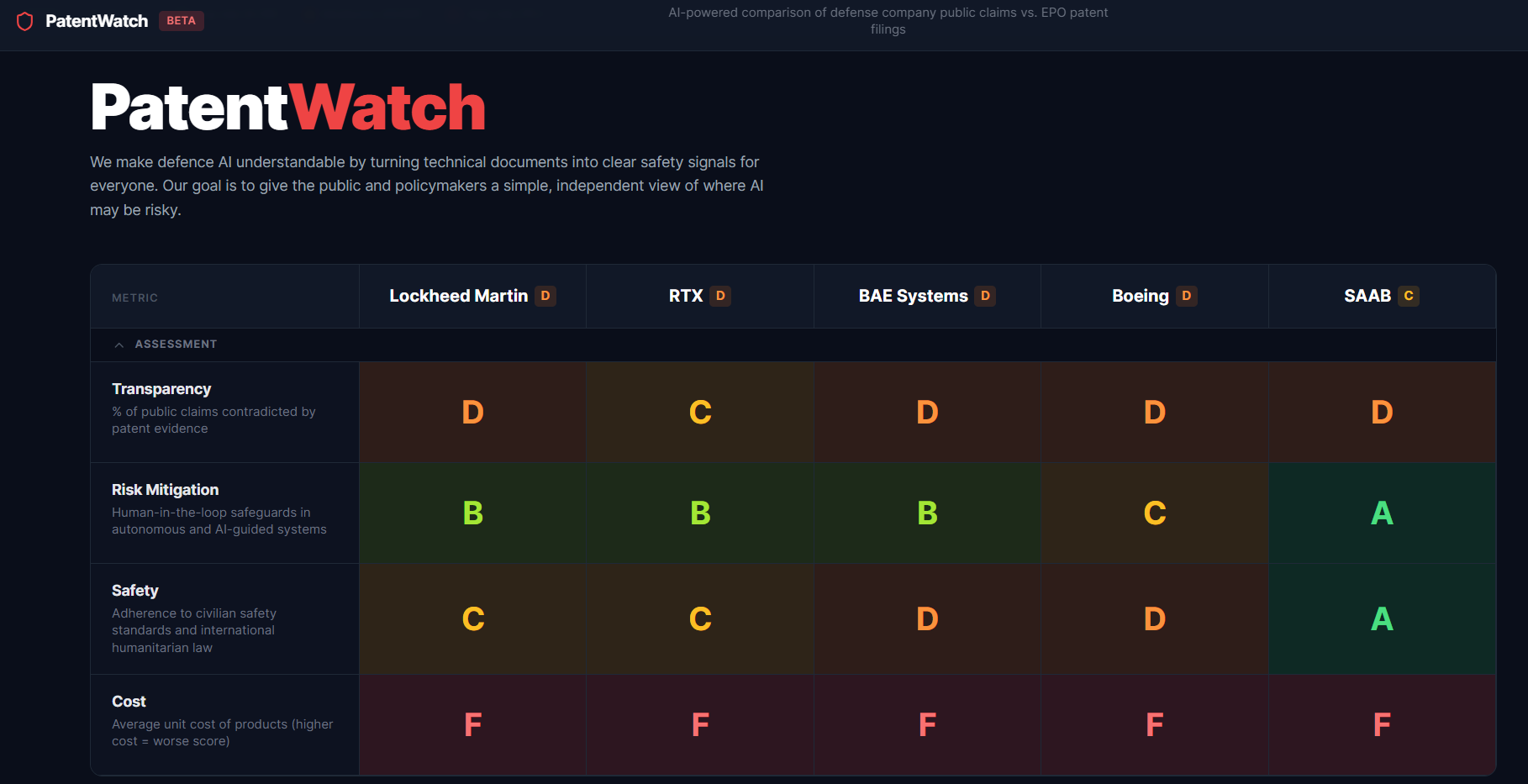
Inspiration
We were frustrated that even as AI-and-policy students, we couldn’t tell what defence AI systems actually did from polished company statements. We wanted a way for the public to see concrete safety signals instead of marketing language.
What it does
PatentWatch compares patents, product descriptions, and press releases for defence AI systems and turns them into simple risk scores and explanations. It gives regulators, journalists, and citizens a quick view of where a system may be risky or opaque.
How we built it
We built an LLM-based pipeline that ingests official sources like the European Patent Office and company websites, then classifies each system along a small set of safety-related metrics. On top of that, we created a clean web interface where users can search companies, inspect systems, and see A–F ratings at a glance.
Challenges we ran into
Data is our biggest challenge. They often lacked product names, didn’t reliably connect patents to press releases, and made older releases hard to access. To handle this, we added an LLM step that infers missing links and fields so the pipeline can still produce usable signals from messy data.
Accomplishments that we're proud of
We’re proud that in a hackathon timeframe we went from a vague concern about defence AI to a working tool that surfaces specific risk signals for real companies. We’re also proud that non-technical testers were able to use the site and immediately point to systems they felt uneasy about, and explain why.
What we learned
We learned how fragmented data can be, and how important careful prompt design and validation are when you rely on LLMs for analysis. We also saw that people engage much more with AI safety when information is company-specific, visual, and phrased in plain language.
What's next for PatentWatch
Next, we want to expand coverage to more defence contractors and then pilot the same method in sectors like healthcare and finance. We also plan to harden our metrics, bring in feedback from policy and civil-society partners, and improve the pipeline so it can support serious oversight and research use.

Log in or sign up for Devpost to join the conversation.