-
-
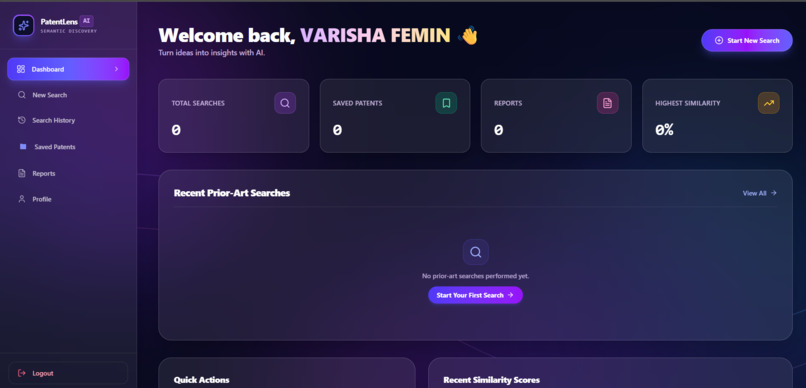
dashboard
-
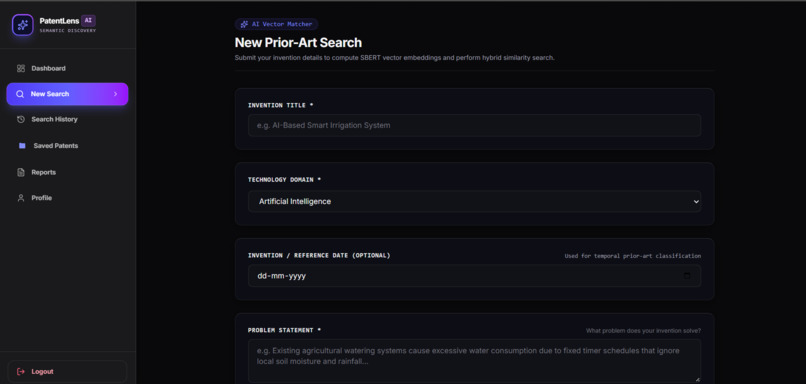
search
-
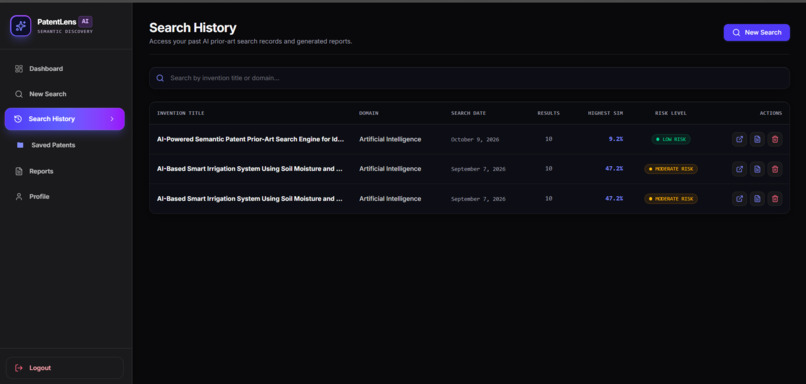
history
-
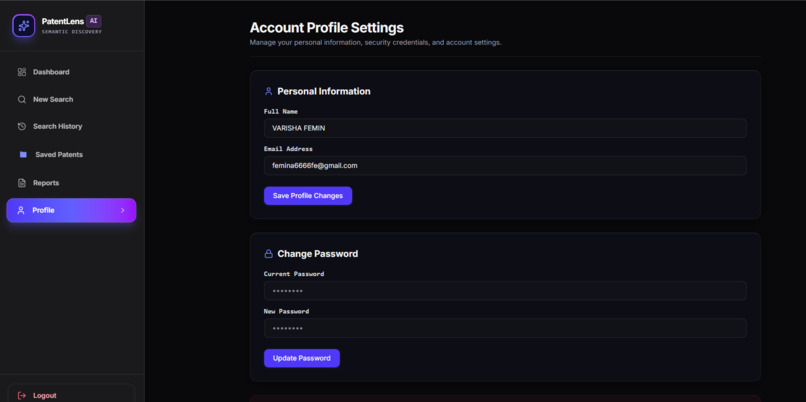
profile
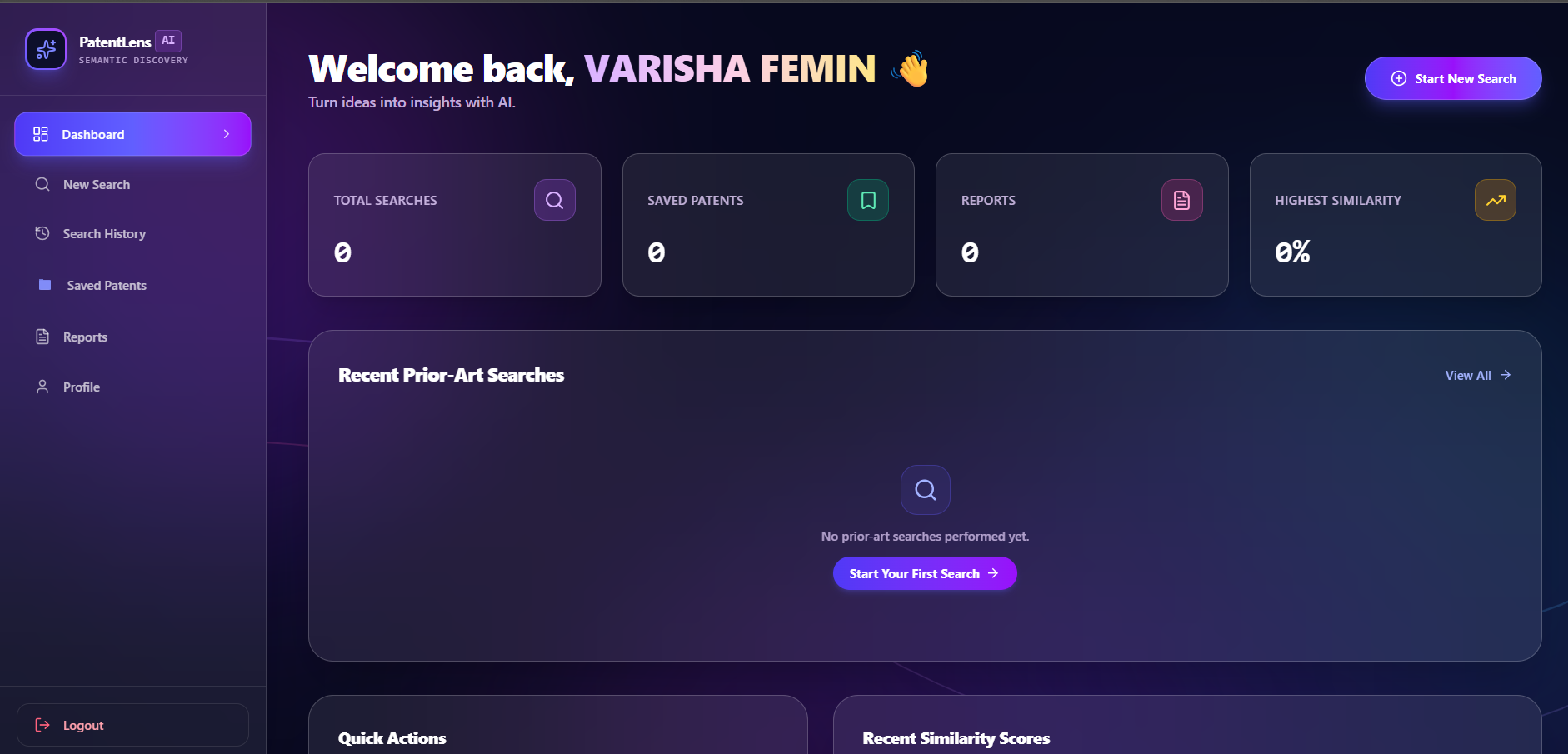
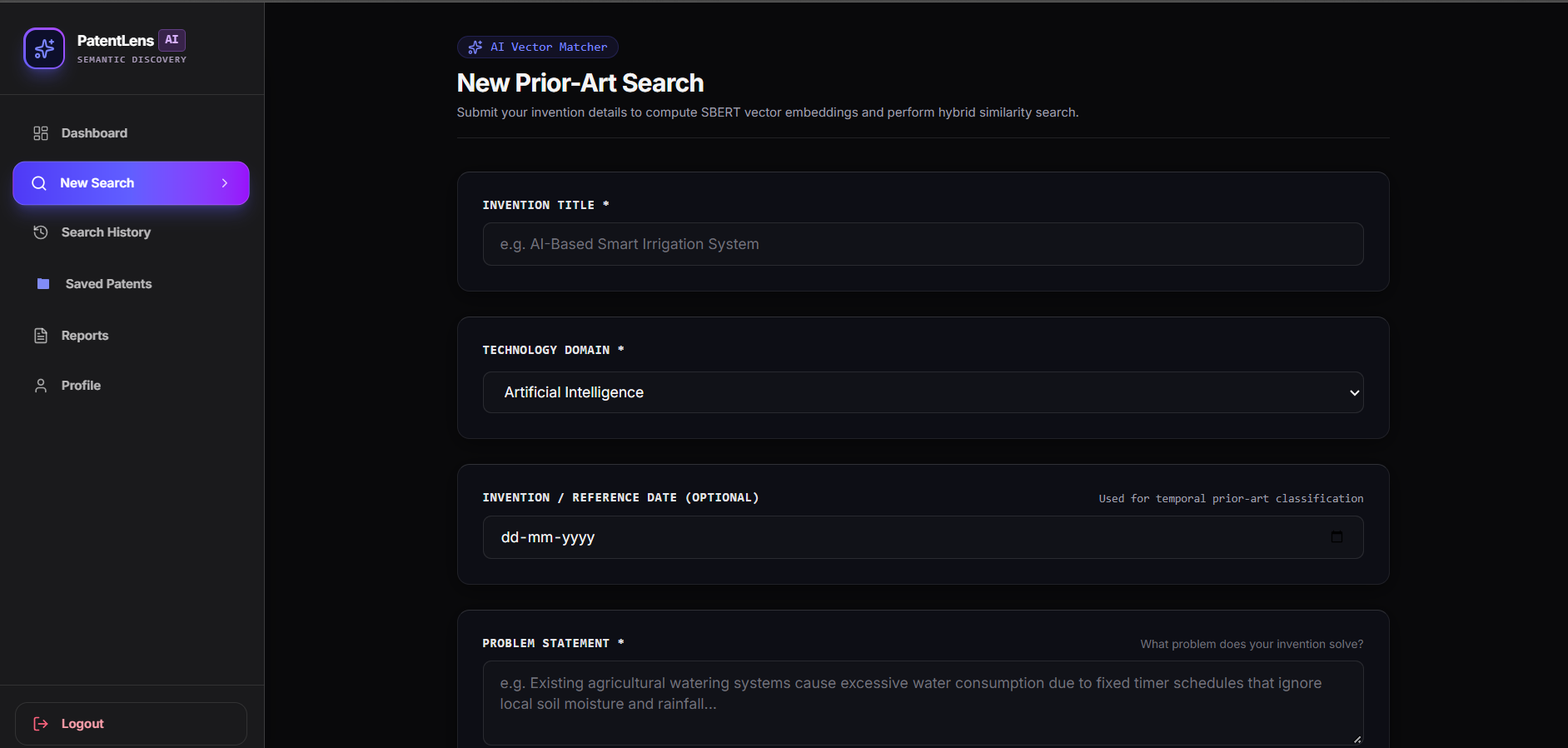
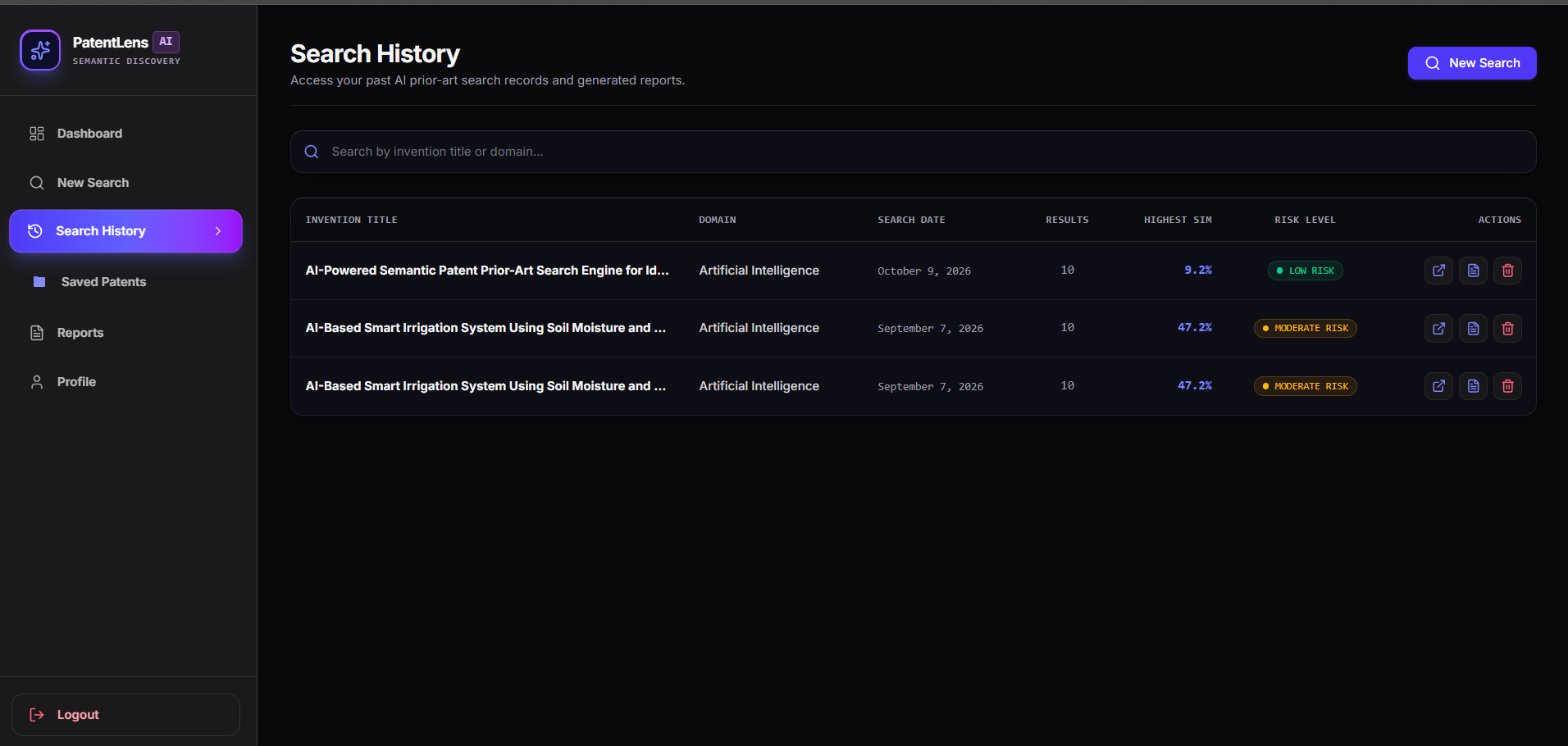
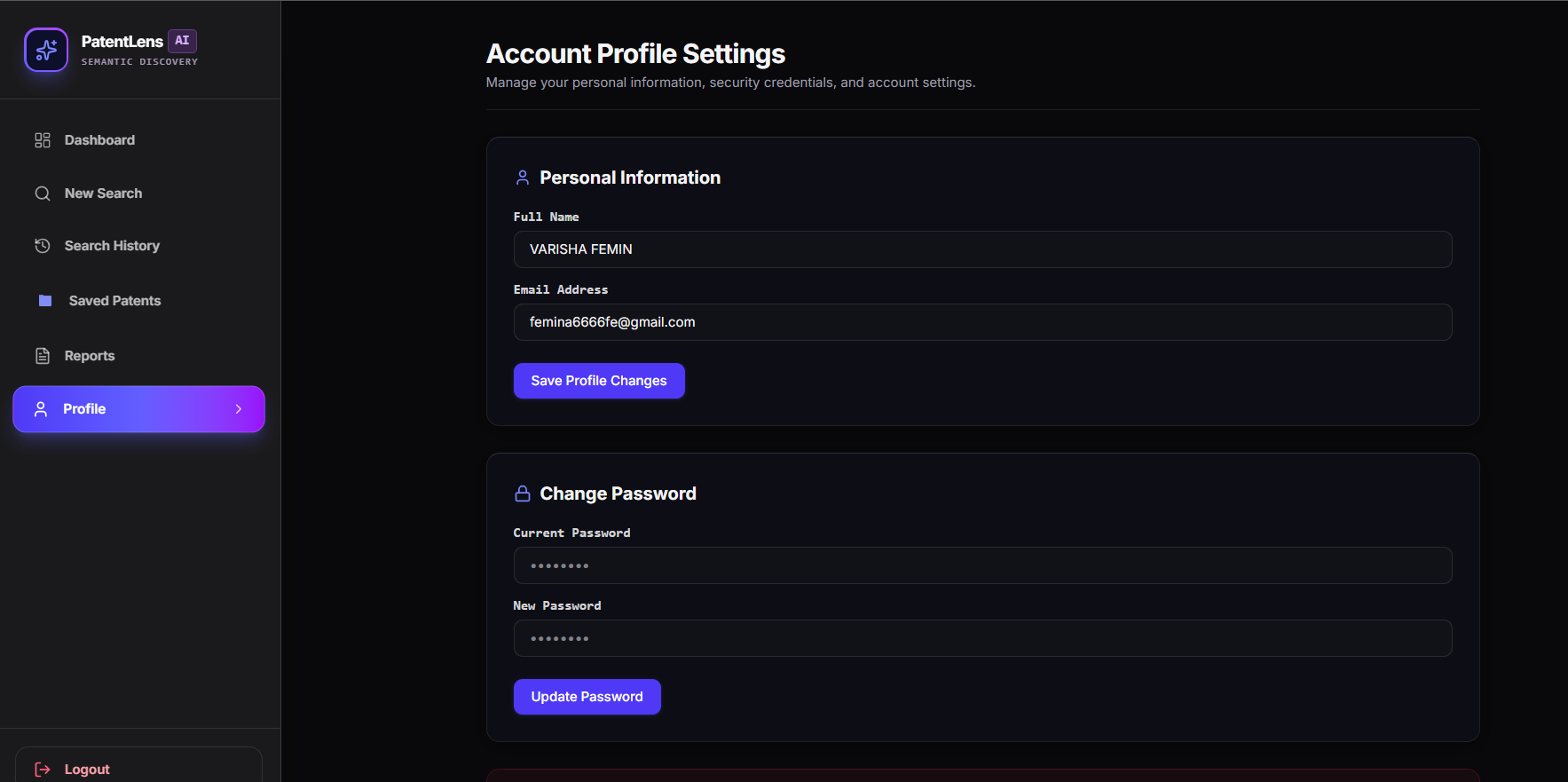
PatentLens AI — Semantic Patent Prior-Art Search for MSME Innovators
Inspiration
An invention can be described in many different ways, even when similar technical ideas already exist in patent documents. Finding those documents through keyword searches alone can be challenging because patents often use different technical terminology to describe related concepts.
We wanted to explore how AI and semantic similarity could help innovators, students, and small businesses discover potentially relevant patent documents more efficiently. This led us to develop PatentLens AI, an AI-assisted prior-art search engine designed to retrieve, compare, and rank patent documents based on the meaning and technical features of an invention description.
What it does
PatentLens AI accepts an invention title, technology domain, problem statement, detailed description, keywords, and a reference date. It processes this information, searches available patent sources, and ranks candidate documents using semantic similarity and additional technical relevance signals.
The system is designed to provide:
- Semantic comparison between an invention description and patent text.
- Technical feature-based relevance scoring.
- Evidence-oriented results with source links and supporting text when available.
- Publication-date information to help users examine the chronology of potentially relevant documents.
- A web interface for reviewing results and, where implemented, saving patents, viewing search history, and exporting reports.
PatentLens AI is intended to support preliminary patent research. Its rankings are not a legal determination of novelty, patentability, infringement, or the legal status of prior art.
How we built it
We developed a web-based architecture with a frontend and a Python backend.
- Frontend: Next.js, React, and TypeScript provide the user interface for entering invention details and reviewing search results.
- Backend: FastAPI handles API requests and coordinates the search workflow.
- Language-model integration: Gemini is used in the configured workflow for understanding invention descriptions and generating search queries.
- Semantic search: FastEmbed with the
all-MiniLM-L6-v2embedding model converts text into 384-dimensional vectors. Cosine similarity helps estimate semantic closeness between the submitted invention and candidate patent text. - Patent retrieval: The Lens Patent API is integrated for external patent retrieval when the service is available. Configured repositories and fallback behavior support development and testing.
- Relevance ranking: The system combines semantic similarity, technical feature matching, evidence strength, distinctive concepts, and domain/CPC alignment.
- Persistence and reporting: The application includes workflows for reviewing and managing search results, with the availability of individual features depending on the configured environment.
The configured five-factor scoring formula is:
$$ S = 0.25M + 0.35F + 0.20E + 0.10C + 0.10D $$
where (M) represents semantic similarity, (F) technical feature score, (E) evidence strength, (C) distinctive concept score, and (D) domain/CPC alignment. Additional relevance gates may apply in the implementation.
Challenges we faced
One of the main challenges was dealing with differences in technical vocabulary. An invention and a related patent may describe similar mechanisms using different words, which makes exact keyword matching insufficient for some searches.
Another challenge was distinguishing semantic similarity from actual technical relevance. A document can discuss the same broad domain without sharing the invention's important features. This motivated the use of multiple relevance signals rather than relying on embedding similarity alone.
We also worked on evidence handling, authentication, database integration, and external API reliability. Patent text and supporting quotations need to be traceable to the correct source document. External services may be unavailable or subject to usage limits, so fallback results must be clearly identified rather than presented as live patent retrieval.
What we learned
Through this project, we explored how text embeddings, cosine similarity, language models, API integration, and backend services can be combined into an end-to-end application.
We also learned that a convincing AI system needs more than a model and a score. Source traceability, consistent scoring, authentication, error handling, testing, and transparent limitations are equally important. A high similarity score is only a signal for further investigation, not proof that two inventions are equivalent.
Future scope
Future improvements include evaluating search quality against expert-reviewed patent examples, expanding reliable patent-source coverage, improving technical feature extraction, strengthening evidence verification, and measuring retrieval precision and recall on a labelled evaluation dataset.
Our goal is to make preliminary patent exploration more accessible by helping innovators move from a description of an idea to a more focused set of patent documents for further review.
Built With
- artificial-intelligence
- embeddings
- fastapi
- gemini-api
- machine-learning
- mongodb
- natural-language-processing
- next.js
- patent-search
- postgresql
- python
- react
- rest-api
- semantic-search
- sentence-transformer
- typescript

Log in or sign up for Devpost to join the conversation.