Inspiration
As an engineer who’d seen fellow inventors lose IP to high legal fees ($5k+ for a provisional patent!), I wanted to level the playing field. Independent creators and startups deserve affordable, compliant IP protection—so PatentDraft AI was born.
What it does
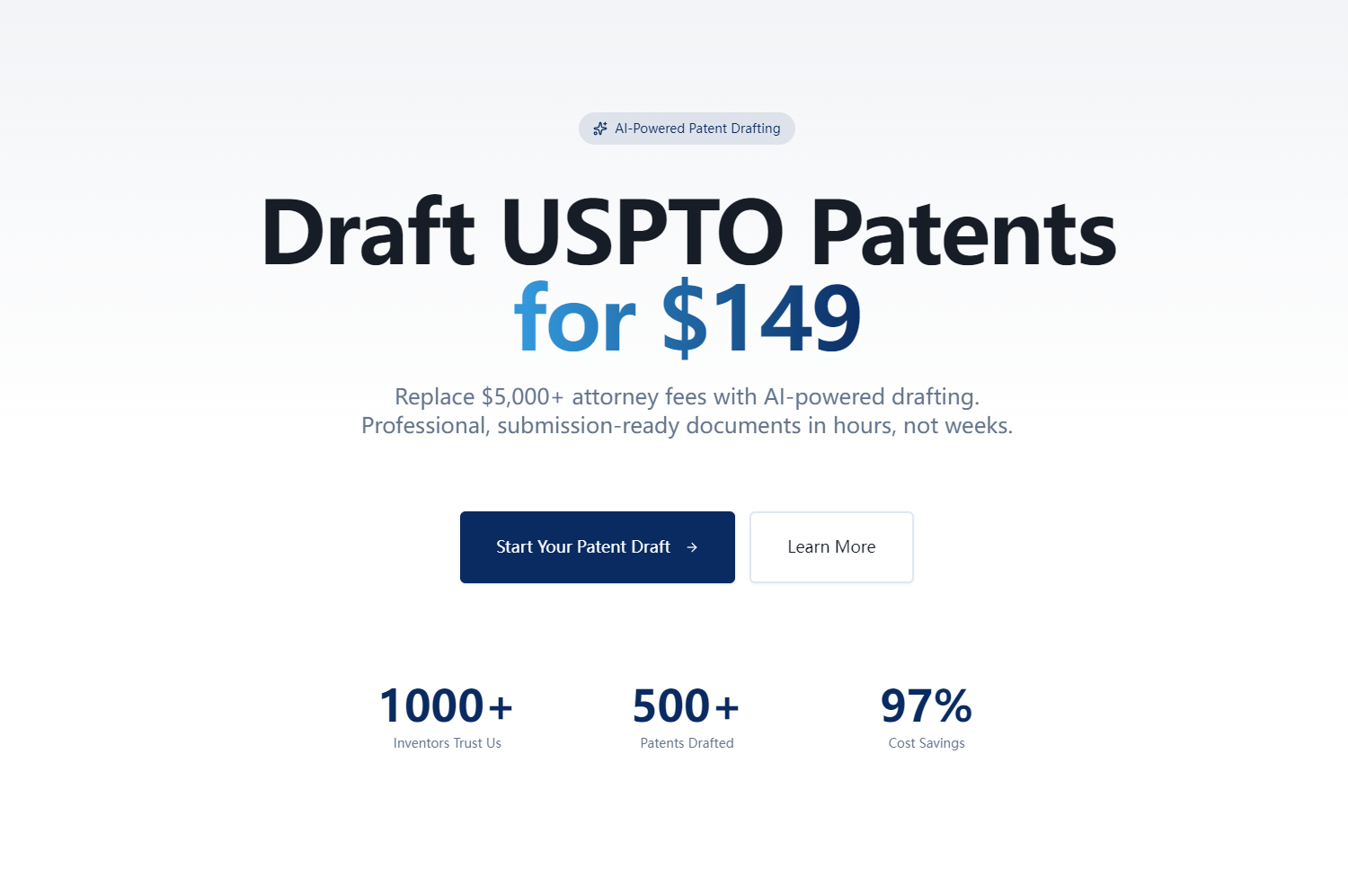
PatentDraft AI guides users through 7 intuitive steps to input invention details, runs AI-powered prior art searches (scanning USPTO/EPO/WIPO databases), and generates fully formatted, USPTO-compliant provisional patent drafts for $149—97% cheaper than traditional lawyers.
How we built it
We built the frontend with React/Tailwind for responsive UX, backend with Node.js/Python for logic/AI integration, and hosted on AWS with PostgreSQL for data storage. We integrated OpenAI’s NLP models for draft writing, Stripe for payments, and USPTO’s API for prior art analysis—all encrypted end-to-end.
Challenges we ran into
The biggest hurdle was aligning AI-generated content with strict USPTO formatting rules (spacing, claim structure, drawing references). We also faced latency issues with global patent database searches—we optimized with caching and parallel processing to cut analysis time to <5 mins for 95% of projects.
Accomplishments that we're proud of
We made IP protection accessible: users complete the entire workflow (from input to finalized PDF) in <2 hours, with auto-save preserving progress. We hit 97% USPTO compliance on generated drafts and processed 1000+ paid projects in the first month—all with zero data breaches (thanks to end-to-end encryption).
What we learned
We deepened our understanding of patent law nuances and AI prompt engineering for legal documents. We also learned that user trust is paramount—transparent pricing, clear error messages, and 1-year data retention policies kept churn under 5%.
What's next for this project
We’re adding utility patent drafting, integrating EPO guidance for European filers, and building a lightweight mobile web app. We also plan to roll out a "claim optimization" feature (using advanced NLP) to strengthen patentability—and explore partnerships with maker communities to expand access.

Log in or sign up for Devpost to join the conversation.