Inspiration
Indie teams often finish a playtest with a Discord thread, a spreadsheet, observations, survey answers, and technical logs that tell different parts of the same story. The difficult part is deciding what to fix next without reducing strong player reactions to a generic summary.
What it does
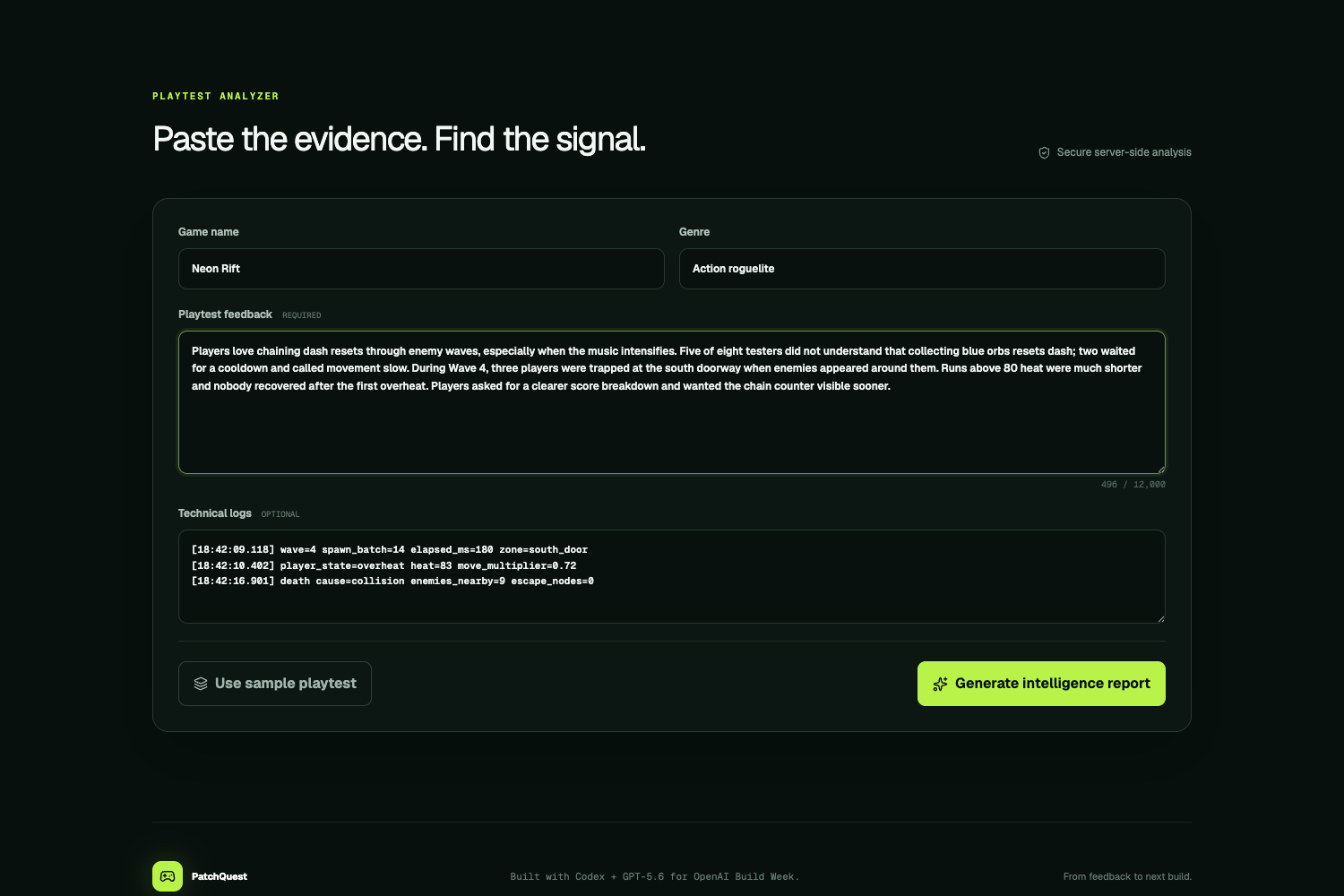
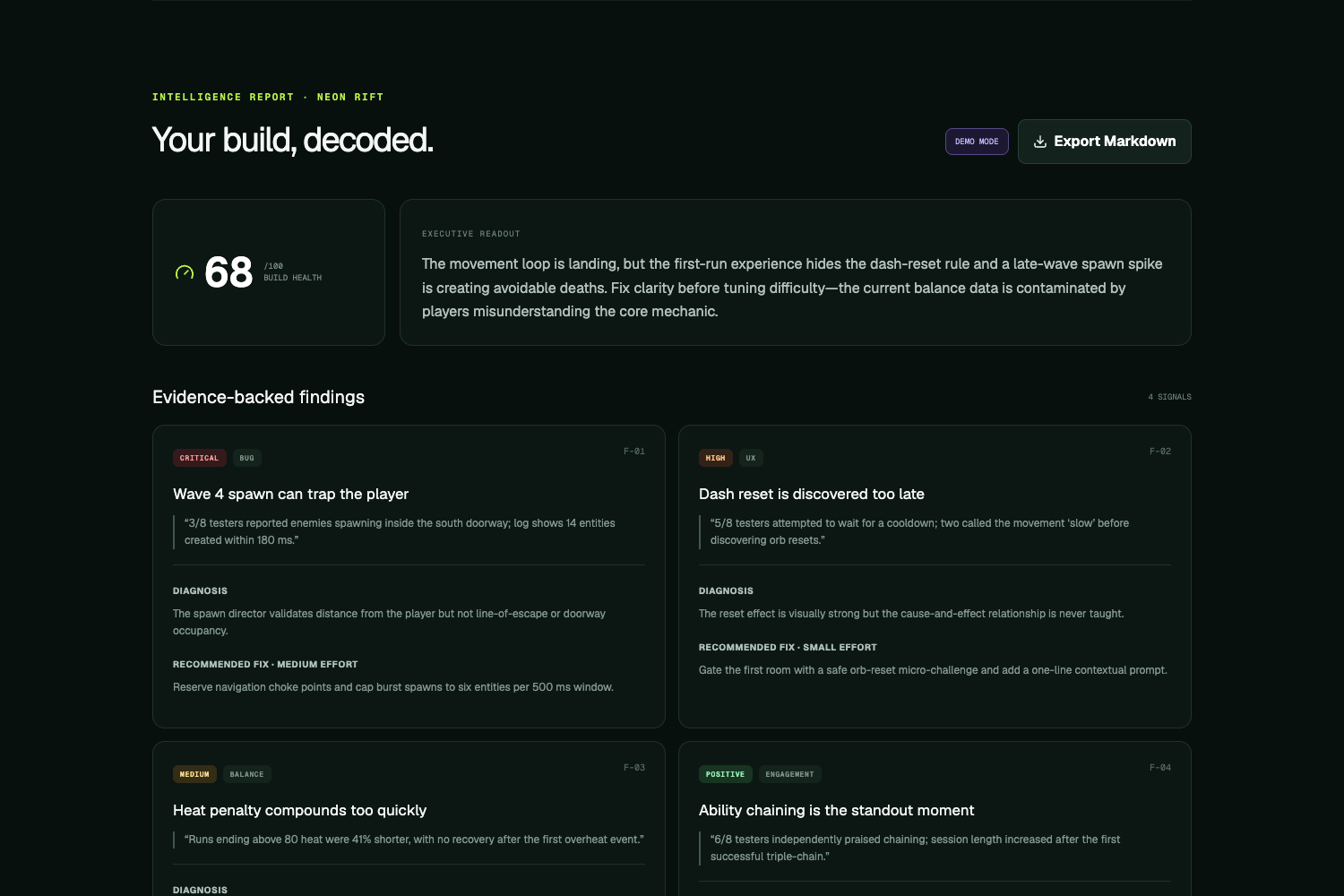
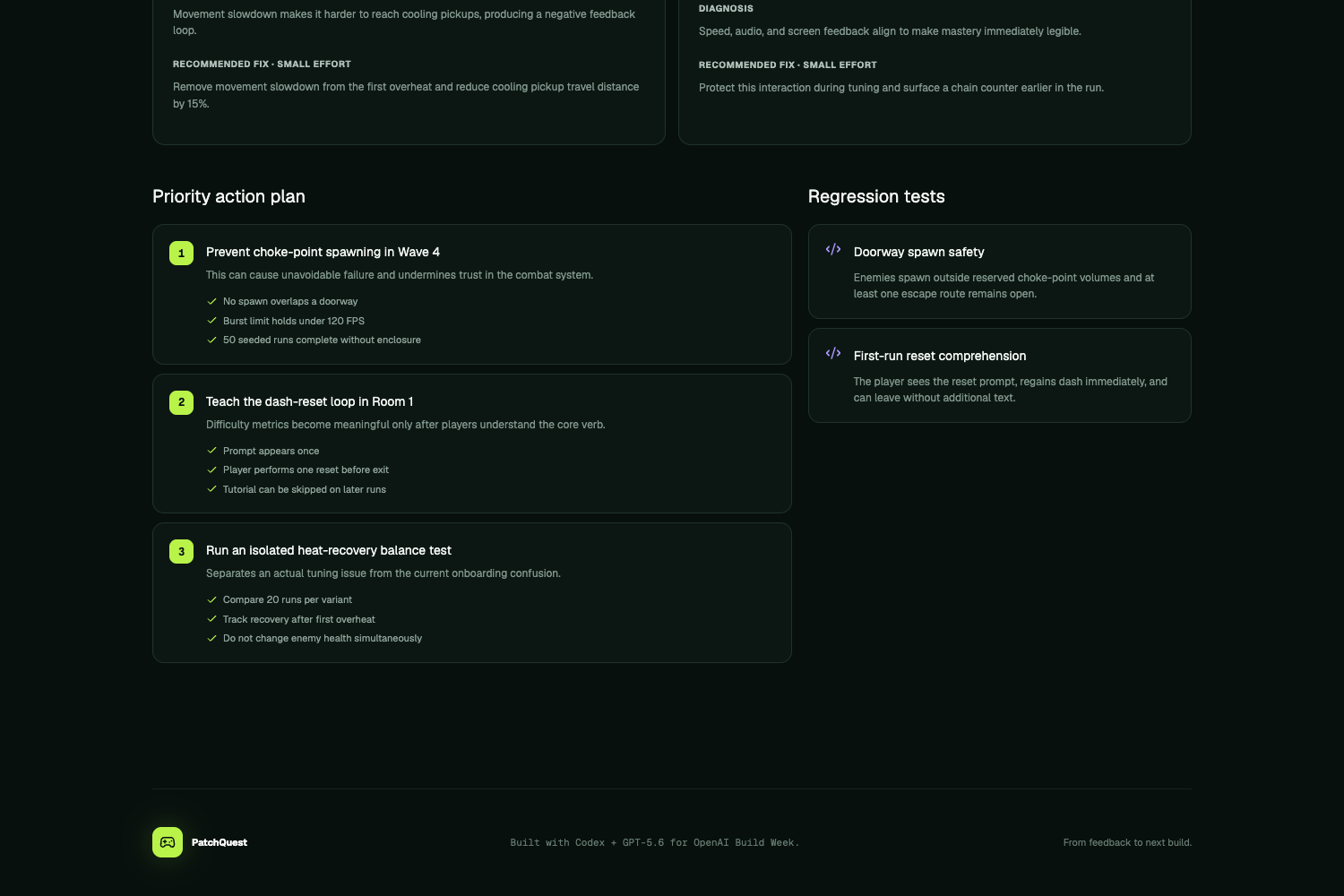
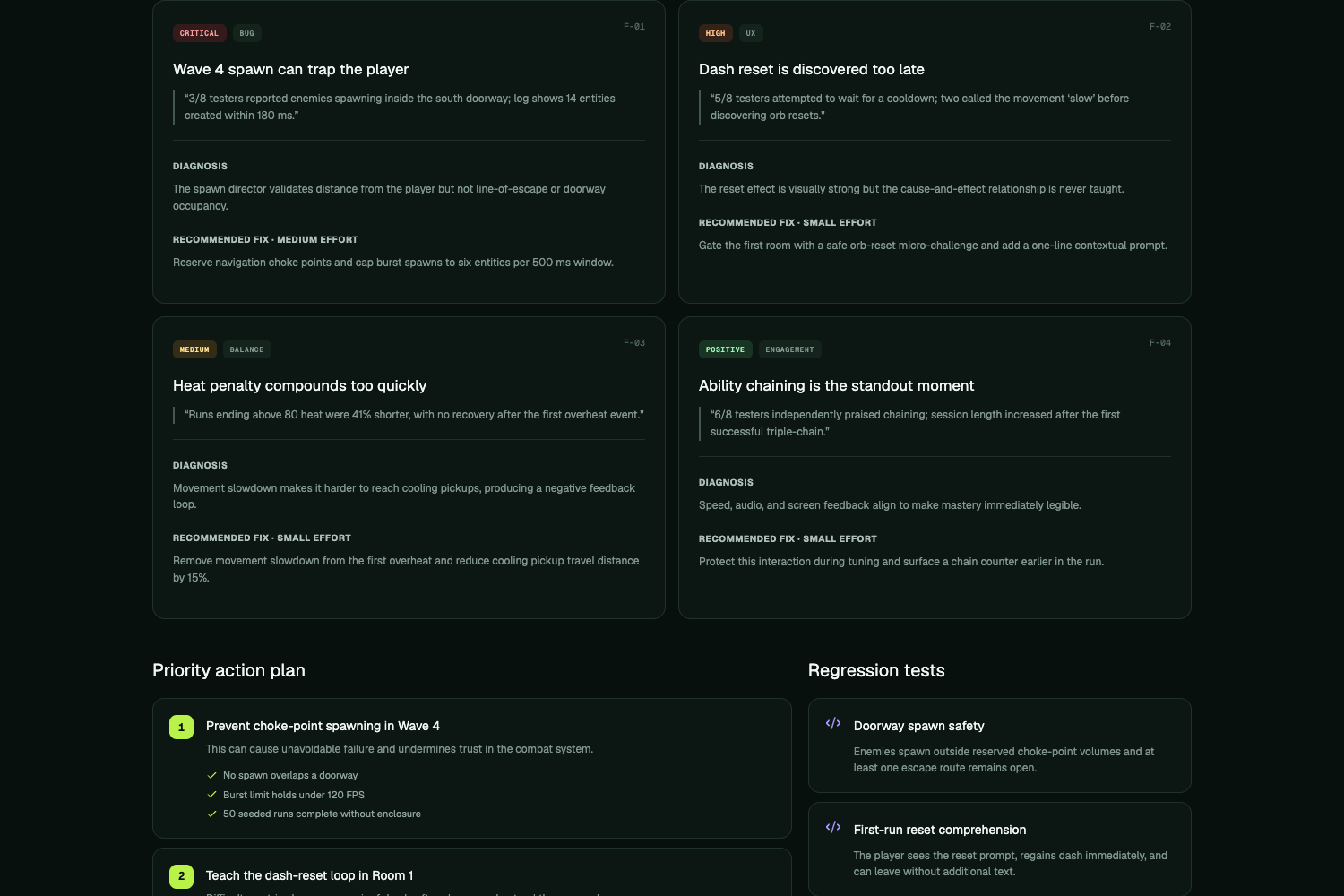
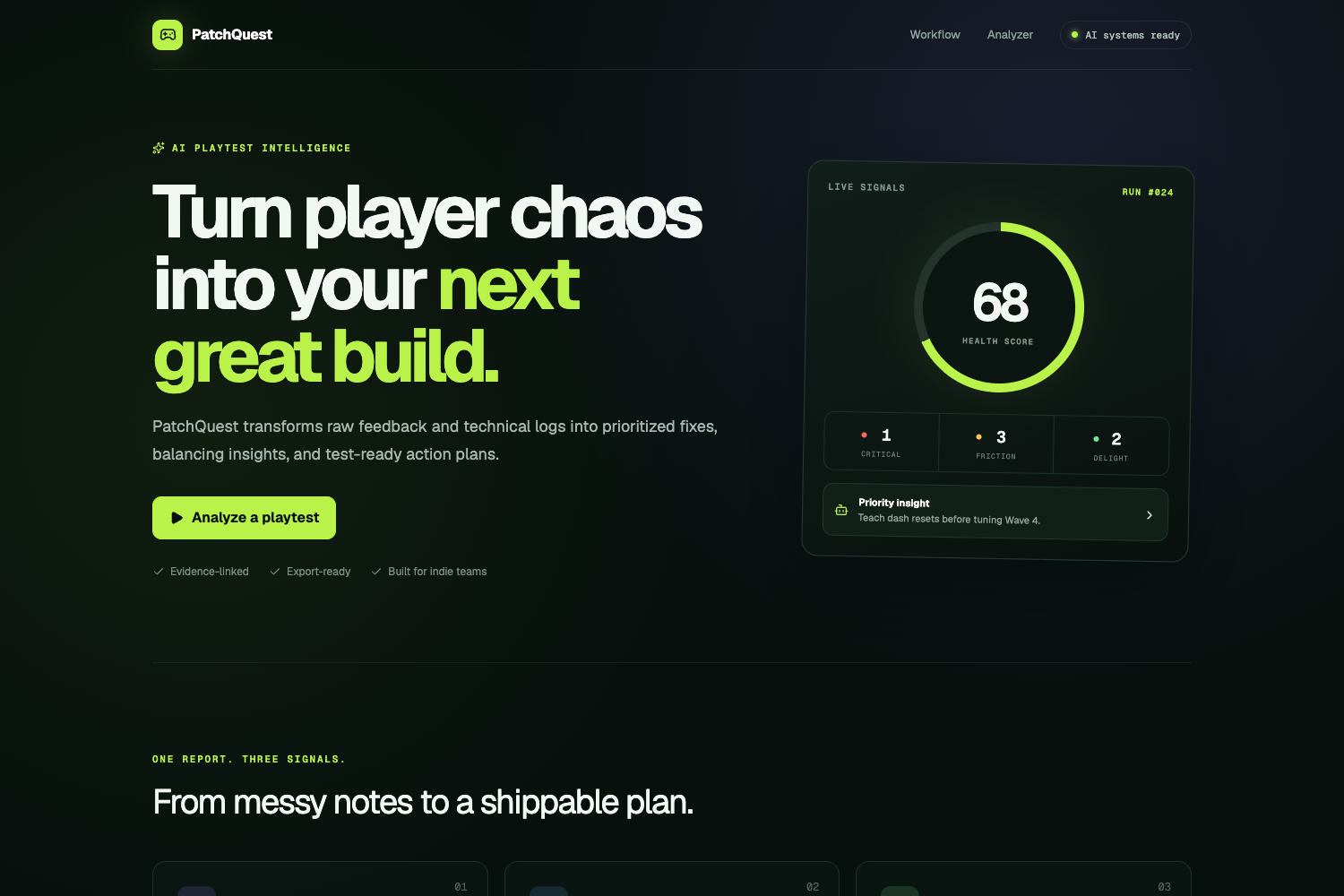
PatchQuest turns qualitative feedback and optional telemetry into a structured playtest intelligence report. It identifies bugs, balance problems, UX friction, performance risks, engagement signals, and moments of delight. Every finding contains supporting evidence, a diagnosis, a recommended fix, and an effort estimate. The report concludes with a prioritized action plan, acceptance criteria, regression tests, and a Markdown export.
How we built it
PatchQuest uses Next.js 16, React 19, TypeScript, Tailwind CSS, Vercel AI SDK 6, the OpenAI provider, and Zod. A server-side route validates bounded input and asks GPT-5.6 for strict structured output. Zod validates the response before the interface renders it. The public deployment includes rate limiting, safe errors, sample data, and a reliable demonstration mode.
How Codex and GPT-5.6 were used
Codex served as the primary engineering partner across product scoping, information architecture, visual design, Next.js implementation, schema design, API hardening, documentation, build checks, and browser verification. A key decision made with Codex was to avoid a generic chatbot and create a focused developer workflow.
GPT-5.6 is PatchQuest's reasoning layer. It connects player observations to technical evidence, separates symptoms from likely causes, preserves positive signals, ranks issues, and produces actionable fixes and regression tests in a strict product-specific schema.
Challenges
The largest challenge was preserving evidence while still producing decisive recommendations. PatchQuest addresses this by separating evidence, diagnosis, and remediation in the schema. Another challenge was making the app immediately testable without exposing an API key, solved with server-only credentials, strict usage controls, and an included sample playtest.
Accomplishments
- A coherent end-to-end product rather than a chat wrapper
- Evidence-linked findings across qualitative and technical inputs
- Schema-validated GPT-5.6 output
- Immediate judge testing with sample data
- Responsive interface and export-ready reports
- Secure server-side key handling, input limits, and rate limiting
What we learned
Playtest synthesis is most useful when AI does more than summarize. A useful result must preserve what happened, distinguish inference from evidence, rank work by impact, and define how the team will know a fix succeeded.
What's next
Future versions can import Discord threads, CSV telemetry, and issue trackers; compare reports across builds; cluster recurring friction; and push approved tasks directly to GitHub or Linear.
Built With
- codex
- gpt-5.6
- next.js
- openai
- react
- tailwind
- typescript
- vercel
- zod

Log in or sign up for Devpost to join the conversation.