Inspiration
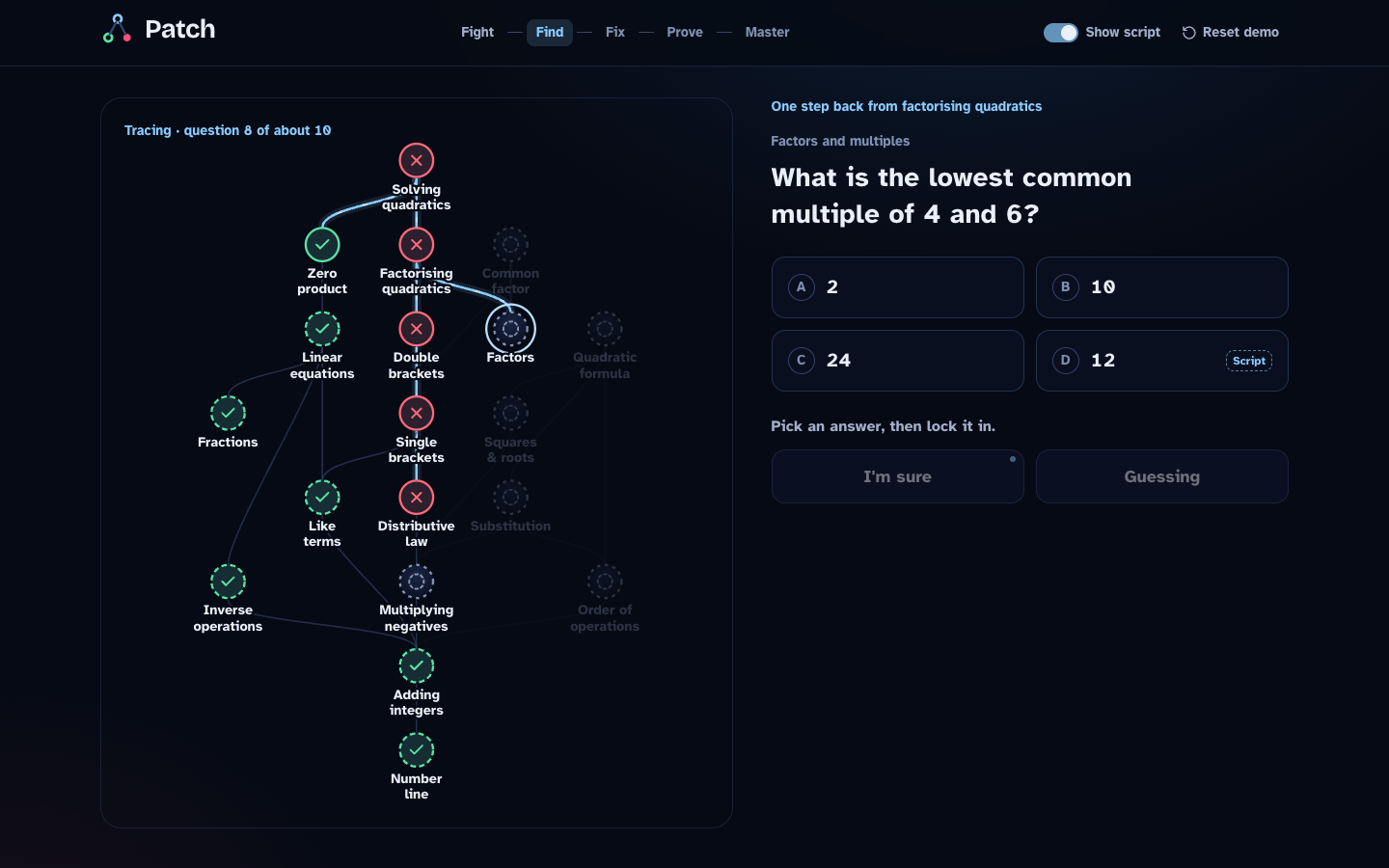
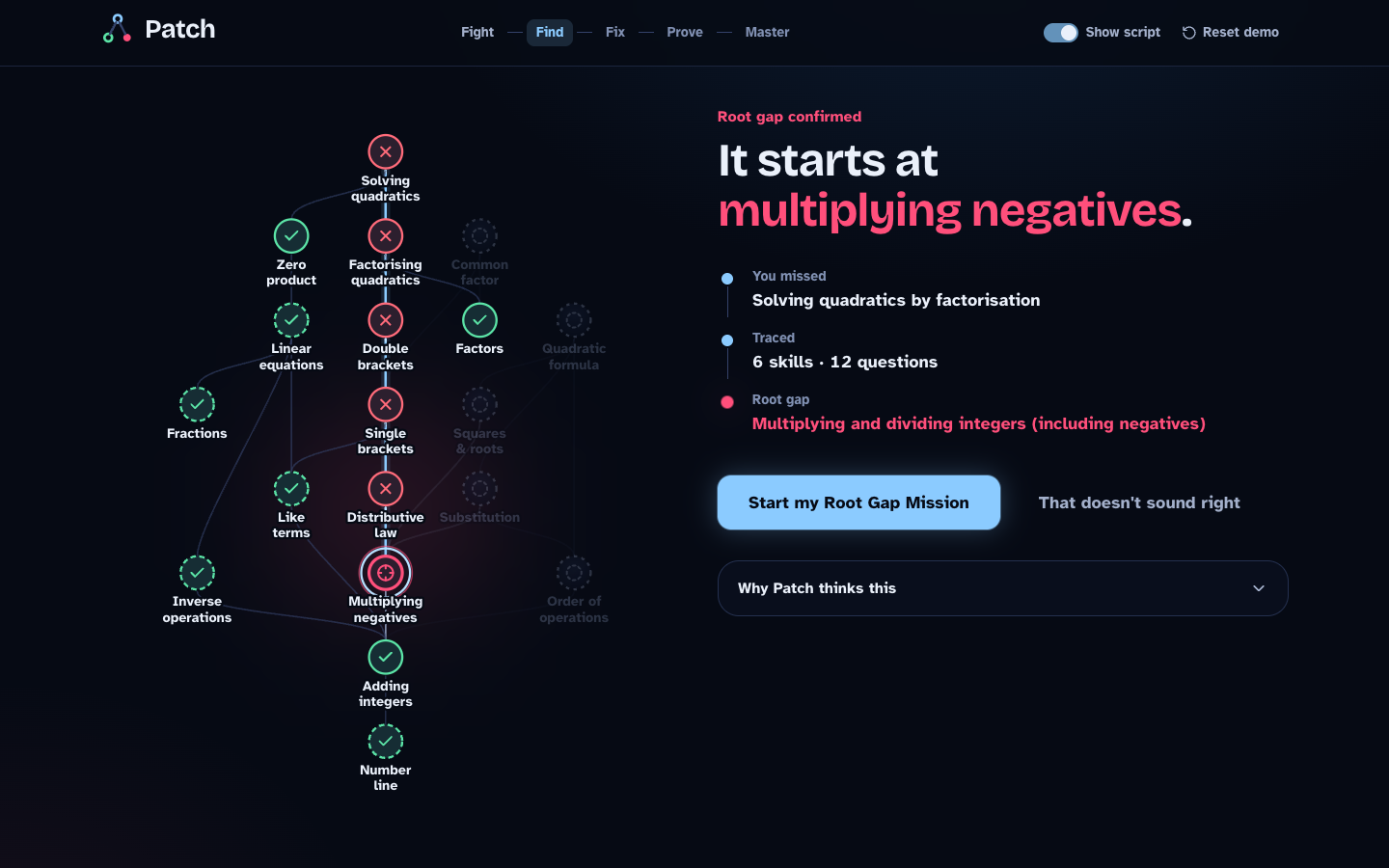
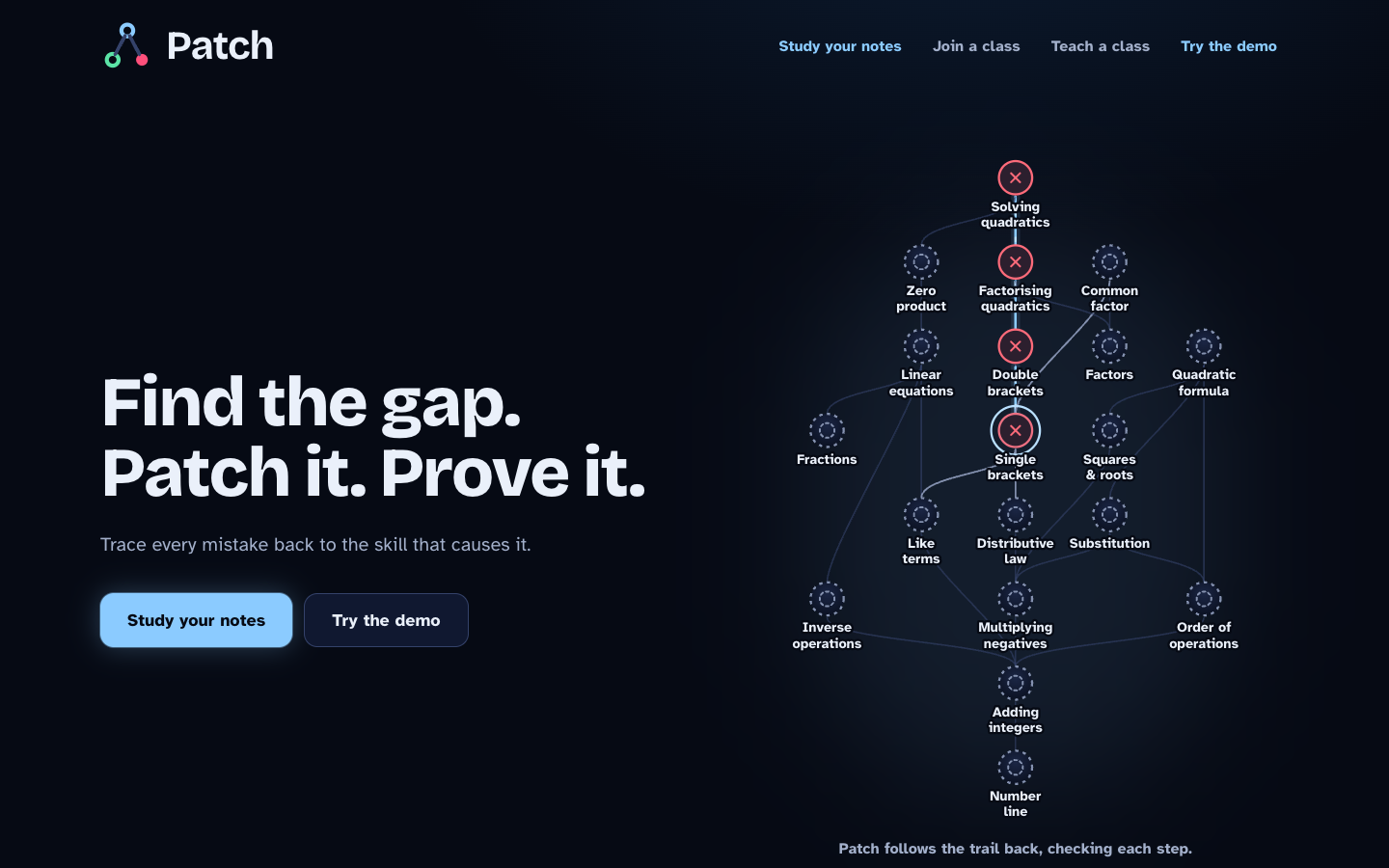
Getting a question wrong rarely tells you what to study next. You might struggle with a new topic because an earlier concept never quite clicked.
We built Patch around that problem: helping students find the missing foundation behind a mistake and giving them a clear path forward.
What it does
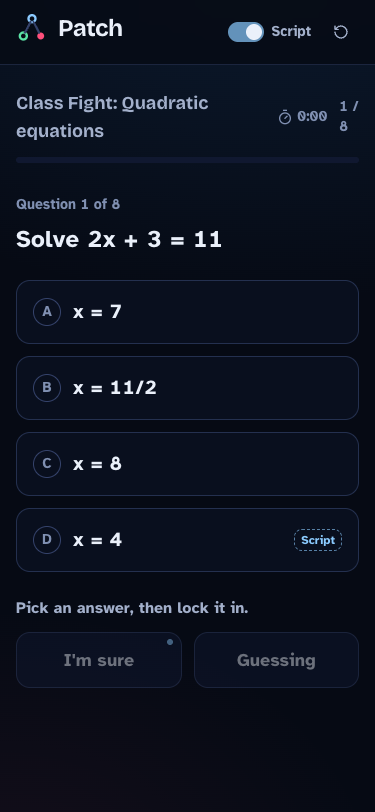
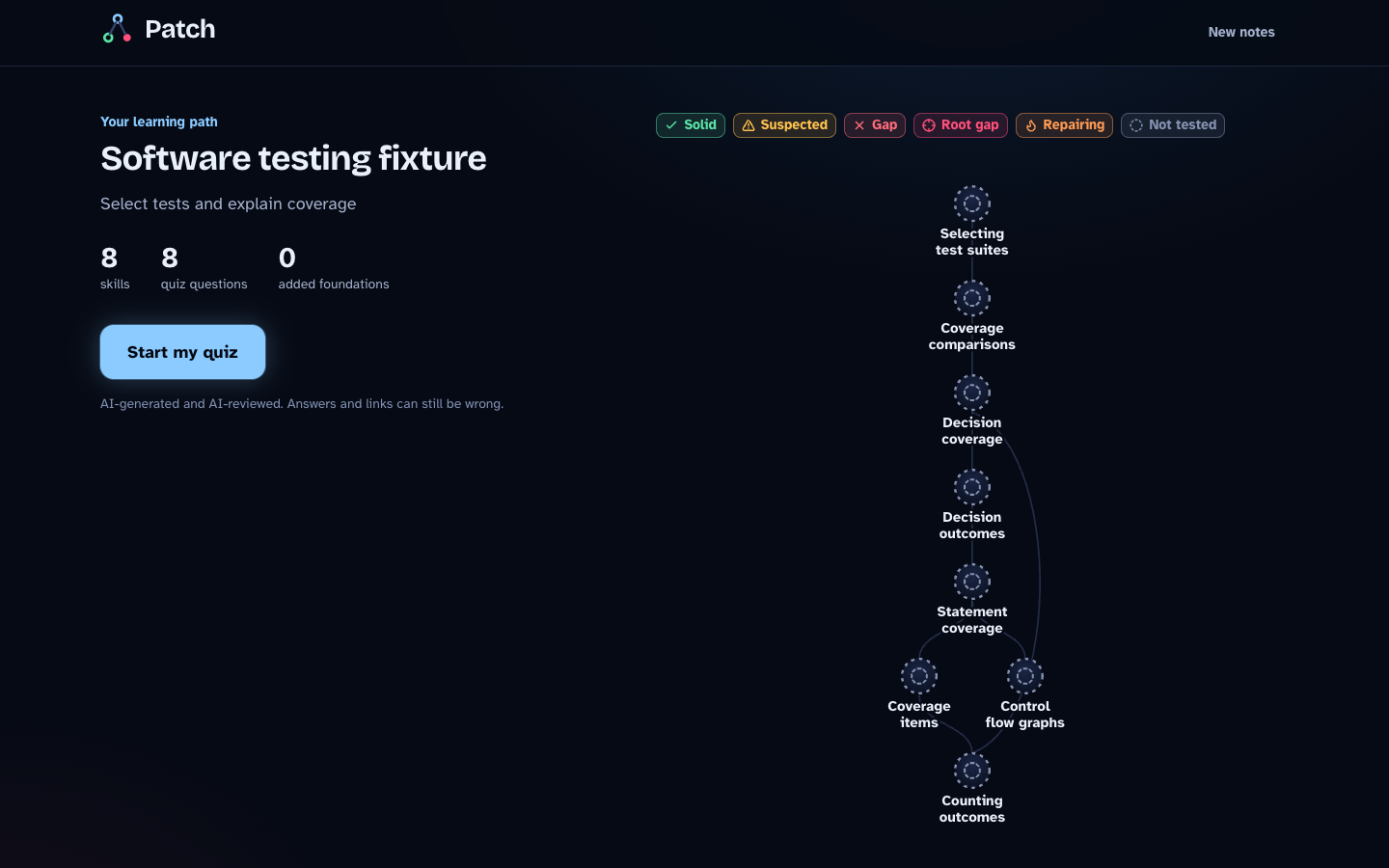
Patch turns lecture notes into an individual learning session. Students upload a PDF or paste their notes, and AI generates a quiz, lessons, and a connected skill map.
The learning flow follows five steps:
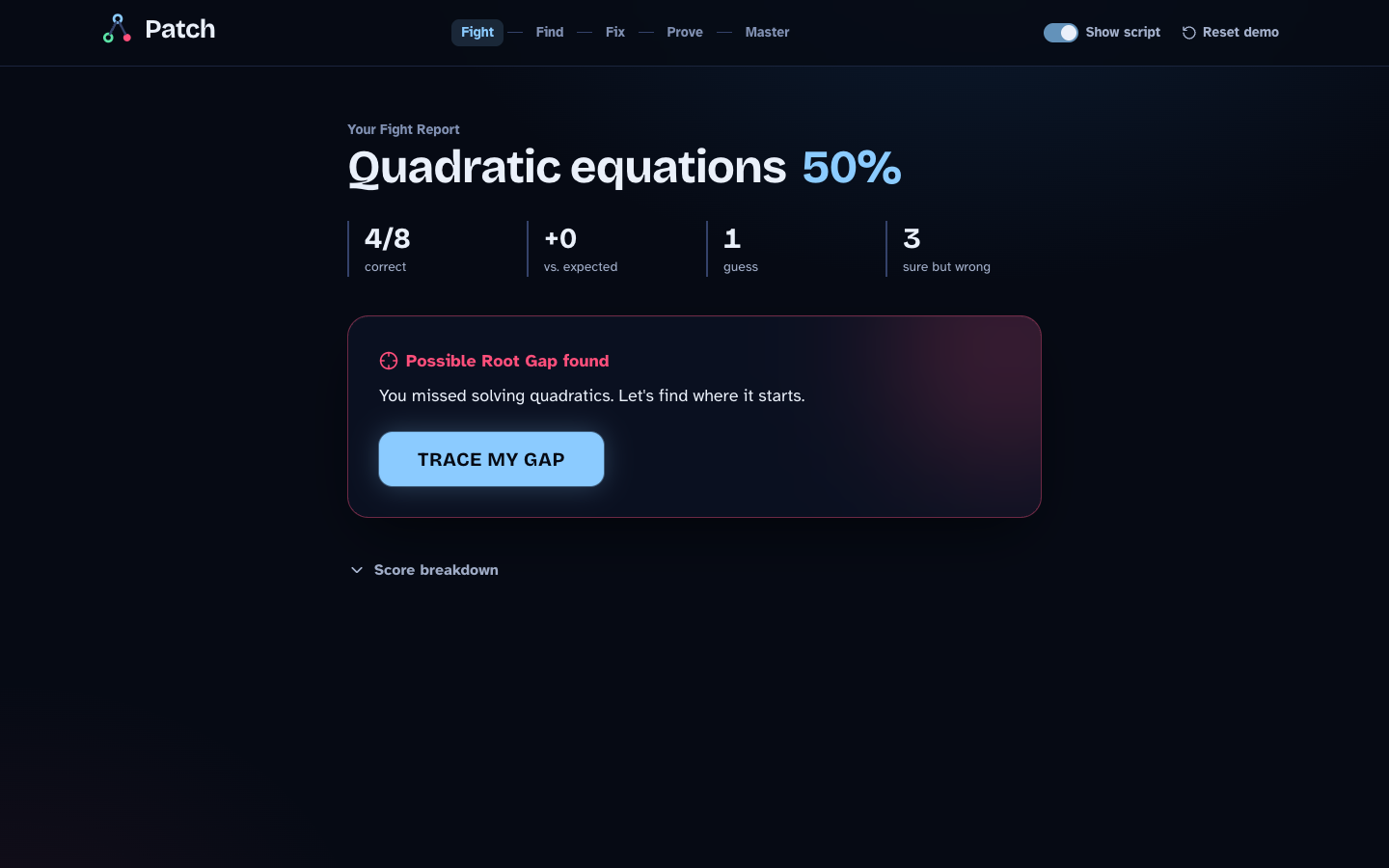
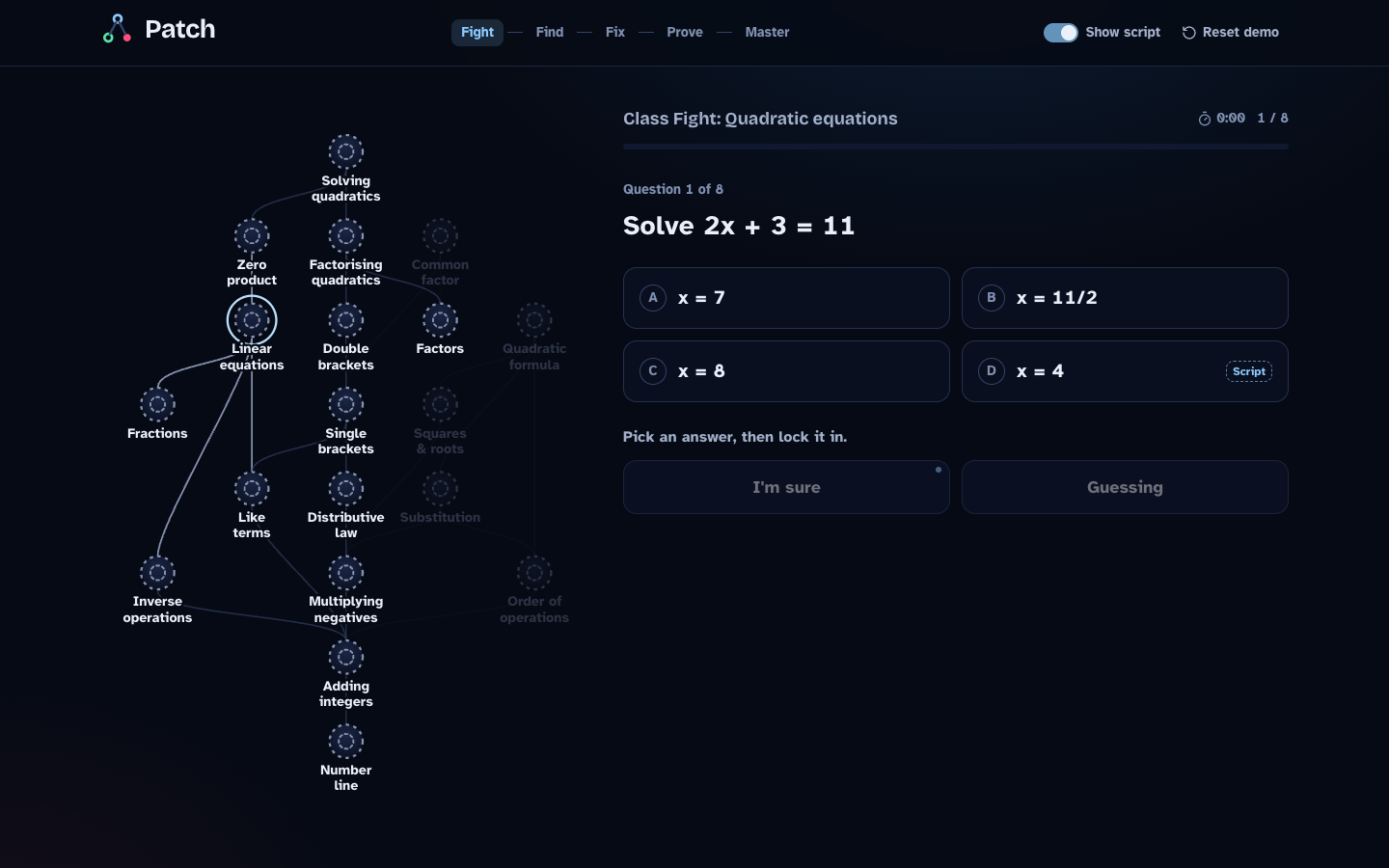
- Fight: Take a diagnostic quiz and mark each answer as “Sure” or “Guess.”
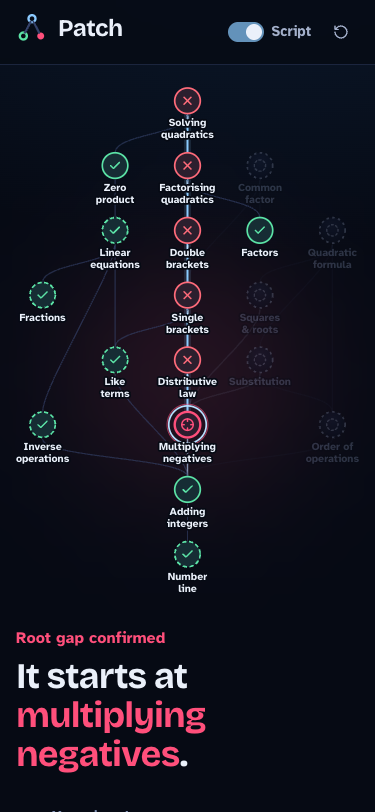
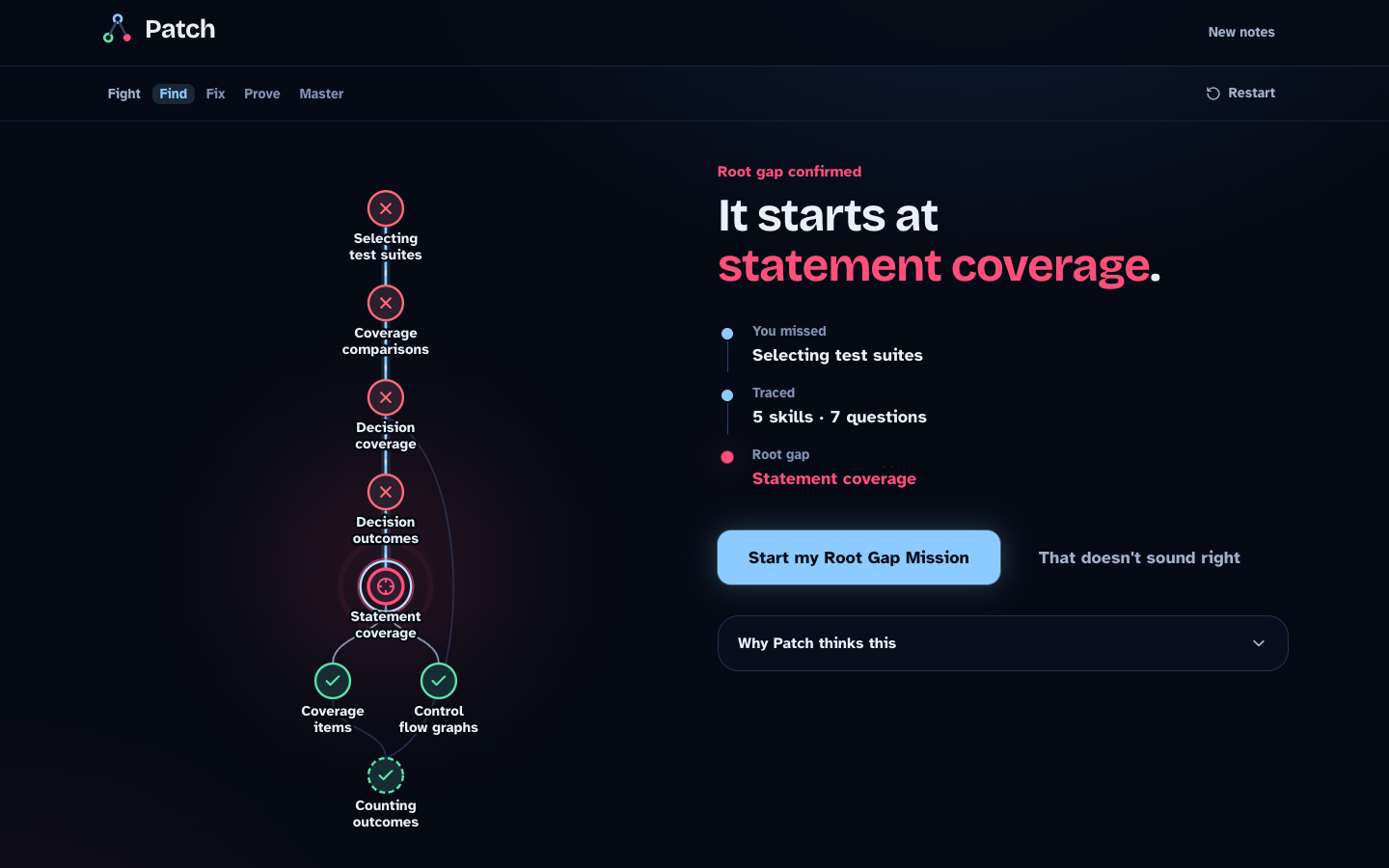
- Find: Answer targeted follow-up questions that trace mistakes through prerequisite skills.
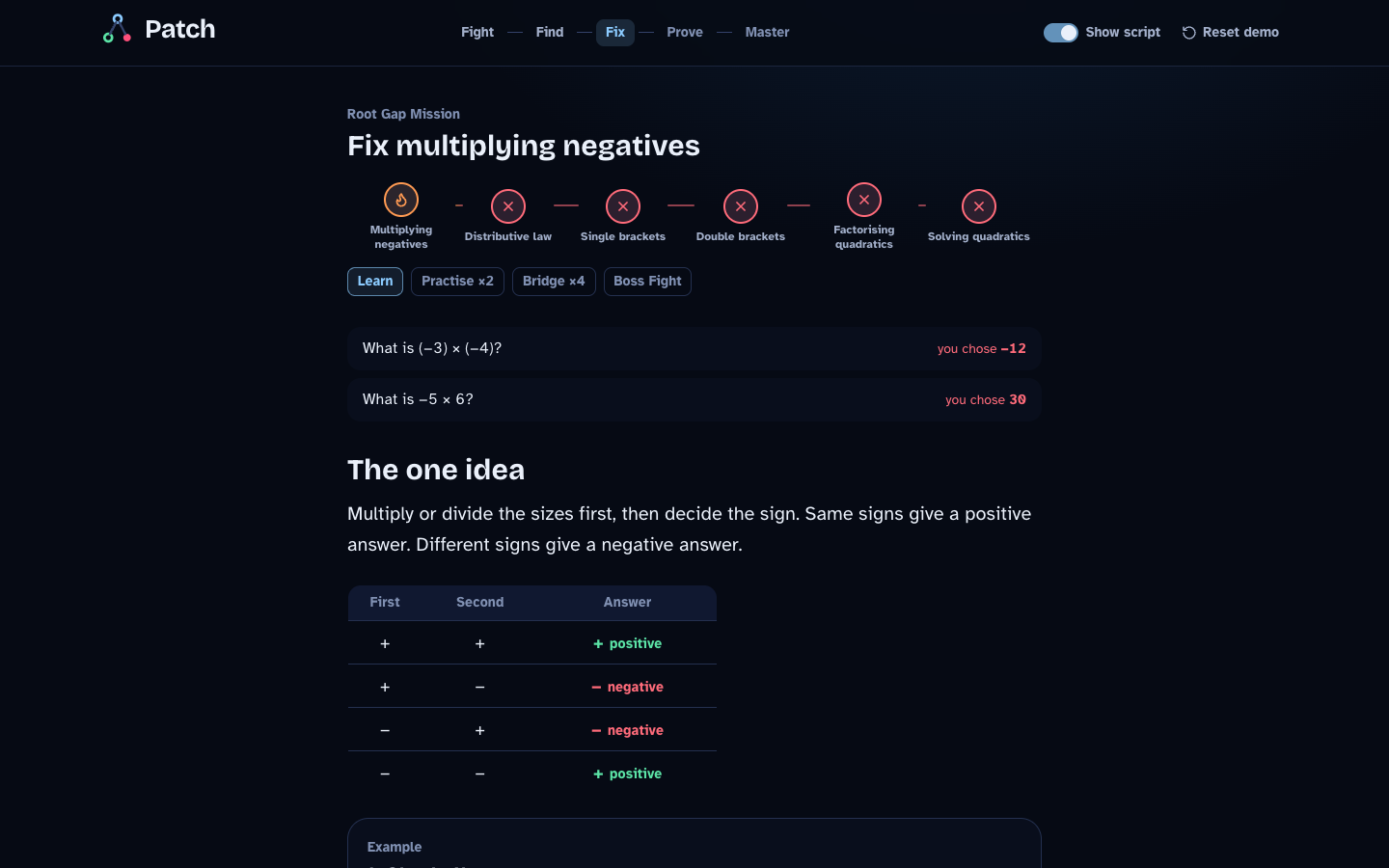
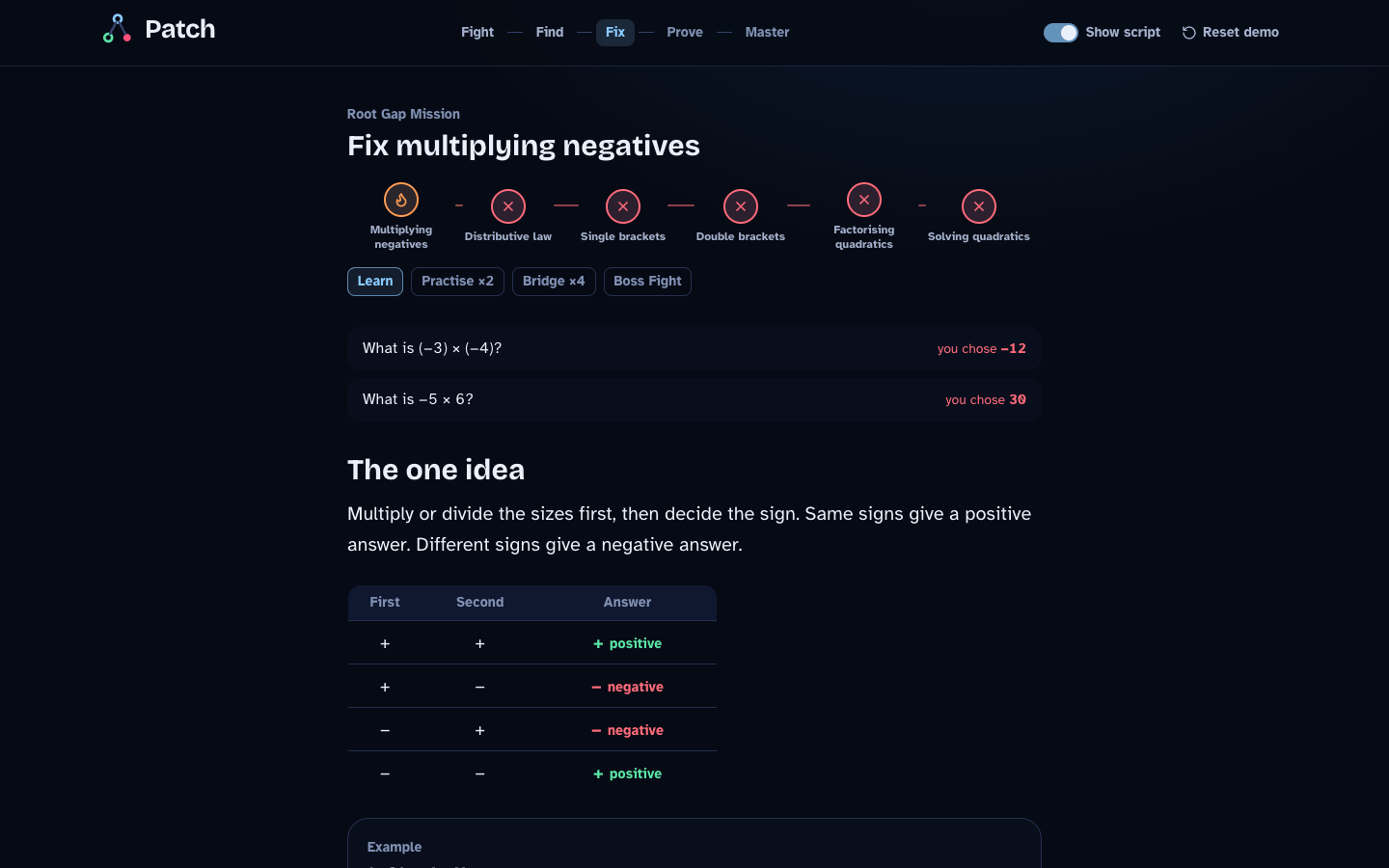
- Fix: Complete a short learning mission for the identified gap.
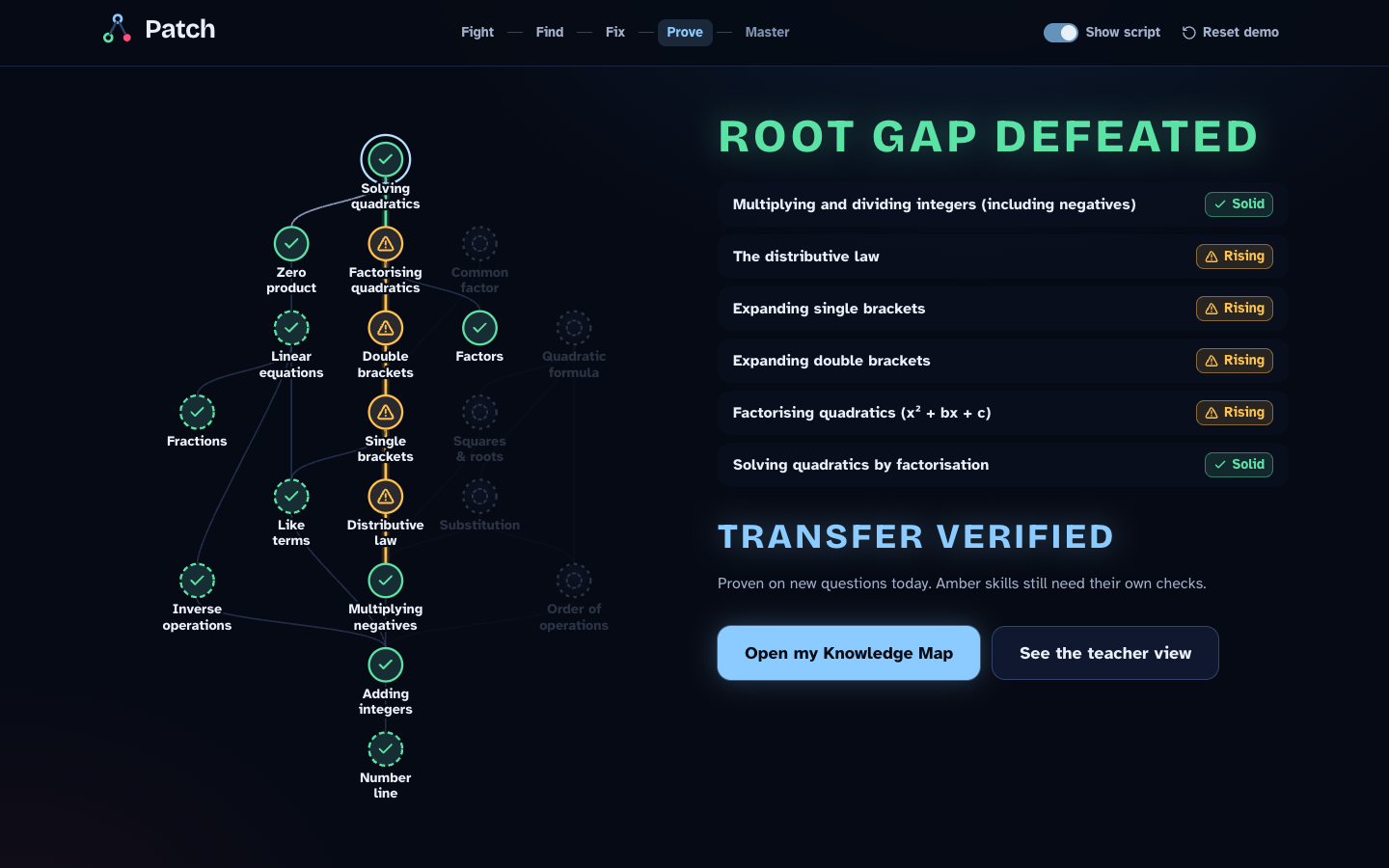
- Prove: Tackle fresh questions on the original topic to check whether the repair carries over.
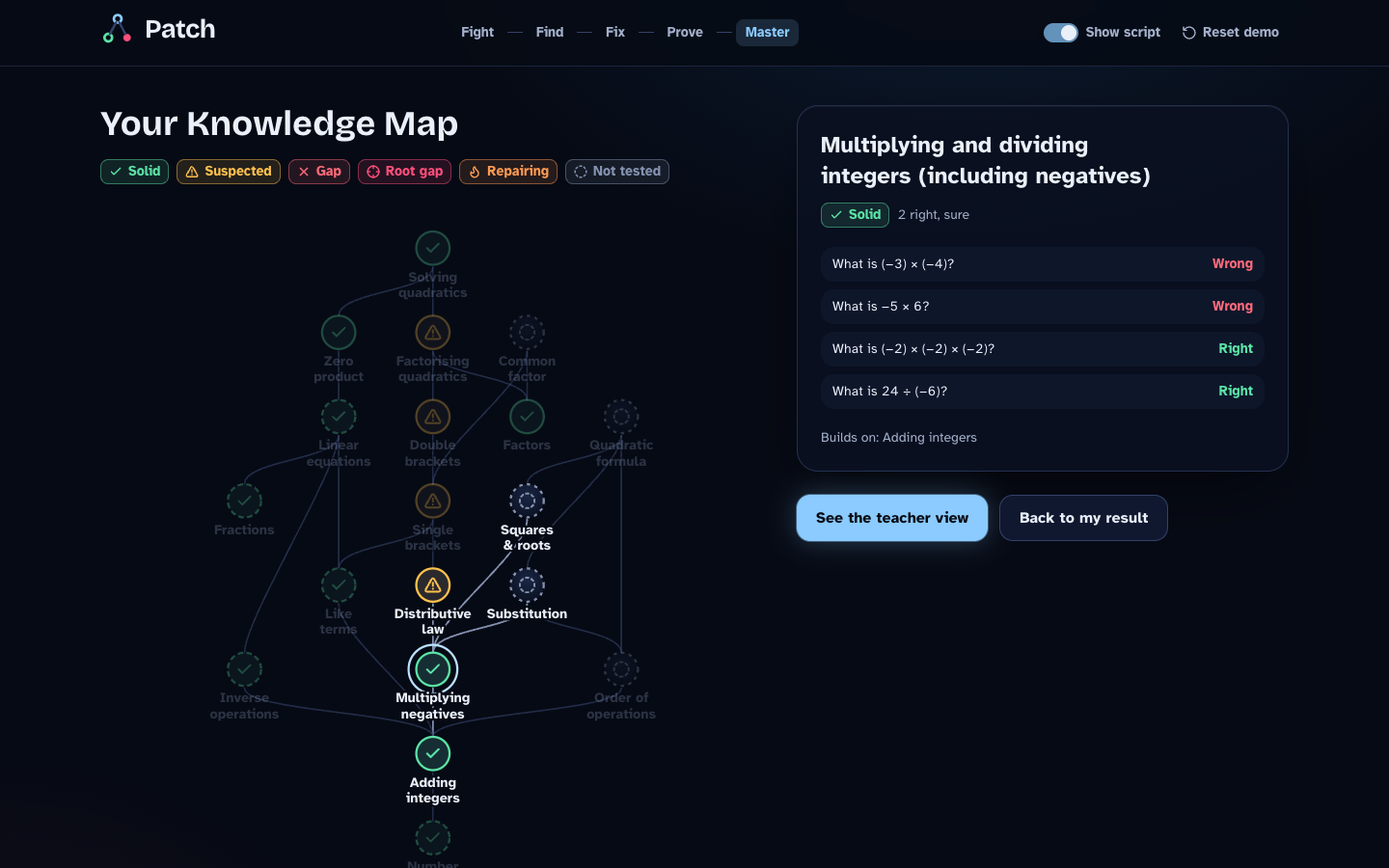
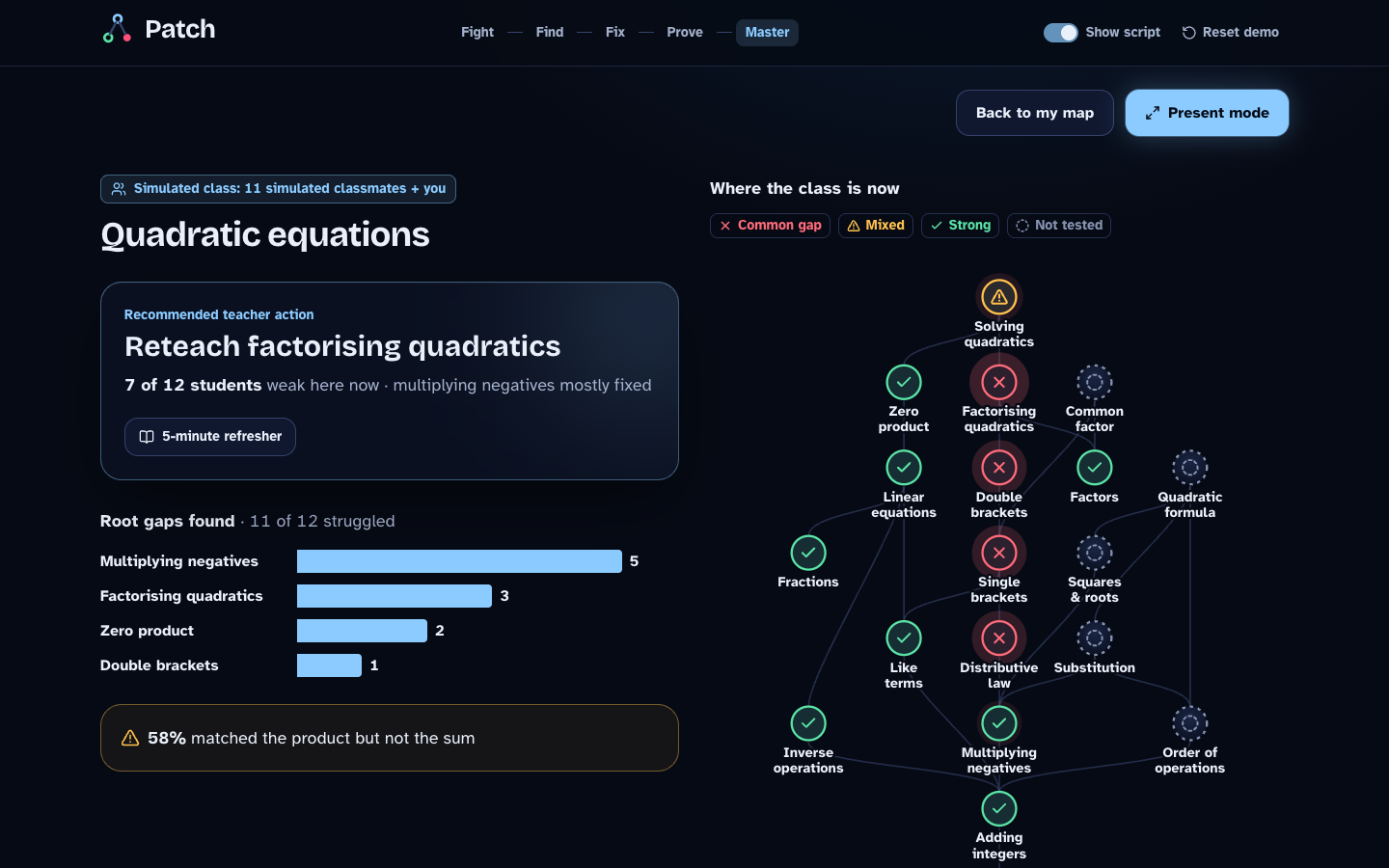
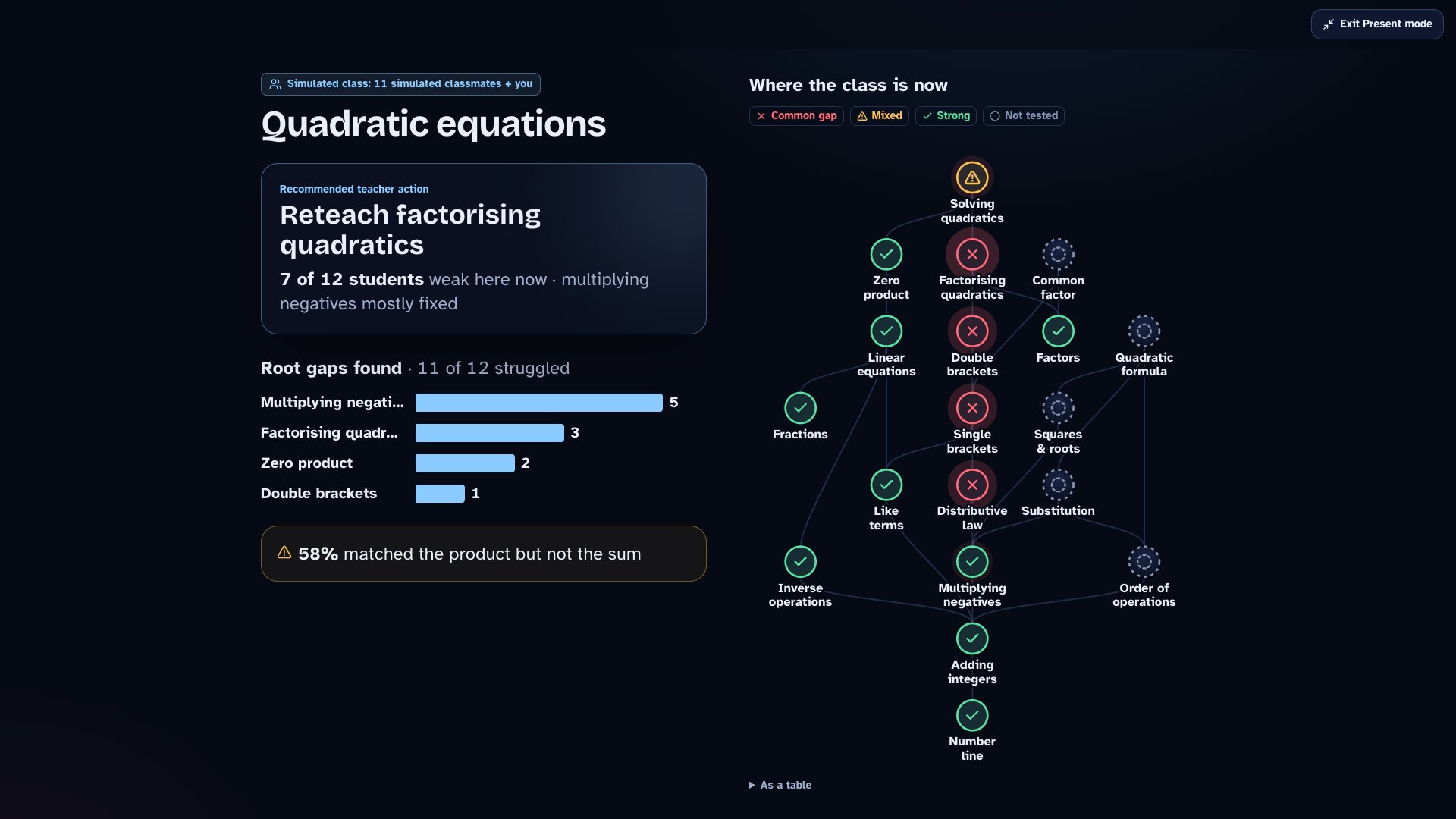
- Master: Explore a knowledge map showing the evidence collected and the gaps that remain.
Students can inspect the reasoning behind a diagnosis and challenge it with additional checks.
How we built it
We built the web app with Next.js, React, TypeScript, and Tailwind CSS, and integrated Google Gemini to generate learning content from uploaded notes.
Gemini creates the proposed skill map, question bank, and lessons. We validate their structure and request a separate AI review against the source material before starting a session.
A rule-based learning engine then handles answer evaluation, confidence, diagnosis, and progression. This keeps the session’s decisions consistent and makes their supporting evidence visible.
We started with an algebra demo, then extended the same learning flow to AI-generated content while preserving the original demo.
Challenges we ran into
The hardest challenge was deciding when there was enough evidence to identify a gap. One wrong answer could reflect a guess or a slip, so we use multiple questions and confidence signals.
We also had to handle Gemini request failures, validate generated prerequisite maps, reserve unseen questions for later checks, and make branching maps readable on mobile.
Accomplishments that we're proud of
We built a complete loop from lecture notes to diagnosis, targeted practice, and fresh-question confirmation. We tested the AI integration with real software-testing lecture slides and checked the learning flow across mobile, keyboard navigation, and automated tests.
What we learned
Generating questions is only part of the problem. Useful learning support also needs careful sequencing, visible evidence, and a way to check whether practice helped.
We learned that a correct answer and a confident understanding are different signals—and that AI-generated content still needs validation and review.
What's next for Patch
We want to pilot Patch with college students, improve content quality using their feedback, save progress across sessions, and add spaced follow-up questions to check retention.
Our goal is to make every study session answer three questions: Where am I stuck? What should I practise? Did it help?
Built With
- google-gemini-api
- next.js
- node.js
- playwright
- react
- supabase
- svg
- tailwind-css
- typescript
- vercel
- vitest
- zod


Log in or sign up for Devpost to join the conversation.