Patch Me If You Can
Project Summary
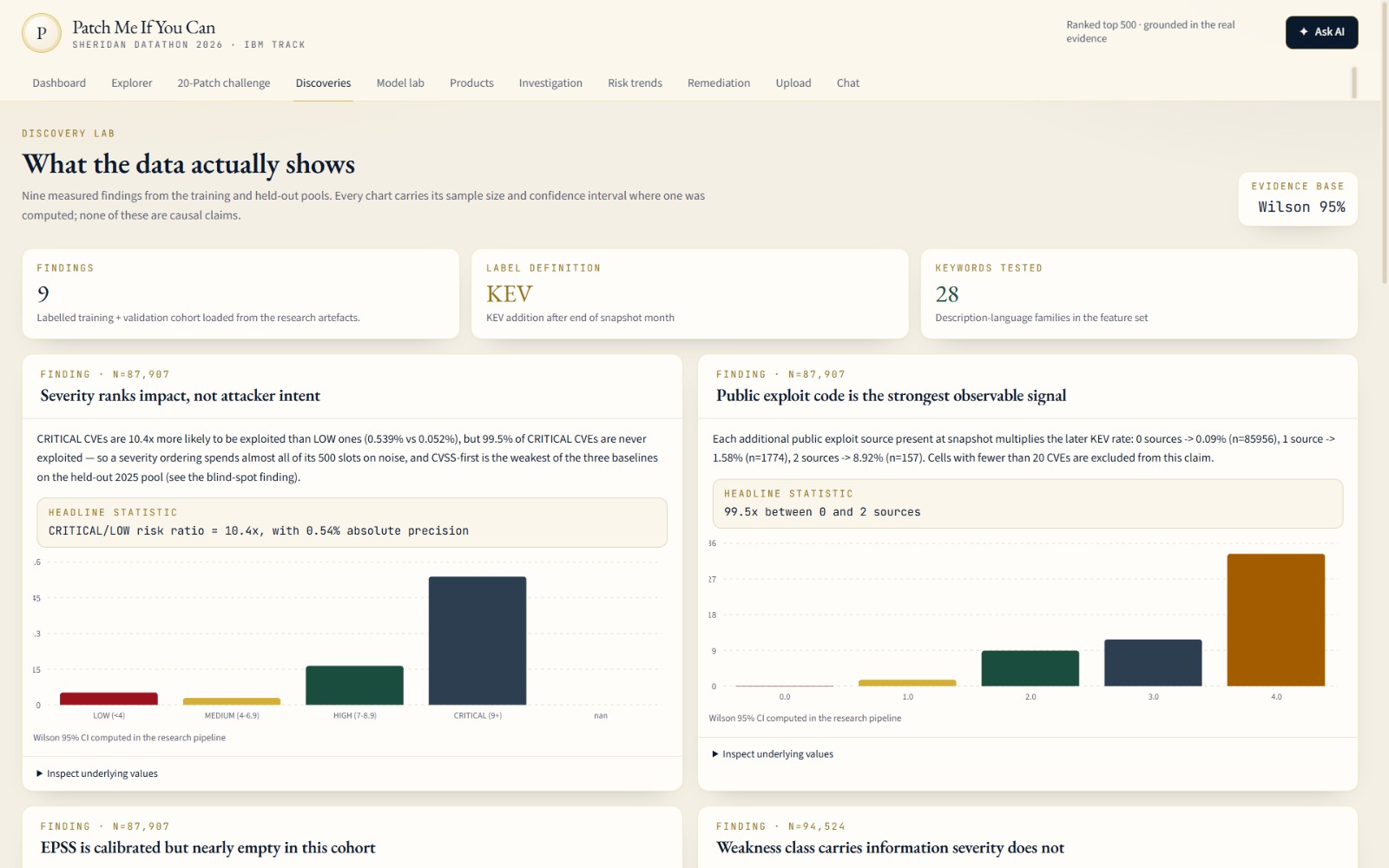
Inspiration Security teams are overwhelmed by the sheer volume of software flaws; in fact, over 92,205 vulnerabilities have been published so far in 2026, which is more than double the total for all of 2024. Because fewer than 1 in 250 published software vulnerabilities are actually confirmed to be used by attackers, security engineers are constantly faced with a critical question: what do we fix first? Traditional prioritization relies heavily on CVSS severity scores, which only measure how damaging an attack could be, rather than the actual probability of an attack occurring. Our goal was to build a predictive threat intelligence tool that identifies which vulnerabilities attackers will weaponize before the breach happens.
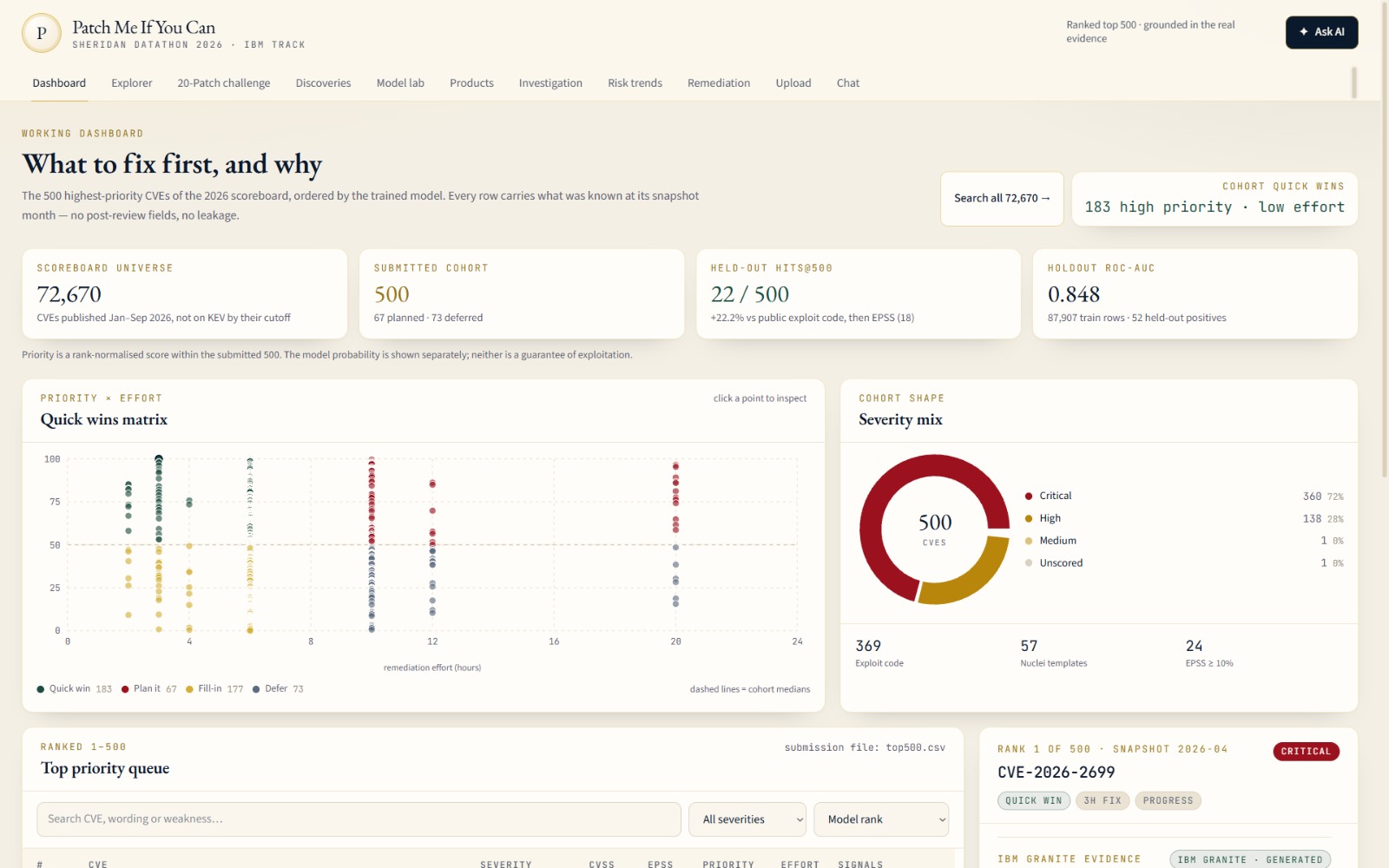
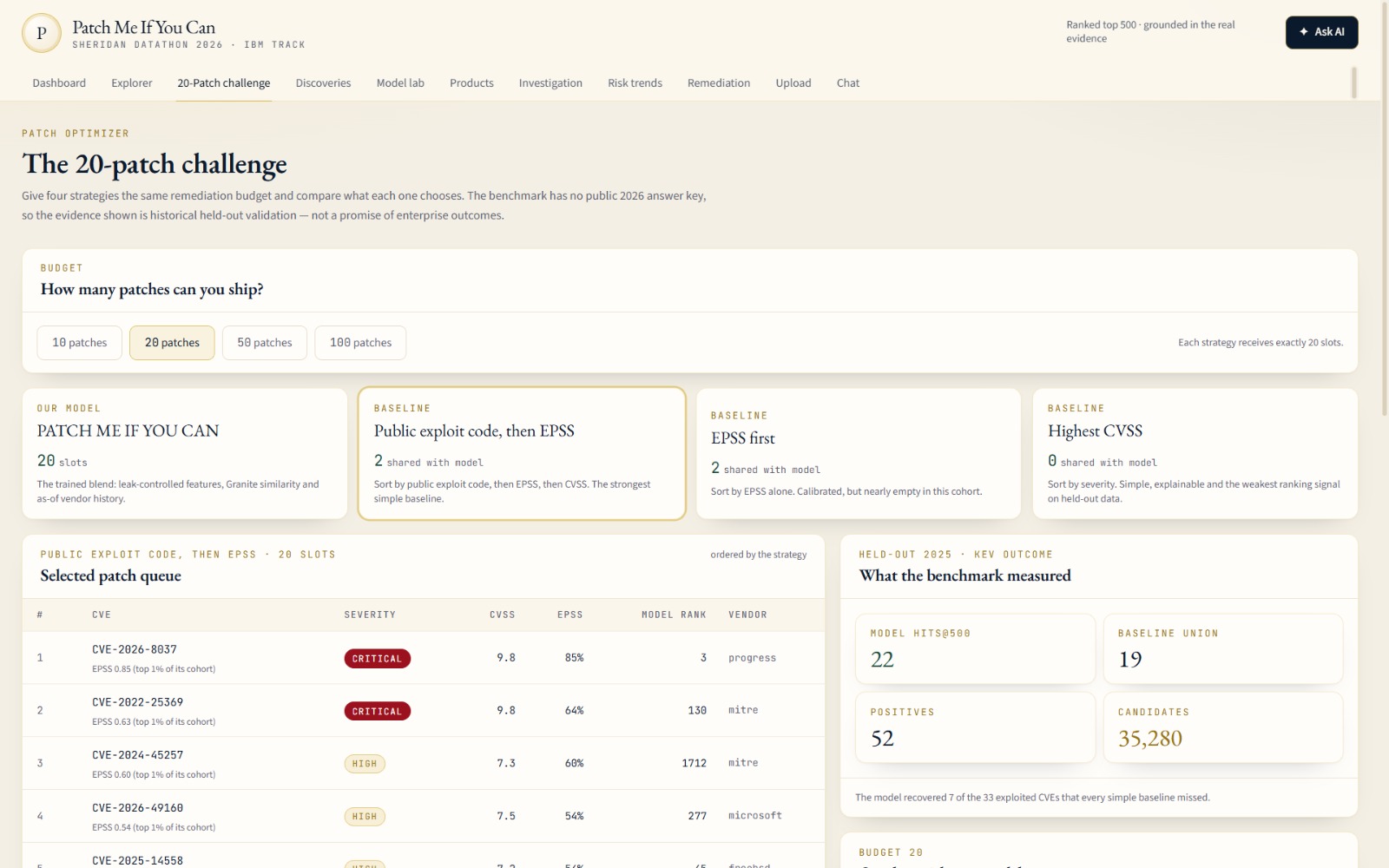
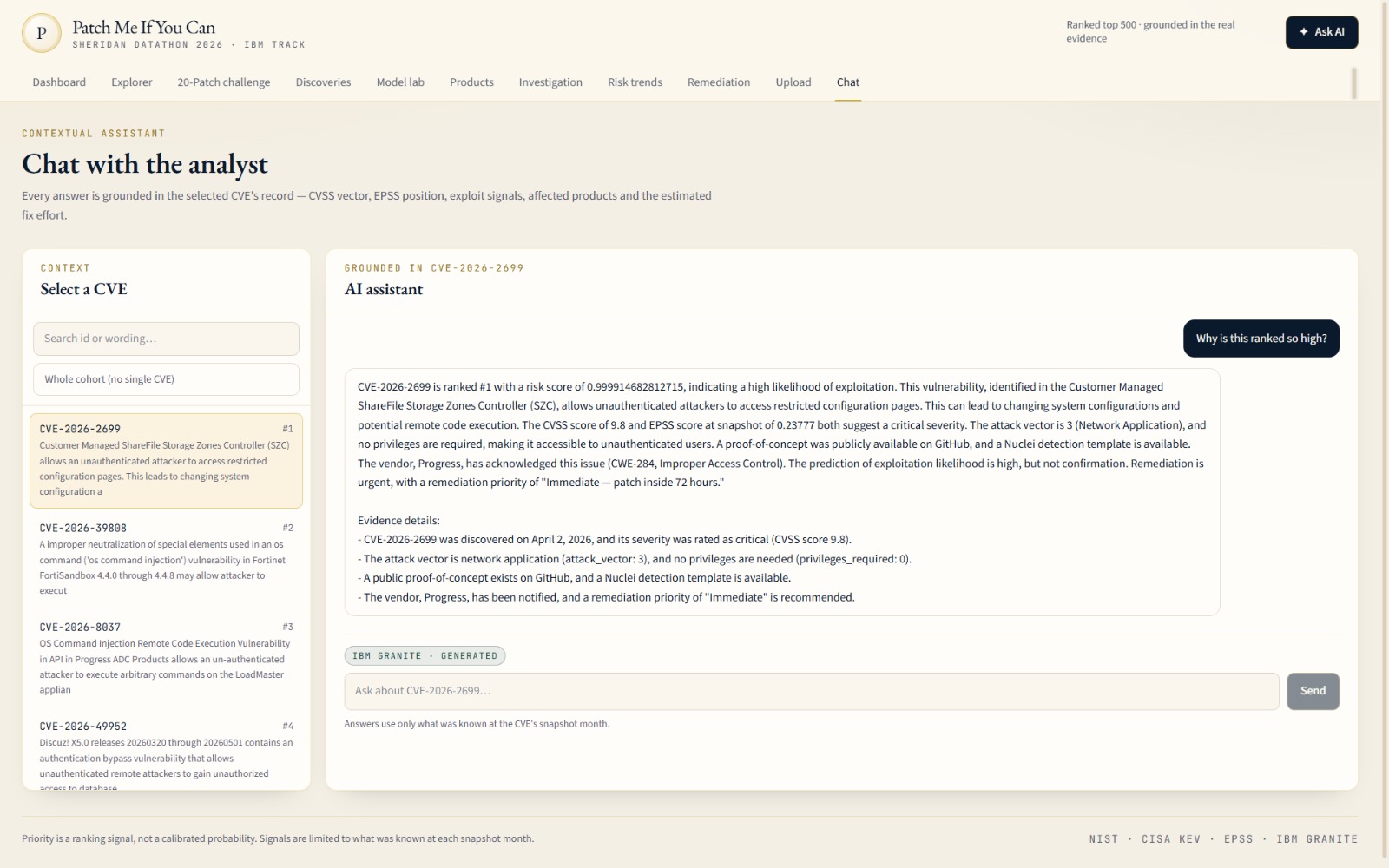
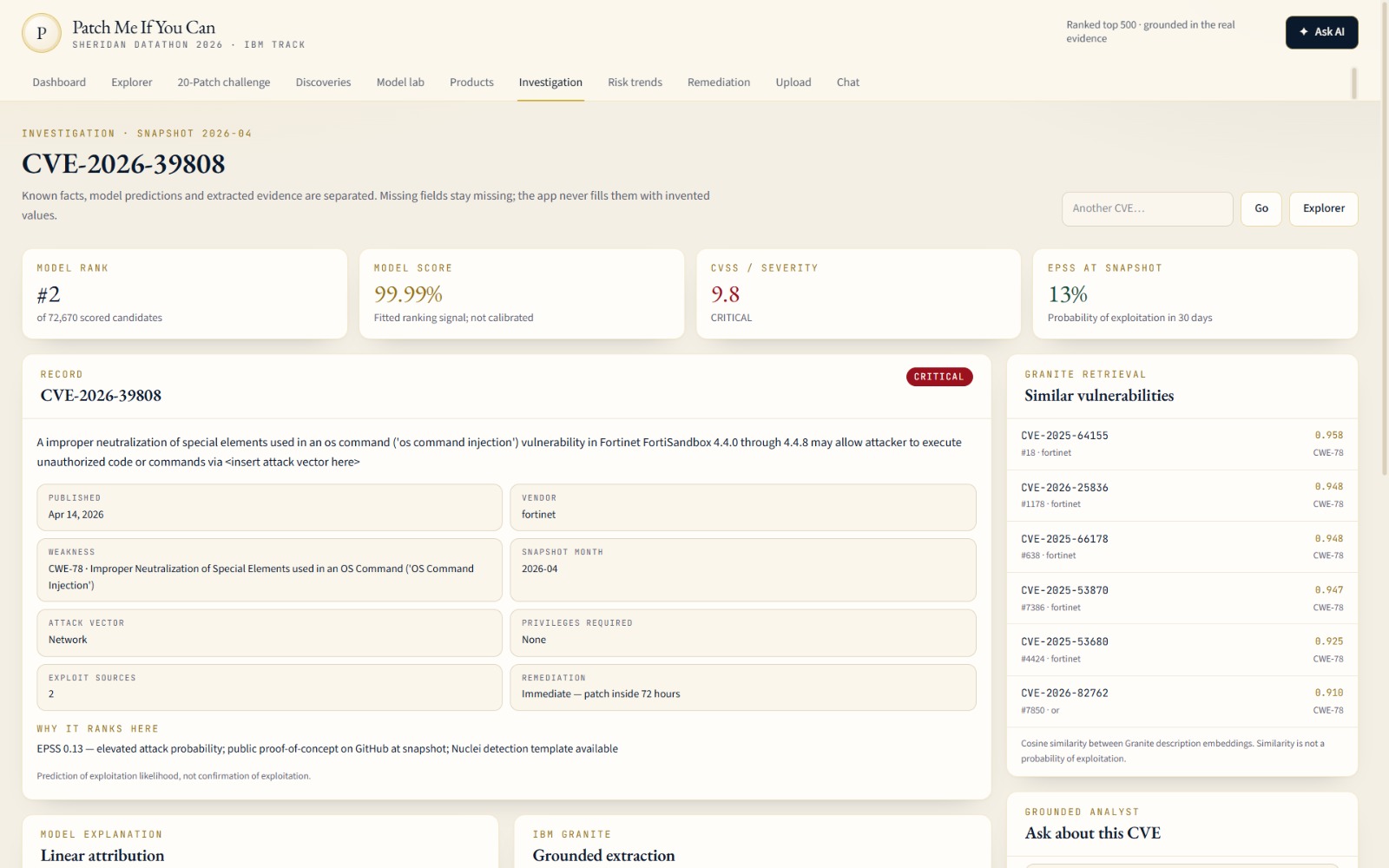
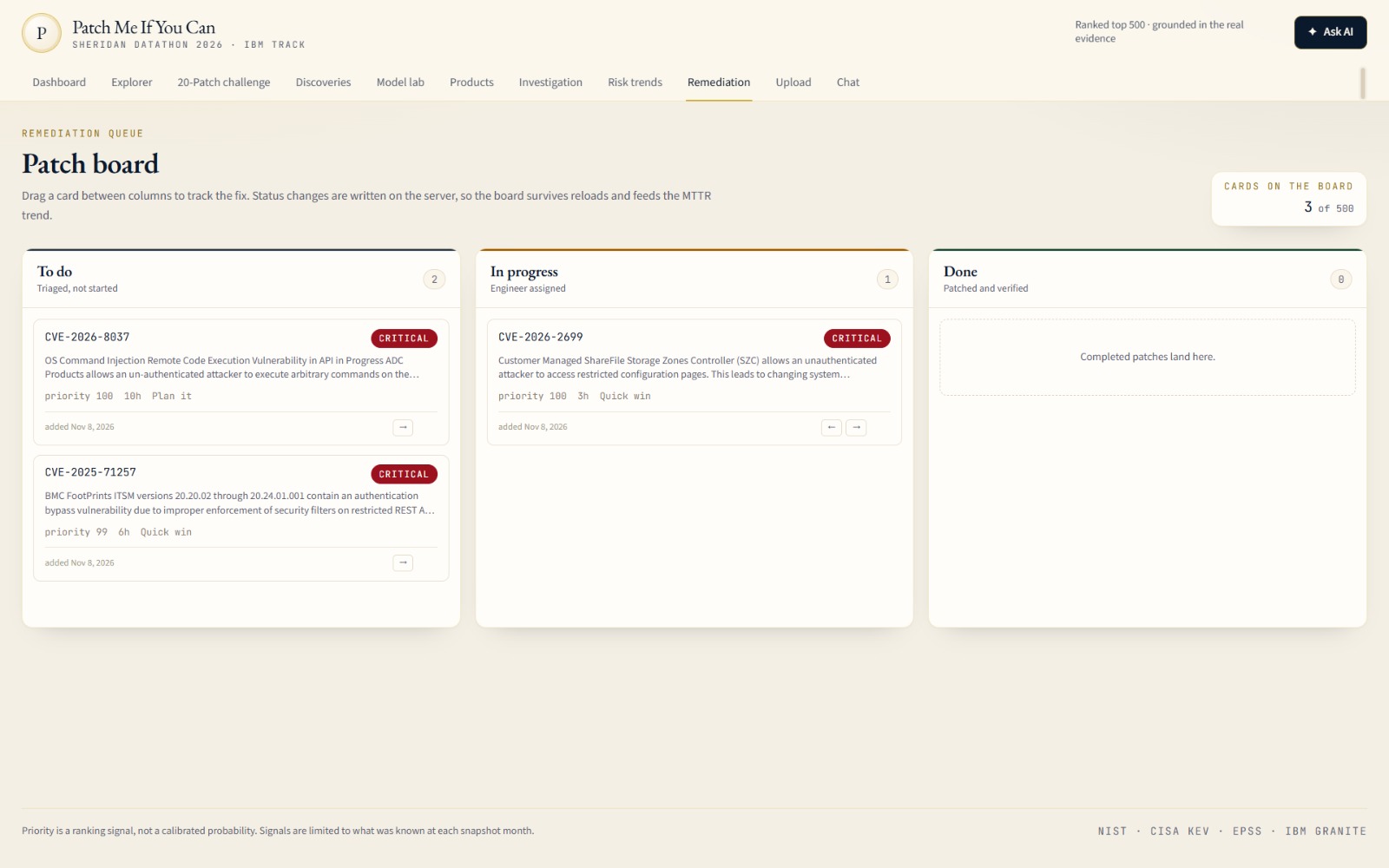
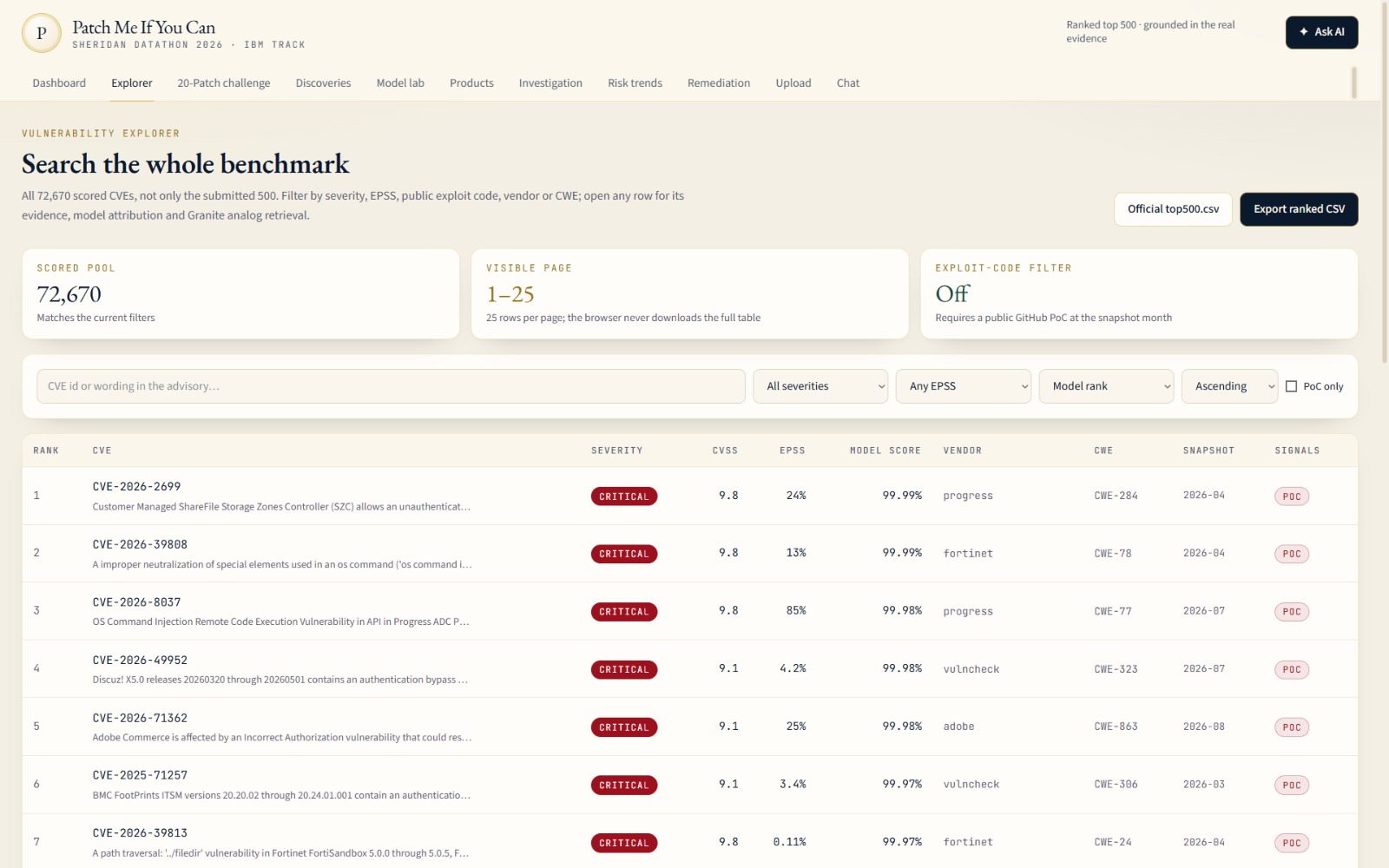
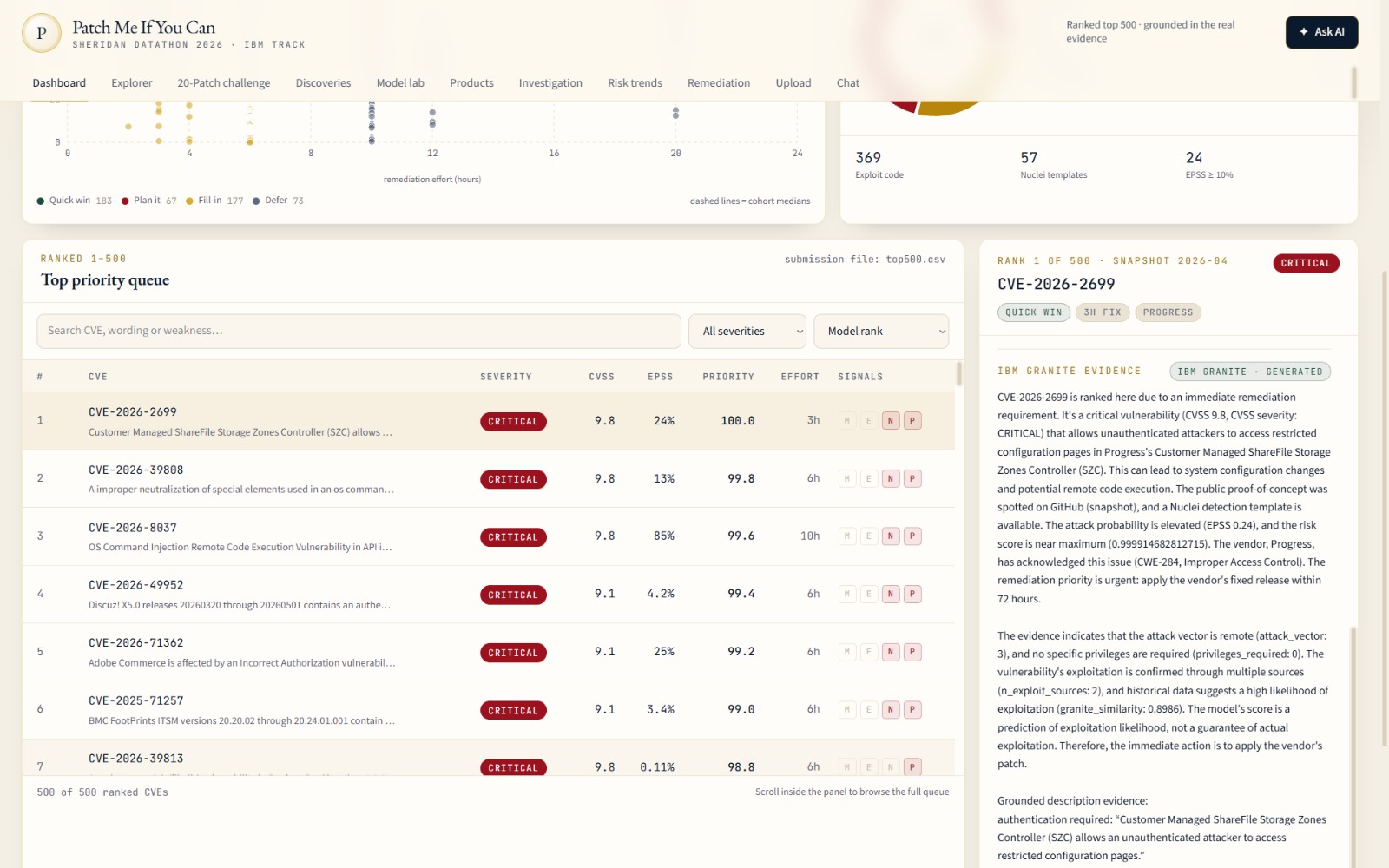
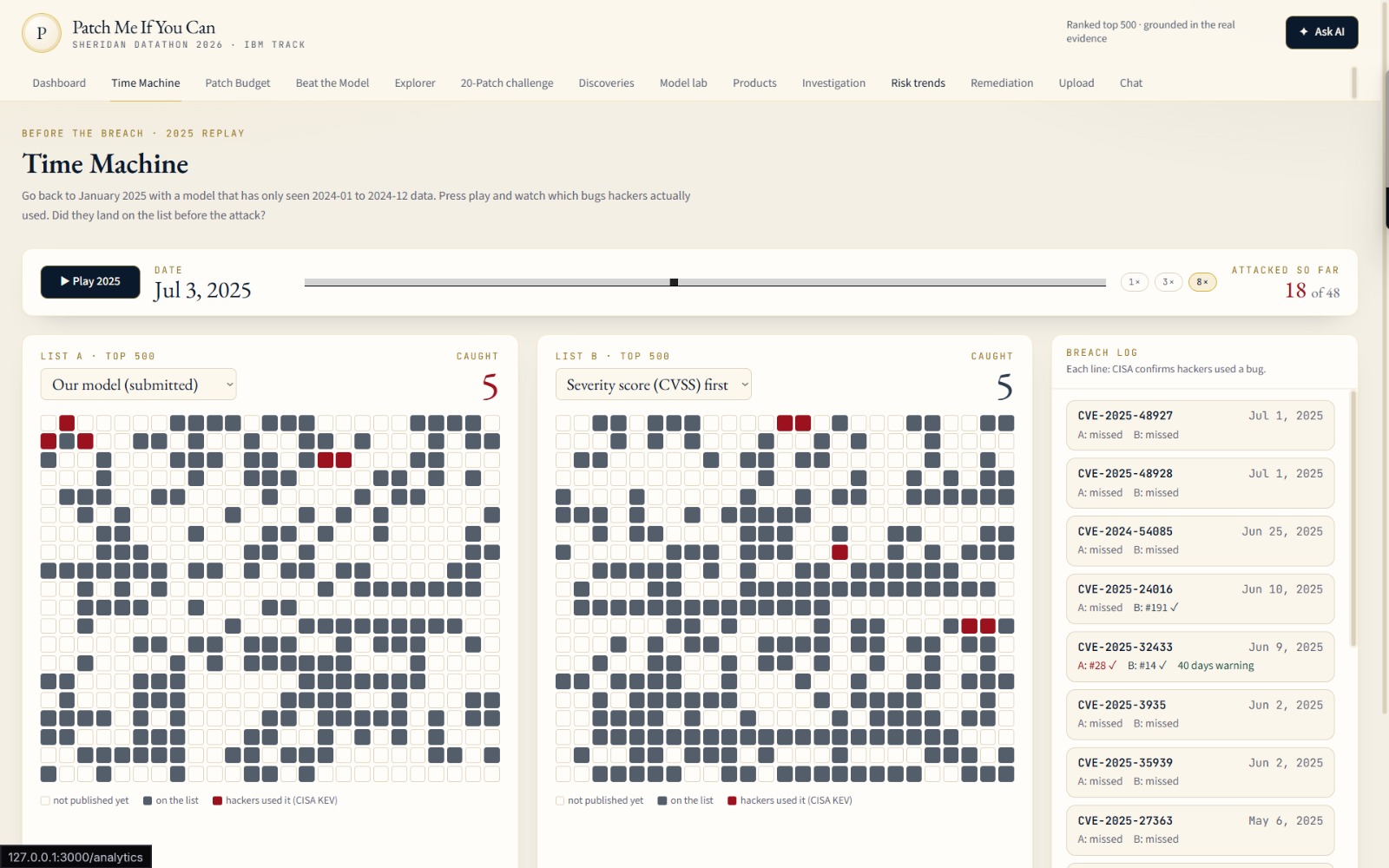
What it does "Patch Me If You Can" acts as an early-warning exploitation radar for security operations teams. It evaluates raw vulnerability data and predicts which CVEs are most likely to be added to CISA's Known Exploited Vulnerabilities (KEV) catalog. Instead of overwhelming analysts with data, our system outputs a targeted, deterministic ranking of the top 500 highest-risk threats so engineers know exactly what to patch immediately.
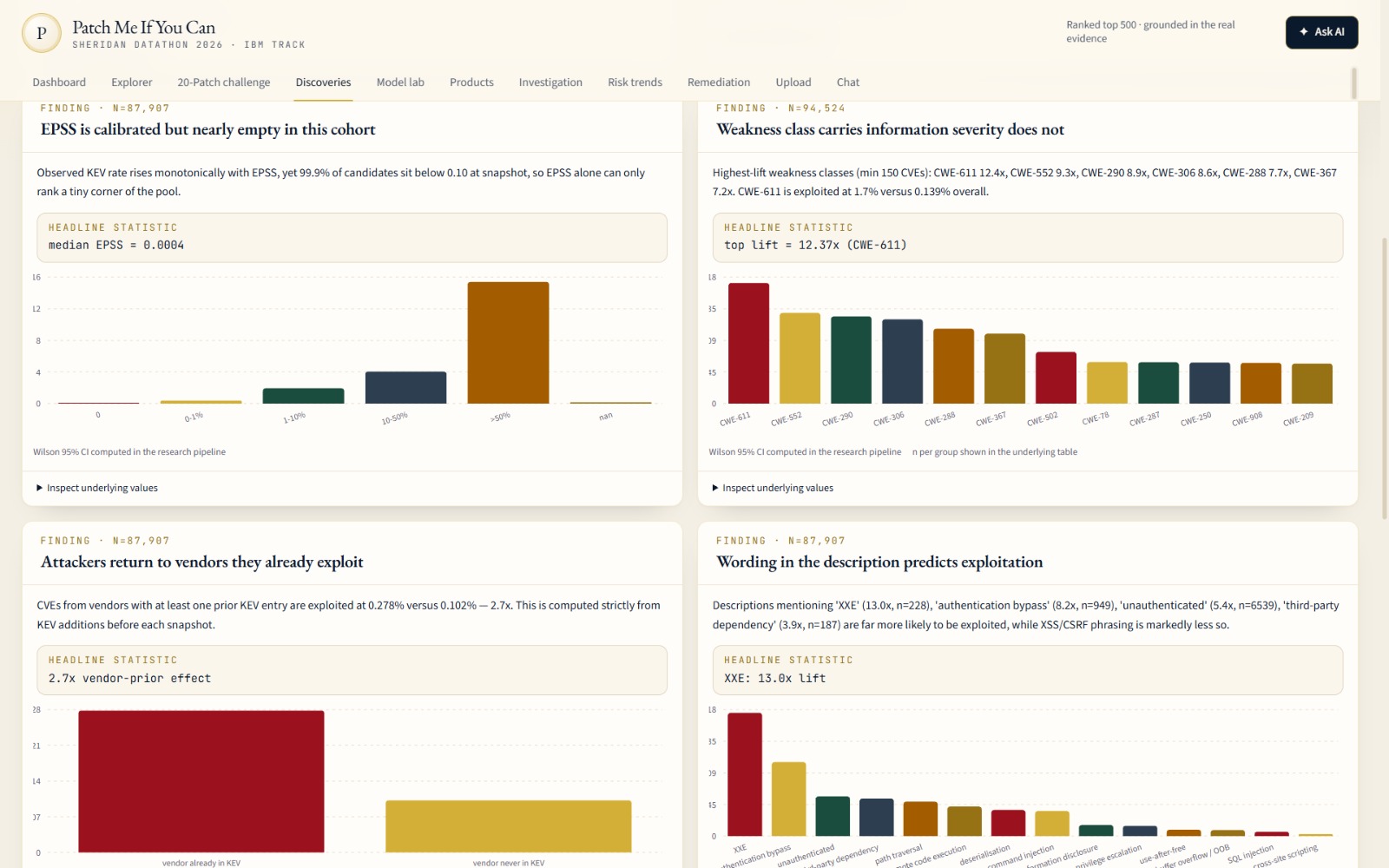
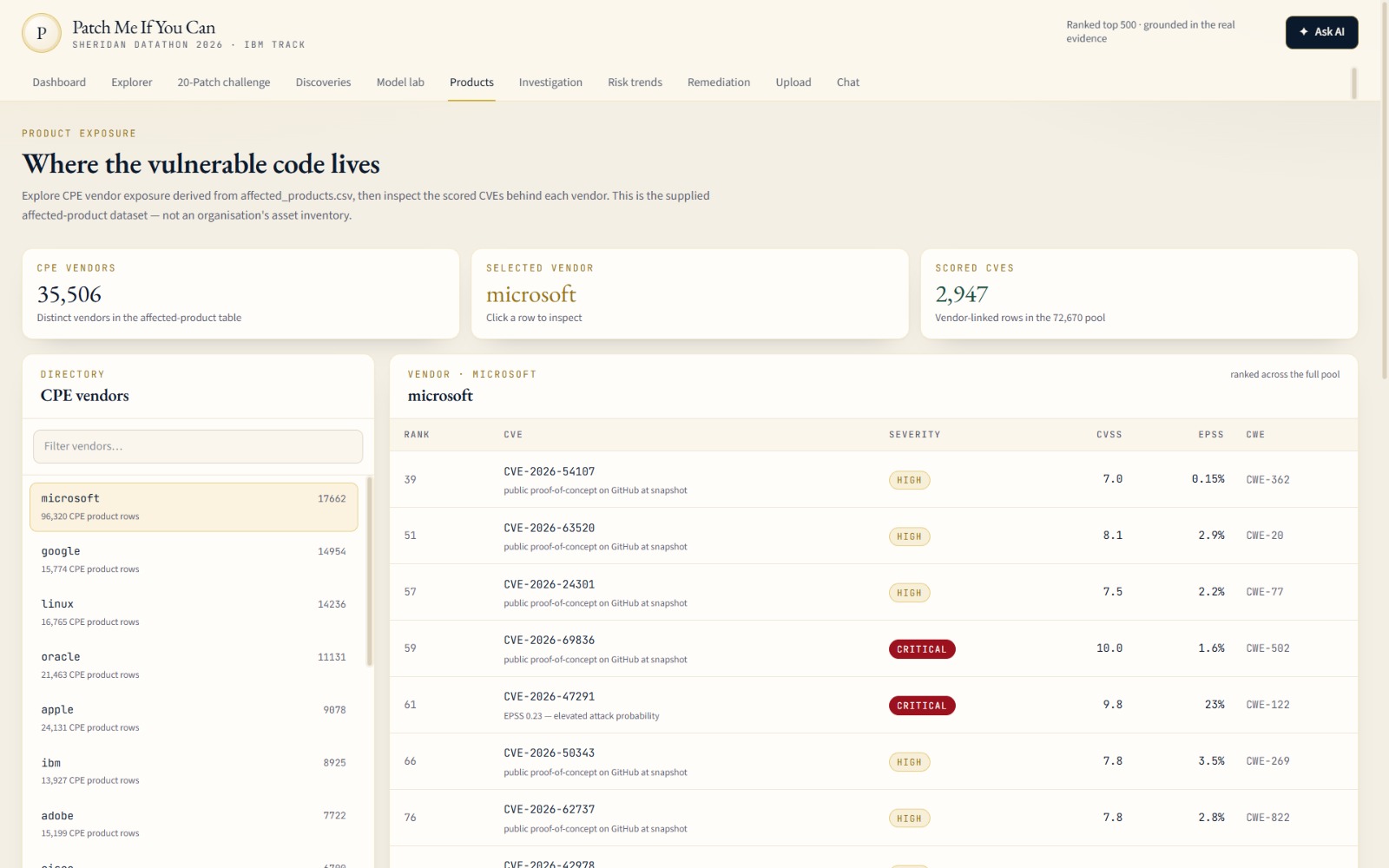
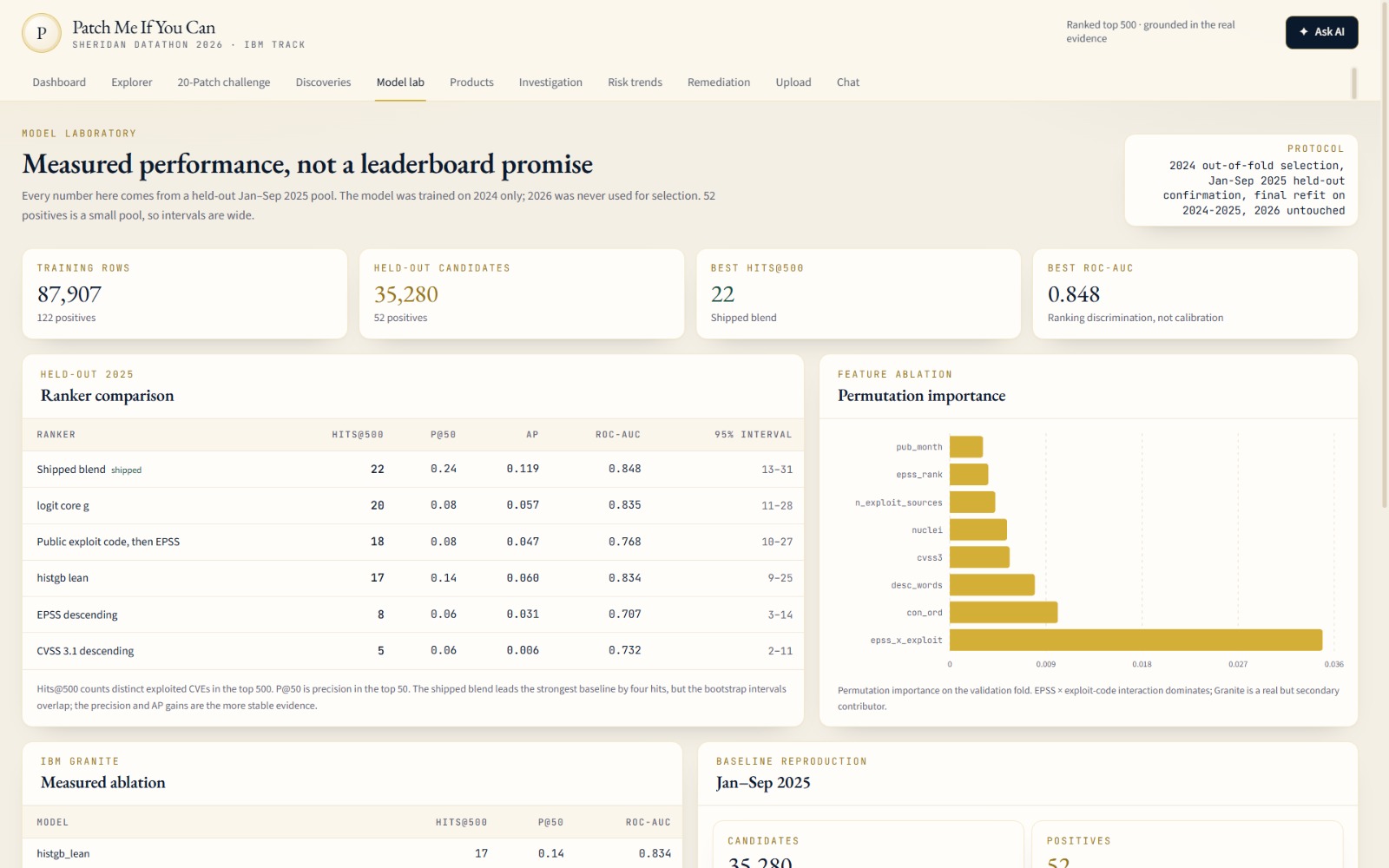
How we built it We engineered a predictive risk pipeline combining historical exploitation signals with vulnerability metadata. Our model evaluates the Exploit Prediction Scoring System (EPSS)—which estimates the probability of an attack within the next 30 days—alongside the presence of public exploit code across repositories like Exploit-DB, Metasploit, Nuclei, and GitHub. We cross-referenced this against MITRE's Common Weakness Enumeration (CWE) list and CVSS attack vectors to understand how attackers reach the vulnerable components.
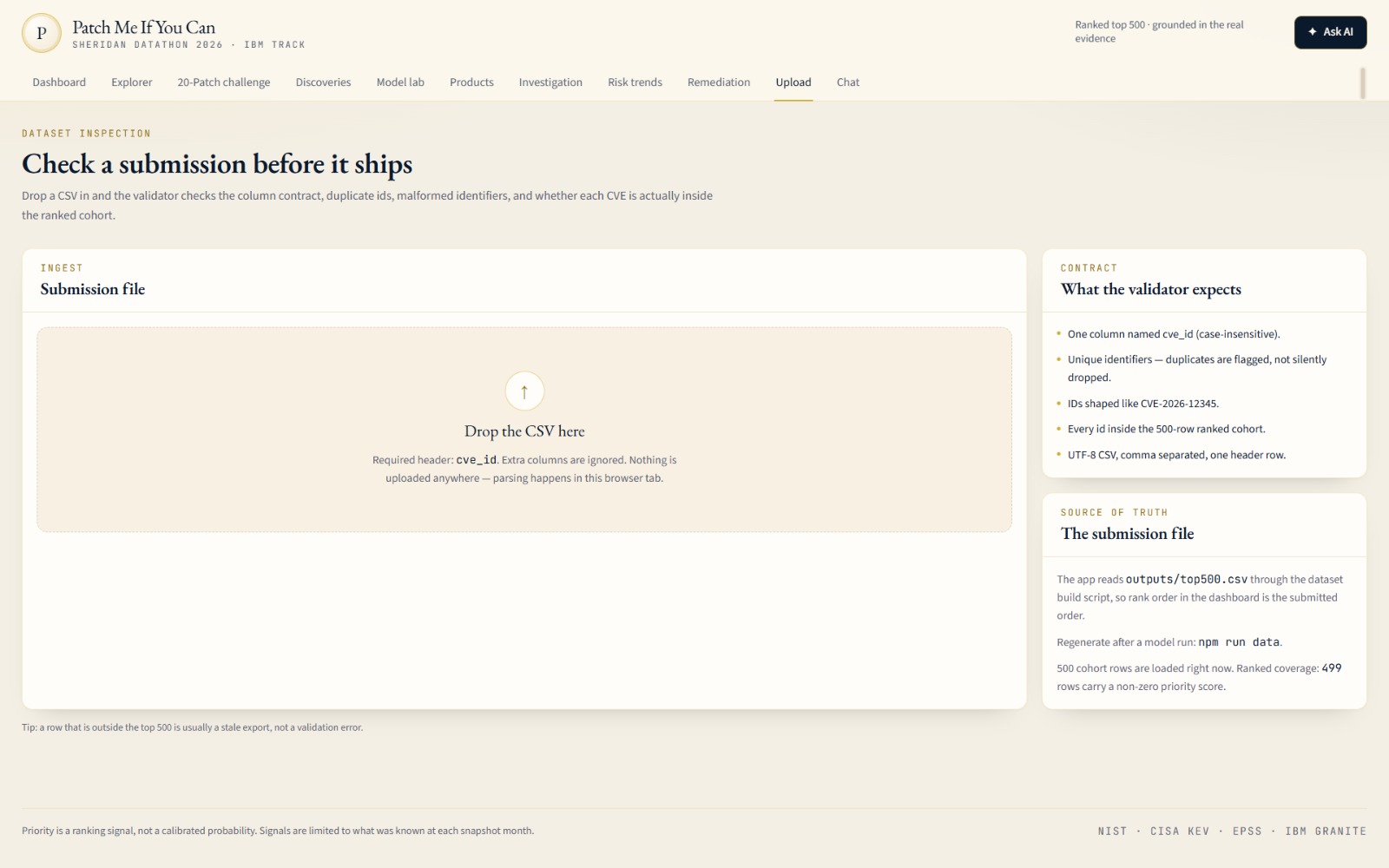
Crucially, we implemented strict data contamination safeguards to ensure our model only evaluates information known at the end of a vulnerability's snapshot_month. To maintain fair predictive validity and prevent data leakage, we explicitly excluded features that are often updated by NIST after an attack occurs, specifically: nvd_status, n_affected_cpes, n_references, blank severity scores, and post-attack news links in the references data.
Value and Impact By cutting through the noise of thousands of unexploited vulnerabilities, this tool directly answers IBM's core challenge. It transitions security teams from a reactive patching cycle to a proactive defense posture, ensuring enterprise resources are deployed exactly where the threat is highest.
