-
-
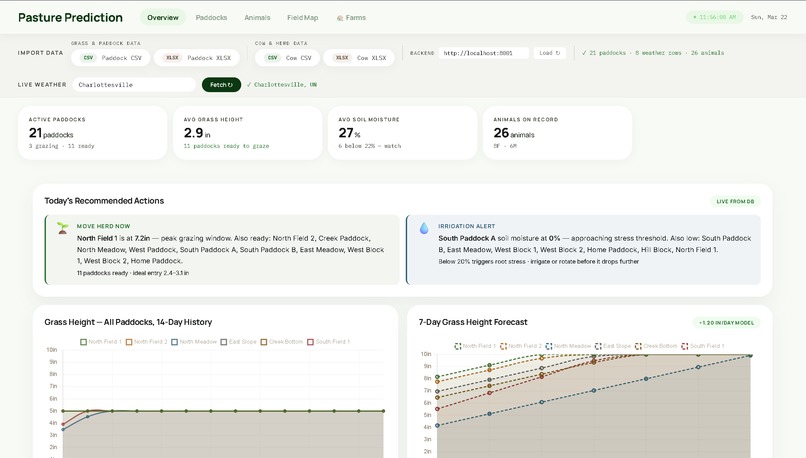
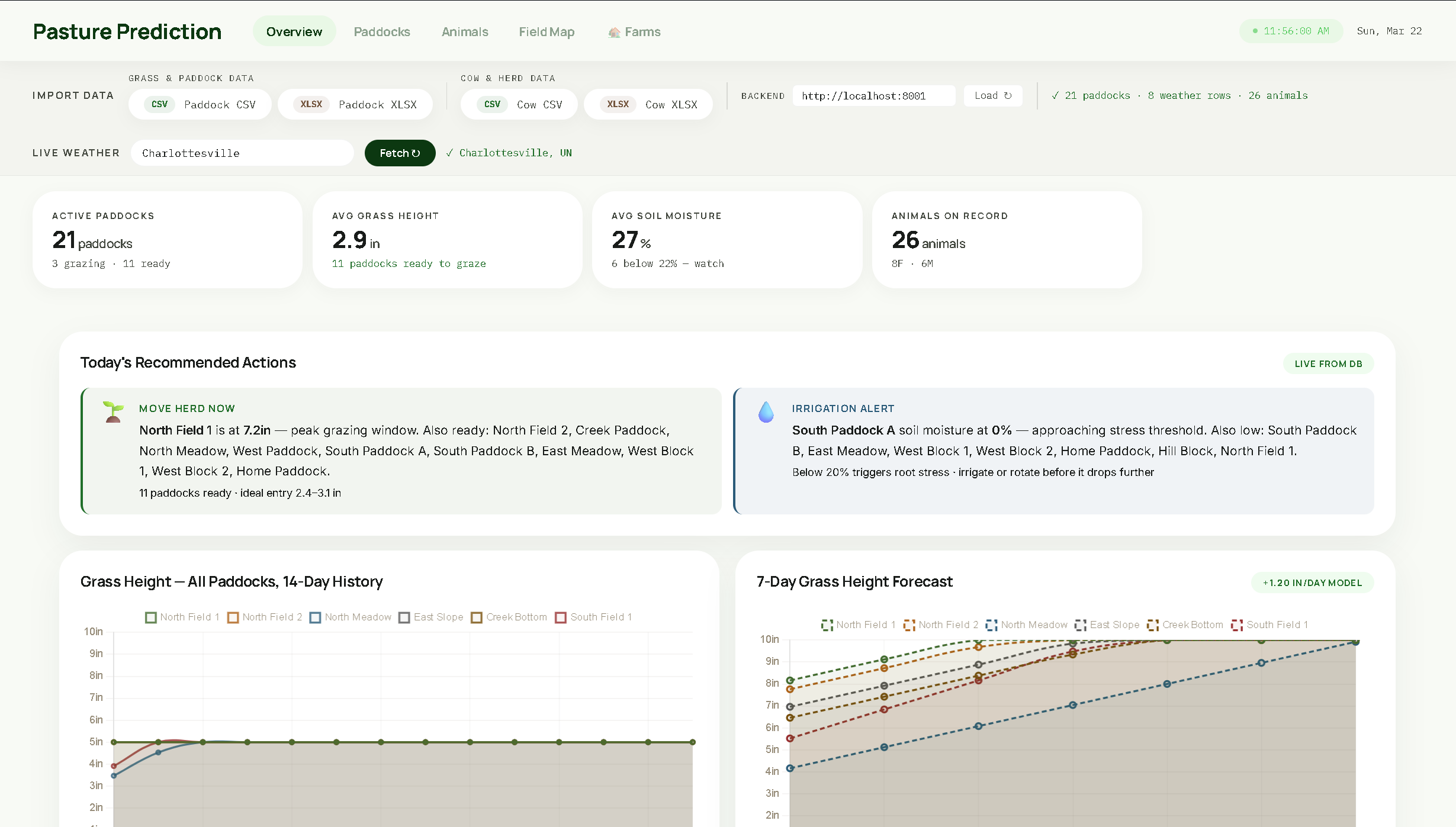
Home page for Pasture Prediction
Inspiration
We wanted a way to help farms manage their land more efficiently while also improving sustainability. Many farmers rely on intuition for grazing decisions, which can lead to overgrazing, wasted resources, and reduced soil health. We aimed to build a simple, data-driven tool that helps farmers make better decisions without needing technical expertise.
What it does
Utilizes dynamic modeling to forecast grass growth based on weather conditions. Divides pasture into paddocks for effective rotational grazing. Alerts farmers when it is time to rotate livestock. Optimizes rotation schedules to allow proper regrowth, prevent overgrazing, and improve pasture productivity.
How we built it
Used HTML for a clean and simple frontend designed for ease of use. Built a Python backend to handle modeling and decision logic. Integrated the OpenWeatherMap API to pull real-time and forecasted weather data. Connected the system to update predictions and display them through a basic paddock visualization.
Challenges we ran into
We ran into issues managing API keys and ensuring secure usage. Integrating the UI with the backend was difficult, especially when connecting different components and maintaining smooth data flow. Coordinating multiple system parts, like linking weather data to the growth model and updating the interface, introduced bugs that required debugging and restructuring.
Accomplishments that we're proud of
Completing the HooHacks project within the time limit. Building a functional full-stack system that connects weather data, predictive modeling, and a simple user interface. We were able to contact real farms in the local area to acquire real data and user feedback. Creating a tool that is practical, accessible, and focused on real-world agricultural use.
What we learned
We learned how to quickly build and iterate on a full-stack project under time constraints. We gained experience integrating APIs and using external data in a predictive model. We also learned the importance of simplicity when designing for non-technical users and gained insight into real challenges in rotational grazing.
What's next for Pasture Prediction
Add new breeding information to track genetics and reproduction cycles. Incorporate cost data analysis to help farmers understand expenses and improve profitability. Integrate ear tag technology for better livestock tracking. Automate gates between paddocks to reduce manual labor. Improve the grass growth model with more detailed environmental data. Expand analytics on livestock to reduce methane emissions and increase sustainability. Add mobile support and notifications for easier use in the field.

Log in or sign up for Devpost to join the conversation.