PastPort – Preserve Moments. Unlock Memories.
Inspiration
PastPort was born from a desire to design a place where nostalgia meets the future. Back in 2020, I wrote myself a digital letter on FutureMe.org and felt the thrill of waiting to read it. Around the same time, I used Slowly, where delayed letters made online friendships feel real, and *Snapchat, where 24-hour stories built fleeting shared memories.
Those three experiences shaped a question that became the core of this project: What if you could combine reflection, anticipation, and connection—inside one timeless design? That vision inspired PastPort, a digital time-capsule concept turned into a single-page web mockup for this hackathon.
Concept
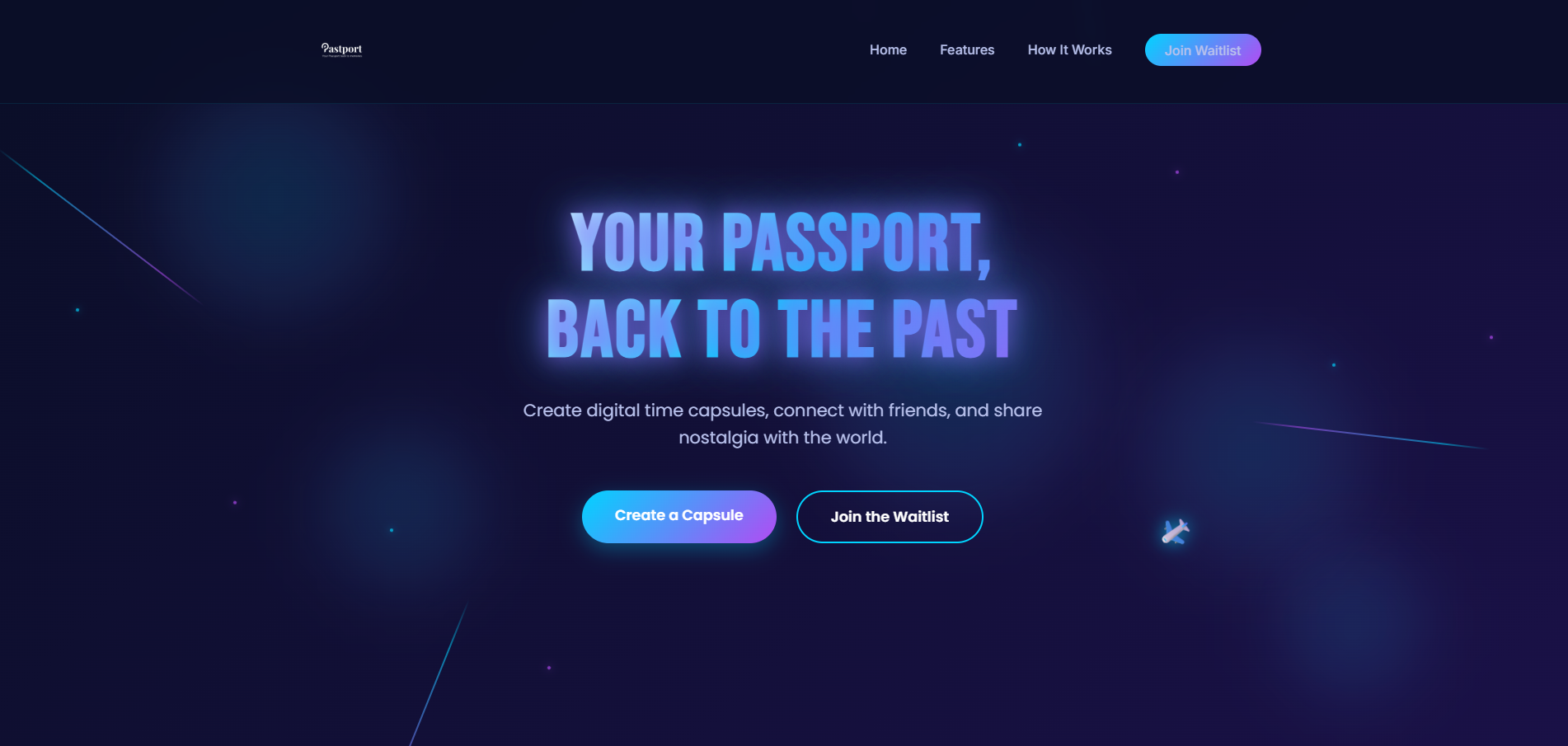
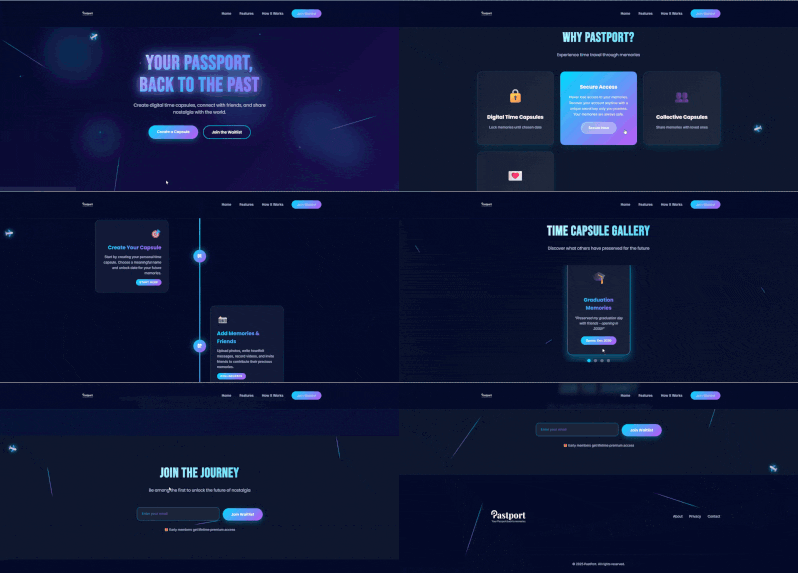
PastPort is a design prototype for the world’s first Anticipatory Social Network—a social platform centered on digital time capsules. Because this hackathon emphasizes design over code, the focus is on visual storytelling: using layout, color, and typography to communicate emotion and function without JavaScript.
Core Design Ideas
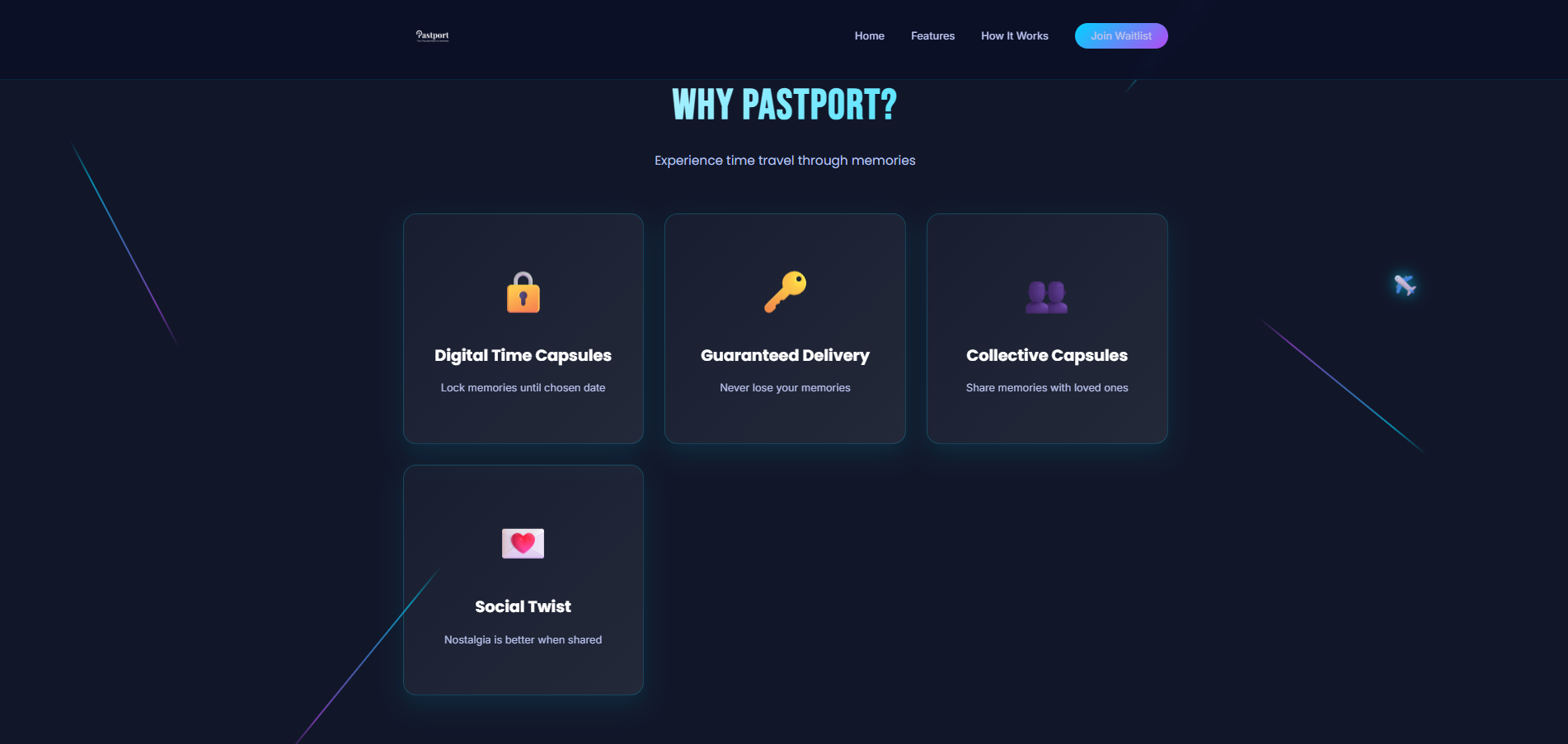
- Digital Capsules: Illustrated through soft, rounded cards representing stored memories.
- Guaranteed Delivery: Symbolized by a lock-and-key icon and a subtle CSS glow, hinting at account security and trust.
- Collective Capsules: Group imagery and overlapping gradients represent shared experiences.
- Social Twist: Minimalist message bubbles connected by flowing lines, evoking friendships that grow over time.
How We Built It
This project was crafted entirely with HTML and CSS.
- Structure (HTML): Semantic layout using sections—Hero, About, Features, and CTA—to keep the design accessible and clean.
- Styling (CSS):
- Color Palette: Deep navy background with neon-blue and violet gradients to evoke both future and nostalgia.
- Typography: Bebas Neue for headings, Poppins for sub-headings, and Inter for readable body text.
- Glassmorphism Cards: Translucent panels and hover transitions create depth without interactivity.
- Animations: Subtle keyframe motions to simulate “floating memories.”
- Responsiveness: Flexbox and media queries ensure the design adapts across mobile, tablet, and desktop.
Challenges
- No JavaScript Limitation: Conveying motion and interaction using only CSS animations required creative problem-solving.
- Visual Storytelling: Balancing futuristic elements with warmth so the site felt emotional, not just technical.
- Information Hierarchy: Reducing a complex app concept into a single clear page.
Accomplishments
- Designed a visually rich concept page that tells a story through design alone.
- Created a cohesive aesthetic that mirrors the emotional essence of time and memory.
- Developed clean, maintainable HTML + CSS code suitable for beginner-friendly standards while still feeling professional.
What We Learned
- Design can communicate emotion without functionality. Through gradients, layout, and typography, a user can feel what an app might do.
- Constraints spark creativity. Removing JavaScript pushed us to rely on spacing, layering, and motion in CSS to simulate interaction.
- Narrative first, interface second. By defining the emotional journey (anticipation → nostalgia → reconnection), the layout almost designed itself.
What’s Next
- Expand this mockup into an interactive prototype (using JavaScript or React in future hackathons).
- Integrate countdown visuals and capsule-opening animations to reflect the time element more dynamically.
- Explore collaborations with schools or events to visualize collective digital memory capsules.
Design Summary
Theme: Nostalgia × Future
Tools: HTML + CSS + Figma (for mockups)
Layout: Single-page responsive site
Goal: Capture the emotion of preserving and rediscovering memories without writing a single line of JavaScript.

Log in or sign up for Devpost to join the conversation.