Inspiration
As someone who’s spent years experimenting with fresh pasta at home, I grew frustrated with scattered, inconsistent tutorials online. Italian pasta is about precision – the right dough ratio, cooking time, and sauce pairing – yet most guides skip critical details. I wanted to create a one-stop tool that distills professional pasta-making knowledge into something accessible for home cooks, whether you’re a beginner or a seasoned enthusiast.
What it does
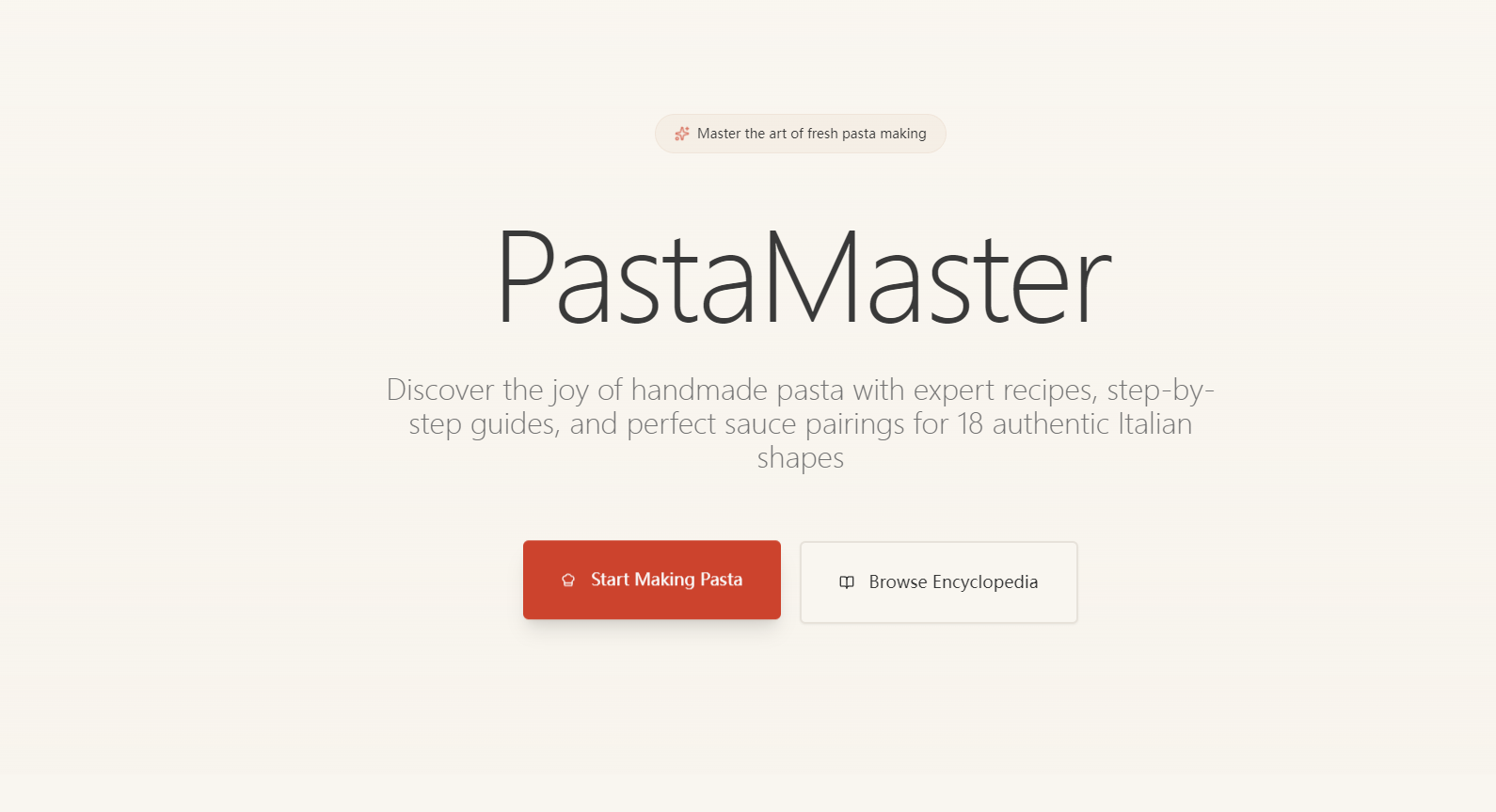
PastaMaster is a mobile-focused guide that centralizes everything you need to make fresh Italian pasta: 18 pasta shapes with tailored dough recipes (in dual units), step-by-step handmade/machine production guides, curated sauce pairings (with rationale), cooking parameters (plus an interactive timer), and an A-Z pasta encyclopedia. It’s designed to make artisanal pasta approachable, no fancy tools required.
How we built it
We started by researching authentic Italian pasta recipes and regional traditions to ensure accuracy. Then, we mapped the user journey – from browsing pasta shapes on the homepage to accessing detailed steps – and designed a minimalist, warm UI aligned with Italian culinary aesthetics. The core build used React Native for cross-platform functionality, with local storage to manage free access limits. We hand-crafted all visual assets (icons, illustrations) and structured static data to work offline, prioritizing mobile optimization for on-the-go cooking.
Challenges we ran into
The biggest hurdle was balancing precision with simplicity – translating professional culinary measurements (like egg-to-flour ratios) into easy-to-follow steps without losing accuracy. We also struggled with the timer logic: ensuring it ran in the background when switching tabs but reset when navigating away, which required fine-tuning state management. Additionally, designing the subscription prompt to feel helpful (not intrusive) took multiple iterations to get right.
Accomplishments that we're proud of
We’re thrilled with how the app balances depth and usability – every pasta shape has unique, research-backed guidance, yet the interface remains intuitive. The dual-unit measurement system (US/metric) makes it accessible across North America and Europe, and the offline functionality ensures it’s usable in busy kitchens with spotty internet. Most importantly, it’s a tool that honors Italian pasta traditions while making them approachable for home cooks.
What we learned
Building PastaMaster taught me the value of user-centric design – even the most accurate culinary data is useless if it’s not easy to navigate mid-cooking. I also learned to prioritize offline functionality early, as kitchen environments rarely guarantee internet access. Additionally, researching regional pasta traditions deepened my appreciation for the cultural context of Italian cuisine, which shaped how we framed the encyclopedia content.
What's next for this project
Next, we want to add video micro-tutorials for tricky steps (like shaping ravioli or rolling fresh dough) and expand the pasta library to include regional specialty shapes. We also plan to introduce a "save favorite recipes" feature and a seasonal sauce pairing section, aligned with fresh, local ingredients. Long-term, we’d love to partner with Italian culinary experts to add even more authentic regional variations and pro tips.

Log in or sign up for Devpost to join the conversation.