Inspiration
When I cook pasta with a sauce, the pasta boils in one pot while the sauce cooks in a pan. My hands are wet or oily, and my eyes keep jumping between the cutting board, the burners and the fridge. The timer is on my phone, and I don't want to touch it. I kept losing track of which thing needed me next.
What it does
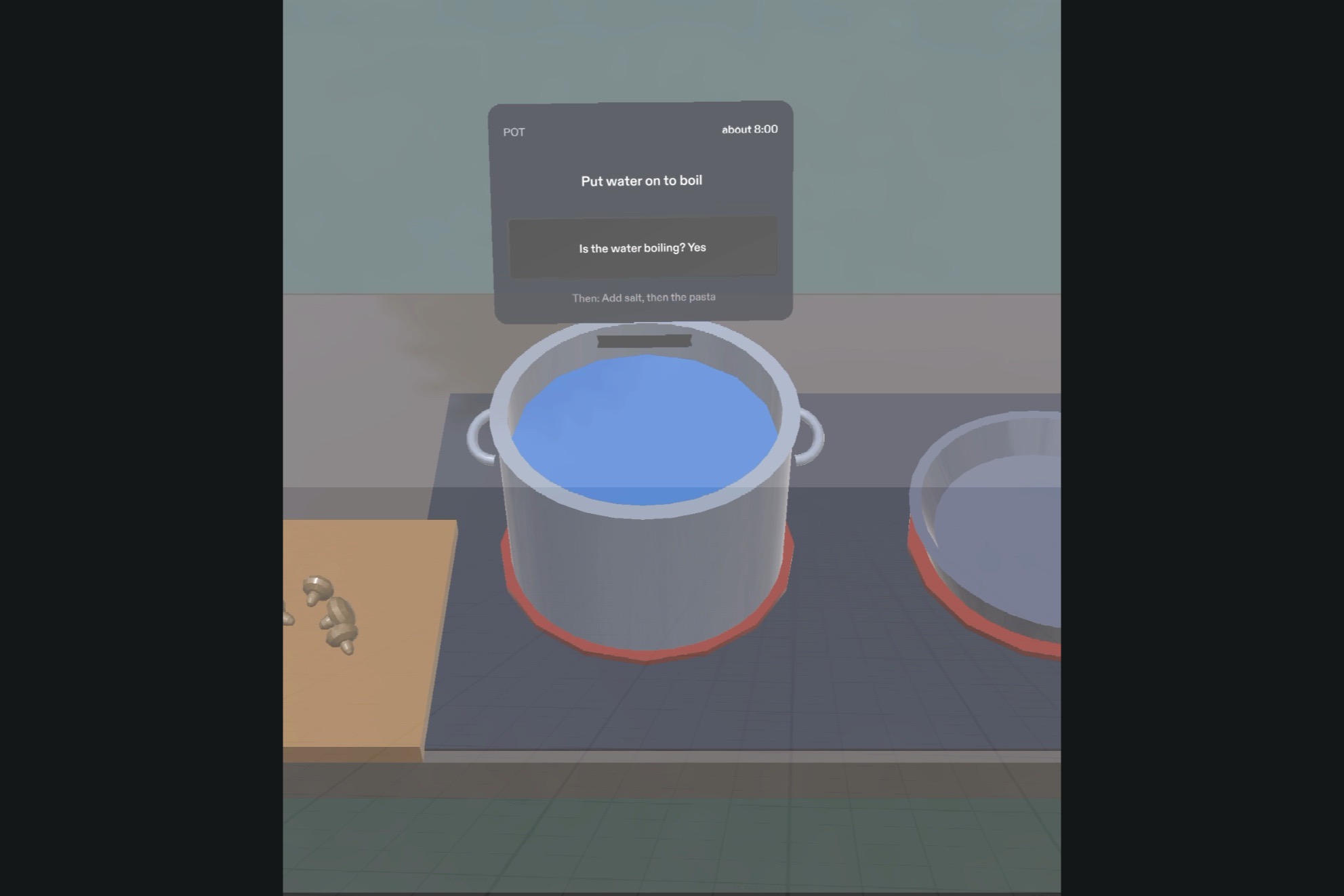
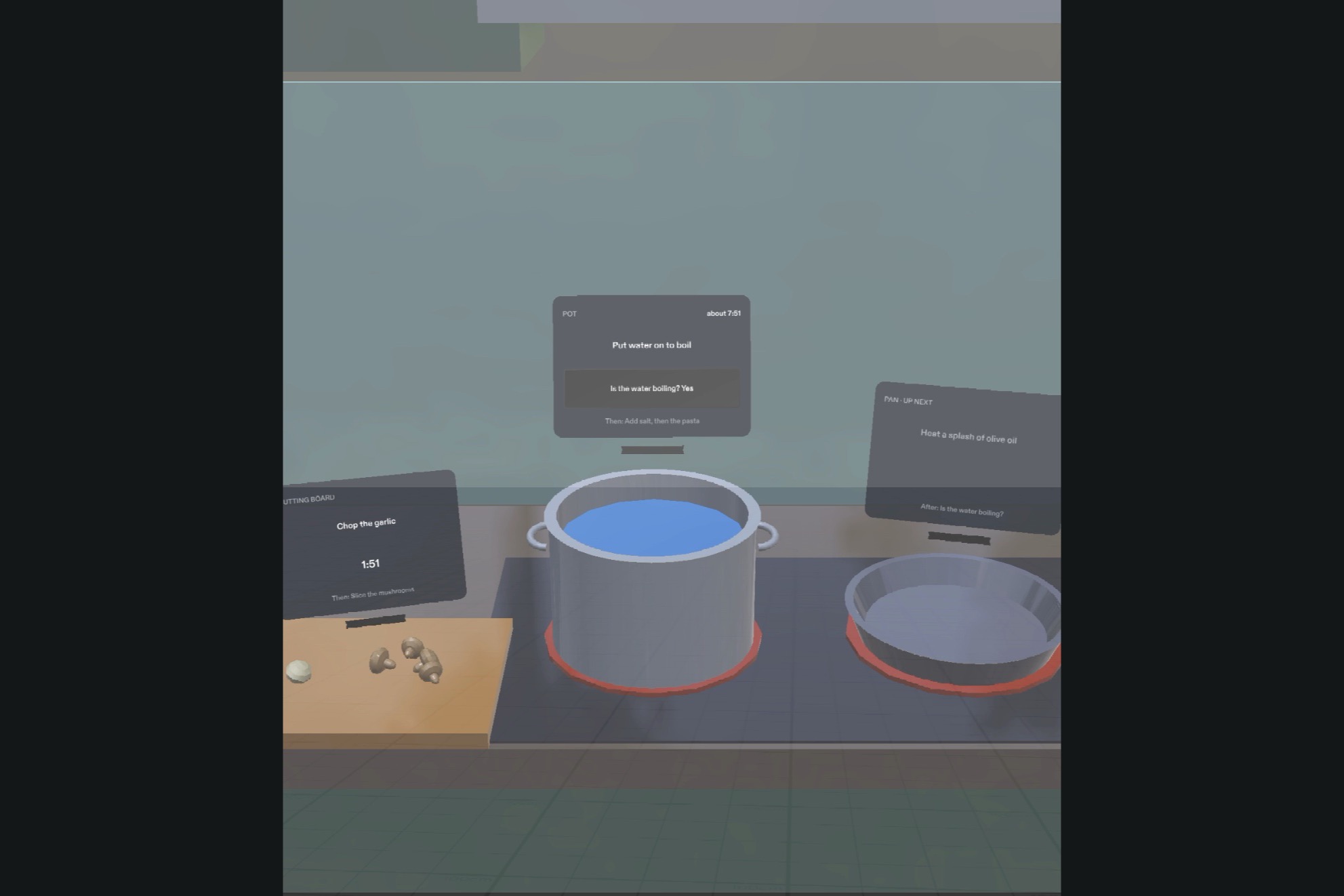
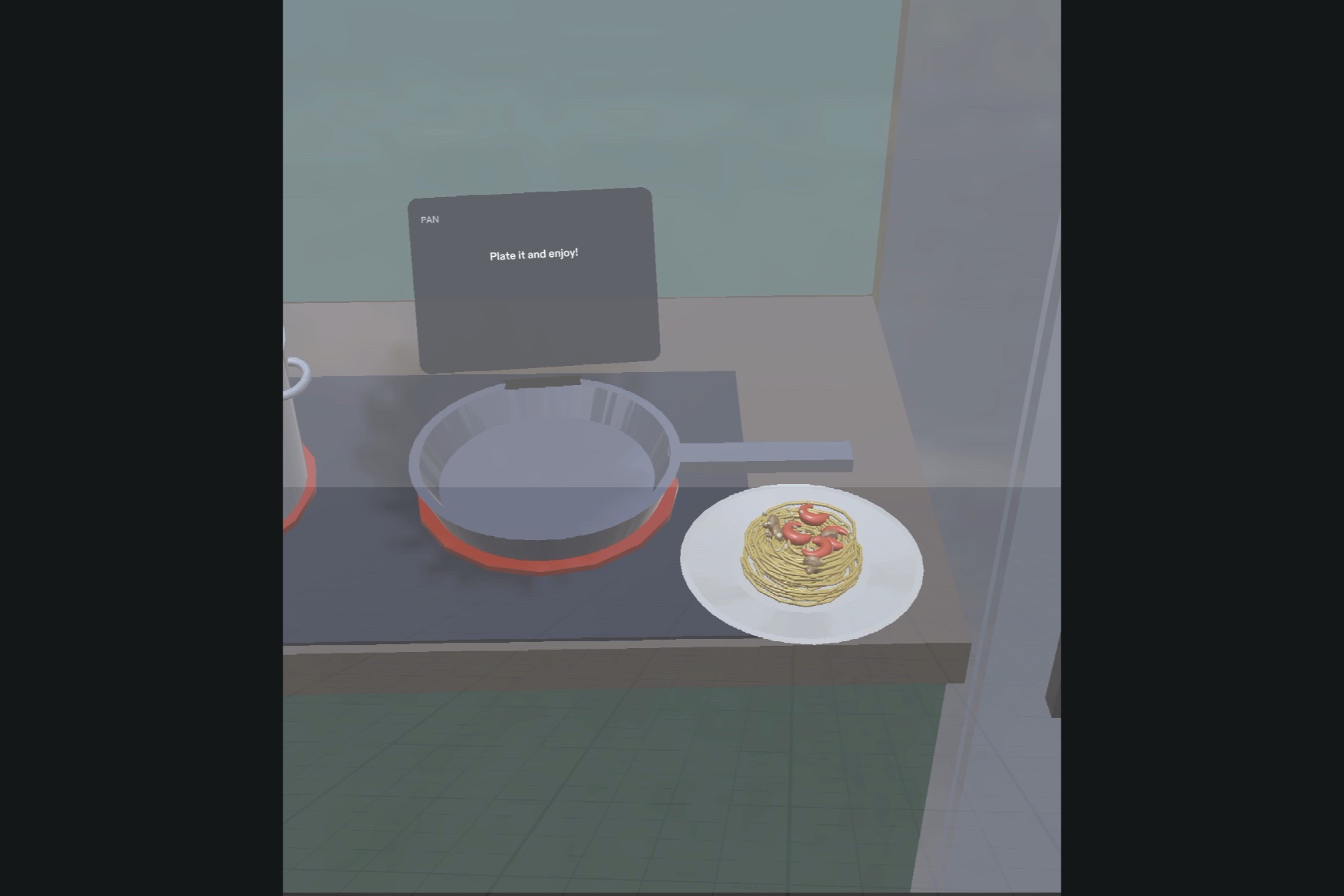
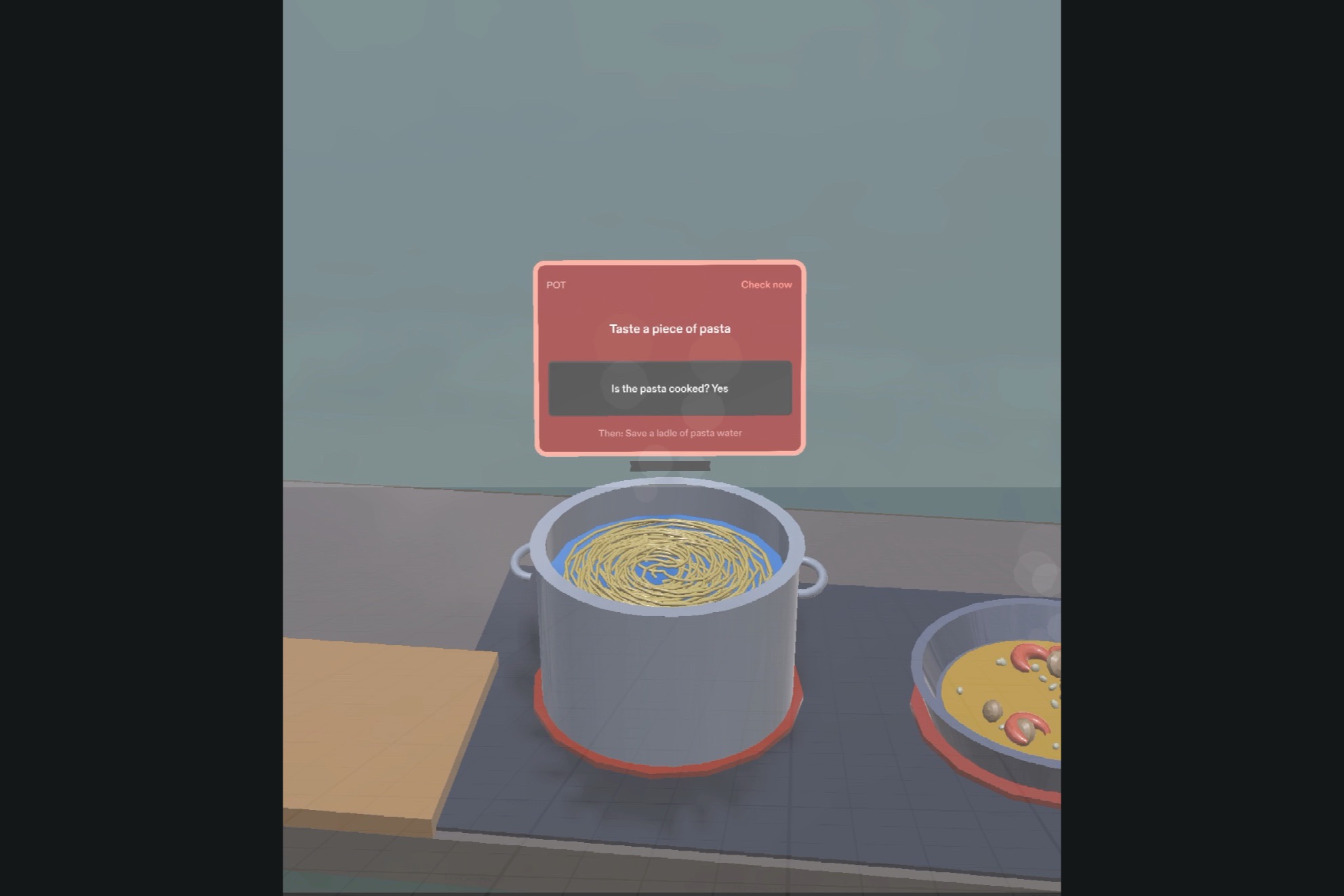
Pasta Coach is a Lens for Snap Spectacles that guides one recipe (garlic butter shrimp and mushroom pasta) across three places at once: the pot, the pan and the cutting board.
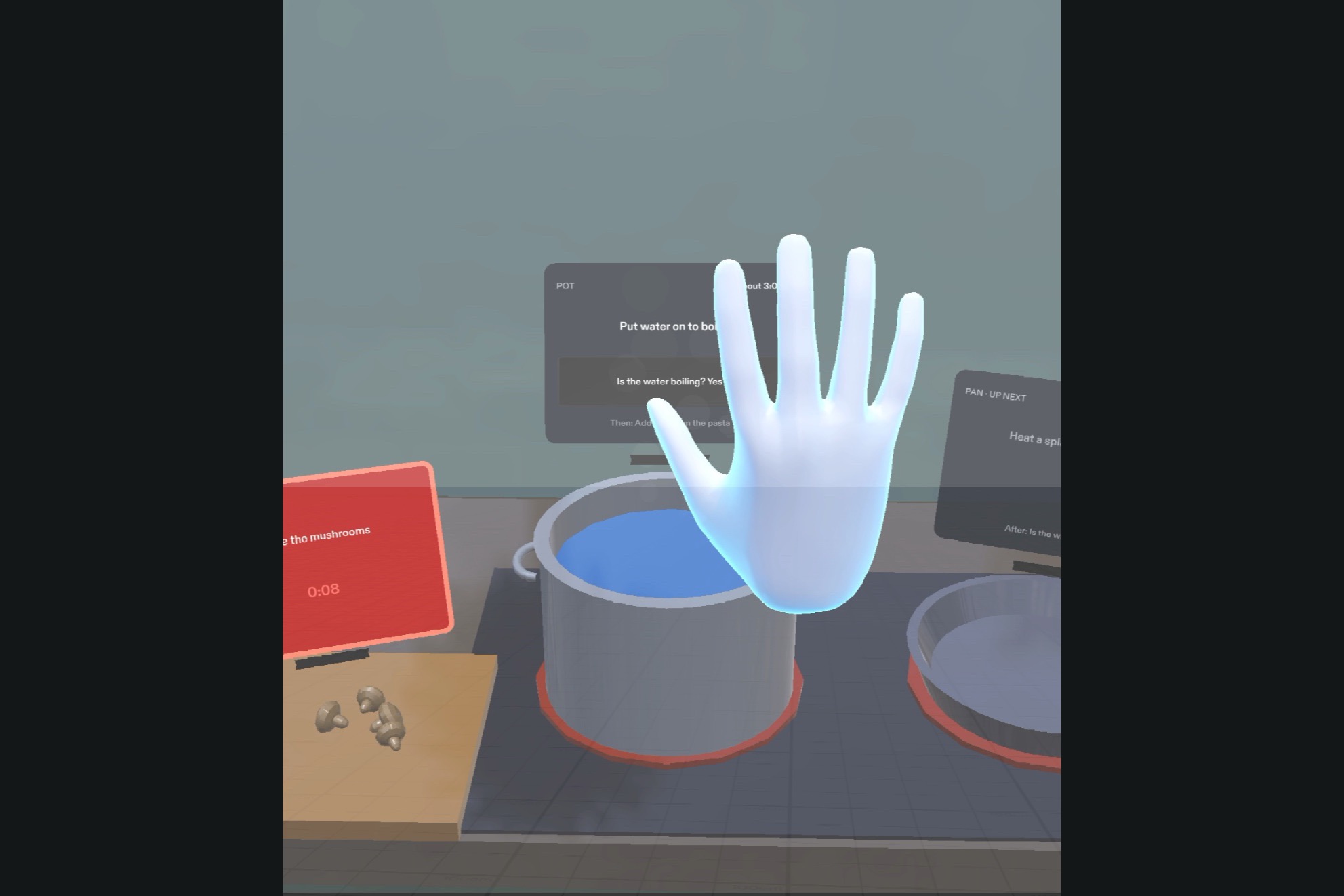
- Place the cards. Three cards appear in front of you. Pinch the bar under each and drag it onto your pot, pan and cutting board. Timers wait until all three are placed.
- Each card shows only its own place. The pot card has the pot's step and timer, the pan card the pan's. Cards with nothing to do shrink to a dot, and the board card goes away once the water is boiling.
- It only asks what it can't know. Every stove heats differently, so it asks "Is the water boiling?" and "Is the pasta cooked?" with one big pinch button. Steps with a fixed time move on by themselves.
- The card warns you before time runs out. It turns steadily redder and a little bigger near the end of a timer.
- The sound tells you where to look. When the pasta timer ends, beeps come from the pot's direction, even if you're at the fridge with your back to it. Steps that simply move on get a soft ding, so beeps always mean "come check this".
Who it's for: home cooks making more than one thing at once, especially anyone who has burned the garlic while looking for the pasta timer.
How I built it
- Planned with the Devpost Learn skill pack. Its interview turned my idea into the design brief in the
devpost/folder, with five done criteria. - Built by Claude Code through CLAD and the Lens Studio MCP, in TypeScript with the Spectacles Interaction Kit and UI Kit. The pot, pan, food and steam are generated in code, and the kitchen is a stand-in so the Lens can run in the preview without real cookware.
- Tested with LEAF: one scenario per done criterion, plus scenarios for card placement, reaching the button from a standing position, the full recipe, the demo controls and the food visuals. All ten pass in the Lens Studio preview.
- Video: a LEAF scenario plays the whole demo in one take (camera path, card drags and pinches), recorded from the preview.
Challenges I ran into
- Signing in. After updating Lens Studio, Spectacles projects asked for a separate SPECS account, and sign-up kept failing. Everything here runs in the preview without signing in, so I built without it.
- Matching package versions. The newest kit versions didn't fit my Lens Studio version. I had to go back to the versions the official Specs template uses.
- Dragging cards in a test. LEAF's simulated arm couldn't grab the cards in the preview, and SIK's depth stretch dragged them the wrong way. Turning off depth stretch and re-aiming the drag after each pass made placement reliable.
- Recording sound. A macOS screen recording doesn't capture the computer's audio. I rebuilt the beeps from the exact times the take logged and panned the climax beep to the side the pot is on.
Accomplishments that I'm proud of
- The moment at the fridge: the pot is behind you, it beeps from where it is, you turn around and the card is red. That is the one thing a phone can't do.
- Every done criterion from the brief has an automated test that passes.
What I learned
- Edge-of-view content is tiring. I first wanted the cards fixed at the edge of my view. After the planning interview explained why that wears you out, I anchored them to the cookware instead, and it reads much better.
- Fewer clicks matter more than features. My own rule became "too many clicks while cooking and nobody will use it," so only stove-dependent checks ask for a pinch.
- Sound needs a hierarchy. When every timer beeped, the important beep got lost. A soft ding for routine steps made the real alert stand out.
- Separate what's proven from what's felt. The tests prove the logic. Comfort, wet-hand pinching and hearing the beep in a noisy kitchen can only be judged on real glasses.
What's next for Pasta Coach
- Try it on real Spectacles with real pots, wet hands and kitchen noise.
- Let the cards follow the cookware if it's moved, and detect boiling from the camera instead of asking.
- More recipes. Every step is already tagged with where it happens, so a new recipe is mostly data.
Built With
- augmented-reality
- clad
- claude-code
- leaf
- lens-studio
- lens-studio-mcp
- spectacles
- spectacles-interaction-kit
- spectacles-ui-kit
- typescript
