-
-
Teamphoto
-
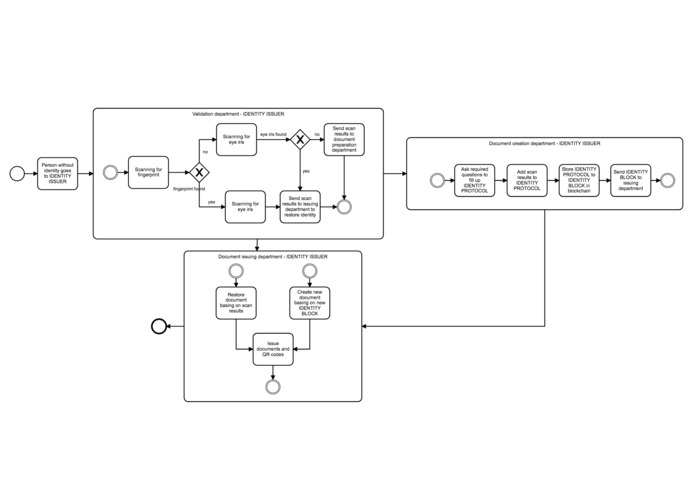
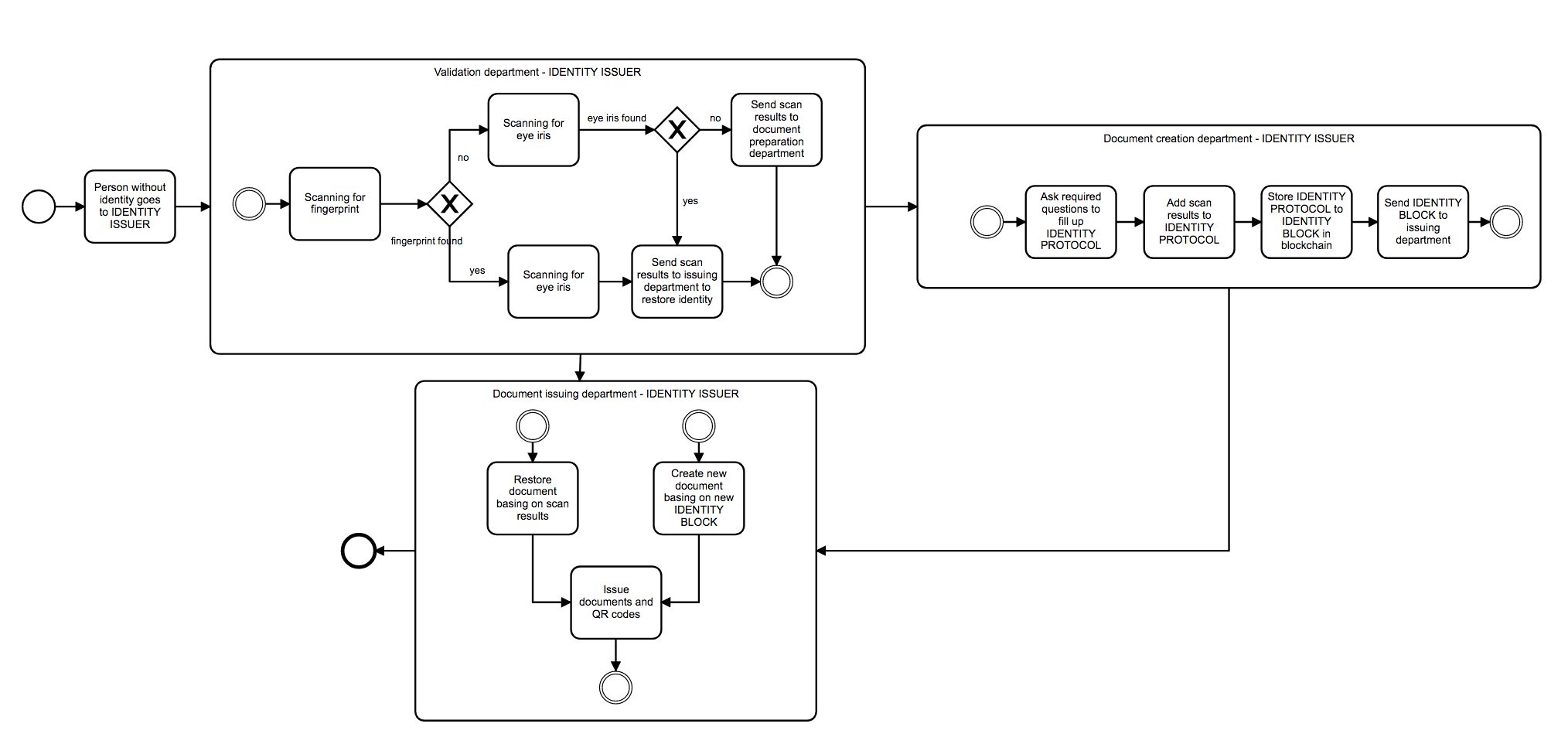
Mock up functionality diagram
-
Illustration of kit containing necessary equipment for complete biometric scan.
Powerpoint
Problem
Most refugees flee their country leaving everything they own behind. A big problem is identifying each individual. The process of registering takes a lot of time, and is stored through papers and messy excel forms. It is hard for a refugee without proper paperwork to prove his/her identity.
Story
When 23 year-old Fatima had to flee from her home when it was bombed, all her identification papers was lost. Walking for days she arrived at a UN refugee camp. At this refugee-camp they had started to use PassWay. Instead of paper forms Fatima was now registered by one of the volunteers on the PassWay app.
She states name, age, and place of birth and in return she received a public key, and one of two private keys. The second is held by the registrar. Her new identity gets saved to the blockchain. She can go to expand her identity profile at the camp at any time, to make sure everyone at least gets their basic information stored. To update her identity, she has to do it through a UN registration center, since they hold the second private key to her identity.
After a week she gets a fingerprint scan and a retina scan added to her identity in the blockchain. 6 weeks later she is able to obtain her university degree and personal identity number from her country of origin. This certificate gets verified and added to her passway identity on the blockchain.
Fatimas profile is now complete, and an automatic process for asylum seeking is begun. She shortly thereafter receives a notification that she has been accepted in France, and travel arrangements are made. Fatima is on her way to a safer future.
How it works
When issuing the Passway identity is saved to the Ethereum blockchain, and generates a private and a public key. The public key is given to the person of which the identity refers to, and the private key is kept by UN. All the files connected to the identity is stored on IPFS (Interplanetary File System) and linked to from the blockchain. Changing the state of the identity, or adding more assets, can only be done by the private key holder, in this case, the UN.
When Proving the Passway identity, the refugee shows his/her public key and the identity assets can be fetched by UN for proving. If the refugee has lost the public key, it can easily be obtained by searching the database for some of the information the refugee can remember.
Implications
The Passway system ensures quick initial registration in cases of mass displacement. Standardized and procedural expansion of identity profiles on the blockchain help build and confirm identities. Once a profile is complete automatic an automatic asylum seeking process minimizes bureaucracy and waiting time, and spares potential seekers from dangerous unfruitful journeys.
Your identity must persist even though your documentation may not. Natural disasters and war displace millions every year, leaving many without their official documentation. To ensure proper aid, reunification of families, and rights to asylum these documents are critical. PassWay introduces a procedural, standardized identification system. It serves as an international non-disputable passport for refugees using decentralized blockchain technology.
Roadmap
Finalization of concept → Implementation of smart contract platform → Bracelet design and proof of concept → Local usertesting and project revision → Field testing → Followup of performance → Deployment and maintenance
Summary
In short Passway technology enables refugees to quickly be integrated into refugee camps and update their identity with all their personal information. Storing this on the blockchain enables them to easily be verified by anyone while keeping their personal information secure. Furthermore this enables accepting country to grant asylum to migrants remotely. The only requirement is to have with them a low cost bracelet containing a public and private key.
Built With
- ipfs
- solidity

Log in or sign up for Devpost to join the conversation.